
International Research Journal of Engineering and Technology (IRJET) e-ISSN:2395-0056
Volume: 11 Issue: 02 | Feb 2024 www.irjet.net p-ISSN:2395-0072
International Research Journal of Engineering and Technology (IRJET) e-ISSN:2395-0056
Volume: 11 Issue: 02 | Feb 2024 www.irjet.net p-ISSN:2395-0072
Pranjal P. Farakte 1, Rohini N. Gaikwad2, Priyanka S. Chavan3
1Assitant Professor, D. Y. Patil college of Engineering and Technology, Kolhapur, Maharashtra, India
2Assitant Professor, D. Y. Patil college of Engineering and Technology, Kolhapur, Maharashtra, India
3Assitant Professor, D. Y. Patil college of Engineering and Technology, Kolhapur, Maharashtra, India ***
Abstract - The human femur is the leg bone that experiences the most deformation. The femur bone, which is the largest and longest bone in the body, is the most likely to fail, especially in women. In the event of failure, orthopedic implantation is performed. Sometimes implanting a new synthetic femur is necessary following femoral bone loss.Therefore,inordertocomparewithasyntheticfemur,we must see how the real and actual femur behaves. Analysis of the material's properties, size, form, surface treatment, load resistance, and failure probability is required prior to implantation.
Key Words: Femur, bone, resistance, Orthopaedic, skull , Titanium
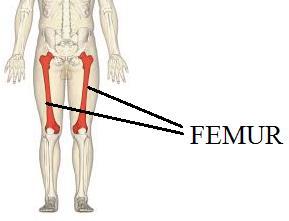
Thefemur,orthighbone,isthemostproximal(closesttothe body) bone of the leg invertebrates capable of walking or jumping.ThewordfemurisLatinforthigh.InmedicalLatin itsgenitiveisalwaysfemoris,butinclassicalLatinitsgenitive isoftenfeminis,andshouldnotbeconfusedwithcaseforms offemina,whichmeans"woman".
Femurfracturesrankinthetoptenofallinjuriesintermsof residualfunctionalimpairmentforpeopleoverage50.Dueto increasing life spans, this number is consistently growing. Riskfactorsforfemurfracturesincludewomenoverage50, men over age 65, smokers, certain blood pressure medications,diseasessuchasosteoporosis,epilepsy,obesity, poor vision and more. Today, with technological medical inventions, means of bone fixation such as screws, metal Prosthesesandimplantscanallowfullweightbearingafew daysafterbonefixationsurgery.However,approximately1 outofevery10fixationsmustbesurgicallyreadjusteddueto
problems such as: failure of the bone due to stress concentration,fatigueofbonecementedrarely,afailureof themetalfixationdevice.Acommontoolinengineeringfor thepredictionofstress,strainanddeformationsisthefinite elementmethod.Thepurposeofthesestudieswastopredict themechanicalresponseofthepreservedhumanfemur,and validatedbyexperimentsonthesame.
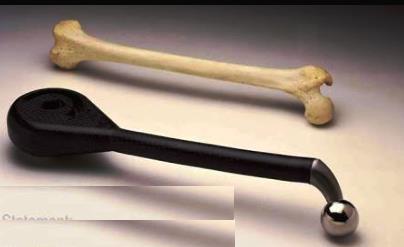
“Femur is leg bone of the human body undergoing more deformation. Being longest and heaviest in size, failure of femur bone is the most common among bone failures especiallyinwoman.Orthopedicimplantationisdoneincase of failure. After failure of femur bone sometimes it is necessarytoimplantanewsyntheticfemur.Sothatwemust checkthebehaviourofrealandactualfemurtocomparewith synthetic femur. Before implantation it is necessary to analyzetheperfectnessincaseofitsmaterialproperty,size andshape,surfacetreatment,loadresistanceandchancesof failure.’’
3.
3.1HUMANANATOMY
Inhumananatomy,thefemuristhelongestandlargestbone. Alongwiththetemporalboneoftheskull,itisoneofthetwo strongestbonesinthebody.Theaverageadultmalefemuris 48 centimeters inlength and 2.34 cm in diameterand can supportupto2timestheweightofanadult.Itformspartof the hip joint and part of the knee joint, which is located above.Therearefoureminences,inthehumanfemur:the head,thegreatertrochanter,thelessertrochanter,andthe lower extremity. They appear at various times from just
International Research Journal of Engineering and Technology (IRJET) e-ISSN:2395-0056
Volume: 11 Issue: 02 | Feb 2024 www.irjet.net p-ISSN:2395-0072
beforebirthtoaboutage14.Initially;theyarejoinedtothe main body of the femur with cartilage, which gradually becomesossifieduntiltheprotuberancesbecomeanintegral partofthefemurbone,usuallyinearlyadulthood.Theshaft of femur is cylindrical with a rough line on its posterior surface.
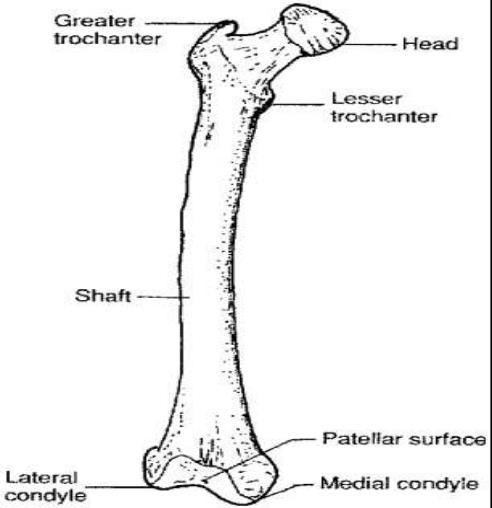
Fig.32Nomenclatureoffemurbone
3.2TYPESOFFEMURBONEFRACTURE:
In order for a femur fracture to occur, either a large force must be applied or something is wrong with the bone. In patientswithnormalbonestrength,themostcommoncauses offemurfracturesinclude:
● Caraccidents
● Fallsfromaheight
Patientsmayalsohavebonethatisweakenedby osteoporosis,tumor,orinfection
3.3ProximalFemoralFracture
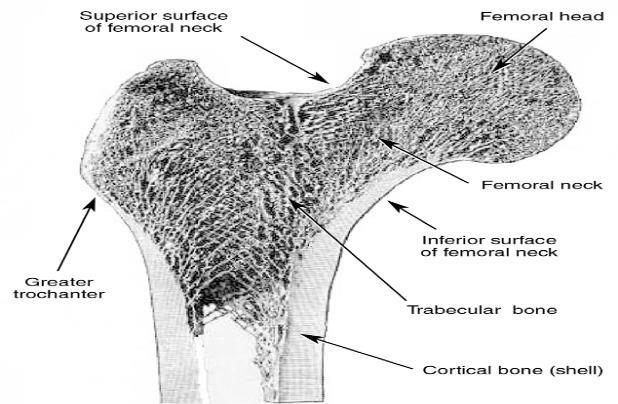
Fig.3.3Femoralfracture
Figure shows the anatomy of the human proximal femur (upperthirdofthehumanfemurbone),whichincludesthe femoral head, femoral neck,greater trochanter, and upper portion of the femoral stem. The femoral neck is the narrowed region directly below the femoral head. Cortical bone is the outer (hard) shell of a bone having higher material density. Trabecular bone is the relatively soft,
sponge-like bone residing inside the hard cortical shell. Proximalfemurfractures,orhipfractures,involvetheuppermostportionofthethighbone,justadjacenttothehipjoint.A hipfracturesafractureintheproximalendofthefemur(the longbonerunningthroughthethigh),nearthehipjoint.The term "hip fracture" is commonly used to refer to four differentfracturepatternsandisoftenduetoosteoporosis;in thevastmajorityofcases,ahipfractureisafragilityfracture due to a fall or minor trauma in someone with weakened osteoporoticbone.Mosthipfracturesinpeoplewithnormal bone are the result of high-energy trauma such as car accidents
3.4Sub-Types:Manysubtypesoffracturesaboutthehipjoint arecolloquiallyknownas'hipfractures’.Althoughatruehip fractureinvolvesthejoint,thefollowingfourproximalfemur fractures are commonly referred to as hip fractures. The differences between them are important because each is treateddifferently.
Femoral head fracture denotes a fracture involving the femoralhead.Thisisusuallytheresultofhighenergytrauma and a dislocation of the hip joint often accompanies this fracture.
Femoralnecksfractureisadjacenttothefemoralheadinthe neck between the head and the greater trochanter. These fractureshaveapropensitytodamagethebloodsupplyto thefemoralhead,potentiallycausingvascularnecrosis.
Intertrochanteric fracture denotes a break in which the fracturelineisbetweenthegreaterandlessertrochanteron theIntertrochantericline.Itisthemostcommontypeof'hip fracture'andprognosisforbonyhealingisgenerallygoodif thepatientisotherwisehealthy.
Sub trochanteric fractureactually involves the shaft of the femur immediately below the lesser trochanter and may extenddowntheshaftofthefemur.Afemoralshaftfracture isasevereinjurythatgenerallyoccursinhigh-speedmotor vehiclecollisionsandsignificantfalls.Theseinjuriesareoften oneofseveralmajorinjuriesexperiencedbyapatient.The treatment of a femoral shaft facture is almostalways with surgery.Themostcommonprocedureistoinsertametalrod downthecenterofthethighbonecalledanintramedullary rod.Thisprocedurereconnectsthetwoendsofthebone,and therodissecuredinplacewithscrewsbothaboveandbelow thefracture.Theintramedullaryrodgenerallyremainsinthe boneforthelifeofthepatient,butcanberemovedifitcauses pain or other problems. Other less commonly used treatmentsofafemurfractureincludeaplateandscrewsor anexternalfixator.Thesetreatmentoptionsmayhavetobe used if an intrameduallary rod cannot be used for some reason.Incertainpatients,dependingonthefracturetype andassociatedinjuries,anintramedullaryrodmaynotbean option;inthesecasesoneoftheothertreatments(plateand screws,externalfixator,etc.)willbeselected.
International Research Journal of Engineering and Technology (IRJET) e-ISSN:2395-0056
Volume: 11 Issue: 02 | Feb 2024 www.irjet.net p-ISSN:2395-0072
Inthisproject,theanalysesaremainlyconcerningabouthow does the stress distributed over the proximal femur bone during the standing position of human being. The main purposeinthisprojectistostudythestressescarriedbythe proximal femurbeforetotalhipreplacement.
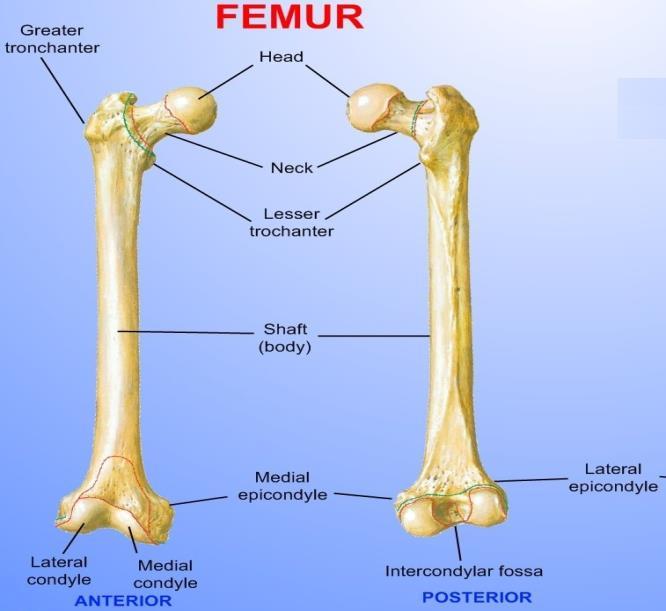
Fig.3.4 Femur
With the above problems, the following are the reasons becauseofthatwewereinterestedinstressanalysisofreal humanfemurbone.
1. LargestHumanBone:Itconnectstothepelvisatthe proximalendtoformthehipjointandtothetibiaat thedistalendtoformthekneejoint.Thefemurin thebodytakesthelargestpercentageoftheweight ofthebody.Theshaftofthefemuriscylindricalwith approximatelycircularcrosssectionshape.
2. SingleSupportMember:Thehumanskeletalsystem consists of a large number of bones that fill roles suchassupportforthebody,protectinginnerbody organs,allowingmovementandproducingredblood cells. The femur is the longest, strongest, and heaviest bone in the human body and one of the principalloadbearingbonesinthelowerextremity.
3. Less Flexible(Stiff):Manystudieshavefocusedon geometry,biomechanicalproperties,etc.ofahuman femur.Atypicalfemurstructureincludescompact bone,spongebone,medullarcavity,yellowmarrow, periosteum, articular cartilage, etc. The average adult male femur is 48 centimeters in length and 2.84 cm in diameter at the mid-shaft, and has the ability to support up to 30 times the weight of an adult.
4. Anisotropic Material: Human bone is highly heterogeneous and non-linear in nature, so it is difficult to assign the material properties. The proper assignment of material properties on the otherhand,isstillunderactiveresearchbecauseof theinherentinhomogeneousandanisotropicnature ofbone'stissue.Mostpaststudiesassumedthebone tobeinhomogeneousisotropicduetosimplicityand thelimitedknowledgeoftheanisotropicbehavior. Thus, the bone is known to be anisotropic and inhomogeneous, most studies simplify these difficultiesbyconsideringanisotropicmaterialso wehavealsoconsideredsame(i.e.Isotropic)femur bonematerialinourstudy.
2. The load acting on the femur is assumed to be a pointloadactingatthetopofthe femurhead.
3. Motionsconsideredareforaflatground.
4. Fourarbitraryloads 490N,540N, 588N and 640N wereassumed.
5. Self-weightofthefemurboneisneglected.
6. Smallmodificationsweremadetothedimensionsas ANSYSwasunabletoimport
7. Themodel.
8. Muscleforceswereneglected:
There are a lot of muscle forces acting on the femur. The muscleforcesmovethehipjointbyasystemoflevers.The resultantforcesactingonthehipjointwhenapersonmoves arefewtimeshigherthanthebodyweight.Basically,there aretwomajorkindsofforces,whicharebendingforceand twistingforce.
1. In the present work, experimental and finite element analysisofstressesinrealproximalhumanfemurboneunder staticbodyloadwascarriedout.
Theworkfocuseson:
● FEManalysis :
a) Modelingofhumanfemurbone.
b) Meshingofhumanfemurbone.
c) ANSYScalculationsofthestresses.
d) Experimentalanalysis:
International Research Journal of Engineering and Technology (IRJET) e-ISSN:2395-0056
Volume: 11 Issue: 02 | Feb 2024 www.irjet.net p-ISSN:2395-0072
e) Positioning of strain gauges on real human femur bone.
f) Mountingofhumanfemurbone.
g) Applying a load on proximal human femur bone head.
h) Stressanalysis.
2.TocheckthevalidityofFEManalysisresultsbyusingthe obtainedexperimentalresults.
3.TocarryoutcomparativestudyofexperimentalandFEM analysisresultstodecidethehighstressconcentrationareas of the femur bone which are extremely responsible for fracturesanddamages.
7.
[1] These analyses will provide information to medical doctorsaboutriskofpossiblefractureareasinhuman femurbone.
[2] The results of proposed analysis will be helpful for orthopedic surgeons for clinical and experimental interest.
[3] This research work will be aimed to make available guideline in relation to the importance of medical treatmentoncefracturehasoccurredforthefemur.
[4] The results of this analysis are helpful to design an implant, which is called hip prosthesis, to replace the failedfemurpart.
1. RoyiFedida,ZoharYosibash,CharlesMilgromand LeoJoskowicz2005.FemurMechanicalSimulation Using High-Order Fe Analysis with Continuous Mechanical Properties. In Proceedings of the II International Conference on Computational Bioengineering.
2. Nir Trabelsi, Zohar Yosibash, “Patient-specific FE analyses of the proximal femur with orthotropic material properties validated by experiments”, Journal of Biomechanical Engineering. Received November 29, 2010; Accepted manuscript posted May 6, 2011. doi:10.1115/1.4004180 Copyright 2011byASME.
3. P.E. Galibarov, P.J. Prendergast, A.B. Lennon, “A method to reconstruct patient-specific proximal femur surface models from planar pre-operative radiographs”, Elsevier Journal of Medical Engineering&Physics,2010(1180-1188).
4. Adeeb Rahman, Shirin Selmi, Chris Papadopoulos, and George Papaioannou, “CT-Scan based FEA for the Assessment of the Effect of Bone Density on Femur's Fracture”, In Proceedings of the 9th InternationalConferenceonInformationTechnology and Applications in Biomedicine, ITAB 2009, Larnaca,cyprus,5-7November2009.
5. A. Ramos, J.A. Simoes, “Tetrahedral versus hexahedralfiniteelementsinnumericalmodellingof the proximal femur”, Science Direct Journal of MedicalEngineering&Physics282006(916–924).
6. FulviaTaddei,SauloMartelli,BarbaraReggiani,Luca Cristofolini, and Marco Viceconti, “Finite-Element Modeling of Bones from CT Data: Sensitivity to Geometry and Material Uncertainties”, IEEE TransactionsonBiomedicalEngineering,Vol.53,No. 11,November2006.
7. A.S. Dickinson1, A.C. Taylor, H.Ozturk1 and M. Browne, “Experimental Validation of a Finite ElementModeloftheProximalFemurUsingDigital Image Correlation and a Composite Bone Model”, JournalofBiomechanicalEngineering.ReceivedMay 24,2010;AcceptedmanuscriptPapaioannou,“CTScanbasedFEAfortheAssessmentoftheEffectof BoneDensityonFemur'sFracture”,InProceedings ofthe9thInternationalConferenceonInformation TechnologyandApplicationsinBiomedicine,ITAB 2009,Larnaca,cyprus,5-7November2009.
8. A. Ramos, J.A. Simoes, “Tetrahedral versus hexahedralfiniteelementsinnumericalmodellingof the proximal femur”, Science Direct Journal of MedicalEngineering&Physics282006(916–924).
9. FulviaTaddei,SauloMartelli,BarbaraReggiani,Luca Cristofolini, and Marco Viceconti, “Finite-Element Modeling of Bones from CT Data: Sensitivity to Geometry and Material Uncertainties”, IEEE TransactionsonBiomedicalEngineering,Vol.53,No. 11,November2006.
10. A.S. Dickinson1, A.C. Taylor, H.Ozturk1 and M. Browne, “Experimental Validation of a Finite ElementModeloftheProximalFemurUsingDigital Image Correlation and a Composite Bone Model”, JournalofBiomechanicalEngineering.ReceivedMay 24, 2010; Accepted manuscript posted November 29, 2010. doi:10.1115/1.4003129 Copyright 2010 byASME.
11. Raji Nareliya et al., “Biomechanical Analysis of Human Femur BoneInternational”, Journal of EngineeringScienceandTechnology(IJEST)ISSN: 0975-5462Vol.3No.4Apr20113090-3094.
International Research Journal of Engineering and Technology (IRJET) e-ISSN:2395-0056
Volume: 11 Issue: 02 | Feb 2024 www.irjet.net p-ISSN:2395-0072



Assistant professor Pranjal P. Farakte at Department of Electronics & Telecommunication Engineering, D. Y Patil College of Engineering & Technology, Kolhapur,Maharashtra,India
Assistant professor Rohini N. Gaikawad at Department of Electronics & Telecommunication Engineering, D. Y Patil College of Engineering & Technology, Kolhapur,Maharashtra,India.
Assistant professor Priyanka S. Chavan at Department of General Science Engineering, D. Y Patil College of Engineering & Technology, Kolhapur, Maharashtra,India