
International Research Journal of Engineering and Technology (IRJET) e-ISSN: 2395-0056
Volume: 11 Issue: 02 | Feb 2024 www.irjet.net p-ISSN: 2395-0072
International Research Journal of Engineering and Technology (IRJET) e-ISSN: 2395-0056
Volume: 11 Issue: 02 | Feb 2024 www.irjet.net p-ISSN: 2395-0072
1Department of Electrical engineer, RK University , Rajkot, Gujarat, India
2Department of Electrical engineer, RK University , Rajkot, Gujarat, India
3Department of Electrical engineer, RK University , Rajkot, Gujarat, India
4Assistant Professor, Department Electrical engineer, RK University , Rajkot, Gujarat, India
Abstract - It is essential to shift to sustainable transportationinfrastructureinordertolessenthenegative environmental effects of using fossil fuels. Though they provideapotentialanswer,thelackofproperinfrastructure for charging electric cars (EVs) is impeding their wider adoption,especiallyinplaceslikeIndia.Thisstudysuggests acreativesolutiontothisproblem:creatinganddeploying EVchargingstationsthatarefueledbyahybridsystemthat combinessolarandwindenergy. Inordertoeffectivelyutilize renewable energy, solar panels and wind turbines are integrated into the architecture. Given the geographical and climatic variety of India, the hybrid system reduces the intermittent nature of individual renewableenergysourcesby ensuring constant power output. The best configurations are found through thorough feasibility studies and simulations that aim to optimize energy output while reducing expenses. The analysis of crucial elements including system scale, grid integration tactics, and location choice is extensive to guarantee economic feasibility, scalability, anddependability. In addition, the study looks at how renewable energy development and EV charging infrastructure may work together to further India's larger sustainability objectives. Apart from technological aspects, the research delves into regulatory structures, policy inducements, and commercial strategies that facilitate the implementation and functioning of these charging stations. Facilitating implementation and promoting acceptance necessitates collaboration with pertinent players, such as government agencies, electricity providers, and electric vehicle manufacturers. The suggested hybrid EV charging stations have several advantages, such as lower carbon emissions, increased energy independence, and improved resistance to power outages. Additionally, they support economicgrowth,technologicaladvancement,andjob creation in the rapidly expanding renewable energy industry.
To sum up, this study offers a thorough methodology that is especially adapted to the Indian context for developing and implementing EV charging infrastructure that is powered by renewable energy sources. This programisabigsteptowarda sustainable and inclusive transportation ecology as it makes use of the nation's enormous solar and wind resources.
Key Words: Electric Vehicle (EV) Charging Stations1 , Wind-Solar Hybrid System2 , Renewable Energy
Integration3, Hybrid energy Management4, Solar Energy5, wind energy6, Sustainable Transportation7.
Aparadigmshifttowardtheutilizationofrenewableenergy resourceshasbeenbroughtaboutbythegrowingneedfor clean and sustainable energy solutions as well as the necessity to reduce climate change. The investigation of novelandeffectiveenergysystemsbecomesessentialinthe setting of India, a nation with rapidly increasing energy demandsandadedicationtoloweringitscarbonimprint.In ordertoaddressthechallengesofcombiningsolarandwind technologies in the varied environment of India, this researchstudyexploresthecomplicatedfieldoftheDesign andPerformanceEvaluationofaWind-SolarHybridSystem inIndia.Givenitslargegeographicareaanddiverseclimate, Indiapresentsaspecialmixofpotentialaswellasobstacles for the use of renewable energy. The nation boasts an abundanceofsolarandwindenergyresources,whichwhen combined can produce a steady and sustainable power source.Combiningsolarandwindpowertechnologymight help reduce the intermittent nature of each power source andproducemoreconstantanddependableelectricity.The maingoalofthisresearchistocreateahybridsystemthat best integrates solar and wind power while taking into account India's unique geographic features and climatic circumstances. The construction of an effective hybrid systemandthecomprehensiveperformanceevaluationthat followsarethetwomaincontributionsofthiswork.Thegoal of the study is to provide important new insights into the complex interplay of design concerns, technical developments,andsuchhybridsystems'feasibilityfroman economic and environmental standpoint. India has demonstrated a strong commitment to expanding its renewableenergyinfrastructureastheworldtransitionsto alow-carbonfuture.Thisstudyaimstoclosetheknowledge gapbetweentheoryandapplicationbyofferingathorough grasp of the opportunities and problems related to windsolar hybrid systems in the Indian setting. In doing so, it hopestoeducateacademics,energyplanners,andpoliticians on these systems' potential to support India's sustainable energy goals and promote a cleaner, greener energy environmentacrossthecountry.
International Research Journal of Engineering and Technology (IRJET) e-ISSN: 2395-0056
Volume: 11 Issue: 02 | Feb 2024 www.irjet.net p-ISSN: 2395-0072
Thegrowingchallengesposedbyresourcedepletion,climate change, and environmental degradation have called attentiontotheneedforasignificantshiftinourapproachto energyproduction.Renewableenergysources,suchassolar and wind, significantly improve energy security, lessen dependency on non-renewable resources, and reduce greenhousegasemissions.Thesesourcesofferasustainable and environmentally acceptable alternative, supporting globaleffortstocreatealow-carbonfuture.
• An electrical power source is now one of the mostimportantthings.
• Twosourcesareusedtogeneratepower.
• Indiagenerated77%ofitspowerin2020from fossil fuels, of which 72.5% came from coal, 4.2%fromnaturalgas,and0.3%fromoil.
• The nation said in June that it will aim to produce half of its power from renewable sourcesby2030.
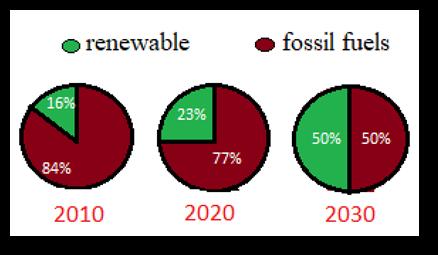
The unique characteristics of wind and solar energy contributetotheirappealasrenewableenergysources.The highestwindpowerresourcesareoftenfoundinareaswith consistent winds, such as mountainous terrain or coastal locations.Ontheotherhand,becausesolarenergyprimarily dependsonexposuretosunlight,itfunctionsbestinregions withlotsofsunshine.Thecomplementarycharacteristicsof these two sources have led to the development of hybrid systems that aim to maximize energy output and grid resilience.Ineverylocation,bothenergysourcesaremore readilyavailable.Itrequireslessmoney.Nospecificsiteis requiredfortheinstallationofthissystem.
Two renewable energy sources wind and solar are combined in a wind-solar hybrid system to produce electricity.Thissystemisdesignedtogeneratepowerusing solarpanelsandsmallwindturbinegenerators.
Comprehending the functioning of solar and wind energy systemsiscrucialforanunderstandingofsolarwindhybrid systems. A solar power system is a device that uses solar panelstoproduceelectricityfromsolarradiation.Theblock diagram of the solar wind hybrid system, which produces
electricityusingsolarpanelsandwindturbines,isshownin thegraphic.
Windenergy,generatedbywindturbinesandgenerators,is another renewable energy source that may be used to generateelectricity.
Afanwithtwoorthreebladesthatspinsinreactiontowind isknownasawindturbine;therotation'saxismustcoincide withthedirectionofthewind.Becauseagearboxisusedto moveenergymechanicallyfromonedevicetoanother,itis knownasahigh-precisionmechanicalsystem.Windturbines comeinmanydifferentvarieties,butthetwomostpopular typesareverticalandhorizontalaxisturbines.
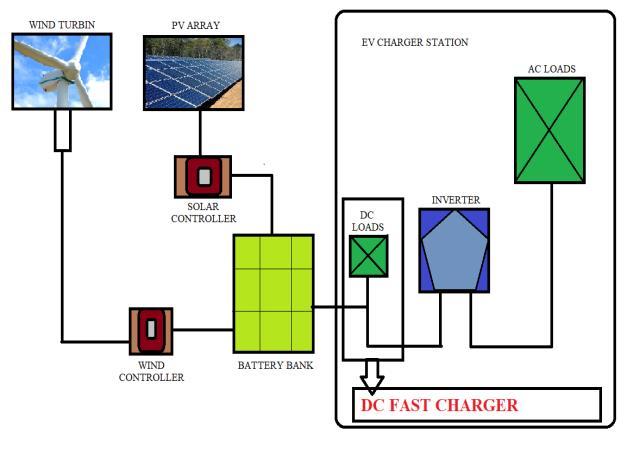
Thethreeprimarypartsofasolarpowersystemaresolar panels,solarphotovoltaiccells,andenergy-storagebatteries. DCpower,orelectricalenergygeneratedbythesun,canbe usedtopowerDCloadsdirectly,storeitinbatteries,orfeed AC loads via an inverter. Solar energy is only available throughouttheday,howeverwindenergymaybeusedall daylongdependingonmeteorologicalconditions.
Thecombinationofwindandsolarenergyallowsthesystem to provide electricity almost year-round. The main components of the wind solar hybrid system are the inverter, charge controller, batteries, solar photovoltaic panels,windaerogenerator,andtower.Withtheuseofan inverter,thewind-solarhybridsystem'selectricitymaybe used to operate air conditioning units and recharge batteries.Atowerthatisatleasteighteenmetersabovethe ground is necessary for the installation of a wind aerogenerator. Because of its height, the aero-generator can capturewindmorequickly,producingmorepower.
India's fast industrialization and urbanization have raised the country's transportation needs, which has resulted in energy instability and environmental deterioration. It is imperative to move toward sustainable transportation options that lower greenhouse gas emissions and
International Research Journal of Engineering and Technology (IRJET) e-ISSN: 2395-0056
Volume: 11 Issue: 02 | Feb 2024 www.irjet.net p-ISSN: 2395-0072
dependencyonfossilfuelsinordertoaddresstheseissues. As a viable substitute, electric cars (EVs) have gained popularity because of their reduced emissions and significant energy savings. But the absence of sufficient infrastructure for charging EVs prevents them from being widelyadopted,especiallyinanationasbigandvariedas India.Thisresearchsuggestsauniquesolutiontoclosethis gap:thedevelopmentanduseofEVchargingstationsthat arefueledbyahybridwind-solarsystem.Usingthewindand solarenergythatareabundantinIndia,thishybridsystem provides a scalable and sustainable way to power EV charginginfrastructureallthroughoutthenation.Thehybrid systemcanreducetheerraticnatureofseparaterenewable energy sources by combining solar and wind turbines, guaranteeingasteadyanddependablesupplyofelectricity tochargingstations.SuchhybridEVchargingstationdesign and deployment call for a multidisciplinary strategy that includes engineering, economics, politics, and stakeholder involvement.Ourgoalinwritingthisarticleistopresenta thoroughframeworkfortheplanning,implementation,and management of renewable energy-powered EV charging infrastructureinIndia.
Inadditiontoaddressingtheinfrastructuralissuesrelatedto EV adoption, the installation of wind-solar hybrid EV charging stations advances India's larger sustainability objectives.ThisprogramsupportsIndia'sobjectivestofight climatechangeandadvancethedevelopmentofrenewable energy sources by lowering carbon emissions, improving energyindependence,andencouragingtechnicalinnovation.
The technical components of developing hybrid electric vehicle (EV) charging stations, such as system sizing, locationselection,andgridintegrationtechniques, will be coveredindetailinthisstudy.Wewillalsodiscussthepolicy and regulatory frameworks required to facilitate the installation of this kind of infrastructure, as well as the advantages it will have for the economy and the environment.
Ingeneral,thedevelopment andimplementationof windsolarhybrid electricvehicle chargingstationsconstitute a noteworthyadvancementintheestablishmentofarobust and sustainable transportation network in India. We can takeadvantageofthisrevolutionaryinitiative'spossibilities and solve its problems by working together with government agencies, corporate sector stakeholders, and civilsociety.
2.1
The primary goal is to evaluate and map India's various areas'potentialforsolarandwindenergy.Themappingof GeographicInformationSystems(GIS)isanessentialtoolfor determiningthebestplacesinIndiatoputsolarpanelsand wind turbines. Acquire GIS information about land usage,
terrain,andweatherconditions. Include temperature,sun radiation,andwindspeeddataintheGISsystem.Determine thebestplacesforsolarpanelsandwindturbinesbasedon the availability of resources. Examine both temporal and geographical differences to identify the best deployment tactics.
InthewindturbineExamineallofthevariouswindturbine typesindetail,takingintoaccountvariableslikehubheight, cut-inwindspeed,andratedpower.Examinewindturbine designs with horizontal and vertical axes. Examine the poweroutputparametersandefficiencycurvesofthewind turbinemodelsthatmadetheshortlist.Thinkabouthowthe turbineperformsindifferentwindspeedscenarios.Analyze eachwindturbinemodel'smaintenanceneedsandlongevity. Examine the selected turbines' anticipated lifespan and dependability.
WhilechoosingsolarpanelsExamineseveralphotovoltaic (PV) technologies, such as thin-film, polycrystalline, and monocrystalline. Evaluate each technology's cost, space needs, and efficiency. To comprehend how solar panels function in various temperature environments, take into accounttemperaturecoefficients.Examinetheeffectofhigh temperaturesonsolarpanelefficiency.Examinehowflexible solar panel installation is, taking into account things like tracking systems, ground-mounted systems, and rooftop installation.
Rotorblades:Forstrengthandflexibility,fiberglass or carbon fiber reinforced composites are frequentlyused.Tower:Forstabilityanddurability, steelorconcretearetypicallyusedinconstruction. Thegeneratorhousingiscomposedofaluminumor castironforheatdissipationanddurability.
PVmodules(solarpanels):Constructedfromthinfilmmaterialsorcrystallinesilicon.Therearetwo primaryvarietiesofcrystallinesiliconpanelsthat are widely used: monocrystalline and polycrystalline.
Frame:Solarpanelsarestructurallysupportedby steeloraluminumframes.
Inverters:Foreffectiveheatdissipation,aluminum orotherlightweightmetalsarefrequentlyusedfor thehousing, DevicesthattransformDCelectricity fromsolarpanelsandwindturbinesintoACpower. Constructed of aluminum or other conductive materials.
Support Structures: Frames made of steel or aluminum that hold up solar panels and wind turbines. The decision is based on many considerations, including corrosion resistance, strength,andcost.
International Research Journal of Engineering and Technology (IRJET) e-ISSN: 2395-0056
Volume: 11 Issue: 02 | Feb 2024 www.irjet.net p-ISSN: 2395-0072
Mounting Systems: Aluminum or galvanized steel racks and frames for safely securing solar panels andsupportingotherparts.
Battery Enclosures: Constructed from steel or reinforced plastic, these enclosures guarantee battery safety by shielding the batteries from the elements.
Lithium-ion (Li-ion) batteries are widely utilized because of their extended cycle life, high energy density,anddependability.
ControlSystems:Electroniccomponentprotection provided by sturdy housings. PCBs, or printed circuit boards, are frequently composed of fiberglassorepoxy.
Powercablesareusuallycomposedofcopperdueto itsdurabilityandconductivity.
Control cables: made of aluminum or copper, dependingontheneed.
Monitoringdevicesandsensors:Weather-resistant housingsforthesensors,anddifferentmaterialsfor thesensorsdependingonhowtheywork.
Communicationequipmentisbuilttoresistweather conditionsandiscomposedofmaterialslikemetal orplastic.
Wind turbine foundations consist of steel or reinforced concrete structures that firmly anchor thewindturbinetower.
Concrete or steel constructions that serve as a sturdy support for the installation of solar panels arecalledsolarpanelfoundations.
Enclosures:Usuallyconstructedof polycarbonate, stainless steel, or aluminum to shield electrical componentsfromtheelements.
The wind's kinetic energy is transformed into mechanical energybythewindturbine,andthegeneratorsubsequently turnsthat mechanical energyinto electricity. Throughthe process of photovoltaics, solar panels transform sunlight intodirectcurrent(DC)power.Forlocalorgridintegration, inverters transform DC electricity from solar and wind systems intoalternating current(AC). Systems forstoring extra energy are used when the production of renewable energyislow.Controlsystemsmaximizetheperformanceof solar and wind energy components according to energy consumptionandenvironmentalfactors.Forthepurposeof assessing performance, monitoring systems continually gatherinformationonenergyproduction,systemefficiency, andenvironmentalfactors.
Dependingonthetechnology,design,andmanufacturerof the parts used in the wind-solar hybrid system, different materials and operational details may be employed. It is important to take into account many aspects including expenses,effectiveness,andecologicalconsequenceswhile choosingmaterialsfordistinctparts.
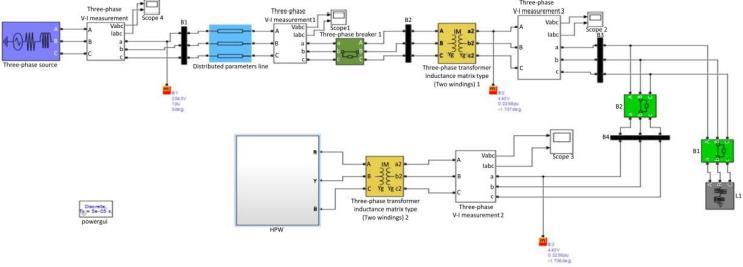
Fig 3 MATLABdiagramforawind-solarhybridsystem.
The MATLAB schematic model of the wind-solar hybrid systemisdisplayedinFig.3.Inordertosupplythegridwith the unused electricity, a grid is added to the suggested model.Thegrid-connectedhybridsystem,connectedtothe grid via a transformer, is depicted in the accompanying figure.
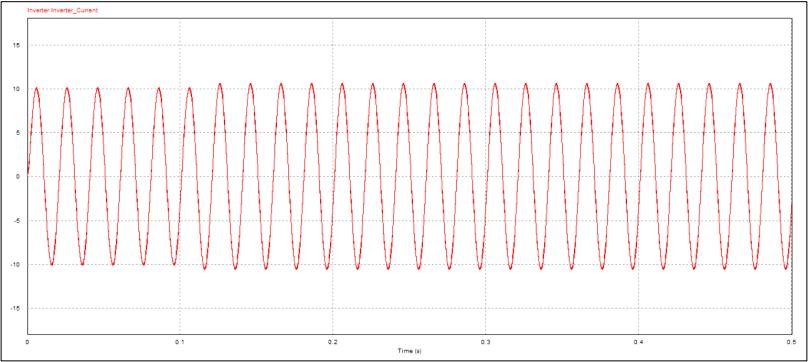
4 OutputcurrentofInverter.
Figure 4 shows the inverter's output current. The inverter'soutputcurrentisaround10amps.Thesuggested approach uses an inverter to change the two-energy system'sDCoutputpowerintoAC.Theinverterreceivesan additionofDCelectricityfromthesolarandwindsystems. Additionally,alimiterisattachedtotheinverter'sinputto restrict the input voltage's amplitude. The limiter has an upperlimitof110voltsandalowerlimitof1005volts.The inverter uses the sinusoidal pulse width modulation approachbecauseitprovidessuperiorharmonicreduction. Wehaveemployedthepulsewidthmodulationapproachin the inverter circuit. An IGBT bridge was employed as the switchingmechanism.
International Research Journal of Engineering and Technology (IRJET) e-ISSN: 2395-0056
Volume: 11 Issue: 02 | Feb 2024 www.irjet.net p-ISSN: 2395-0072
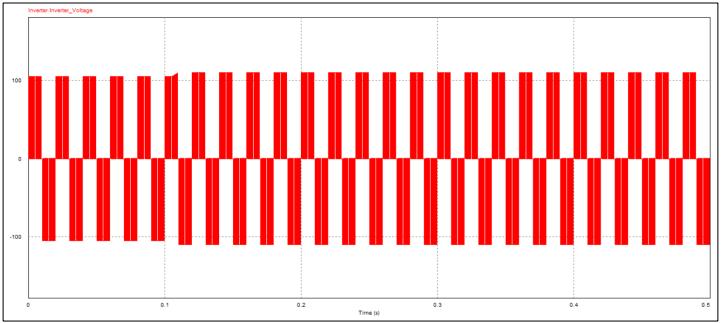
Fig. 5:OutputVoltageofInverter.
Fig. 5 shows the inverter's output voltage. The inverter producesanoutputvoltageof110volts.
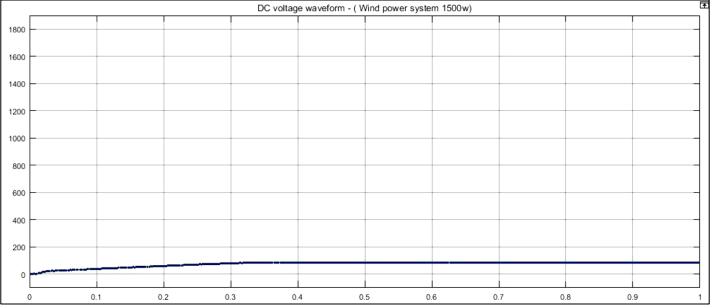
Fig 6:OutputVoltageoftheRectifier.
Fig.6showstherectifier'soutputvoltage.AnIGBTbridge withthreephasesandaPWMpulsegeneratoriscoupledvia therectifiercircuit.Additionallyattachedtotherectifieris anL-Cfilter.Therectifierhasamaximumvoltageofabout 80V.Thevoltageattheoutputisrectifying.
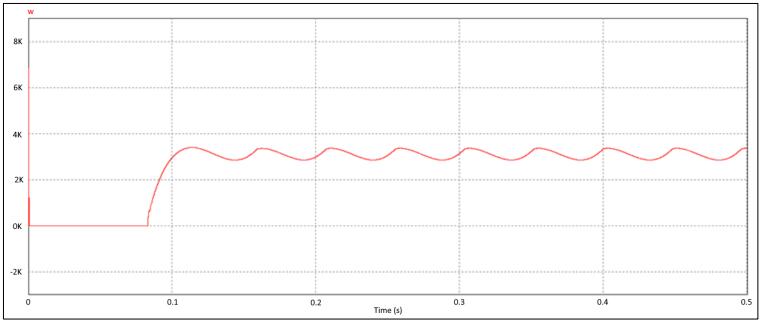
Fig 7 PowerOutputofWindTurbine
Thewindturbinesystem'soutputpowerisdisplayedinFig. 7. The wind turbine's output fluctuates in tandem with
variationsinwindspeed.Whenthewindspeedis12m/s, thewindturbine'soutputpowerrangesfrom4kWto3kW. Themaximumpitchangleforawindturbineis27degrees, andthemaximumpitchanglechangerateis10degreesper second.Thesampletimehasavalueof0.1seconds.
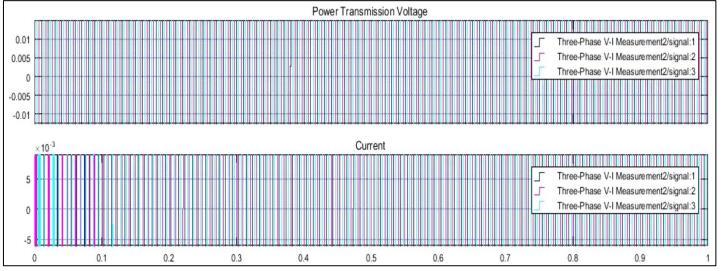
Fig 8 OutputVoltageoftheHybridSystem.
Fig.8showsthehybridsystem'soutputvoltage.
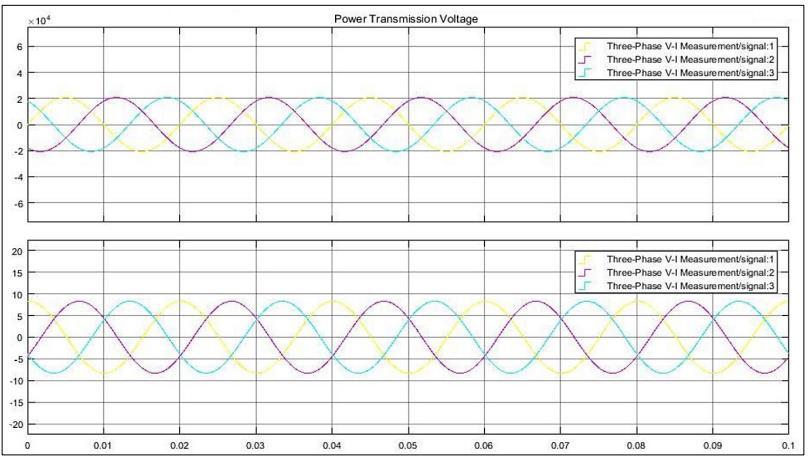
Fig 9 OutputoftheGrid-connectedThree-Phase Generator.
The output, or power transmission voltage, of the threephasegeneratorlinkedtothegridisdisplayedinFigure9.
ResearchPaperConclusions:DesignandApplicationofEV ChargingStationsRunningonWind-SolarHybridSystemsin India
Thestudyshowsthatcombiningwindandsolarelectricity for EV charging stations in India is both possible and economicallyviable.Byutilizingrenewableenergysources, such stations can help to dramatically reduce carbon emissionsandrelianceonfossilfuelsinthetransportation industry.
International Research Journal of Engineering and Technology (IRJET) e-ISSN: 2395-0056
Volume: 11 Issue: 02 | Feb 2024 www.irjet.net p-ISSN: 2395-0072
Optimal Siting and Design: The location and design of EV chargingstationsarecriticalforincreasingtheefficiencyof thewind-solarhybridsystem.Localweatherpatterns,sun insolationlevels,andwindspeedsshouldallbetakeninto account to guarantee that the stations work optimally. technologyIntegration:Tosuccessfullyintegratewindand solarelectricitywithEVcharginginfrastructure,innovative technologysolutionsarerequired.Thiscomprisessmartgrid technologies, energy management systems, and gridconnected inverters that regulate power flow and assure steadychargingoperations.
Grid connection and stability are important issues when deployingEVchargingstationsfueledbyrenewableenergy sources.Thestudyunderlinestheneedofgridintegration solutions, such as energy storage devices and demand responsemechanisms,inaddressingpossibleconcernswith intermittency and unpredictability in renewable energy output.
PolicyandRegulatoryFramework:Developingsupporting policyandregulatoryframeworksiscriticalforincreasing thegeneral useofEVchargingstationspoweredbywindsolarhybridsystems.Thisincludesincentivesforrenewable energy deployment, faster licensing processes, and grid access laws that make it easier to integrate with existing infrastructure. Environmental and social benefits: The installation of wind-solar hybrid EV charging stations has major environmental and socioeconomic implications. By loweringgreenhousegasemissionsandairpollution,these stationshelptoenhanceairqualityandpublichealth.They alsocreatenewjobsintherenewableenergysectorandhelp India shift to a low-carbon economy.Future Directions: Future research should prioritize improving the performance and scalability of wind-solar hybrid EV charging systems. This involves investigating innovative energy storage technologies, improving forecasting capacitiesforrenewableenergyoutput,anddeterminingthe long-term effects on system stability and resilience. Overall,thestudy'sfindingshighlightthepotentialforwindsolar hybrid systems to foster sustainable growth in the transportation sector and speed India's transition to a cleaner,moreresilientenergyfuture.
[1] M. El-Ashry, Renewables 2010 Global Status Report, (Paris:REN21Secretariat).CopyrightDeutsche(GTZ), GmbH,2010.
[2] Ziad Debbas, The Solar Tree, a Green Urban Lighting Experi,BuilditGreenLebanonExhibitionMonroeHotel, Beirut,2011.March28th,www.debbas.com
[3] P. Joshi, K. Roy, Implementation of hybrid wind–solar energy conversion systems, in: Proceedings of International Conference on Data Science and
Applications, Springer, 2021, pp. 221–240, https://doi.org/10.1007/978-981-15-7561-7_18
[4] Milisavljevic (https://en.wikipedia.org/wiki/Strawberry_Tree_(solar _energy_device.(Accessed19July2022).accessed.
[5] Ross Lovegrove’s solar tree (Available, https://www.artemide. com/en/subfamily/665440/solar-tree). (Accessed 19 July2022).accessed.
[6] P. Gangwar, N.M. Kumar, A.K. Singh, A. Jayakumar, M. Mathew, Solar photovoltaic tree and its end-oflife managementusingthermalandchemicaltreatmentsfor material recovery, Case Stud. Therm. Eng. 14 (2019), 100474,https://doi.org/10.1016/j.csite.2019.100474.
[7] K.Shanmukhi,K.N.JillellaRajeev,V.S.S.SivaPrasad,M. Kannam Naidu, Design and Analysis on Structure of a Solar Tree for 3 kW Capacity. Recent Advances in Material Sciences, Springer, Singapore, 2019, https://doi.org/10.1007/978-981- 13-7643-6_60 (Chapter60):747–757.
[8] I.Oluwafemi,T.Laseinde,A.OlalekanSalau,Designand constructionofa 0.5kWsolartreeforpoweringfarm settlements (september 10, 2019), Int. J. Mech. Eng. Technol. 10 (6) (2019) 19–33. https://ssrn.com/abstract=3451085.
[9] S. Dey, B. Pesala, Solar tree design framework for maximisedpowergenerationwithminimisedstructural cost, Renew. Energy 162 (2020) 1747–1762, https:// doi.org/10.1016/j.renene.2020.07.035.
[10] B.Raillani,D.Chaatouf,M.Salhi,A.Bria,S.Amraqui, A. Mezrhab, The effectiveness of the wind barrier in mitigating soiling of a ground-mounted photovoltaic panelatdifferentanglesandparticleinjectionheights, Results Eng. 16 (2022), 100774, https://doi.org/10.1016/J.RINENG.2022.100774.
[11] Khan,A.A.,Khan,S.U.,Ali,M.A.,Safi,A.,Gao,Y.,Luo, J.: Identifying impact of international trade and renewable energy consumption on environmental qualityimprovementandtheirroleinglobalwarming. Environ.Sci.Pollut.Res.29(23),33935–33944(2022) https://doi.org/10.1007/ S11356-022-185748/TABLES/7
[12] Chien,F.,Ngo,Q.T.,Hsu,C.C.,Chau,K.Y.,Mohsin,M.: Assessingthecapacityofrenewablepowerproduction forgreenenergysystem:Awayforwardtowardszero carbonelectrification.Environ.Sci.Pollut.Res.28(46), 65960–65973(2021)https://doi.org/10.1007/S11356021-15517-7/FIGURES/3
International Research Journal of Engineering and Technology (IRJET) e-ISSN: 2395-0056
Volume: 11 Issue: 02 | Feb 2024 www.irjet.net p-ISSN: 2395-0072
[13] Eldesoukey, A., Hassan, H.: 3D model of thermoelectric generator (TEG) case study: Effect of flowregimeontheTEGperformance.EnergyConvers. Manag. 180, 231–239 (2019) https://doi.org/10.1016/j.enconman.2018.10.104
[14] P.William,A.Chaturvedi,M.G.Yadav,S.Lakhanpal, N. Garg, A. Shrivastava, Artificial intelligence based models to support water quality prediction using machinelearningapproach,in:2023WorldConference on Communication & Computing, WCONF, RAIPUR, India, 2023, pp. 1–6, https://doi.org/10.1109/ WCONF58270.2023.10235121.
[15] P.William,S.Singh,Y.Kumar,A.K.Rao,A.K.Khan,D. Singh,Softwarereliabilityanalysiswithvariousmetrics usingensemblingmachinelearningapproach,in:2023 World Conference on Communication & Computing, WCONF, RAIPUR, India, 2023, pp. 1–6, https://doi.org/10.1109/WCONF58270.2023.10235066
[16] Deepak Narayan Paithankar, Abhijeet Rajendra Pabale, Rushikesh Vilas Kolhe, P. William, Prashant MadhukarYawalkar,Frameworkforimplementingair quality monitoring system using LPWA-based IoT technique, Measurement: Sensors 100709 (2023), https://doi.org/10.1016/j.measen.2023.100709. ISSN 2665-9174.
[17] H.P.Varade,S.C.Bhangale,S.R.Thorat,P.B.Khatkale, S.K. Sharma, P. William, Framework of air pollution assessment in smart cities using IoT with machine learning approach, in: 2023 2nd International Conference on Applied Artificial Intelligence and Computing,ICAAIC,Salem,India,2023,pp.1436–1441, https://doi.org/10.1109/ICAAIC56838.2023.10140834
[18] U.S.EnergyInformationAdministration,2019.EIA Projects that Renewables Will Provide Nearly Half of World Electricity by 2050 - Today in Energy - U.S. Energy Information Administration (EIA) [WWW Document]. eia. URL. https://www. eia.gov/todayinenergy/detail.php?id¼41533# (accessed9.23.20)
[19] A.F. Altun, M. Kilic, Economic feasibility analysis with the parametric dynamic simulation of a single effect solar absorption cooling system for various climaticregionsinTurkey,Renew.Energy152(2020) 75e93,https://doi.org/10.1016/j.renene.2020.01.055.
[20] ]V.V.Bakic,M.L.Pezo,S.M.Stojkovic,Technicaland economic analysis of gridconnected pv/wind energy stationsintherepublicofSerbiaundervaryingclimatic conditions, FME Trans 44 (2016) 71e82, https://doi.org/10.5937/fmet1601071B
[21] Malek Kamal Hussien Rabaia a , Mohammad Ali Abdelkareem,EnasTaha Sayed b,c , KhaledElsaidd , Kyu-Jung Chae e, Tabbi Wilberforce f , A.G. Olabi , Environmental impacts of solar energy systems: A review , Elsevier Journal (Science of the Total Environment)2021.
[22] SajjadZereshkian,DariushMansoury, Solar-wind hybridenergysystemtosupplyelectricityforoffshore oilandgasplatformsintheCaspianSea:Acasestudy, TheJournalofEngineering2023.
[23] Perry Sadorsky , Wind energy for sustainable development: Driving factors and future outlook , ElsevierJournal(JournalofCleanerProduction)2021.
[24] Iman Rahimi,Mohammad Reza Nikoo ,Amir H. Gandomi , Techno-economic analysis for using hybrid windandsolarenergiesin Australia , ElsevierJournal (EnergyStrategyReviews)2023.
[25] Pradosh Kumar Sharma a , D. Arul Kumar b , P. Williamc,*,D.Obulesud,P.MuthuPandiane,Tasneem K.H.Khanf,G.Manikandang, Energystoragesystem based on hybrid wind and photovoltaic technologies, MDPI(Measurement:Sensors)2023.
[26] Zeyu Dinga ,Hongjuan Houa, Gang Yua ,Eric Hub ,Liqiang Duana ,Jin Zhaoc, Performance analysis of a wind-solarhybrid powergeneration system, Elsevier Journal(EnergyConversionandManagement)2019.
[27] Ayse Fidan Altun, Muhsin Kilic , Design and performance evaluation based on economics and environmental impactofaPV-wind-dieselandbattery standalonepowersystemforvariousclimatesinTurkey ,ElsevierJournal(RenewableEnergy)2020.
[28] Ahmed M. Osman a , FahadAlsokhiry a,b, Control designandperformanceevaluationofagridconnected PV–windpowersystem:AcasestudyofDongola,Sudan, ElsevierJournal(EnergyReports)2022.
[29] WallaaldinAbassEltayeba,JarupulaSomlala,Sonu Kumara,b,S.KoteswaraRaoa,b,Designandanalysisof a solar-wind hybrid renewable energy tree , Elsevier Journal(ResultsinEngineering)2023.
[30] Mahtab Murshed *, Manohar Chamana , Konrad ErichKorkSchmitt,RabindraBhatta OlatunjiAdeyanju andStephenBayne,DesignandPerformanceAnalysisof a Grid-Connected Distributed Wind Turbine , MDPI (MolecularDiversityPreservationInternational)2023.