
International Research Journal of Engineering and Technology (IRJET) e-ISSN: 2395-0056
Volume: 11 Issue: 02 | Feb 2024 www.irjet.net p-ISSN: 2395-0072
International Research Journal of Engineering and Technology (IRJET) e-ISSN: 2395-0056
Volume: 11 Issue: 02 | Feb 2024 www.irjet.net p-ISSN: 2395-0072
Anushree Jain1, Shanu Kuttan Rakesh2
1,2Department of Computer Science and Engineering, Chouksey Engineering College, Lal Khadan, Masturi Road, NH-49, Bilaspur, Chhattisgarh, India.
Abstract - Healthcare has undergone revolutionary transformation as a result of the development of artificial intelligence (AI) and the internet of things (IoT). This narrativestudyexaminestheapplicationsandconsequences of generative adversarial networks (GANs) and machine learning (ML) in healthcare. Statistical models exhibit encouraging outcomes in machine learning applications, which span from predictive diagnosis to optimizing hospital workflows. Meanwhile, through data collection and processing, the Healthcare Internet of Things (H-IoT) has become a key player, transforming patient care. Additionally, this research explores the use of transformers and diffusion models two forms of generative AI in the medical field. These models have had a major impact on data reconstruction, drug synthesis, and diagnostic accuracy, ranging from improving medical imaging to protein structure prediction and medication design. The examinationaddresses relatedissues liketrust, truthfulness, and privacy in addition to gathering the most recent applications. Future directions are examined, emphasizing the possibility of conversational interfaces powered by AI and the developing application of generative AI in healthcare. The expanding significance of AI, IoT, and generative technologies in healthcare is highlighted in the paper's conclusion. These technologies have the potential to significantly influence how healthcare is delivered in the futureaslongastheydevelopandmeettheparticularneeds ofthemedicalfield.
Key Words: Patient Care, Artificial Intelligence (AI), Healthcare, Machine Learning (ML), Generative AdversarialNetworks(GANs),InternetofThings(IoT)
The integration of artificial intelligence (AI) in healthcare is far from a recent development. Dating back to the 1970s, the initial applications of AI were employed to address biomedical challenges. Since then, AI-powered applications have undergone significant expansion and adaptation, revolutionizing the healthcare sector. This transformationhasledtocostreduction,enhancedpatient outcomes, and overall improvements in operational efficiency. Prior to delving into the progression of AI in healthcare, it's helpful to grasp the fundamentals of how
artificial intelligence operates. In essence, AI refers to computer models and programs designed to replicate human-level intelligence, engaging in cognitive functions such as intricate problem-solving and gathering experiences.
The bulk of AI tools on the market are classified as "Narrow AI," which denotes that the technology is superior to humans in certain, well-defined task areas. Machine learning techniques, which enable computers to learn, carry out tasks, and modify their performance without requiring direct human intervention, are used in many of these artificial intelligence applications. In 1955, the phrase "artificial intelligence" was first used in a proposalforaconferenceatDartmouthCollege.However, it wasn't until the early 1970s that artificial intelligence (AI) applications made their way into the healthcare industry with the creation of MYCIN, a program meant to helpwithbloodinfectiontreatmentidentification.
The momentum of AI research continued, leading to the formation of the American Association for Artificial Intelligence in 1979, which is now known as the Association for the Advancement of Artificial Intelligence (AAAI). During the 1980s and 1990s, the evolution of AI systems contributed to significant medical advancements. This included improvements such as accelerated data collection and processing, assistance in more precise surgical procedures, extensive research and mapping in the field of database administration (DBA), and the widespread implementation of electronic health records formorecomprehensivehealthcaremanagement.
Machine learning represents a distinct subset of artificial intelligence,enablingsystemstolearnanddiscernpatterns from data with minimal human intervention. Rather than being explicitly instructed on what actions to take, computersemployingmachinelearningarepresentedwith patternsand data. Subsequently, they autonomously draw conclusions and enhance their performance based on the information provided. This approach contrasts with traditional programming where computers are explicitly programmedwithspecificinstructions.
International Research Journal of Engineering and Technology (IRJET) e-ISSN: 2395-0056
Volume: 11 Issue: 02 | Feb 2024 www.irjet.net p-ISSN: 2395-0072
With so many potential uses, machine learning in healthcare is a rapidly developing field of study within precision medicine. The function of machine learning in healthcare is growing more and more important for medicalpractitioners
and health systems as patient data becomes more widely available. With the use of this technology, medical information may be interpreted in meaningful ways, leading to more accurate diagnosis, more individualized careplans,andbetteroverallhealthoutcomes.
Leveraging machine learning in healthcare, such as employing machine learning algorithms, facilitates the discovery of patterns and insights in medical data that wouldbechallengingorimpossibletoidentifymanually.As the adoption of machine learning in healthcare becomes moreprevalent,healthcareprovidersstandtobenefitfrom ashifttowardapredictiveapproachinprecisionmedicine. This transition enables the creation of a more cohesive system, enhancing care delivery, improving patient outcomes, and streamlining patient-centric processes for greater efficiency. The integration of machine learning contributes to a more informed and proactive healthcare approach, ultimately leading to advancements in personalizedandprecisemedicaltreatments.
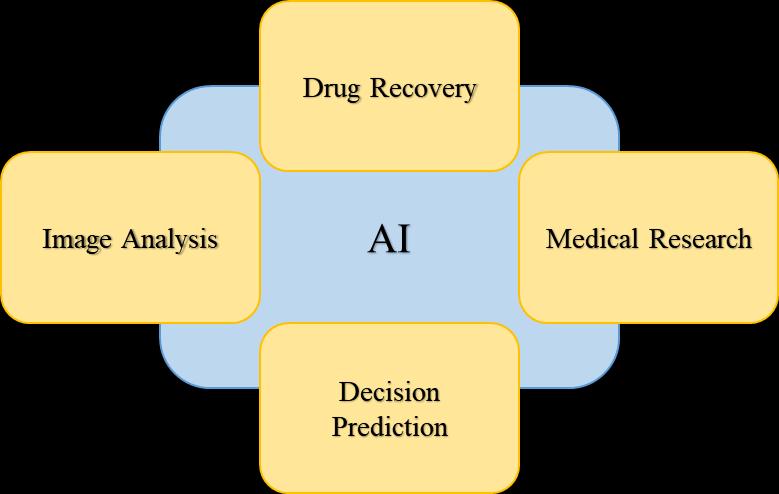
Machine Learning (ML) offers methodologies, techniques, andtoolsthatprovevaluableinaddressingdiagnosticand prognostic challenges across various medical domains[1]. Its application extends to analyzing the significance of clinical parameters and their combinations for prognosis, including predicting disease progression, extracting medicalknowledgeforoutcomeresearch,aidingintherapy planning, and supporting overall patient management. ML is instrumental in data analysis, encompassing tasks such as identifying regularities in data by handling imperfect data, interpreting continuous data from Intensive Care Units, and implementing intelligent alarming systems for effectiveandefficientmonitoring.
ThesuccessfulimplementationofMLmethodsisarguedto foster the integration of computer-based systems into healthcare environments, presenting opportunities to facilitate and enhance the work of medical experts. Ultimately, thiscanlead to improvementsin the efficiency and quality of medical care. The following section summarizessomekeyapplicationsofMLinmedicine.
This paper [2] offers an overview of the evolution of intelligent data analysis in the field of medicine, particularlyfromamachinelearningperspective.Itcovers three main aspects: a historical view, a state-of-the-art perspective, and glimpses into future trends within this specific domain of applied artificial intelligence. The intention of the paper is not to present a comprehensive survey but to highlight certain subareas and directions that,fromtheauthor'sstandpoint,holdsignificanceforthe application of machine learning in medical diagnosis. The historical overview focuses on key elements such as the naive Bayesian classifier, neural networks, and decision trees. Moving to the current state of the field, the paper provides a comparative analysis of state-of-the-art systems, each representative of different branches of machinelearning,asappliedtovariousmedical diagnostic tasks. This comparison serves to showcase the diversity and effectiveness of machine learning approaches in addressingmedicalchallenges.
Looking forward, the paper discusses future trends throughtwocasestudies.Thefirstcasestudyintroducesa recently developed method designed to address the reliabilityofdecisionsmadebyclassifiers,offeringpromise for intelligent data analysis in the medical domain. The second case study explores an approach using machine learning to investigate unexplained phenomena within complementarymedicine,which,althoughnotyetaccepted by the mainstream medical community, could potentially play a significant role in future medical diagnosis and treatment.
The use of Artificial Intelligence (A.I.) technologies in healthcare has become a crucial topic, given their diverse applications[3]. A.I., especially through techniques like machinelearning,hasgainedprominenceinenhancingthe quality of the doctor-patient relationship. Despite the efficiencies it brings to doctors, patients, and researchers, there remains a prevailing discussion about a limitation –the notion that A.I. won't completely replace human involvement in healthcare in the near future. This paper delves into the discourse surrounding A.I. in healthcare, providing insights into the various forms of A.I. utilized in the medical field and the roles each plays. It outlines the potential and positive impacts of A.I. in healthcare, supported by data showcasing improvements. However, it also addresses the drawbacks and limitations, underscoring that despite the numerous enhancements facilitated by A.I., there are still challenges preventing its
International Research Journal of Engineering and Technology (IRJET) e-ISSN: 2395-0056
Volume: 11 Issue: 02 | Feb 2024 www.irjet.net p-ISSN: 2395-0072
full integration into the healthcare sector. The discussion within the paper thus traces the evolving landscape of A.I. in healthcare, recognizing both its achievements and the barriersthatnecessitatefurtherconsideration.
Several technologies play a pivotal role in mitigating costs associated with preventing or managing chronic illnesses. These encompass devices for continuous health monitoring, automated therapy administration, and realtime tracking of health data during self-administered therapies[4]. With growing access to high-speed Internet and smartphones, many patients are turning to mobile applications (apps) to address diverse health needs. Notably, these devices and apps are progressively intertwined with telemedicine and telehealth through the medicalInternetofThings(mIoT).Thispaperundertakesa review of the medical Internet of Things (mIoT) and big data within the healthcare domain. The focus is on exploring the integration of devices and apps, enabled by mIoT, to enhance healthcare delivery. Additionally, the paper delves into the role of big data in healthcare, highlighting its significance in handling and deriving insightsfromthevastamountsofinformationgeneratedby these interconnected devices and applications. The combined impact of mIoT and big data in healthcare is likely to shape the futurelandscape of medical technology andpatientcare.
The application of machine learning to electronic health records (EHRs) holds the potential to generate valuable and actionable insights in various aspects of healthcare. This includes enhancing patient risk score systems, predicting the onset of diseases, and optimizing hospital operations. Whilestatistical modelsleveraging the diverse and detailed data within EHRs are still relatively uncommon, they present an exciting avenue for further research.[5] This paper provides an overview of the current landscape of machine learning applications in clinicalsettings,highlightingtheadvantagesitbringswhen compared to traditional analysis methods. The richness of dataderivedfromEHRsallowsformoresophisticatedand nuanced modeling, enabling better-informed decisionmaking in healthcare. The paper also addresses the methodologicalandoperationalchallengesassociatedwith implementing machine learning in both research and practical healthcare settings. By acknowledging these challenges, the paper aims to contribute to a more comprehensiveunderstandingofthecomplexitiesinvolved inleveragingmachinelearningwithEHRs.
Furthermore, the paper offers a forward-looking perspective on potential future application areas for machine learning in healthcare. Anticipating significant impacts on health and healthcare delivery, the authors discuss the evolving role of machine learning in shaping thefutureofmedicalresearchandpractice.
In recent years, there has been a widespread adoption of machinelearning (ML)and deep learning (DL) techniques in various healthcare applications. These applications range from predicting cardiac arrest based on onedimensional heart signals to assisting in computer-aided diagnosis (CADx) using multi-dimensional medical images[6]. Despite the notable performance of ML/DL, concerns persist about their robustness in healthcare settings,whichareinherentlychallengingduetonumerous securityandprivacyissues.Recentfindingshaveindicated vulnerabilities of ML/DL models to adversarial attacks, raising questions about their reliability in healthcare applications. This paper offers an overview of diverse healthcareapplicationareasthatutilizeML/DLtechniques, withaspecificfocusontheassociatedsecurityandprivacy considerationsand challenges. It addresses the skepticism surrounding the robustness of ML/DL in healthcare, given the sensitivity of medical data and the critical nature of healthcare decisions. Potential solutions to guarantee the security and privacy of machine learning in healthcare applications are also covered in the study. Understanding how important it is to protect private health data, the authorsinvestigatemethodstomakeML/DLmodelsmore resistant to hostile attacks. Lastly, the study clarifies the state of the field and suggests interesting avenues for further investigation into the convergence of machine learning,security,andhealthcare.Theauthorshopethatby exploring these facets, they can add to the current conversationaboutthesafeandappropriateapplicationof ML/DLtechnologyinhealthcaresettings.
TheInternetofThings(IoT)isplayingapivotalroleinthe automation of the healthcare sector, specifically through the branch known as Healthcare Internet of Things (HIoT)[7].CentraltoallH-IoTapplicationsaredatagathering andprocessing.Giventhesubstantialvolumeofhealthcare dataandthesignificantvalueaccuratepredictionshold,the integrationofmachinelearning(ML)algorithmsintoH-IoT becomesessential.Thispaperservesasbothacompilation anda reviewofthestate-of-the-artapplicationswhereML algorithms are currently integrated with H-IoT. The paper introduces some of the widely used ML algorithms and analyzes their integration into various H-IoT applications, considering factors such as advantages, scope, and potential improvements. These applications are categorized into domains including diagnosis, prognosis and spread control, assistive systems, monitoring, and logistics. In healthcare, the practical use of a model necessitates high accuracy and robust security measures. The discussed applications of ML algorithms in H-IoT provide experimental evidence of accuracy and practical usability.However,thepaperalsooutlinesconstraintsand drawbacks associated with each application, providing a comprehensive overview of the current landscape where MLandH-IoTintersect.
International Research Journal of Engineering and Technology (IRJET) e-ISSN: 2395-0056
Volume: 11 Issue: 02 | Feb 2024 www.irjet.net p-ISSN: 2395-0072
Generative AI, encompassing algorithms and models like OpenAI's ChatGPT, possesses the capability to produce diversetypesofcontentwhenprompted[8].Thisnarrative reviewfocusesonrepresentativeexamplesofgenerativeAI applications within the field of medicine and healthcare. The review also touches upon associated issues, including concernsrelatedtotrust,veracity,clinicalsafety,reliability, privacy, copyrights, ownership, and explores potential opportunities such as the development of AI-driven conversational user interfaces for more amicable humancomputer interactions. The narrative concludes by emphasizing the growing significance of generative AI in therealmofmedicineandhealthcare.Itanticipatesthatas generative AI continues to evolve and becomes more tailored to the specific needs and settings of the medical domain,andaslegalandregulatoryframeworksgoverning its use take shape, its role in these fields will become increasinglyprominent.
Particularlyinthehealthcareindustry,thedevelopmentof artificial intelligence (AI) has brought about revolutionary advances. The application of generative AI models, with a focusondiffusionandtransformermodelsinparticular,is onenoteworthydevelopment[9].Medicalimaging,protein structure prediction, clinical documentation, diagnostic support,radiologyinterpretation,clinicaldecisionsupport, medical coding, billing, drug design, and molecular representation are just a few of the data types that these models have been crucial in analyzing within the healthcare industry. Reconstruction of data, chemical synthesis,andclinicaldiagnosticshaveallgreatlybenefited from the uses of generative AI. With an emphasis on transformers and diffusion models, this review article offersathoroughoverviewofgenerativeAIapplicationsin the healthcare industry. It provides insights into the influenceofthesemodelsonhealthcareandcoversa wide rangeoffieldswheretheyhaveprovencrucial.
Inaddition,thepapersuggestspossibleavenuesforfuture research to overcome current constraints and meet the changing demands of the healthcare industry. This review is a useful resource for researchers and practitioners who are interested in using generative AI in healthcare. It presents the state of the art, problems encountered, and opportunities for future advancements in this rapidly evolvingfield.
Thispaperdiscussestheintegrationofmachinelearningin healthcare, highlighting its widespread adoption. Below is thetablesummarizingcoststatisticsduetoML
Table -1: Cost
The second section of this paper focuses on generative AI applications in healthcare, particularly transformers and diffusion models. Below is the table that explains the impactofGenAIonhealthcare
Table -2: Impact of Gen AI on healthcare domain
The adoption of large language models (LLMs) like ChatGPT is gaining momentum in real-world applications, particularly within the healthcare sector. While many companies are still in the exploratory phase, some have progressed to practical implementations. Microsoft, for instance, has introduced the Dragon Ambient experience (DAX) Express, an AI-powered clinical notes app designed for healthcare professionals. Additionally, EPIC is integrating its Electronic Health Records (EHR) with GPT4, aiming to assist healthcare workers in drafting responsestopatientqueriesandanalyzingmedicalrecords fortrends.
International Research Journal of Engineering and Technology (IRJET) e-ISSN: 2395-0056
Volume: 11 Issue: 02 | Feb 2024 www.irjet.net p-ISSN: 2395-0072
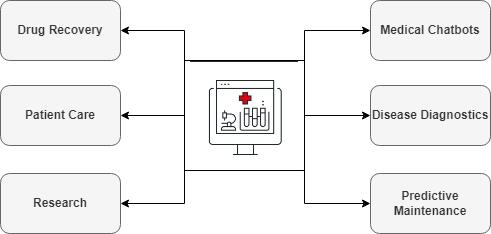
-2: Function of Gen AI
Thistrendisexpectedtoburgeon,especiallyinnon-clinical domains like note-taking and document creation, where the impact on patient health is indirect. Healthcare organizationsarelikelytoleveragethecapabilitiesofLLMs to enhance operational efficiency and streamline administrative tasks. However, for applications directly influencingpatienthealth,suchasclinicaldecisionsupport, companies will need to navigate regulatory pathways, obtaining FDA approval for Generative AI (GenAI) to be recognized as a medical device before widespread commercial adoption can occur. The intersection of advanced language models and healthcare holds promise for revolutionizing various aspects of the industry, balancing innovation with regulatory compliance and patientsafety.[10]
5. CONCLUSION
The integration of Machine Learning (ML) and Generative Artificial Intelligence (Gen AI) in healthcare presents a myriad of advantages. ML algorithms contribute to enhanced diagnostics, leveraging vast datasets to identify intricate patterns and trends, ultimately improving diagnosticaccuracyandfacilitatingpersonalizedtreatment plans tailored to individual health profiles. Furthermore, MLstreamlineshealthcareoperations,optimizingresource allocation and patient scheduling. Gen AI, particularly in theformofgenerativeadversarialnetworks(GANs),aidsin
personalizedmedicinebysimulatingrealisticmedicaldata for training models. It also accelerates drug discovery by predicting candidates and generating novel molecular structures. In the realm of diagnostics, ML enhances medicalimaginginterpretation,whileGenAIcontributesto image generation and reconstruction, improving visualization. Additionally, ML-driven conversational interfaces offer personalized patient engagement and support, contributing to a holistic healthcare experience. These advancements not only streamline processes but also fuel research and innovation, automating literature reviews, identifying research areas, and providing sophisticatedtoolsfordataanalysis.Despitethesebenefits, ethical considerations, data privacy, and security challenges must be addressed to ensure the responsible deployment of ML and Gen AI in healthcare. Striking a balance between innovation and safeguarding patient welfare is crucial to fully realize the potential of these technologiesintransforminghealthcaredelivery.
[1] Magoulas,G.D.andPrentza,A.,1999.Machinelearning in medical applications. InAdvanced course on artificialintelligence(pp.300-307).Berlin,Heidelberg: Springer Berlin Heidelberg.M. Young, The Technical Writer’sHandbook.MillValley,CA:UniversityScience, 1989.
[2] Kononenko, I., 2001. Machine learning for medical diagnosis: history, state of the art and perspective.Artificial Intelligence in medicine,23(1), pp.89-109.
[3] Jain, C., 2001. Application of artificial intelligence in healthcare: chances and challenges.Science,291(5504),pp.599-600.
[4] Dimitrov,D.V.,2016.Medicalinternetofthingsandbig data in healthcare.Healthcare informatics research,22(3),pp.156-163
[5] Callahan, A. and Shah, N.H., 2017. Machine learning in healthcare.InKeyadvancesinclinical informatics(pp. 279-291).AcademicPress.
[6] Qayyum,A., Qadir, J., Bilal,M.andAl-Fuqaha,A.,2020. Secure and robust machine learning for healthcare: A survey.IEEE Reviews in Biomedical Engineering,14, pp.156-180.
[7] Bharadwaj, H.K., Agarwal, A., Chamola, V., Lakkaniga, N.R., Hassija, V., Guizani, M. and Sikdar, B., 2021. A reviewontheroleofmachinelearninginenablingIoT based healthcare applications.IEEE Access,9, pp.38859-38890.
International Research Journal of Engineering and Technology (IRJET) e-ISSN: 2395-0056
Volume: 11 Issue: 02 | Feb 2024 www.irjet.net p-ISSN: 2395-0072
[8] Zhang,P.andKamel Boulos,M.N.,2023.GenerativeAI in medicine and healthcare: Promises, opportunities andchallenges.FutureInternet,15(9),p.286.
[9] Shokrollahi,Y.,Yarmohammadtoosky,S.,Nikahd,M.M., Dong, P., Li, X. and Gu, L., 2023. A comprehensive review of generative AI in healthcare.arXiv preprint arXiv:2310.00795.
[10] https://medium.com/coinmonks/generative-ai-inhealthcare-an-overview-of-use-cases-1ee60bd2f695
© 2024, IRJET | Impact Factor value: 8.226 | ISO 9001:2008 Certified
|