
International Research Journal of Engineering and Technology (IRJET) e-ISSN: 2395-0056
Volume: 11 Issue: 02 | Feb 2024 www.irjet.net p-ISSN: 2395-0072
“
International Research Journal of Engineering and Technology (IRJET) e-ISSN: 2395-0056
Volume: 11 Issue: 02 | Feb 2024 www.irjet.net p-ISSN: 2395-0072
“
S. M. Tandale1 , A. S. Sajane2 , S. K. Patil 3 .
1 PG Student,Civil department, Dr. J. J. Magdum College of Engineering, Jaysingpur,Sangli,Maharashtra,India
2 Associate Professor,Civil department, Dr. J. J. Magdum College of Engineering, Jaysingpur,Sangli,Maharashtra,India ***
Abstract – Effective risk management in construction projects is crucial for achieving project objectives related to time, cost, quality, and scope. This project focuses on identifying and analyzing risks accompanying with infrastructure ventures, utilizing a inclusive assessment of contract conditions to categorize these risks. Through quantitativeriskanalysis,itbecomesevidentthatfactorssuch as "opposition from social bodies," "change in design," and "suspension of work" exert the most significant influence on project objectives. Furthermore, this research identifies best practices for mitigating these critical risks. It emphasizes the need for collaboration among clients, contractors, designers, and government organizations from the project's possibility phase forward to proactively address impending risks. Contract documents play a pivotal role as tools for risk management, including contractors, clients, and investors, should begin a risk management policy that spans the entire project life cycle. Ultimately, this approach ensures a more robust and successful execution of construction projects.
The study of various risks and their management is becoming pre-requisite for many construction projects and can significantly beneficial most all parties. The construction activity involves a number of agencies like owner, consultant and contractor may have conflicting interests. In order to establish the duties, obligations, rights, responsibilities amongst the agencies, a contract is required to be made betweenthemwhichwillestablishamutualrelationshiptodo a work. The contracts may be used as a risk managing tool by allocating risks to the various agencies through the various contractsbetweenthemandclient,contractorsandinvestors. Thequalitativeriskanalysis isusedforanalysiswhichhelpsto predict severity of risks. Risk management includes identification of risks in contract documents, risk classification, risk analysis and then risk control. It has been found that severities of important risks have been calculated considering the suitable control measures from client and contractorspointofview.Thefindingsofstudymaybeusedas referencetosimilar constructionprojectsinIndiai.e. for local clients, contractors, investors and also for government.
Managing risks in construction projects has been recognized as a very important management process in order to achieve the project objectives in terms of time, cost, quality and scope. In this identification and analysis of risks associated with the infrastructureprojects.Based onacomprehensiveassessment of conditions of contracts, this paper identifies risks and classifies them into different categories.
Key Words: Risk, risk management, construction projects,contract,qualitativeriskanalysis.
Building projects are inherently unique & resist standardization due to their complex and dynamic nature. These endeavours are shaped by various environmental factors such as weather conditions, geographical location, transportation accessibility, and labour availability, which often lie beyond the contractor's control. Furthermore, the entities involved in construction projects can differ significantly,includingvariousagencies,ownerswithdiverse requirements,distinctsiteconditions,andfluctuatingmarket conditions. Consequently, the construction industry is characterizedbyvolatility,markedbycyclicalandseasonal ups & downs. Therefore, each building project demands meticuloushandlingandattentionduetotheever-evolving landscape of the erection sector. In the realm of erection, multiple stakeholders play crucial roles, with differing interestsandobjectives.Theprimaryplayerstypicallyinclude the client, an architect/engineer, and the contractor, each harboringsomewhatconflictinginterests.Theclientdesires thesuccessfulcompletionoftheprojectwhileensuringtheir specific requirements are met, all while minimizing costs, hassles,andresponsibilities.Incontrast,thecontractoraims tomaximizeprofitswhileminimizingoperationalchallenges. This inherent tension among stakeholders necessitates the establishment of clear duties, obligations, rights, and responsibilitiesthroughaformalizedcontract.Contractsserve as the cornerstone of the construction industry, with the majority of civil engineering work conducted under contractual agreements. These contracts serve as "self-
International Research Journal of Engineering and Technology (IRJET) e-ISSN: 2395-0056
Volume: 11 Issue: 02 | Feb 2024 www.irjet.net p-ISSN: 2395-0072
contained statements of obligations" between the involved parties, outlining the terms and conditions governing their collaboration. Contracts are pivotal to the success of constructionprojects,astheymitigatepotentialdisputesand provide a structured framework for project execution. Without contracts, resolving conflicts and ensuring compliance with agreed-upon terms could be a complex, costly,andprotractedprocess.Acontract,initsessence,isa legally binding document through which individuals or entities commit to performing work under specified conditions. It emerges from the convergence of mutual intentions,aspartiescommunicatetheirsharedobjectivesto createbindingobligations.However,notallagreementshold the same legal weight. The Indian Contract Act of 1872, in Section 10, stipulates that only those agreements are enforceablebylawthatmeetspecificcriteria:theymustbe formed with the free consent of competent parties, entail lawful considerations and objects, and not be expressly declaredvoidbylaw.Centraltotheformationofacontractis theconceptofofferandacceptance.Partiesmustengageina dialoguethatleadstoameetingofminds,andthisagreement must pertain to actions and outcomes that are legally permissible. When these elements align and the agreement meetsthelegalcriteria,ittransformsfromamereagreement intoalegallybindingcontract.
Stepsare-
1.PreparingProposal
2.Communicationoftheproposal
3.ACommunicationofacceptanceofproposal
The Indian Contract Act of 1872 states that an agreementisacontractifitiscreatedwiththefreeassent ofpartieswhoarelegallyabletoenterintocontracts,has legal considerations and a legal purpose, and is not explicitlyandunambiguouslydeclaredtobevoid.Arisk tooneindividualmaypresentanopportunitytoanother. Thisisentirelydependentontheperspectivefromwhich theprojectisbeingevaluated.
1.Arangeofprobableoutcomes
2.Individualsignificances
3.Probability
2. DEFINITIONS
According to "D van Well- Stam," To retain control over a project, risk management can be summed up as "theentiresetofactivitiesandmeasuresthatareaimedat dealingwithrisks."
AccordingtothedefinitionprovidedbyL.Y.Shen,"Thegoal of risk management is to discover and measure all the
dangersthatacompanyorprojectfaces,sothatacalculated choicemaybetakenabouthowtodealwiththem."
Riskmanagementaidsprojectcontrolintime,cost, quality,scope,andorganization.
Usingriskmanagementcan:
1.Encourageprojectactivitytomoveforward
2.Encouragesfaithintheproject
3.Encouragecommunicationwithintheproject;
4.Assistinprojectdecision-making
The following are some of the reasons why risk managementistypicallynotusedoneveryproject:
1. Most project participants are unfamiliar with risk management.
2 Somepeoplebelievethatriskanalysiscanbeusedto evaluateanindividual'sperformance.
3. Costsareassociatedwithriskmanagementandtheuse ofcontrolmeasures.
4.Businessesandorganizationsoftensaytheylacktimeor resourcesforriskmanagement.
To identify, analyse and mitigate various risks in the projectfromcontractdocuments.
Themainobjectivesofstudyare
1.Toidentifyandclassifythetypesofconstructionproject risksinagivensetofcontractdocuments
2.Tostudydifferentmethodsavailableforevaluatingrisks
3. To evaluate risk by Relative important index (RII) method,bytakingsuitablecasestudy
4.ComparativestudyoftheRelativeimportantindex(RII) method of risk evaluation with other method of evaluationi.e.Expectedmonetaryvalueriskanalysis
1. Risks in construction project such as time, cost and qualityareminimized.
International Research Journal of Engineering and Technology (IRJET) e-ISSN: 2395-0056
Volume: 11 Issue: 02 | Feb 2024 www.irjet.net p-ISSN: 2395-0072
2.Contractclaritybetweentheownerandcontractor.
3.Futureforecasting.
4.Nodebatesbetweenownerandcontractorregarding theprojectfinances.
Riskmanagementintheconstructionindustryisacritical processforachievingprojectobjectivesintermsoftime, cost, quality, and scope. Various researchers have exploredthenuancesofriskmanagementinconstruction projects,highlightingitsimportanceandsheddinglight onpractical approachesand challenges.Thissummary providesanoverviewoftheirfindings.
7.1 Borysowich (2008): Itisnotpossibletoidentifyor quantifyriskinthismannerbecause,asmostorganizations areaware,dangersdonotmanifestinalinearfashion.The true difficulty lies in evaluating and comprehending the interplaybetweenrisksandthelinkedimpactstheyentail.A distinct set of instruments is necessary to deal with these intricateconnections.Anorganizationcanstarttocreatea goodmapoftheirrisklandscapebyusingtoolsthatsimulate various risk scenarios and how those risks are interdependent. To choose the right combination of risk retention and risk remedies, the study set out to comprehend the cumulative effect of risks on value and performance.
7.2 Irem Dikmen et.al. (2013): Instead of being comprehensivesystemsthatcanbackupriskmanagement, risk management paradigms are more like approaches. Whiletheremainingstepsaretypicallyexecutedoutsideof theprogram,thecurrentriskmanagementsupporttoolsare typicallybuiltaroundquantitativeriskanalysis.Asdecision support systems, risk registers and assessment tools are suggested for usage at certain points in a construction project for particular goals, such as estimating time and costsduringthebiddingprocessorevaluatingtheriskofa countryduringtheselectionofoverseasmarkets.Ontopof that, the suggested risk management methods seldom address subjectivity, fail to take into account the effect of risks on all project success metrics, and fail to promote collaboration among all parties involved in the building supplychainwhenitcomestoriskmanagement.Developing a risk management corporate memory and a decision supporttoolfor effective risk managementisthe primary goal of this article, which also aims to critically examine currentriskmanagementsupporttools.
7.3 Alfredo Federico et.al. (2014): Project risk managementisanimportantpartofaprojectmanager'sjob. Butwithoutproperriskmanagementfromthestartofthe project, this task becomes even more complicated and inefficient.Properandmethodicaltechnique,togetherwith, mostsignificantly,knowledgeandexperience,arenecessary foranefficientandeffectiveriskmanagementapproach.
7.4 Franck Taillandier et.al. (2014): The ability to effectively manage risks is crucial to a project's success. However,suchamanagementisdifficulttoachievedueto the diversity and dynamic nature of hazards. There is no one-size-fits-all solution to project risk because each participantbringstheirownsetofcircumstances,viewpoint, andexpertisetothetable.Weofferanagent-based model called SMACC in this post to help you assess the possible consequences of project risks. The model allows for the assessment of different risk reduction strategies and how theyimpacttheproject.
7.5 Amita Pawar et.al. (2017): Therearediscrepancies and gaps in the understanding and management of constructionandprojectrisk.Inthisarticle,welookathow theconstructionindustryviewstherisksinvolvedintheir work and how often they employ risk analysis and management strategies. Our data comes from a survey of Pune-based general contractors and project management firms.Findingsindicatethatriskmanagementplaysacrucial role in construction operations for reducing losses and increasingprofits.Mostpeoplethinkofconstructionriskas anythingthatcouldderailtheproject'sbudget,schedule,or qualitygoals.Managementandanalysisofconstructionsite risksrelyheavilyongutfeelings,bestjudgement,andyears of expertise. Because of misconceptions about their applicabilityandagenerallackofunderstanding,formalrisk analysisandmanagementapproachesareunderutilizedin theconstructionsector.
Risk is the likelihood that an event will occur differently than expected with potential for positive or negativeconsequence.
Risk is where the outcome of an event, or each set of possible outcomes, can bepredictedonthebasis ofstatisticalprobability.
Anadditional definition ofrisk isaneventthat mayor maynothappenandcouldresultin:
1.Higherprices
2.Increasingtheproject'sscope
International Research Journal of Engineering and Technology (IRJET) e-ISSN: 2395-0056
Volume: 11 Issue: 02 | Feb 2024 www.irjet.net p-ISSN: 2395-0072
3.Notmeetinginformationstandardsorrequirements
4.FailingtoadheretoorganizationalRiskManagement requirements
PhasesinRiskManagement
Thestagesinvolvedinmanagementofriskareasfollows:
RiskIdentification
RiskClassification
RiskInvestigation
RiskAttitude
RiskResponse
All potential hazards that can have an impact on a building project are recognized and looked into throughout the risk identification process. Identifying "causesandeffects"(whatwouldhappenandwhatwould follow) or the inverse, "effects and causes" (what outcomesaretobeencouragedordiscouragedandhow eachmightoccur)canbeusedtodetectrisks.
site conditions, inaccuracies in cost estimates and schedules, delays, financial challenges, labor strikes, subpar materials, workmanship issues, operational setbacks, and deficiencies in project plans and specifications. Thoroughcontract To avoid construction projectrisksfollowingarethemeasures
1.Knowthebasecostforconstruction
2.Establishthenetworkoftrustedsubbies.
3.Checkouttheprofit
4.Usetheintegratedconstructionsoftware
Constructionprojectsarefraughtwithvarioustypesof risks that can impact their successful completion and overall outcomes. These risks can be categorized into severalkeyareas
Risksareclassifiedasfollowingtypes
8.1 Physical risks – Construction labour poses a number of physical health risks. Due to prolonged exposuretonoise,manyconstructionworkersgethearing loss, ringing in the ears, and other illnesses. Vibration using hand-held power tools or other equipment that vibrates often while working can result in long-term damage.
8.2 Financial risks- Amongtheissuesincludemisuse ofprojectfunds,poorlyfundedorunderbidprojects,and contractorfailure
8.3 Legal Risks: Legal risks arise from potential conflicts between the construction project and local laws and regulations. These risks are primarily under the control of the project owner, as they bear legal responsibility for the entire undertaking. Ensuring compliance withlegal requirements is crucial toavoid legaldisputesandpotentialdelays.
8.4 Construction Risks:Theseencompassarangeof issuessuchasdesignerrorsandomissions,delaysinthe design process, late stakeholder requests for changes, andfailurestoadheretothetermsof theconstruction contract. Effective project management and communicationareessentialtomitigatetheserisks.
8.5 Environmental Risks: Environmental risks pertaintothelikelihoodandconsequencesofunintended environmental incidents. Poor waste management, transportation,anddisposal practicescanresultinthe release of pollutants into the environment, posing significant threats to human health. Stringent environmental management and compliance are necessarytomitigatetheserisks.
8.6 Contractual Risks:Contractualrisksarecommon inconstructionprojectsandencompassvariousfactors like adverse weather conditions, unexpected managementandriskassessmentarecrucialtoaddress thesechallenges.
8.7 Design Risks: Design risks revolve around the potential failureoftheproject'sdesigntomeetproject requirements. This may include fundamental flaws, infeasibleconcepts,inefficiencies,instability,ordesigns thatfallbelowclientstandards.Poordesigncanresultin functional defects or obstacles that hinder project progress.
8.8 Political Risks: Political risks include elements including political unrest, legal restrictions, environmental and product safety regulations local taxation, labor laws, trade policies, and currency regulations. These external factors can significantly impact the project's execution and must be carefully monitoredandmanaged
A risk's severity can be estimated through risk assessment.Withoutassessment,aprojectmanagermay waste time on minor risks that have no bearing on the project or neglect to give important risks enough attention.
Riskassessmentcouldbeusedto:
-Achievemorecontroloveraproject;
-Improvethesettingofpriorities;
-Makeawell-foundeddecision
-Obtainbetterfoundationforanestimateorplan.
Risk analysis in project management encompasses severalcriticalcomponents:
International Research Journal of Engineering and Technology (IRJET) e-ISSN: 2395-0056
Volume: 11 Issue: 02 | Feb 2024 www.irjet.net p-ISSN: 2395-0072
Qualitative Risk Analysis: This process involves evaluatingrisksbasedonsubjectivecriteria,suchastheir likelihood and potential impact. It helps project stakeholdersidentifyandunderstandthenatureofrisks.
Risk Quantification: Risk quantification involves assigning numerical values to risks, enabling a more preciseassessmentoftheirpotentialconsequences.This step provides a basis for decision-making and prioritization.
QuantitativeRiskAnalysis:Inquantitativeriskanalysis, mathematicalmodelsanddataareusedtoquantifyrisks intermsofprobabilitiesandpotentialfinancialimpacts. This approach offers a more rigorous and quantitative understandingofrisks.
Risk Attitude: People's perception of risk varies, with most individuals associating risk with unpleasantness andapreferenceforcertaintyoveruncertainty.However, risk attitudes can differ among individuals, and some maybemorewillingtoembraceuncertainprojects.
Risk Response: Project contracts typically outline four strategiesforaddressingrisks
Followingarethefourstrategies
1 Risk Avoidance: This involves taking actions to eliminatetherisk'simpactonprojectobjectives.
2.RiskTransfer:Risktransferinvolvesshiftingtheriskto athirdparty,oftenthroughmechanismslikeinsurance, performancebonds,orwarranties.
3. Risk Mitigation: Mitigation aims to reduce the probability or impact of adverse risk events through proactivemeasures.
4.RiskAcceptance:Acceptancemeansacknowledgingthe riskandplanningforhowtomanageitifitoccurs Foreveryprojecttosucceed,effectiveriskanalysisand management are crucial. The project team does quantitative&qualitativeriskanalysisaspartoftherisk examination processin ordertodevelop risk response planstoaddressbothpositiveandnegativerisks. Normally,projectriskmanagementhassevensteps.
1.Organizeriskmanagement.
2.Identifyrisks
3.Conductaqualitativeriskexamination
4.Conductastudyofquantitativerisk.
5.Planyourriskreaction
6.Userisk-reductionstrategies
7.Trackrisk
Any task must be planned out before hand to ensure effectiveexecutionandbenefitsfromacost,time,andquality perspective.Therefore,thefirststageinriskmanagementis planning the procedure. The next step after planning is recognizingrisk.Thereareeightdifferentcategoriesofrisk: contractualrisks,politicalrisks,legalrisks,financialrisks, environmentalhazards,andphysicalrisks.Projectrisksare identifiedfromthesedistinctrisks.Thefollowingstepisa qualitativeandquantitativestudyoftherisk
Qualitative risk examination is a project administration methodfocusedonuncoveringtwocrucialaspectsofrisks: thelikelihoodofariskeventhappeningandthemagnitudeof itspotential impactifitweretooccur.Inessence,all risks encompassthesetwodimensions.Probabilityrepresentsthe chanceorprobabilitythataparticularriskeventwillcometo pass,whileimpactsignifiesthegravityoftheconsequences associatedwiththatriskevent.Theseimpactsripplethrough various facets of the project, affecting elements such as schedule, resources, budget deliverables, cost, quality, performanceandscope.Qualitativeriskanalysisdelvesinto individual project risks, systematically evaluating their unique characteristics, and appraising their capacity to disruptprojectprogressoroutcomes.Byconsideringboth theprobabilityandimpactoftheserisksacrossthespectrum of project elements, project managers can make wellinformed decisions about risk response strategies and effectivelyprioritizetheirriskmanagementefforts.
Thequantitativeevaluationofthelikelihoodandeffectsof thegreatestriskontheprojectto
1.Selecttherisksandeventsthatrequireareaction.
2.Calculatethetotalprojectrisks
3. Establish the qualified probability of achieving the project'sgoals.
4.Establishbudgetandtimereserves.
5.Determinewhichhazardsneedthemostattention.
International Research Journal of Engineering and Technology (IRJET) e-ISSN: 2395-0056
Volume: 11 Issue: 02 | Feb 2024 www.irjet.net p-ISSN: 2395-0072
6.Establishreasonableandattainablecost,schedule,or scopeobjectives
Quantitative risk analysis is an essential aspect of project managementthathelpsinassessingandmanagingpotential risksbyassigningnumericalvaluestovariousriskfactors. Several methods are available for conducting quantitative risk analysis, each with its own unique approach and advantages
Five common quantitative risk analysis techniques are ExpectedMonetaryValue(EMV),DecisionTree,MonteCarlo, SensitivityandThree-Pointanalysis.
10.2.1 Expected Monetary Value (EMV) Risk Analysis:EMVanalysisisastraightforwardmethodthat calculatestheoverallprojectedriskamountforaproject.It reliesontwoprimaryfactors:theexpectedcostofariskand the probability of that risk occurring. To determine these values, data analysis, expert consultations, and past experience are often utilized. The EMV is obtained by multiplying the cost of each risk by its probability and summingupthesevalues.Thisyieldsanestimateofthetotal expectedriskcostfortheproject.
10.2.2 Decision Tree Risk Analysis:Decisiontreesare a valuable tool for evaluating multiple choices and their associated costs and risks. Each branch of the tree representsadecisionorchoice,withassignedprobabilities and costs. By traversing the tree and summing the costs alongeachpath,youcanidentifywhichdecisionpathsoffer the lowest risk. This method is particularly useful for complexdecision-makingscenarios.
10.2.3 Monte Carlo Risk Analysis:MonteCarloanalysis isbestsuitedforassessingrisksrelatedtoprojectduration or yield. It generates a range of potential outcomes and assignsprobabilitiestoeachoutcome.Typically,thehighest probability is assigned to the expected outcome. As outcomesdeviatefromthisexpectation,lowerprobabilities areassigned.Costsareestimatedforeachoutcome,andby combining these costs with their associated probabilities, youcancalculatethetotalexpectedcost,providingamore comprehensiveviewofrisk.
10.2.4 Sensitivity Risk Analysis: Sensitivity analysis focuses on identifying the elements responsible for uncertaintywithinariskanalysis.Itallowsyoutopinpoint which components or factors have the most significant impactonoveralluncertainty.Forinstance,inaprojectwith multiplecomponents,evenifoneislessexpensivebuthighly
variable,itcancontributemoretooveralluncertaintythana stable but costly component. Recognizing sensitive componentsenablesyoutoexplorestrategiesforreducing uncertaintyandimprovingestimationaccuracy.
10.2.5 Three-Point Risk Analysis: The three-point analysisassessestheexpectedcostofariskbyconsidering threevalues:themostlikelycost,themostoptimisticcost, andthemostpessimisticcost.Forabasictriangularthreepoint analysis, you add these three values and divide by three. Alternatively, the beta distribution approach is commonlyused,whereyoumultiplythemostlikelyvalueby four, add the optimistic and pessimistic values, and then dividethetotalbysix.Thismethodprovidesamorenuanced estimateofriskcomparedtoasimpleaverage
10.2.6 Relative important index method of risk analysis
Researchers in the fields of construction and facilities management frequently utilize the Relative Importance Index(RII),anon-parametricmethod,toanalyzestructured questionnaireresponsesforinformationcontainingattitudes measuredordinary.
Relativeimportanceindex=∑w/AN =5n5+4n4+3n3+2n2+1n1/5N
where w is the weighing given to each factor by the respondant,rangingfrom1to5.Forexample,n1=numberof respondantslittleimportant,n2=numberofrespondantsfor someimportant,n3=numberofrespondantsfor
Byapplyingtheabovemethodhere,
Following is the average rating (from1 to 5)given bythe contractorfor eachquestionwhichwasaskedininterview
HighervalueofRIImoreimportantwasthecauseofdelays ImportancelevelfromRII
High=0.8<RII<1
Highmedium=0.6<RII<0.8
Medium=0.4<RII<0.6
Mediumlow=0.2<RII<0.4
Low=0<RII<0.2
Contractrecordsfromtheinfrastructureprojecttobuilda bridge with approaches over the Krishna River on the HaripurtoKothaliRoadODR-112Tal-Miraj,Dist-Sangliwere
International Research Journal of Engineering and Technology (IRJET) e-ISSN: 2395-0056
Volume: 11 Issue: 02 | Feb 2024 www.irjet.net p-ISSN: 2395-0072
used for this study. Client of the project is Public work division, Miraj. Consultant of project is Manoja Sthapatya. Krishna River is having length of approach is 175m from kothali and 115m from Haripur. Basic advantage of this projectiseasytransportfromdistrictKolhapurtosangli.
Name of work-Construction of major bridge with approachesacrossKrishnaRiveron HaripurtoKothali roadODR112Tal-Miraj,Dist-sangli.
Asperdevelopmentplan2001-2021,theroadbetween Haripur and Kothali (ODR-112) km 0/00 to 10/340 is classifiedasMDR-93.Thetotallengthof10.34kmis in SangliandKolhapurdistrict.AroadlengthfromCh.9/340 i.e.0.50kmisunderP.W.Division,Mirajformaintenance &repairs.RoadlengthfromHaripursideis115m.Road length from Kothali side is 175m. In - between these village210mlengthbridgeandtotal290mapproachroad areproposedinthework.Theaveragerainfallis400to 500mmperyear.Theaverageroadwidthis11.40mwith heightofembankmentvariesfrom0to11.50m.Thisroad passesthroughBCsoilwithadjoiningcultivatedland.
Quantitative risk analysis is the method of analysis of riskswhichincludesnumericalanalysis.Inthisproject RII(Relativeimportantindex)methodfortheanalysisof risksisused.Therisksareidentifiedbythetakingwalk ininterviewandresponsesofcontractorsandthentop fiverisksareidentifiedfromtheresponseofcontractors. For the case study bridge under construction site is considered. There are many methods for analysis of risks. (Expected Monetary Value) EMV method of analysis of risk is also applied for the analysis of case study apart from questionnaire survey. As per the informationgivenbythesiteengineer,riskintermsof costisidentifiedwhichmayoccurredintheproject.
Bridgeunderconstructionsiteforcasestudy
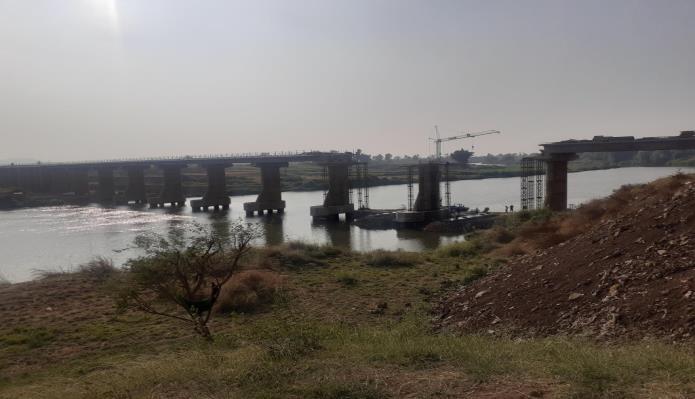
Aspertheinformationgivenbyengineerofconstruction siteofbridgeandaccordingtothegovernmenttender& conditionsofcontract,thefollowingrisksmayoccurin
theproject.Afterstudyingthecontractdocumentandthe conditions of contract the risks for particular clause is identified. Below table shows the different risks in the project's contract documents and those are listed, investigated, and evaluated. Using the site engineer's provided checklist, multiple provisions pertaining to generalconditions,technicalspecifications,andspecial circumstancesareidentified. Everyaspectofacontract has the potential to become a risk, which in turn can affect various aspects of a project, such as its timeline, budget, scope, and quality. To help, identify and categorizetheserisks,anevaluationisdevelopedbased ontheirpotentialinfluenceontheclientandcontractor.
Byanalysingthetermsand conditionsofthecontract, one can have a better understanding of the risks involved,manyofwhichpertaintotheclient.
Below table shows risk associated with each clause includedintenderdocument
Conditions of contract Risk
Clause 1.Supply of the materials by thecontractors Design , construction
Clause2.Executionofwork Construction
Clause3.Executionofwork Design
Clause4. Controloverwork Construction
Clause5. Alterations in drawingsandspecifications Design,contractual
Clause 6. The power to make additions and alterations in drawingsorspecifications Design, construction
Clause7.Materialsleftonsite Financial
Clause 8. Removal and substitution ofmaterials Financial
Clause 9Workmanship Construction
Clause10.Action and compensationpayable in case ofbadwork Contractual, Financial
Clause 11. Responsibility of contractor dueto damage by fire Construction, contractual, environmental
Clause 12. Execution of work included inthecontract Contractual
Clause 13. Action when work isnotcompleted Contractual, Financial,
Clause14.Finalcertificate Contractual
Clause15. Actionwhen contractorbecomes bankrupt Contractual
International Research Journal of Engineering and Technology (IRJET) e-ISSN: 2395-0056
Volume: 11 Issue: 02 | Feb 2024 www.irjet.net p-ISSN: 2395-0072
Clause 16. Payment to contractor for workdone Contractual, financial
Clause17.Certificate Contractual
Clause 18. No compensation for alteration in or restriction ofworkdonetobecarriedout Contractual
Determiningareasofuncertainty
From the information which is given by engineer followingarethe uncertainties occursat siteduring construction
Clause19.Compensation undertheworkmen compensation Contractual
Clause 20. Refund of quarry feesroyalties Financial
Clause21.Securitydeposit Financial, contractual, construction
Clause 22. Compensation for delay Contractual,Design
Clause 23. Action when the progress of any particular portion of the work is unsatisfactory Contractual
Clause 24. Liability for damages arising from nonprovisionoflightfencing Physical, Environmental
Clause 25 Liability of contractor for damage doneinoutsideworkarea Environmental
Clause26.WorkonSunday Contractual
Clause 27.Minimum age of persons employed theemployment Legal
Clause28. -
Clause29.Minimum age ofpersons employed theemployment Legal
Clause 30. Employment of scarcitylabor Contractual
Clause 31. Employment of scarcitylabor Contractual
Clause 32. Employment of scarcitylabor Contractual
Clause 33. Employment of scarcitylabor Contractual
Clause34.Actionwhenwhole of the security deposit is forfeited Contractual
Clause 35.Conditionfor material Physical, environmental
Clause 36. Condition relating to insuranceof contractworks Contractual
Clause 37. Condition relating to insuranceofcontractworks Contractual
Astheprojectisstartedin2020,ithadfacedpandemic condition.Duetopandemicconditionlaboursshiftedto theirvillagesandworkisstoppedinlockdown.Sothere isdelayinprojectcompletion
Availabilityofmaterialinlockdown
Financialproblem:duetochangeindesigncostofproject hasincreased
Naturalhazards:AsKrishnaRiverisaperinealriver,it facesfloodsituationineveryyearsoduetothisnatural hazard construction work was stopped 1 month every year.
Villagers which are living near the bridge started opposingtotheconstructionofbridgesothereisdelayin projectcompletionandaffecttheestimatedcost
AssessthecostofeachriskExpectedcostofeachrisk
1. Financialrisk–
Suspensionofwork=60000
Changeindesign=10000000
Penaltyfordelay=360000
Extraworks=100000
Pricevariationclause=200000
Totalfinancialrisk=10720000
2.Environmentalrisk
Penaltyfordelay=360000
Labourregulation=1000000
Totalcostofenvironmentalrisk=13600003.
Physicalrisks=400000
Politicalrisk=720000
Step3:Determineprobabilityofeachriskoccurring
1.Financialrisk=80%
International Research Journal of Engineering and Technology (IRJET) e-ISSN: 2395-0056
Volume: 11 Issue: 02 | Feb 2024 www.irjet.net p-ISSN: 2395-0072
2.Environmentalrisk=60%
3.Physicalrisk=50%
4.Politicalrisks=20%
Step 4: To calculate expected cost by multiplying and addingprobabilityandexpectedcostofpotentialrisK
(1)
(2)
Forbigprojectsitisverynecessarytoidentifyandmitigate the probable risks to complete the project in time and availableresources.Theriskidentificationshouldbedonein early stage of the project. The very first step of risk identification is contract itself. There can be number of clauses in contract that create ambiguity about the responsibilityandscopeofwork
Therefore questionnaire survey was carried out by preparingquestionsforidentifyingrisksinvariousstagesof construction. The response of questionnaire survey was takenfromvariouscontractorsandconsultants.Theanalysis ofresponsewasdonebyRIImethod.Fromtheanalysisthe topfiveriskswereidentified.Thoserisksare
1. Financialrisks
2. Contractualrisks
3. Physicalrisks
4. Politicalrisks
5. Constructionrisks
Latertheseriskswererelatedtothedifferentclausesin thecontract,inordertocategorizetheriskswithrespect totheclausesincontracts
Tomitigatethetopfiverisksinconstructionprojects,the suggestions and solutions were taken from the contractors by discussing risks in the project orally. According to the contractors the adoption of risk managementpracticeshelpstoincreasethesuccessrate of project and then enhance the competitiveness of organizations. Risk management aims to identify risks
andtakeactionstoreduceoreliminatetheirprobability andimpactsothatprojectiskeptfrombeingdamagedby risks. It is started from the feasibility phase onward, clients,contractors,designers,andgovernmentalagencies mustcollaboratetoaddresspotentialhazardsinatimely mannerandtomakegoodpreparationsforcarryingout safe, effective, and high-quality construction activities. Through the usage of multiple contracts between the various agencies, the agreement are employed as instrumenttomanage
These include ensuring that the project has sufficient funding, collecting additional geotechnical information, performingconstructabilityreviews,settingreasonable contractperformancedeadlines,collectinginformationon work and rework costs, implementing phased pricing, anticipating the need for permits, utilities, and zoning, pre-definingrates,equations,andprocedures,andusing project staff with relevant experience. A proactive, informed approach to risk distribution andcontracting procedurescanbenefitallpartiesengagedinabuilding project in the short and long periods. By sharing construction risks when appropriate and fairly distributingandcompensatingforthosethatcannotbe shared, contracting parties should aim to closely align theirinterests.
The major risk affecting the infrastructure project are systematicallyexaminedforsuccessfulcompletionofany infrastructure project, also it is necessary to study all aspects of project depending upon contract over major riskinvolvedinprojectandcriticalfactorsresponsiblefor costandtimeoverruns.
Contract document used as a tool to manage risk by identifyingandallocatingrisktovariousagenciesthrough sub-contractstominimizethechancesoffailureorunder performanceofprojectriskmanagementpolicymustbe implements and evaluate regularly into construction project
1. D van Well- Stam, Project risk Management- An essential tool formanaging and Controlling projects”; KoganPageLimited,Dutch,2005.
2.L.Y.Shen,Riskmanagement,InternationalJournalof ConstructionEngineeringandManagement,Vol.127,
3.Mark H.McCallum, “A Quick PrimeronConstruction Risks and Contracting Practices”, American Corporate Counsel AssociationAnnualMeetingOctober,2000.
International Research Journal of Engineering and Technology (IRJET) e-ISSN: 2395-0056
Volume: 11 Issue: 02 | Feb 2024 www.irjet.net p-ISSN: 2395-0072
4. N.J.Smith, “Managing Risk in construction projects”, BlackwellScience,Oxford,1999.
5. Richard Clough, Construction Contracting, WileyInterscience,NewMexico,1972
6.RogerFlanagan&GeorgeNorman,“Riskmanagement and construction”, Blackwell Scientific Publications, London,1993.
7. Paper on Comparison of risk assessment method withinthescopeofoccupationalsafetyinconstruction sector.
8.Contractdocumentofbridgebypublicworkdivisionmiraj.
BIOGRAPHIES


She is an excellent academic personandPGstudentwithintend in Research work Working on number of projects which is related with construction management
He is Research scholor having more than 12 years teaching experience Published number of researchpaper,guidednumberof research project and PG,UG student.