
International Research Journal of Engineering and Technology (IRJET) e-ISSN: 2395-0056
Volume: 11 Issue: 02 | Feb 2024 www.irjet.net p-ISSN: 2395-0072
International Research Journal of Engineering and Technology (IRJET) e-ISSN: 2395-0056
Volume: 11 Issue: 02 | Feb 2024 www.irjet.net p-ISSN: 2395-0072
Omkar Kale1, Soham Jain2, Anuj Chiplunkar3, Siddh Kadam4 , Prof. Siddhesh Bandekar5
1Omkar Kale SPPU (Jayawantrao sawant college of Engineering)
2Soham Jain SPPU (Jayawantrao sawant college of Engineering)
3Anuj Chiplunkar SPPU (Jayawantrao sawant college of Engineering)
4Siddh kadam SPPU (Jayawantrao sawant college of Engineering)
5 Professor Siddhesh Bandekar Dept. of Mechanical Engineering, JSCOE, Maharashtra, India ***
Abstract - In today’s modern era Drone is upcoming and multidimensional technology in the world. Fixed wing unmanned aerial vehicle (UAV) have become an integral part of modern surveillance and military operations. Fixedwing aircraft have proven to be an effective platform for surveillance operations due to their versatility, range, and endurance. In recent years, the development of advanced sensor technologies, such as high-resolution cameras and imaging systems, has further enhanced the capabilities of fixed-wing aircraft for surveillance applications. This research paper provides a comprehensive overview of the use of fixed-wing aircraft for surveillance applications and identification. Furthermore, we examine the advantages and disadvantages of fixed-wing aircraft over other surveillance platforms, such as drones and helicopters, and provide insights into their potential applications. The research findings demonstrate the exceptional stability and maneuverability of the fixed-wing drone across various flight scenarios, including straight-line flights, turns, and altitude changes. Control surfaces, including ailerons, elevators, and rudder, exhibited precise response and control authority throughout the flight. Additionally, the flight test confirmed the drone's extended endurance capabilities, allowing for prolonged airborne operation withoutperformancecompromise
Keyword: Fixed wing (UAVS), Surveillance, Air foil, Performanceanalysis.
Surveillance operations play a pivotal role in maintaining public safety, safeguarding national security, and protecting various commercial interests. In recent years, technological advancements have brought about a paradigm shift in the field of surveillance, enabling more efficient and effective data collection. Among these advancements, the utilization of fixed-wing drones for surveillance purposes has gained significant attention. Fixed-wing drones, characterized by their aerodynamic designandextendedflightendurance,offeramultitudeof advantages over traditional surveillance methods, including the ability to cover large areas, collect highresolution imagery, and conduct covert operations without arousing suspicion. This research paper aims to
explore and analyze the potential of fixed-wing drones in surveillance applications, examining their operational advantages, technological advancements, and potential limitations.
Fixed-wingdronespossessseveraloperationaladvantages that make them highly suitable for surveillance missions. The aerodynamic design of fixed-wing drones enables efficient flight and extended endurance, allowing them to remain airborne for longer durations compared to rotary wing drones. The extended operational range of fixedwing drones makes them particularly well-suited for large-scale surveillance applications such as border patrolling, perimeter security, and monitoring expansive industrial sites[1].Additionally,fixed wingdronescan be equipped with advanced imaging technologies, including high-resolutioncameras,thermalsensors,andevenLiDAR systems.Thesecapabilitiesenablethecollectionofprecise and detailed surveillance data, facilitating better situational awareness and more accurate threat assessment [2]. The high-resolution imagery captured by fixed-wing drones provides operators with an in-depth understanding of the monitored area, enhancing their ability to identify potential security risks or suspicious activities [3]. Furthermore, fixed-wing drones offer the advantage of covert operations. With their streamlined design and low noise emissions, fixed-wing drones can conduct surveillance activities discreetly, minimizing the risk of detection and avoiding potential interference with ongoing operations. This covert capability makes fixedwing drones highly valuable in scenarios were maintaining secrecy and avoiding suspicion are critical aspectsofsurveillancemissions[4].
The rapid advancement of technology has significantly contributed to the improved capabilities of fixed-wing drones for surveillance purposes. One notable technological development is the integration of artificial intelligence (AI) algorithms, which enables autonomous flight and intelligent data analysis. Through AI-powered object recognition and tracking algorithms, fixed-wing
International Research Journal of Engineering and Technology (IRJET) e-ISSN: 2395-0056
Volume: 11 Issue: 02 | Feb 2024 www.irjet.net p-ISSN: 2395-0072
drones can automatically identify and monitor specific targets of interest in real-time, thereby enhancing situational awareness for operators on the ground [5]. This automation not only reduces the cognitive load on operatorsbutalsoimprovestheaccuracyandefficiencyof surveillance operations. Moreover, advancements in data transmission and storage have revolutionized the way surveillance data is collected, processed, and analyzed. Fixed-wing drones can now transmit high-definition imageryandvideofootagefromtheironboardcamerasto the control station in real-time. This capability allows for timely decision-making, facilitates real-time collaboration amongsurveillanceteams,andenhancesthe effectiveness ofresponseandinterventionefforts[6].
2. Objective
1. Design of fixed wing drone and Simulation of Airfoilwing
2. Manufacturing of drone system, Testing and validation ofdronesystem
3. To explore the operational advantages offered by fixed-wingdronesinsurveillanceapplications.
4. To examine relevant case studies showcasing the successful utilization of fixed-wing drones in surveillance scenarios.
5. Evaluate the performance metrics and capabilities of fixed-wingdronesystemsinconductingaerialsurveillance missions.
3. Theory
A drone is an unmanned aerial vehicle (UAV) or a RemotelyPilotedVehicle(RPV)thatcanflyautonomously orberemotelycontrolledforvariouspurposes.Theentire system is known as an Unmanned Aircraft System (UAS) or Remotely Piloted Aircraft System (RPAS) or Ground ControlSystem(GCS).



FigureNo.01Unmannedaircraftsystem
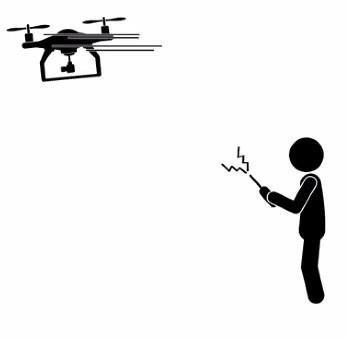
FigureNo.02Remotelypilotedvehicle
4. Hardware Configuration


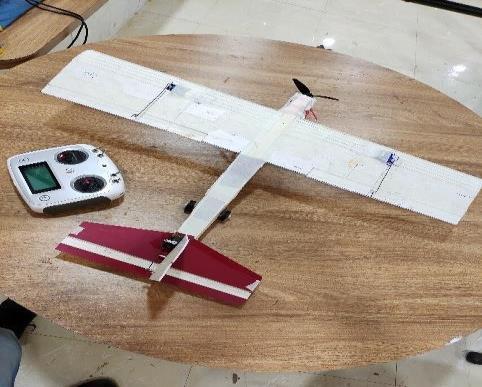
FigureNo.03EagleEye
Alphabet Indication
Propeller
BLDC Motor
Main Wing
Fuselage
Horizontal stabilizer
Vertical stabilizer
Transmitter
Servo motor
TableNo.01Partlist
- Motor:[BLDCMotor1000kv]
-Battery:[3Cells2200Mah]
- Weight:[AUW800grams]
- Wingspan:[800mm]

International Research Journal of Engineering and Technology (IRJET) e-ISSN: 2395-0056
Volume: 11 Issue: 02 | Feb 2024 www.irjet.net p-ISSN: 2395-0072
Parameter Value
Wing Span 0.900 m
XY Proj. Span 0.900 m
Wing Area 0.147 m²
XY Proj. Area 0.147 m²
Plane Mass 2 kg
Wing Load 10.218 kg/m²
Root Chord 0.350 m
MAC 0.185 m
Tip Twist 0.000°
Aspect Ratio 5.518
Taper Ratio 0.257
Root-Tip Sweep 27.575°
TableNo.02Parameters
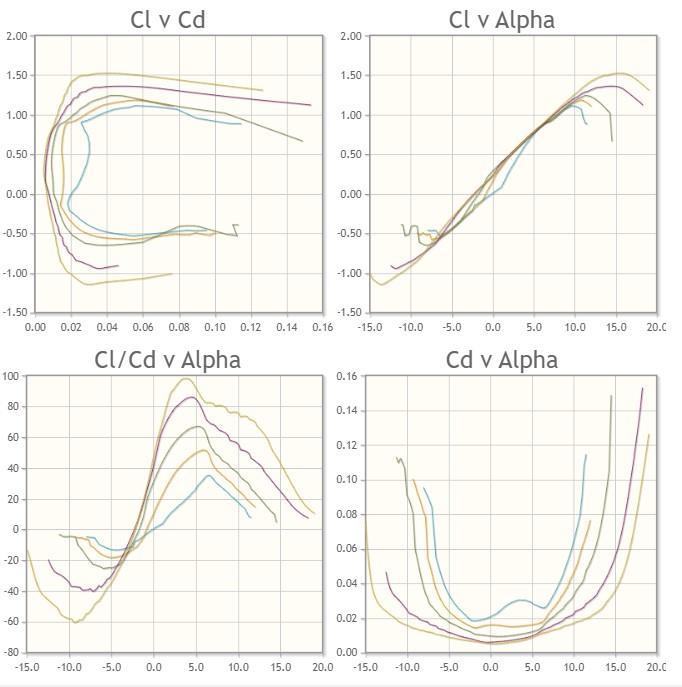
FigNo.04CD,CL,CMGraphs
- Identify the specific requirements and objectives of the fixed-wing drone for surveillance applications, such as endurance, range, payload capacity, and flight stability.
- Determinethedesiredwingconfiguration,suchas the wing aspect ratio, sweep angle, and airfoil selection, basedontheintendedmissionrequirements.
- Define the overall dimensions of the aircraft, including wing span, wing area, and fuselage length, while considering weight limitations and payload capacity.
- Assess parameters such as lift, drag, and stability derivatives to analyze the performance of the aircraft undervariousflightconditions.
- Design the tail section, including the horizontal stabilizer and elevator, to ensure proper stability and controlduringflight.
- Adjustwingparameters,suchaswingarea,aspect ratio,andairfoilselection,toachieveoptimallift-to-drag ratiosanddesiredflightcharacteristics.
- Account for structural integrity and strength in the design process, considering the material selection, wingplacement,andoverallweightdistribution.
- Construct a prototype of the fixed-wing drone basedonthefinalizeddesign.
- Based on the analysis and research of various graphwedesignedawingwithairfoil(NACA2410).
6. Result and Discussion
-Thefixed-wingdroneexhibitedexcellentstabilityduring various flight maneuvers, including straight-line flights, turns,andaltitudechanges
- Control surfaces, such as ailerons, elevators, andrudder, demonstrated effective response and control authority, ensuring precise control of the drone throughouttheflight.
- The flight test verified the extended endurance capabilities of the fixed-wing drone, allowing it to remain airborne for a significant duration without compromising performance.
- The drone successfully carried the intended payload, including cameras, sensors, and other surveillance equipment without affecting its flight stability or maneuverability
International Research Journal of Engineering and Technology (IRJET) e-ISSN: 2395-0056
Volume: 11 Issue: 02 | Feb 2024 www.irjet.net p-ISSN: 2395-0072
Most importantly, we would like to express our profound gratitude to the college's management as well as to our dear principal, Dr. R. D. Kanphade, of JSPM's Jayawantrao Sawant College of Engineering, Hadapsar, Pune, for his unwavering encouragement and support during the preparation of this report, as well as for providing the necessarylabandlibraryspace.
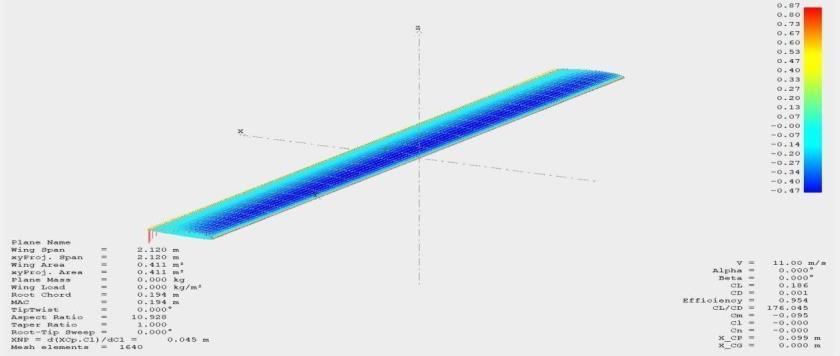
We've completed the iterative procedure using Xflr5 softwareandwillchoosethemostefficientairfoilpossible. Accordingtothetheoreticalandsoftwarecalculations,we have reached the intended outcome with a 95.7% efficiencyrate.
7. Conclusion
Fixed-wing drones have emerged as powerful tools for surveillance operations, offering operational advantages, technological advancements, and promising prospects for the future. Their extended flight endurance, ability to covervastareas,andcollectionofhigh-resolutionimagery make them valuable assets for various surveillance applications. However, careful consideration of legal and ethical frameworks, addressing challenges related to payload capacity and agility, and ensuring responsible deployment are crucial for their effective and ethical utilization. By harnessing the potential of fixed-wing drones, the realm of surveillance can be transformed, enabling more efficient and accurate data collection, improved situational awareness, and enhanced public safety.
8. Acknowledgment
We would like to express our sincere gratitude and appreciation to all those who have contributed to the successfulcompletionofthisresearchpaperonfixed-wing dronesforsurveillance.
To begin with, we would like to thank our research supervisor Prof. Siddhesh Bandekar for their invaluable guidance, support, and expertise throughout the research process. Their insightful feedback and encouragement have been instrumental in shaping the direction and qualityofthisstudy.
We would like to express our gratitude to Dr. Pradeep A. Patil, Head of the Mechanical Engineering Department at JSCOE, for his insightful advice and counsel during the writing
FigureNo.06Analysisofairfoil NACA2410 ofthispaper
The Project on “Design and Development of Fixed wing DroneforSurveillance”wasveryhelpfultousingivingthe necessary background information and inspiration in choosingthistopicfortheProject. WesincerelythankDr. Mahesh Gaikwad, Project Coordinator, for supporting the work related to this Project. His contributions and technical support in preparing this report are greatly acknowledged
1. Johnston, M. (2018). Drones: The ethical implications of surveillance by unmanned aerial vehicles. International Journal of Techno ethics, 9(2),1-16.
2. Keshen, D. (2017). Advantages and limitations of dronesforcivilapplications.InProceedingsofthe EuropeanCooperationinScienceand Technology (COST) conference on robotics in extreme environments(pp.41-44).
3. Rottensteiner, F., Soergel, U., & Breitkopf, U. (2019). An evaluation framework for photogrammetric 3D reconstruction of UAV data. ISPRS Journal of Photogrammetry and Remote Sensing,150,166-181.
4. Calderón, A. M., Moreno, F. A., Serradilla, F., & Merino, L. (2020). An overview of drone surveillance systems: Models, architectures, and deploymentscenarios.Drones,4(4),69.
5. Amir,N.,Ahmad,I.,Khaliq,A.,&Ahmad,I.(2020). Real-time drone surveillance system using deep learning for video-based object detection and tracking.Sensors,20(10),2832.
6. Cao, Y., Zhang, Y., Zhu, Y., & Zhang, D. (2021). A secure and reliable drone data transmission systembasedondeeplearning.FutureGeneration ComputerSystems,117,356-367.