
International Research Journal of Engineering and Technology (IRJET) e-ISSN: 2395-0056
Volume: 11 Issue: 02 | Feb 2024 www.irjet.net p-ISSN: 2395-0072
International Research Journal of Engineering and Technology (IRJET) e-ISSN: 2395-0056
Volume: 11 Issue: 02 | Feb 2024 www.irjet.net p-ISSN: 2395-0072
Gaurangi A. Sawant1
1– Student, Dept. of Electrical Engineering, SSPM College Of Engineering, Kankavli
Abstract - Researchers have given electric vehicles (EVs)alotofattentionas agreentransportation option, which has resulted in a number of in-depth studies. As high-storage batteries and electric vehicles (EVs) become more common, the sheer volume of EVs on the road will pose significant problems to the safe and stable functioning of power grids due to their erratic charginganddischargingpatterns.Thispaperprovides aquickintroductiontomanyaspectsofelectricvehicles (EVs), encompassing government legislation, charging procedures,importantapproaches,impactsofcharging, andsolutionstoassociatedproblems.TalkabouttheEV trend based on the issues and present state of development. This study explores the development of EVs over time and emphasizes their advantages, which include a decrease in air pollution and carbon emissions. It also discusses the obstacles and problems encountered in their adoption, including the expensive cost of infrastructure, the dearth of charging stations, the short range or range anxiety, and battery performance.Enhancingtheinfrastructureforcharging, expanding the number of charging stations, employing battery swapping strategies, and advancing battery technology to mitigate range anxiety and shorten charging times are some potential answers to these problems. Governments might invest in developing a strong charging infrastructure and offer tax breaks or other subsidies to encourage people to buy electric vehicles.
Key Words: Electric Vehicles, Vehicle to grid, Optimisation technique, CO2reduction, challenges, charging infrastructure
1.Introduction:
Theautomotivesectorhasgrowntobeasignificant force in both research and development (R&D) and the global economy. The safety of both passengers and pedestriansisincreasinglygivenpriorityincarsthanksto ongoing technological advancements. In addition to using solarplates,electricbusescanoperateongridelectricity.A batteryispresentthatcanbeusedafterbeingcharged.To lessentheircarbonfootprint,allautomakersarerequiredto create at least one hybrid electric vehicle type. By 2030, FranceandJapanwillbetheonlynationsremaininginthe petroleum industry. This is an additional step towards improvingelectricalvehiclesandreducingpollutantsfora cleanerenvironment.Electricvehicles(EVs)areemergingas apossibleavenueforenhancingairquality,energysecurity,
and economic opportunity due to the swift growth of the Indian automobile sector. The Indian government understands how urgent it is to investigate sustainable mobility options in order to lessen reliance on foreign energysources,cutgreenhousegasemissions,andlessenthe negative effects of transport, such as global warming. By adopting preventative steps to lessen the catastrophic climate change that threatens the planet's biodiversity, carbon dioxide emissions can be decreased. Significant effortshavebeenmadetoreducetheamountoffossilfuels used for energy production, transportation propulsion, energyconsumption,andcarbonsequestrationprotection. An alternative to reduce carbon dioxide petrol emissions could be electric vehicles (EVs). Even if EV adoption has started,peoplestill relyoncarsthatrunonfossil fuels.In contrasttotraditionalfossilfuel-poweredvehicles,electric vehicles (EVs) have difficulties with life cycle assessment (LCA), charging, and driving range. The production of electricvehiclesemits59%moreCO2thanthatofinternal combustionengines.Fromatanktowheelperspective,the ICEVemits120g/kmofCO2,butfromanLCAperspective, thisrisesto170–180g/km.AlthoughCO2emissionsfrom EVsarezerofromtanktowheel,weestimatethataverage CO2emissionsaremeasuredoverthecar'slifecyclerather than just one vehicle. Due to the transportation sector's harmfulemissionsandvariousOEMinvestments,thereisa growing worry about the need for more affordable and efficientelectricvehiclesintheyearstocome.Theadoption ofEVsinIndiamaybeinfluencedbyanumberofvariables, including improvements in technology, falling car prices, governmentpolicysupport,incentivesforbuyingnewcars, parking benefits, and well-developed public charging infrastructure.Since thereisverylittle production ofEVs, their entire market share in India is very small. Electric vehicles (EVs) can be classified into three categories: (i) three-wheelers, such as e-rickshaws; (ii) four-wheelers, whichcompriseelectriccars.
The aim of this research is:
Todeterminethenecessaryprocedures,obstacles, and difficulties associated with using a batteryoperated vehicle in a developing nation such as India.
To determine the causes of the lack of interest in electricvehiclesinIndia.
To raise awareness in India of the benefits that battery-operatedautomobileshaveovertraditional fossilfuel-poweredvehicles.
International Research Journal of Engineering and Technology (IRJET) e-ISSN: 2395-0056
Volume: 11 Issue: 02 | Feb 2024 www.irjet.net p-ISSN: 2395-0072
A smart city is a developed area that uses a variety of sensors and technology gadgets to gather data. Using information and communication technology (ICT), smart cities prioritise comfort, upkeep, and sustainability while managing public resources to improve service quality. Electricvehicles(EVs),whichincludeneighborhoodelectric vehicles,electricbuses,andelectriccars,willsoonrulethe transportation sector. The whole transportation network willbeelectrifiedaspartofthecity'soverallefforttoreduce petrolemissions.However,becauseofnovelproblemswith powerdistributionandtrafficcontrol,theefficacyofthese new transit systems cannot be guaranteed in a normal metropolis.Thus,asmartcitycanhelpachievethisnational objective.Smartcitiesandelectriccarsarecloselyrelated sinceelectricvehiclesareanessentialcomponentofmany smart city initiatives. The widespread adoption of electric vehicles is one of the primary goals of many smart city initiatives,whichaimstosignificantlyreduceemissionsand improvethequalityoftheairinmetropolitanareas.Smart cities can also become more efficient by using electric vehicles, whichhave lower running costs and requireless maintenancethanconventionalautomobiles.Furthermore, theadoptionandintegrationofelectricvehiclescanbeaided byinfrastructurecreatedforsmartcities,suchascharging stationsandintelligenttrafficcontrolsystems.[2]
However, there are several challenges involved in incorporatingelectricvehiclesintosmartcities.Oneofthe main issues is the cost of electric automobiles and the infrastructurerequiredtochargethem,whichcanbecostly and need a significant investment. Additionally, because electricvehicleshavealimitedrange,somelocalscouldbe concerned about running out of energy. Make sure the infrastructure for charging is in line with people' needs; carefulplanningandoversightarerequiredforthis.Another challengeisensuringthatelectricvehiclesaresuccessfully andefficientlyincorporatedintotheinfrastructureofsmart cities,whichcallsforcoordinationandcollaborationacrossa number of stakeholders, including the public sector, businesses,andindividuals.Theemergenceofsmartcities may lead to more efficient, sustainable, and livable urban regions.Citiesmust,however,resolvetheimplementationrelatedproblemstoguaranteeeffectivenessandfairness.By investingintechnologyanddatamanagement,establishing stringentcybersecurityand privacyrulesandprocedures, collaborating productively with stakeholders, and developing inclusive and accessible projects, cities can successfully execute smart city efforts and enjoy their benefits.
Smart cities require an Intelligent Transportation System (ITS) that can meet their transportation requirements. transitinasmartcityshouldbehassle-free,eco-friendly,and consist of networked and shared cars for better public transitservices.Thebestchoiceisanelectricvehicle(EV), which also provides a solution to global energy issues. Intelligent electric vehicles, also known as autonomous electricvehicles,providethenetworkedandcommunallayer requiredforasmartcity.
In light of the growing popularity of smart cities, new regulationshavebeenproposedtorestrictcarbonemissions (CEs) in the transport sector. The problems with carbon emissions and traffic congestion caused by the significant increase in the number of cars are solved by intelligent transportsystems,orITS.(ITS).
Electric vehicles (EVs) are becoming a more and more popularmodeoftransportation because oftheirability to reducegreenhousegasemissionsanddependencyonfossil fuels. They have also received a lot of attention lately. An electricmotorthatrunsonrechargeablebatteriespowersan electric car instead of requiring petrol or diesel fuel. By 2030,therewillbethreetimesasmanyelectricvehicle(EV) users as there were in 2011. This is the outcome of technologicaldevelopmentsinbatteryperformanceandhow they impact the autonomy of vehicles. One of the primary advantages of electric cars is their impact on the environment.Theenergy-relatedcarbondioxideemissions fortheUS,China,andEuropearedisplayedinFigure1for the years 1983 through 2023. Although the US and China have seen a rise in the sales of electric vehicles, it is importanttorememberthatthesenationsstillhavealarge numberofconventionalfossilfuel-poweredcarsontheroad. Furthermore, as a result of these nations' growing energy needs,morecoalisbeingused,whichisthemainsourceof carbondioxideemissions.[3]
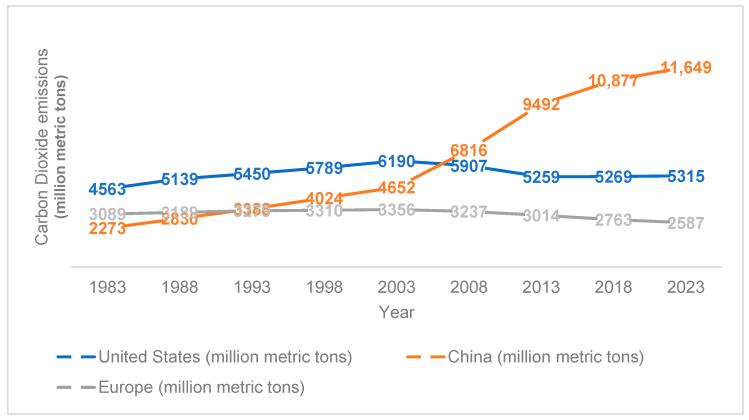
Figure 1. Energy-relatedcarbondioxideemissionsinthe US,China,andEuropefrom1983to2023[3]
International Research Journal of Engineering and Technology (IRJET) e-ISSN: 2395-0056
Volume: 11 Issue: 02 | Feb 2024 www.irjet.net p-ISSN: 2395-0072
Long-term carbon dioxide emissions reductions from electricvehiclesarestillanticipatedinthesenationsdespite this. EVs are exhaust-free vehicles, in contrast to conventional automobiles. They emit less pollution than gasoline-poweredcars,even whenthe electricitytheyuse comes from fossil fuels. As a result, EVs are a preferred substitute for people who want to reduce their carbon footprint. There are several types of electric vehicles, including plug-in hybrid electric vehicles (PHEVs) and battery electric vehicles (BEVs). Batteries power BEVs, whereasconventionalpetrolordieselenginesandbatteries powerPHEVs.Beforethepetrolenginekicksin,PHEVscan onlytravelasetdistanceonelectricityalone.
Because they make electric vehicles more accessible and cheap for the general public, government incentives are crucialindrivingupsalesofthesevehicles.Agoodexample of this is China, where the government has introduced a numberoflawsandfinancialincentivestopromotetheuse ofelectriccars.Theseconsistofmonetaryrewardsliketax exemptions,subsidies,andfreelicenceplatesinadditionto non-monetaryrewardslikefreeparkingandpriorityaccess tocarpoollanes.Dueinparttotheseincentives,theinitial cost of electric vehicles has decreased, increasing their competitiveness with respect to conventional gasolinepoweredvehicles.GovernmentexpendituresonR&Dandthe infrastructure needed for charging have also assisted in resolvingissueswithtechnologicaldependabilityandrange anxiety.
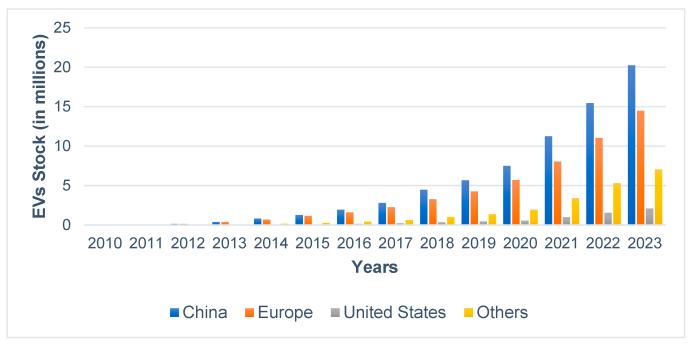
Chinaisnowtheworld'slargestmarketforelectricvehicles because to these incentives, which have caused a spike in sales of electric vehicles there. Figure 2 shows the worldwide inventory of electric cars, including plug-in hybridelectricvehicles(PHEVs)andbatteryelectricvehicles (BEVs), broken down by country. As Figure 3 illustrates, China is also home to the greatest number of public EV chargingstations.[4]
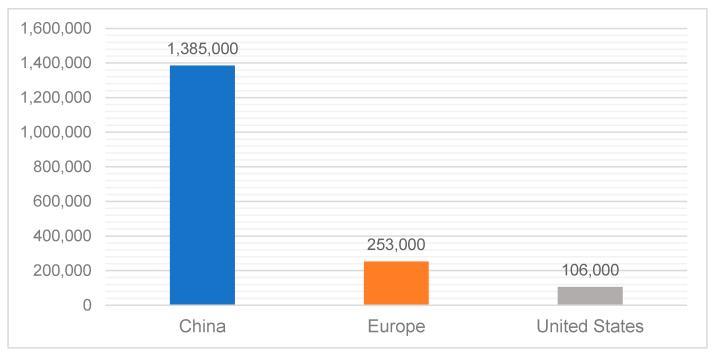
It's important to remember that these numbers change frequentlyduetoinvestmentsmadebypublicandprivate organisations to increase the availability of EV charging stations.Withplanstohave4.8millionchargingstationsby 2025, China has been especially active in expanding its networkofchargingstations.Withaimstohaveonemillion public charging stations by 2025, Europe is also a major investor in the expansion of its charging infrastructure. Althoughtherearen'tasmanychargingstationsintheUSas there should be, the Biden administration has suggested largeamountsofmoneytosupportthedevelopmentofthe nation'sEVcharginginfrastructure.[3]
3. Difficulties in Putting Electric Vehicles into Practice:
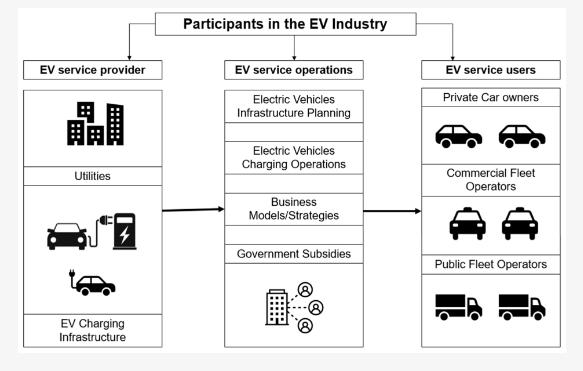
Utilities, state and local governments, and private sector participantssuchasEVserviceproviders,fleetemployees, and individual automobile owners are examples of public sector operators in the EV market. Diverse operational decisions are made by variable adopters, which include privatevehicleowners,managersofprivatecompanyfleets, and public fleet operators. At-home charging, public charging,andbattery-swappingstationsshouldbeoptimised forthechargingmodelsbasedonthetypesanddistribution of adopters. Infrastructure rollout and incentive programmesarealsorelatedtothetypeofclient.Figure4 provides a summary of the major issues faced by the membersoftheEVservicebusiness.
International Research Journal of Engineering and Technology (IRJET) e-ISSN: 2395-0056
Volume: 11 Issue: 02 | Feb 2024 www.irjet.net p-ISSN: 2395-0072
This definition classifies as a "EV" any car in which an electric battery provides the majority of the driving force. (Forinstance,plug-inhybridelectriccars(PHEVs),battery electricvehicles(BEVs),andplug-inelectricvehicles(PEVs). TheonlysourceofpowerforaBEVisitsbatterypack,which maybechargedusingthegrid.PHEVs,ontheotherhand,are powered by an internal combustion engine, an electric motor, and a battery that can be charged from the grid. "PEVs"areanothertermforBEVsandPHEVs,whichareEV modelsthatcanbechargedwithgridelectricity.Themost widely used battery substitute for electric cars (EVs) is lithium-ion, which is followed by lead-acid, nickel-metal hydride,andsodium-nickelchloridebatteries.[6]
It is well recognised that electric vehicles (EVs) have the potential to offer a number of important social and individual benefits as compared to cars with internal combustionengines(ICEs).Recentstudieshaveexamined the various challenges faced by EVs and have generally foundthatthemostprevalentonesarethoserelatedtocost, range,charginginfrastructure,andcustomerperceptions.
TherangeofBEVsisnowlimitedascomparedtorefuelling ICEVs,andchargingstilltakessignificantlylonger.Thisleads tooverlyoptimisticroutedesign,withcertainroutesbeing too long for BEVs (battery electric vehicles). As a result, appropriateimplementationsolutionsforelectricvehicles (EVs)insmartcitiesaresuggestedinthisresearcharticle. [6]
Ownersofelectricvehiclesmightworrythattheywon'thave enoughfueltogettotheirdestinationbecausethesevehicles oftenhaveashorterdrivingrangethanconventionalones. DespitethefactthatEVs'rangeisincreasing,somedrivers stillfinditdifficult,especiallythosewhomusttravellarge distances.Iftheycanschedulechargingtimesaheadoftime, though,thecustomerwillbeinformedoftheavailableslots. Thus,customershavetheoptiontolookatslotsotherthan thosethatarealreadyinqueue.Goodcharginginfrastructure will also aid in lowering consumers' "range anxiety" by respondingtotheirquestionsandassuagingtheirconcerns aboutthechargingnetwork.
First,whentravellingbyhighwaybetweencities,quickDC chargingisausefultechniqueforshorteningtherecharging timeandincreasingtherange.PlannersofEVinfrastructure shouldtakeintoaccountthefactthatdifferentdrivinghabits need different amounts of energy and time to recharge. Rangeanxietycan be reducedby designingEVrecharging infrastructureproperlyanddynamically.
Secondly, precise estimation of energy consumption and drivable range can be achieved by using a mathematical
vehiclemodel thatcanforecast"real road"drivingenergy consumptionanddrivablerange.
Third,creatingchargingstationsacrossthenationcanalso help reduce range anxiety, but this requires cooperation between the public and commercial sectors as well as governmentincentives.
Finally, a network path selection model can be used to reduce range anxiety. This model uses an algorithm to determine the best and fastest route for electric vehicle drivers.Inthemeanwhile,thesemodelscouldbeenhanced bydeterminingthelengthofahaltatachargingstationand thetimeofdeparture.Usinghighlyefficientelectricmotors inseries,parallel,andseries-parallelchargingconfigurations canextendthedrivingrange.SomeEVmanufacturerseven offer free rental cars for short excursions outside the EV rangetohelpreducerangeanxiety.[6]
Electric automobiles' range is limited by the significant influence of auxiliary loads on their energy consumption. First, when driving in cities, high auxiliary loads deplete batteries, limiting the range of the electric vehicle. When using the AC in the summer, the driving range drops by 17.2–37.1%(undersimulatedparameters).JustasEVsuse PTC(Positive Temperature Coefficient)heaters, the range (based on simulations) is 17% to 54% because of the requirementforheatinginthewinter.Secondly,theimpacts of auxiliary loads like heating and air conditioning when driving electric automobiles at highway speeds have not beenthoroughlystudiedyet.
UsingaheatpumptowarmEVsinthewinterisonesolution to solve the issue of auxiliary loads' short range and high energyconsumption.Thiscanresultina7.6–21.1%increase in driving range due to a higher heating coefficient of performance(CoP).Aheatpump'svapourcompressioncycle regulatesbothheatingandcooling.There'salsoafour-way valvethatreversestheflowofrefrigerant.Furthermore,it hasacoefficientofperformancethatis1%higherthanPTC heaters.Furthermore,anaccurateevaluationofEVs'cooling andheatingneedscouldsavetheenergyconsumptionofthe air conditioner by a large margin. Lowering the overall energyusageduringcoolingisalsopossiblewiththeright energymanagementstrategy.[6]
Oneoftheprimarybarrierstothebroadadoptionofelectric vehicles(EVs)isthelimitationsofbatterytechnology.The currentEVbatterydesignhasalowenergydensity,which reduces the driving range of the car [58]. Over time, numerousbatterytechnologiesandcombinationshavebeen developedtoincreaseEVefficiency.Becausestronger,more reasonablypriced,andlarger-capacitybatterieswillboost vehicle autonomy, consumers view electric vehicles as a
International Research Journal of Engineering and Technology (IRJET) e-ISSN: 2395-0056
Volume: 11 Issue: 02 | Feb 2024 www.irjet.net p-ISSN: 2395-0072
viable alternative to internal combustion engine automobiles.
Giventheimportanceofbatteriestoelectricvehicles,more producers including LG, Panasonic, Samsung, Sony, and Bosch are devoting resources to producing better, more reasonablypricedbatteries.
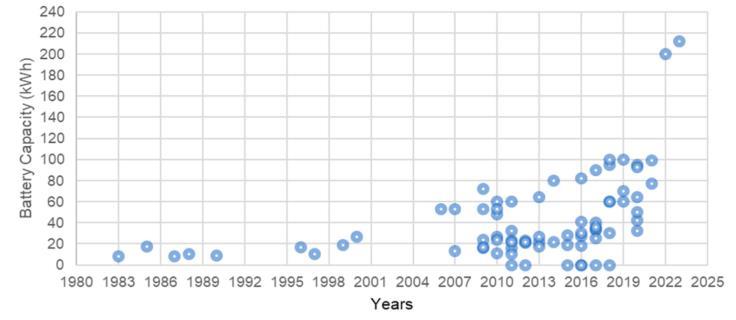
The most expensive component of any EV is the battery package.Forexample,thelithium-ionbatteriesoftheNissan LEAForiginallycostone-thirdofthevehicle'sentireprice. Butthiscostshouldgraduallygodown;bytheendof2014, thebatterypackcostabout$500perkWh,whichwashalfof whatitcostin2009;currently,itcosts$200perkWh,andby the end of 2025, it should only cost about $100. Another pieceofevidencethatsupportsthetrendtowardsreduced batterycostsisthefactthatTeslaMotorsisbuildinga"Mega factory" in order to improve battery output and reduce manufacturingcosts.
4.4. Improving Battery Switching Stations for EV Charging Processes:
Batteryswappingstationscouldbeusedinsteadofbattery charging stations to reduce range anxiety. At battery switchingstations,standard,fullychargedbatteriesarekept available so that electric vehicle drivers can rapidly swap them out and resume their journey. EVs at a highway charging point can be switched out right away in this manner. Figure 6 shows the working mechanism of the batteryswappingstations.Teslaandbatterysuppliersinthe US and Europe are already using this instantaneous EV chargingtechnology.
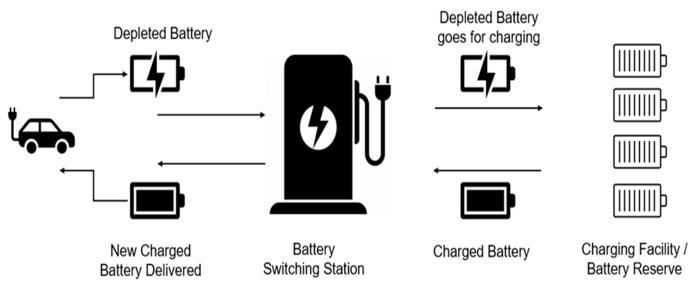
Comparing normal petrol stations and battery switching stations demonstrates that the majority of conventional vehiclescanrunonanyofthethreefuels:petrol,dieseland petrol.Batteryswitchingstationsmayoccasionallyrunout ofaparticulartypeofbattery,thustheywillneedtohandlea widevarietyofbatteries.Thiscouldmakedriversofelectric vehicles nervous. Batteries are available in a variety of forms,energies,andpowerdensities.
Thanks to smartphone applications created by battery swapping facilities, electric vehicle drivers will be able to keepaneyeonthevariousbatterykindsthatareavailable. Betteryet,theycouldpre-storeextrabatteriestoswapout theirdepletedones.Reducingwaitingtimesandeliminating rangeanxietycanbeachievedbyprovidingacommunication platformforboththedriveroftheelectricvehicleandthe batteryswitchinglocations.
Butthiscancauseextraproblemsforthebatteryswitching stations,sincetheymayneedtostockalotmorebatteriesto service customers especially if some of them exchange batteriesmultipletimesaday.Thisproblemcanbesolvedin anumberofways.Someoftheoptionsaretosetadailycap onthenumberofswapsthatmaybeconducted,chargeextra foreachadditionalswapthatcanbecompletedinasingle day, penalise users who go over their daily cap, etc. As mentioned, levying fines can discourage individuals from adopting EVs, therefore we need to think about the most practicaloptions.Moreover,anotherproblemwithbattery swappingstationsistheinconsistentavailabilityofspecific batterykinds.
It'simportanttonotethatbatteryswitchingtechnologyhas becomeratherpopularinChinainthisregard.China-based EV maker NIO is a major player in this market, having installedbatteryswappingstationsallaroundthecountry. The robotic arm at these completely automated stations removestheEV'sdrainedbatteryandreplacesitwithafully chargedone.AccordingtoNIO,theentireproceduretakes less than five minutes, giving EV users a quick and easy optiontocontinuetheirtrip.AsofMarch2023,therewere more than 1323 battery swapping stations operational throughoutChina.
A different business by the name of CATL has created a universalbatteryswitchingsolutionforusewithvariousEV models.ThismethodgivesEVmakersfreedomandletsthem usebatteryswappingtechnologywithoutrequiringthemto create exclusive solutions of their own. Moreover, a McKinsey&Companystudyprojectsthatby2030,battery swappingtechnologymaysupplyupto30%ofChina'sEV charging needs. Additionally, the report points out that battery swapping can have advantages like lowering EV ownership costs, increasing EV battery utilisation, and lowering the requirement for extensive charging infrastructure.[7]
International Research Journal of Engineering and Technology (IRJET) e-ISSN: 2395-0056
Volume: 11 Issue: 02 | Feb 2024 www.irjet.net p-ISSN: 2395-0072
Even though the evolution and development of electric vehicleshaveadvancedsignificantly,particularlyinrecent years,thissectionaddressesissuesthatarecurrentlybeing researched and addressed or that may be worth investigating in order to come up with better and more creativesolutions.[9]
5.1.NewAdvancements andInnovationsinEVBatteries:
As we've said before, batteries are among of the most importantpartsofelectriccars(EVs),astheybearthebrunt of the vehicle's expense and have a direct impact on its efficiency.
A variety of resources have been required in order to developnewtechnologiesthatcanoutperformthecurrent lithium-ion batteries, which are mostly utilized in automobiles, due to advancements in durability, charging density,andchargeanddischargeprocedures.
Consideringallthefactors,itisevidentthatmoreworkhas to be done in this field, primarily because batteries are crucial and could greatly accelerate the development and adoptionofEVs.Investigatingnewpartsandtechnologyis now a thing. Regarding this, current research is being conducted using graphene, a material with great thermal conductivity and light weightthatis composed entirely of carbon.Oneofthekeybenefitsofgraphene-basedbatteries is that they almost never warm up, making it possible to charge them quickly or extremely quickly without experiencingsignificantpowerlossesduetoheat.[7]
5.2. EV's Artificial Intelligence:
Inorderforelectriccarstocompletelyreplaceotherformsof transportationonourroadsandinourcommunities,aswas alreadymentioned,anumberofconditionsmustbemet.
As the world transitions to AI, there is a large research vacuuminthisdomain.Therehavebeenseveralsuggestions for artificial intelligence (AI)-based EV themes, including batterytemperaturecontrol,moreintelligentcharging,and energy-efficient routing. The energy consumption of the various road segments that comprise the planned or real vehicleroutescanbepredictedusingtheirmethod.
Inordertoenhancethebatterytemperaturemanagement system and reduce total energy usage suggests using Artificial Neural Networks (ANNs). Under the plan, the batterytemperaturemaybekeptwithinreasonablebounds. The relationship between battery temperature behaviour and design parameters is examined. According to their computer research, with varying discharge rates, a distributed forced convection cooling technique may produce consistent voltage and temperature distributions acrossthebatterypack.[10]
Governmentsubsidieshaveamajorroleinencouragingthe useofelectricvehicles,aswaspreviouslyindicated.While theimpactofsubsidiesonEVproductionhasbeenexamined in earlier research, few models have been created to investigate how governments might use subsidies to encourage EV adoption among consumers with limited budgets.
InordertooptimiseEVmarketdemandorconsumersurplus while taking into account the goals of EV manufacturers, retailers, and consumers, further research is primarily requiredtobetterunderstandtheaimsofsubsidiesandthe design of government subsidy programmers and policies. Game models offer an answer to this issue. The goals and strategies of the subsidy programmes will be greatly impactedbyafewfactors,suchasthenegotiatingpowerof thecustomerswhenselectingbetweenspecificallybuiltcars andelectricvehicles.
Government subsidies will affect how the car industry evolves and grows. How governments should reconcile competinggoods(suchBEVsandICVs)withtheobjectivesof differentsupplychainstructures(liketheproducer,retailer, orcustomer)isstillupfordebate.Forexample,government subsidieswillaffectconsumerdemand,retailerordersand pricing,andmanufactureroutputandpriceifamanufacturer sellsindividuallydesignedandbattery-electricautomobiles through different retailers. Game models can be used to characterizevarioussituations.Bycomparingtheresultsof multiple scenarios, the ideal industrial structure can be found.[9]
6. Conclusion:
This article examines electric vehicles (EVs), their advantagesandpotential,aswellasthechallenges suchas rangeanxiety,infrastructure,andbatterycost thatprevent EVadoptionandintegrationintosmartcities.Accordingto thereport,EVintegrationcanresultinamoreefficientand sustainableurbanenvironmentwithloweroperatingcosts, fewer greenhouse gas emissions, and better air quality in smartcities.Smartcitiesmayusedataanalytics,smartgrid technologies, and a strong charging infrastructure to overcometheobstaclesthatcomewithEVadoption.Wecan create more livable, sustainable communities that put residents' health and well-being first while lowering our carbon footprint by encouraging the use of EVs in smart cities.
Thereareseveralobstaclestothewidespreaduseofelectric cars(EVs),includinghighinitialcosts,ashortdrivingrange, inadequateinfrastructureforcharging,andnegativepublic opinion. To overcome these obstacles, however, policies fromthepublicandprivatesectorscanbeusedtopromote the adoption of EVs, create new business models that facilitate their use, finance the construction of charging
International Research Journal of Engineering and Technology (IRJET) e-ISSN: 2395-0056
Volume: 11 Issue: 02 | Feb 2024 www.irjet.net p-ISSN: 2395-0072
infrastructure, advance battery technology and charging speeds,andraisepublicawarenessoftheadvantagesofEVs. By overcoming these obstacles, the transition to a sustainable transport system can be accelerated and the effectsofclimatechangecanbelessened.
Theinitiativestoencouragetheuseofelectriccars(EVs)asa sustainableformoftransportationarecoveredinthearticle. These tactics consist of public outreach and education programmes, charging infrastructure investments, and supportivelawsandregulations.Governmentscanassistby enactingminimumEVsalesrequirements,offeringfinancial incentives, and financing the infrastructure needed for chargingEVs.ToencourageEVadoption,privatebusinesses might make investments in the infrastructure needed for charging,createfreshbusinessplans,andcollaboratewith automakers.Programmersforpubliceducationcanassistin overcoming challenges including lack of awareness of the advantagesofelectricvehiclesandrangeanxiety.Byputting thesetacticsintopractice,wecanfightclimatechangeand moveawayfromfossilfuelsinfavourofamoresustainable transportationsystem.
Positivedevelopmentsinbatterytechnology,infrastructure for charging, and policies that encourage them portend a bright future for electric vehicles. It is anticipated that batterycostswoulddeclinesharply,loweringthecostand increasing customer convenience of EVs. By moving to electricvehicles(EVs),onecanlessendependencyonfossil fuels, fight climate change, and increase efficiency by integratingEVsintosmartcityinitiatives.Newmodelswith longer driving ranges and quicker charging periods are anticipated as the industry expands, and self-driving EVs maybeamongthem.[8]
7. Reference:
1. Ibrahim,M.;Rassõlkin,A.;Vaimann,T.;Kallaste,A. OverviewonDigitalTwinforAutonomousElectrical Vehicles Propulsion Drive System. Sustainability 2022,14,601.[GoogleScholar][CrossRef]
2. Egbue, O.; Long, S.; Samaranayake, V.A. Mass deployment of sustainable transportation: Evaluationoffactorsthatinfluenceelectricvehicle adoption.CleanTechnol.Environ.Policy2017,19, 1927–1939.[GoogleScholar][CrossRef]
3. Catenacci, M.; Fiorese, G.; Verdolini, E.; Bosetti, V. Going Electric: Expert Survey on the Future of Battery Technologies for Electric Vehicles. elgaronline.com. Available online: https://www.elgaronline.com/abstract/edcoll/978 1782546467/9781782546467.00013.xml (accessedon15April2023).
4. TrendsinElectricLight-DutyVehicles GlobalEV Outlook 2022 Analysis IEA. Available online:
https://www.iea.org/reports/global-ev-outlook2022/trends-in-electric-light-duty-vehicles (accessedon15April2023).
5. ChinaConsidersExtendingItsEVSubsidiesto2023. Available online: https://www.chinabriefing.com/news/china-considers-extending-itsev-subsidies-to-2023/(accessedon15April2023).
6. Tsakalidis,A.;Krause,J.;Julea,A.;Peduzzi,E.;Pisoni, E.;Thiel,C.Electriclightcommercialvehicles:Are theythesleepinggiantofelectromobility?Transp. Res.DTransp.Environ.2020,86,102421.[Google Scholar][CrossRef]
7. Capuder, T.; Sprčić, D.M.; Zoričić, D.; Pandžić, H. Review of challenges and assessment of electric vehicles integration policy goals: Integrated risk analysisapproach.Int.J.Electr.PowerEnergySyst. 2020,119,105894.[GoogleScholar][CrossRef]
8. Lai,C.S.;Jia,Y.;Dong,Z.;Wang,D.;Tao,Y.;Lai,Q.H.; Wong,R.T.K.;Zobaa,A.F.;Wu,R.;Lai,L.L.AReview of Technical Standards for Smart Cities. Clean Technol. 2020, 2, 290–310. [Google Scholar] [CrossRef]
9. Gandy, O.H.; Nemorin, S. Toward a political economy of nudge: Smart city variations. Inf. Commun. Soc. 2019, 22, 2112–2126. [Google Scholar][CrossRef]
10. Camero, A.; Alba, E. Smart City and information technology: A review. Cities 2019, 93, 84–94. [GoogleScholar][CrossRef]
11. Wang,T.;Luo,H.;Zeng,X.;Yu,Z.;Liu,A.;Sangaiah, A.K. Mobility Based Trust Evaluation for HeterogeneousElectricVehiclesNetworkinSmart Cities. IEEE Trans. Intell. Transp. Syst. 2021, 22, 1797–1806.[GoogleScholar][CrossRef]