
International Research Journal of Engineering and Technology (IRJET) e-ISSN:2395-0056
Volume: 11 Issue: 02 | Feb 2024 www.irjet.net p-ISSN:2395-0072
International Research Journal of Engineering and Technology (IRJET) e-ISSN:2395-0056
Volume: 11 Issue: 02 | Feb 2024 www.irjet.net p-ISSN:2395-0072
Mr. Dipankar Chowdhury
Final Year Student, B.Sc in Computer Science, Siliguri College, West Bengal, India
Abstract“Plants”are the most important part for human beings. Nowadays many of us are very passionate about gardening. My project is mainly focused on agriculture in Urban areas. Whether it is rooftop gardening or gardening in a greenhouse type area or something else. After the development of an Urban Agriculture area, there are always some people who take care of the whole system (e.g, watering, maintaining hydroponics etc.). I am using the IoT concept and automation to make this happen. I have built this system to replace human labor with the internet and technology. I have built a prototype of the system, it does not have all of our ideas which we can implement in real life but it will give a full blueprint of the production level system that we are dreaming of. We will discuss how we can replace humans with technology, how we can maintain our garden more efficiently with our technology, how we can bring the whole garden to your pocket and also my future plans for moving forward with this project.
Key Words: IoT, Urban Agriculture, gardening, sensors, software,internet.
In the era of urbanization, the demand for vegetables, fruits has increased insanely. In this time, the importance and needness for urban agriculture is increasing. To maintainurbanagriculture(e.g,kitchengardening,rooftop gardening,vertical farming etc.),beingonlydependenton humanlaborisproblematicinmanyways.Myprojectisto replacethemaximumhumanlaborwithtechnology.Ihave builtaprototypethatcandecreasealmost 80%of human effort. With the help of IoT, microcontrollers, programming we can make this happen. This project has two levels, one is based on IoT and another is based on Automation. These levels control the whole system. With the help of some input sensors and output electronic devices,thewholesystemworks.
Urban Agriculture, urban gardening or urban farming is the practice of agriculturing in the city area. In this practice, we are processing, marketing food in our urban localities. It is also about animal husbandry, horticulture etc. Apart from urban areas, people are also developing this practice in outskirt areas of cities, called pre-urban areas.Ithasalsoaneconomicimportance.Ithasopeneda new door in agriculture where the agriculture is not only dependent on rural areas, the urban people also can get
into it. The main idea behind practicing urban agriculture is to have easy access to locally grown food, understand the way of cultivation and gain basic knowledge of crop husbandry.
According to reports of FAO, by 2050, more than 6 billion people will be dwelling in urban areas, which is almost double the current population of 3.5 billion. In the case of India, the reports by the UN state of the world population 2007, by 2030, 40.76% of the country's population will reside in urban areas. By the above statistics, we can estimate the pressure on the rural production system to meet the increasing demand for fruits, vegetables in the urban market. To overcome the food crisis, we have to adopt urban agriculture. Urban agricultureisthesaviortoavoidthisfoodcrisis.
[Source: Chaitra Bhat and Amit Paschapur, “Urban Agriculture: The Saviour of Rapid Urbanization”, Indian Farmer 7(01):01-09; January-2020]
3. Objective
● Minimum usage of humans in urban agriculture places.
● Continue monitoring the environment(e.g, temperature, humidity, soil moisture, plant height,intruderdetectionetc.).
● Automatic operations(e.g, watering, maintaining hydroponics etc) based on the values of various sensors.
● Scheduled operations based on input time intervals.
International Research Journal of Engineering and Technology (IRJET) e-ISSN:2395-0056
Volume: 11 Issue: 02 | Feb 2024 www.irjet.net p-ISSN:2395-0072
4.1 Hardware Components
● Arduino Uno
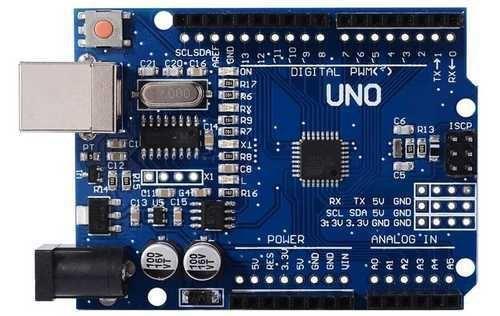
Fig-1: ArduinoUno
Arduinounoisamicrocontrollerwhichcontrolstheinput andoutputdevicesthatareconnectedtoit.Inthissystem, it takes values from input sensors(e.g, soil moisture sensor, sonar sensor etc) and controls output devices(e.g, relaymodules,buzzeretc.)onthebasisofthosevalues.
● Esp8266
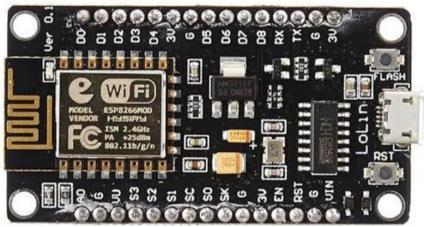
Fig-2: ESP8266/NodeMCU
It is a wifi chip integrated microcontroller. It connects to theinternetviawifiandsendsvaluestothecloud.Itisthe main component of the IoT part of this project. It also works as an arduino and I will use it to control input and outputdevices.
● Soil Moisture Sensor
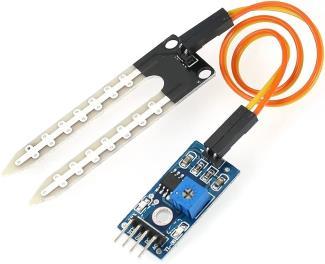
Fig-3: SoilMoistureSensor
Itdetectsandmeasureswaterinsoil.Ithas4pins,VCCfor positivepowersupply,GNDforgroundconnection,ACfor analog data output, DC for digital data output. I use an analogdataoutputpinheretomeasurewaterinsoil.
● Ultrasonic Sensor(HC-SR04)
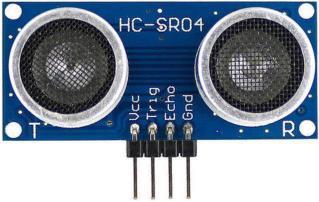
Fig-4: UltrasonicSensor(HC-SR04)
There are 4 pins in this sensor, VCC for positive connection of power supply, GND for ground connection, TRIGisusedtosendultrasonicsoundwaves,ECHOisused to receive the sound wave that was sent by TRIG. I will calculatethedistanceofanobjectonthebasisofthetime interval between outgoing sound wave and incoming soundwave.Iwillusethissensortomeasuretheheightof plantsanddetectwaterlevelofhydroponics.
● PIR Motion Sensor:
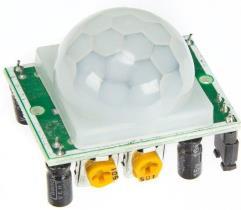
Fig-5: PIRMotionSensor
Human and animal body always reflects passive infrared rays. Thesensorsensestherayandgivesdigitaloutput.I will use it to detect movement of animals that could be harmfulforthegarden.
● Relay Module
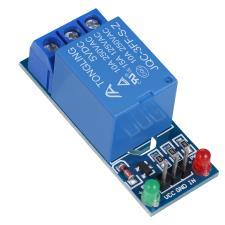
Fig-6: SingleChannelRelayModule
Ithas6pins.3pinsforinput,VCC,GND,INforinputsignal. 3 pins for output, NC(Normally closed), COM(Common), NO(Normally Open). I will use it to turn on/off the water pumponthebasisofamicrocontrollersignal.
International Research Journal of Engineering and Technology (IRJET) e-ISSN:2395-0056
Volume: 11 Issue: 02 | Feb 2024 www.irjet.net p-ISSN:2395-0072
● DC Water Pump
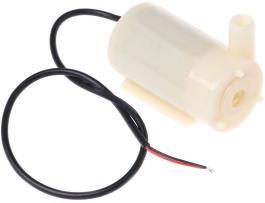
Fig-7: DCWaterPump(9V)
Iwilluseittowatertheplants.
● DHT11 Sensor
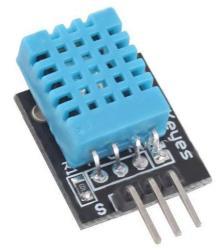
Fig-8: DHT11TemperatureandHumiditySensor
It measures the temperature and humidity of a place where it is placed. I will use it to measure those of our agriculturalarea.
4.2 Programming Language, Libraries, IDE and Cloud Services
● Blynk IoT 2.0

Fig-9: Blynk
I will use the Blynk IoT service and Android app for control and monitoring. I will monitor plant height, soil moisture, temperature, humidity etc. We will control waterpumps.
● Programming Language

Fig-10: C++
IwilluseC++toprogramArduinoandEsp8266.
● Libraries
1. DHT.h
2. ESP8266WiFi.h
3. BlynkSimpleEsp8266.h
● IDE

Fig-11: ArduinoIDE
IwilluseArduinoIDEtocodeArduino.
4.3 Description
The system is divided into two levels. One is IoT and anotherisAutomation.
4.3.1 Level 1
4.3.1.1 IoT Plant Watering
● HowItWorks
It works on the IoT concept. In this part, we control the water pump through our mobile application. We don’t needtobephysicallypresenttowaterourplants. Wejust need to install the Blynk app to our android device, login with our username and password. There is a switch, by turning it on the switch the pump will turn on and start watering the plant. By turning the switch off, the pump willturnoffandstopwateringtheplant.
● RealWorldImplementation
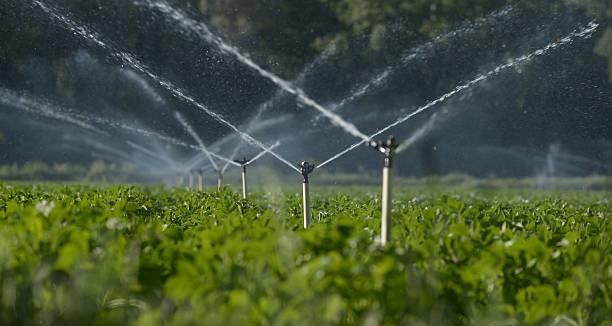
In vertical farming, rooftop gardening etc places, we will usea water spray pump insteadofnormalwaterpumpin which by spraying water on high pressure, a single IoT system can give water to more than one plant. Not only water, we can also give liquid solutions, pesticides to plants by this system.
International Research Journal of Engineering and Technology (IRJET) e-ISSN:2395-0056
Volume: 11 Issue: 02 | Feb 2024 www.irjet.net p-ISSN:2395-0072
This is a large field but we will use this technology with IoT in urban agricultural places. The power of the water spraypumpwillvaryonthebasisofhowlargetheplaceis.
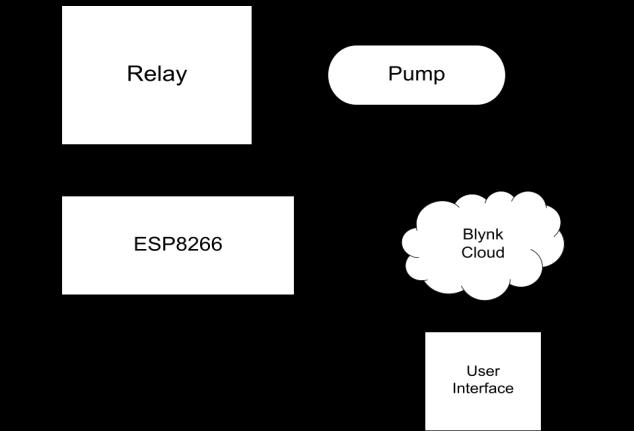
● BlockDiagram
● WorkingMethodology
When weswitchontheBlynk app, the data goestoBlynk cloud,thenthecodeinnodemcu,fetchesthedatafromthe Blynk API and sends a digital signal to the relay module. On the basis of the signal, the pump turns on/off. I have used “BlynkSimpleEsp8266.h”, the library, to connect to ESP8266withBlynk.Blynkauthtoken,wifissid,password hasbeencodedinnodemcu.
● Scheduling
By using the “Automation” feature of Blynk, we can set a limited time to conduct this operation. For example, we can set 5 hours as a time interval. That means, every 5 hours, Blynk sends data to nodemcu to turn on the pump for a limited time which is initialized in the code of nodemcu. You do not need to remember to water your plants.
● Precaution
The water tank from where the pump will supply the watershould bealways full. Now in the market, thereare many devices that automatically fill the tank when it is empty. We can install this in our tanks, then it will never beempty.
4.3.1.2
● Howitworks
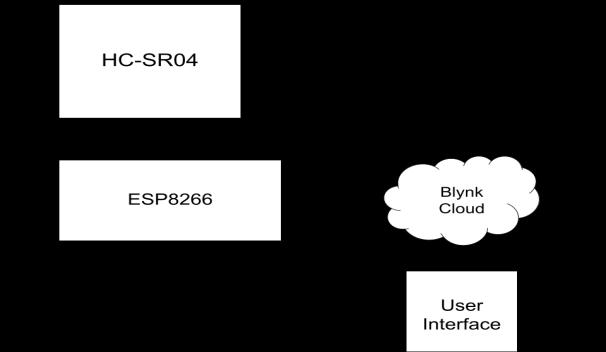
Placeasonarsensoraboveaplant.Whentheplantslowly increases, it will go closer to the sensor. Sensor is always looking for the distance of the object in front of it. So, the sensor can track the changes of height in the plant on the basis of the distance. It always sends data to the Blynk cloud.
● Setup
Let's place a sonar above a plant and the distance is 5 inches.MakeittheinitialvalueintheBlynkapp,so,inthe app, the data will show 0. Now, check the minimum distanceofthesonarsensor.Makethatminimumdistance as maximum distance in the Blynk app. Let’s assume the minimum distance is 10 inches. Now, the Blynk app is showing distances between 5 inches to 10 inches. So the growthoftheplantismoreclearlyvisible.
● BlockDiagram
● Howitworks
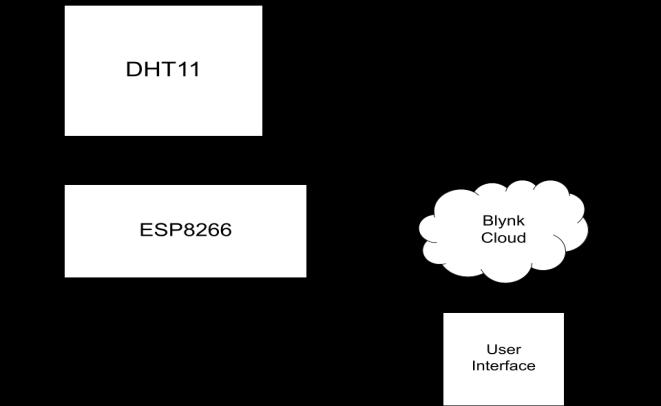
I have used DHT11 to measure the temperature and humidityoftheplace.
● WorkingMethodology
DHT11 has 3 pins, VCC, GND, Data. I have connected VCC to a 5V pin of nodemcu and GND to a ground pin of nodemcuandDatatoadigitalGPIO.“DHT11.h” libraryhas been used to take temperature and humidity values from the sensor. Both come as analog values. It gives 0-50 degreecelsiustemperaturevaluewitha2-degreeaccuracy and humidity range is 20% to 80% with 5% accuracy. It sendsdatatotheBlynkcloudandwecangetthedatafrom ourBlynkapp.
● BlockDiagram
International Research Journal of Engineering and Technology (IRJET) e-ISSN:2395-0056
Volume: 11 Issue: 02 | Feb 2024 www.irjet.net p-ISSN:2395-0072
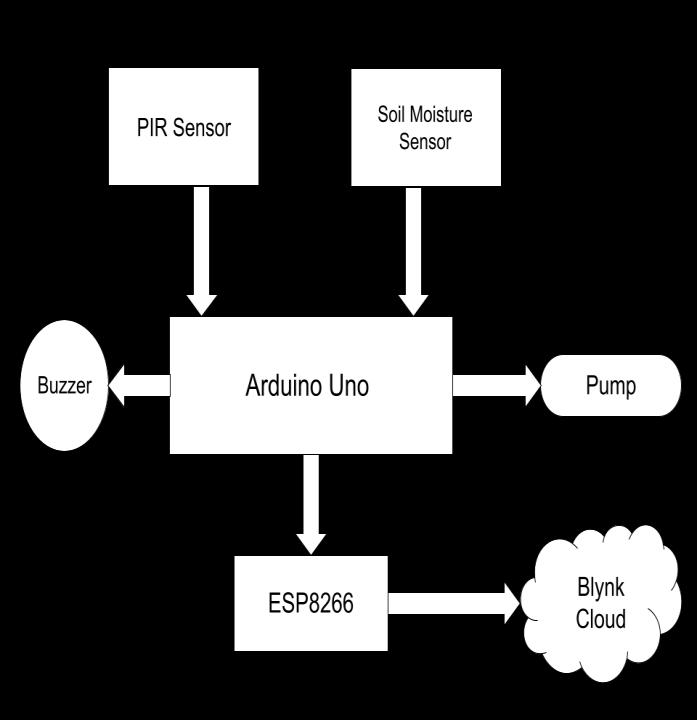
This level is quite big. At this level, I have used various sensors,programstoautomateeachandeveryoperation.
4.3.2.1
● Howitworks
A soil moisture sensor is placed in soil. By measuring water quantity present in that soil, the system will turn on/off the water pump. The soil moisture value will be sent to the Blynk cloud, that is how we can monitor whetherourplantsaregettingwaterornot.
● WorkingMethodology
Ihavesettwovaluesinarduinocode.Oneistheminimum moisture value and another is maximum moisture value. When the moisture of soil decreases below the minimum value, the water pump will start watering. When the moisture value goes above the maximum value, the water pump will stop watering. I have connected the AC pin of the soil moisture sensor with both arduino uno and nodemcu,so thatthevalue isnot onlyutilized byarduino butalsosendsthevaluetoBlynkvianodemcu.
Weknowthereisonlyoneanalogpininnodemcuandwe willneedmorethanonesoilmoisturesensor.Inthatcase, we can use a 12-channel analog multiplexer module to increaseanalogpinsinnodemcu.
● RealWorldImplementation
Let’s assume, we have a 5ft long, 4 ft wide and 5 inches depthtraywherewehaveplantedmorethan10saplings. Now,weneedtosetthissystem.Wewillmake5columns, each column is 1 ft long. We will set one sensor per column. Set a 12V DC water spray motor in front of the tray.Now,with5sensors,wecanmeasurethemoistureof alongplaceandsupplywatertomorethan10plants. We can also use this idea in large agricultural land. Then we will need more powerful pumps to cover the whole area. We can also monitor the moisture from anywhere via the internet.
4.3.2.2 Automatic Intruder Detection
● Howitworks
The PIR sensor detects human and animal movement. When any animal tries to enter the garden, the alarm will ring and the animal will run away from the garden. If it comes into the garden anyway, still when it moves, the alarm will ring and the animal will have to go out from there.
● WorkingMethodology
The PIR sensor has 3 pins, VCC, GND, Out. Set VCC to positive 5V, GND to ground and OUT to digital GPIO of nodemcu. A buzzer is connected to another digital GPIO pin and GND. When the sensor detects something, the buzzerstartsringingfor30seconds.
4.3.2.3 Advanced Hydroponics System
● Whatis“Hydroponics”?
Hydroponicsisthecultivationofplantswithoutusingsoil. Hydroponic flowers, herbs, and vegetables are planted in inert growing media and supplied with nutrient-rich solutions, oxygen, and water. This system fosters rapid growth, stronger yields, and superior quality. When a plant is grown in soil, its roots are perpetually searching forthenecessarynutritiontosupporttheplant.Ifaplant’s rootsystemisexposeddirectlytowaterandnutrition,the plantdoesnothavetoexertanyenergyinsustainingitself. Theenergytherootswouldhaveexpendedacquiringfood and water can be redirected into the plant’s maturation. Asaresult,leafgrowthflourishesasdoesthebloomingof fruitsandflowers.
● HowTheMachineWorks
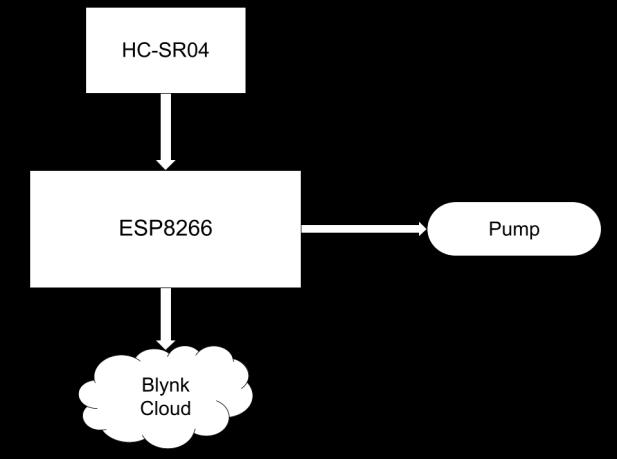
There is a tank of nutrient solution. A water pump is connected to it, so when the water pump turns on, it supplies a nutrient solution, not water. There is a long aquarium where all the plants are placed. The plants are above the aquarium but their roots are sinked in the nutrient solution. When those plants completely take all thesolution,thewaterpumpwillautomaticallysupplythe solution from the tank. The height of the solution level is alwayssenttotheBlynkcloud.
● WorkingMethodology
Ihaveplacedasonarsensorontheplanewheretheplants arealsoplaced,theupperplaneoftheaquarium.Now,the sensor can easily measure the water level. I have set a minimum distance and a maximum distance in nodemcu board. When the water level goes below the minimum distance,thewaterpumpwillstartsupplyingthenutrient solution. After reaching the maximum level, the water pumpwillstopsupplyingsolution.
● RealWorldImplementation
We can easily implement this. We can add some sensors butwithoutanychanges, itisstillreadyforexecution.
International Research Journal of Engineering and Technology (IRJET) e-ISSN:2395-0056
Volume: 11 Issue: 02 | Feb 2024 www.irjet.net p-ISSN:2395-0072
4.4 Connect Level 1 to Level 2
● WhatIfAnySensorFails
Suppose, a soil moisture sensor got damaged, then how plants get water? In that case, we can combine Level 1 withLevel2.Wewillconnecteverywaterpumpwithboth an IoT system and Automation system. So, if any sensor from the automation system fails, we still supply water through our mobile app. We can see the moisture level in our app, so, when we see that the moisture is below minimum moisture value for some time, we will understand that something wrong has happened to our automationsystem,thenwewillsupplywaterthroughthe Blynkapp.
It is also applicable for the Advanced Hydroponics System. When we see that the solution level is below minimum distance, we will supply a solution with our Blynkapp.
We can add a notification system with it. When the water level of hydroponics or moisturelevel of soil is below the minimum level for more than a certain time then the
system automatically sends a notification to the user. So theusergetanalertanddoesitovertheapp.
● I will add a PH sensor to understand what fertilizer and how much fertilizer should be appliedinsoil.
● I will add a NPK sensor to measure nitrogen, potassium and calcium in soil. That will help in understanding what fertilizer and how much fertilizershouldbeapplied.
● A system is needed to take the stale solution out from the aquarium of hydroponics. At a certain time interval, stale solution will be taken out and freshsolutionwillbesupplied.
● I will design my own backend server and hardware setup so that a user can add more hydroponics, more plants to the system just by doing some simple steps without knowing any technical knowledge(e.g, circuits, programs etc.) about the system. It will make the system more user-friendly.
● Iwill usemachinelearning tomeasuretheheight and health of plants. By implementing some cameras with machine learning technology in agricultural areas, we will be able to take day by day notes about the health of plants. It will make thissystemmoreefficient.
This is an advanced IoT system that has the ability to replace most of human work in the Urban Agriculture area. It will also decrease the cost of maintenance. This is to continuously keep an eye on the whole environment. We have seen how much we need urban agriculture to avoid the future food crisis. If I get any chance, I will definitely implement this system on a rooftop garden or somethingelseandwillobservethechanges.
I would like to express my sincere gratitude to Sovendra Ghosh Roy, Teacher of Biology, Siliguri Boys’ High School and Subhajit Bardhan, Teacher of IT/ITeS, Siliguri Boys’ High School. They helped me a lot in this project. Without them, I might not have completed this project.
[1] https://blynk.io/
[2] https://docs.blynk.io/en/
International Research Journal of Engineering and Technology (IRJET) e-ISSN:2395-0056
[3] https://www.wikipedia.org/
[4] https://docs.arduino.cc/
[5] ChaitraBhatandAmitPaschapur,“UrbanAgriculture: The Saviour of Rapid Urbanization”, Indian Farmer 7(01):01-09;January-2020
BIOGRAPHIES

Volume: 11 Issue: 02 | Feb 2024 www.irjet.net p-ISSN:2395-0072 © 2024, IRJET | Impact Factor value: 8.226 | ISO 9001:2008
Dipankar Chowdhury
Iamafinalyearstudent.I ampursuingBachelor’sin Science in Computer Science from Siliguri College. I am very passionate about coding, IoT and embedded systems.Iama Full Stack Web Developer that will help me to build my own IoTplatform.