
International Research Journal of Engineering and Technology (IRJET) e-ISSN: 2395-0056
Volume: 11 Issue: 02 | Feb 2024 www.irjet.net p-ISSN: 2395-0072
International Research Journal of Engineering and Technology (IRJET) e-ISSN: 2395-0056
Volume: 11 Issue: 02 | Feb 2024 www.irjet.net p-ISSN: 2395-0072
Gopal Kumar Choudhary1 , Baisali Mallick2
1University Institute of Technology, Chandigarh University, Mohali, Punjab, 140413, India
2Department of Quality Control, Swiss Pac Pvt. Ltd., Vadodara, Gujarat, 391440, India
Abstract- Petrolpumpownersoccasionallytamperwith fuel dispensing machines, leading to inaccuracies in the quantity of fuel dispensed and impacting consumers' economic interests. To address this issue, we propose a system that ensures accurate measurement of incoming fuel and enhances user awareness of the dispensed quantity. This system utilizes flow sensors to measure fuel flow rates, an LCD display to visually indicate the dispensed quantity,andaspeakertoaudibly announcethe displayed fuel quantity. Controlled by a Raspberry Pi powered by a battery, the system provides real-time feedback to users, increasing transparency and confidence in refuelling transactions. By integrating affordable and accessible components, such as a Raspberry Pi, the proposedsystemoffersacost-effectivesolutionthatcanbe easily implemented at petrol pumps. Ultimately, this system aims to mitigate the impact of fuel measurement inaccuracies caused by tampering, safeguarding consumers' interests and promoting fair and transparent transactionsinthefuelindustry.
Key Words: Fuel Measurement, Fuel fraud, Flow sensor, Raspberry Pi, Tampering, Transparency, Petrol pump, Frauddetection
Petrol pump owners occasionally engage in unethical practices by tampering with fuel dispensing machines, leadingtodiscrepanciesinthequantityoffueldispensed to consumers. These manipulations, often achieved through software modifications within the machines, result in inaccuracies between the displayed value and the actual amount of fuel dispensed. Such discrepancies can have significant economic implications for consumers, as even slight variations in fuel measurementscanresultinfinanciallossesovertime[1].
To combat this issue and ensure fair and transparent transactions at petrol pumps, we propose the developmentofacomprehensivesystemthatguarantees the accurate measurement of incoming fuel and enhancesuserawarenessofthedispensedquantity.This systemwillintegratevariouscomponents,includingflow sensors, an LCD display, a speaker, jumper wires, and a Raspberry Pi powered by a battery, to create a robust solution.
The core objective of this system is to address the root cause of fuel measurement inaccuracies caused by tampering while providing consumers with real-time feedback on the quantity of fuel they are receiving. By leveraging technological advancements, such as flow sensors capable of accurately measuring fuel flow rates, and utilizing a Raspberry Pi as the central processing unit, we aim to create a reliable and cost-effective solutionthatcanbeeasilyimplementedatpetrolpumps.
Through the integration of an LCD display, users will haveaccesstovisualfeedback,allowingthemtomonitor the dispensed quantity in real-time. Additionally, the inclusion of a speaker will provide audible announcements of the displayed fuel quantity, further enhancing user awareness and confidence during refuelingtransactions.
Overall, this system represents a proactive approach to addressing the challenges posed by petrol pump tampering, promoting fairness, transparency, and consumertrust withinthefuel industry.In thefollowing sections, we will delve into the technical specifications andimplementationdetailsofeachcomponent,outlining the system's functionality and potential benefits for consumersandpetrolpumpoperatorsalike.
The timeline of the reported problem of petrol pump fraud spans several decades, reflecting the evolution of fraudulent practices and the response of the industry and regulatory authorities. While specific dates and events may vary, the following general timeline outlines keydevelopments:
1960s-1980s: The initial cases of petrol pump fraud involvedmanualtamperingwithmechanicalmeters. Unscrupulous individuals manipulated mechanical parts to dispense less fuel than indicated, leading to financiallossesforconsumers.
190s-2000s: With the advent of electronic fuel dispensers, fraud tactics evolved. Hackers exploited vulnerabilities in electronic systems to alter measurements and deceive customers, showcasing theshifttowardstechnologicallydrivenfraud.
International Research Journal of Engineering and Technology (IRJET) e-ISSN: 2395-0056
2000-2010s: The 2010s witnessed a surge in software-based manipulation of fuel dispensing machines. Fraudsters employed advanced techniques, such as installing malware or custom software, to modify measurements remotely. This marked a new level of sophistication in fuel pump fraud.
Present and Future: Technology-Driven Solutions: Thepresenteraseestheriseofinnovativesolutions, such as the proposed integration of flow meters in vehicles. This approach aims to prevent fraud by directly measuring fuel at the source and bypassing externalmeasurementsystems.
Table 1: TimelineofReportedProblemsandFraud Techniques
Decade/Period KeyProblemsandFraudTechniques
Manual tampering with mechanicalmeters.
1960s-1980s
1980s-2000s
Manipulation of mechanical parts to dispense less fuel than indicated.
Resulting in financial losses for consumers.
Transition to electronic fuel dispensers.
Hackingofelectronicsystemsto altermeasurementsanddeceive customers.
Surge in software-based manipulation of fuel dispensing machines.
2000-2010s
RecentYears
Installation of malware or custom software to modify measurementsremotely.
Increased sophistication in fraudulentpractices.
Reports of fuel measurement inaccuraciesandfinanciallosses continuetorise.
Widespread use of software manipulationtechniques.
Challenges in ensuring accurate fuelmeasurements.
Present and Future
Development of technologydriven solutions, such as the integration of flow meters in vehicles
The evolving timeline of petrol pump fraud underscores the need for adaptive and technology-driven countermeasures. The proposed solution to implement flow meters in vehicles represents a significant step
Volume: 11 Issue: 02 | Feb 2024 www.irjet.net p-ISSN: 2395-0072 © 2024, IRJET | Impact Factor value: 8.226 | ISO 9001:2008
towards ensuring accurate fuel measurements and combating fraudulent practices in the fuel dispensing process.
The accurate measurement of fuel dispensed at petrol pumps is crucial for ensuring fairness and transparency in refueling transactions. However, the prevalence of tampering and fraudulent practices among petrol pump operators has led to widespread concerns regarding the reliability of fuel measurement systems. In this section, wereviewexistingliteratureandresearchrelatedtofuel measurement accuracy and solutions proposed to mitigateinaccuraciesinpetrolpumptransactions.
Several approaches have been proposed to address the issue of inaccurate fuel measurement at petrol pumps. Traditional methods, such as manual inspection and calibration by regulatory authorities, have been widely employed but are often resource-intensive and prone to human error. More recently, technological solutions involving the use of flow sensors, electronic monitoring systems, and automated calibration procedures have emergedaspromisingalternatives[2].
Addressing the problem of inaccurate fuel measurement at petrol pumps have evolved to incorporate advanced technologies aimed at enhancing transparency and accountability in refueling transactions. One such solution involves the integration of flow sensors with electronic monitoring systems, which accurately measuretheincomingfuelflowanddisplaythequantity on-screen in real-time. However, to further enhance transparency, particularly for commercial vehicles, additional features such as GSM (Global System for Mobile Communications) and GPS (Global Positioning System)moduleshavebeenintegratedintothesystem.
The integration of GSM and GPS modules allows for seamless communication and real-time tracking of fuel transactions for commercial vehicles. Once the fuel quantity is measured by the flow sensors and displayed on the screen, the GSM module enables the system to send a message containing the total incoming fuel quantity along with the live location of the petrol pump to a designated mobile number. This message provides commercial vehicle operators with immediate confirmation of the fuel transaction and ensures transparencyintherefuelingprocess[3].
ByincorporatingGSMandGPSmodulesintotheexisting flow sensor-based fuel measurement system, petrol pumpoperatorscanenhanceaccountabilityandmitigate the risk of fraudulent activities. Commercial vehicle operators benefit from real-time notifications of fuel transactions, enabling them to monitor and verify refueling activities remotely. Overall, this integrated solution not only improves the accuracy of fuel
International Research Journal of Engineering and Technology (IRJET) e-ISSN: 2395-0056
Volume: 11 Issue: 02 | Feb 2024 www.irjet.net p-ISSN: 2395-0072
measurement but also fosters trust and confidence amongconsumersandstakeholdersinthefuelindustry.
Working Principle of the Proposed System:
FlowMeasurement:
The system starts by measuring the flow of fuel using flow sensors installed in the fuel dispensing system. Theseflow sensorsaccuratelymonitorthe rate at which fuelpassesthroughthesystem.
DataAcquisition:
The flow sensor data is acquired by the Raspberry Pi, whichservesasthecentralprocessingunitofthesystem. TheRaspberryPicontinuouslycollectsandprocessesthe flowsensorreadings.
QuantityCalculation:
Based on the flow sensor data, the Raspberry Pi calculates the quantity of fuel dispensed in real-time. It uses algorithms to convert the flow rate measurements into volume measurements, taking into account factors suchasdensityandtemperaturevariations.
DisplayOutput:
ThecalculatedfuelquantityisthendisplayedontheLCD display in a clear and visible format. The LCD display providesuserswithreal-timefeedbackontheamountof fueltheyarereceivingduringtherefuelingprocess.
AuditoryFeedback:
Simultaneously, the RaspberryPitriggers thespeaker to provide auditory feedback to the user. The speaker announces the displayed fuel quantity audibly, ensuring that users are aware of the dispensed quantity even withoutactivelymonitoringtheLCDdisplay.
ContinuousMonitoring:
Throughout the refueling process, the system continuously monitors the flow of fuel and updates the displayed quantity accordingly. This ensures that users have accurate and up-to-date information about the amountoffueltheyhavereceived.
UserInteraction:
UserscaninteractwiththesystembyobservingtheLCD display and listening to the auditory announcements. They can verify the dispensed quantity and raise any concernsifdiscrepanciesareobserved.
TransparencyandTrust:
By providing accurate and transparent measurement of fuel quantity, the system aims to foster trust between consumers and petrol pump operators. It promotes fairness and integrity in refueling transactions, ultimatelybenefitingallstakeholdersinvolved.
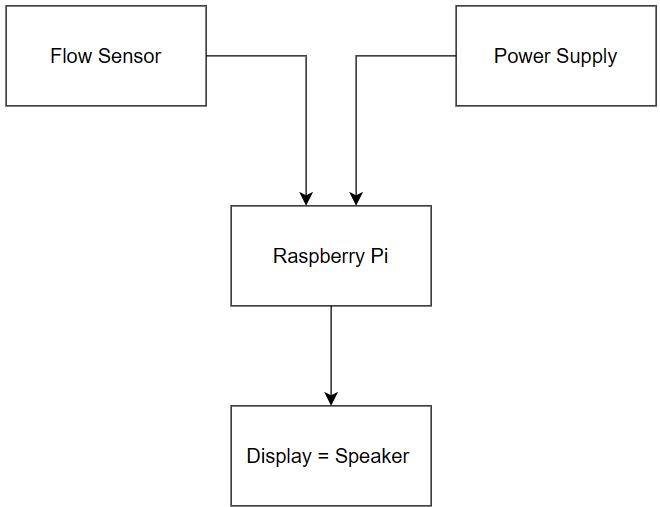
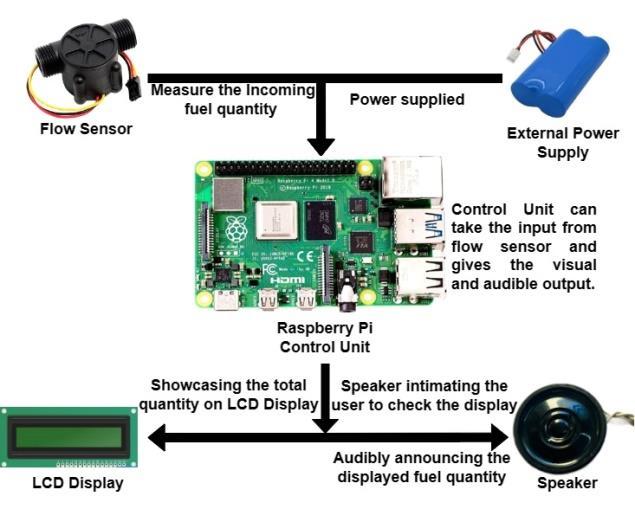
The project utilizes the following hardware components foritsimplementation:
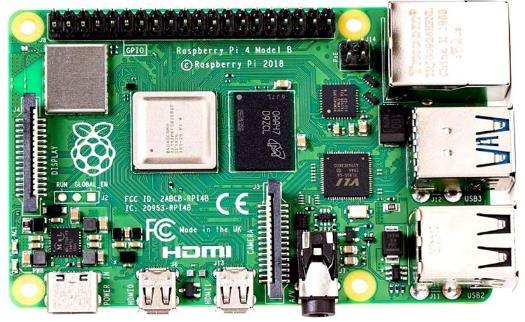
RaspberryPi
TheRaspberryPiservesasthecentralprocessingunitin our proposed invention for ensuring accurate fuel measurement at petrol pumps. It processes data from flowsensors,calculatingthequantityoffueldispensedin real-time. The Raspberry Pi controls the LCD display, updating it continuously to provide users with visible feedback on the dispensed quantity. Additionally, it triggersthespeakertoprovideauditoryannouncements ofthedisplayedfuelquantity,enhancinguserawareness.
International Research Journal of Engineering and Technology (IRJET) e-ISSN: 2395-0056
Volume: 11 Issue: 02 | Feb 2024 www.irjet.net p-ISSN: 2395-0072
Managing system operations, including power management and error handling, the Raspberry Pi ensures efficient and reliable performance. Its flexibility allows for customization and expansion, supporting future upgrades and enhancements. Overall, the Raspberry Pi plays a crucial role in coordinating the system'scomponentstopromotetransparencyandtrust inrefuelingtransactions[4].
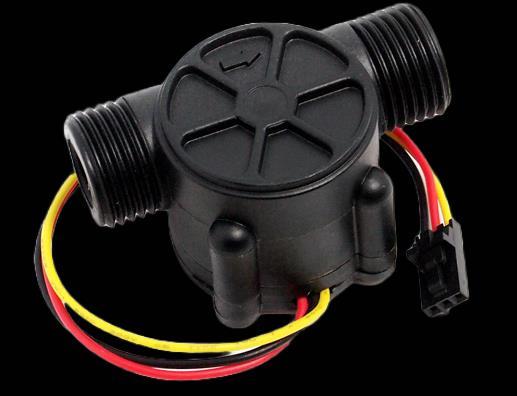
FlowSensor
A flow sensor is a critical component used to measure the rate of flow and total quantity of a fluid passing through it in a system or pipeline. By continuously monitoring the flow rate and total volume, flow sensors enable precise control of fluid flow, ensuring efficiency, safety, and accuracy in numerous applications. Whether it is for fuel dispensing, water management, HVAC systems, medical equipment, or industrial processes, flow sensors provide vital information for optimizing processes, conserving resources, and enhancing overall systemperformance[5]
Theuseofflowsensorintheproposedsystemtoachieve precise measurement of incoming fuel. Flow sensor will provideaccurateandreal-timedataontheflowoffluids, ensuring that customers receive accurate and trustworthyfuelmeasurements.
LCDDisplay
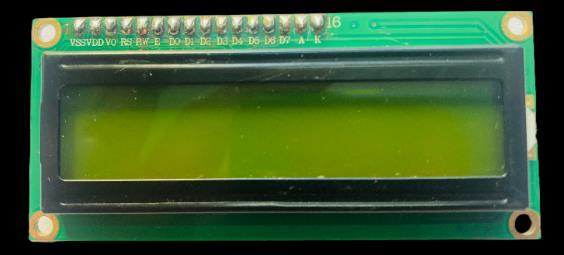
The LCD 16x2 (Liquid Crystal Display) is a widely used display technology that has become an integral part of various electronic devices. LCD displays consist of multiple layers, including a backlight, polarizers, glass substrates, and liquid crystals. They offer several advantages, including low power consumption, compact size, and the ability to display text, numbers, symbols, andgraphicswithclarityandprecision[6]
The LCD display is an essential component of the proposedsystemforpreventingpetrolpumpfraud.
It is utilized to showcase the fuel quantity on a screen, providingusers with a clear visual representation of the amount dispensed. The LCD display ensures transparency and allows consumers to verify the accuracyoffuelmeasurements.
Speaker
The speaker is a critical component used to produce audiblesoundinvariouselectronicdevicesandsystems. It converts electrical signals into sound waves, allowing foraudiooutputandcommunicationwithusers[7].
The speaker is an essential part of the proposed system for preventing petrol pump fraud. It is used to audibly announce the displayed value of the fuel quantity. By providing auditory feedback, the speaker enhances the transparency and user experience of the system, ensuring that consumers can easily and accurately perceive the information being presented. It helps to provide an additional layer of assurance to the fuel dispensingprocess.

International Research Journal of Engineering and Technology (IRJET) e-ISSN: 2395-0056
Volume: 11 Issue: 02 | Feb 2024 www.irjet.net p-ISSN: 2395-0072
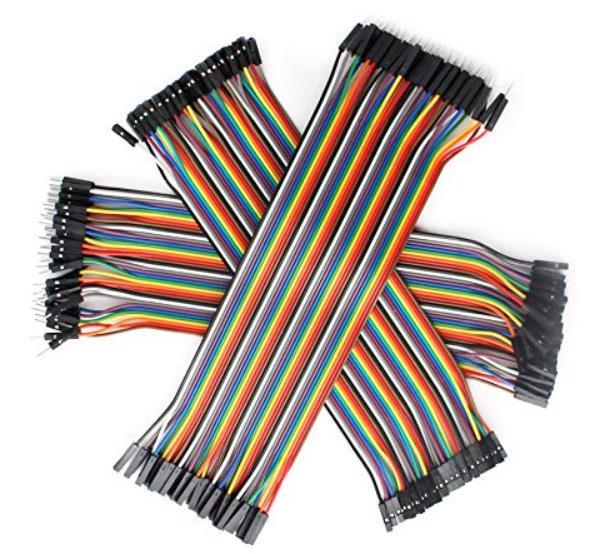
JumperWires
Jumper wires serve as integral components facilitating the interconnection of various system elements. These wirestypicallyconsistofinsulatedcopperstrands,often withmaleorfemaleconnectorsateachend,allowingfor easyinsertionand removal. Theirversatility liesintheir ability to facilitate temporaryor permanentconnections between different points on a circuit, enabling the creationofcomplexelectronicsystemswithouttheneed forsoldering[8]
It plays a pivotal role in establishing electrical pathways between critical components such as flow sensors, the RaspberryPi,LCDdisplay,speaker,andpowersource.By employing jumper wires, we achieve a flexible and modular system architecture, allowing for swift assembly, disassembly, and reconfiguration as needed duringprototyping,testing,anddeploymentphases.
In conclusion, our proposed invention offers a comprehensive solution to address the issue of inaccuratefuelmeasurementatpetrolpumps,stemming from tampering and fraudulent practices. By leveraging innovativetechnologyandrobustsystemdesign,wehave devised a solution that ensures transparency, accuracy, and reliability in refueling transactions. Through the integration of flow sensors, a Raspberry Pi, LCD display, speaker, and other components, our invention provides real-time feedback to users, empowering them to make informeddecisionsabouttheirfuelpurchases.
The implementation of our solution not only enhances consumer confidence and trust in the fuel industry but also promotes fairness and integrity in business practices. By mitigating the impact of fuel measurement inaccuracies caused by tampering, our invention safeguardsconsumers'economicinterestsandpromotes a level playing field for all stakeholders involved.
Furthermore, the scalability and adaptability of our solution allow for potential expansion and integration with existing petrol pump infrastructure, ensuring widespreadadoptionandlong-termsustainability.
In summary, our proposed invention represents a significant step forward in ensuring fairness, transparency, and accountability in refueling transactions. By addressing the root causes of fuel measurement inaccuracies, we contribute to a more equitable and efficient fuel distribution system, benefitting consumers, petrol pump operators, and the fuel industryasa whole. Withcontinued innovationand collaboration,wecanbuilduponourinventiontofurther enhance the integrity and reliability of fuel dispensing processes, ultimately fostering trust and confidence amongconsumersworldwide.
[1] “Five ways petrol pumps can cheat you and how to becareful - Times of India.”Accessed: Feb.28, 2024. [Online]. Available: https://timesofindia.indiatimes.com/auto/advice -centre/five-ways-petrol-pumps-can-cheat-youand-how-to-becareful/articleshow/99122422.cms
[2] “Volumetric Fuel (Petrol) Flow Meter: An Innovation,” MediconAgriculture&Environmental Sciences, Nov. 2022, doi: 10.55162/MCAES.03.072.
[3] A.Pawar,A.Mulla,V.Phalle,N.Patil,P.Patil,andS. Yakub Inamdar, “This work is licensed under a Creative Commons Attribution 4.0 International License Smart Fuel Meter with Detection of Frauds by SMS,” International Advanced Research Journal in Science, Engineering and Technology, vol. 7, no. 9, 2020, doi: 10.17148/IARJSET.2020.7912.
[4] “What is a Raspberry Pi? | Opensource.com.” Accessed: Feb. 28, 2024. [Online]. Available: https://opensource.com/resources/raspberry-pi
[5] “Flow Sensor - an overview | ScienceDirect Topics.” Accessed: Feb. 28, 2024. [Online]. Available: https://www.sciencedirect.com/topics/engineeri ng/flow-sensor
[6] “LCD - Construction, Working, Types and Its Applications.” Accessed: Feb. 28, 2024. [Online]. Available: https://www.elprocus.com/everwondered-lcd-works/
[7] “What is a Speaker - javatpoint.” Accessed: Feb. 28, 2024. [Online]. Available: https://www.javatpoint.com/what-is-a-speaker
International Research Journal of Engineering and Technology (IRJET) e-ISSN: 2395-0056
Volume: 11 Issue: 02 | Feb 2024 www.irjet.net p-ISSN: 2395-0072
[8] “What is a Jumper Wire?” Accessed: Feb. 28, 2024. [Online]. Available: https://blog.sparkfuneducation.com/what-isjumper-wire


I'm Gopal Kumar Choudhary, hailing from Samastipur, Bihar Currently, I'm at Chandigarh University, delving into Mechanical Engineering. Previously, I conquered a Diploma in Plastics Mould Technology at CIPET-Guwahati. Along the way, I've earned patents and published research papers, marking my journey of innovation and academicexcellence
I am Baisali Mallick, hailing from Guwahati, Assam. Currently, I work as a Lab Technician at Swiss Pac Pvt. Ltd. in Vadodara, Gujarat. Previously, I completed a Diploma in Plastics Mould Technology at CIPET-Guwahati. Along the way, I have participated in NCC and various paintingcompetitions.
2024, IRJET | Impact Factor value: 8.226 | ISO 9001:2008