
International Research Journal of Engineering and Technology (IRJET) e-ISSN: 2395-0056
Volume: 11 Issue: 02 | Feb 2024 www.irjet.net p-ISSN: 2395-0072
International Research Journal of Engineering and Technology (IRJET) e-ISSN: 2395-0056
Volume: 11 Issue: 02 | Feb 2024 www.irjet.net p-ISSN: 2395-0072
Ghanshyam L. Jodhani1 , Kishan Pala2
1M. Tech Student, L.J. University, Ahmedabad
2Kishan Jayswal, Assistance Professor, Civil Engineering Department, L.J. University, Ahmedabad, India.
Abstract - Here we implemented high rise structure construction everywhere as we have urbane designing software and due to improvement in the field of engineering and technology. As we know if we rise height of building seismic and wind load response also increase. Indianstandard codes propose that the displacements and forcesofastructure are directly relational to itsheight.Continuouslystudyis going on for reduction of response during extreme horizontal loading due to shaking and wind. Passivecontrollerdevicelike various type of dampers is used for controlling response of shaking and wind load.
Key Words: Fluid viscous dampers, Displacement, Storey Drift and Storey shear, ETABS.
1. INTRODUCTION
1.1 General
Which different kind of load is acting on RC building?
TherearemanytypesofloadsareactingonRCbuilding If we discus majorly in India we consider Dead load, Live load, Seismic load and Wind load (if height if building is morethan10m,asperIS875part3).ButaccordingtoIS456 table-18whileweconsiderearthquakeeffecttheningiven loadcombinationwindloadissubstitutebyearthquakeload.
Dead Load:
Deadloadismainlycausedbytheindividualweightof thestructureandthecompletionofthestructure.Deadloads are carried out only in the vertical direction. We can only assumethatnotippingoccurredduetostaticproperties.
Live Load:
Live load is acting due to human stay in building, furniture, vehicle etc. In different type of building, we considerdifferentvalueofLiveloadassuggestedinIS875 part2.
Earthquake Load (Seismic load):
Seismic load is the horizontal load on the building as result of the shaking of the ground during an earthquake. Earthquakeloadsare“dynamicload”.Othertypesofloads
usuallyslowlyactsonstructure,butseismicloadactrapidly andvibratethestructure.
What is earthquake resistant building?
Earthquakeresistantbuildingisdefinedasthereisno damageallowedinstructuralmemberandnomajordamage allowed in non-structural member in weak earthquake, Structuraldamageallowedbutnotmajordamageallowedit should be repairable in moderate or moderately strong earthquake,andinstrongearthquakemajordamageallowed but structure should not collapse during earthquake, this typeofbuildingknownasearthquakeresistantbuilding.
What is damper?
“Dampersareenergydissipationsystem”.
Dampersaredeviceusedtodisperseorabsorbvibration resultingfromearthquakeinthestructuretoincreasethe dampingandstiffnessofthestructure.
Different type of damper majorly used in building.
1] FluidViscousDampers(FVD)
2] ViscoelasticDampers
3] FrictionDampers
4] TunedMassDamper(TMD)
5] YieldingDampers
6] MagneticDamper
1.2 Fluid viscous dampers:
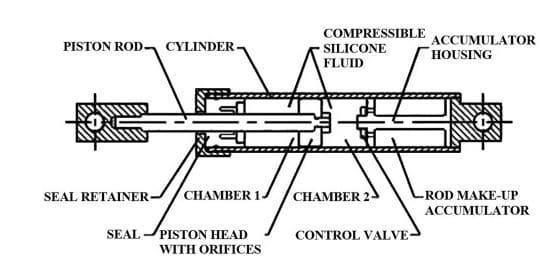
Figure 1: Schematic Detailing of Fluid Viscous Damper Components
Inthefluidviscousdampers,seismicenergyabsorbed by silicon-based fluid passing through the piston-cylinder
International Research Journal of Engineering and Technology (IRJET) e-ISSN: 2395-0056
Volume: 11 Issue: 02 | Feb 2024 www.irjet.net p-ISSN: 2395-0072
arrangement.Viscousdampersareusedinmanybuildingin higherearthquakezone.Itoperatesinthetemperaturerange of40oCto70oC.Viscousdampersreducevibrationcaused byearthquake.
Component of Fluid viscous dampers.
1] PistonRod
2] Cylinder
3] SiliconeFluid
4] AccumulatorHousing
5] SealandSealRetainer
6] Chamber-1andChamber-2
7] PistonHeadwithOrifices
8] ControlValve
9] RodMake-upAccumulator
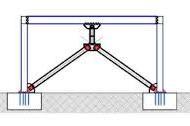
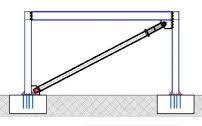
Types of connection of Fluid viscous dampers.
Therearethreewaystoconnectdampers,
1] Infloororfoundation
2] Insternpericardialbraces
3] Indiagonalbraces
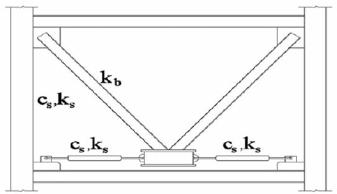
1.3 Terminologies:
Displacement:
“Thedistancefromtheoriginalpositionofsamplepointof structure to its final location of the deformed structure is knownasdisplacementofstructure.”
Story Drift:
“Thelateral displacementofconsecutivefloor isknownas storeydrift.”And“Theratiooffloordrifttothefloorheightis knownasstoreydriftratio.”
Story Shear force:
“Thelateralforceactonthestoreyduotoforcesuchaswind loadorseismicloadisknownasstoreyshearforce.”
Building having less stiffness attracts less storey shearandbuildingshavingmorestiffnessattractmorestorey shear.
The main objective of this study isto check the kind of performance a building can give when designed as per IndianStandards.
TheAnalysisofthebuildingframeiscarriedoutbyusing structuralanalysisanddesignsoftwareETABS(version21).
ToanalyseStoreydisplacementofbuilding.
ToanalyseStoreydriftofbuilding.
ToanalyseStoreyshearofbuilding.
WeareuseETABS(version21)foranalysemodelofRCC building. Take random parameters of column, beam and other structural component. Different seismic zone and differenttypeofsoilisconsideredforanalysis.
[1] Milton Fernandes 1, Swane Rodrigues 2, Suraj Sharma3, Smit Raut 4, Mr. Shreeshail Heggond 5, “ComparativeStudyofSeismicBehaviorofHigh-Rise Building with and Without Use of Fluid Viscous Damper Using E-Tabs”, International Journal of Innovations in Engineering and Science.
G+25RCCcommercialofficebuildinglocatedinMumbai withhigherheighttoplandimensionratioisexaminedusing fluidviscousdampersatexteriorcornerofbuilding.Modelis runinETABS2019andexaminedmodelwithtwomethods, (1)Equivalentstaticmethodand(2)Responsespectrum method.
For a G+ 25-storey RCC building with and without ice damper,floordisplacements,floordrifts,floorshearforces andmodelsalongxandydirections,staticequationmethod and response spectrum method time and frequency value wereused.
The study concluded that the floor deflection of a conventionalreinforcedconcretebuildingwithoutatipper willhavethehighestdeflectioncomparedtoabuildingwith atipper.Byaddingdamperstothestructure,wewillreduce
International Research Journal of Engineering and Technology (IRJET) e-ISSN: 2395-0056
Volume: 11 Issue: 02 | Feb 2024 www.irjet.net p-ISSN: 2395-0072
the displacement factor and increase the stability of the structure. Since the displacement value increases as the heightofthebuildingincreases,dampersareusedtoreduce grounddisplacement.Byaddingdamperstothestructure, the inter-storey drift value can be reduced, and the maximuminter-storey drift valueofthe buildingdoesnot exceedthelimitspecifiedinIndianstandards.
[2]Daniel C, Arunraj E, Vincent Sam Jebadurai S, Joel Shelton J, Hemalatha G, “Dynamic Analysis of Structure using Fluid Viscous Damper for Various Seismic Intensities”, International Journal of Innovative Technology and Exploring Engineering (IJITEE)
Dynamic analysis done for 5 story RCC structure with fluid viscous damper with different earthquake intensity,themodelisdoneusingSAP2000inthisresearch paper.UsingSAP2000,runthemodelandexaminethemodel with the dynamic analysismethod.Roofdisplacementand baseshearofRCCbuildingwithliquidviscousdampersand withoutliquidviscousdamperswereinvestigated.
Basedonthisresearch,itisconcludedthatthebaseshear obtainedwasreducedby50%fortheX-axisusingFVD.The base shear obtained was reduced by 61.3% for the Y-axis usingFVD.Theroofdriftwasreducedby50.65%fortheXaxisusingFVD.Theroofdriftwasreducedby51.35%forthe Y-axiswithFVD.
[3]Vibha More, Dr. Vikram Patil, Somanagouda Takkalaki, “Dynamic Analysis of RCC Frame StructureswithandWithoutViscousDamperHaving DifferentAspectRatio”,IJISET-InternationalJournal of Innovative Science, Engineering & Technology.
Detailed analytical study of liquid viscous damper usingETABSversion15.Thestudyislimitedtotheanalysis of 20 storey and 40 storeys R.C.C. building. A total of four different structuresare modelled for two different heights andtwodifferentaspectratios.
This work includes a study of the structure with and withoutafluidviscousdamper.Thedifferentheightstobe considered for this study are 20 storeys and 40 storeys. Differentaspectratioshouldalsobeconsidered,forexample 1,1.5.Theaimofthestudyistofindoutthedifferencesin variousparametersofthestructureusingETABSsoftwareby performingresponsespectrumanalysis.
Liquidviscousdamperswillbeinstalledinthebuildingto combattheaccelerationforceduetotheearthquake.Atrialand-errormethodwasusedtofindtheoptimallocationofthe dampersinthebuilding.
Researchindicatesthatupto44%reductioninfloordrift hasbeenobservedwhenFVDisprovidedtothe10thfloorin azigzagpattern,whilethereductionisupto54%whenFVD isprovidedatallexteriorcornersinazigzagpattern.Floor
driftreducedbyupto78%whenFVDissecuredtothe10th floorinazigzagpattern.Itisalsoreducedbyupto65%when FVD is provided at all outer corners in a zigzag pattern. Approximately40%reductionintime-periodwasobserved when using FVD. It was observed that the B model with aspectratioof1withdampersprovidedwithazigzagpattern atall outercornersgivesa satisfactoryresultcomparedto othermodels.
[4]Madhuri S L, Lakshmi P S, “Seismic Performance Evaluation of Fluid viscous Damper”, International JournalofAdvancesinEngineeringandManagement (IJAEM).
In this research, a 5-bay X-direction and 5-bay Ydirection rectangularreinforcedconcrete structure model for 15-story frames made of M25-grade concrete for the beam and slab and M30 for the column and Fe500-grade steelisbuilt.Aschemewithafieldwidthof5mismeasured. The expected floor height is 3.6 m. The total width of the frameistherefore25x25m.Thesupportconditionsareto be fixed and the reduction factor is to be 5 for soil type 2 (medium)andseismiczoneV.
Weconcludedthattheoffsetofthefloorishighonthe upperfloorandloweronthebase,withincreasingheightthe offset increases. The displacement of the floors of the structure without the application of FVD is the maximum compared to the structure with FVD, and with the applicationofFVDinthecornersofallfloors,themaximum displacement is reduced compared to other places of the structure.Thefloordisplacementfollowsaparabolicpath along the floor height with a maximum value somewhere near the fourth floor. After the fourth floor, the floor displacement decreases as the height of the structure increases. The storey displacement is maximum for the structure without dampers and is reduced by 47% when FVDs are placed at the corners of all storey and by 41% whenFVDsareplacedatthecenterofallstorey.
[5] N. Priyanka, Dr. J. Thivya, J. Vijayaraghavan, “SEISMIC STUDY OF MULTI-STOREY STRUCTURE WITH FLUID VISCOUS DAMPERS USING ETABS”, International Research Journal of Engineering and Technology (IRJET)
A seismic study of a multi-story structure resting on normal terrain with different seismic intensities with and withouttheuseofliquidviscousdampersisperformed.An RCmulti-storeybuildinginseismiczonesII,III,IVandVisto bedesignedandthemostvulnerablebuildingamongthemis to be identified. Fluid viscous dampers with different strengths can also be used in different types of buildings because the modelled structure has a low height; smaller deviceswereusedtostarttheanalysis.TheFVDisaddedto the structure after it is defined in the joint properties by addinganewdamperexponentialinthejointpropertydata.
International Research Journal of Engineering and Technology (IRJET) e-ISSN: 2395-0056
Volume: 11 Issue: 02 | Feb 2024 www.irjet.net p-ISSN: 2395-0072
From the results, we conclude that responses such as acceleration, base shear, displacement are reduced when FVDisincludedinthedesign.Theseismicperformanceof buildingscanonlybeimprovedbyusingenergydissipation devices(dampers)thatdissipatetheinputenergyduringan earthquake. Damper placement plays a primary role in controllingstructuralvibration.Efficiencyisgreaterwhen the dampers are placed in the corners instead of in the middle. Themostvulnerabletype of buildingis inzone V. Therefore,fromthisanalysis,thelocationofthedamperis veryeffectiveandrecommended.
Fluid viscous dampers are devices to absorb energy producedbyearthquakeor windloadoranyotherlateral loadactingonRCCbuilding.
Analysis of storey displacement with fluid viscous damperandwithoutfluidviscousdampersclearlyshow thatmaximumdisplacementofbuildingis reducedby somepercentageafteraddingfluidviscousdampers.
Storey drift of building after adding fluid viscous dampersdecreaseandbaseshearalsoreduce.
Time period of building is increase so frequency of building is decrease and less frequency attract less seismicload.
Location of fluid viscous dampers also affect on displacement,storeydriftandotherseismicparameters.
Cornerdampingismosteffectiveascomparedtoother placementofdampers.middledampingislittlebitless effectiveascomparedtocornerdamping.
Building in higher seismic zone getting more displacement and storey drift as compared to lower seismiczone.
Ifwewanttodecreasedisplacementandstoreydrift,we need to introduce some shock absorber for reduce movement of RCC building during lateral load acting duringearthquakeorhighwindspeed.
Fluidviscousdampersarethemoreeffectiveabsorbers forRCCbuilding.
4.
1] MiltonFernandes1,SwaneRodrigues2,SurajSharma3, Smit Raut 4, Mr. Shreeshail Heggond 5, “Comparative Study of Seismic Behavior of High-Rise Building with andWithoutUseofFluidViscousDamperUsingE-Tabs”, InternationalJournalofInnovationsinEngineeringand Science,www.ijies.net,e-ISSN:2456-3463Vol.6,No.5, 2021,PP.22-30
2] DanielC,ArunrajE,VincentSamJebaduraiS,JoelShelton J, Hemalatha G, “Dynamic Analysis of Structure using FluidViscousDamperforVariousSeismicIntensities”, International Journal of Innovative Technology and Exploring Engineering (IJITEE) ISSN: 2278-3075, Volume-9Issue-1,November2019
3] Vibha More,Dr.VikramPatil,Somanagouda Takkalaki, “Dynamic Analysis of RCC Frame Structures with and WithoutViscousDamperHavingDifferentAspectRatio”, IJISET - International Journal of Innovative Science, Engineering&Technology,Vol.6Issue10,October2019 ISSN (Online) 2348 – 7968 | Impact Factor (2019) –6.248
4] N. Priyanka, Dr. J. Thivya, J. Vijayaraghavan, “SEISMIC STUDY OF MULTI-STOREY STRUCTURE WITH FLUID VISCOUS DAMPERS USING ETABS”, International Research Journal of Engineering and Technology (IRJET),Volume:06Issue:04|Apr2019.
5] Madhuri S L, Lakshmi P S, “Seismic Performance Evaluation of Fluid viscous Damper”, International Journal of Advances in Engineering and Management (IJAEM),Volume4,Issue7July2022.
6] IS1893Part1(2016)
7] IS875Part1(1987)
8] IS875Part2(1987)