
Legacy Waste Management - A Case Study of Pune City.
Mr. Vishal Madhukar Bhandare1, Mr. Shrikant M Bhosale2, Dr. Y M Patil3
1 PG. Student Department of Technology, Shivaji University Kolhapur-416004, Maharashtra India.
2 Assistant Prof. Departments of Technology, Shivaji University Kolhapur-416004, Maharashtra India.
3 Assistant Prof. Rajarambapu Institutes of Technology, Shivaji University Kolhapur-415414, Maharashtra India
Abstract – Since 1985 there was no any existence of dumpsite in Pune. But at the time of industrialization population increases day by day and Pune covert into the metropolitan city, and city comes under the unexpected load of Municipal Waste, and place of empty ground, farms taken by dumps of Solid Waste. Before the years of industrialization farmers were collected urban waste, and farmers converts this discarded waste into the compost and utilized it for the farming activities. After the introduction of plastic in recent years, most of the city’s waste contains plastic, and farmer refused for the collection of cities waste and ultimately cities Solid Waste took place on empty ground and farms. In year 1989 District Collector of Pune allocated the land at Uruli/Fursungi for the disposal of cities solid waste. An efficient and environmentally friendly process known as "bio-mining" or "landfill mining" includes stabilizing old legacy waste in landfills by recovering valuable resources. In order to provide protection through the removal of waste, which will also help the community become more independent and pollution-free it entails reusing, recycling, and recovering with the goal of creating a viable resource. Near about 80% of plastic waste found in landfill & 75% of metal and glass remained and 5 % conversion of inert material turned into soil by weathering action. By referring the guidelines of Central Pollution Control Board (CPCB) or as per the direction of NGT, court directed that every city/corporation should follow the clause J of SWM Rules, 2016.
Key Words: Legacy waste, bio-mining, landfill mining, Central Pollution Control Board (CPCB), National Green Tribunal (NGT), Municipal Solid Waste (MSW, Solid Waste Management (SWM).
1. INTRODUCTION
Theterm"legacywaste"referstoamixtureofbiodegradable wastes, plastic waste, textiles, metals, glass, and other materialsthathavepartiallyortotallydecomposed.Landfill miningwasinitiallydocumentedinayear1953anarticleon the procedures employed at a disposal site run by the Tel AvivCityinIsrael.Anumberoflandfillminingprojectswere conducted in the late 1990s to reduce groundwater contamination, promote the recovery and reuse of mined
materials, and expand waste capacity in Florida and Connecticut. As per the research of the Florida, as mining wastewas60%asasubstanceresemblingdirt.TheDeonar dumpinggroundinMumbaiwasminedin1989asprototype caseresearchforutilizingcompostable.AttheKodungaiyur and Perungudi dump in Chennai, Kurian Joseph and his researchcrewfromAnnaUniversitycreatedthestudyofold cityrefusein2003.Atdepthof3meterssamplesweretaken. It was found that 65% of the waste was composed of tiny particles, and after determining their geotechnical appropriateness,theyweresuggestedforusageascompost material or material used for the landfilling. Although far above USEPA guidelines, in the recovered material heavy material were found, in which violate Indian composting regulations. Chronic neglect for scientific and sustainable treatment has produced to an ever-increasing quantity of MSW finding as a way to Indian dumpsites. Several of the aged dump sites are even so ruminating whenever their poisonouslegacy.Unlineddumpinggroundispollutingtheair &water,causinglongdurationmenacetothehumanhealth& environment.InaccordwithSwachhBharatMission(SBM) 2.0operatingstandards,withapopulationofcitiesunderone millionmustremoveoldmunicipalwastesitesby31March 2023,whileonemillionpopulationcitiesormoremustclean up their dumping ground site by 31 March, 2024. 1,250 hectaresofvaluablelandarelosttothedisposalofMSWeach yearinIndia.AspertheNationalGreenTribunal(NGT)study, over10,000hectares,oraround14,500footballstadiums,of urbanlandarethoughttoremaintrappedinIndia'slegacy waste dumpsites. For city officials all throughout India, reclaiming running dumping ground in an affordable & environmentally responsible manner is one of the high importances
India recently saw a major shift in waste management strategythatmadeitpossibletocleanupoldwastedumps and rotted out the reasons and excuses for not doing so. A hugefinancingofRupees1,41,600CrhassetasideforSwachh Bharat Mission 2.0, with a concentrated on source segregation, MRF facility, phase-out of single-use plastic, processing of C & D waste, as well as cleaning up all remaininglandfillsaroundthecountry.SincetheVedicera, houseshavedischargedprimarilyfoodwaste,whichhasbeen recycled into the soil together with stable wastes using compost pits. Farmers were collected the discarded unwanted material and that collected unwanted material (waste)byfarmerandtheyconvertitintothecompostand
International Research Journal of Engineering and Technology (IRJET) e-ISSN: 2395-0056 Volume: 11 Issue: 01 | Jan 2024 www.irjet.net p-ISSN: 2395-0072 © 2024, IRJET | Impact Factor value: 8.226 | ISO 9001:2008 Certified Journal | Page565
***
utilizeitforfarming.Yearswerepasses&citiestendstoward urbanization, Urbanization increase day by day, with the changingthelifestyle.GenerationofMunicipalSolidWaste (MSW) is rising together with global population growth, & landfillsarecontinuingtofillupwithrecyclablesthatcanbe utilizedasmaterials,ortorecoverenergy.Bystabilizingaged legacywasteinlandfillsandrecoveringpreciousmaterials,a technique known as "bio-mining" & "landfill mining" is effectual&environmentallysustainable.Mainobjectiveisto handling with the realistic categorization & recovery of mining legacy waste as well as potential recycling and processing options through an average compositional analysisofdatacollectedoverthepast25years.Accordingto estimates,thereare80%ofplasticsinlandfills,75%ofmetal andglass,and5%ofinertthathasweatheredintosoil-like material. The flowchart demonstrates that the waste ratio, accordingtocompositionalanalysis,is40:60tothecement industryandpowerplants,around7.3%ofthecombustible material utilized in co-processing will be supplied as RDF. Recycling facility received recyclable materials Noncombustiblematerials,C&Dwaste,andinertgarbageshould be disposed of in a low-lying region. Such as for the embankment filling of road, river filling, and basement of newly constructed building. With respect to changing life style,ineverydaylifeusesofplasticalsogetincreases.The endpointofthisappearsintothecompositionalcharacteristic ofcitieswaste;peoplestarteddiscardedplasticwithkitchen wastes.Plasticfallsunderthenon-degradablecategory,and end point of this blanketed plastic is supposed to that soil become infertile. Result of these activities is that farmers couldnotabletofertileasmuchcropcomparetohardlyany yearago,becauseraincouldnotablegoinforintotheplastic andseedsbecomeinfertile.Sofarmersstoppedthegathering themixedwasteandcitiescomesundertheunexpectedload ofwaste.Sopeoplecontinuouslydumpedthewasteoutside the metropolis along road sides. Heaps of Old Municipal wastes(legacywaste)wereproducedbytheuncheckedand ongoing dumping of municipal solid waste. Succeeding the decadesofneglecting,thatparticularwastedepositedatwide open ground and this open dumps have grown larger and higher,beingthepollution'sprimarysource.Thisdeposited waste carry the dry waste & wet waste it can also call it heterogeneouswastei.e.Bio-degradable&nondegradable. Thisdepositedwasterottinginbreathlessheapsproducesthe fouldarkliquidknownasleachatethatdestroythevegetation all over about the dumps and pollutes the groundwater reason for polluting is leachate generation. Degradation of solidwasteisafactorinthegenerationofgreenhousegases like methane and carbon dioxide that contribute to global warming. On Other side greenhouse gases methane is an inflammableinnature,soitbecomereasonofthefire,which contaminating an air quality. These open disposal grounds arebecomingamassivemountainduetothegradualincrease in municipal solid waste. Such as open dumping ground in DelhiGazipur(69meters),55metersheightofOkhladumps, 56 meters height of Bhalswa, all that dumping ground exceeding the allowable height. The city should abide by
clauseJofschedule-IoftheSWMRules,2016,inrelationto this Honorable NGT communication to all municipal corporations. If a municipal corporation violated the SWM Rules, 2016, the municipal corporation is accountable for coveringupforanyenvironmentaldamages.India'scitiesare battlingthecontroloftheirwastesincethesedumpsitesare fullandcannotabsorbanymorewaste.Theyhavealsobeen unable to locate land for the construction of facilities for waste processing. Up to 1,250 hectares of India's valuable landarelosteachyeartothedisposalofMSW,accordingto Swachh Bharat study (2020). Over 10,000 hectares of valuable urban land are covered by 3,159 legacy waste dumpsitesinIndia,accordingtotheNationalGreenTribunal.
2. About Legacy Waste
Wastethathasbeenaccumulatedandkeptforalongtimeon alandoranotherareaofundevelopedlandisreferredtoas legacy waste. Legacy Waste is a term used to describe the methodofscienceofremoving,handling,sorting,andusing for business the old municipal solid waste that has been dumpedinlandfills.Theterm"legacywaste"oftenrefersto old municipal solid wastes that are put in landfills, even though it has not been formally specified in any Indian government documents. Legacy waste is a mixture of biodegradable waste, plastic waste, textile waste, metal waste,glasswaste,andothermaterialsthathavepartiallyor completelydecomposed.Thereisnopertinentinformation availableregardingtheminimumageofwastestobeclassed as legacy waste. The aim is to clean up former dumps unscientificallyplanned&maintainedthiscouldbedamaging thepublichealthandenvironmentinthelongterm.
Itgenerallyincludethe
Bio-soil
RDF
Inerts/Rejects
Construction&Demolition
Glass&ceramics/Metals
Plastics/Rubber
Bio-compost
The form of legacy waste is regulated by the landfill's age. Componentoflegacywastebasedonthepercentageofwaste still in the landfill, composition grounded on the following fractions,likeas
Scrapandpolymericmaterial:Thiscomprisesthetextile andcardboard,plastic,paperetc.
Stones:Morethan20mminsize
FineSoil:Fractionoffinesoilisfoundmoreinpercentage in the landfill. Fine soil materials are mineralized and decomposedorganicwastewithsandandsilt,finefragment oftheC&Dwaste.
Miscellaneous: These include the broken glass, sanitary napkin,metallicfractionsuchasrazor,needles.
International Research Journal of Engineering and Technology (IRJET) e-ISSN: 2395-0056 Volume: 11 Issue: 01 | Jan 2024 www.irjet.net p-ISSN: 2395-0072 © 2024, IRJET | Impact Factor value: 8.226 | ISO 9001:2008 Certified Journal | Page566
2. Methodology
Geographical conditions:
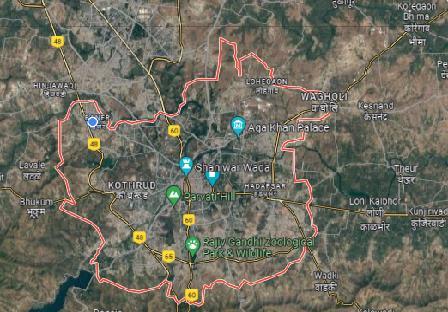
TheresearchworkwasperformedinthejurisdictionofPune Municipal Corporation and legacy waste plant situated in UruliFursungiPune.Puneisthesecond-largestmetropolisin Maharashtra and the sixth-largest city in all of India. The currentpopulationofthecityisapproximately39.33lakhs withnearbyonemillionhouseholds.TheareaofthePunecity is250sq.km.Punealsoknownasbicyclecity,accordingto current population bicycle city has been changes to automobilecity. Disposal sitesituatedbetween73.51°east and18.32°north.PunemetropolisislocatedintheDeccan Plateau.Founddifferentseasonaltemperatureandweather.
Methodology for the Legacy Waste
TostudycharacteristicsorquantityofLegacy WastegeneratedfromPuneCity.
Comparativestudyofdifferentmethodsusedfor LegacyWasteManagementforPuneCity
ToprepareactionplanforLegacyWaste ManagementforPuneCity.
TosuggestsolutionforLegacyWasteManagement forPuneCity.
Tochecktheeconomicviabilityofsuggested optionforPunecity.

Legacy Waste Process:
Municipal solid waste is a category of garbage that mostly consistsofhouseholdwaste(domesticwaste),occasionally with some business waste, Construction and Demolition waste, sanitation waste, and rubbish from streets also
International Research Journal of Engineering and Technology (IRJET) e-ISSN: 2395-0056 Volume: 11 Issue: 01 | Jan 2024 www.irjet.net p-ISSN: 2395-0072 © 2024, IRJET | Impact Factor value: 8.226 | ISO 9001:2008 Certified Journal | Page567
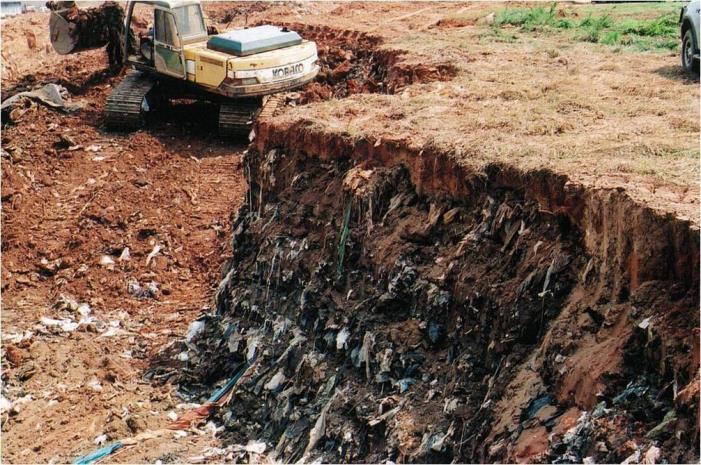
Figure 1 Picture of Legacy Waste
Figure 2 Pune Municipal Corporation boundary map
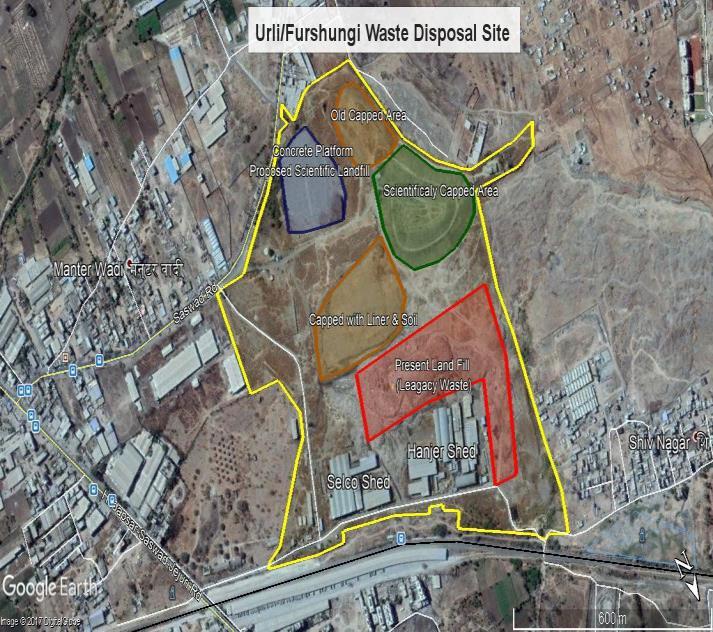
Figure 3 Legacy waste disposal site.
Figure 4 Process flow diagrams for the processing of legacy waste
includedina certainlocation.ThisMSWconsists mostlyof wet, biodegradable organic waste (at least 65%, and frequentlymore).Paperandplasticwastearethenexttwo biggest waste sources. The bulk of waste for all socioeconomicclasseswasmadeofbiodegradablematerials asopposedtorecyclableorunwanteditems.
Mostly of the waste generated form household, hotels, vegetablemarket,fishmarket,sothatmajorityofthecities inorganicorganicandwasteisproducedatvariouslevels;the specifics are described here. 40% to 45% of the trash is organic,30%to35%isinorganic,and15%to20%isinert wasteorrefuse.Wastegenerationdependsonthecommodity uses.Differentactivityarisesdifferentwaste.
Thesampleoflegacywastewasgatheredfromsolidwaste dumping ground of Pune city. The details physical and chemical analysis was done in Environmental Engineering laboratory. From PMC dumpling yard site 20 kg of legacy waste sample was collected for component separation of legacywaste.
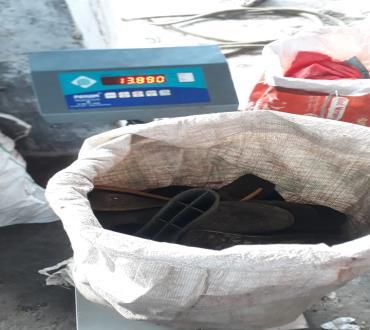
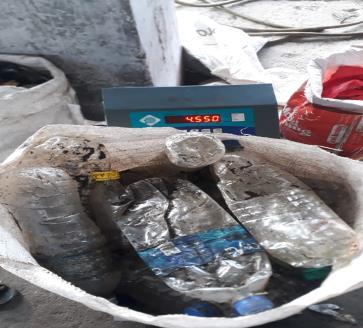
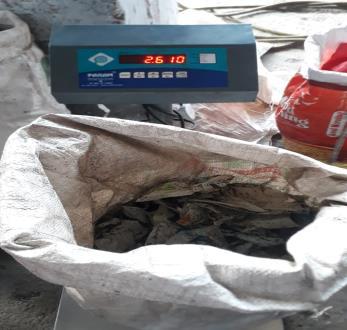
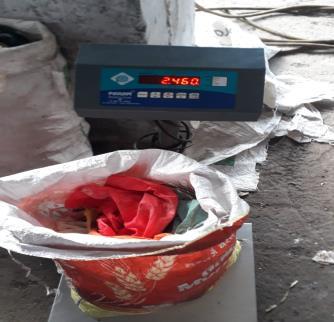
Afterstudyingthevariousdocumentsandliterature,mostof themunicipalcorporationuses theCPCBguidelinesforthe bioremediationorthetreatmentofOldMunicipalWaste.As per CPCP guidelines and characteristics of legacy waste following method must be used by Pune Municipal Corporationforeffectivewastemanagement.Thedetailsof suggestedplanformanagementoflegacywasteforPunecity isasgivenbelow
Excavationand heapingoflegacy waste
Preprocessingof legacywaste
Transportationupto processingPlant
Screening/Component Separation
SeparatedLegacy waste
I)Compost
II)Inertmaterial
III)Plasticandother material
Equipmentand machineryrequired
i)JCBforexcavation
Ii)Tractor/dumper
iii)Landforstacking
Sprayingofbio-culture forodourremoval
Equipment&machinery required
I)JCBforloading
II)Tractor/dumper
Equipmentand machineryrequired
I)Separator
II)Screen
Applicationofseparated legacywaste
I)Compost-Agriculture use
II)Inertmaterial-Land filling
III)Plasticandother material-for manufacturingofPaving blocks
Suggested plan for effective Legacy Waste management
International Research Journal of Engineering and Technology (IRJET) e-ISSN: 2395-0056 Volume: 11 Issue: 01 | Jan 2024 www.irjet.net p-ISSN: 2395-0072 © 2024, IRJET | Impact Factor value: 8.226 | ISO 9001:2008 Certified Journal | Page568
Figure 5 Sample collected from Legacy Waste site
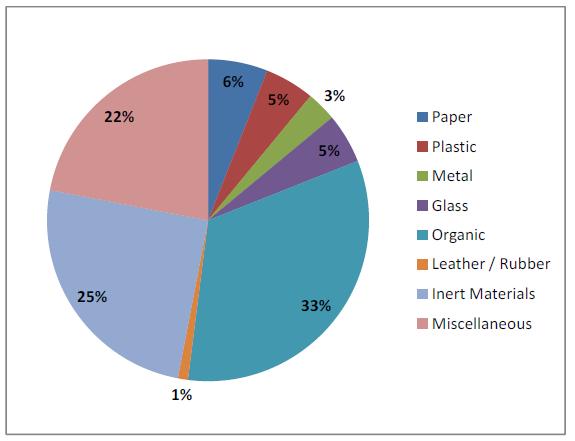
Figure 6 % wise components of Legacy Waste
3. Observation:
The details for various processes suggested for Municipal CorporationofPuneisgiveninbelowsectionofthethesis
The process of bio-mining involves excavating previously dumpedwasteandcreatingwindrowsoflegacywaste.The waste is then stabilized through bio-remediation, which involves exposing all of the waste to the air and using compostingbio-culturetorecovervaluableresources(such asorganicfines,bricks,stones,plastics,metals,clothes,and rags),anditisthenmanagedsustainablythroughrecycling co-processing. Following process is initiated to accomplish thebiomining-
Excavation/ Pre-processing treatment:
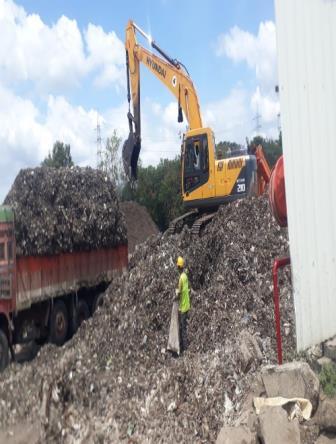
For reducing toxic gases, odour, and the dust, in the demarcatedarea.Theexcavationbestartedfromlowheight heap of waste to the high height heap of waste. Dumped waste excavated and turning with the use of excavator in heaps/cells formation. During the excavation as old waste dump contains various toxic gases and odour causing substancewastreatedbyscientificmannerwithsprayingof Bio-culture.Turningprocesswill neutralizethe toxic gases andalsocontroltheodouranddust.
MSW Heaping-Stacking:
After excavation completion of the above pre-treatment process,separateheapsiscreatedandstackedinpropersize of Lenght (m)X Width (m) X Hight (m) with the use of excavator. During the process each heap is turned upside down in every 5 days and same utilised after 45 days for furtherprocess.Duringeachturningofheaps,toimprovethe de-composing process and to get the require results, biocultureisaddedformaintainingqualityoflegacywaste.
Transportation-up to processing plant tipping floor:
The pre- processed MSW is shifted through trucks at the tipping floor of final processing shed, after weighment at Weigh Bridge. The proper record of each vehicle is maintained. While shifting of legacy waste necessary precautionistaken,sothatnoeffectonnearbypremisesand surrounding areas. After this, legacy waste is ensured/ checkedthequalityofmaterialformoisture.
Screening of Waste:
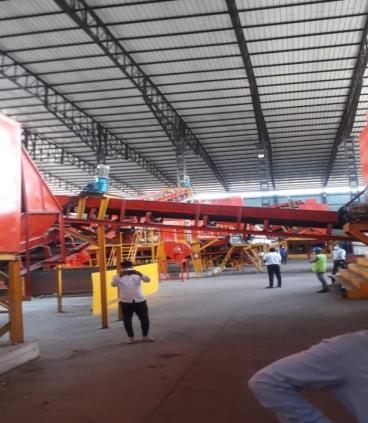
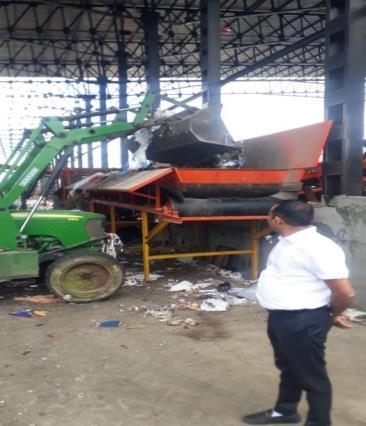
TheprocessoflegacywasteinBiominingprocessingplant comprises of glass removal, density separation, mass separation,shredding,dustremoval,inertremoval,moisture removal,andthefinalproducts,RDF,Bio-compost,Inert,Biosoil,andotherrecyclablesmaterial.Thewastefeededtothe hopperundergoes8trommelsofdifferentsizesof120mm, 100mm,80mm,22mm
Mining of Legacy Waste
Basically for the mining of legacy waste or excavation of legacywasteexcavatororloaderareused.Dumpsitecontains pool of leachate in an unlike layer and different odorous gases, this puddles excavate by using excavator, so unnecessarytrappedgasesorleachatedrainedout,excavated materialtransportedforthefurtherprocess.
Duringtheprocessoflegacywasteexcavationandmaterial handling this point must be taken under consideration, Leachate should be collected and transported for further treatmentinleachatetreatmentplant.
As per characteristic and quantity of legacy waste land requirement,plantandmachineryisprepared.Thedetailsof capital investment and recurring expenditure is given in
Theproposedcapacityofprocessingplantis1000MT/day. From this processing plant revenue generation model is prepared for legacy waste management. The details of revenuegenerationmodelaregiveninTable2
International Research Journal of Engineering and Technology (IRJET) e-ISSN: 2395-0056 Volume: 11 Issue: 01 | Jan 2024 www.irjet.net p-ISSN: 2395-0072 © 2024, IRJET | Impact Factor value: 8.226 | ISO 9001:2008 Certified Journal | Page569
Table1 Particulars Requiremen t Cost (lakh) Land 20Ar Plantandmachinery JCB 02 80 Dumper 04 100 TractorwithLoader 02 40 Componentseparator processingplantwithindustrial shed 01 130 Man-power 12XRs.25000 36 Electricityforprocessingplant 21000 units/month 302.40 Totalinvestment 688.40
Table 1: Machinery required for the processing Legacy Waste
Sr. No. Particulars Quan tity MT Rate Rs/MT Amount (Rs) 1 Compost/Biosoil 450 3600 16,20,000 2 Refused Derived Fuel (RDF) 280 1200 3,36,000 3 Plastic/metal/ glassetc. 68.00 1200 81,600 4 Construction/ demolition waste 34.00 200 6,800
Total
Assuming 300 days working of processingplantperyear Therefore revenue generation (Rs./year)
20,44,400
6132lakhs
4. Results and Discussion:
The20kglegacywastesampleiscollectedfromsolidwaste dumpingsiteofPuneCitywhichislocatedatUraliDevachi village.Thissampleiscollectedat3differentlocationswhich representtruesampleoflegacywastefromdumpingsite.For samplecollectionanddecidinglocationforsamplecollection guidelines of CPCB were used. The legacy waste sample is analyzedinprivateEnvironmentalEngineeringlaboratoryat Pune.Thedetailreportofanalysisisgivenintable3
Table 3: Sample analysis report.
Fromanalysisthebulkdensityofsample1is185kg/m3 , sample2is102kg/m3&sample3is165kg/m3. Theaverage bulk density of old municipal waste (legacy waste) is 150 kg/m3.Byusingthisinformationplantlayoutforlegacywaste managementisdeveloped.
Themoisturecontentofsample1is39.5%,sample2is33.14 %&sample3is48.00%. Theaveragemoisturecontentof oldmunicipalwasteis38.21%.Byusingthisinformationair requirement for separation of old municipal waste is developed.
Thevolatilematterofsample1is54.02%,sample2is41.69 % & sample 3 is 42.81 %. The average volatile matter of legacywasteis46.17%.Theresultsshowthatapproximate 46.17 % material may be used as compost for agriculture purpose. The compost/bio-soil good soil conditioning material.
TheCalorificvalueoflegacywastesampleisdeterminedby usingproximateanalyzer.Thecalorificvalueofsample1is 4195Cal/gm,sample2is4450Cal/gm&sample3is4544 Cal/gm. TheaverageCalorificvalueoflegacywasteis4396.
To check the economic viability of suggested option:
Theeconomicanalysisofsuggestedoptionswasalsostudied. Thedetailsofcalculationareasgivenbelow:
CapitalInvestment = 3.50Cr
Recurringexpenditure = 3.38Cr
From this processing plant three important material is recovered I) Compost/bio-soil ii) Plastic/glass/metal and othermaterialandiii)Refusedderivedfuelaspermarketrate ofallthesethreematerialandcalculationshowninTable2 revenuegenerationisRs61.32crore.ButinIndiaawareness about recycle and reuse of waste is not satisfactory. Therefore, the payback period of legacy waste processing plantis5years.Thiscalculationshowsthisprojectisgood potential value and it is need for sustainable development. Thisprojectwill beuseful forproperutilizationofland for solidwastemanagement.
5. Conclusion:
The study concluded that legacy waste content 46 % organic matter and good calorific value. This result showed that 46 % material is helpful for agriculture propose. The 10 % material from legacy waste is good
International Research Journal of Engineering and Technology (IRJET) e-ISSN: 2395-0056 Volume: 11 Issue: 01 | Jan 2024 www.irjet.net p-ISSN: 2395-0072 © 2024, IRJET | Impact Factor value: 8.226 | ISO 9001:2008 Certified Journal | Page570
Revenue
generation from legacy wasteprocessingplant(Perday)
Table 2: Details revenue generation for legacy waste management
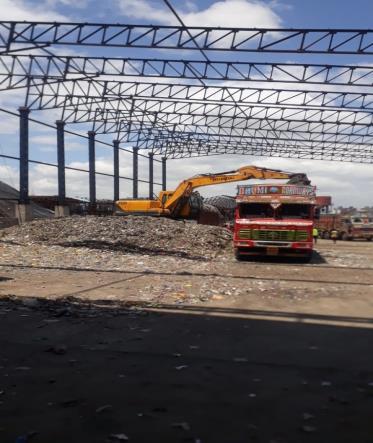
Figure 6 Processing of Legacy waste
Parameter Sample I Sample II Sample III Bulkdensity 185 102 165 Moisturecontent 39.50 33.14 48.00 Volatilematter 54.02 41.69 42.81 Calorificvalue 4195 4450 4544
calorificvaluewhichisusefulasarefusedderivedfuelfor cement industry and remaining 9 % material is inert whichisusefulforfillinglowlayingareafromPunecity.
UnderSwacchaBharatschemeandothervariousfunding available for management of legacy waste would be utilized for management of legacy waste. The process suggested is excavation, stacking, application of bioculture and separation/screening and storage of segregated legacy waste. By using funds from Swaccha Bharat this processing plant is being implemented. Implementationofthisprocessingplantwouldreducefine imposedbyNGTtoPuneMunicipalCorporation.
Afterstudywascarriedoutforvarioustechnologiesused formanagementoflegacywasteofsolidwastegenerated in various wards of Pune city that was discovered that solid waste with high organic content and moisture contenthasthepotentialforcomposting.Whichcould beefficientlyimprovedbyminimizingtheloadonlandfill sites. Contribute directly towards the sustainable development goal. Cost optimization of legacy waste managementinurbanareasstillneedsfurtherprobeand researchasthatgiventourbanareas.ATentativeBudget shows Income more than Expenditure for a year indicationispossiblethenandthenonlywhencommunity participation. Overall, such approach not only directly advantageforMunicipalCorporationbutalsocreatemore potential employment outcome from this facility. From thiscalculation.Theyearlyexpenditureforoperationand maintenance is 3.38 Cr and income from resource recovery is 6.11 Cr if formers and industries ready to purchase compost and RDF material separated from legacywaste.
The economic analysis of processing plant showed five years is payback period for processing plant for legacy waste management. This shows good potential for businessinlegacywastemanagement.
There is need to conduct awareness about segregation, recycle and reuse of solid waste. There is also need to conduct awareness workshop about composting and benefitsofcompostingwhichwillbeusefulforsustainable development
6. Reference:
Richa singh -2022- Legacy waste management and dumpsiteremediationtosupportSWACHHBHARATMISSION 2.0.
Simon Ford, Kathryn Warren- 2013- Feasibility and viabilityofLandfillMiningandReclamation.
Central Pollution Control Board.- 2019- Guideline for disposalofLegacywaste.
KUSUM LATA, ANJITA R NAIR, SAURABH BHATT-2022Transforming the Urban Waste Mountains: Lessons from Indore’sBioremediationofLegacyWaste.
María Alonso Alonso & María Jesús Cabarcos Traseira.2019- A legacy of waste: Reflections on literature and the environment
Chandigarh Smart City limited- 2019- Mining of Legacy WasteandRecoveryofLand.
Vikash Talyan,R.P.Dahiya,T.R.Sreekrishnan-2008- State ofmunicipalsolidwastemanagementinDelhi,thecapitalof India
N. Ejaz, N. Akhtar, H. Nisar & U. Ali Naeem-2010Environmentalimpactsofimpropersolidwastemanagement indevelopingcountries:acasestudyofRawalpindiCity.
S K Garg- Environmentalengineering.
International Research Journal of Engineering and Technology (IRJET) e-ISSN: 2395-0056 Volume: 11 Issue: 01 | Jan 2024 www.irjet.net p-ISSN: 2395-0072 © 2024, IRJET | Impact Factor value: 8.226 | ISO 9001:2008 Certified Journal | Page571
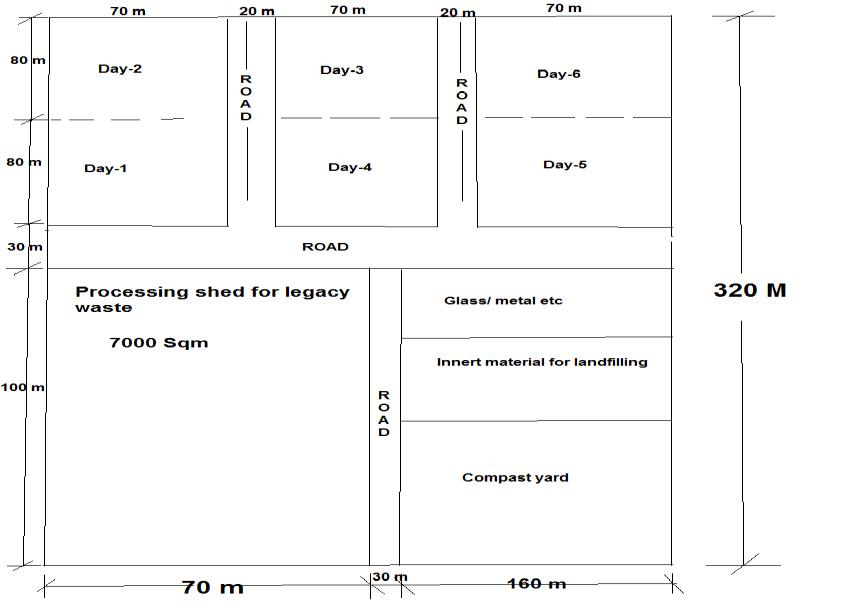
Fig 7 Proposed layout of 20 Acre land for Legacy waste management for Pune city
.
Kang, A.J. and Yuan, Q- 2017- Enhanced Anaerobic Digestion of Organic Waste”, Solid Waste Management in RuralAreas,InTech,Rijeka,Croatia.
Joseph, K., Esakku, S., and Nagendran, R., 2007. “Miningof compost from dumpsites and bioreactor landfills”, International Journal of Environmental Technology and Management,Cointrin-Geneva,Switzerland.
Bhattacharya, S. and Yadav, P., 2 September, 2017. Two killedas50tonnesofwastehurtlesdownGhazipurlandfill. TimesofIndia,AccessedonJanuary28,2022.Available at: https://timesofindia.indiatimes.com/city/delhi/two-killedas-50-tonnes-of-waste-hurtles-down-ghazipur-landfill/ articleshow/60332295.cms.
Ranjan, M.R., Ramanathan, A.L., Tripathi, A., and Jha,P.K., 2014. Landfill mining: A case study from Ghazipur landfill area of Delhi, International Journal of Environmental Sciences.
Krook, J., Svensson, N., and Eklund, M. (2012). Landfill mining:Acriticalreviewoftwodecadesofresearch.Waste Management,32(3),513–20,Elsevier,TheNetherlands.
TanmoyBir, Samran Banerjee, Amit Gupta-2022 https://www.researchgate.net/publication/360525429_Lega cy_Waste_Characterization_Biomining_Solution_for_Landfills_ and_Resource_Recovery_Towards_Circularity
International Research Journal of Engineering and Technology (IRJET) e-ISSN: 2395-0056 Volume: 11 Issue: 01 | Jan 2024 www.irjet.net p-ISSN: 2395-0072 © 2024, IRJET | Impact Factor value: 8.226 | ISO 9001:2008 Certified Journal | Page572