
EFFECTIVE UTILIZATION OF MOTHERBOARD AS WALL TILES
ALARMELUMANGAI.S1 RAMESH.K2 AMBETHKAR.S3
123Assistant Professor
Department of Civil Engineering
A.V.C College of Engineering, Mayiladuthurai, Tamilnadu, India.
Abstract – Through this project we experiment E-Waste as wall tiles, waste Motherboards are used as specific method of disposing the E-waste, then replaced ordinary ceramic tiles by waste PCB (Printable circuit board) on mother board. Mother boards are cleaned to remove the external parts. Then the PCB boards are coated with paint for sufficient finishing and good appearance. And last it is to be placing on the interior portion of the wall. Placing is to be done by using the cement mortar. We obtained satisfactory results in the form of wall decorating tiles and it minimizes Electronic waste. It control pollution cost by E-waste. It is initial process and low level of production so the cost of E waste tile is increases but after the increases of production in some years to minimize the cost and also simple process.
Key Words: Wall tiles, E-Waste, Motherboard, Cement mortar, Pollution.
1. INTRODUCTION
In developing countries, the E-waste has major handlingchallengesissues.Inthelast10to15years,rapid growthandtechnologychangesinelectronicshaveledtoan increasingturnoverofcomputers,tablets,phones, display screens, printers and other electronics. Consequently, businessesandhouseholdshaveseensteadygrowthinthe volumeoftheirelectronicsneedingsafeandcost-effective end-of-lifemanagement.Electronicsbeingdisposedofare commonly referred to as e-waste. Most of the e-scrap contains printable circuit board which consist of approximately27%metals,madeupmainlyof aluminum, copper,lead,ironandtin,aswellasotherheavymetalssuch as nickel and cadmium. Hence by processing the E-waste, valuablematerialsarerecoveredandwasteminimizationis achieved.
1.1 DEFINITION OF E-WASTE
E-wasteisanyelectricalequipmentandelectronic equipment that’s been wasted; this includes not working devicesandbrokenequipmentsthatarethrownasgarbage. Often, if the devices or equipments that goes unsold electronicdevicesarereservedanditwillbethrownaway. Finally,itisharmfulduetodangerouschemicalsnaturally whenburiedinsideintothe ground leachfromthemetals thatinside
1.2 TYPES OF E-WASTE
Generate e waste in many ways as a type of electronic devices like monitors, television, mouse, keyboard,laptops,CPU,audioandvideodevices,andother personal electronic devices. It has PCB as a type of motherboardforworkabilityofdevices.Aftertheusageof devices cannot to be reuse and waste generate in large quantityofIndia.
1.3 METHOD OF DISPOSAL OF E-WASTE IN INDIA
INCINERATION, LANDFILLING,
RECYCLINGOFE-WASTE,
REUSEOFELECTRONICDEVICES,
RECOVERYANDREUSE.
1.4 DRAWBACKS OF E-WASTE DISPOSAL
Recycling tons of garbage will require separate factories.
Recycling will produce pollutants, including chemical stews after breaking down the waste materials
Recyclingisnotalwayscost-efficient.
Recyclingcanincreaselowqualityjobs.
Recyclingcancreatemoreenvironmentalproblems, ifnotdoneright.
Recyclingdoesnotguaranteegoodqualityproducts.
1.5 OBJECTIVE
The aim is the disposal of unwanted electronic gadgets compared to the past days the e-waste productsoritemshaveincreasedabundantlynow days.
The recycling of e-waste serves a lot of useful purposes.
InthisprojectmainlyforReuseofmotherboards.
ThisprocessshouldbeminimizingtheE-waste.
Use electronics or electrical products which are design for reuse, resale, refurbishment, salvage recyclingthroughmaterialrecovery
2. E-WASTE GROWTH


3. METHODOLOGY
Inthisresearchworkfirstwecollecttheliterature and journals to the related topics. Then the collect the ewastesuchasmotherboardfromthelocalcomputerservice centres.Thenweconvertthee-wastetomakewalltile.And thefinalproductisatestedasperIScode13630.Fortiles theflexuralstrengthisdetermineasperIScode13630partI –2006,WaterabsorptiontestisdeterminedasperIScode 13630partII–2006andBondingtestisdeterminedasper code part VIII – 2006. The paint such as primer and color coatareappliedtothesurfaceofamotherboard.Andthe finallypastedthee-wastetilesonthewallsurface,byusing cementmortar.
4. MATERIALS AND METHODS
4.1 MATERIALS
4.1.1 SAND
Sandparticlesconsistofsmallgrainsofsilica(SiO2). It is formed by the decomposition of sand stones due to variouseffectsofweather.Sizeofparticlebetween4.75mm and0.15mmiscalledfineaggregate;itisusedformaking concrete, mortars and plasters. It is also used for filling underfloorandbasements. Duetoincreasedconstruction activity, natural sand is becoming more difficult to get. Hence,alternativematerialslikecrushedrockandflyashare usedinconstruction.
4.1.2 CEMENT AND MORTAR
Thecementproductismanufacturebyburningand crushingtopowdereitherstonecontaining1/5 th or2/5 th clayandremainingcarbonateoflimeoranintimatemixture ofwellproportionedcalcareousandargillaceousmaterialsis called cement. Calcareous materials are limestones, marl, chalkandshells etc.Argillaceous materialsaresilica,clay, oxide of iron etc. commonly used cement for normal constructionworkisordinaryPortlandcement.
Mortarisamixtureofbindingmateriallikecement andaninertmaterialorfineaggregatelikesand.Itisusedas bindingmaterialintiles,asacoveringmaterialtowallsin theformofplastertoprovideasmooth,hardanddecorative surface.
4.1.3 MOTHERBOARD
AMotherboardisgenerallyaprintedcircuitboard (PCB).Itisacomputer’scentralcommunicationsbackbone connectivity point, through which all components and external peripheral connect. Motherboard include the following primary components, areCPU,memory, storage interface, ROM BIOS, Northbridge chipset, Southbridge chipset,coolingfans,peripheralconnectorslots,connectors for peripheral devices, backup battery and the power connector.
4.1.4 TYPES OF PRINTED CIRCUIT BOARD
SingleSidedPCB
DoubleSidedPCB
MultilayerPCB
RigidPCB
FlexPCB
Rigid-FlexPCB
4.1.5 TILES
Tiles are thin slabs either rectangular or square, used for covering hard wearing roofs or flooring with the
supportofcementmortar.Lightweight materialsareused forwallandceilingapplications.
4.1.6 TYPES OF TILES
CERAMICTILE, PORCELAINTILE, QUARRYTILE, TERRACOTTATILE, NATURALSTONETILE, TRAVERTINETILE, MARBLETILE, SLATETILE.
4.1.7 CLASSIFICATION OF TILE ACCORDING TO PURPOSE OF PLACING
FLOORTILE, CEILINGTILE, WALLTILE, ROOFTILE.
4.2 METHODS
4.2.1 COLLECTION OF MOTHERBOARD
Availabilityofmotherboardasawasteinenormous quantity present in local computer service centres. We havinga25numbersofwastemotherboardscollectedfrom local shops. A small quantity of e waste motherboard is collected for research purpose when it to be success will collectinmorequantitytoourproject.

4.2.2 CLEANING OF MOTHERBOARDS
The components of resistors, capacitor, copper, slots, processor,batteryandothercomponentsarepresentonthe surfaceofboard.Thecomponentsarepresentinboardisnot tobeappearanceoftiletobeseen.Firstthecomponentsare toberemovedandtheplainboardwilltobeget.

4.2.3 SMOOTHENING OF BOARDS
Aftertheprocessofcleaningtheboardisvisibleand appearance in rough surface in both sides. So the smooth surface by the equipment of grinding machine used, Emerysheetbyusehandmadetothisworkforshine.


4.2.5
FIXING THE TILES
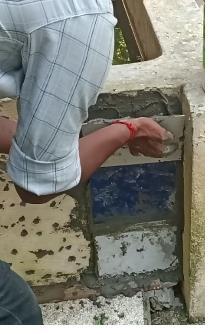
– 7: FIXING THE TILES
5. RESULT AND DISCUSSION
5.1 FINAL FINISH
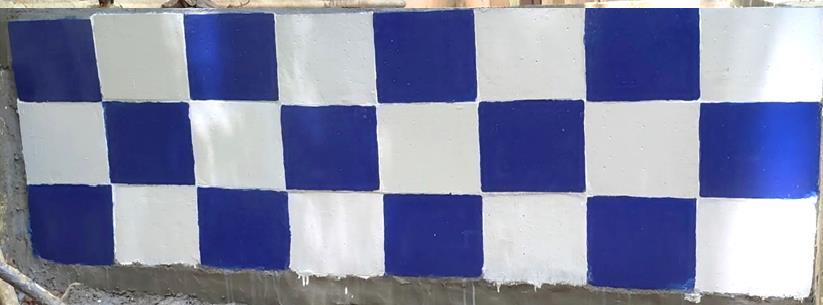
– 8: FINAL FINISH
5.2 BEFORE AND AFTER PICTURE BEFORE AFTER Fig – 9: BEFORE AND AFTER PICTURE

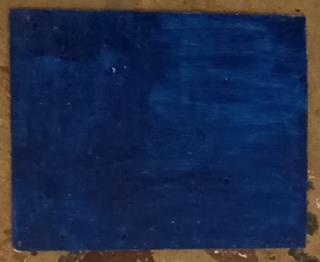
5.3 TEST FOR TILES
5.3.1 WATER ABSORPTION TEST
5.3.2 FLEXURAL TEST
FlexuralstrengthofE-Wastetilesis 55.13 Kg/mm.
Flexuralstrengthofceramictilesis 35.34 Kg/mm.
CERAMIC TILES
7069
Flexural = strength 200 = 35.34 kg/mm
5.3.3 BONDING TEST
E-WASTE TILES
12130
Flexural = strength 220 = 55.13 kg/mm
Normallywalltilesarebondedwithwallbyusing cementmortarofratio1:2asperIScode13630.Assameas E-wastetilesalsobondedwithCM1:2,thequalityofbonding isexposedbythismixratiowhencomparedtonormaltiles bonding.Beforeplacingthetiles,theareashouldbepatched forbetterbondingresult.
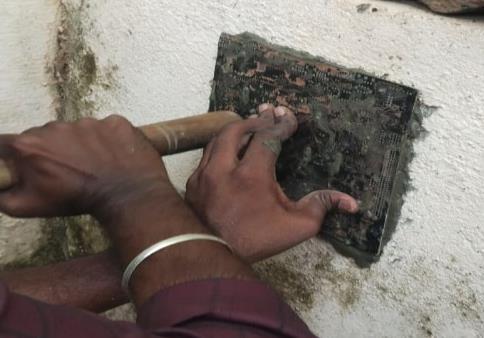
Fig – 10: BONDING TEST
5.4 TEST FOR BONDING MATERIALS FOR CEMENT AND SAND
5.4.1 SPECIFIC GRAVITY OF CEMENT
TheSpecificGravityofCementis 3.08
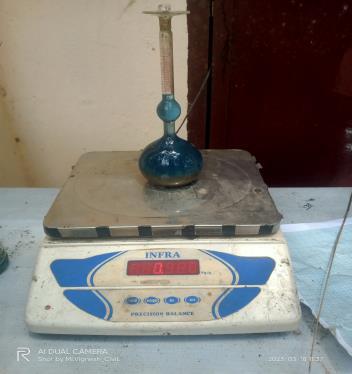
Fig – 11: SPECIFIC GRAVITY OF CEMENT
5.4.2 SPECIFIC GRAVITY OF FINE AGGREGATE
TheSpecificGravityofSandis 2.40
5.4.3 SIEVE ANALYSIS OF FINE AGGREGATE
Thesandisgenerallypassingthrough 4.75mm IS sieve and retaining in 2.36 IS sieve is 1.5, The cumulative value of sand is 98.50 and its presentin zone II
5.4.4 CONSISTENCY OF CEMENT
TheConsistencyofCementis 34 %
5.4.5 INITIAL SETTING TIME
The Initial Setting Time of Cement is 30 minutes.
6. CONCLUSIONS
With this project, there is a proper and perfect alternatingsolutionforreusingofE-wasteinsimplestand costeffectiveway.Thenewcreativewalltileiscarriedout successfully with the standard specifications. The characteristics and properties of E-waste tiles are better than the normal tiles and cost of the E-waste tile is give pleasantlookwhencomparedtonormalwalltile.Infutureit willreducebyincreasinginlargelevelofproduction.Andit willbeagoodsolutionforreducingtheE-waste.
7. REFERENCES
[1] Aniket Ravindra Ingole, etal (2019) - “UtilizationofEWaste, Fly Ash in Manufacturing of Paver Blocks and Tiles /Aug 2019/IJITEE/VOLUME 8 ISSUE 10/ISSN: 2278-3075
[2] H. I. Pathan, et al (2015) - “Recycling of Demolished Concrete and E-waste” /Jan 2015/IJITEE/VOLUME 5 ISSUE1/ISSN:2319-7064”
[3] IS CODE: 13630 (Part 1)-2013, CeramicTilesMethods of Test. Sampling and Basis for Acceptance [CED 5: Flooring,WallFinishingandRoofing].
[4] Sharan Kumar k, et.al (2021) – “ExperimentalStudy on Tiles Using E-Waste” /Apr 2021/ISR Journals/VOLUME3ISSUE1/ISSN:230-723X.
[5] Supriya S, et al (2017) - “ManufacturingofEco-friendly Parking Tiles” /Sep 2017/IJSR/VOLUME 5 ISSUE 4/ISSN:2454-132X”
BIOGRAPHIES


First Author: Mrs.S.Alarmelumangai,Assistant Professor, Department of Civil Engineering, A.V.C college of Engineering,Mayiladuthurai.
Second Author: Mr. K.Ramesh, AssistantProfessor,Departmentof Civil Engineering, A.V.C college of Engineering,Mayiladuthurai.
Third Author: Mr.S.Ambethkar, AssistantProfessor,Departmentof Civil Engineering, A.V.C college of Engineering,Mayiladuthurai.