
Comparative Study of Seismic Analysis of RC Frame Structure with and without Belt Truss and Outrigger Truss
AtulKumar1 , Mr. Ushendra Kumar2
1M.Tech, Civil Engineering, Lucknow Institute of Technology, Uttar Pradesh, India
2 Assistant Professor, Department of Civil Engineering, Lucknow Institute of Technology, Uttar Pradesh, India
Abstract - A comprehensive three-dimensional model of the RC buildings, including all structural and architectural details, is first created as part of the investigation. In order to find out how the structure reacts dynamically to seismic stimulation, ETABS software is used to do the response spectrum analysis. The response spectra that correlate to the site's location and the seismic hazard level that has been established are used in the study.
The use of belt and outrigger trusses improves the structural performance. These supplementary systems for lateral load resistance are positioned at appropriate heights throughout the building. The trusses improve the building's stability by reducing inter-story drift, redistributing lateral pressures, and supporting the structure.
Material qualities, seismic characteristics, and code requirements are just a few of the design aspects that are considered during the process. By analysing the structure's response spectra, one may learn about its dynamic properties, such as its basic period, mode shapes, and spectral accelerations.
Base Shear, Natural Period, Storey Stiffness, Maximum Storey Displacement, and Storey Drift are terms that come out of the study. The efficiency of the extra lateral load-resisting devices is evaluated by comparing the structures with and without the belt and outrigger trusses. Incorporating such truss systems improves structural performance under seismic loads, as shown in the research.
Key Words: G+30,reinforcedconcrete(RC)structure,belt truss,outriggertruss,responsespectrumanalysis,ETABS, seismicloads.
1. INTRODUCTION
Tall buildings have been around for a long time because peoplehavealwaysbeeninterestedinbuildingthingsthat reach new heights. An enduring example of the aweinspiring towering buildings built by ancient civilizations liketheMayansandEgyptiansistheGreatPyramidofGiza. Impressive heights were shown by monumental and religious buildings in mediaeval Europe, such Gothic cathedrals.Nevertheless,theideaofskyscraperscameinto existenceinthe19thcentury,propelledbyadvancementsin technology and the expansion of metropolitan areas. The HomeInsuranceBuildinginChicagoiswidelyrecognisedas
the pioneering skyscraper, setting the stage for other renownedlandmarkssuchastheEiffelTower,theEmpire StateBuilding,andtheChryslerBuilding.Theconstructionof record-breaking structures such as Taipei 101 and the PetronasTowershasbeenmadepossiblebyadvancements in structural engineering. As the highest building in the world right now, the Burj Khalifa is a symbol of how far humans are willing to go in their quest for architectural perfection.

1.1. Increase Performance of High-Rise Structure
Toenhancetheperformanceofahigh-risestructure,several key considerations should be addressed. Firstly, implementingadvancedstructuralanalysistechniquesand materialsiscrucialtoensureoptimalloaddistributionand resistance to external forces. This involves employing cutting-edge engineering technologies and materials with highstrength-to-weightratios.Additionally,incorporating intelligent design features such as damping systems and tunedmassdamperscaneffectivelymitigatevibrationsand sway,improvingoverallstability.Moreover,theintegration ofenergy-efficientsystemsandsustainabletechnologiesnot onlyreducesoperationalcostsbutalsoalignsthestructure with environmental standards. Regular maintenance and
International Research Journal of Engineering and Technology (IRJET) e-ISSN: 2395-0056 Volume: 11 Issue: 01 | Jan 2024 www.irjet.net p-ISSN: 2395-0072 © 2024, IRJET | Impact Factor value: 8.226 | ISO 9001:2008 Certified Journal | Page321
***
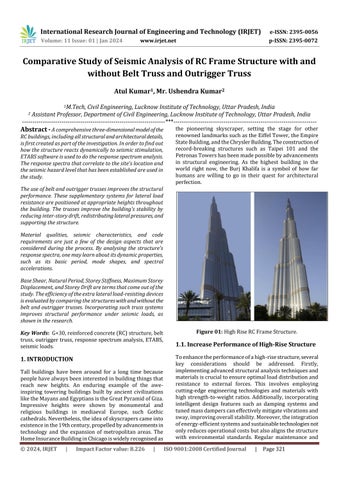
Figure 01: HighRiseRCFrameStructure.
monitoringprotocolsshouldbeestablishedtoidentifyand address any potential issues promptly. Collaboration between architects, engineers, and construction teams throughout the project lifecycle is essential to optimize performance and ensure the longevity of the high-rise structure. By incorporating these measures, the structure can achieve heightened resilience, efficiency, and sustainabilityinthefaceofdynamicexternalfactors.
1.2. REGULAR STRUCTURE
Inthecontextofaregularframestructure,compliancewith IS 1893 Part 1:2016 involves a systematic approach to earthquake-resistant design. This includes selecting appropriate materials with specified strength characteristics, determining seismic forces and their distribution,andincorporatingdesignfeaturestoenhance thestructure'sabilitytowithstandseismicevents.
The standard emphasizes the importance of properly proportioning structural elements, considering the lateral load-resisting system, and incorporating ductility in the design to allow for controlled deformation during earthquakes.Thedetailingofreinforcementandconnections is also addressed to ensure the integrity of the structure underseismicforces.
It is essential for structural engineers and architects to thoroughlyfamiliarizethemselveswiththeprovisionsofIS 1893 Part 1:2016 and integrate these guidelines into the design and construction processes to enhance the earthquake resistance of regular frame structures. This comprehensiveapproachhelpsincreatingstructuresthat are better equipped to withstand the dynamic forces associatedwithseismicevents,thusprioritizingthesafety andresilienceofthebuiltenvironment.
2. METHODOLOGY
Thispartoftheapproachwillteachusallthetricksweneed toknowtobuildmodelsandthenanalysethem. TheIndian standardcode,modelload,modelview,loadcombination, andanalysistechniqueforallmodelswillalsobecoveredin thisstudy.
2.1. Software
ETABS (Extended Three-Dimensional Analysis of Building Systems) is a widely-used structural analysis and design software for buildings. Developed by Computers and Structures,Inc.(CSI),ETABSoffersadvancedmodelingand analytical toolstoassessthebehaviorofstructuresunder various conditions. It enables engineers to perform linear and nonlinear static and dynamic analyses, making it a valuable tool for designing and optimizing complex structures, including high-rise buildings. ETABS facilitates efficient and accurate structural engineering solutions, streamliningthedesignprocess.
2.2. Method Used for Analysis
ResponseSpectrumAnalysis,asperIS1893Part1:2016,isa seismic analysis method used in structural engineering to evaluate a structure's response to earthquake forces. The standard provides guidelines for determining site-specific responsespectra,representingthemaximumresponseofa structureatvaryingnaturalfrequencies.Engineersusethis analysis to assess the dynamic behavior of structures and designthemtowithstandseismiceventseffectively.IS1893 Part 1:2016 outlines procedures and factors to ensure structuresmeetearthquake-resistantcriteriainIndia.
2.3. Seismic Parameter
IS 1893 Part 1:2016, the Indian Standard for earthquakeresistant design, defines seismic parameters crucial for structural analysis and design in seismic-prone regions. These parameters encompass seismic zone factors, sitespecific response spectra, and design ground acceleration values. Seismic zones categorize regions based on their seismicvulnerability,withassociatedfactorsindicatingthe seismicity level. Engineers utilize these parameters to calculateandapplyseismicforcesduringthedesignprocess, ensuring structuresare resilient to potential earthquakes. Compliance with these specifications is essential for constructing buildings that meet Indian seismic safety standards.
2.4. Details of Model
Inthissection,wehavestudiedthegeometryofthemodel, load on the model, seismic parameters on the model, materialofmodels,etc.
International Research Journal of Engineering and Technology (IRJET) e-ISSN: 2395-0056 Volume: 11 Issue: 01 | Jan 2024 www.irjet.net p-ISSN: 2395-0072 © 2024, IRJET | Impact Factor value: 8.226 | ISO 9001:2008 Certified Journal | Page322
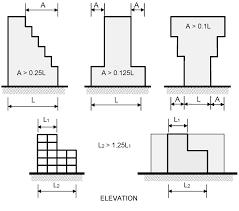
Figure 02: IrregularFrameStructure.
2.4.1. Material Parameters
Inthissectionofthematerialparameter,wewillknowthe detailsofthegradeoftheconcrete,gradeofthesteel,etcare givenbelowintheformofthetable:
Table-1: Material Parameters
2.4.3. Load on Models
The load of the models is given below in the form of the table,whichisusedintheseallmodels.
Table-3: Load on Models S.No
1
2
3 HYSDBar Fe500
4 BeltandOutrigger MildSteel
2.4.2. Dimension of Belt and Outrigger Truss
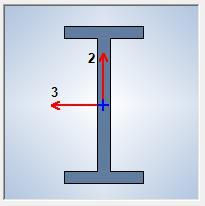
The cross-section of the belt and outrigger truss is an I sectionwhichismadeofmildsteelandthedimensionsofthe beltandoutriggertrussaregivenbelow
Table-2: Dimension of Belt and Outrigger Truss
3
The cross-section of the belt and outrigger truss is given below:
2.4.4. Seismic Load Parameter
Allparameteroftheseismicloadisgivenbelowintheform ofthetablewhichisusedinallthreemodels:
Table-4: Seismic Load Parameter
S.No SeismicParameter
1
3
4
2.4.5. Building Geometry
Theparameterofthebuildinggeometryisgivenbelowinthe formofthetable:
Table-5: Building Geometry
S.No Parameter of Building Values
1
3
4
5
6
7
International Research Journal of Engineering and Technology (IRJET) e-ISSN: 2395-0056 Volume: 11 Issue: 01 | Jan 2024 www.irjet.net p-ISSN: 2395-0072 © 2024, IRJET | Impact Factor value: 8.226 | ISO 9001:2008 Certified Journal | Page323
Number Name of the Material Grade
Serial
Concrete M30
Fe250
MildSteelBar
Name of Properties Value
ThetopwidthofFlange 125mm 2 ThebottomwidthofFlange 125mm 3 TopandBottomThicknessof theFlange 20mm 4 Thicknessoftheweb 20mm 5 Thetotaldepthofthesection 250mm
S.No
1
Figure 03: Cross section of the Belt and Outrigger Truss.
Name
Load Value
DealLoad AsPerISCode875Part1
LiveLoad 4KN/m3
of
1
2
FinishingLoad 1.5KN/m3 4 SeismicLoad AsperISCode1893Part1:2016
Value
SeismicZone 0.24
ImportanceFactor 1.50
2
SoilType Second
ResponseReductionFactor 3
Cross
400mm
600mm
sectionofBeam
*
750mm
400mm
2 CrosssectionofColumn.
*
thickness
theSlab. 150.00mm
The
of
Beam. 3000mm
Lengthof
Height
G+30 93000mm
of
FloorHeight 3000mm
PlanArea 21m*15m
2.5. Name of Models
Inthisthesiswork,wehavecreatedthreemodelswiththe help of the ETABS software, the details of the models are givenbelow:
1. Model-01:G+30RCCRegularStructures.
2. Model-02: G+30 RCC Regular Structure with Belt Truss.
3. Model-03: G+ 30 RCC Regular Structures with Outrigger.
2.5.1. Details View of Model-01
Theplan,elevation,and3DViewofModel-01aregiven below:
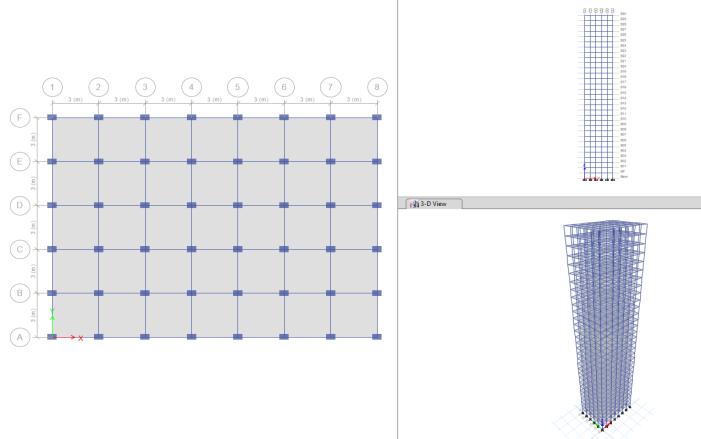
Figure-04: Plan, elevation, and 3D View of the Model01
2.5.2. Details View of Model-02
The plan, elevation, and 3D View of Model-02 are given below:
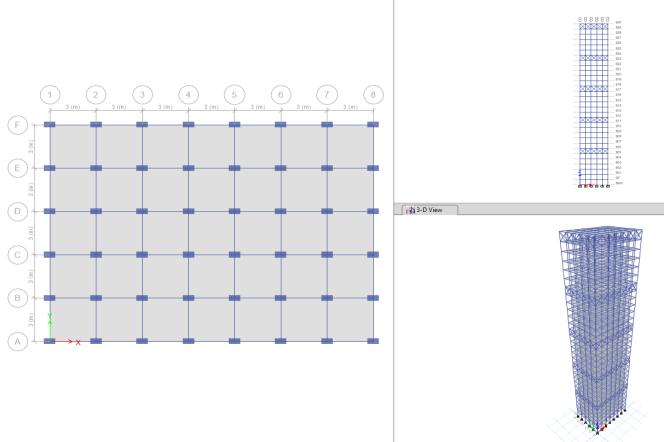
Figure-05: Plan, elevation, and 3D View of the Model02.
2.5.3. Details View of Model-03
The plan, elevation, and 3D View of Model-03 are given below:
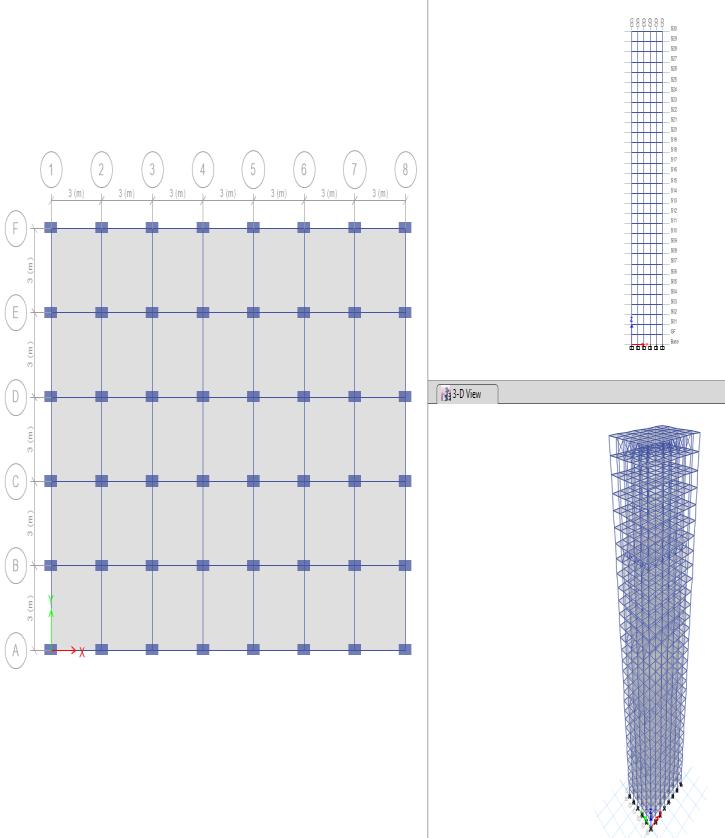
Figure-06: Plan, elevation, and 3D View of the Model03.
3. RESULT AND ANALYSIS
Herewewillexaminetheoutcomesofallthreemodelsthat were developed using the ETABS programme. Response SpectralAnalysisisusedtoexamineallofthesemodels.In order to evaluate the models, we have settled on the followingsevenseismicparameters:
1. BaseshearduetoEX
2. Naturalperiod,
3. MaximumStoreyDisplacement,
4. Maximumstoreydrift,
3.1. Base Shear
Base Shear, as defined by IS 1893 Part 1:2016, is a fundamental seismic force used in earthquake-resistant designofstructuresinIndia.Itrepresentsthetotallateral forceappliedatthebaseofastructureduringanearthquake. Thestandardprovidesspecificformulasandcoefficientsto calculatethebaseshear,consideringfactorssuchasseismic zone,importanceofthestructure,andsoilcharacteristics. Engineersusethisparametertodesignstructurescapableof withstandingseismicforcesandensuringcompliancewith Indianseismicsafetystandards.
International Research Journal of Engineering and Technology (IRJET) e-ISSN: 2395-0056 Volume: 11 Issue: 01 | Jan 2024 www.irjet.net p-ISSN: 2395-0072 © 2024, IRJET | Impact Factor value: 8.226 | ISO 9001:2008 Certified Journal | Page324

3.2. Natural Period
TheNaturalPeriod,asoutlinedinIS1893Part1:2016,isa crucial parameter in seismic analysis and design. It representsthetimetakenforastructuretocompleteonefull cycle of oscillation in response to an applied lateral force.
Thestandardprovidesguidelinesforestimatingthenatural periodbasedonthestructuralcharacteristicsanddynamic properties. Engineers use this information to assess the dynamicbehaviorofstructures,aidinginthedevelopmentof earthquake-resistantdesignsthatalignwithIndianseismic safetystandards.

3.3. Maximum Storey Displacement
Theseismiczoneandbuildingtypedeterminethemaximum permittedstoreydisplacement,asstatedinIS1893(Part1): 2016. Different values are provided by the code for structuresthathaveductiledetailingandthosethatdonot.
The maximum value of the storey displacement, as per IS Code1893part-1:2016,shallnotexceedH/250,whereHis theoverallheightofthebuildinginmm.

3.4. Maximum Storey Drift
One of the crucial factors taken into account by seismic designers when evaluating the lateral displacement of a building's storeys during an earthquake is the maximum storey drift. A number of variables, including the seismic zone, structural system, occupant type, and design goals, determinethemaximumpermissiblestoreydrift.
Atloadscenario0.9DL+1.5EY,themaximumstoreydriftis shownbelowinthetableandgraph.

International Research Journal of Engineering and Technology (IRJET) e-ISSN: 2395-0056 Volume: 11 Issue: 01 | Jan 2024 www.irjet.net p-ISSN: 2395-0072 © 2024, IRJET | Impact Factor value: 8.226 | ISO 9001:2008 Certified Journal | Page325
Graph 01: Base Shear.
Graph 02: Natural Period.
Graph 03: Maximum Storey Displacement.
Graph 04: Maximum Storey Drift.
4. CONCLUSION
Basedonourresearchintothesethreemodels,weknowthat theirnaturalperiodsallfallsomewherewithin3.0seconds; model 02, which includes a belt truss, has the shortest natural period, while model 01, which does not, has the longest.
AccordingtotheIndianstandardcode1893part1:2016,as long as all the seismic factors (seismic zone factor, importancefactor,soiltype,responsereductionfactor,etc.) stayconstant,thebaseshearvaluegrowsasthestructure's self-weightdoes.Basedontheseresults,wemaydeducethat model-03,whichincludestheoutriggertruss,hasagrowing baseshearvalue,whereasmodel-01,whichdoesnot,hasa minimalbaseshearvalue.
Accordingtotheresultsofthemaximumstorydisplacement andmaximumstoreydrift,themodelswithoutbelttrussor outriggertruss(model-01)andwiththemhadthehighest valuesforthesevariables,whiletheoneswithbelttrusshad thelowest.
Ourresearchshowsthatbelttrussesarebettersuitablefor useinhigh-risebuildingsthanoutriggertrusses.
REFERENCE
1. Rafid Kunglay*1, N.G. Gore*2 (2022) “Seismic DesignAndNonlinearAnalysisOfCommercialHighRise Structure Using Various Combinations Of OutriggerSystems”InternationalResearchJournal of Modernization in Engineering Technology and Science ( Peer-Reviewed, Open Access, Fully Refereed International Journal ) Volume:04/Issue:07/July-2022.
2. Sayali Anil Bidve (2022) “Seismic Analysis Of Outrigger Braced Systems In High Rise Building” 2022IJCRT|Volume10,Issue12December2022| ISSN:2320-2882.
3. Lokendra Verma 1 , Mr. Atulya Kumar 2 , Mr. Abhishek Singh 3 (2022) “Structural Systems Of High Rise Buildings” International Journal of Mechanical Engineering, Vol. 7 (Special Issue 5, April-May2022).
4. Dr. R. Saravanan1 , Dr. N. Pannirselvam2* (2022) “SeismicPerformanceOfOutriggerSystemInHigh Rise Structures Under Seismic Loading” http://ymerdigital.com
5. Vandana Kushwaha1 , Neeti Mishra2 (2022) “Dynamic Analysis of Outrigger Systems in High RiseBuildingagainstLateralLoading”IOSRJournal ofMechanicalandCivilEngineering(IOSR-JMCE)eISSN: 2278-1684,p-ISSN: 2320-334X, Volume 19,
Issue 2 Ser. III (Mar. – Apr. 2022), PP 28-36 www.iosrjournals.org
6. Bishal Sapkota (2017) “Comparative Study On Seismic Performance Of High-Rise Building With Energy Dissipation And Outrigger Belt Truss System”InternationalJournalofCivilEngineering and Technology (IJCIET) Volume 8, Issue 4, April 2017,pp.1539-1545,ArticleID:IJCIET_08_04_173.
7. Premalatha J, Mrinalini M (2018) “Seismic BehaviourofaMulti-storeyedReinforcedConcrete IrregularBuildingwithOutriggerBelttrussSystem” InternationalJournalofEngineeringandAdvanced Technology(IJEAT)ISSN:2249–8958,Volume-8, Issue-2S,December2018.
8. İbrahimÖzgürDedeoğlu*1,YusufCalayır2(2020) “Effectiveness of outrigger and belt truss systems on the seismic behavior of high-rise buildings” Journal of Structural Engineering & Applied Mechanics2020Volume3Issue3Pages180-203.
9. G. Ranganayagi1 and J. Premalatha2 (2020) “Tall BuildingswithOutriggerandBeltTrussSystemas the Lateral Load Resisting System” international Journal of Advanced Research in Science, CommunicationandTechnology(IJARSCT)Volume 11,Issue2,November2020.
10. Urjal Das1, Ankit Pal2 , Arvind Vishwakarma3 (2020) “Behavior of Outrigger Wall and Wall Belt Supported System under Lateral Loads in a Structure” International Journal of Advanced EngineeringResearchandScience(IJAERS)[Vol-7, Issue-8,Aug-2020].
11. VandanaVirde(2021)“EffectsofOutriggeronHighRise Structure” IJSTE - International Journal of Science Technology & Engineering | Volume 8 | Issue1|July2021ISSN(online):2349-784X.
12. Nilesh B Mahale1, Pallavi Pasnur2 , Navnath Khadake3(2021)“TheEfficientUseOfAOutrigger AndBeltTrussInTall Buildings”2021JETIRMay 2021,Volume8,Issue5.
13. ShamanthN(2021)“OutriggerStructuralSystemin High-Rise Building” International Journal of ResearchinEngineeringandScience(IJRES)ISSN (Online): 2320-9364, ISSN (Print): 2320-9356 www.ijres.orgVolume9Issue8ǁ2021ǁPP.78-86.
14. PankajPatel1,RahulSharma(2021)“Comparative AnalysisofWallBeltSystems,ShearCoreOutrigger Systems and Truss Belt Systems on Residential Apartment” International Journal of Research Publication and Reviews Journal homepage: www.ijrpr.comISSN2582-7421.
International Research Journal of Engineering and Technology (IRJET) e-ISSN: 2395-0056 Volume: 11 Issue: 01 | Jan 2024 www.irjet.net p-ISSN: 2395-0072 © 2024, IRJET | Impact Factor value: 8.226 | ISO 9001:2008 Certified Journal | Page326