
A Review on Comparative Analysis of Multistorey Buildings Under Various Indian Seismic And Soil Conditions
Pandya Drashti1 , Aakash Suthar2 ,
1MTech. Student, L.J. University, Ahmedabad
2Aakash Suthar, Professor, Structural Engineering Department, L.J. University, Ahmedabad, India.
Abstract -Due to India's vulnerabilitytoseismicactivity, the paper emphasizes the need for research on the analysis of structures in seismic zones and soil conditions. It highlights how crucial it is to comprehend how various building types react to seismic stress in order to lessen thedevastatingeffects of earthquakes on infrastructureandpeople. Bysheddinglight on the benefits and drawbacks of different structural systems, the study hopes to improve building practices. It takes into account elements like overall stability, stress distribution, deformation, and seismic performance under various load scenarios. A comparison of high-rise reinforced concrete irregular buildings with and without shear walls is also included in the paper. It evaluates variables like modalperiod, storey displacement, storeydrift, shear force, bending moment, and building torsion using analytical methods and simulations. The investigation also takes into account various structural forms. The overall goal of the research is to offer a thorough understanding of how different structures behavein India's various seismic zones, which will improve building techniques and seismic vulnerability assessments.
Key Words: Seismic analysis, Multistorey Buillding, Structural Design, Seismic Load, E-tabs.
1.INTRODUCTION
India'svastandvariedterrainismarkedbydifferentdegrees of seismic hazard, which makes in-depth study of the evaluation of structures in seismic zones necessary. Structuresaremorevulnerableinhigh-seismic-riskareas, suchasthoseneartectonicplateboundaries,necessitatinga careful analysis of construction materials and design principles. To determine the unique difficulties brought aboutbyseismicactivityandtocreateresilientconstruction techniques, research in these areas is crucial. Through examininghowdistinctstructuralsystemsreacttoseismic strain,scholarscanacquiresignificantunderstandingofthe benefits and drawbacks of different kinds of buildings. By improvingastructure'sseismicperformance,thisknowledge helps lessen the effect of earthquakes on surrounding communities.
Furthermore,seismicstudiesprovideabasisforthecreation ofseismicbuildingstandardsandcodesspecifictovarious Indianregions.Strictlybasedbuildingcodesarenecessaryto guarantee that newly constructed buildings meet the strictestseismicsafetyrequirements.Regulatorybodiescan promoteanearthquake-resilientcultureintheconstruction industrybyestablishingguidelinesthatprioritizethesafety ofstructuresandoccupants,apracticethatismadepossible byincorporatingthelessonslearnedfromseismicanalysis. Inconclusion,studiesontheevaluationofIndianseismically vulnerable structures are essential to the preservation of infrastructureandhumanlife.Thecountry'svariedseismic risk makes it necessary to take a nuanced approach to comprehending how different regions' buildings behave. Thesestudiesprovidevaluableinsightsthatnotonlyguide thedesignandconstructionofnewbuildings,butalsoplaya majorroleinthedevelopmentofrobustbuildingcodesand retrofittingstrategies.Theknowledgegainedfromseismic researchwill becrucial indevelopinga builtenvironment that is safer and more resilient as India continues to urbanize and grow. Regulatory bodies can promote an earthquake-resilientcultureintheconstructionindustryby establishingguidelinesthatprioritizethesafetyofstructures and occupants, a practice that is made possible by incorporatingthelessonslearnedfromseismicanalysis.
International Research Journal of Engineering and Technology (IRJET) e-ISSN: 2395-0056 Volume: 11 Issue: 01 | Jan 2024 www.irjet.net p-ISSN: 2395-0072 © 2024, IRJET | Impact Factor value: 8.226 | ISO 9001:2008 Certified Journal | Page243
***
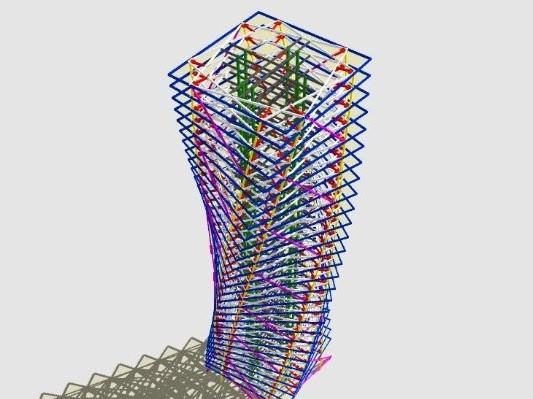
Figure 1: Structuralrepresentation

1.2 Objective
Tocomparethesusceptibilityofdifferentstructures in different seismic zones of India, conduct an assessmentofseismicvulnerability.
Tocomparetheperformanceofdifferentbuildings underdifferentsoilconditions.
Examine how India's seismic zoning map affects structural performance, taking into account the variousfeaturesofeachzone.
Utilizing analytical techniques and simulations, assess and contrast the deformation, stress distribution, and overall stability of various structures.
To analyze different buildings using E-tabs software.
2. Literature Review
[1]Md.SabbirHossain,S.K.Singh,“Comparativeanalysis of irregular RCC buildings in different zones” IOP Conf. Series: Earth and Environmental Science (2023)
This research paper compares and contrasts two irregularly designed Reinforced Cement Concrete (RCC) buildingplansthatareintendedtowithstandseismicloads andgravityindifferentseismiczones.Theextendedthreedimensional analysis of building systems (ETABS) and the responsespectrummethod(RSM)arebothusedinthestudy
toevaluatetheearthquakeperformanceofthesestructures. Importantfactorslikeearthquakeresistance,serviceability, anddesignconsiderationsareallincludedintheevaluation, with a focus on how the system responds to seismic and gravitationalforces.
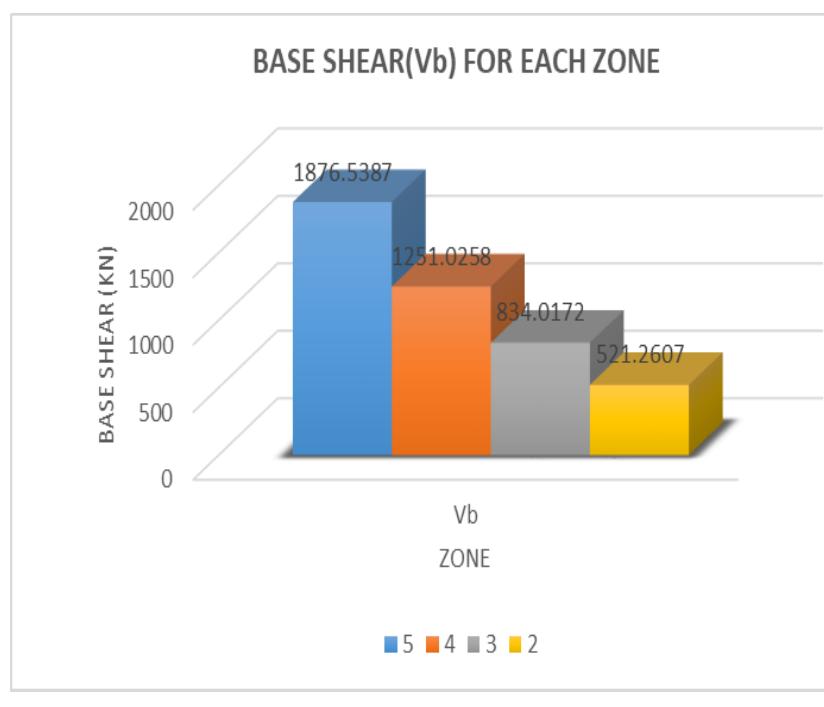
ThereweretwodistinctirregularRCCbuildingplansforG+9 and G+25,and they were exposed to four distinct zones Zones 2, 3, 4, and 5 for a total of eight models Notable resultsareobtainedfromtheanalysis,whichwascarriedout using the Indian Standard (IS) 1893 for earthquake load. Whenitcomestobaseshear,maximumstorydisplacement, and maximum story drifts, the models located in lower seismic zones perform better. This implies that these buildingsaremoreresilienttothedynamicforcesbroughton by seismic activity. A thorough grasp of the structural behaviorundervariousloadingscenariosisprovidedbythe applicationoftheresponsespectrummethodandextended three-dimensionalanalysis.

International Research Journal of Engineering and Technology (IRJET) e-ISSN: 2395-0056 Volume: 11 Issue: 01 | Jan 2024 www.irjet.net p-ISSN: 2395-0072 © 2024, IRJET | Impact Factor value: 8.226 | ISO 9001:2008 Certified Journal | Page244
Figure 2: E-tabsStructuralmodel
Figure 3 BaseshearforG+25
Figure 4 BaseshearforG+9
[2] Deepali Vasudev, Anjali Rai, “Comparative Study on Seismic Analysis of Multi Storied RC Framed Structure with and without Diaphragm Discontinuity” International Journal for Research in Applied Science & Engineering Technology (IJRASET), (2021)
Thisstudydelvesdeeplyintothetopicofseismicanalysisas it relates to multi-story reinforced concrete (RC) framed buildings. The study's main focus is on how diaphragm discontinuity more especially, architectural openings or structuralcutouts affectshowthesebuildingsbehaveunder seismicstress.Theterm"diaphragmdiscontinuity"describes breaksinabuilding'shorizontalcomponents,likeitsfloorsor roofs,whichmayhaveanimpactonhowseismicloadsare distributed.
Abuildingplanmeasuring25metersby25meterswastaken into consideration for the structural analysis, and the structure is regarded as a residential building for the purposes of the load applications. The structure has been examinedwithagenericstoreyheightof3metersinmind.To look into how seismic forces affect the structure with the diaphragm discontinuity, different percentages of the openings have been provided in the structure. The percentageofgrossareaoccupiedbytheopeningshasbeen provided.Wehavefourmodels:0%,5%,10%,and17%,with increasingopeningpercentages.
The analysis's conclusions provide important new information about how the structure's openings affect its seismic behavior. The research has revealed that the introductionofarchitecturalopeningsorcutoutshasaltered the load transfer path within the building, which is one significant outcome. It is clear from this that diaphragm discontinuitymustbetakenintoaccountinseismicdesign and analysis since it significantly affects the structure's overall response to seismic forces. For engineers and architects involved in the planning and construction of buildings in seismically active areas, this information has important practical implications for seismic design procedures.

[3] Suraj D. Vasave, Ganesh N. Vhankade, Aniket S. Kumbhar,Akshay R. Damse, V.P. Bhusare, Dr. N.V. Khadake “Comparativestudyofdynamicbehaviorofg+4 building with differentconfigurationsin seismiczoneiii usingEtabssoftware.” InternationalResearchJournalof Modernization in Engineering Technology and Science (2023)
The study under review offers a thorough comparative analysiswithanemphasisonthedynamicbehaviorofG+4 buildings in seismic zone III. With the use of the ETABS software, the study focuses on structures that have two different spatial configurations: rectangular, H-shape, Cshape and hollow shape with non-parallel x and y coordinates. The effect of slenderness ratio on these structuresisoneofthemainissuesthestudyaddresses.This study is important because it may provide important new information about how mid-rise structures with different geometricfeaturesbehaveduringearthquakes.
International Research Journal of Engineering and Technology (IRJET) e-ISSN: 2395-0056 Volume: 11 Issue: 01 | Jan 2024 www.irjet.net p-ISSN: 2395-0072 © 2024, IRJET | Impact Factor value: 8.226 | ISO 9001:2008 Certified Journal | Page245
Figure 5 Baseshearofallmodels
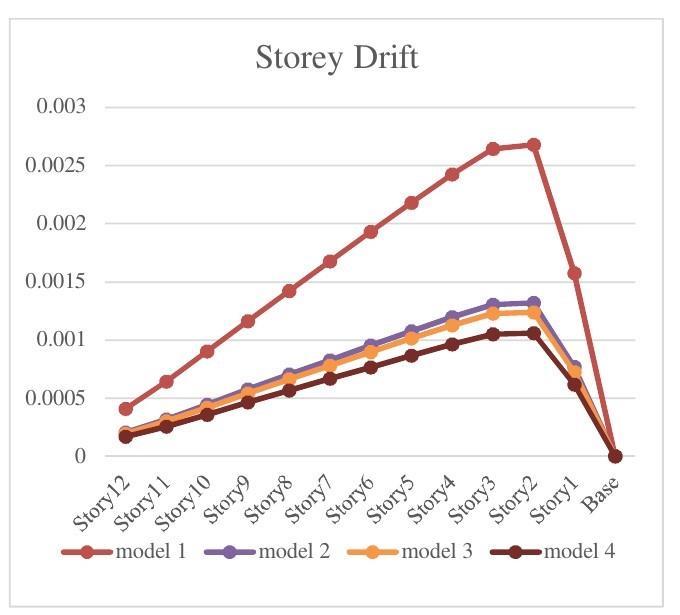
Figure 6 Storeydriftofallmodels
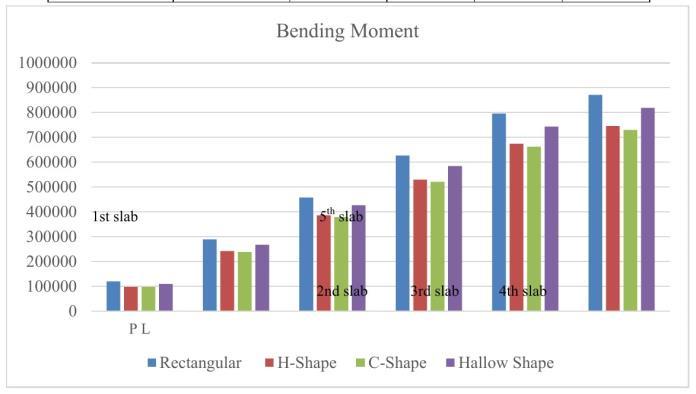
Acrucialcomponentofthestudyistheanalysisofvarious structural parameters. The study looks into the reaction moment, story drift, and base shear among these. The researchers obtain a sophisticated understanding of how various building configurations react to seismic ground motion by closely examining these parameters. The conclusions regarding the seismic resilience of G+4 structuresarebasedonthisthoroughanalysis,whichoffers crucial information to structural engineers and urban plannersworkinginearthquake-proneareas.
Thestudy'smainconclusionsincludetherealizationofhow significantly building shape affects a structure's ability to withstandseismicforces.Thechoiceofspatialarrangement, whethersquareorrectangular,canhaveabigimpactonhow wellabuildingcanabsorbandreleaseseismicenergy,asthe conclusion makes clear. This realization is crucial for directingfuturebuildingproceduresanddesignchoicesin seismicallyvulnerableareas.

[4]G.VamshiPrathap,D.Radha “Comparativeanalysisof behaviour of horizontal and vertical irregular buildings with and without using shear walls by etabs software.” Journal of Engineering Sciences (2023)
The current paper investigates the structural buildings havingverticalandhorizontalirregularitieswithandwithout theprovisionofshearwall.TheanalysisoftheG+12multi-
story commercial building in zone 2 is taken into considerationinthecurrentstudyusingETABS.Shearwalls are essential for improving high-rise reinforced concrete buildings' seismic performance, especially during earthquakes. When compared to buildings without shear walls, these vertical structures significantly lessen the displacementofbuildingstories,showingareductionof50–70%.Thissignificantadvancementindisplacementcontrolis essentialtothestructure'soverallstabilityandseismicevent safety.
Buildingstructureswithirregularities,particularlythosewith vertical irregularities, are significantly more likely to fail duringearthquakes.Variationsinmassandstiffnessalonga building'sheightareexamplesofverticalirregularitiesthat significantly affect seismic performance. In order to overcomethesedifficulties,shearwallsincreaseresistanceto lateralloads,lessenthenegativeeffectsofirregularities,and improvethebuilding'soverallstructuralintegrity.
The presence of shear walls is not the only factor that determines their effectiveness; other factors include their design.Instructureswithshearwalls,theresistancetolateral loadsriseslinearlywiththeshearwall'sthickness.Butthe shear wall's width hasan even more noticeable impacton how well it performs. This emphasizes how crucial it isto takeintoaccountbothwidthandthicknesswhendesigning structureswithshearwallsinearthquake-proneareas.


International Research Journal of Engineering and Technology (IRJET) e-ISSN: 2395-0056 Volume: 11 Issue: 01 | Jan 2024 www.irjet.net p-ISSN: 2395-0072 © 2024, IRJET | Impact Factor value: 8.226 | ISO 9001:2008 Certified Journal | Page246
Figure 7 BendingMomentgraph
Figure 8 Storydriftgraph
Figure 9 Momentgraph
Figure 10 Storeydriftgraph
[5]KiranDevi,SubhankarPetal “AComparativeStudyon Seismic Analysis of Multistorey Buildings in Different Seismic Zones” Journal of Smart Buildings and Construction Technology (2023)
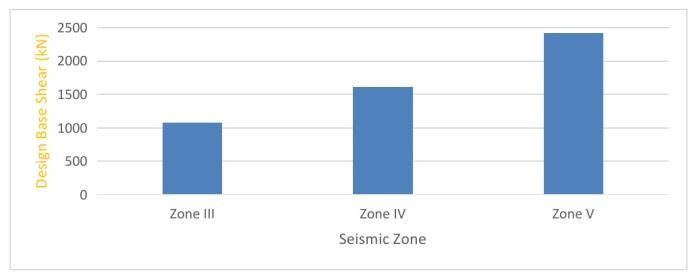
The study offers a thorough examination of how multistorybuildingsbehaveseismicallyindifferentseismic zones.Thisstudyexaminestheperformanceofareinforced concrete (RC) structure with a maximum height of eight storiesinseismiczonesIII,IV,andV.Thisstudy'smaingoalis tousetheETABSanalyticalmodeltocomparethepercentage oflongitudinalsteel,reinforcementdetails,anddesignbase shear of a single G + 8 story reinforced concrete (RC) structureinthreedistinctseismiczones India'sIII,IV,and V. The analysis takes into account a number of important variables,suchasthebuilding'sinherentfrequency,damping factor,basetype,structuralsignificance,andductility.
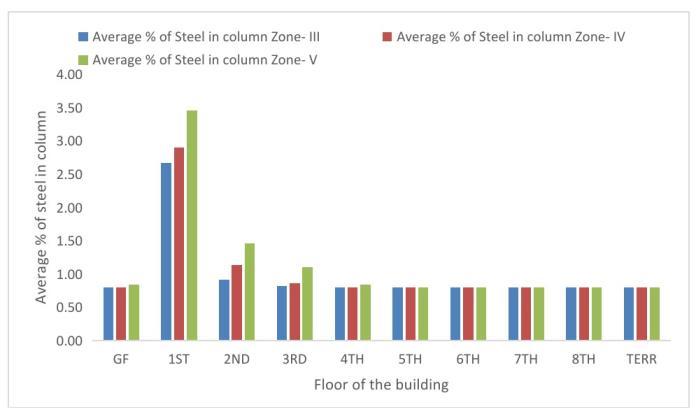
ItisobservedthatwhentheseismiczoneshiftsfromIIItoV, theamountofbottommidspanreinforcementinthebeams increases significantly, ranging from 13% to 35%. This suggests that in response to the increased seismic forces, thereisagreaterneedforreinforcingelementsinthebeams, especiallyatthelowerlevelsofthestructure.Furthermore, thetotalamountofsteelneededforthestructureincreases gradually from seismic Zone III to V by about 35%. This emphasizes how crucial it is to give material qualities and structural design significant thought in areas with greater seismicactivity.
The differences in base shear, reinforcement details, and overall steel demand observed in the G + 8 storey RC structureacrossseismiczonesIII,IV,andVhighlighttheneed forincreasedattentiontoearthquake-resistantconstruction practices,especiallyinhigherseismiczones.
3. CONCLUSIONS
Studies on the evaluation of Indian seismically vulnerable structuresareessentialtothepreservationofinfrastructure andhumanlife.Thecountry'svariedseismicriskmakesit necessary to take a nuanced approach to comprehending how different regions' buildings behave. These studies providevaluableinsightsbasedontheresearchofvarious buildingshavingvariousirregularitiesasstatedabove.Some ofthemareasbelow:
Maximumdisplacementandthenumberofstoreys haveaninverserelationshipwiththeseismiczone coefficient.
Thereisaninverserelationshipbetweenbaseshear andseismiczonecoefficientincrease.
Thestructuralperformanceagainstearthquakeload issignificantlyinfluencedbythelengthandwidthof thestructure.
The load transfer path and the behavior of a multistory building under seismic forces can be greatly impacted by the presence of architectural openingsordiscontinuities.
Reducing the storey drift indicates less lateral displacement, whichiscorrelated with increasing thepercentageofopeningsinthestructure.
The base shear, which represents the maximum expected lateral force, also decreases as the percentageofopeningsincreases.
The way a structure is designed for its shape can haveabigimpactonhowitrespondsstructurallyto groundmotioncausedbyearthquakes.
The base shear, which represents the maximum expected lateral force, also decreases as the percentageofopeningsincreases.
International Research Journal of Engineering and Technology (IRJET) e-ISSN: 2395-0056 Volume: 11 Issue: 01 | Jan 2024 www.irjet.net p-ISSN: 2395-0072 © 2024, IRJET | Impact Factor value: 8.226 | ISO 9001:2008 Certified Journal | Page247
Figure 11 Designbaseshear
Figure 12 %steelincolumn
The base shear, which represents the maximum expected lateral force, also decreases as the percentageofopeningsincreases.
The base shear, which represents the maximum expected lateral force, also decreases as the percentageofopeningsincreases.
As seismic zones increased, the quantity of top longitudinal steel at support sections in beams variedfromapproximately0.23to0.46,whilethe quantity of bottom longitudinal steel at support sectionsinbeamsvariedfromapproximately0.23 to0.36.
Between seismic Zone III and V, the quantity of bottommidspanreinforcementinbeamsincreased byroughly13to35,andthetotalamountofsteel requiredincreasedgraduallybyabout35.
REFERENCES
[1] Hossain,S.,&Singh,S.K.(2023,February).Comparative analysisofirregularRCCbuildingsindifferentzones.In IOPConferenceSeries:EarthandEnvironmentalScience (Vol.1110,No.1,p.012035).IOPPublishing.
[2] Deepali Vasudev, Anjali Rai. "Comparative Study on SeismicAnalysisofMultiStoriedRCFramedStructure withandwithoutDiaphragmDiscontinuity",Volume9, Issue X, International Journal for Research in Applied ScienceandEngineeringTechnology(IJRASET)PageNo: 657-662,ISSN:2321-9653
[3] Vasave,S.D.,Vhankade,G.N.,Kumbhar,A.S.,Damse,A. R., Bhusare, V. P., & Khadake, N. V. COMPARATIVE STUDY OF DYNAMIC BEHAVIOR OF G+ 4 BUILDING WITHDIFFERENTCONFIGURATIONSINSEISMICZONE IIIUSINGETABSSOFTWARE.
[4] PRATHAP, G. V., & RADHA, D. (2023). COMPARATIVE ANALYSIS OF BEHAVIOUR OF HORIZONTAL AND VERTICAL IRREGULAR BUILDINGS WITH AND WITHOUTUSINGSHEARWALLSBYETABSSOFTWARE. JournalofEngineeringSciences,14(02).
[5] Devi, K., & Petal, S. (2023). A Comparative Study on Seismic Analysis of Multistorey Buildings in Different Seismic Zones. Journal of Smart Buildings and ConstructionTechnology,5(2),9-16.
International Research Journal of Engineering and Technology (IRJET) e-ISSN: 2395-0056 Volume: 11 Issue: 01 | Jan 2024 www.irjet.net p-ISSN: 2395-0072 © 2024, IRJET | Impact Factor value: 8.226 | ISO 9001:2008 Certified Journal | Page248