
International Research Journal of Engineering and Technology (IRJET) e-ISSN: 2395-0056
Volume: 11 Issue: 12 | Dec 2024 www.irjet.net p-ISSN: 2395-0072

International Research Journal of Engineering and Technology (IRJET) e-ISSN: 2395-0056
Volume: 11 Issue: 12 | Dec 2024 www.irjet.net p-ISSN: 2395-0072
Vinay K1
1Security Analyst cum Trainer, Institute of Information Security Mumbai, Maharashtra, India ***
Abstract - The integration of ArtificialIntelligence(AI)into Governance, Risk Management, and Compliance (GRC) frameworks is transforming how organizations manage and mitigate risks, ensure compliance, and optimize operations. This paper explores the potential of AI in enhancing GRC processes, including risk assessment, incident response, and compliance monitoring. Through a mixed-method approach combining qualitative and quantitative analysis, the study identifies key components of AI-powered GRC and assessesthe benefits and challenges associated with its implementation. The research highlights the ability of AI to automate routine tasks, provide real-time insights, and improve decisionmaking, leading to increased efficiency and accuracy. However, it also addressessignificantchallengessuchaspolicy and governance issues, ethicalandlegalconcerns,andsecurity threats. Case studies from various industries demonstrate the practical applications and successes of AI in GRC. The paper concludes with recommendations fororganizationsseekingto integrate AI into their GRC frameworks, emphasizingtheneed for robust governance, ethical guidelines, and advanced security measures.
Key Words: Artificial Intelligence, Governance, Risk Management,Compliance,Decision-Making,Policy,Ethics, Law
Organizationsnowfacenever-before-seenchallengeswith riskmanagement,compliance,andeffectivegovernancein the complex rapidly evolving business environment. The intersection of the Governance, Risk Management, Compliance (GRC) with the Artificial Intelligence (AI) presentstechnologieswhichcanbeorganizedbyenhancing theirriskmanagement,betteroperationalefficiencyalong with a better GRC in this. GRC, is the simple words, is an integration of the multiple of different governance, regulation, and compliance come together along with the riskmanagementprocess.
Traditional GRCpracticeused methodssuchasInterview, Discuss, Self-Assessment Questionnaires, Compliance Checklists,GapAnalysis.Mostlythesemethodsrelyonthe manualprocessandcompileofthedatawhichwillleadto inefficiencies, errors, and delays. By using the Artificial IntelligencepoweredGRC,helptheGRCprocesstousethe abilityoftheAItoprocessahugeamountofdata,identity
patterns, and make intelligent decisions. By automating these processes, it helps the organization/industries with betterriskassessment,proactivecompliancemonitoring.It also helps the industry to achieve greater time efficiency, reduce costs, and mitigate risk with intelligent decisions.
[1,9]
Thispaperwillfollowamixed-methodapproachwhichuses combining techniques such as analysis, quantitative and qualitativemethods.Itwilldelveintomultiplecomponents of GRC such as risk assessment, incidence response, compliancemonitoringandexamineeachcomponentwith Artificial Intelligence. It also discusses the benefits and challenges of Governance, Risk Management, Compliance (GRC)withtheArtificialIntelligence(AI)andprovidesthe case studies of the different organizations who have implementedArtificialIntelligencewiththeirGRCprocess successfullywiththeirorganizationefficiency
Thispaperhasthefollowingresearchobjectiveisfollowed as:
ToidentifythekeycomponentsoftheGRCProcess andexaminecomponentswithAIintegration.[3]
ToassessthebenefitsandchallengesofAIpowered GRC including different parameters such as cost, efficiency,andaccuracy.[2]
To examine different industrycasestudies where Artificial Intelligence with GRC processes in their process.[7]
To provide recommendations for organizations/industriesseekingwhereAIcanbe integratedwiththem.
The research intends to add to the increasing volume of knowledge on the connection between AI and GRC by addressingtheseresearchobjectives.Itwillprovideuseful informationtoorganizationsaimingtoimprovetheirGRC practices to make use of AI's potential for improving efficiency,effectiveness,andcompliance.
This The intersection of the Governance, Risk and Compliance (GRC) with the Artificial Intelligence (AI) has
International Research Journal of Engineering and Technology (IRJET) e-ISSN: 2395-0056
Volume: 11 Issue: 12 | Dec 2024 www.irjet.net p-ISSN: 2395-0072
becomeanexponentialgrowthintheareaofresearchand practicalityinvariousindustries.Asindustriesarestruggling with increasing burden, new regulations, laws related to informationsecurity,andcomplexandrapidlychangingrisk landscape and reduced efficiency in the organization process. Integrating Artificial Intelligence with the GRC Framework,helpstheorganization/industrieshelpthemto transform better process optimization, enhance risk managementandcompliancemanagement.
This literature review aims to explore the potential of ArtificialIntelligencetotheGRCFrameworktoenhancethe business process, optimize the organization productivity, andupdatewiththelatestlawsandregulationsbyexploring thecurrentstateofresearchandtrends.Byexaminingthe variousapplicationsofArtificial Intelligenceintodifferent GRCprocessessuchasanalysingthelargeamountofdata, better decision making on risk assessment, examine the challengesandlimitationsofthesetechnologies.Thereview alsoexploresthefuturedirectionsforfurtherresearchand advancementinthisdomain.
GovernanceplaysavitalroleintheInformationSecurity landscape in the modern complex thread full world. Governanceistheprocessofensuringthatsecuritystrategies for top management of the organizations a direction to frameworkforlawandregulationsforinformationsecurity along with their business objectives. Wirtz et al. (2022) proposeanideawhereriskandguidelines-basedframework forAIGovernancetomanagetheAIbasedriskinstructures approach. This paper also assesses the resource allocation efficiently and prioritizes compliance efforts based on the potentialrisks[4].
Araz Taeihagh (2021) highlights the importance of AI governance and discusses the need for a framework to addresstheethics,legalityandimpactsofAI.Itdiscussesthe benefits and challenges involved in integrating artificial intelligence with a variety of businesses, including autonomouscars,armedsystems,androbotics.Thispaper alsogivesthecaseswhereArtificialIntelligenceGovernance suchasusingcarerobotsinAustraliaandNewZealand,IT PlatformContentanalysisusingAIbasedalgorithmandmany moreusecasesofArtificialIntelligenceinreallife[9].
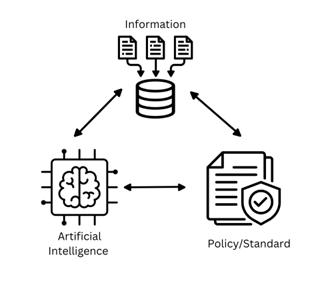
Intheabovefigure1,wecanseehowtheinformationwill beusedwithArtificialIntelligenceinthegovernancepolicy/ standard to make better business decisions and policy implementation.Italsohelpsthemachievebetterbusiness productivity and stay updated with the latest governance policyandstandardwiththelawoflandoftheiroperation.
RiskManagementinanyorganizationplaysavitalroleto makethemmoresecureinnaturebyeliminating/reducing the risk asset in their organization. Risk Management is a complex processto detect,assess,prioritizeandtreatany risk asset in the organization. Artificial Intelligence algorithmswithriskmanagementareveryusefultoanalyze thehugeamountofdatafrominternalorexternalsourcesto identify emerging risk in a timely manner, predict the likelihood and impacts on the organization with available amount of information/data and assess the potential risk withthebetterdecisionmakinginthetopmanagementin theorganization.
Xia studied different existing AI based risk assessment frameworksusedintheorganizationfromdifferentsectors likeprivate,government,andnon-profitorganization(NGO). It analyses and identifies key characteristics such as stakeholders,systems,locationandassessmentmethods.It alsoassessesthecurrentstateofthedifferentframeworks andhighlightsareasfor researchand development in this area.[3]
In the case of Jeong's (2020) research, artificial intelligence (AI) presents a variety of security risks, including cybercrime and data privacy violations, which graduallybecomemoreandmoresignificantwithinmodern GRCframeworks.Organizationsmustcreateadvancedthreat detection systems that use AI to monitor network vulnerabilitiesandimmediateresponsetoattacksinorderto defend against AI-driven cybersecurity threats. Organizations could enhance their capacity to identify potentialrisksandmaintaincompliancewithdataprotection lawsbyusingAIwithexistingsecurityprocesses.[2]
International Research Journal of Engineering and Technology (IRJET) e-ISSN: 2395-0056
Volume: 11 Issue: 12 | Dec 2024 www.irjet.net p-ISSN: 2395-0072
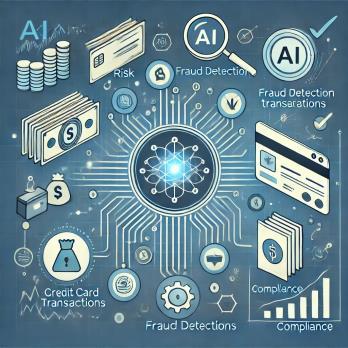
Figure 2 explains the uses of AI in the financial sector further demonstrate its capacity to enhance GRC frameworks. In the analysis of artificial intelligence's applicationtofinancialservices,MujtabaandYuille(2024) highlight how predictive analytics may enhance fraud detection and risk assessment. By analysing transactional data to identify patterns indicative of fraud, AI-powered solutionsmayreducefinancialrisksandverifycomplianceto industryregulations.[7]
Thegovernance,risk,andcompliance(GRC)frameworks' use of artificial intelligence (AI) has transformed the compliance management process. By streamlining complianceprocesses,improvingnon-compliancedetection, and offering real-time insights, artificial intelligence (AI)driven technologies are revolutionizing how businesses assurecompliancetolawsandregulations.
Through predictive analytics, AI is also enhancing compliance by helping businesses predict potential issues with compliance before they occur. By comparing an organization'sdatatolegalrequirements,predictivemodels canidentifypatternsleadingtoapotentialnon-compliance risk.Byaddressingcompliancegapspromptly,thisproactive strategysupportsfirmsinminimizingriskswhilepreventing penalties.
AIcanassistwithautomatedauditsandreporting,which relieves compliance teams of a portion of their administrative duties. AI-driven solutions can generate reports based on audit trails and real-time data, ensuring that all necessary paperwork is promptly and properly created and submitted to regulatory agencies. Because AI systemscanproducedetaileddocumentationofcompliance actions, this role further enhances accountability and transparencyinsideorganizations.
Artificial Intelligence (AI) has become an important component in the automation of compliance processes in Governance, Risk, and Compliance (GRC) frameworks, reducing human operations. A wide range of tasks are involvedincompliancemanagement,includingkeepingan eyeonregulatorychanges,reporting,auditing,andmaking sure internal regulations are followed. Organizations may automate the extraction and interpretation of regulatory documents, saving time and money, by utilizing AI technologieslikemachinelearning(ML)andnaturallanguage processing(NLP).
AI-driven systems analyze huge databases, identify trends,andpredictpossiblenon-complianceriskstoincrease
efficiencyanddecision-making.Xiaetal.(2023)discussthe wayAIplaysaroleinsystematicriskassessmentandhowit can be utilized to create predictive models for compliance managementbyconnectingactualrisksituationswithrealtime data. With the support of such predictive abilities, organizations may guarantee regulatory compliance and proactively handle all risks. By offering automatically documented audit trails, these systems further improve accountability and transparency by enabling in-depth examinationsduringregulatoryaudit.
RiskmanagementisavitalaspectofGRCframeworks,and AIindicatesimmensepotentialforincreasingriskdetection, assessment, and mitigation. Traditional risk management techniques tend to depend on historical data and expert judgment,resultingindelayedreactionstonovelthreats.In contrast, AI systems can assess real-time data from many sources, enabling for more dynamic and adaptive risk managementcapabilities.
Forexample,AI-poweredalgorithmscanassessrisksby identifyingabnormalpatternsintransactionaldata,flagging unusualactivitiesthatcouldindicatefraudorotherfinancial crimes. Mujtaba and Yuille (2024) demonstrated how AIdrivenpredictiveanalyticscanbeusedinfinancialservices to enhance fraud detection and risk assessment. By continuously learning from data, AI systems refine their ability to detect new forms of risks that were previously unnoticed,offeringamorerobustandscalableapproachto managingrisksindynamicenvironments.
Moreover,AIcansupportdecision-makersbygenerating risk scores, visualizing risk landscapes, and simulating variousriskscenarios.Thishelpsorganizationspreparefora widerangeofpotentialoutcomes,enhancingtheirabilityto respond effectively to both known and unknown risks. Through automation and predictive capabilities, AI can significantly reduce the likelihood of human error in risk assessments and offer real-time insights that enable proactiveriskmanagement.
As organizations increasingly rely on digital infrastructure, cybersecurity risks have become a top concernwithinGRCframeworks.AIplaysapivotalrolein advancing cybersecurity defenses, providing enhanced detection, response, and prevention capabilities against evolvingcyberthreats.Jawharetal.(2024)discusshowAIis beingusedtodelivercustomizedcybersecuritytrainingand awareness programs that adapt to specific organizational needs and threat landscapes. These AI-driven training solutions can analyze user behavior, identify potential vulnerabilities, and tailor security measures to mitigate risks.
International Research Journal of Engineering and Technology (IRJET) e-ISSN: 2395-0056
Volume: 11 Issue: 12 | Dec 2024 www.irjet.net p-ISSN: 2395-0072
AIisalsotransformingcybersecuritybyautomatingthreat detection and response mechanisms. Machine learning algorithms can monitor network traffic in real-time, identifying anomalies and potential breaches far more quicklythantraditionalsecuritysystems.Thesesystemscan automatically initiate defensive actions, such as isolating compromisedsystems,alertingsecurityteams,ordeploying countermeasures to mitigate the impact of a cyber attack. AI'sabilitytocontinuouslylearnfromnewthreatsenablesit tostayaheadofincreasinglysophisticatedcyberadversaries, providing an adaptive and scalable approach to cybersecuritymanagement.
Furthermore, AI-driven cybersecurity solutions are particularly valuable in maintaining compliance with evolving data protection regulations. For example, AI can monitor compliance with the General Data Protection Regulation (GDPR) by tracking how personal data is processed and stored, ensuring that organizations are meetingregulatoryrequirements.ThisintegrationofAIinto cybersecurity enhances the overall GRC strategy by providingorganizationswiththetoolstoanticipate,detect, and respond to cyber threats in real-time, while also ensuringcompliancewithregulatorystandards.
4.1
The integration of artificial intelligence (AI) in Governance, Risk, and Compliance (GRC) frameworks presents numerous policy and governance challenges. AIdriven systems, though highly effective in automating decision-making and compliance processes, operate in a regulatory grey zone due to the lack of comprehensive AI governance structures. Many governments and organizations struggle to keep pace with the rapid advancements in AI technologies, resulting in fragmented policiesandinconsistentregulatoryframeworksglobally.
According to Taeihagh (2021), the governance of AI necessitates a multi-level, interdisciplinary approach that addresses the complexity of AI's impact on policymaking, ethics, and societal values. AI’s ability to independently assess risks and generate compliance reports raises concernsoveraccountabilityandtransparency.Forexample, in situations where AI systems provide flawed or biased outcomes, it becomes difficult to assign responsibility shouldthefaultliewiththeAIsystem,itsdevelopers,orthe organizationimplementingit?
Additionally, the lack of standardized AI governance frameworks leads to significant discrepancies in how AI tools are used across industries. In sectors like finance, healthcare,andcybersecurity,thereareemergingguidelines, butauniversalregulatoryframeworkforAIinGRCisstill evolving.Thislackofuniformitymayleadtonon-compliance withinternationalstandardsorunexpectedlegalliabilities
asAIsystemsarefurther integrated intocritical decisionmakingprocesses.
AI’sgrowingroleinGRCframeworksalsoraisesethical and legal challenges. The ethical use of AI hinges on its ability to provide unbiased, equitable, and transparent decision-making processes. However, AI algorithms are often trained on biased datasets, resulting in skewed outcomes that may unfairly target specific groups or overlookcriticalcompliancerisks.Forexample,Safdaretal. (2020) highlighted that ethical concerns in AI extend to issueslikeprivacy,fairness, andbias,especiallyinsectors like healthcare, where AI-driven decisions may directly affectpatientoutcomes.
From a legal perspective, the deployment of AI in GRC systems introduces complexities around liability and accountability.IfanAIsystemfailstoidentifyamajorriskor incorrectly flags a compliant activity as non-compliant, determininglegalresponsibilitybecomesambiguous.Should the fault rest with the organization using the AI, the developerswhodesignedthesystem,ortheunderlyingdata thatfedtheAI’sdecision-makingprocess?Moreover,theuse of AI in regulatory compliance creates potential conflicts with data privacy laws like the General Data Protection Regulation(GDPR).TheabilityofAItoanalysevastamounts of personal data may inadvertently result in violations of privacy rights, compounding the legal risks for organizations.
Tomitigatetheseethicalandlegalconcerns,organizations must implement robust frameworks for AI transparency, fairness,andaccountability.ThisincludesensuringthatAI systemsareauditedregularlyandthatethicalguidelinesare integrated into their development and deployment processes
TheuseofAIinGRCsystemsintroducesuniquesecurity threats that must be addressed to ensure the integrity of theseframeworks.AIsystemsaresusceptibletoadversarial attacks,wheremaliciousactorscanmanipulateinputdatato cause AI algorithms to make incorrect predictions or assessments.Jeong(2020)outlinesataxonomyofAI-related securitythreats,includingmodelinversion,poisoning,and evasion attacks, all of which pose significant risks to organizations that rely on AI for compliance and risk management.
AIsystemsusedinGRCarevulnerabletodatapoisoning, where attackers intentionally introduce corrupt or biased data into training datasets, leading the AI to make flawed decisions.InaGRCcontext,thiscouldresultintheAIfailing toidentifycriticalcompliancerisksorincorrectlyassessing certain risks as compliant. Furthermore, the increasing
International Research Journal of Engineering and Technology (IRJET) e-ISSN: 2395-0056
Volume: 11 Issue: 12 | Dec 2024 www.irjet.net p-ISSN: 2395-0072
complexityofAImodelsmakesthemhardertosecure,and traditionalcybersecuritymeasuresmaynotbesufficientto protectthesesystems.
The growing use of AI in cybersecurity, as explored by Jawharetal.(2024),addsanotherlayerofcomplexity.While AIcanenhancethreatdetectionandresponsecapabilities,it can also be exploited by attackers to develop more sophisticated and automated attacks . These AI-driven threatscanbypassconventionalsecuritydefenses,makingit imperative for organizations to adopt advanced AI-driven cybersecuritysolutionswhilesimultaneouslyaddressingthe vulnerabilitiesthatAIsystemsintroduce.
Insummary,addressingthesecuritychallengesposedby AI in GRC frameworks requires a multi-faceted approach. OrganizationsneedtoemployAI-specificsecuritymeasures, includingadversarialtesting,securetrainingprotocols,and continuous monitoring of AI models. Additionally, collaborationbetweenAIdevelopers,securityexperts,and policymakers is essential to create robust defense against theevolvingthreatstargetingAI-basedsystems
The research demonstrates that leveraging AI within Governance, Risk, and Compliance (GRC) frameworks has significant potential for optimizing decision-making, enhancing compliance processes, and improving risk management.However,theintegrationofAIalsopresents severalcriticalchallenges,particularlyintheareasofpolicy, ethics,andsecurity.
ThestudyconfirmsthatAIsystemscansignificantlyenhance the efficiency of GRC operations by automating routine compliancetasksandgeneratingreal-timeinsights.AItools streamlinedataanalysis,enablepredictiveriskassessments, andreducemanualintervention,asseenintheworksofXia et al. (2023) and Mujtaba & Yuille (2024) . This results in moreaccurateriskidentificationandfasterresponsetimes tocomplianceviolations.
Despite the clear benefits of AI, the absence of comprehensive governance frameworks hinders its full potential. As highlighted by Taeihagh (2021), fragmented regulatory environments across industries and regions createinconsistenciesinAIgovernance,leadingtogapsin accountabilityandtransparency.Thelackofastandardized approachtoAIgovernanceinGRCcreatessignificantrisks for organizations, especially those operating in multiple jurisdictions.
Ethical considerations remain a central concern, as AI systems are prone to bias, especially when trained on incomplete or biased datasets. Safdar et al. (2020) emphasize that the deployment of AI in sensitive sectors, such as healthcare and finance, must be approached cautiouslytoavoidexacerbatingexistingbiasesorinfringing on individual privacy rights. Furthermore, the legal ambiguity surrounding AI’s role in decision-making complicates the assignment of liability in cases of noncomplianceorriskmisidentification.
AI’svulnerabilitiestosecuritythreats,suchasadversarial attacksanddatapoisoning,arecriticalareasofconcernfor organizationsrelyingonAIinGRCframeworks.Jeong(2020) and Jawhar et al. (2024) demonstrate that while AI can improvecybersecuritymeasures,itisalsoadouble-edged sword,asitintroducesnew attackvectorsthattraditional defenses may not address adequately. The study suggests that integrating AI-driven cybersecurity solutions with strongadversarialdefensemechanismsisvitaltomitigate thesethreats.
International Research Journal of Engineering and Technology (IRJET) e-ISSN: 2395-0056
Volume: 11 Issue: 12 | Dec 2024 www.irjet.net p-ISSN: 2395-0072
Table -1: Summarizesthekeycomponentsandfindingsofthestudy
Summarizes the key components and findings of the study
Component Description Key Findings Challenges Recommendations References
AI in Governance
AI in Risk Management
AI in Compliance
AI-Driven Cybersecurity
Policy and Governance Issues
Ethical and Legal Challenges
UseofAItoensure compliancewith lawsand regulationsandto manageAIrisks.
AIalgorithmsfor riskdetection, assessment,and mitigation.
AI-drivensolutions forautomated audits,reporting, andreal-time insights.
UseofAIforthreat detection, response,and prevention.
Regulatoryand governance challengesinAI integration.
EthicaluseofAI andlegal responsibilities.
Security Threats Security vulnerabilities introducedbyAI systems.
Enhancesresource allocationand prioritizes complianceefforts.
Improvesreal-time riskdetectionand predictiveanalytics.
Streamlines compliance processesand enhances transparency.
Enhancesdetection andresponse capabilitiesagainst evolvingcyber threats.
Fragmentedpolicies andinconsistent regulatory frameworks.
Concernsoverbias, privacy,andfairness.
Susceptibilityto adversarialattacks anddatapoisoning.
Thetable1aboveprovidesacomprehensiveoverviewof thekeycomponentsandfindingsoftheresearch.Thestudy confirms that AI systems can significantly enhance the efficiency and accuracy of GRC operations. However, the integrationofAIalsointroducesseveralcriticalchallenges, particularlyintheareasofpolicyandgovernance,ethicaland legalissues,andsecuritythreats.Addressingthesechallenges iscrucialforthesuccessfulandresponsibleimplementation ofAIinGRCframeworks.
Byfollowingtherecommendationsoutlinedinthetable, organizations can better leverage the benefits of AI while mitigating the associated risks. This includes developing robust governance structures, ensuring ethical and legal compliance,andimplementingadvancedsecuritymeasures toprotectagainstAI-specificthreats.:
Lackof comprehensiveAI governance frameworks.
Dependenceon historicaldatacan leadtodelayed responsestonovel threats.
Potentialfor biasedoutcomes andethical concerns.
Vulnerableto adversarialattacks anddata poisoning.
Lackofuniformity inAIgovernance acrossindustries.
Ambiguityin assigninglegal responsibilityfor AIdecisions.
Traditional cybersecurity measuresmaynot besufficient.
Developmulti-level, interdisciplinary governancestructures. [4,9]
Implementcontinuous learninganddynamic riskmodels.
RegularlyauditAI systemsandintegrate ethicalguidelines.
EmployAI-specific securitymeasuresand continuousmonitoring.
[2,3,7]
[1,3,4]
[2,6]
DevelopstandardizedAI governanceframeworks. [9]
Implementrobust frameworksforAI transparency,fairness, andaccountability.
IntegrateadvancedAIdrivencybersecurity solutionswithstrong defensemechanisms.
[5,8]
[2,6]
TheintegrationofAIintoGRCframeworksofferssignificant benefits, including enhanced efficiency, real-time risk detection, and improved compliance. However, the challengesofpolicyandgovernance,ethicalandlegalissues, and security threats must be addressed through robust governancestructures,regularaudits,continuouslearning models,andadvancedcybersecuritymeasures.Byfollowing theserecommendations,organizationscanharnessthefull potentialofAIinGRCwhilemitigatingtheassociatedrisks. Thisstructuredapproachwillhelporganizationsoptimize their GRC processes, leading to more effective risk management, enhanced compliance, and improved operationalefficiency.
International Research Journal of Engineering and Technology (IRJET) e-ISSN: 2395-0056
Volume: 11 Issue: 12 | Dec 2024 www.irjet.net p-ISSN: 2395-0072
[1] Papazafeiropoulou, A., Spanaki, K. Understanding governance,risk andcomplianceinformationsystems (GRC IS): The experts view. Inf Syst Front 18, 1251–1263 (2016). https://doi.org/10.1007/s10796-0159572-3
[2] D.Jeong,"ArtificialIntelligenceSecurityThreat,Crime, and Forensics: Taxonomy and Open Issues," in IEEE Access, vol. 8, pp. 184560-184574, 2020, doi: https://doi.org/10.1109/ACCESS.2020.3029280
[3] B.Xiaetal.,"TowardsConcreteandConnectedAIRisk Assessment (C2AIRA): A Systematic Mapping Study," 2023 IEEE/ACM 2nd International Conference on AI Engineering – Software Engineering for AI (CAIN), Melbourne, Australia, 2023, pp. 104-116, doi: https://doi.org/10.1109/CAIN58948.2023.00027
[4] BerndW.Wirtz,JanC.Weyerer,InesKehl,“Governance of artificial intelligence: A risk and guideline-based integrative framework”,Government Information Quarterly,Volume39,Issue4,2022,101685,ISSN0740624X,doi:https://doi.org/10.1016/j.giq.2022.101685
[5] Nabile M. Safdar, John D. Banja, Carolyn C. Meltzer, “Ethical considerations in artificial intelligence”, European Journal of Radiology, Volume 122, 2020, 108768,ISSN 0720-048X,doi: https://doi.org/10.1016/j.ejrad.2019.108768
[6] S.Jawhar,J.MillerandZ.Bitar,"AI-DrivenCustomized CyberSecurityTrainingandAwareness,"2024IEEE3rd InternationalConferenceonAIinCybersecurity(ICAIC), Houston, TX, USA, 2024, pp. 1-5, doi: https://doi.org/10.1109/ICAIC60265.2024.10433829
[7] Mujtaba, Numan & Yuille, Alan. (2024). AI-Powered FinancialServices:EnhancingFraudDetectionandRisk Assessment with Predictive Analytics. Doi: https://doi.org/10.13140/RG.2.2.23580.09603
[8] ToyinVictor-Mgbachi"LeveragingArtificialIntelligence (AI) Effectively: Managing Risks and Boosting Productivity"IconicResearchAndEngineeringJournals Volume7Issue72024Page54-69
[9] Araz Taeihagh, Governance of artificial intelligence, PolicyandSociety,Volume40,Issue2,June2021,Pages 137–157, https://doi.org/10.1080/14494035.2021.1928377
2024, IRJET | Impact Factor value: 8.315 | ISO