
International Research Journal of Engineering and Technology (IRJET) e-ISSN: 2395-0056
Volume: 11 Issue: 12 | Dec 2024 www.irjet.net p-ISSN: 2395-0072

International Research Journal of Engineering and Technology (IRJET) e-ISSN: 2395-0056
Volume: 11 Issue: 12 | Dec 2024 www.irjet.net p-ISSN: 2395-0072
Snehal R. Watharkar1, Shreyash S. Mali2, Sneha S. Salunkhe3, Shreya S. Khochage4 , Omkar U. Kanase5
1Assistant Professor, Department of Electronics and Telecommunication Engineering, Kasegaon Education Society’s Rajarambapu Institute of Technology, affiliated to Shivaji University, Sakharale, MS-415414, India. 2345UG Student, Department of Electronics and Telecommunication Engineering, Kasegaon Education Society’s Rajarambapu Institute of Technology, affiliated to Shivaji University, Sakharale, MS-415414, India.
Abstract - Inthe evolvingagricultural landscape, precision farming is revolutionizing crop cultivation with the aid of technology. This research focuses onthe development of a soil parameter analysis device that uses Bluetooth technology to measure and transmit real-time data on essential soil properties such as temperature, moisture, pH, and nutrient content. The device offerspersonalizedcroprecommendations based on soil conditions, helping farmers optimize their resource use and improve crop yields. By integrating IoT principles with Bluetooth, the system provides an accessible and efficient solution for modern, sustainable farming.
Key Words: Soil Analysis, IoT, Bluetooth, Precision Agriculture, Real-time Data, Sensors, Sustainable Farming.
Agriculture faces numerous challenges such as soil degradation, water scarcity, and the effects of climate change.Precisionfarming,supportedbyInternetofThings (IoT)technologies,offersaninnovativeapproachtoaddress thesechallenges.Thispaperpresentsthedevelopmentofa Bluetooth-baseddeviceforreal-timesoilparameteranalysis. This device measures critical parameters such as soil moisture, soil temperature, pH, and N, P, K that provides crop recommendations based on the data collected by respectivesensors.
Inconventionalsoiltestingmethod,numberofsoilsamples arecollectedfromthesamefieldatdifferentplaces.Thenthe collectedsoilsamplesaremixedthenfilteredandconverted toasinglefinesoilsample.10gramsofsoilsampleistested on various equipment. These tests like electrical conductivity,pH,andflamephotometryarecarriedoutusing varioussolutions.Asthisconventionalmethodofsoiltesting takes more time to give precise results, IoT based soil parameteranalysisdeviceisdeveloped.Thisdeviceallows farmers to maximize their available resources and reduce the risk of crop failure. By utilizing Bluetooth for data transmission,thesystemensureseasyaccesstosoilhealth information through a mobile application, empowering farmerstomakeinformeddecisionsincropmanagement.
PoorsoilfertilityisamajorchallengeinIndianagriculture. Thisstudyuseschemicalsoilmeasurementstoclassifysoil parameters such as organic carbon (OC), phosphorus pentoxide (P2O5P_2O_5P2O5), manganese (Mn), and iron (Fe), alongside soil pH, type, and nutrient content, to recommendfertilizersandsuitablecrops.Twentymachine learningclassifiers,includingRandomForest(RF),AdaBoost, and SVM, were evaluated. RF achieved the highest performanceinsixoftenclassificationproblems,surpassing 90% accuracy in most cases. The results highlight the potentialofMLmodelstosavetimeandcostwhileoffering reliablerecommendations.[1]
Sensitivity and uncertainty analyses identify critical soil parameters for crop simulation models, enabling users to prioritize calibration efforts.This study focused on 15 soil inputparametersoftheWebInfoCropWheatmodelunder different stress conditions, including water deficit, high temperature, and their combination. Key findings showed thatnutrientparameterslikenitrateandorganiccarbonwere mostsensitiveunderpotentialandhigh-temperaturestress, whilesoilmoistureparameterssuchasclaypercentageand field capacity were critical under water deficit conditions. Identifyingsensitivesoilparameterssignificantlyimproved model efficiency across various agro-climatic regions in India.[2]
ThisstudypresentsanIoT-enabledsoilnutrientclassification andcroprecommendationmodel(IoTSNA-CR)designedto assistfarmersinprecisionagriculture.Themodelintegrates sensors,cloudcomputing,andmachinelearningforreal-time monitoringofsoilparameterssuchastemperature,moisture, pH,andNPKvalues.Datacollectedviasensorsarestoredin Firebase cloud storage and accessed through an Android application for analysis using a multi-class support vector machine optimized with the fruit fly optimization method (MSVM-DAG-FFO). The proposed algorithm achieved high accuracy(0.973)comparedtoothermethodslikeSVMand decision trees. The system provides cost-effective, userfriendly solutions for monitoring soil health, optimizing fertilizeruse,andenhancingproductivity.[3]
International Research Journal of Engineering and Technology (IRJET) e-ISSN: 2395-0056
Volume: 11 Issue: 12 | Dec 2024 www.irjet.net p-ISSN: 2395-0072
Tamil Nadu faces challenges in agriculture due to variable climatic conditions, necessitating modern technological interventions. This study highlights the use of machine learning techniques to develop models for predicting crop suitability, water and fertilizer requirements, and pest protection. By leveraging agricultural data and climatic factors,thesystemprovidescroprecommendationstailored toproductivityandseasonalvariations.Dataanalyticsplaysa crucialroleinextractinginsightsfromagriculturaldatasets, helpingfarmersoptimizecultivationandmanagement.This approach not only aids in overcoming climate-related uncertaintiesbutalsopavesthewayformoreefficientand sustainableagriculture.[4]
This study explores the use of machine learning (ML) to analyseagriculturaldatasets,includingsoilnutrients(NPK), pH, and climatic variables (temperature, rainfall, and humidity), to recommend crops or nutrients for optimal production.FiveMLmodels SVM,XGBoost,RandomForest, KNN,andDecisionTree wereevaluatedusingdatafor11 agriculturaland10horticulturalcrops.Resultsshowedthat analysing datasets separately for agricultural and horticultural crops yielded better predictions. Among the models, XGBoost achieved the highest accuracy, with precision rates exceeding 98% for all crop categories. The studyproposesapotentialAIcloud-basedinterfaceforrapid, site-specificdecision-makingtoenhancecropselectionand fertilizerapplication.[5]
Thispaperexaminestheroleofmachinelearningclassifiers insolvingagricultural challenges,particularlysoil nutrient analysisandcropprediction.VariousclassifierssuchasJ48, Naive Bayes, k-NN, Random Forest, SVM, and JRip were comparedfortheireffectivenessinpredictingcropsbasedon soildata,includingparameterslikepH,nitrogen,phosphorus, andpotassium.NaiveBayesperformednotablywellforlarge datasets. The survey highlights the utility of ML modelsin aiding farmer decision-making for improved yield, soil quality assessment, and addressing plant diseases, contributingtosustainableagriculturepractices.[6]
Spatialdistributionsofsoilchemicalpropertiesarecritical forsite-specificmanagementpractices.Thisstudyanalysed spatial patterns in two fields: one under a corn-soybean rotationwithinorganicfertilizersandtheotherunderafiveyear crop rotation using organic nutrient sources. Soil properties like pH, exchangeable calcium, total organic carbon,andnitrogenshowedstrongspatialcorrelationsin the inorganic field with a larger range (>182 m), while properties like phosphorus and magnesium in the organic fieldexhibitedpatchydistributionsduetomanureandsludge applications. These findings suggest that closer sampling grids are required for organic fields to improve data precision, whereas conventional fields can utilize coarser grids.Thestudyemphasizestheimportanceofdocumenting long-termfieldmanagementhistoriestooptimizesampling strategies.[7]
Thisstudyreviewedoptimizationmethodsforidentifyingsoil parameters, focusing on error functions, search strategies, and identification procedures. Five optimization techniques geneticalgorithms,particleswarmoptimization, simulatedannealing,differentialevolution,andartificialbee colonyalgorithms werecomparedusingsyntheticandreal geotechnical tests.Differential evolutiondemonstratedthe strongestsearchcapabilitybutslowconvergence.Toaddress this, an enhanced algorithm integrating the Nelder-Mead simplex method was developed, improving convergence speed while maintaining search reliability. The enhanced methodsuccessfullyidentifiedsoilparameters,suchasMohrCoulombandANICREEP,frompressuremetertestsinsand and clay, showcasing its potential for geotechnical applications.[8]
Repeated wetting and drying cycles in soil lead to crack formationand the development of fracture networks. This study examined crack characteristics in alfalfa root-loess complexes during different growth periods and dry-wet cycles. It compared these with plain soil under both plant growthdry-wetcycles(PG-DWC)andextremeconditiondrywetcycles(EC-DWC).Thepresenceofplantrootsintherootsoil complex increased crack parameters (average width, rate,relativearea,andlength)comparedtoplainsoil.Crack developmentwasstableunderPG-DWCbutintensifiedwith thenumberofcyclesunderEC-DWC.Thesefindingshighlight the dual role of plant roots in promoting crack formation whileenhancingmacro-mechanicalsoilproperties,offering insightsfordesigningvegetation-basedslopeprotections.[9]
Thisreviewhighlightsin-fieldtechniquesforassessingsoil propertiessuchaspH,texture,carbon,andnitrogenlevels, emphasizing methods for determining plant-available nutrients. Key tools include electromagnetic, conductivitybased, and electrochemical sensors. Soil spectroscopy and ion-specificelectrodesprovidereliabledataonnutrientslike phosphorus, potassium, and pH. Combining multi-sensor methods with data fusion has proven economically and practicallyviable.Challengeslikesensorsignalinterference andcertificationasofficialanalysismethodsremainbarriers to adoption. These advancements enable faster, more accurate soil evaluations, supporting precision agriculture practices.[10]
Static soil parameters often fail to capture the dynamic stress-strain responses observed during geotechnical construction.Thisstudyintroducesanintelligentinversion methodusingaResNetarchitecturetomodelsoilbehaviour. DeformationresponsesareprocessedviaaBiLSTMnetwork, withaResNetmappingfeaturestosoilparameters.Anovel input strategy enables static finite element method (FEM) analysistosimulatedynamicexcavationscenarios,improving modelaccuracy.Validationusingafoundationpitprojectin Chinademonstratedstrongalignmentbetweenpredictedand measureddiaphragmwalldisplacements,underscoringthe method'sefficacyinqualitycontrolandproblemprevention forgeotechnicalinfrastructure.[11]
International Research Journal of Engineering and Technology (IRJET) e-ISSN: 2395-0056
Volume: 11 Issue: 12 | Dec 2024 www.irjet.net p-ISSN: 2395-0072
Agriculture heavily depends on soil fertility and moisture levels,withfertilizersrecommendedbasedonsoilnutrient content.Traditionalsoiltestingmethodsaretime-intensive, leadingmanyfarmerstoskiptesting,resultingindeclining soil health due to continuous monocropping. This study proposes an IoT-based system utilizing Wireless Sensor Networks(WSNs)forreal-timemonitoringofsoilparameters suchasmoisture,pH,andtemperature.Thecollecteddatais transmitted to the cloud and accessed through a mobile application, which also provides recommendations for fertilizer and water usage. This approach improves soil quality, ensures optimal crop growth, and promotes sustainablefarmingpractices.[12]
Thisstudyexaminedtheeffectsofdifferentirrigationwater qualities (groundwater, mixed water, canal water, and desalinized water) and fertigation levels on tuber yield in potatoes.Whilegroundwaterirrigationshowedthelowest totalyield,mixedwateranddesalinizedwatersignificantly enhancedtuberproduction.Notably,desalinizedwaterwas superior when soil salinity (EC1:2) exceeded 0.65 dS m⁻¹. Amongpotatovarieties,'KufriJyoti'outperformedothersby 13–22%inyieldunderallirrigationconditions.Fertigationat 80%oftherecommendedNPKlevelsshowednosignificant yield reduction, offering cost savings and reduced environmental impact. The findings advocate optimizing waterandnutrientusetoimproveyieldsinsalineconditions whileminimizingresourcewaste.[13]
This device uses a set of sensors to collect data of soil moisture,soiltemperature,pH,andnutrientlevels(N,P,K). These sensors are connected to a microcontroller, which process and analyse the data and sends it via a Bluetooth moduletoamobiledevice.Amobileapplicationisusedto display real-time soil parameters and provide crop recommendations based on the data collected. The Bluetooth-based design allows for easy, wireless data transmission over short distances, making the system portableandsuitableforsmalltomedium-sizedfarms.
Tomeasurethenecessarysoilparameters,severaltypesof sensors were researched and selected based on their accuracy, cost-effectiveness, and compatibility with the microcontrollerandBluetoothmodule:
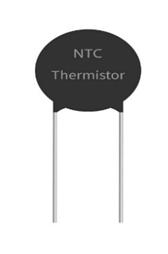
Temperature Sensor:
Thermistorplaysakeyroleinmeasuringsoiltemperature, whichisacriticalfactorincropcultivation.Athermistorisa type of temperature-sensitive resistor, meaning its resistancechangessignificantlywithtemperaturevariations. Specifically, Negative Temperature Coefficient (NTC) thermistors,whicharecommonlyusedinsoiltemperature monitoring,decreaseinresistanceasthetemperaturerises.
Soil Moisture Sensor:
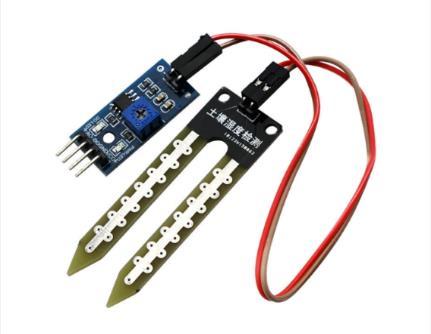
Thecapacitivemoisturesensorwaschosenforitsabilityto accuratelymeasuresoilmoisturelevelsbydetectingchanges in the dielectric permittivity of the soil. This sensor is preferred over resistive types due to its durability and resistancetocorrosion.
pH Sensor (YL-69):
AnelectrochemicalsoilpHsensorwasselectedtomeasure theacidityoralkalinityofthesoil.Thissensorisoptimized forsoiltestingandprovidesprecisepHreadingscriticalfor cropselection.
International Research Journal of Engineering and Technology (IRJET) e-ISSN: 2395-0056
Volume: 11 Issue: 12 | Dec 2024 www.irjet.net p-ISSN: 2395-0072
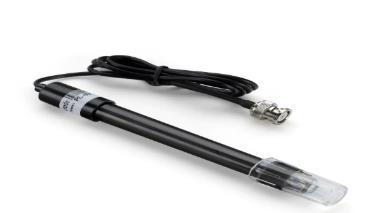
Fig-4: pHsensor
N, P, K Sensors:
This sensor is selected to measure the concentrations of Nitrogen(N),Phosphorus(P),andPotassium(K)inthesoil. Thesesensorsprovidereal-timenutrientanalysisandcan detectdeficienciesinessentialnutrients,helpingtooptimize fertilizerapplication.
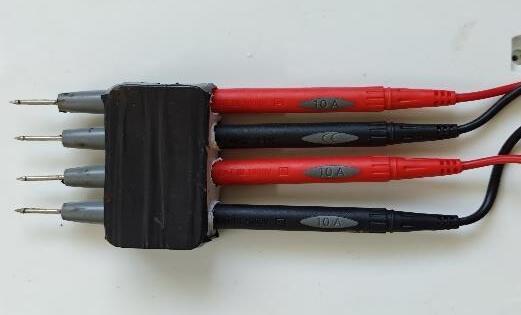
Fig-5: NPKsensor
3.3 Data Processing
Todevelopasystemthatcanaccuratelyrecommendcrops basedonsoilconditions,dataiscollectedfromsensorsand analysedusingamicrocontroller.
Table -1: StandardSoilParametervaluesforCrop
The essential soilparametersinfluencingcropgrowth are identified as moisture content, pH levels, and nutrient concentrations, primarily focusing on Nitrogen (N), Phosphorus(P),andPotassium(K).
Ding cereals (e.g., wheat, maize), legumes (e.g., soybeans, peas),andvegetables(e.g.,tomatoes,carrots)arecompiled. Foreachcrop,rangesofpH,moisturecontent,andnutrient levelswererecordedfromagriculturalresearchstudiesand governmentpublications.
The PIC18F4550 microcontroller was chosen due to its processing capability, which allows it to handle multiple sensorinputssimultaneously.ABluetoothmodule(HC-05) wasintegratedtoenablewirelesscommunicationbetween thesensorsystemandamobiledevice,wherethedatawill bedisplayed.
Thesensorswereinstalledatstrategicpointsinthesoilto measuremoisturecontent,pH,andnutrientlevels(N,P,K). Data wascollected at regularintervalsand transmitted to themicrocontrollerforprocessing.
Afterthesoildatawasanalyzed,thesystemprovidedcrop recommendationsbasedonthefollowingprocedure:
The processed data was compared against the ideal conditions for various crops in the database. If the soil moisture,pH,andnutrientlevelswerewithintheacceptable range for a particular crop, that crop was suggested as suitableforcultivation.
The analyzed data and crop recommendations were transmittedviaBluetoothtoamobileapplication.Theuser interfaceoftheappdisplayedalistofrecommendedcrops alongwithsuggestionsforoptimizingsoilconditions(e.g., addingfertilizertobalancenutrientlevels).Farmerscould view this information in real-time, enabling informed decision-making.
Thesoilmonitoringsystemintegrateshardwarecomponents andsoftwaretocollect,process,andtransmitdataaboutsoil conditions. At its core, a PIC18F4550 microcontroller manages data acquisition and control. Sensors for temperature,moisture,pH,andNPKlevelsareconnectedto the microcontroller, primarily through analog input pins. ThesystemalsoincludesanLCDmodulefordisplayingrealtime data and a Bluetooth module for wireless communication with mobile devices. Signal conditioning circuitsareusedwherenecessarytoensureaccuratesensor
International Research Journal of Engineering and Technology (IRJET) e-ISSN: 2395-0056
Volume: 11 Issue: 12 | Dec 2024 www.irjet.net p-ISSN: 2395-0072
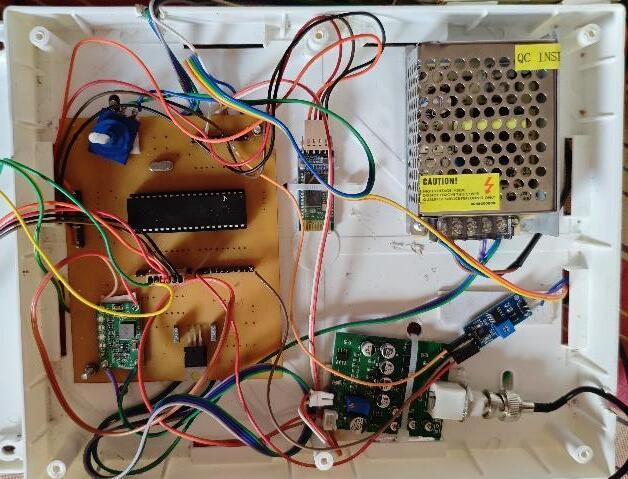

The microcontroller is programmed using C in MikroC, leveragingitsADCmodulestoreadsensorinputsandUART forBluetoothcommunication.Thesoftwareprocessesraw analogdataintomeaningfulvalues,suchastemperaturein °C,moisturepercentages,andpHlevels.Thesereadingsare displayed on the LCD and sent via Bluetooth to a paired mobile device, which can display and store the data. A custom mobile application may enhance usability with featuresliketrendvisualization.
TheBluetoothmodule,configuredthroughATcommands, ensuresreliablewirelessdatatransfer.Sensorcalibrationis crucialtomaintainaccuracy,usingreferencestandardslike buffer solutions for pH. The system undergoes testing to confirm sensor accuracy, data display, and Bluetooth communicationfunctionality.
InitialtestinghasshownthattheBluetooth-enabledsystem effectively measures and transmits soil parameter data in real-time. The mobile application provides farmers with easy-to-understandinsightsonsoilhealthandpersonalized croprecommendations.Fieldtrialsareplannedtovalidate the system's performance in diverse agricultural environments, but early results suggest the device significantlyimprovesdecision-makingrelatedtoirrigation, fertilization,andcropselection,leadingtobetterresource managementandhighercropyields.
International Research Journal of Engineering and Technology (IRJET) e-ISSN: 2395-0056
Volume: 11 Issue: 12 | Dec 2024 www.irjet.net p-ISSN: 2395-0072
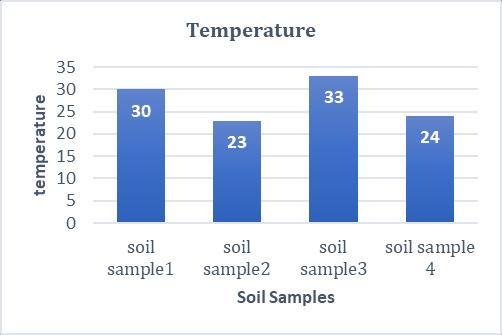
Soilsamplev/sTemperature
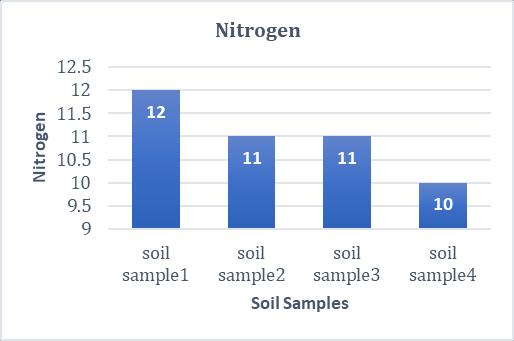
:Soilsamplev/sNitrogen
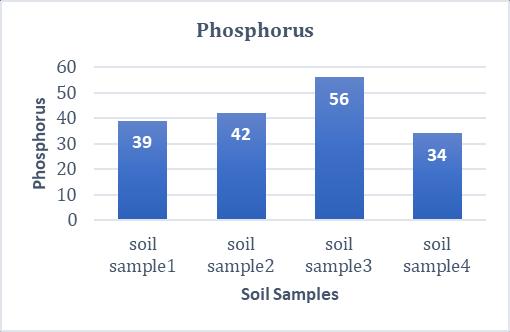
Chart-2: Soilsamplev/sPhosphorus
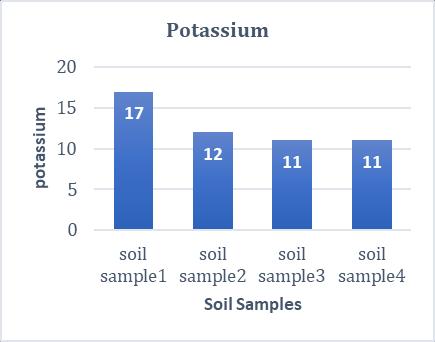
Chart-3:Soilsamplev/sPotassium
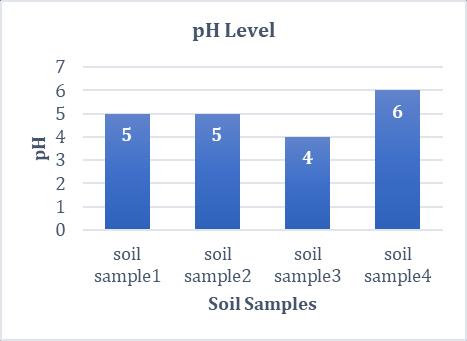
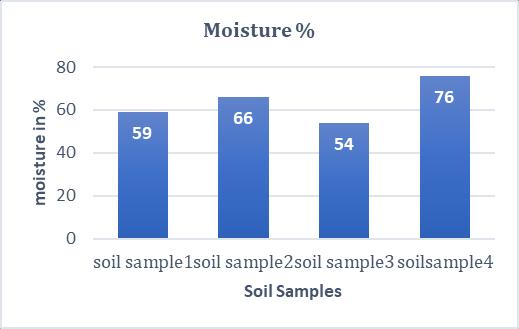
Theabovesamplesshowtheanalysisofvariousparameters insoil.Itisobservedthatinsamples1and3,andaccording toourgivendatasetoursystempredictsthissoilissuitable forcotton,wheat,andchickpeacultivation,Similarly,ifwe observethesecondsoilsample,wecanseetheincreasein parameterslikemoistureandreducedtemperaturethissoil issuitableforsoybean,turmeric,banana,maize,grapecrop cultivation.Observingthesoilsamplefouraccordingtothe given dataset we can predict, that it is good for the cultivation of rice since it requires moderate temperature andveryhighmoisture.
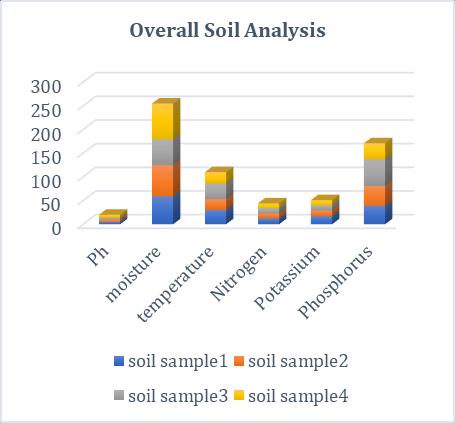
Chart-4: OverallSoilAnalysis
This is the overall analysis of all four soil samples, as it depicts all four parameters of each soil sample. And according to this prediction, crops is done via a mobile applicationusingBluetooth.Asperanalysisthepredictions for soil sample one and three are cotton, wheat, chickpea cultivation.Similarlyforsoilsampletwo,soybean,turmeric,
International Research Journal of Engineering and Technology (IRJET) e-ISSN: 2395-0056
Volume: 11 Issue: 12 | Dec 2024 www.irjet.net p-ISSN: 2395-0072
banana,maize,grapecropcultivation.Andsoilsamplefour, isgoodforcultivationofrice.
IoT-basedsoilparameteranalysisandcroprecommendation systemstandsasatestamenttothetransformativepowerof technologyinagriculture.ByharnessingthepotentialofIoT and data analytics, this paper not only addresses the challenges faced by traditional farming methods but also charts a course towards a more sustainable, resilient, and productivefutureforglobalagriculture.Asthistechnology continues to evolve and be embraced by the farming community,itholdsthepromiseofusheringinaneweraof precisionagriculture,wheredata-drivendecisionspavethe wayforincreasedfoodsecurity,resourceconservation,and environmentalsustainability.
[1] Sirsat, M.S., Cernadas, E., Fernández-Delgado, M. and Khan, R., 2017. Classification of agricultural soil parameters in India. Computers and electronics in agriculture,135,pp.269-279.
[2] Krishnan,P.andAggarwal,P.,2018.Global sensitivity anduncertaintyanalysesofawebbasedcropsimulation model(webInfoCropwheat)forsoilparameters.Plant andsoil,423,pp.443-463.R.Nicole,“Titleofpaperwith onlyfirstwordcapitalized,”J.NameStand.Abbrev.,in press.
[3] Senapaty,M.K.,Ray,A.andPadhy,N.,2023.IoT-enabled soilnutrientanalysisandcroprecommendationmodel forprecisionagriculture.Computers,12(3),p.61.
[4] Vaishnavi, S., Shobana, M., Sabitha, R. and Karthik, S., 2021,March.Agriculturalcroprecommendationsbased onproductivityandseason. In20217th international conferenceonadvancedcomputingandcommunication systems(ICACCS)(Vol.1,pp.883-886).IEEE.
[5] Dey, B., Ferdous, J. and Ahmed, R., 2024. Machine learning based recommendation of agricultural and horticulturalcropfarminginIndiaundertheregimeof NPK,soilpHandthreeclimaticvariables.Heliyon,10(3).
[6] Wankhede, D.S., 2021. Analysis and prediction of soil nutrients pH, N, P, K for crop using machine learning classifier: a review. In International Conference on MobileComputingandSustainableInformatics:ICMCSI 2020(pp.111-121).SpringerInternationalPublishing.
[7] Cambardella,C.A.andKarlen,D.L.,1999.Spatialanalysis ofsoilfertilityparameters.Precisionagriculture,1(1), pp.5-14.
[8] Yin, Z.Y., Jin, Y.F., Shen, J.S. and Hicher, P.Y., 2018. Optimizationtechniquesforidentifyingsoilparameters in geotechnical engineering: Comparative study and enhancement.InternationalJournalforNumericaland AnalyticalMethodsinGeomechanics,42(1),pp.70-94.
[9] Mao,Z.,Ma,X.,Geng,M.,Wang,M.,Gao,G.andTian,Y., 2025. Development characteristics and quantitative analysisofcracksinroot-soilcomplexduringdifferent growth periods under dry-wet cycles. Biogeotechnics, 3(1),p.100121.
[10] Najdenko,E.,Lorenz,F.,Dittert,K.andOlfs,H.W.,2024. Rapidin-fieldsoilanalysisofplant-availablenutrients andpHfor precisionagriculture Areview. Precision Agriculture,pp.1-30.
[11] Liu,W.,Tong,L.,Li,H.,Wang,Z.,Sun,Y.andGu,W.,2024. Multi-parameter intelligent inverse analysis of a deep excavation considering path-dependent behavior of soils.ComputersandGeotechnics,174,p.106597.
[12] Madhumathi, R., Arumuganathan, T. and Shruthi, R., 2020, July. Soil NPK and moisture analysis using wireless sensor networks. In 2020 11th International Conference on Computing, Communication and NetworkingTechnologies(ICCCNT)(pp.1-6).IEEE.
[13] Garg,N.,Choudhary,O.P.,Thaman,S.,Sharma,V.,Singh, H.,Vashistha,M.,Sekhon,K.S.,Sharda,R.andDhaliwal, M.S.,2022.EffectsofirrigationwaterqualityandNPKfertigationlevelsonplantgrowth,yieldandtubersizeof potatoesinasandyloamalluvialsoilofsemi-aridregion ofIndianPunjab.AgriculturalWaterManagement,266, p.107604.