
International Research Journal of Engineering and Technology (IRJET) e-ISSN: 2395-0056
Volume: 11 Issue: 12 | Dec 2024 www.irjet.net p-ISSN: 2395-0072

International Research Journal of Engineering and Technology (IRJET) e-ISSN: 2395-0056
Volume: 11 Issue: 12 | Dec 2024 www.irjet.net p-ISSN: 2395-0072
1Bachelor of Engineering, Information Science and Engineering, Bapuji Institute of Engineering and Technology, Davangere, affiliated to VTU Belagavi, Karnataka, India.
2Bachelor of Engineering, Information Science and Engineering, Bapuji Institute of Engineering and Technology, Davangere, affiliated to VTU Belagavi, Karnataka, India.
3Bachelor of Engineering, Information Science and Engineering, Bapuji Institute of Engineering and Technology, Davangere, affiliated to VTU Belagavi, Karnataka, India.
4Bachelor of Engineering, Information Science and Engineering, Bapuji Institute of Engineering and Technology, Davangere, affiliated to VTU Belagavi, Karnataka, India.
Abstract - Hydroponic farming advanced technique for vegetable production 6 is gaining global recognition for its efficient resource utilization and high-quality food production. Soil-based agriculture faces challenges like urbanization, climate change, and the overuse of chemicals, which degrade soil fertility. This paper explores various hydroponic systems, such as flow, drip, deep water culture, and Nutrient Film 1 wick, ebb and Technique (NFT). The review highlights the benefits of hydroponics, including reduced growth time, year-round production, and water conservation, with commercial systems saving up to 90% of water. While countries like the Netherlands, Australia, and the USA lead in hydroponic technology, challenges like high initial costs and technical requirements must be addressed for wider adoption.
Key Words: Nutrient Film Technique (NFT), Soil-less agriculture, water conservation, nutrient management, hydroponicmarket.
Hydroponicsisessentiallyamodernwayofgrowingplants orgardeningwithoutusingsoilandagriculturalproducts. Thehydroponicmethodisrelativelysimple,butittakestime tounderstand.Inthismethod,cropsareplantedandgrown inwater.Thesecropshavealsoprovenveryeffectiveand richin beneficial nutrients.According toscientists,plants grownhydroponicallyhavetheirrootsdirectlyimmersedin a water-based solvent rather than in soil. Hydroponics is becoming a leader in agriculture, and India is quickly catching up. The wide range of benefits makes it highly advantageousintoday’sworld,whereitcanplayavitalrole asthebackboneofsustainableagriculture.Globalflexibility offersmanyadvantages.Forexample,thismethodrequires less work and produces much higher yields because the plantsgrowfasterthanconventionalfarming.Hydroponics usesrelativelylittlewater only20%ofthewaterusedin traditional farming methods. There are many benefits for growers, such as the ability to grow crops year-round through creative combinations and offer more attractive
nutrientoptionsfortheircustomers.Whilethistechnology isgainingpopularity,themajordrawbackforfarmersisthe costofimplementation.Itismuchhigherthantraditional farmingmethods.Theinitialinstallationcostissubstantial. Other essential crop management and maintenance equipment,suchassensors,controllers,pumps,andlighting, are also required. Because there is no soil, precise temperature control, purified water, and other important nutrients like nitrates, phosphorus, and potassium are needed to promote plant nutrition. The system also promoteswaterefficiency.Hydroponicsuseslessthan10% ofthewaterconsumedintraditionalfarming,andthewater left behind by the plants is also recycled. The process of growingcropsisfascinating.Theplantrootsareplacedinan absorbent,inertmedium,suchascoconuthusk,insteadof soil.Cocopeatisprimarilyusedasaseedbaseinsteadofsoil. Hydroponics,whichiscompletelypesticide-free,isfarahead oforganicfarmingbecauseiteliminatesexposuretoharmful chemicals that may be present in the soil, providing consumerswiththehealthiestpossibleproduct.
2.1.Fox(2019):HydroponicCropProduction:APractical Guide for Soilless Growers – Comprehensive insights for hobbyistsandcommercialgrower.
2.2. Panda&Malik(2021):Discussthehistory,principles, andsustainabilityofhydroponics.
2.3. Adhikari&Gupta(2021):Argueforhydroponicsasa sustainable method that reduces water use and enhances nutrientuptake.
2.4. Sikora&Reed(2018):Focusonhydroponicgreenhouse production,includingdesignandpestmanagement.
2.5. Resch (1981): A foundational guide for setting up hydroponic systems for home and commercial use. The literatureunderscoreshydroponics’potentialinachieving higheryieldswithefficientresourceuse.
International Research Journal of Engineering and Technology (IRJET) e-ISSN: 2395-0056
Volume: 11 Issue: 12 | Dec 2024 www.irjet.net p-ISSN: 2395-0072
Hydroponic systems are designed to optimize nutrient recyclingandplantsupport.Commonsystemsinclude:
3.1 Wick System: The simplest design uses a wick to transfernutrientstoplantsviacapillaryaction.Itis idealforsmall-scalecultivationofherbsandspices.
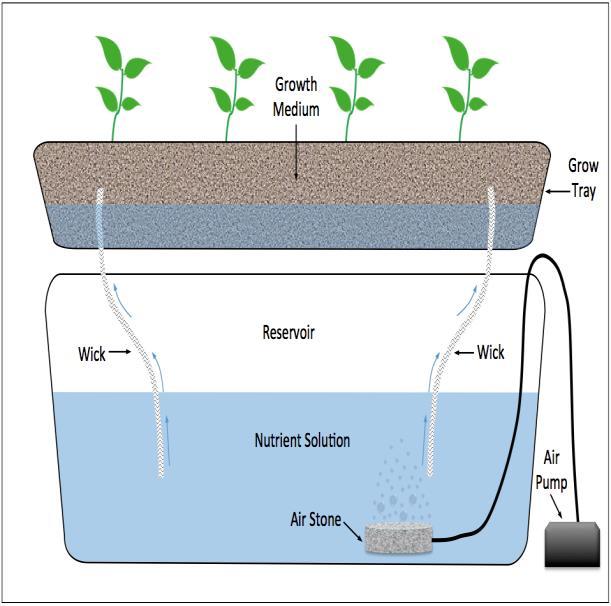
-3.1: Wick System
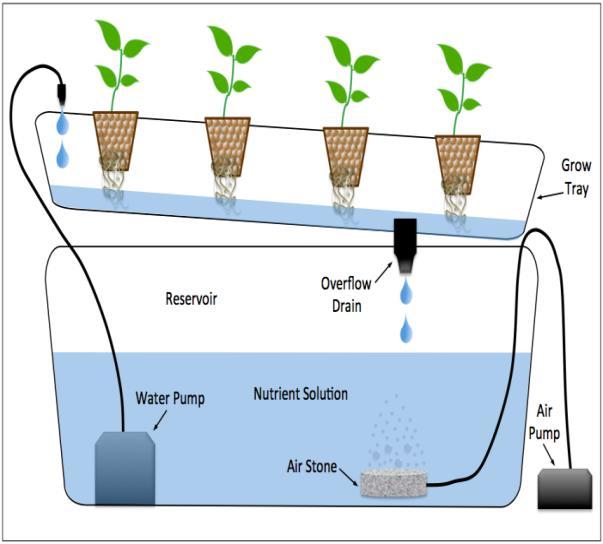
3.2 Ebb and Flow: System Operates by flooding and drainingnutrientsolutionsperiodically.Suitablefor diversecropsbutrequiresmonitoringtopreventroot rotandalgaegrowth.
3.3 Drip System: Pumps nutrient solutions directly to plant roots. Widely used commercially for waterefficientvegetablecultivation.
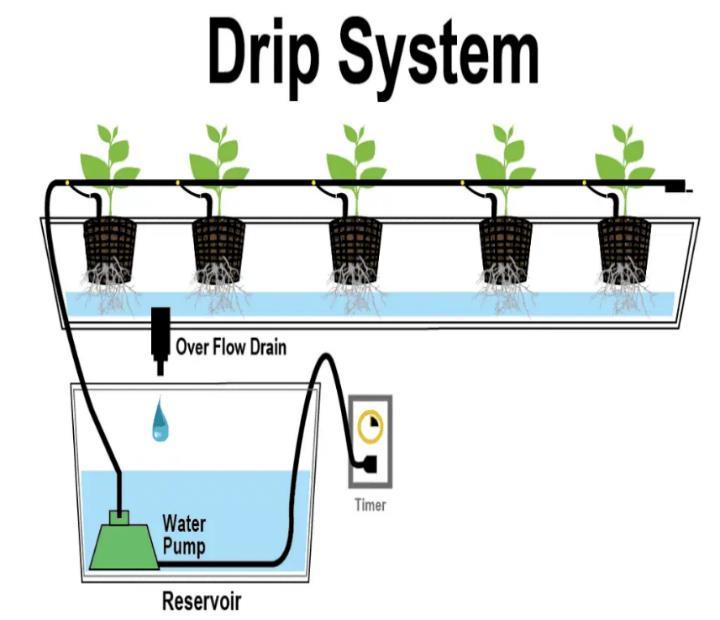
-3.3: Drip System
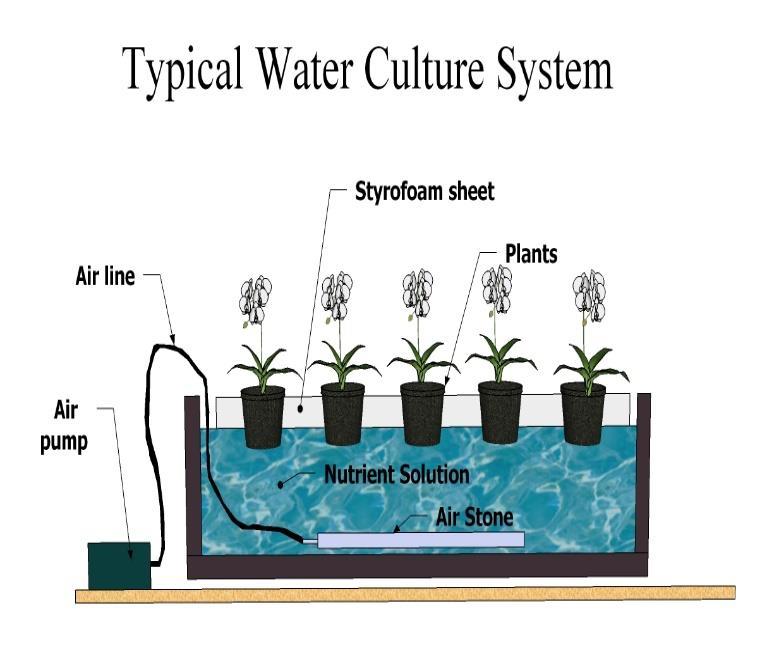
3.4 Deep Water Culture: Suspends plant roots in nutrient-richwaterwithaeration.Bestforlargefruitbearingplantsliketomatoesandcucumbers.
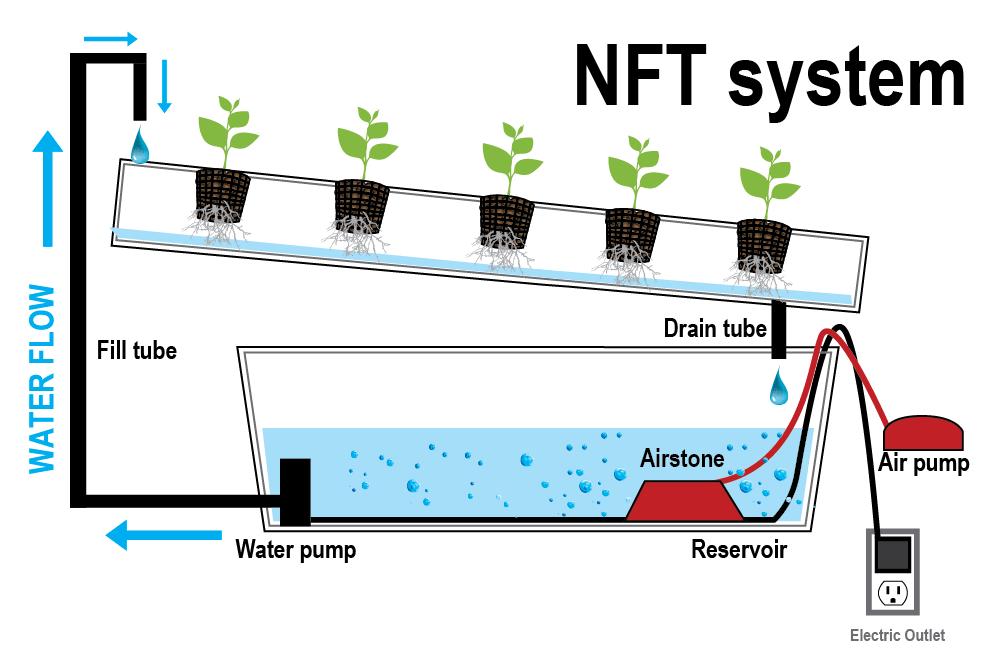
3.5 Nutrient Film Technique (NFT): Circulates a thin nutrient film over plant roots, ideal for leafy greens. Commercially the most popular system for lettuce production.
International Research Journal of Engineering and Technology (IRJET) e-ISSN: 2395-0056
Volume: 11 Issue: 12 | Dec 2024 www.irjet.net p-ISSN: 2395-0072
4. Benefits and Limitations
Benefits
•Fastercropgrowthduetonutrientavailability.
•Year-roundcultivationisindependentofclimate.
•Reductioninwateruse(upto90%savings).
•Minimaluseofpesticidesandfertilizers.
•Efficientlanduse,idealforurbansettings.
Limitations
•Highinitialsetupcosts.
• Technical expertise is required for nutrient and pH management.
•Susceptibilitytowaterbornediseases.
• Dependency on electricity and light for optimal functioning.
5. Quality improved by Hydroponics.
Consumption of fruits and vegetables significantly reduces the risk of several types of chronic diseases in humans ( Giovannucci et al., 2002; Dorais et al., 2008). Several bioactive compounds or nutrients, such as betacarotene and antioxidants, present in vegetables benefit health.Therefore,greentechnologiessuchashydroponics canincreasetheamountofhealth-promotingcompounds and improve the quality of fruits and vegetables. It is intensively used for environmental control and to avoid uncertaintyaboutthestatusofwaterandsoilnutrientsin protectedagriculture.Controllinglightandtemperaturecan alsochangethenutritionalqualityoffruitsandvegetables. Thereweresignificantdifferencesinyieldqualitybetween
hydroponically grown and conventionally grown lettuce (Murphyetal.,2011).Tomatoflavor,acidity,carotenoids, andvitaminswerebetterinhydroponicsystems(Gruda, 2009).Tomatoyieldswere30%higherinamixtureof80% pumice,10%perlite,and10%peatthansoil(Mastouriet al.,2005).Hydroponicallygrowntomatoeswereconsidered to be softer and tastier than conventionally grown tomatoes.
As water becomes a scarce and important resource, growingcropsusinghydroponicsandotherwater-saving methods is becoming more necessary and is expected to becomemorecommonovertime.Hydroponics2usesthan soil-basedfarming.Insoil-basedagriculture,mostoftmuch less water hewater wegiveplantsleaches deepinto the soil, where it cannot reach the roots. In contrast, hydroponics keeps the roots submerged in water or a nutrient film constantly covers the root zone, retaining moistureandnutrients.Nowaterislostduringthisprocess, as the water is recovered, filtered, replenished, and recycled. Spent nutrient solution can also serve as an alternativewatersourceforgrowingcropsinhydroponic systems. The savings in irrigation water, fertilizer, total vegetable,andwaterproductivityinhydroponicsystems comparedtoconventionalagricultureareshowninTable3. NFT-based9hydroponicscanreduceirrigationwateruse by 70-90% by reusing wastewater. It is possible to efficientlygrowhigh-quality,high-valuevegetablesunder controlledhydroponicconditionsusing85-90%lesswater than traditional soil-based production. Groundwater sources or dams/rivers usually contain factors such as salinity, dissolved solids, and pathogens that can affect plantperformanceandhealth.Someofthesefactorsmay benefitthecrop,whileothersshouldbeminimized.
Thehydroponicsmarketwasvaluedatover$21billion in2016,withtomatoesaccountingfor30%ofthemarket. Europe and Asia-Pacific are leading regions in adoption, with the Netherlands as a global leader. Countries like Australia, Israel, Canada, and India are increasingly investinginhydroponictechnologyforitspotentialtogrow high-valuecropsefficiently.
Hydroponicsoffersasustainablesolutionforaddressing foodsecuritylimitedarable8inareaswithlandandwater resources. By enabling year-round production of highquality crops, it is poised to revolutionize agriculture. However, scaling hydroponics requires innovations to reduce costs and reliance on labor while ensuring widespreadaccessibility.
International Research Journal of Engineering and Technology (IRJET) e-ISSN: 2395-0056
Volume: 11 Issue: 12 | Dec 2024 www.irjet.net p-ISSN: 2395-0072
9. References
1. Adhikari & Gupta (2021) - Vertical Farming Using InformationandCommunication.
2.Sikora&Reed(2018)-ComparisonBetweenGrowing PlantsinHydroponicandSoil-BasedSystems.
3. Resh (1981) - A Complete Guide to Growing Plants Hydroponically.
4. Panda & Malik (2021) - Impact of Hydroponics Technology.
5.Wada(2019)-Hydroponics:AnIntensifiedAgricultural PracticetoImproveFoodProduction.
6.Pablo,Carlo,&Andrea(2019)-HydroponicSolutions forSoillessProductionSystems:IssuesandOpportunities.
7. Khan & Purohit (2020) - Hydroponics: Current and FutureStateofFarming.