
International Research Journal of Engineering and Technology (IRJET) e-ISSN: 2395-0056
Volume: 11 Issue: 12 | Dec 2024 www.irjet.net p-ISSN: 2395-0072

International Research Journal of Engineering and Technology (IRJET) e-ISSN: 2395-0056
Volume: 11 Issue: 12 | Dec 2024 www.irjet.net p-ISSN: 2395-0072
Ananya H K1 , Divya N2 , Deepa S S3 , Dilshad Begum K L4
1,2,3,4 Student, Dept. of ISE, Bapuji institute of engineering and technology, Affiliated to VTU Belagavi, Karnataka, India
Abstract - Theincreaseincyberattackshasleftthecriminal justice system in a state of chaos. Understanding the motivationforcrimeandcombatingit isthe primarytask facing law enforcement officials. This study aims to show how to use artificial intelligence, machine learning, and predictiveanalysiswithsoftevidencetoforecastcrime,use metadata,andclassifycriminalrecordsthatarecurrentlyon file.Lawenforcementandintelligenceserviceswouldsurely benefit from the database's use in intelligent case investigations.Thiswouldenablequickerandmoreeffective investigative processes, which would assist society lower crime.Theanalystwouldalsobeabletokeepaneyeonthe relationships and recent actions of various criminal componentsbyextractingthepreciseinformationfromthe documentmentdata.Itispossibletocomprehendthecrime prediction with this research. Researching this topic demonstratesthatwhenthemodelisgiventherightdata,its chances of producing an accurate forecast are raised. The study also made an effort to identify the psychological components of the offense and the likely reasons why a personwouldhavecommittedit.
Key Words: information technology legislation, artificial intelligence, criminal justice, law enforcement, prediction algorithms, accuracy, machine learning, motivations, and cyberattacks.
Inrecentyears,thescience ofcriminal procedure lawhas beenactivelyaddressingconcernswiththeuseofartificial intelligence(AI).Theconceptofartificialintelligence(AI)is not governed by laws; rather, it is defined by scientific theories, methods, and practices that seek to replicate humancognitiveabilitiesincomputersystems.Basedonthe outcomes of information processing from the external environment, Artificialintelligence, accordingtoanumberof Russian authors, is a machine that can "act, determine its actions,andevaluatetheirconsequencesfullcontrolonthe partofahuman."OneAccordingtosomeauthors,computer systems that mimic the human brain and include built-in learning mechanisms might be thought of as artificial intelligence. In other without words, experts in Russian research and practice concur that artificial intelligence is necessary for computers to take the place of people in addressing difficult problems. This will undoubtedly raise the bar for criminal processes and make them more
impartial, transparent, and equitable. This is done in recognitionofartificialintelligence'sgrowingsignificancein contemporary law. Research often emphasizes the importanceofhavingatheoreticalknowledgeoftheartificial intelligence phenomenon. books.Most people think of artificialintelligenceasacollectionoftheoriesandmethods for building machines that can think like humans. Three categories strong,moderate,andweak aresuggestedfor artificialintelligence.Robustartificialintelligencewillenable self-solvingofcomplexissuesandworldsimulation.Weak artificial intelligence will enhance the performance of existinginformationsystemsduetoalgorithmicprocessing, whereas moderate artificial intelligence will allow for exceptionalperformanceinacertainsectorof Thisishow someauthorsdefineartificialintelligence.Inotheracademic journals, the phrase "artificial intelligence" (AI) refers to computerprogramsthatmimicthecognitiveprocessesthat peopleassociatewithotherhumanmin
Increased decision-making processes in terms of effectiveness,precision,andobjectivityareanticipatedwhen AIisincludedintothecriminaljusticesystem.Concernsof privacy, prejudice, and possible unforeseen repercussions are also brought forward. The purpose of this paper is to provideathoroughoverviewofartificialintelligenceandits presentusesincriminaljustice.
AIisaquicklydevelopingareaofcomputerscience.The man who is recognized as the creator of artificial intelligence,JohnMcCarthy,coinedthephrase"thescience andengineeringofconstructingintelligentmachines"inthe middleofthe1950s(seesidebar,"ABriefHistoryofArtificial Intelligence"). The ability of a computer to independently observe,reactto,andcarryouttasksthatnormallycallfor human intelligence and decision - making processes is knownasartificialintelligence(AI),anditcandosowithout the direct assistance of a human. One facet of human intelligence is the ability to learn by experience. Machine learning,whichsimulatesthisabilityandenableshardware and software to learn from experience, uses artificial intelligence (AI). From the perspective of criminal justice, pattern recognition is essential. Humans are patternspotters,thuswithpractice,theycandiscernbetweenawide
International Research Journal of Engineering and Technology (IRJET) e-ISSN: 2395-0056
Volume: 11 Issue: 12 | Dec 2024 www.irjet.net p-ISSN: 2395-0072
rangeofobjects,peoplecomplexhumanemotions,facts,and circumstances on a regular basis. The goal of artificial intelligence(AI) incomputersoftware andhardwareis to mimic human intelligence. Self - learning algorithms, for example, use data sets to learn how to recognize faces in photographs,performdifficultroboticsandcomputerjobs, understand online shopping habits, recognize medical diseases from difficult radiological pictures, and make predictionsaboutthefuture.
NumerousstrategiesforusingAIasatoolforpublicsafety arebeinginvestigated.OnesuchAIapplicationthatiswidely used in both the public and business sectors is facial recognition. For instance, intelligence analysts frequently utilizefacialphotostodiscoverandidentifypeople.Ittakesa lot of time and effort to go through all of the potentially importantpicturesandvideos,andhumanmistakecanoccur for a variety of reasons, including fatigue. Machines, in contrast to humans, never tire. 4 In an effort to improve publicsafety,theU.S.DepartmentofTransportationisalso investigating,creating,andtestingautomatictrafficaccident detection based on video in order to maintain safe and efficient commuter traffic over a range of locations and weather, lighting, and traffic conditions. The use of AI algorithms in the medical industry to analyze radiological picturescouldhavea bigimpactonmedical forensicsand criminal justice in terms of figuring out how and why someonedied.5Inforensicscience,AIalgorithmshavealso beenstudiedinavarietyofdomains,includingDNAanalysis. Furthermore,AIisswiftlybecomingasacrucialinstrument forfrauddetection.Byconsistentlyaddingmassivevolumes ofdatatotheirfrauddetectionalgorithms,onlinebusinesses like PayPal are able to both detect and predict unusual trendsaswellasidentifynewones,thusfoilingfraudulent attempts.6
ThemajorityofAIresearchfundedbyNIJisfocusedonfour areas:gunshotdetection,crimepredicting,DNAanalysis,and publicsafetyvideoandimageanalysis.
The criminal justice and law enforcement sectors employ video and image analysis to gather data about people, locations, and behaviors to help criminal investigations. However,processinginformationfromimagesandvideosis very labor - intensive and demands a large investment in subjectmatterexpertise.Duetothelargeamountofdata,the rapidadvancementofoperatingsystemsandsmartphones, thescarcityoftrainedstaffwiththenecessaryskills,andthe volume of information, video and image analysis is also prone to human error. With the help of AI - based technology,wecanovercometheseshortcomingsinhumans and carry out tasks expertly. For facial recognition and
pattern analysis, traditional software algorithms are restrictedtospecificcriterialikeeyecolor,eyeshape,and eyedistance.AIvideoandimagealgorithmsarecapableof learningchallengingtasksandautonomouslygeneratingand buildingtheirowncomplexfacialrecognitioncharacteristics and parameters, far beyond the capabilities of human intelligence. These algorithms might be able to recognize faces,matchobjectstopeople,detectcomplicatedeventslike crimes and accidents (in progress or after the fact), and identify firearms and other objects. NIJ has invested in a number of areas to enhance the speed, quality, and specificityofdatacollecting,imaging,andanalysisaswellas the caliber of contextual information in response to the demands of the criminal justice and law enforcement sectors.WithfundingfromtheNIJandincollaborationwith the FBI and the National Institute of Standards and Technology,researchersattheUniversityofTexasatDallas are assessing facial recognition by humans and exploring methodsforefficientlycomparingAIalgorithmsandskilled facialexaminersinordertocomprehendthepotentialspeed benefitsofAI.
PreliminaryfindingsshowthatAI-basedfacerecognition algorithmscreatedin2017performonparwithhumanfacial examiners when the recognition period is limited to 30 seconds. These results suggest that using AI - based algorithmsasa"secondpairofeyes"toimprovetheaccuracy ofskilledhumanfaceexaminerscouldincreaseproductivity.
Artificial intelligence can benefit the legal system from a scientific and evidence-processing perspective. This is particularlytrueinthecaseofforensicDNAtesting,which duringthepasttwodecadeshassignificantlyimpactedthe criminaljusticesystem.Whencommittingacrime,biological materialincludingblood,saliva,semen,andskincellscanbe transferred through contact with persons or items. The sensitivity of DNA analysis has increased along with DNA technology,enablingforensicspecialiststofindanduseDNA evidence that was previously useless due to low levels, degradation, or other factors. For instance, labs are increasinglyreceivingDNAevidencefromsignificantcrimes, including decades-old sexual assaults and cold case homicides,forexamination.Greatersensitivityallowsforthe detection of smaller amounts of DNA, increasing the potential for DNA detection. even in minuscule amounts, fromseveraldonors.Crimelabsarefacingnewdifficultiesas aresultoftheseandotherdevelopments.Forinstance,DNA fromnumerouscriminalsorfromapersonunrelatedtothe crime could be discovered utilizing incredibly sensitive techniquesonevidence.Thisbringsupthequestionofhow tointerpretDNAmixturesandthenecessityofidentifying anddissectingindividualprofilestogeneratecrucialleads forinvestigationsbylawenforcement.
International Research Journal of Engineering and Technology (IRJET) e-ISSN: 2395-0056
Volume: 11 Issue: 12 | Dec 2024 www.irjet.net p-ISSN: 2395-0072
The detection of pattern signatures in gunshot analysis is another use case for AI algorithms. In one project, the National Institute of Justice awarded funding to Cadre ResearchLabs,LLC"basedontheobservationthatthetype offirearmandammunition,thegeometryofthescene,and therecordingdeviceusedinfluencethecontentandquality ofgunshotrecordings"throughtheanalysisofgunshotaudio filesfromsmartphonesandothersmartdevices.TheCadre scientists are developing algorithms that can detect gunshots,distinguishbetweenmuzzleexplosionsandshock waves,countthequantityoffirearmsinthearea,linkcertain rounds to certain rifles, and calculate class and caliber probability. Law enforcement may find these algorithms usefulintheirinvestigations.
Predictiveanalysisisacomplextechniquethatusesalotof data to estimate and produce future events. This task is mostly the responsibility of police, probation officers, and other criminal justice professionals, who must hone their abilities over many years. 8. Using a wealth of legal precedent,socialdata,andmediadata,artificialintelligence (AI) may be used to find illegal enterprises, predict and identifythosewhoareatdangerfromcriminalenterprises, and recommend decisions. To enhance and expedite the workofprofessionalslikejudges,lawyers,prosecutors,and administrative staff, the University of Pittsburgh is investigating and developing computational methods for statutory interpretation. These researchers are receiving moneyfromtheNIJ.Theoretically,acomputersystemcould recognizespecificlanguagekindsthatarecrucialforreading lawsautomatically.Thegoalistodevelopaproof-of-concept expertsystemthatcanautomaticallyinterpretcybercrime.
Arepresentationofthesetoolsisunavoidablylackinginthe flowchart that follows. A major contributing factor is the intentional lack of transparency. Due to trade secret carveouts in Open Government laws and comparable obstacles in evidentiary and discovery standards, affected individuals frequently lack knowledge about the technologiesusedbythejurisdictionsinwhichtheyreside. Thefollowingexplanations,documents,andchartillustrate whichtoolsareusedwhere.Theyalsoshowtheresultsof Open Government requests, news articles that frequently reveal a problematic use of one of the tools, and the patchwork of jurisdictionsthatareoccasionallyforthright aboutthetoolstheyuse.
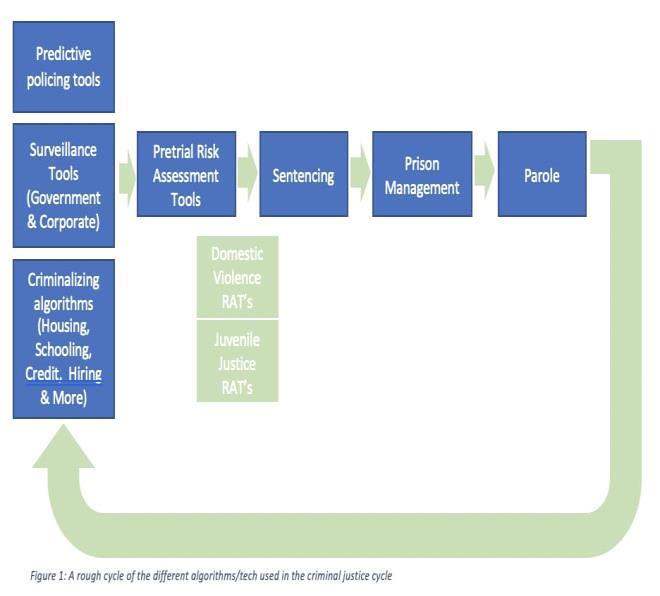
Figure:Aroughcycleofthedifferentalgorithms /techniquesusedinthecriminaljusticecycle
AIapplicationsforcriminaljusticemaybeemergingdaily, whichcouldresultinfurtheropportunitiestosupportthe criminaljusticesysteminthefutureandultimatelyenhance public safety. Movement and pattern analysis, video analytics for integrated facial recognition, closed-circuit televisionfordetectingpeopleacrossmultiplecamerasor locations,andobjectandactivitydetectioncanallbeusedto help investigate crimes by identifying suspects and preventingcrimesbeforetheyoccur.Artificialintelligence (AI)maybeabletoidentifycrimesthatwouldotherwisego undetected and improve public safety by looking into possiblecriminalactivitiesbecauseofthemassiveamounts ofdataproducedbygadgetslikecameras,video,andsocial media.
Thepublicwillthushavegreatertrustinlawenforcement andthecriminaljusticesystem.Crimelaboratoriesaround thecountrymaybenefitfromAIforjobslikecomplexDNA combination analysis. By analyzing data trends, illegal conductcanbestopped,curbed,andpenalized.Bykeeping victimsandpotentialoffendersfromturningintocriminals, algorithms may also help criminal justice professionals in waysthatwerepreviouslyunimaginable.Lawenforcement may benefit from AI's capacity to provide context and situationalawarenesssinceitwouldallowofficerstoreactto potentially dangerous situations more intelligently and safely.
Additionally, robots and drones can be used to monitor public safety, be incorporated into broader public safety systems, and be presented as a safe alternative to endangering the public and law enforcement. Robots and dronescouldprovidevaluableintelligence,aidinrecovery efforts,andprovideunexpectedassistancetocriminaljustice personnel.
International Research Journal of Engineering and Technology (IRJET) e-ISSN: 2395-0056
Volume: 11 Issue: 12 | Dec 2024 www.irjet.net p-ISSN: 2395-0072
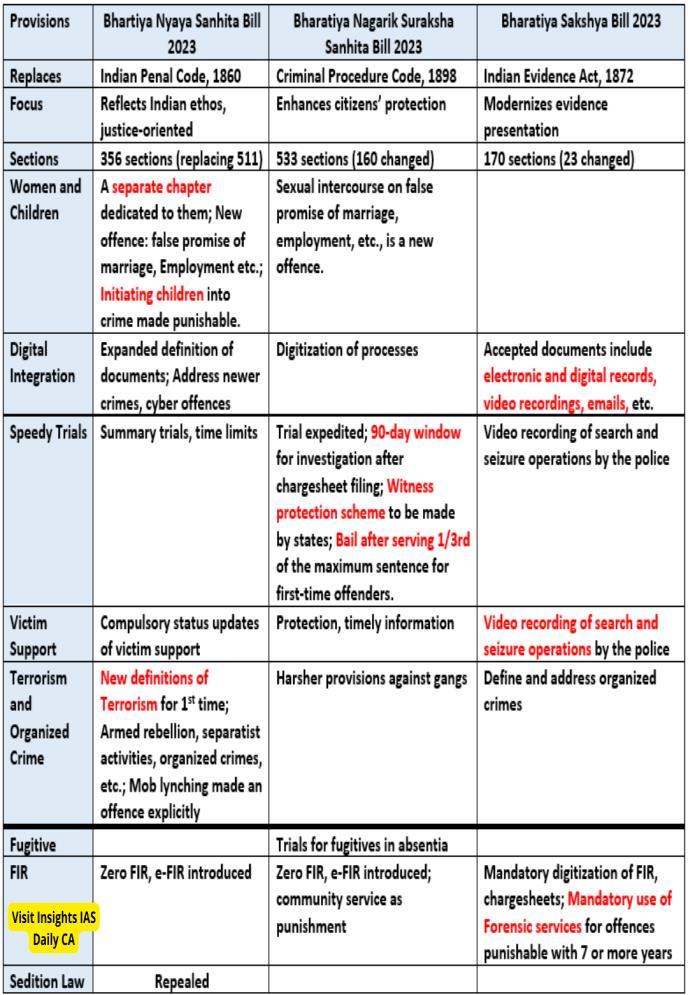
Withoutaquestion,artificialintelligenceispresentinevery aspect of our life. Thanks to machine learning and AI algorithms, there have been notable developments in the domainsofhealthcare,finance,security,andtransportation. It encourages creative decision-making and clears the backlogofcourtcases.AIalsomakesiteasierforjudgesand lawyerstoconductfairandopeninvestigations,whichhasa significant effect on the legal sector. Because AI lacks emotional intelligence, it cannot serve as a judge or an attorney.Thisisadrawbackofmoderntechnology.
Before AI is extensively used in Indian law, it is crucial to address worries about possible infringements of the constitutionallyguaranteedrighttoprivacy.Sincethereis currently no legal framework for the collecting and protectionofdatathatcanbeputintothesystemforlegal and judicial use, using AI requires a significant volume of datatobefedintothesystem.Practicallyspeaking,before integrating AI into the legal system, legal officers and lawyersmusthavetheappropriatetraining.Itwillalwaysbe required to update a legal database with the most recent case laws and judicial trends.As a result, incorporating AI into the legal system requires proof and a systematic approachratherthanahaphazardone.
1. Alexandrov AS, Andreeva OI, Zaitsev OA (2019) On the prospects for the development of Russian criminal proceedings in the context of digitalization. Bulletin of Tomsk State University 448:199-207.doi:10.17223/15617793/448.
2. Barr A, Feigenbaum EA (1981) The Handbook of artificialintelligence.Vol.1p.427
3. Egbert S (2018) About discursive storylines and techno - fixes: The political framing of the implementationofpredictivepolicinginGermany. EuropeanJournalforSecurityResearch3(2):95–114
4. FergusonAG(2017)TheRiseofBigDataPolicing: Surveillance, Race, and the Future of Law Enforcement.
5. KaplanA,HaenleinM.Siri,Siri,inmyhand:Who’s the fairest in the land? On the interpretations, illustrations, and implications of artificial intelligence.
https://www.sciencedirect.com/science /article/pii /S0007681318301393.Accessed10Jan2020
6. KehlL,KesslerA(2017)Algorithmsinthecriminal justice system: Assessing the use of risk assessments in sentencing. http: //nrs. harvard. edu/urn-3:HUL.InstRepos:33746041.Accessed 20.01.2020.
7. NeapolitanR,JiangX(2018)ArtificialIntelligence: With an Introduction to Machine Learning. Chapman&Hall/CRC.p.220p.
8. Nilsson N (1998) Artificial Intelligence: A New Synthesis.MorganKaufmann.p.185.
9. RussellSJ,NorvigP(2009)ArtificialIntelligence:A ModernApproach.UpperSaddleRiver,NewJersey. p.178.
10.Stanier I (2016) Enhancing intelligence - led policing:Lawenforcement’sbigdatarevolution.In: BunnikA,CawleyA,MulqueenM,ZwitterA(eds) BigDataChallenges:Society,Security,Innovation andEthics.London:PalgraveMacmillan,p.97–113.
International Research Journal of Engineering and Technology (IRJET) e-ISSN: 2395-0056
Volume: 11 Issue: 12 | Dec 2024 www.irjet.net p-ISSN: 2395-0072




Ananya H K student at Bapuji Institute of Engineering and Technology,Davangere.Affiliation toVTU,Belagavi.
DivyaNstudentatBapujiInstitute of Engineering and Technology, Davangere Affiliation toVTU,Belagavi.
Deepa S S student at Bapuji of Institute of Engineering and Technology,Davangere.Affiliation toVTU,Belagavi
Dilshad Begum K L student at BapujiInstituteofEngineeringand Technology,Davangere.Affiliation toVTU,Belagavi