
International Research Journal of Engineering and Technology (IRJET) e-ISSN: 2395-0056
Volume: 11 Issue: 12 | Dec 2024 www.irjet.net p-ISSN: 2395-0072

International Research Journal of Engineering and Technology (IRJET) e-ISSN: 2395-0056
Volume: 11 Issue: 12 | Dec 2024 www.irjet.net p-ISSN: 2395-0072
Snehal Shinde1 , Aadinath Chaudhari2 , Hanumant Garad3 , Prasad Karne4 , Pravin Rakte5
1Professor, Dept. of Information Technology, RMD Sinhgad School of Engineering ,Warje ,Pune, Maharashtra, India 2345Student, Dept. of Information Technology, RMD Sinhgad School of Engineering ,Warje ,Pune, Maharashtra, India
Abstract - Healthcare supply chains are complex, often leading to issues like limited data provenance, lack of transparency, and the proliferation of counterfeit drugs, which harm public health and the economy. Current centralized track-and-trace systems face challenges with data privacy and authenticity. This work proposes a blockchain-based solution using smart contracts and decentralized off-chain storage to enhance traceability, ensure data security, and eliminate intermediaries The system’s architecture, algorithms, and performance are analyzed through testing, validation, and a cost-security evaluation, highlighting its effectiveness in combating counterfeitsinthepharmaceuticalsupplychain.
Key Words: Healthcare supply chain, Counterfeit medications, Blockchain-based solution, Smart contracts, Producttraceability,Dataprivacy.
1.INTRODUCTION
The healthcare supply chain comprises a network of independent entities, including raw material suppliers, manufacturers, distributors, pharmacies, hospitals, and patients. Managing and tracking supplies through this network is challenging due to issues such as limited information sharing, centralized control, and conflicting interestsamongstakeholders.Thiscomplexityoftenleads to inefficiencies, as seen during the COVID-19 pandemic, and increases the risk of counterfeit drugs infiltrating the supplychain.
Counterfeit drugs are intentionally fabricated or mislabeled products designed to mimic genuine medications. These may lack active pharmaceutical ingredients (API), contain incorrect quantities of API, use low-quality or incorrect APIs, or include contaminants. Some counterfeit drugs are expired products repackaged to appear new or are manufactured under unsafe conditions. They pose significant health risks, particularly indevelopingcountries,wheretheyaccountforupto30% of drugs sold. Counterfeit drugs are a major cause of deaths, especially among children, and they also result in significant financial losses, with the U.S. pharmaceutical industry alone incurring approximately $200 billion in annuallosses.
A typical drug supply chain begins with API suppliers delivering raw materials for manufacturing approved drugs. These drugs are then packaged into batches by manufacturers or repackagers. Distributors handle the distribution of these batches to pharmacies or secondary distributors based on demand. Pharmacies dispense the drugs to patients based on prescriptions. Third-party logistics providers or distributor-owned fleets typically handle transportation. However, the complex structure of this supply chain makes it easier for counterfeit drugs to infiltrate, as gaps in documentation and monitoring allow forminimaltraceability.
Ensuring traceability within the pharmaceutical supply chain is essential for combating counterfeit drugs. Many countries now emphasize and mandate drug traceability systems.Forexample,theU.S.DrugSupplyChainSecurity Actrequires thedevelopment ofinteroperable systems to monitor prescription drugs. Similarly, China has implemented regulations requiring stakeholders to log all transactions related to pharmaceutical products in specialized systems. These initiatives aim to verify productauthenticity andestablish a comprehensivechain ofcustodyformedications.
Blockchaintechnologyprovidesaninnovativeapproachto enhancingtraceabilityinthepharmaceuticalsupplychain. It allows for secure, tamper-proof data storage and transaction validation through decentralized networks. Blockchain applications are widely used across various fields, including the Internet of Things, e-governance, and document management. By leveraging cryptographic methods and distributed ledgers, blockchainensures data integrity and minimizes the possibility of record tampering.
International Research Journal of Engineering and Technology (IRJET) e-ISSN: 2395-0056
Volume: 11 Issue: 12 | Dec 2024 www.irjet.net p-ISSN: 2395-0072
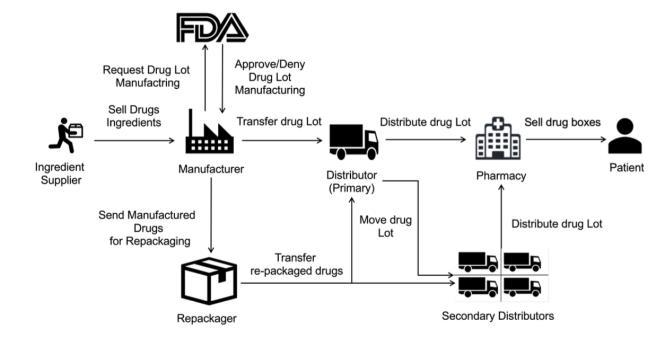
Fig1:DrugSupplyChainStakeholdersandTheir Relationships
Ablockchain-basedsystemfordrugtraceabilityaddresses key challenges by integrating all stakeholders, such as regulatory authorities, suppliers, manufacturers, distributors, pharmacies, and patients. This end-to-end solution not only establishes clear relationships among stakeholdersbutalsoutilizessmartcontractstoautomate processes, reducing manual intervention and delays. Each drug batch is assigned a unique smart contract to track changesinownershipandprovidereal-timeupdates.This approach ensures effective monitoring, enhances traceability, and minimizes the risk of counterfeit drugs reachingpatients.
The adoption of blockchain technology within the pharmaceutical industry, particularly for drug traceability systems, has attracted considerable interest from both researchers and industry players. This section outlines existing literature, case studies, and initiatives that have investigated the role of blockchain in improving transparency, traceability, and security in pharmaceutical supplychains.
1.BlockchainTechnologyinHealthcare:
Extensive research has explored the potential of blockchain technology in healthcare, emphasizing its ability to address critical challenges related to data security,interoperability,andprivacy.Proposedusecases include managing electronic health records (EHRs), enhancing clinical trial transparency, optimizing supply chain processes, and tracking prescription drugs. For instance, blockchain enables tamper-proof and decentralized records, ensuring that sensitive patient information is protected while facilitating seamless data sharingbetweenhealthcareproviders.Emergingsolutions also leverage smart contracts for automated compliance and real-time tracking, significantly reducing administrativebottlenecks.
2.ChallengesinPharmaceuticalSupplyChains:
The pharmaceutical supply chain faces numerous challenges, including the infiltration of counterfeit drugs, diversion ofproducts, regulatory compliancehurdles, and inefficient data sharing among stakeholders. These issues not only compromise patient safety but also impact the pharmaceutical industry’s economic stability. Literature highlights the urgency of integrating advanced technologies like blockchain to ensure better visibility, improve traceability, and establish secure, real-time communication channels across the supply chain. Furthermore, blockchain's ability to create an immutable and transparent record of transactions can help address thetrustdeficitsoftenfoundamongstakeholders.
3.Blockchain-BasedDrugTracingInitiatives:
Several pilot projects and initiatives have demonstrated the feasibility of blockchain for drug tracing. Notable among them is the MediLedger Project, which seeks to create a secure and interoperable platform to verify the authenticity of pharmaceutical products. Launched by Chronicled Inc., this initiative leverages blockchain technology to meet regulatory requirements and enhance supply chain integrity. Similarly, the IBM Blockchain Platform, in collaboration with leading pharmaceutical companies,hasfocusedonreducingcounterfeitdrugsand improving supply chain visibility. These initiatives illustrate blockchain's capability to enforce transparency and accountability while addressing critical gaps in drug traceability. Additionally, projects like VeChain Thor have introduced unique solutions using blockchain's capabilitiesforsecureproductverificationandend-to-end tracking.
4.RegulatoryConsiderationsandIndustryStandards:
Regulatory bodies such as the U.S. Food and Drug Administration(FDA)andtheEuropeanMedicinesAgency (EMA) acknowledge the transformative potential of blockchain technology in pharmaceutical supply chains. However, challenges persist concerning data privacy, regulatory compliance, and the need for universal standards for blockchain integration. Researchers emphasize the necessity of involving regulatory authoritiesandstakeholderstoco-developguidelinesthat address these concerns. For instance, the implementation ofblockchainunderframeworksliketheU.S.DrugSupply Chain Security Act (DSCSA) exemplifies efforts to align technological advancements with compliance needs. Furthermore, developing global standards for blockchain adoption can harmonize efforts across borders, reducing fragmentation in pharmaceutical supply chain management.
International Research Journal of Engineering and Technology (IRJET) e-ISSN: 2395-0056
Volume: 11 Issue: 12 | Dec 2024 www.irjet.net p-ISSN: 2395-0072
Beyond drug traceability, blockchain holds significant promise for enhancing other areas within the pharmaceutical supply chain. It can improve inventory management, optimize demand forecasting, and address issues such as drug shortages. By integrating blockchain with Internet of Things (IoT) devices, stakeholders can achievereal-timemonitoringofdrugshipments,including critical parameters like temperature and humidity, ensuring that products meet storage and transportation standards. Additionally, data collected through blockchain-based systems can be analyzed to predict
Musamihetal.(2021)
Shwetaetal.(2022)
Ethereum Blockchainfor DrugTraceability
Utilizedsmartcontractsfor drugtrackingacross stakeholdersinthesupply chain
Blockchainwith Decentralized Storage
Bianconietal (2023) Systematic LiteratureReview
Wang,Chen&Yan(2022)
Swapniletal.(2021)
IoTand Blockchain Integration
Blockchainfor Traceabilityand Privacy
Take,Mane,&Bendre(2021) Drugledgerfor DrugTraceability
Zhaoetal (2023) Low-Cost BlockchainModel
UsedEthereumblockchain withoff-chainstorageto ensureefficientproduct traceability
Reviewedblockchain applicationsfordrug traceabilityandhealthcare
CombinedIoTwith blockchaintomonitordrug environmentalconditions duringtransit
Employed Ethereum and smart contracts for traceability in drug supply chains
Designed“Drugledger”for securetrackingwithUTXO structure
Developedablockchain modelforlow-resource settingstocombat counterfeitdrugs
Research by Musamih and others demonstrated the use of Ethereum-based smart contracts to create tamperproof records of drug transactions. By implementing blockchain protocols, these systems offered decentralized storage and real-time traceability without
market trends, facilitating better resource allocation and minimizingproductwastage.
As the blockchain ecosystem continues to mature, its convergence with emerging technologies such as artificial intelligence (AI) and cloud computing is expected to unlock new capabilities for the pharmaceutical industry. AI can be leveraged to analyze blockchain data for predictive insights, while cloud computing can provide scalablesolutionsfordecentralizedledgerstorage,further enhancing the efficiency and security of supply chain management. These integrations promise to create more resilient, transparent, and cost-effective supply chains, reducing risks associated with counterfeit drugs and ensuringbetterpatientoutcomes.
Enhanced transparency and authenticationofdrugtransactions
Highcomputationalcost,scalability limitations
Improved data provenance and minimized the need for intermediaries
Reliesheavilyonblockchainforsecure datastorage,highinitialsetupcost
Foundhighpotentialforcounterfeit drugpreventionusingblockchain, especiallyviasmartcontracts
Fewreal-worldimplementations;mostly conceptualorsimulation-basedstudies
Providedreal-timevisibilityon drugstatusthroughoutthesupply chain
Enhanced traceability and reduced the chance of counterfeit drugs enteringthemarket
High setup costs for IoT devices, potential dataprivacyissues
Scalabilityissuesduetoblockchain’s limitations,dependencyonEthereum network
Ensuredauthenticityandprivacyof drug information in the supply chain Highstoragerequirements;UTXOdata structurecanbecostly
Enabledsecuretraceabilitywith minimalinfrastructure requirements
Limitedscalability;infrastructure challengesinlow-resourceareas
intermediaries, enabling stakeholders such as suppliers, manufacturers, and distributors to track drug status securely. Studies noted, however, that Ethereum’s computational costs and the complexity of decentralized systems posed significant challenges to scalability in largernetworks.
International Research Journal of Engineering and Technology (IRJET) e-ISSN: 2395-0056
Volume: 11 Issue: 12 | Dec 2024 www.irjet.net p-ISSN: 2395-0072
Studies by Wang and colleagues integrated IoT technology with blockchain to monitor environmental factors (e.g., temperature, humidity) that could impact drug efficacy. IoT devices collected data throughout transport stages, while blockchain provided a secure, immutable ledger for these conditions. This approach proved particularly useful for temperature-sensitive medications, ensuring that all environmental data was logged accurately for quality assurance. Despite the benefits,authorsnotedthatintegratingIoTsystemswith blockchain increased infrastructure costs and raised privacyconcernsduetotheextensivedatagenerated.
Work by Patel and Desai focused on the application of blockchain for unique drug serialization, enhancing traceability by assigning each drug a unique code stored in a decentralized ledger. This serialization approach provided stakeholders like regulatory agencies, distributors,andhealthcareproviders withamethodto verify each drug unit’s origin, authenticity, and status. Studies showed that blockchain serialization reduced risks of counterfeit drugs entering the supply chain, but required a stable network connection, increasing costs and complexity, especially in remote or low-resource regions.
Zhao et al. proposed a simplified, cost-effective blockchain model for use in resource-limited settings. Targetingcountrieswherehigh-techinfrastructuremight be lacking, the model enabled traceability through a streamlined blockchain structure that minimized energy and storage requirements. While this model provided a feasible solution for improving drug traceability in lowresource areas, its scalability was limited compared to more robust blockchain frameworks, highlighting the trade-off between affordability and comprehensive functionality.
Across studies, blockchain’s decentralized ledger proved crucialinimprovingtransparencyandtraceabilitywithin the supply chain. Researchers noted that blockchain’s immutability and access control features minimized counterfeiting risks, offering stakeholders secure access to verified data. In systems like “Drugledger” by Take et al.,blockchain’senhanceddataintegrityallowedforendto-end tracking without compromising privacy, as data wascryptographicallysecured.
Authors highlighted blockchain’s ability to decentralize data control, ensuring that no single party could unilaterally alter records. However, they also cautioned that blockchain systems require careful planning to manage privacy and compliance with data protection regulations. Integration with additional security layers, such as encryption and off-chain storage, was suggested
asameanstosafeguardpatientinformationandmaintain compliancewithstandardslikeHIPAA.
Several studies, including those by Bianconi et al., identified cost and scalability as major obstacles for blockchain adoption in healthcare supply chains. Ethereum-based models, though secure, incurred significantoperationalcosts,whichcouldbeprohibitivein large-scale or lower-income settings. To counteract this, researchers advocated for hybrid blockchain frameworks that could integrate both on-chain and off-chain storage, reducing the processing load while maintaining essential dataontheblockchain.
Authors such as Brown and colleagues emphasized that while blockchain offers a secure foundation for traceability, theindustry mustaddress interoperability to maximize its potential. Compatibility with existing systems such as electronic medical records (EMRs) and logistics software is crucial for a seamless supply chain. Studies suggested implementing blockchain in a modular fashion, allowing various stakeholders to adopt the technology incrementally while ensuring compatibility withexistingITsystems.
Implementationchallengeslikehigh energy consumption, complex regulatory landscapes, and the technical knowledge required to manage blockchain systems were frequently cited. Authors suggested that further research into more energy-efficient consensus algorithms, such as Proof of Stake (PoS), could help reduce blockchain’s environmental impact. In terms of regulation, collaboration between pharmaceutical companies and policymakers will be essential to develop blockchain solutionsthatalignwithexistinglegalframeworks.
Scalability remains a key challenge, especially as blockchainsystemsgrowtosupportglobalsupplychains. Integrating solutions like layer-2 scaling and sidechains were proposed as methods to improve performance. Additionally, making blockchain-based traceability accessible to all supply chain stakeholders especially in resource-limited settings will require lightweight, adaptable models that can function without extensive infrastructureinvestments.
Blockchain’sprimaryadvantageliesinitsabilitytocreate an immutable ledger where all transactions are recorded and time-stamped, ensuring that no data can be altered once it has been added. In the context of healthcare, this feature is particularly useful for tracking the provenance of drugs and other medical products as they move from manufacturers to end-users. Several studies have
International Research Journal of Engineering and Technology (IRJET) e-ISSN: 2395-0056
Volume: 11 Issue: 12 | Dec 2024 www.irjet.net p-ISSN: 2395-0072
explored how blockchain can address the challenges of datasecurityandintegrityinhealthcaresupplychains.
Blockchain enhances transparency by allowing stakeholders to access a shared, tamper-proof record of transactions. This is particularly valuable in the pharmaceutical sector, where the movement of drugs needstobesecurelytrackedtopreventcounterfeiting. A studybyresearchersin2021highlightedhowblockchain canbe used tocreate a transparent tracking system that allows consumers and healthcare providers to verify the authenticity of pharmaceutical products (Musamih et al., 2021).
Counterfeit drugs pose a serious risk to patient safety and public health. Blockchain’s traceability capabilities can help eliminate the chances of counterfeit drugs entering the supply chain by allowing each drug unit to be tracked fromproduction todistribution. Forinstance, a system that assigns a unique identifier to each drug batch stored on the blockchain could ensure that any tampering or unauthorized distribution is detected immediately.
Smart contracts, which are self-executing contracts where the terms of the agreement are written directly into lines of code, are increasingly being used in blockchain-based solutions. These contracts automatically enforce and execute transactions once predefined conditions are met. In healthcare supply chains,smartcontractscanautomateprocesseslikedrug distribution or payment processing, reducing delays and humanerrors.
Blockchain’s ability to provide real-time data access means thatall supply chain participants canmonitor the status of products throughout the distribution process. Real-time access to data on inventory, shipping, and transaction details ensures that stakeholders can make informeddecisionsandmaintaincontinuousoversightof theproductsinthesystem.Thisisespeciallyimportantin managing temperature-sensitive medications and ensuringregulatorycompliance.
Oneofthemainissueswithblockchainadoptioninlargescale supply chains is its scalability. The process of validating and adding blocks to the chain can be timeconsumingandresource-intensive,whichcanslowdown transaction speeds in systems with high transaction volumes, such as healthcare.Integrating blockchain technology with existing healthcare systems, such as electronic health records (EHRs) or inventory management software, poses a significant challenge. Many healthcare institutions rely on legacy systems that may not be compatible with blockchain technology,
requiring significant modifications or updates to accommodate blockchain.The decentralized nature of blockchain can create challenges related to data privacy and compliance with regulations like HIPAA (Health Insurance Portability and Accountability Act) in the United States. Ensuring that blockchain solutions adhere totheseprivacylawswhilemaintaining transparencycan becomplex
Blockchain has the potential to significantly enhance transparency in healthcare supply chains by providing secure, tamper-proof tracking of medical products. However, for successful implementation, the healthcare sector must address scalability issues, ensure interoperability with existing systems, and navigate regulatory challenges. As blockchain technology evolves, future research and development are likely to focus on creating scalable, secure, and regulatory-compliant solutions that can benefit stakeholders throughout the healthcaresupplychain.
[1]. Shweta, Shweta M. (2022). "A Blockchain-Based Approach for Drug Traceability in Healthcare Supply Chains." International Journal of Creative Research Thoughts(IJCRT),Volume10,Issue8.
[2]. U.S. Food and Drug Administration (FDA). (2020). "Drug Supply Chain Security Act." Available at FDA Website.
[3]. Suliman, A., Husain, Z., Abououf, M., Alblooshi, M., & Salah, K. (2019). "Monetization of IoT Data Using Smart Contracts."IETNetworks,Volume8,Issue1,pp.32-37.
[4]. Health Research Funding Organization. (2017). "Growing Threat from Counterfeit Medicines." Retrieved fromWHOWebsite.
[5]. Gupta, A., Patel, J., Gupta, M., & Gupta, H. (2017). "Issues and Effectiveness of Blockchain Technology on Digital Voting." International Journal of Engineering and ManufacturingScience,Vol.7,No.1.
[6]. Navya, A., Roopini, R., & SaiNiranjan, A. S. (2017). "Electronic voting machine based on Blockchain technology and Aadhar verification." International Journal of Advance Research, Ideas and Innovations in Technology,Volume4,Issue2.
[7]. Meter, C. (2017). "Design of Distributed Voting Systems."arXivpreprintarXiv:1702.02566.
[8]. Neudecker, T., Andelfinger, P., & Hartenstein, H. (2016)."Timinganalysisforinferringthetopologyofthe bitcoinpeer-to-peernetwork."InUbiquitousIntelligence
International Research Journal of Engineering and Technology (IRJET) e-ISSN: 2395-0056
Computing, Advanced and Trusted Computing, Scalable Computing and Communications, Cloud and Big Data Computing, Internet of People, and Smart World Congress (UIC/ATC/ScalCom/CBDCom/IoP/SmartWorld),IEEE.
[9]. Liu, P. T. S. (2016). "Medical record system using blockchain, big data and tokenization." In International Conference on Information and Communications Security,pages254-261.Springer.
[10].Makary,M.A.,&Daniel,M.(2016)."Medicalerrorthethird leading cause ofdeath intheUS." BMJ: British MedicalJournal(Online),353.
[11]. Zhang, D. (2018). "Resilience enhancement of container-based cloud load balancing service." PeerJ Preprints.
[12]. Hardwick, F. S., Akram, R. N., & Markantonakis, K. (2018)."E-VotingwithBlockchain:AnE-VotingProtocol withDecentralisationandVoterPrivacy."arXivpreprint arXiv:1805.10258.
[13]. Zhang, D. (2015). "Measuring the Resilience of MobileAdHocNetworkswithHumanWalkPatterns."In Proceedings of the 7th IEEE/IFIP International Workshop on Reliable Networks Design and Modeling (RNDM),Munich,Germany,October2015.
[14]. Zhang, D., & Sterbenz, J. P. G. (2015). "Robustness analysis of mobile ad hoc networks using human mobility traces." In Proceedings of the 11th International Conference on Design of Reliable Communication Networks (DRCN), Kansas City, USA, March2015.
[15]. Zhang, D., & Sterbenz, J. P. G. (2014). "Modelling critical node attacks in MANETs." In Self-Organizing Systems, volume 8221 of Lecture Notes in Computer Science,pages127-138.SpringerBerlinHeidelberg.
[16]. Zhang, D., & Sterbenz, J. P. G. (2014). "Analysis of Critical Node Attacks in Mobile Ad Hoc Networks." In Proceedings of the 6th IEEE/IFIP International Workshop on Reliable Networks Design and Modeling (RNDM),Barcelona,Spain,November2014.
[17]. Decker,C.,& Wattenhofer, R.(2013)."Information propagation in the bitcoin network." In Peer-to-Peer Computing (P2P), 2013 IEEE Thirteenth International Conferenceon,pages1-10.IEEE.
[18].Panja,S.,&Roy,B.K.(2013)."Asecureend-to-end verifiable e-voting system using zero knowledge based blockchain."
[19].Zhang, D.,Gogi, S.A.,Broyles,D. S., Cetinkaya, E.K., & Sterbenz, J. P. G. (2012). "Modelling Attacks and Challenges to Wireless Networks." In Proceedings of the 4th IEEE/IFIP International Workshop on Reliable Networks Design and Modeling (RNDM), St. Petersburg, October2012
[20].Zhang, D.,Gogi, S.A.,Broyles,D. S., Cetinkaya, E.K., & Sterbenz, J. P. G. (2012). "Modelling Wireless Challenges." In Proceedings of the 18th ACM Annual International Conference on Mobile Computing and Networking(MobiCom),pages423-425,Istanbul,August 2012.
[21]. Muniandy, M., & Ong Tze Ern, G. (2019). "Implementation of Pharmaceutical Drug Traceability Using Blockchain Technology". Inti Journal, Vol. 2019:035.eISSN:2600-7920.
[22]. Olsen, P., & Borit, M. "The components of a food traceability system", Trends in Food Science & Technology(2018),doi:10.1016/j.tifs.2018.05.004.
[23]. Bougdira, A., Ahaitouf, A., & Akharraz, I. (2019). "Conceptual framework for general traceability solution: description and bases", Journal of Modelling in Management,Vol.15No.2,pp.509-530.
[24]. K. Al Huraimel, R. Jenkins, "Smart Track", 2020. Available: https://smarttrack.ae/ [Accessed: 26-May2020].
[25]. "GS1 DataMatrix: A tool to improve patient safety through visibility in the supply chain". Available: https://www.gs1.org/docs/healthcare/MC07_GS1_Data matrix.pdf.[Accessed:26-May-2020].
[26]. Cameron Faulkner. "What is NFC? Everything you need to know". Available: https://techradar.com [Accessed:3-June-2020].
[27]. "Blockchain technology in healthcare: The revolution starts here" 2016 IEEE 18th International Conference on e-Health Networking, Applications and Services(Healthcom).
[28]."Drugledger:Apracticalblockchainsystemfordrug traceability and regulation" 2018 IEEE International Conference on Internet of Things (iThings) and IEEE Green Computing and Communications (GreenCom) and IEEE Cyber, Physical and Social Computing (CPSCom) andIEEESmartData(SmartData).
[29]."Designofcoldchainapplicationframework(CCAF) based on IOT and cloud" 2015 8th International Conference on u- and e-Service, Science and Technology (UNESST).
Volume: 11 Issue: 12 | Dec 2024 www.irjet.net p-ISSN: 2395-0072 © 2024, IRJET | Impact Factor value: 8.315 | ISO 9001:2008 Certified
International Research Journal of Engineering and Technology (IRJET) e-ISSN: 2395-0056
Volume: 11 Issue: 12 | Dec 2024 www.irjet.net p-ISSN: 2395-0072
[30]."Blockchain:TheNextDirectionofDigitalPayment inDrug PurchaseApplications ofEnsuring Securityand PrivacyUsingBlockChainwithIoTforHealthRecord"
[31] M. Pilkington, ‘‘Blockchain technology: Principles and applications,’’ in Research Handbook on Digital Transformations, vol. 225. London, U.K.: Edward Elgar, 2016.
[32] M. Mettler, ‘‘Blockchain technology in healthcare: Therevolutionstartshere,’’inProc.IEEE18thInt.Conf. e-HealthNetw.,Appl.Services,Sep.2016,pp.1–3.
[33] J. Kurki, ‘‘Benefits and guidelines for utilizing blockchaintechnologyinpharmaceutical supplychains: Case Bayer Pharmaceuticals,’’Bachelor thesis, Dept. Inf. ServiceEcon.,AaltoUniv.,Espoo,Finland,2016.
[34] Y. Huang, J. Wu, and C. Long, ‘‘Drugledger: A practical blockchain system for drug traceability and regulation,’’ in Proc. IEEE Conf. Internet Things, Jul./Aug.2018,pp.1137–1144.
[35] S. Delgado-Segura, C. Pérez-Solà, G. NavarroArribas, andJ. HerreraJoancomartí, ‘‘Analysis of the bitcoin UTXO set,’’ in FinancialCryptography and Data Security (Lecture Notes in Computer Science),vol. 10958, A. Zohar, Ed. Berlin, Germany: Springer, 2019, pp.78–91.
[36] F. Jamil, L. Hang, K. Kim, and D. Kim, ‘‘A novel medical blockchainmodel for drug supply chain integrity management in a smart hospital,’’Electronics, vol. 8, p. 505, Apr. 2019, doi: 10.3390/electronics8050505.