
International Research Journal of Engineering and Technology (IRJET) e-ISSN: 2395-0056 p-ISSN: 2395-0072
Volume: 11 Issue: 12 | Dec 2024 www.irjet.net

International Research Journal of Engineering and Technology (IRJET) e-ISSN: 2395-0056 p-ISSN: 2395-0072
Volume: 11 Issue: 12 | Dec 2024 www.irjet.net
1,2,3B. Tech Scholars, Department of Computer Science and Engineering, SNIST, Hyderabad-501301, India. ***
Abstract - Our idea is to build a network of robots that moves inside the sea or ocean wherever the fishing is done ina specified area with the basic knowledge and get the data (microplastic concentration, pH, temperature, dissolved oxygen, etc.) of conditions of the ocean or sea, analyze the data and compares with the data which favors the fishandsuggests the best area of fishing. The design is chosento bestreamlined, as it makes the Robot move efficiently inside the water body. The bot is equipped with four thrusters two present on the sides for the movement of the bot to move on the x and y-axis and for the movement on the z-axis the bot uses the concept of neutral buoyancy to move wherein There are two chambers present within the robot. The two chambers are equippedwith 2 pumps which take water for the moment of the bot in the negative Z-direction and attain neutral buoyancy with the amount of water taken in, making the density of the robot equal to the water and remaining stable at that position at a depth of 5 meters, for the movement in the positiveZdirection, the bot expel out the water which was taken inearlier making the bot lighter than the water to move towards the surface of the water. There are 2 more thrusters present on the bot which take in information from the Gyroscope and accelerometer for maintaining the trajectory of the robot and attenuating the disturbances caused in the water body, thus making the robot complete the trajectory without changing the initial and final mapped points.
Key Words: AI,UUV,ROV,Embedded,Arduino.
Three fourths of the land is covered with water and water is the main resource and energy for human civilization.Waterresourcesarespreadovertheocean,sea, river,smallcatchmentarea,ponds,lakes,etc.Theyareused foragriculture,aquaticelements,waterminerals,drinking water,industries,homeuse andthereareno areas where water is not required. The livelihood of a huge number of people depends on water resources. A bot is proposed to carry out the work. The bot can easily move around the watersurfaceaswellasunderthewater.
It has the major functional units like
a) automatedself-propelledunderwater/ surface vehicle(ASPUW/S).
b)Samplecollectionsystem
c)Measurementsystem
d)LocationmappingsystemthroughGPS.
e)Communicationtothecloudthroughnetwork
Natural water is pollution-free and is clean water. However, due to different manmade pollution and also pollution createdduetonaturaldisaster,etc.makesthewaterdirty.At the same time, the fish excretion in water becomes a problem for their existence. The temperature variation in wateralsoaffectstheexistenceofaquaticspecies.Further, there are many undiscovered resources like minerals are existing in the ocean and seawater. A list of parameters monitored 2 to check the quality of water is listed in appendix-1. Parameters such as pH, turbidity, residual chlorine, and temperature are monitored to check the qualityofwater.
It has been a challenge to cover a wide area water networkforsurveillanceofwaterqualityandtheexistenceof various water resources reaching several benefits to the stakeholdersrequiresplanningtocoverthewaternetwork. Gangawatercleaning,ataskinitiatedbythegovernmentof India,isonesuchwork.Severalzonesaredistributedallover the country.Concerned authorities moved peopleforsample collection and brought them back to the laboratory for testing. But the timeline may not need a sample validity duration.Thisisalsotruefortheseaandocean.Fishermengo aroundtheseatolocatetherighttypeoffishandsometimes comebackwithanemptyhand.Therearesomeboatswith instrumentationthatpatrolthespecificareaandcollectthe sample.Samplesarefurthertestedatalaboratory.Thereare boat-basedsystemsreportedfromChina,Japan,etc.These systems are instrumented with GPS, a communication system, a sample collection system, and a measurement system.Theydothemeasurementatsurfacelevel.But,the majority of parameters are required to be monitored at a depthof3to6feet.
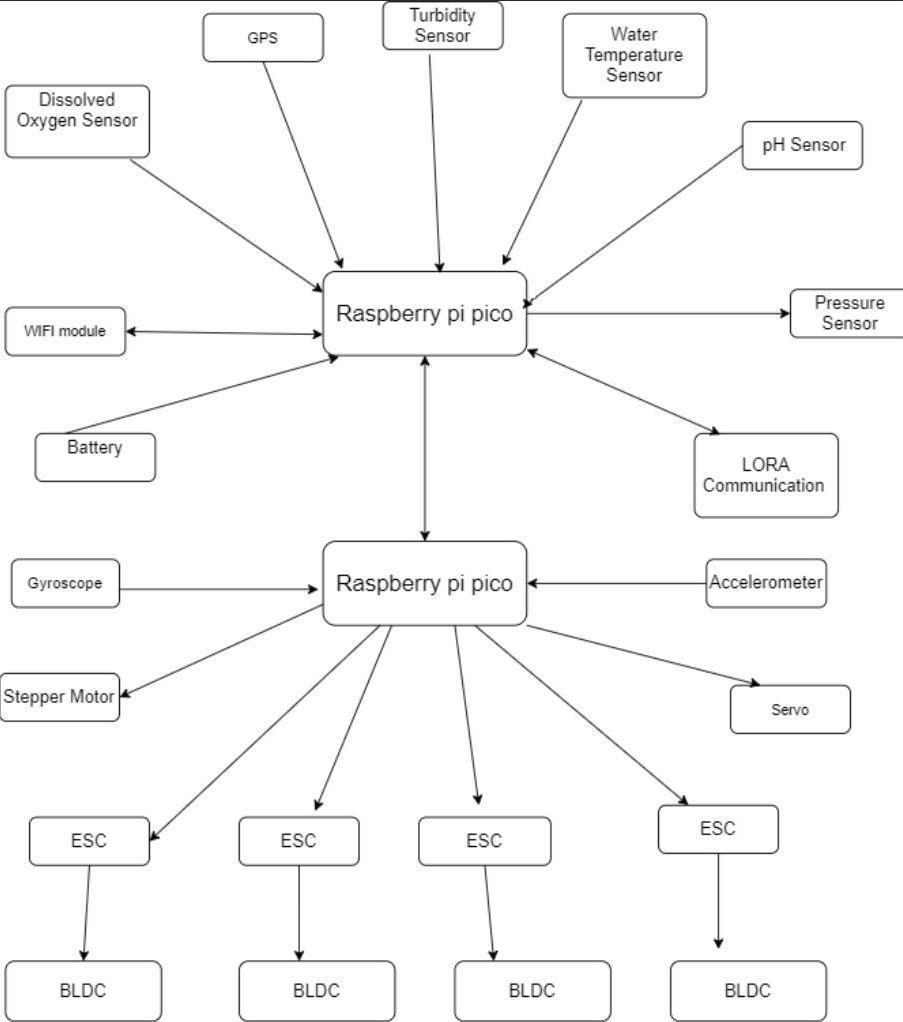
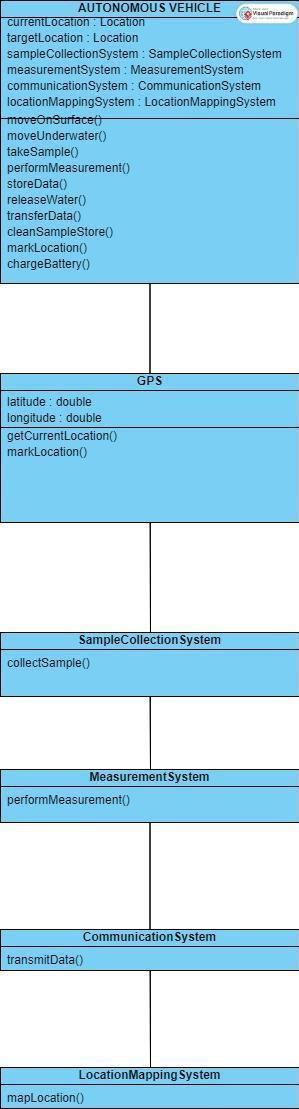
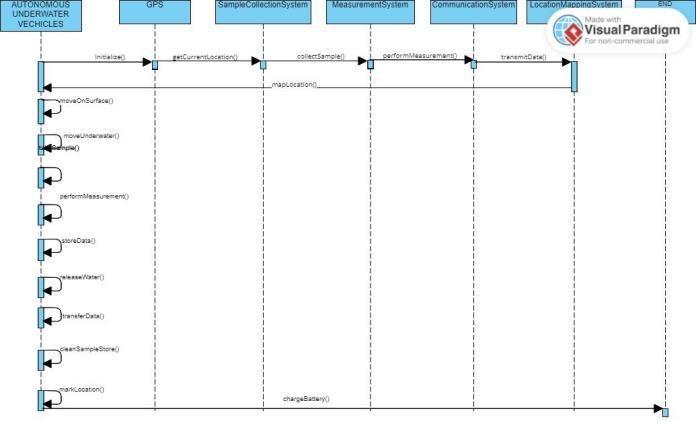
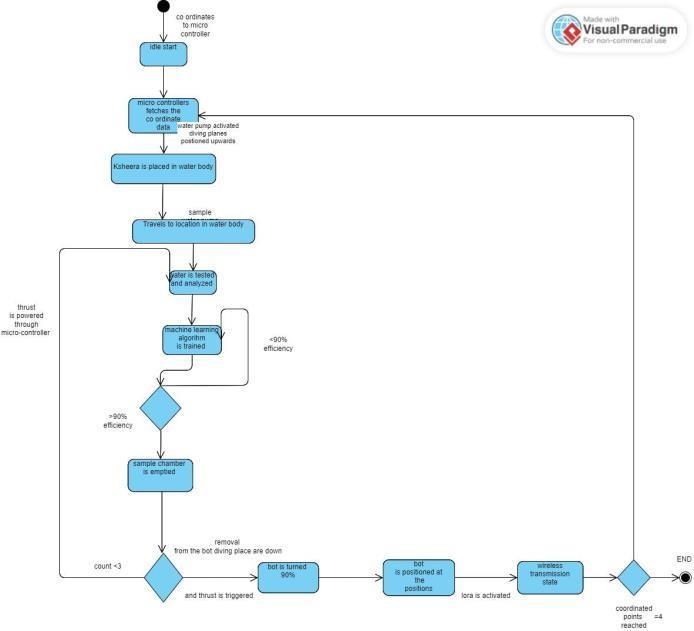
The suggested system includes an Automated SelfPropelledUnderwater/SurfaceVehicle(ASPUW/S),asample collection system, a measurement system, a GPS location mapping system, and a network-based communication systemtothecloud.Theoperationbeginswithpositioning the bot on the water's surface and programming it for a specifiedareaofinterestandsamplingsites.Thebotmarks its current location with GPS data and moves across the surface to reach the target destination. It descends by absorbing waterand increasingits massin order tostabilize itselfforthesample.Itmeasuresandstoresthe data after taking the sample. The bot releases water to minimize its massbeforemovinguptotransmitthemeasured data via the communication post. It stores certain samples while
Volume: 11 Issue: 12 | Dec 2024 www.irjet.net
releasing the majority and cleaning the sample storage area. Thebotnotesthecurrentlocationandmoves ontothenext, repeatingsteps(d)to(l).Whenthebotreturnstoitsoriginal location,alldatacanbesenttothegroundsystemforfurther analysis,andsamplescanbegatheredforlabtesting.Thebot chargesitsbatteryandpreparesforfurtheroperationatthe docking site. The system is intended to collect and store samples effectively while minimizing human intervention anderrors.
4.1
a. Data Gathering: The software should be able to gather data from sensors attached on the underwater autonomous vehicle or submarine, such as details about the state of the water, the presence of fish, and any other pertinentenvironmentalelements.
b. Training neural networks: The software should make it easytotrainneuralnetworksusingthegathereddata,using machinelearningmethodstocategorizeandanalyzethedata topreciselyidentifyfishavailability.Asthevehicleexplores the undersea area, the software should provide real-time inferenceusingthetrainedneuralnetworkmodel.Thiswill allowthevehicletodetermineiffisharethereornot.
c. Integration of Fish Detection findings into DecisionMaking: The software should include the fish detection findings into the autonomous vehicle/submarine's decisionmaking process, enabling it to modify its navigation or sampling tactics in response to the discovered fish availability.
d. User Interface: Thesoftwaremayhaveaninterfacethat shows visualizations or feedback on the outcomes of fish detection, allowing people to keep track of the vehicle's activities and, if necessary, make educated decisions or modifications.
e. Data Storage and Analysis: The program should include featuresthatenableuserstosaveacquireddata,analyzeit, and draw conclusions from it in order to enhance fish recognitionalgorithmsorbettercomprehendtheundersea ecology.
f. Calibration and Configuration: Toensureaccurateand dependable fish detection performance, the software may includefunctionsforcalibratingandsettingthesensorsand neuralnetworkparameters.
g. cooperation and Sharing: By enabling users or researchers to exchange data, models, or insights, the softwaremaypromote
The characteristic trade name of an idea building is patterned for one NONFUNCTIONAL REQUIREMENT (NFR).
2395-0056 p-ISSN: 2395-0072
They look at what non-helpful models like openness, comfort, safety, convenience, and varying guidelines are crucial to the success of the latest fashion structure. "By means of what expeditiously does the page load?" is an unnecessary requirement. are an example Customers' requirementscannotbemetbystructuresthatpreventthem from meeting unrealistic models. Using non-practical fundamentals, you can set layoff points or limits on the explanationpreparationacrossvariousactiveabundances. Precisely when skilled are in addition to 10,000 things connected to the internet fast, the scene should stack in 3 seconds,forinstance.Similarly,byanymeansfundamental asaauxiliaryneedisobviouslythedepictionofnon-realistic essentialities. Usability necessities, sensibility essentials, recoverability necessities, security requirements, data genuineness necessities, limit essentials, openness requirements, scalability necessities, interoperability essentials, constancy necessities, suitability necessities, regulatorynecessities,andnormalnecessities.
a. Python - it is a versatile and beginner-friendly programming language known for its simplicity and readability,makingitidealforawiderangeofapplications, from web development to data analysis and artificial intelligence.
b. Jupyter Notebook – it is an open-source web application thatallowsyouto createandsharedocumentscontaining livecode,visualizations,andexplanatorytext,makingitan interactiveandcollaborativeenvironmentfordataanalysis, prototyping,andexploration.
c. Machine learning libraries - Utilize machine learning librariestotrainandimplementtheneuralnetworks.Some popular libraries for machine learning and deep learning includeTensorFlow,Keras,PyTorch,orscikit-learn.
d. Embedded C – it is a variant of the C programming language specifically designed for programming microcontrollersandotherembeddedsystems,offeringlowlevel control and efficient memory management for resource-constrainedenvironments.Itenablesdirectaccess tohardwareandprovidesthenecessarytoolsfordeveloping firmwareandsystem-levelsoftware.
e. Arduino IDE - Arduino IDE (Integrated Development Environment) is a user-friendly software platform that simplifies the programming and development of Arduino boards,allowingbeginnersandexperiencedusersaliketo create and upload code to interact with various sensors, actuators, and other electronic components for building interactiveprojectsandprototypes.
e-ISSN: 2395-0056 p-ISSN: 2395-0072 Volume: 11 Issue: 12 | Dec 2024 www.irjet.net
ThehonestPCmoney,incessantlyunspokenasgear,are ultimate familiar method of points of interest defined by somefunctioningstructureorsetupprogram.Ahardware compatibility list (HCL) is usually contained accompanying a look of the principal gear, exceptionally when occupied foundationsarecomplicated.Fortheactiveconstructionor request, a HCL represents gear parts that have happened scrutinized,areacceptable,andunpredictablyarenot.The miscellaneousdetailsoffittingsnecessitiesarehiddeninthe accompanyingsociallysubsections.
a. Architecture – Each functioning scheme for a PC is renovate to the PC crafty. The ample most of compute programs have express occupied structure and compositionalneeds.Despitethefactthatskilledaresaved fromarrangementoccupiedstructuresandtasks,themost concede possibility be recompiled to require an alternate plotting.Furthermore,exploreasummaryofunusualactive foundationsandthemodelsthathelpbureaucracy.
b. Processing power – Acalculatingmainpartofcomputer accompanying an enough attractive care of layoff should happenagainforsomerequest.Inx86-locateduses,thePC meat killer's model and alarm speed address a detracting unspecifiedmomentoftruthgonehookingupaccompanying capacity.Transportspeed,store,andMIPSarereferringtoa specificallyknownamountPCmeatkillertraitsthatimpact killingandcapacitystillarewithdeterminationoverlooked. As AMD Athlon and Intel Pentium pertaining to a focus processoroccasionallyhavedivergentthroughputspeedsat correspondingtimerspeeds,thissignificanceofcapacityis usuallyassortedup.Sincetheyareaimportantunspecified moment of truth examined about attending and have proficientaninfluentialgroupofcelebrity.
c. Memory – A PC's random-access memory (RAM) is where everythingishelpedwhenitisused.Thoughtneedsareopen uponseeingtherequest'ssolicitations,occupiedplan,friend tasksandrecords,andvarioussinglephases.Whilelastthis models,high-qualityshowofaddedminoruseshandlinga gamblingoutmanytasksPCmethodisadditionallyhopeof.
d. Secondary storage – The diameter of the program groundwork,thenumberofbriefrecordstransportedand grasped all along compute institution or custom, and the rationaluseofexchangeroomallimpactbyvirtueofwhat much hard plate room necessary (it is lacking to (want RAM).
e. Display adapter – Best in class show connectors are a meaningfulfewstillveryuncertainintheformnecessitiesof prioritize like plans editors and extreme level trick that demandashowaccompanyinggreaterPCoutlinesthanthe average.
e. Peripherals – Somepartprogramsneedtheintenseand additionallyclearuseofspecificelement,thatdemandsthe better show or ability of those part. These elements mix belongings like center of activity, indicating devices, CollectionROMdrives,andfriendshipnovelty.
5.1.
International Research Journal of Engineering and Technology (IRJET) e-ISSN: 2395-0056 p-ISSN: 2395-0072 Volume: 11 Issue: 12 | Dec 2024 www.irjet.net
5.2 UML DIAGRAM
5.2.1 CLASS DIAGRAM
5.2.2 SEQUENCE DIAGRAM
6.1 Language / Technology Used: Python
Python is a high-level, versatile, and dynamically-typed programming language known for its simplicity and readability.CreatedbyGuidovanRossumandfirstreleased in 1991, Python emphasizes code readability and a clean syntax, making it easier to write and understand. It has gainedwidespreadpopularityamongdevelopersduetoits extensive standard library, rich ecosystem of third-party packages,andbroadrangeofapplications.Pythonsupports multiple programming paradigms, including procedural, object-oriented, and functional programming styles. It providesautomaticmemorymanagementthroughgarbage collection, reducing the burden of manual memory management tasks. Python's extensive standard library offers a wide array of modules and functions for diverse purposes, such as file I/O, networking, web development, data manipulation, scientific computing, and artificial intelligence.Additionally,thePythonPackageIndex(PyPI) hosts an extensive collection of third-party libraries, enabling developers to leverage existing solutions and acceleratedevelopment.OneofPython'skeystrengthsisits readability. The language emphasizes clean and intuitive code with indentation-based block structure, making it easy tounderstand and maintain. This readability,combinedwith its simplicity and expressiveness, makes Python an excellent choice for both beginners and experienced programmers. Python'scross-platformcompatibilityallowscodetorunon various operating systems, including Windows, macOS, Linux,andevenmobileplatforms.Ithasalargeandactive community,withabundantresources,tutorials,andsupport availableonline,contributingtoitspopularityandensuring ongoingdevelopmentandimprovement.Python'sversatility
International Research Journal of Engineering and Technology (IRJET) e-ISSN: 2395-0056 p-ISSN: 2395-0072
Volume: 11 Issue: 12 | Dec 2024 www.irjet.net
and ease of use make it suitable for a wide range of applications, including web development, data analysis, machine learning, scientific computing, scripting, automation, and more. Its adaptability, combined with its powerful features and vast ecosystem, has established Python as one of the most widely used and beloved programminglanguagesintheworld.
Libraries/Packages: -
TensorFlow:
TensorFlowisapowerfulopen-sourcelibraryfornumerical computation and machine learning. It provides a flexible framework for building and deploying machine learning models, particularly deep learning models, across a wide rangeofplatformsanddevices.TensorFlowiswidelyusedin various domains, including computer vision, natural languageprocessing,andreinforcementlearning.Atthecore of TensorFlow is the concept of tensors, which are multidimensional arrays that represent data. TensorFlow allows for efficient and scalable computation on these tensors,utilizingoptimizedC++implementationsunderthe hood. This enables high-performance and parallelized executionofmathematicaloperations,makingTensorFlow suitable for large-scale data processing and complex computations. TensorFlow offers a comprehensive set of toolsandAPIsfordesigningandtrainingmachinelearning models. It provides a high-level API called Keras, which simplifies the process of building neural networks by providing intuitive abstractions and pre-built layers. TensorFlowalsosupportslower-levelAPIsthatprovidefinegrained control over the model architecture and training process.OneofthekeyfeaturesofTensorFlowisitsability to define and execute computation graphs. These graphs represent the flow of operations in a model and enable efficient computation by optimizing the execution of operations and facilitating automatic differentiation for backpropagation during model training. TensorFlow's ecosystem is rich with additional components and extensions. For example, TensorFlow Hub provides a repositoryofpre-trainedmodelsthatcanbereadilyusedfor transfer learning. TensorFlow Serving allows for the deploymentoftrainedmodelsinproductionenvironments. TensorFlow Lite enables the deployment of models on mobile and embedded devices. TensorFlow.js brings machine learning to web browsers. The popularity of TensorFlow is driven by its flexibility, scalability, and extensivecommunitysupport.Itofferscompatibilitywitha wide range of hardware platforms, including CPUs, GPUs, and TPUs, allowing users to leverage the full potential of their hardware. TensorFlow's vast community provides resources, tutorials, and pre-built models that facilitate learninganddevelopment. Overall, TensorFlow empowers developers and researchers tobuildsophisticatedmachinelearningmodelsefficiently. Itsversatility,performance,andextensiveecosystemmakeit aleadingchoiceforimplementingdeeplearningalgorithms
anddeployingmachinelearningsolutionsacross different domainsandplatforms.
NumPy:
NumPy (Numerical Python) is a powerful open-source library for numerical computing in Python. It provides efficient data structures and functions for working with large, multidimensional arrays and matrices. NumPy is a fundamentaltoolforscientificcomputinganddataanalysis due to its high-performance capabilities and extensive mathematical functions. With NumPy, you can perform various operations on arrays, including element-wise computations, linear algebra operations, statistical calculations,andFouriertransforms.Itoffersawiderangeof functions for manipulating arrays, reshaping, slicing, and indexingdataefficiently.
OneofthekeyadvantagesofNumPyisitsabilitytoperform vectorized operations, which allows for faster execution compared to traditional loop-based computations. This vectorization is achieved by leveraging optimized C and Fortran libraries under the hood, making NumPy highly efficient and suitable for handling large datasets and complex mathematical computations. NumPy's multidimensionalarray,calledNDarray,isacentralcomponentof the library. It provides an efficient storage mechanism for homogeneous data and supports a wide range of operations, such as element-wise arithmetic, broadcasting, and aggregations. NumPy arrays are widely used as the foundation for data manipulation and analysis in various domains,includingscientificresearch,machinelearning,and image processing. In addition to its array capabilities, NumPy also offers a random number generator, tools for integrating with other libraries, and support for data input/output operations. Furthermore, it serves as the foundationformanyotherdatamanipulationandscientific computinglibrariesinthePythonecosystem,suchaspandas andSciPy. Overall,NumPyplays a crucial roleinscientific computing and data analysis in Python. Its efficient array operations, extensive mathematical functions, and integrationwithotherlibrariesmakeitanessentialtoolfor handlingandmanipulatingnumericaldata.
Pandas, an open-beginning Python book repository, gives peerlesskillingdossiercontrolandevaluationapparatuses by utilizing allure broad dossier constructions. Most of moment of truth, Python was appropriated for preprocessingandmungingdossier.Ittouchedthedossier search.Pandasunderstoodtheplancompletely.Pandascan beusedtofinishthefivestandardmodelsofnewshandling andtesting,butthedossier'sfountain:plan,alter,model,and distinguish Python and Pandas are turned to in different expert and expert fields, containing financial issues, evaluations,assessment,consequently.
International Research Journal of Engineering and Technology (IRJET) e-ISSN: 2395-0056 p-ISSN: 2395-0072
Volume: 11 Issue: 12 | Dec 2024 www.irjet.net
Matplotlib:
Indifferenthonestplansandcross-stageintelligentscenes, Matplotlib, plenty Python 2D scheming novelty, produces plans of uneven character. The Python and IPython structures, the Jupyter Scratch cushion, netting request servers, and Python content are surely upheld by Matplotlib'sfourgraphicalUIdevicecompartments.Using Matplotlib, you can handle experiment endeavors and complicateone.Eachsomewhatplot,graphresemblingpie, capacityranges,barframe,disorderoutline,anddistributing plotmaybestealtwoorthreelinesofrule.Modelsmaybein thedirectionofthecondensedshowsandmodelplots.When appropriatedaccompanyingIPython,thepyplotbunchgives aMATLAB-likepartnershippointforfundamentalplan.With compliments to ruling belongings like line styles, content style backgrounds, center point features, etc., the capacity customerhastwoselections:aactattractedconnectoran varietyofMATLAB-consideratemethods.
Scikit – learn:
Scikit-learn,alsoknownassklearn,isawidelyusedopensource machine learning library for Python. It provides a comprehensive set of tools and functions for various machinelearningtasks,includingclassification,regression, clustering,anddimensionalityreduction.Scikit-learnoffersa user-friendly interface and supports a wide range of algorithms, making it accessible to both beginners and experienced practitioners. It provides efficient implementations of popular machine learning algorithms, suchassupportvectormachines(SVM),randomforests,knearest neighbors (KNN), and more. The library includes functions for data preprocessing, feature selection, model evaluation, and model selection through cross-validation techniques.Italsooffersutilitiesforhandlingdatapipelines, model persistence, and parallel computing. Scikit-learn integrateswellwiththebroaderPythonecosystem,allowing seamlessintegrationwithotherlibrariessuchasNumPyand Pandas. It supports both supervised and unsupervised learning tasks and provides tools for handling text data, imagedata,andworkingwithsparsematrices.
Scikit-learn’ s extensive documentation and community support make it a popular choice for machine learning practitioners. Its ease of use, versatility, and rich functionalitymakeitavaluabletoolforvariousapplications, fromacademicresearchtoindustryprojects.
Hardware and Sensors: -
Arduino IDE:
We use Arduino here to write code for our embedded systemsthatcontrolthehardwareoftheproject.Arduinois an open-source electronics platform that comprises both hardwareandsoftwarecomponents.TheArduinoboardsare microcontroller-based development boards that are programmableandcanbeusedforawiderangeofprojects. The Arduino software, known as the Integrated DevelopmentEnvironment(IDE),providesauser-friendly interfaceforwriting,compiling,anduploadingcodetothe
Arduinoboard. Thehardwareaspect ofArduinoconsists of variousboards,eachequippedwithamicrocontrolleranda setofinput/outputpins.Thesepinsallowtheconnectionof sensors, actuators, and other electronic components, enablingthecreationofinteractiveprojects.Arduinoboards come in different sizes and configurations, catering to different project requirements. The Arduino IDE, a crossplatform software tool, provides a simple and intuitive programming environment for writing code using the Arduino programming language. The language is based on a simplified version of C/C++, making it accessible for beginners while still offering flexibility for advanced users. The IDE also includes a library of pre-built functions that simplify common tasks, such as reading from sensors or controlling actuators. Arduino's versatility, ease of use, and extensive community support have contributed to its popularity. The Arduino platform has a vast community of users, providing a wealth of resources, tutorials, and code examples that facilitate learning and project development. Additionally, Arduino-compatible shields and modules are available, which extend the functionality of the boards and enable easy integration with various sensors, wireless communicationmodules,andotherperipherals.
Arduino's affordability and accessibility make it a great choice for hobbyists, students, and professionals alike. Whether you're a beginner exploring electronics or an experienced developer prototyping a complex project, Arduino offers a platform that combines simplicity, flexibility, and a supportive community to bring your ideas tolife.
Raspberry Pi is a series of small, singleboard computers developed to promote learning and experimentation in computer science and electronics. It is a low-cost, credit card-sized device that can be connected to a monitor, keyboard, and other peripherals, functioning as a fully capablecomputer.TheRaspberryPiboardsarepoweredby ARM-based processors and run on various operating systems, including Linux-based distributions. They offer a rangeofhardwareconfigurationsandconnectivityoptions, suchasUSBports,HDMIoutputs,Ethernetports,andGPIO (General Purpose Input/Output) pins, which allow for interfacingwithexternaldevicesandsensors.
Raspberry Pi boards are widely used for diverse projects, including home automation, robotics, IoT (Internet of Things) applications, media centers, game consoles, and educationalprojects.Theyarefavoredfortheiraffordability, accessibility,andthevastcommunitysupportthatprovides tutorials, projects, and troubleshooting assistance. Raspberry Pi offers a platform for learning programming languages like Python, C, and others, and supports a wide range of software tools and libraries. It provides an opportunityforindividualstodeveloptheirskillsincoding, electronics,andprototypingwhilebuildingpracticalprojects andexploringnewtechnologies. Overall,RaspberryPihas becomeapopularchoiceamonghobbyists,students,and
Volume: 11 Issue: 12 | Dec 2024 www.irjet.net
professionalsforitsversatility,affordability,andabilityto serveasaflexibleplatformforlearning,experimenting,and creatingawidevarietyofinnovativeprojects.
Arduino UNO:
ArduinoUnoisapopularandwidelyusedmicrocontroller boardintheArduinofamily.ItisbasedontheATmega328P microcontrollerandoffersasimpleandaccessibleplatform for prototyping and building electronic projects. The ArduinoUnoboardfeaturesavarietyofinput/outputpins, includingdigitalinput/output(GPIO)pins,analoginputpins, anddedicatedpinsforcommunicationprotocolslikeUART, I2C, and SPI. These pins allow for connecting sensors, actuators,andotherelectroniccomponentstointeractwith the external world. Arduino Uno is powered by a USB connection or an external power supply, and it can be programmed using the Arduino IDE (Integrated Development Environment). The IDE provides a userfriendlyinterfaceforwriting,compiling,anduploadingcode totheboard.Withitseaseofuseandextensivecommunity support, Arduino Uno is suitable for both beginners and experienced electronics enthusiasts. It enables rapid prototyping and experimentation, allowing users to bring theirideastolifequickly.
The versatility of Arduino Uno extends beyond basic projects,asitcanbeexpandedusingadditionalshieldsand modules. These add-on boards provide additional functionalityandfeatures,suchaswirelesscommunication, motorcontrol,orLCDdisplays,allowingformorecomplex project development. Overall, Arduino Uno serves as a flexibleandaffordableplatformforlearning,tinkering,and developingawiderangeofelectronicprojects.Itssimplicity, extensive documentation, and strong community support make it an excellent choice for both educational purposes andpracticalapplications.
TheNeo-6MGPSmoduleisawidelyusedandcost-effective GPS receiver module. It is commonly used in various applicationsthatrequireaccuratepositioningandnavigation capabilities. The Neo-6M module receives signals from multipleGPSsatellitesand usesthedata to determine the preciselocation,velocity,andtimeinformation.Itsupports boththeGPSandGLONASSsatellitesystems,increasingthe accuracyandreliabilityofthepositioningdata.Themodule communicates with a microcontroller or a computer using a serial communication interface, typically UART (Universal AsynchronousReceiver-Transmitter).ItsendstheGPSdata instandardNMEA(NationalMarineElectronicsAssociation) sentences,makingitcompatiblewithawiderangeofdevices andsoftware.TheNeo-6MGPSmoduleis compactinsize, makingitsuitableforapplicationswithspaceconstraints.It operates on low power, making it energy-efficient and suitableforbatterypowereddevices.TousetheNeo-6MGPS module,youneedtoprovideitwithaclearviewoftheskyto receive signals from GPS satellites. Once the module establishes a connection and locks onto the satellites, it
2395-0056
p-ISSN: 2395-0072
continuously provides updated location and time information.TheNeo-6MGPSmoduleiscommonlyusedin applications such as vehicle tracking systems, navigation devices, drones, geolocation-based projects, and outdoor sportsactivities.Overall,theNeo-6MGPSmoduleoffersan affordableandreliablesolutionforobtainingaccurateGPS positioning data, making it a popular choice among hobbyists, researchers, and developers working on locationbasedprojects.
The MPU6050 is a commonly used accelerometer and gyroscope sensor module. It combines a 3-axis accelerometer and a 3-axis gyroscope in a single chip, allowing precise measurement of motion and orientation. Theaccelerometermeasureslinearacceleration,whilethe gyroscope detects rotational motion. TheMPU6050 provides accurate sensor data and is widely used in applications such asrobotics,motiontracking,andgaming.
Lithium-ion (Li-Ion) batteries are a type of rechargeable battery that have become widely used in portable electronic devicesduetotheirhighenergydensity,longcyclelife,and lightweightconstruction.Li-Ionbatteriesareknownfortheir abilitytostorealargeamountofenergyrelativetotheirsize andweight.Thishighenergydensitymakesthemidealfor applicationsthatrequireacompactpowersource,suchas smartphones, laptops, tablets, and electric vehicles. They offerahigherenergydensitycomparedtoothercommonly usedrechargeablebatterieslikenickel-cadmium(NiCd)or nickel-metal hydride (NiMH) batteries. One of the key advantages of Li-Ion batteries is their relatively low selfdischarge rate, meaning they can hold their charge for a longer period when not in use compared to other battery chemistries. This makes them more convenient for portable devices as they can be used even after being idle for an extended period. Li-Ion batteries are also known for their stable voltage output. They provide a relatively constant voltagethroughoutmostoftheirdischargecycle,allowing electronic devices to operate consistently as the battery drains. This stable voltage output is beneficial for maintainingtheperformanceandefficiencyofdevicesthat relyonaconsistentpowersupply.Moreover,Li-Ionbatteries have a long cycle life, meaning they can withstand a large numberofchargeanddischargecyclesbeforetheircapacity significantly degrades. This durability and longevity make themsuitableforapplicationswherebatteriesarefrequently recharged,suchasinelectricvehiclesorrenewableenergy storagesystems. However, Li-Ionbatteriesrequirecareful handlingandchargingtoensuresafety.Theycanbesensitive to overcharging, over-discharging, or exposure to high temperatures,whichmayleadtoperformancedegradation or, in rare cases, safety hazards. Overall, Li-Ion batteries have revolutionized the portable electronics industry by offeringhighenergydensity,longcyclelife,andlightweight characteristics. Their widespread adoption has led to
International Research Journal of Engineering and Technology (IRJET) e-ISSN: 2395-0056
Volume: 11 Issue: 12 | Dec 2024 www.irjet.net
advancementsintechnologyandenabledthedevelopment ofmoreefficientandcompactelectronicdevices.
Pi Pico:
The Raspberry Pi Pico is a small yet powerful microcontroller board developed by the Raspberry Pi Foundation. It is based on the RP2040 microcontroller chip, whichwasdesignedin-housebythefoundation.ThePiPico offers a low-cost and versatile platform for embedded projectsandIoT(InternetofThings)applications.Itfeatures a dual-core ARM Cortex-M0+ processor runningat 133MHz, providing ample processing power for a wide range of projects. The microcontroller chip also includes 264KB of on-chip RAM, which is essential for storing program instructionsanddata.OneofthenotablefeaturesofthePi PicoisitsabundantGPIO(GeneralPurposeInput/Output) pins.Itoffersatotalof26GPIOpins,whichcanbeusedfor various purposes such as digital input and output, PWM (PulseWidthModulation),I2C(Inter-IntegratedCircuit),SPI (SerialPeripheralInterface),UART(UniversalAsynchronous Receiver-Transmitter),and more.TheGPIOpinsallowfor easyinterfacingwithsensors,actuators,displays,andother external components. The Pi Pico can be programmed using MicroPython,abeginner-friendlyprogramminglanguage,or C/C++ programming languages using the official software development kit (SDK). It also supports CircuitPython, a variantofPythonspecificallydesignedformicrocontrollers. Withitscompactformfactor,lowpowerconsumption,and extensivecommunitysupport,thePiPicoiswell-suitedfora wide range of projects. It can be used in robotics, home automation,sensormonitoringsystems,wearabledevices, andmanyotherapplications.TheRaspberryPiFoundation provides comprehensive documentation and examples to help users get started with the Pi Pico. Additionally, the availabilityofnumerousopen-sourcelibrariesandprojects from the Raspberry Pi community makes it easier to leverage existing code and resources for rapid development. Overall,theRaspberryPiPicooffersanaffordable,flexible, and capable microcontroller board that enables users to bringtheirideastolifeandexploretheworldofembedded systemsandIoTapplications.
Stepper Motors:
A stepper motor is a type of electric motor that converts electrical pulses into precise mechanical rotations. Unlike conventional DC motors that rotate continuously, stepper motorsmoveindiscretestepsorincrements,allowingfor precise control over position and speed. Stepper motors consist of a rotor (rotating part) and a stator (stationary part).Therotortypicallyhasteethormagneticpoles,while the stator contains multiple coils arranged in a specific pattern. The coils are energized in a specific sequence to generate a magnetic field that interacts with the rotor, causing it to move in small angular increments. The key advantage of stepper motors is their ability to move with accuracy and repeatability. They can achieve precise positioning bycontrollingthenumberofstepstakenandthe
p-ISSN: 2395-0072
direction of rotation. This makes them suitable for applications that require precise control, such as CNC machines, 3D printers, robotics, and automation systems. Stepper motors offer different step resolutions, which determine the smallest angular increment the motor can achieve.Commonstepresolutionsincludefullstep(onestep equals a full revolution), half step (half of a full step), and microstepping(evensmallerstepincrementsachievedby controlling current levels). Micro stepping provides smoother motion and finer positioning but requires more advanced driver circuitry. To control a stepper motor, a drivercircuitisrequired.Thedrivercircuitreceivessignals from a control system (such as a microcontroller) and provides the necessary current and voltage levels to the motorcoils.Thedrivercircuitinterpretsthecontrolsignals andenergizesthecoilsinthecorrectsequencetogenerate thedesiredmotion.Steppermotorsareavailableinvarious sizes,torqueratings, and construction types(suchasbipolar or unipolar). The choice of stepper motor depends on the specific application requirements, including load capacity, speed, accuracy, and power supply limitations. Overall, stepper motors are widely used in applications where precise control over position and speed is essential. Their abilitytomoveinsmallincrementsandtheircompatibility withdigitalcontrolsystemsmakethemapopularchoiceina rangeofindustries,frommanufacturingandautomationto hobbyistprojects.
The A4988 is a widely used stepper motor driver module designed for controlling bipolar stepper motors. It is commonly used in 3D printers, CNC machines, and other projects that require precise control over stepper motor movements. The A4988 driver module provides bidirectional control for a stepper motor, allowing it to rotateinbothclockwiseandcounterclockwisedirections.It works by controlling the current flow through the motor coils,whichdeterminesthemotor'smovementandposition. The A4988 driver module supports microstepping, a techniquethatallowsforsmoothermotionandfinerposition control. Microstepping divides each full step into smaller subdivisions, enabling the motor to achieve more precise positioning.TheA4988driversupportsupto16microsteps perfullstep,allowingforsmootherandmoreaccuratemotor control.OneofthekeyfeaturesoftheA4988drivermodule isitsabilitytoregulatethemotorcurrent.Itincorporatesa built-in current sense resistor and a chopping current control mechanism. This allows the driver to dynamically adjustthecurrentflowingthroughthemotorcoils,thereby providingbettercontrolandreducingpowerconsumption. TheA4988drivermoduleinterfaceswithacontrolsystem, such as a microcontroller or a computer, via digital input signals. It typically requires step and direction signals to controlthemotor'srotationandspeed.Thedrivermodule interprets these signals and generates the appropriate current levels to drive the motor coils accordingly. Additionally,theA4988drivermoduleincludesbuilt-in
Volume: 11 Issue: 12 | Dec 2024 www.irjet.net
protection features such as overcurrent and thermal shutdownprotection.Thesesafeguardshelppreventdamage tothemotorandthedrivermoduleintheeventof abnormal operatingconditionsorexcessiveheat.Overall,theA4988 stepper motor driver module offers a reliable and costeffectivesolutionforcontrollingbipolarsteppermotors.Its ability to support micro stepping, regulate motor current, andprovideprotectionfeaturesmakeitapopularchoicefor variousprojectsthatrequirepreciseandcontrolledstepper motormovements.
The HC05 Bluetooth module is a widely used wireless communicationmodulethatenablesBluetoothconnectivity for electronic devices. It allows devices to establish a wirelessconnectionandexchangedataovershortdistances. TheHC05moduleisdesignedtoprovideaconvenientand low-costsolutionforimplementingBluetoothfunctionality in various projects. It supports the Bluetooth Serial Port Profile(SPP),whichallowsfortransparentandbidirectional serial communication between devices. This makes it compatible with a wide range of devices, such as microcontrollers, computers, smartphones, and other Bluetoothenabled devices. The module operates in the 2.4GHzISM(Industrial,Scientific,andMedical)bandandhas a range of approximately 10 meters, depending on the surrounding environment. It offers a reliable and stable wireless connection, allowing devices to communicate seamlesslywithouttheneedforphysicalcables.TheHC05 module can be configured as either a master or a slave device. In master mode, it can actively search for and connecttootherBluetoothdevices,whileinslavemode, it canwaitforincomingconnectionsfromotherdevices.This flexibilityallowsforversatilecommunicationsetups,suchas connecting a microcontroller to a smartphone or establishing a wireless link between two microcontrollerbased systems. To use the HC05 module, it needs to be connected to a host device, such asa microcontroller or a computer,via a serial interface,typicallyUART(Universal Asynchronous Receiver- Transmitter). The module communicates with the host device using AT commands, which are simple text-based instructions for configuring varioussettings andcontrollingtheBluetooth connection. TheHC05modulerequiresapowersupplyintherangeof 3.3V to 6V, making it compatible with a wide range of electronic systems. It also includes built-in voltage regulationandlevelshiftingcircuits,allowingittointerface withdevicesoperatingatdifferentvoltagelevels.Overall,the HC05 Bluetooth module provides an affordable and straightforwardsolutionforaddingwirelesscommunication capabilitiestoelectronicprojects.Itscompatibility,easeof use, and flexibility make it popular among hobbyists, DIY enthusiasts,andprofessionalsworkingonapplicationsthat requireBluetoothconnectivity.
p-ISSN: 2395-0072
3D printing, also known as additive manufacturing, is a revolutionary manufacturing process that creates three dimensionalobjectsbybuildingthemlayerbylayerfroma digital model. It allows for the production of complex and customizedobjectswithgreatprecisionandaccuracy.The processstartswithadigital3Dmodel,whichcanbecreated using computer-aided design (CAD) software or obtained fromonlinerepositories.Themodelisthenslicedintothin horizontal layers using specialized software. Each layer is sent to the 3D printer, which uses various techniques to depositorsolidifythemateriallayerbylayeruntiltheobject is fully formed. 3D printers work with a wide range of materials,includingplastics,metals,ceramics,andevenfood or biological materials. The most common type of 3D printing technology is called fused deposition modeling (FDM), where a thermoplastic filament is melted and extruded through a nozzle to build the layers. Other technologies,suchasstereolithography(SLA)andselective laser sintering (SLS), use lasers or other light sources to solidify or fuse materials together. One of the significant advantages of 3D printing is its ability to produce highly customized objects. It allows for the creation of complex geometries,intricatedetails,andpersonalizeddesignsthat wouldbedifficultorimpossibletoachievewithtraditional manufacturingmethods.Thismakesitparticularlyvaluable in prototyping, product development, and smallscale production. 3D printing has found applications in various industries, including aerospace, automotive, healthcare, architecture, and consumer goods. It is used to create prototypes,functionalparts,architecturalmodels,medical implants,customprosthetics,andevenartistic sculptures. The technology has democratized manufacturing by reducing costs and enabling decentralized production. It empowersindividuals,makerspaces,andsmallbusinessesto create their own products and iterate quickly on designs. Additionally, 3D printing supports sustainable manufacturing practices by minimizing waste material comparedtosubtractivemanufacturingprocesses.However, itisimportanttonotethat3Dprintingalsohaslimitations.It canbeslowerthantraditionalmanufacturingmethods,and the quality of printed objects can be influenced by factors such as material properties, printer settings, and postprocessing techniques. Overall, 3D printing has revolutionized the manufacturing landscape, offering unprecedented design freedom, customization, and accessibility. It continues to advance rapidly, opening up new possibilities and reshaping traditional manufacturing processesacrossvariousindustries.
International Research Journal of Engineering and Technology (IRJET) e-ISSN: 2395-0056 p-ISSN: 2395-0072
Volume: 11 Issue: 12 | Dec 2024 www.irjet.net
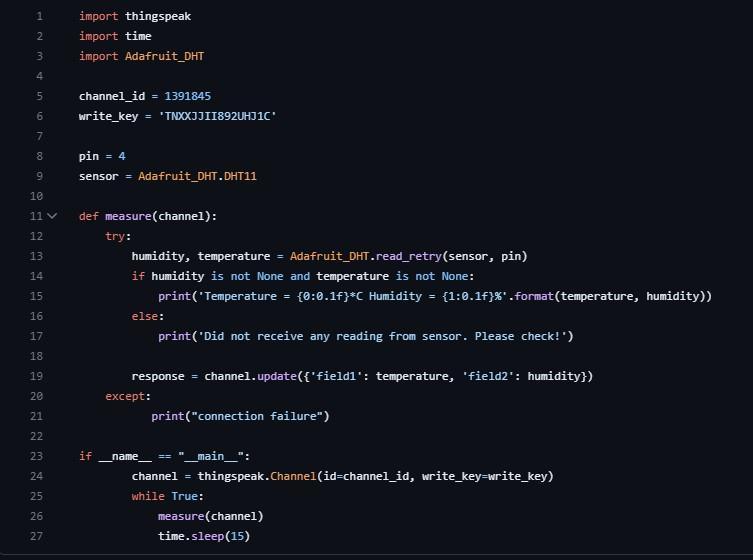
Software Code:
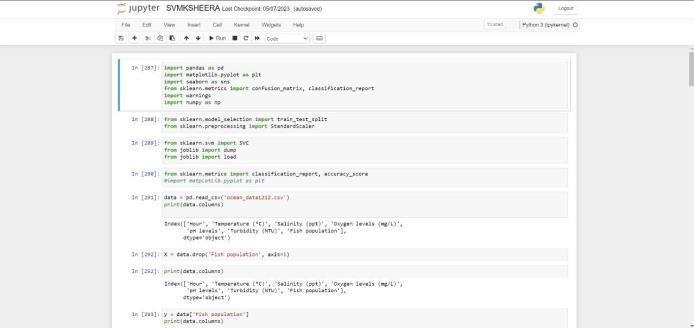
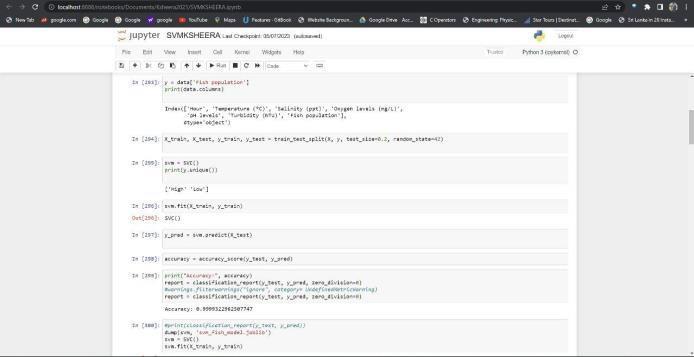
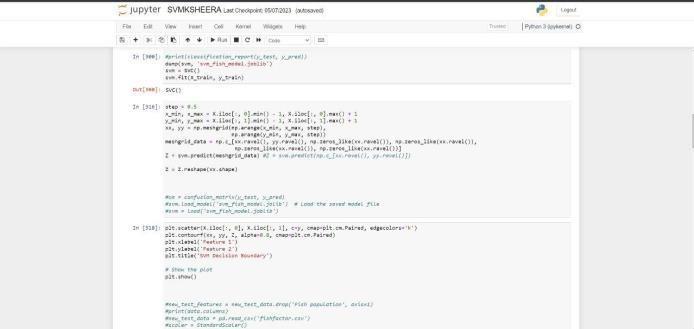
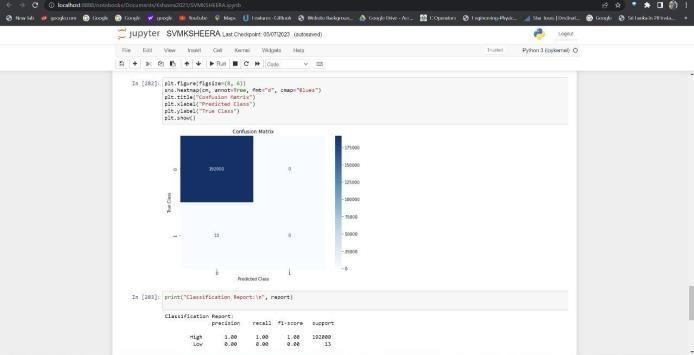
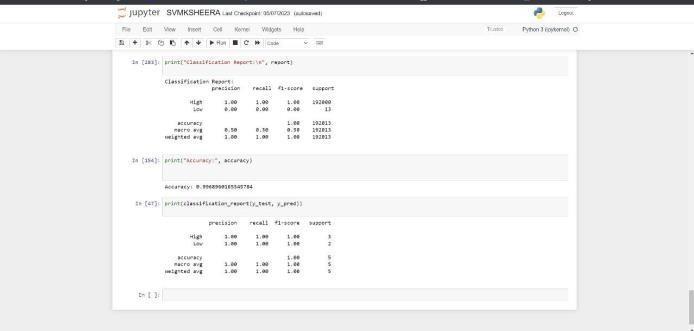
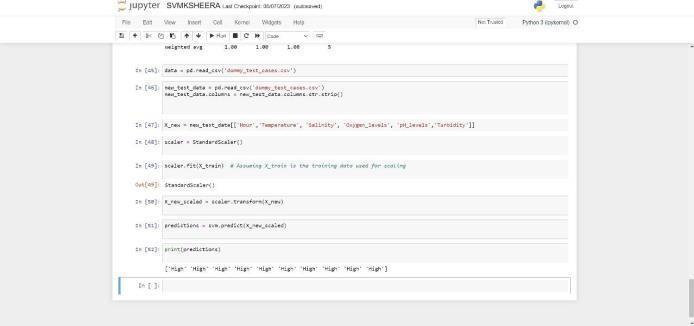
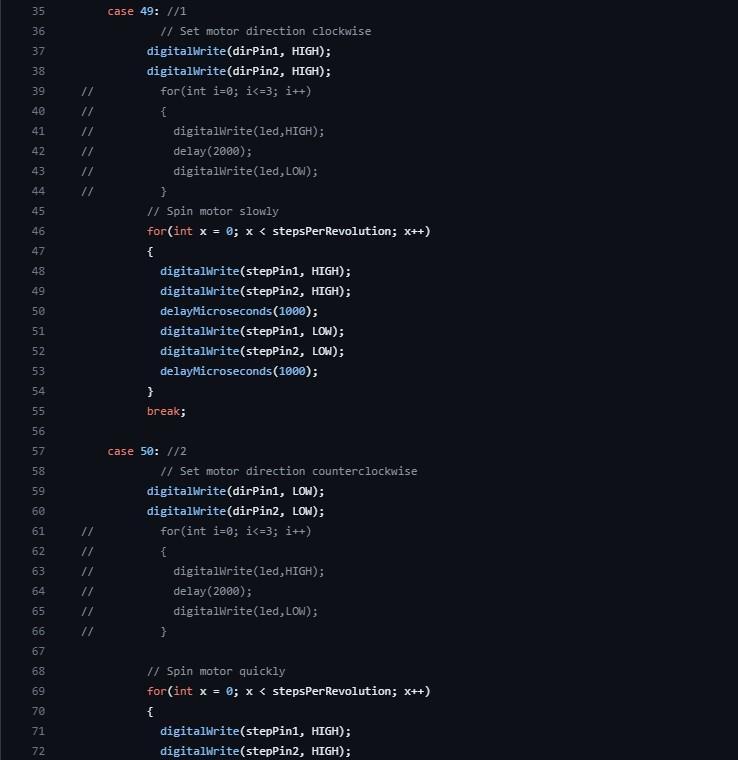
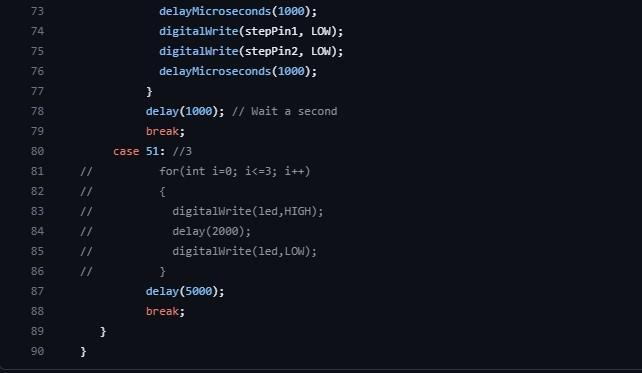
Hardware Code:
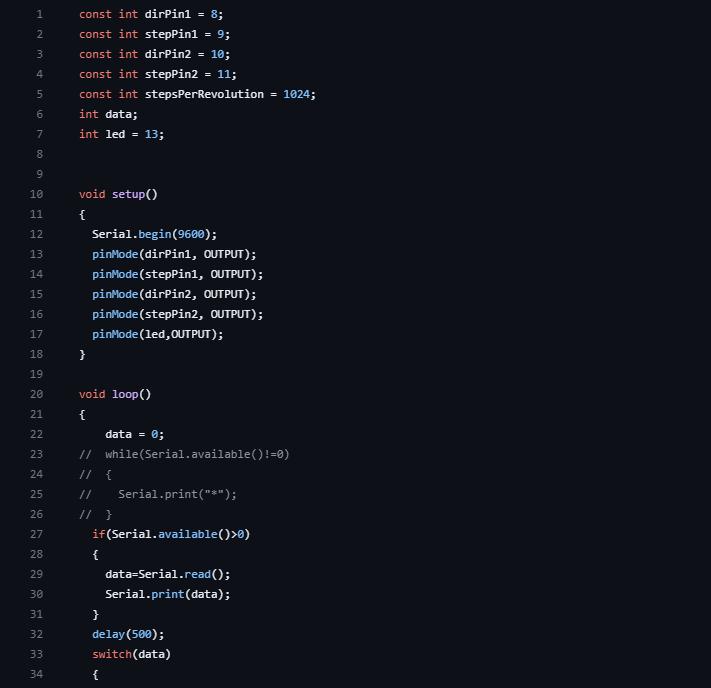
p-ISSN: 2395-0072 Volume: 11 Issue: 12 | Dec 2024 www.irjet.net
7.
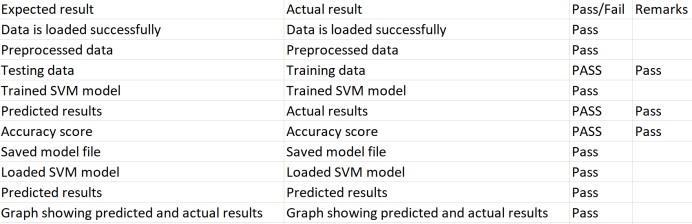
8.
The development of autonomous underwater vehicles (AUVs) holdssignificant importance in scientific research, particularly in various industrial applications such as defense, ocean exploration, and development. This paper aims to provide a comprehensive overview of the key technologies employed in AUVs, including navigation, mapping,andsampling,andexploretheirdiverserangeof applications. Navigation is a crucial aspect of AUV development, ensuring precise and accurate movement underwater.Varioustechniques,suchasinertialnavigation systems, Doppler velocity logs, and acoustic positioning systems, are utilized to enable AUVs to navigate autonomously and reach their designated destinations. Thesenavigationsystemshelpinmappingtheunderwater terrain, collecting valuable data, and conducting targeted surveysforscientificresearchandresourceexploration. Mapping plays a vital role in understanding and documenting the underwater environment. AUVs are equipped with advanced sonar systems, such as side-scan sonarandmultibeamechosounders,tocreatedetailedmaps of the seafloor, underwater structures, and geological features. These maps aid in oceanographic studies, geologicalsurveys,andenvironmentalmonitoring,providing valuable insights into marine ecosystems and potential underwater resources. Sampling technologies incorporated intoAUVsenablethecollectionofphysicalandchemical
International Research Journal of Engineering and Technology (IRJET) e-ISSN: 2395-0056 p-ISSN: 2395-0072
Volume: 11 Issue: 12 | Dec 2024 www.irjet.net
samplesfromunderwaterenvironments.AUVsareequipped with specialized sampling instruments, such as sediment corers, water samplers, and microbial samplers, allowing researchers to study water composition, sediment properties,andbiologicalspecimens. These samples contribute to research in marine biology, ocean chemistry, and ecosystem analysis, enhancing our understanding of the underwater world and its ecological balance.
ThestructuraldesignofAUVsisofutmostimportanceasit significantlyinfluencestheirmovement,stability,andfluid resistance. A streamlined and hydrodynamic shape minimizes dragand ensures efficientpropulsion, enabling AUVs to navigate through water with minimal energy consumption.Structuralconsiderationsalsoencompassthe selectionofmaterialsforoptimalbuoyancy,durability,and resistance to corrosive marine environments. The control system of AUVs is a critical component that enables autonomous operation and precise maneuverability. Sophisticated algorithms and software are employed to execute complex tasks. The control system ensures AUVs maintaindesiredtrajectories,avoidobstacles,andadaptto changing environmental conditions, enhancing their operational efficiency and safety. In addition, this paper providesanin-depthcomparativeanalysisbetweenvarious typesofAUVsandremotelyoperatedunderwatervehicles (ROUVs).Itexplorestheirdifferencesintermsofoperational capabilities, control mechanisms, and applications. Understandingthedistinctionsbetweentheseunderwater vehiclesallowsforinformeddecision-makingwhenselecting themostsuitableplatformforspecificresearchorindustrial requirements. In conclusion, this paper presents a comprehensive examination of the technologies and applicationsrelevanttothedevelopmentofAUVs.Itcovers the crucial aspects of navigation, mapping, sampling, structural design, and control systems. By exploring the capabilities and features of different AUVs and ROUVs, it aims to facilitate informed decision-making and foster advancementsinautonomousunderwatervehicleresearch andindustrialapplications.
The future scope of autonomous underwater vehicle (AUV)developmentholdsgreatpotential,particularlyinthe area of swarm robotics. Swarm AUVs, operating as a coordinated group, can revolutionize underwater exploration and research. By leveraging collective intelligence and distributed algorithms, swarm AUVs can collaboratetoperformcomplextasks,suchasmappinglarge underwater areas, conducting coordinated sampling, and facilitating collaborative sensing. Swarm AUVs offer numerous advantages over individual AUVs, including improved efficiency, enhanced coverage, and increased fault tolerance.Withtheabilitytoworkinunison,swarmAUVs canachievefasterdataacquisition,widerareacoverage,and higher resilience to individual unit failures. These capabilities pave the way for more effective and efficient
underwater research, enabling scientists to gather vast amounts of data with greater speed and accuracy. Furthermore, the future of AUV development also entails significant advancements in sensor technologies. Sensors play a critical role in providing environmental perception anddatacollectioncapabilitiestoAUVs.Inthe comingyears, we can expect sensors to evolve into higher accuracy and more sophisticated devices, enabling AUVs to gather precise and detailed information about the underwater world. Advancements in sensor technology will likely lead to improvedunderwaterimagingcapabilities,allowingAUVsto capture high-resolution images and videos of marine life, geologicalformations,andunderwaterstructures.Enhanced sonarsystemswillofferhigherresolutionandgreaterdepth penetration,enablingmoreaccuratemappingoftheseafloor and detailed identification of underwater objects. In addition, sensor advancements will focus on improved environmental monitoringcapabilities. Sensorscapable of detecting and analyzing parameters such as water temperature,salinity,dissolvedoxygenlevels,andpollutant concentrationswillenableAUVstocontributesignificantly to environmental research, climate studies, and marine ecosystem monitoring. Moreover, the integration of advanced sensor technologies, such as chemical sensors, biological sensors, and hyperspectral sensors, will enable AUVs to gather more comprehensive and specific data about underwater environments. These sensors will provide insights into water quality, biological diversity, and the presenceofpollutants,facilitatingtargeted environmental assessmentsandresourcemanagement.Overall,thefuture ofAUVdevelopmentisexciting,withastrongemphasison swarmroboticsandsensoradvancements.SwarmAUVswill enhance collaborative exploration capabilities, enabling efficient and synchronized operations in underwater environments. Concurrently, advancements in sensor technologies will lead to higher accuracy and more comprehensive data collection, empowering AUVs to contributesignificantlytoscientificresearch,environmental monitoring,andunderwaterresourcemanagement.These advancements hold immense potential for unlocking new discoveriesandinsightsintothevastunderwaterworld.
[1] D. Kornack and P. Rakic, “Cell Proliferation without NeurogenesisinAdultPrimateNeocortex,”Science,vol. 294, Dec. 2001, pp. 2127-2130, doi:10.1126/science.1065467.
[2] M.Young, TheTechnicalWriter’s Handbook.MillValley, CA:UniversityScience,1989.
[3] R. Nicole, “Title of paper with only first word capitalized,”J.NameStand.Abbrev.,inpress.
[4] K.Elissa,“Titleofpaperifknown,”unpublished.