
International Research Journal of Engineering and Technology (IRJET) e-ISSN: 2395-0056
Volume: 11 Issue: 11 | Nov 2024 www.irjet.net p-ISSN: 2395-0072

International Research Journal of Engineering and Technology (IRJET) e-ISSN: 2395-0056
Volume: 11 Issue: 11 | Nov 2024 www.irjet.net p-ISSN: 2395-0072
Shivanjali Raut1 , Sakshi Shinde2, Vaishnavi Shelke3, Komal Kshirsagar4 , Supriya Tarange5, P. D.
Mane6
1,2,3,4,5UG Students, Department of Computer Science and Engineering, SVERI’s College of Engineering, Pandharpur, Maharashtra, India
6Assistant Professor, Department of Computer Science and Engineering, SVERI’s College of Engineering, Pandharpur, Maharashtra, India ***
Abstract - This paper explores the design and implementation of a QR-Code Enabled Identification and Recovery System (QEIRS) to address challenges in locating missing individuals, particularly vulnerable groups like childrenandtheelderly.Traditionally,methodsusedtoidentify missing persons are slow and resource-intensive, which is contrastedbytheuseofQEIRSthatreliesonQRcodesattached to wearable items linked to secure databases for real-time identificationandrecovery.Thesystemfocusesonfastreaction, cost-effectiveness,scalability,andprivacydata.Throughdigital technology combined with friendlier interfaces with real-time communication channels, QEIRS presents a new way of enhancing the accuracy and efficiency of the recovery efforts for missing people.
Key Words: Community involvement, data privacy, emergencyresponse,identificationsystem,lostindividuals, missingpersons,mobileapplication,personalsecurity,public safety, QR code technology, recovery solutions, smart technology,anduseracceptance.
In today's dense, complex public environment, people gettinglostisincreasinglycommon,andthisposesespecially significantproblemstothemostvulnerablegroups,suchas toddlers, elderly people, or those suffering cognitive disabilitiesordevelopmentaldisorders.Traditionallocation andidentificationmethods,suchasoralinquiriesorphysical IDcards,areinadequateintimesofrapidlocalizationand identification of a lost individual, particularly in cases of high-stresssituationswhereeverysecondcounts[6][8][9].
Based on this urgent need, this research introduces a secure, technology-based system, the QR-Code Enabled Identification and Recovery System (QEIRS), to facilitate quickidentificationandrescuethroughQRcodeavailability and simplicity [1][2][3]. The encrypted QR codes on wearableitemssuchasawristband,lanyard,orbadgewill provide easy scanning from legitimate individuals in the formofsecurity,medicalteams,orlawenforcementofficers [4][6].
Scanned into these codes, access is instantly gained to critical, pre-approved information-about emergency
contacts, special medical needs, and identity verificationwith maximum data security protocols protecting privacy [3][5].Builttooperateinavarietyofsettings-throngsatan event, hospitals, or transit hubs-QEIRS is designed for diversity and flexibility as a feasible, cost-effective, and privacy-focused approach to building public safety infrastructure[6][8].
Byenablingrapidresponseandefficientsupport,QEIRS notonlyaidslostindividualsbutalsoreducestheemotional tollontheirfamiliesandcaregivers,representingavitalstep forward in modern identification and recovery methods [7][8][10]maintainingstringentdatasecurityprotocolsto protect individual privacy. Designed to thrive in places of extreme crowding, such as events, hospitals, and transit terminals, QEIRS is scalable, cost-effective, and privacyaware, with a focus on amplifying public safety infrastructure. Through its enabling features for quick responseandsupport,ithelpsthelostbutalsolightensthe emotional burden on their families and caregivers, representingthenextstepforwardinmodernidentification andrecovery.Inthishighdemand,thisstudypresentsthe QR-Code Enabled Identification and Recovery System (QEIRS), a secure, technology-based solution utilizing the accessibility and simplicity of QR codes to immediately identifyandobtainhelp[1][2].InQEIRS,encryptedQRcodes are implemented in wearable articles for instance, wristbands,lanyards,orbadgesthatauthorizedpersonnel, such as security guards, medical teams, or police officials, canscaneasily[3][4]. When scanned, these barcodesgive immediate access to all of one's critical, pre-approved informationsuchascontactpeopleinemergencysituations, specialmedicalneeds,andidentificationverification,butall whilemaintainingstrictdatasecuritytosafeguardindividual privacy[5].Anadaptablesolutionforuseincrowdedevents, hospitals, or transit terminals, QEIRS is a scalable, costeffective,andprivacy-consciousapproachthatstrengthens publicsafetyinfrastructure[6][7].Byprovidingimmediate responseandeffectiveassistance,QEIRSnotonlyhelpslost persons but also mitigates the emotional distress of their familiesandcaregivers,markinganimportantadvancement in contemporary identification and recovery techniques [7][8].
International Research Journal of Engineering and Technology (IRJET) e-ISSN: 2395-0056
Volume: 11 Issue: 11 | Nov 2024 www.irjet.net p-ISSN: 2395-0072
Traditionalidentificationsystemshavesomelimitations, like dependence on physical identification and transverse labourstocommunicateauthorities.Studiesincludedother technologicalresults,likeGPSshadowingandmobileapps, yet these styles generally demand the participation of the user and may not be a perfect result for everyone in the population[6][8].Thankstotheeaseofoperationandspeedy accesscapabilities,QRcodeshaveappearedasapromising solution[1][2].Thisliteraturereviewhighlightsthedemand of an intertwined system dealing explicitly with the problemsofmissingpersonswhilekeepingdatasafetyand userconfidentialityinview[5][7].
2.1. Introduction to Identification and Recovery Systems:Theproblemofidentificationofmissingpersons and their safe recovery has been largely of exploration interest.Theseincludethevulnerablegroups,especiallythe children,theseniors-substantiallythosewhoaresuffering frommadness-andindividualitieswithcognitivedisabilities.
Also there's traditional identification by means of physical IDs, wristbands, and in some cases, electronic shadowingbiassimilarasRFIDmarkers.still,eachofthese options has disadvantages physical IDs can be lost, wristbandstendtocarrytoolittleinformation,andRFIDor GPS shadowing involves hardware and technology that would come too big and out of fund for any mass operation[6][9].
2.2. Exploring QR Code Technology in Identification Systems:QRcodes,orQuickResponsecodes,areasimple, very cost-effective method of carrying and sharing digital information.Originatedfromproducttrackingapplication, QRcodeshavenowgainedmuchmomentuminthevaried fields because of their high storage capacity, ease of application,andadaptability. Theinformationthatcanbe stored includes personal identifiers, emergency contacts, medical data, and many more, making it applicable for identificationpurposes.
Mostsmartphonesareequippedwiththeabilitytoscan QR codes without need for additional equipment, thus allowingmaximumaccessibilitybothinurbanandremote areas[1][3].
2.3. Applications of QR Codes in Health and Safety Contexts:Recently,QRcodeshavebeenusedeveninhealthrelated applications so that critical information may be accessedduringemergencies.MedicalIDbraceletsorcards withembeddedQRscancontainvitalhealthdataforpatients with chronic illnesses or allergies. This way, the first responders and medical personnel can have access to the essentialinformationapatientmightneedatanytime.This utilityinhealthcaresettingspointsoutthepotentialofQR codes to identify and retrieve information from sensitive groups,especiallyforvulnerablepopulations[3][5].
2.4.QR Codes forVulnerable Populations andMissing Persons:Therearespecificneedsconcerningsecurityand identification for vulnerable populations such as children, theelderly,andthosewithdisabilities.
Other research studies use wearable QR tags on patients whohaveAlzheimer'sordementia,tendtowander,andlose theirway.Insuchsituations,addingaQRcodewithpersonal informationcanexpediteeasieridentificationandreunion bycaregiversorfamilymembers[6][9].Studieshavefound thatwhenQRcodesareappliedaswearabletechnology,they representanon-intrusiveandprivacy-preservingmeansto supportlostpersons[8][9].
2.5. Current Limitations and Research Gaps in QR Code-Based Recovery Systems:AlthoughQRcodesarea promisingsolution,therearestillsomelimitationsthatneed tobeovercome
Accordingtoresearch,QRcodesdependonapopulation equipped with a smartphone and will not likely be as effective in areas where smartphone usage is minimal. In addition, QR codes can fade or become scratched, making them unreadable after some period of time has passed. Futureresearchmayfocusonovercomingtheselimitations by developing more durable materials and placement strategiesorintegratingothertechnologies,suchasGPSor RFID, where QR codes may not be feasible on their own [4][9].
2.6.Potential of aQR Code-Enabled Identificationand Recovery System for Lost Individuals: Considering the highaccessibility,lowcost,andadaptabilityfeaturesofaQR codetechnology,thescopeforusingsuchasystemtoaidin identificationandrecoveryoflostindividualsissubstantial. The QR code solution with secure database and real-time communicationchannelscanbethusintegratedwiththese toenablecaregivers,family,andincaseofemergency,first respondersquicklyretrieveessentialinformation[7][8].
3.1.Research Design
TheproposedQR-CodeEnabledIdentificationandRecovery System will have a mixed-methods approach in terms of design, implementation, and evaluation. In this manner, it will use both quantitative and qualitative techniques in order to find out the effectiveness, user perception, and feasibility of the proposed system. The main aim of the systemistoofferanefficientandsafesolutionforfinding missingpersons,especiallyincasetheyarenotabletoselfidentify-children, the aged, and people with cognitive disabilities.
The performanceofthe proposed QRcode-basedsolution willbeexaminedintermsofusability,accessibility,accuracy, andresponsetime.
International Research Journal of Engineering and Technology (IRJET) e-ISSN: 2395-0056
Volume: 11 Issue: 11 | Nov 2024 www.irjet.net p-ISSN: 2395-0072
3.2.1. QR Code Specifications: This designing process involves the selection of an appropriate kind of QR code type;forexample,astatictypeoradynamickindthatwould beappropriateaccordingtotherequirementsofthestudy. DynamicQRcodesarealsopreferredforlinkingandlinking to an online database for quick updates in real-time. The study also determines the size, placement, and material durability of a QR code so that it can be readable and resistanttothesurroundingsinwhichitwillbeplaced.
3.2.2. Database and Security Design:Asecurecloud-based databasewillbedevelopedforthestorageandretrievalof information associated with each QR code. The system designwilladheretostrictdatasecurityprotocolsthatwill guaranteethesafetyandprivacyofstoredinformation,with access restricted to authorized personnel and emergency responders. Techniques such as data encryption, secure access protocols, and user authentication will be used to safeguard confidential data.
throughscanning,andhowtoreachemergencyservicesin case of a problem. There will be training in smartphone applicationsorQRcodereaders,especiallyforuserswhoare notaccustomedtousingQR.
3.5. Data Analysis
Dataanalysiswillincludequalitativecriteriaandqualitative feedback.
3.5.1. Quantitative Metrics:Measurementoftimetakento identifypeople,accuracyrateoftheinformationaccessed, and ease of scanning under various conditions, including lighting and other environmental effects. The system's effectivenesscanalsobeassessedbyrecordingthepercent successful identification. The statistical tools will allow a comparison of how the system functions under different settings, age groups, and usage scenarios to determine if thereisasignificantdifferenceinusabilityandeffectiveness.
3.5.2. Qualitative Feedback:Qualitativefeedbackswillbe collectedfromthecare-givers,participants,andemergency respondersthroughinterviewsandsurveys.Thequalitative feedback will enable answers to question like user satisfaction,perceivedreliability,perceivedeaseofuse,and concernsforprivacyordatasecurity.Thematicanalysiswill thenbeusedtoidentifytherepeatingpatternsandconcerns andthiswillpointoutsomepotentialimprovementsforthe nextversionofthissystem.
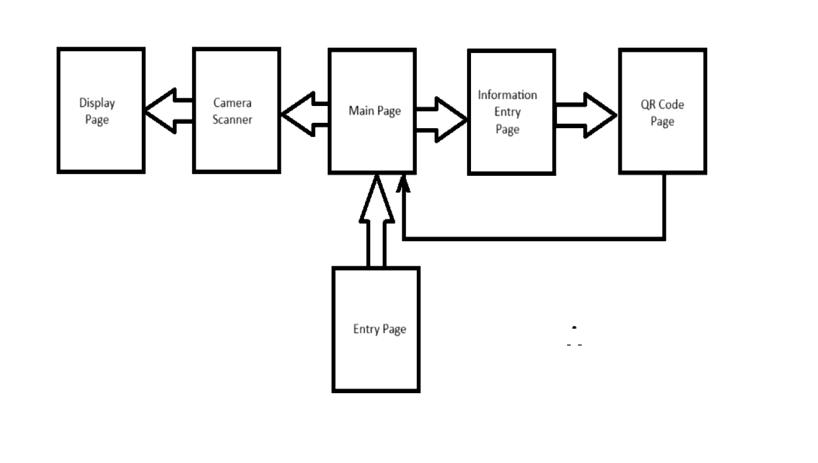
3.3. Data Collection and Participant Recruitment
The study subjects will comprise children, geriatric individuals,anddementiapatients.Inaddition,itisexpected to recruit caregivers, relatives, and health care providers whowilltesttheusabilityofthesystemandofferaresponse onpracticality.
3.4. System Implementation
In the implementation phase, each participant will be assignedaQRcodethatlinksbacktoaprofileinthesecure database. A wearable item for each participant or for a guardianwillbeissued,suchasabracelet,card,orclothing tag,indicatingtheirindividualQRcode.
3.4.1 User Training andInstructions:Theparticipantsand theirguardiansaregoingtobeinstructedonhowthesystem operatesusingQRcodes,howinformationcanbeobtained

Fig.2: Applogo
App Logo is the starting page with a progress bar that is displayeduntiltheHomePageisdisplayed.
International Research Journal of Engineering and Technology (IRJET) e-ISSN: 2395-0056
Volume: 11 Issue: 11 | Nov 2024 www.irjet.net p-ISSN: 2395-0072
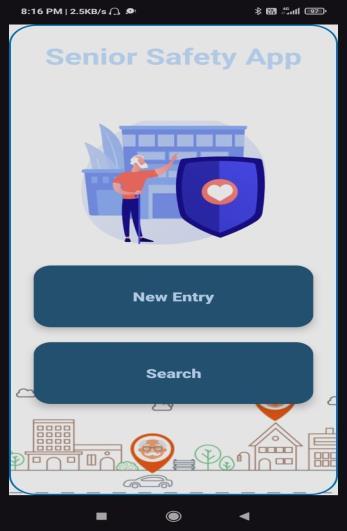
HomePage
The Home Page guidesustowardspagesthattaketheinput ofpersonal informationofanindividual ortothosepages thathelpusscantheQRcodes.
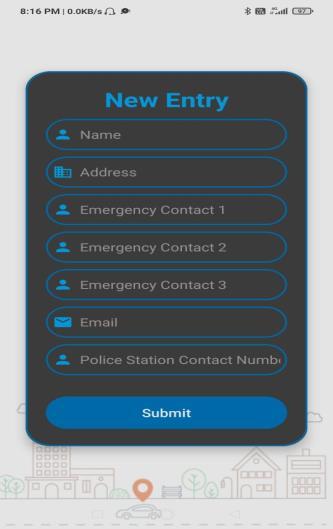
Fig.4:EntryPage
TheNew Entry Page allowstosecurelyaddpersonaldetails foranewindividual,includingessentialcontactinformation, medicalnotes,andauniqueQRcode.Thisensuresthateach entry is easy to manage and accessible in case of emergencies,helpingfaceidentificationandsaferecovery.
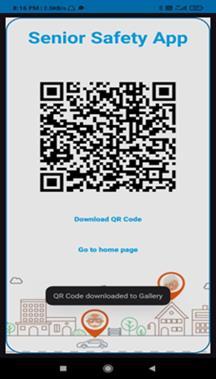
Fig.5: GenerateQRcode
This QR Code Creation page letsyougenerateapersonal QRcodewhichlinksdirectlytotheperson'sprofile,keeping crucialdatathatcaneasilyberetrievedandverifiedincase ofanemergency.
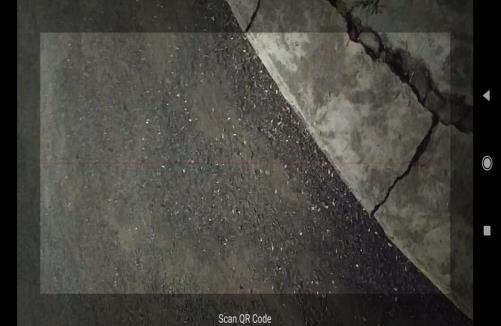
Fig.6: ScanQRCode
Scan QR Code is an ability of the responders to instantly accesscriticalinformationbyscanningtheperson'sunique QR code to ensure speedy identification and contact with caregiversforsaferecovery.
International Research Journal of Engineering and Technology (IRJET) e-ISSN: 2395-0056
Volume: 11 Issue: 11 | Nov 2024 www.irjet.net p-ISSN: 2395-0072
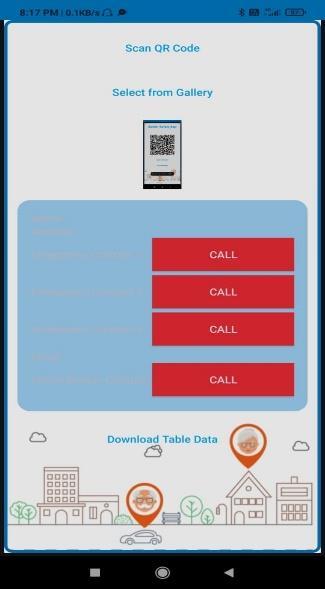
Downloadtabledata
The Download Data feature enables users to securely downloadessentialinformationfromtheQRcode,providing quickofflineaccesstocriticaldetailsforidentificationand recoveryassistance.
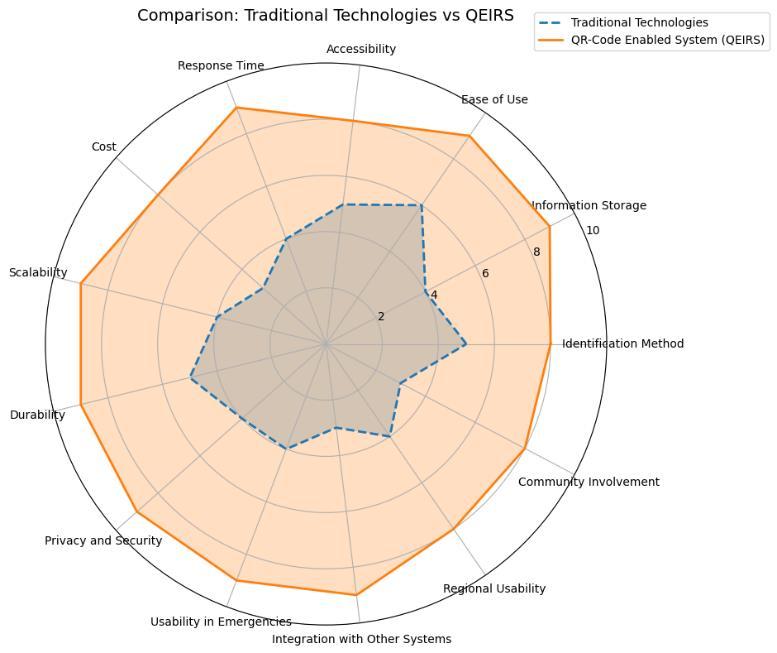
Fig.8: Comparisonbetweentraditionalmethodsand QEIRS
The graph compares traditional methods of locating missingindividualswiththeQR-CodeEnabledIdentification andRecoverySystem(QEIRS)intermsofkeyattributes.
4.1. Identification Method:Traditionalmethodsrelyon thetraditionalreportingandphysicalsearchmethod,while digital technologies are used in QEIRS to read a QR code affiliated with wearable items for real-time identification andrecovery.
4.2 Information Storage: Here,intraditional systems, dataisusuallystoredmanually,mostprobablyinphysical
formats or even non-secure digital databases. But QEIRS usessecure,digitaldatabaseswhich,withregardtohowfast and reliable information could be stored and retrieved, ensuresthatup-to-datedataisalwaysavailable.
4.3. Ease of Use: Traditional methods can be cumbersome,oftenrequiringmultiplemanualsteps,which can be difficult for vulnerable individuals. QEIRS offers a user-friendlyinterfacethatsimplifiestheprocessoflocating individuals,makingitmoreaccessibletoallusers.
4.4 Availability:Traditionalsystemsareoftenconfined tospecificregionallocationsorrequirephysicalpresence. QEIRS provides better accessibility because it is based on mobiledevicesandtheinternet,thusallowinguseinwide regionsandglobally.
4.5. Response Time:Conventionalprocessestakemore time because of reliance on manual search and reporting processes.QEIRSallowsfasterresponsessinceitprovides real-timetracking,ensuringaquickerrecoveryprocess.
4.6 Cost:Traditionalsystemsmaybeverycostlybecause of labour and resource intensiveness in searching efforts, anditrequiresinfrastructureforphysicalsearches.Thecost isloweronQEIRS,especiallyaftersetupbecauseitrequires fewerhumanresourcesandlessphysicalsearch.
4.7.Scalability:Traditionalmethodscanevenfailtoscale whentherearemanymissingpersonsorcases.QEIRS,with its digital infrastructure, is quite scalable and efficient in handlingmanycasessimultaneously.
4.8. Durability: Traditional methods may be limited to environmentalfactorsorhumanerror.QEIRSwillhavemore durabilitybyusingmoderntechnologyandsecuresystems, whichismoreresilientandreliable.
4.9. Privacy and Security: The traditional method is more vulnerable to privacy breach since the reporting channelsareopen.QEIRSaddressessecurityandprivacyby using an encrypted communication system and secure databasesforpersonaldata.
4.10 Usability in Emergencies:Thetraditionalmethod may be slow in emergencies, as it relies upon physical processesandresources.QEIRScanbeappliedveryrapidly inanemergencywherethealertsandupdatesaregivenin real-timeforquickerresponse.
4.11 Integrationwith Other Systems:Thesystemsmay not easily integrate with other tracking or identification technologiesbecausetheyareconventional.QEIRScaneasily beintegratedwithothermodernsystemstocreateamore efficientrecoverynetworkoverall.
4.12 Regional Usability: Because of geographical limitationsandpoor scalability,sometraditional methods maybeconfinedtospecificregions.QEIRSisdigitalandcan,
International Research Journal of Engineering and Technology (IRJET) e-ISSN: 2395-0056
Volume: 11 Issue: 11 | Nov 2024 www.irjet.net p-ISSN: 2395-0072
therefore, beapplied regionally,even in remoteorunderservedareas.
4.13 Community Involvement: Conventional systems usuallydemandactivecommunityinvolvement,informof publicreportingandvolunteerefforts.QEIRScanfunction with minimal involvement from the community but still facilitatesitthroughitsuser-friendlyreportingandtracking.
This contrast shows the vast advantages of the QR-Code Enabled Identification and Recovery System (QEIRS) over the convention methods, especially in terms of speed, scalability,security,andcost-effectivenessregardingfinding missingpersons.
TheinventionandimplementationofaQR-CodeEnabled IdentificationandRecoverySystemforMissingPersonsarea groundbreaking leap in public safety as well as personal security.ThroughintegratingQRcodeswithauser-friendly mobile application, this system proactively answers the growing phenomenon of missing persons. The purpose of such a system is to equip each person with the ability to generate and display unique QR codes that contain such necessaryinformationnecessaryforidentificationandthus canbereadeasilybybystandersorlawenforcement,thus acceleratingtherecoveryprocess.
Thefollowingaremainbenefitsoftheproposedsystemas presented by this study:. First, with the application of QR codes, it makes it more accessible to access important informationduringemergencysituations,whichdecreases the time it takes before the lost persons are identified. Second, the system ensures adoption by almost all individuals including the children, old people and the disabledpersonssothatitcoversabiggerpopulation.This has made it promote community participation and awareness in its activity as citizens can become involved withotherpeopleinneedintheircommunity.
Further,theresearchdiscussessomepotentialchallenges in the system that may arise, including privacy issues or requirements for a thorough social acceptance and enlightenment process of utilizing the system. Most importantly,inensuringthatthesechallengesdonothinder the deployment and longevity of the QR-Code Enabled IdentificationandRecoverySystem,muchresearchshould be focused on improving existing security aspects and establishing partnerships with law enforcement and communityorganizationstoactuallyextendandmaximize theeffectivenessofthesystem.
In summary, the QR-Code Enabled Identification and Recovery System for Lost Individuals offers promise for a verybasicandpainful social issue.Onitsown,harnessing technology to improve processes related to identification andrecoverywillmakeitpossibletosavelivesandprovide
reassurance to individuals and their families. Further developmentandrefinementofthissystemwillbenecessary in realizing its full potential and effective integration into existingpublicsafetyframeworks.
The QR-Code Enabled Identification and Recovery System (QEIRS) presents significant potential for future advancements. Integrating artificial intelligence (AI) and machinelearning(ML)couldenhancereal-timedataanalysis andpatternrecognitionforfasteridentification.Expanding thesystem’sapplicationtoincludebiometricsalongsideQR codes may further improve accuracy and security. Global scalability can be achieved by developing multilingual support and tailoring the system to diverse regional requirements. Besides these, cooperation with the police force, NGOs, and community groups will bolster its canvassing capability. Using blockchain technology could make it even more reliable by creating highly secure and transparentdatastorage,ameasurethatcanfurthersolidify therecoveryprocess
[1] S.Tiwari,"An Introduction to QR Code Technology," 2016 International Conference on Information Technology(ICIT),Bhubaneswar,India,2016,pp.39-44, doi:10.1109/ICIT.2016.021
[2] S. Scanzio, M. Rosani, M. Scamuzzi and G. Cena, "QR Codes: From a Survey of the State of the Art to Executable eQR Codes for the Internet of Things,"in IEEE Internet of Things Journal, vol. 11, no. 13, pp. 23699-23710, 1 July1, 2024, doi: 10.1109/JIOT.2024.3385542.
[3] H. J. Galiyawala and K. H. Pandya, "To increase data capacity of QR code using multiplexing with color coding: An example of embedding speech signal in QR code," 2014 Annual IEEE India Conference (INDICON), Pune, India, 2014, pp. 1-6, doi: 10.1109/INDICON.2014.7030441
[4] C.Kammason,Y.Wanna,K.WiratchawaandT.Intharah, "Dual Image QR Codes: The Best of Both Worlds," 2022 International Conference on Digital Image Computing: Techniques and Applications (DICTA), Sydney, Australia, 2022, pp. 1-8, doi: 10.1109/DICTA56598.2022.10034633
[5] M.R.I.F.andR.Munir,"Data Transmission to Mobile Devices via Multiple QR Codes," 2023 10th International Conference on Advanced Informatics: Concept, Theory and Application (ICAICTA), Lombok, Indonesia, 2023, pp. 1-6, doi: 10.1109/ICAICTA59291.2023.10390307
International Research Journal of Engineering and Technology (IRJET) e-ISSN: 2395-0056
Volume: 11 Issue: 11 | Nov 2024 www.irjet.net p-ISSN: 2395-0072
[6] M. V P, D. Brindha, A. B and J. S, "Missing Persons Comprehensive Tracking System withSecureLoginBased Interface for Displaying Missing People Data, Found Person Details," 2024 Second International Conference on Advances in Information Technology (ICAIT),Chikkamagaluru,Karnataka,India,2024,pp.17, doi: 10.1109/ICAIT61638.2024.10690340 integration; Found Person Details;Proximity-Based PoliceStationMapping},
[7] P. Nirmala, R. Sabitha and V. Vidhyasree, "A Logical Designof Internetof Things AssistedMissingPeople Detection Scheme using Human Computer Interaction Technology," 2024 Ninth International Conference on Science Technology Engineering and Mathematics(ICONSTEM),Chennai,India,2024,pp.1-8, doi:10.1109/ICONSTEM60960.2024.10568671
[8] V.Sudeksha,G.Lahari,A.N.S.Srinivas,K.Mannemand K.Jamal,"Missing Persons Comprehensive Tracking System," 2024 IEEE International Conference on Information Technology, Electronics and Intelligent Communication Systems (ICITEICS), Bangalore, India, 2024, pp. 1-5, doi: 10.1109/ICITEICS61368.2024.10625192
[9] N.Shukla,E.Sanghavi,R.PatilandS.Jagtap,"PARICHAI - Personal Aadhar Referenced Identification of Missing Children and Alzheimer patients of India," 2023 6th International Conference on Advances in ScienceandTechnology(ICAST),Mumbai,India,2023, pp.622-626,doi:10.1109/ICAST59062.2023.10455065
[10] C.Marin,R.-I.CiobanuandC.Dobre,"Finding Lost People Using Mobile Networks," 2024 32nd Euromicro International Conference on Parallel, Distributed and Network-Based Processing (PDP), Dublin, Ireland, 2024, pp. 175-182, doi: 10.1109/PDP62718.2024.00032.
BIOGRAPHIES


SakshiShinde,FourthYearB.Tech. StudentatComputerScience and Engineering Department, SVERI’s College of Engineering, Pandharpur.
Shivanjali Raut, Fourth Year B.Tech. Student at Computer Science and Engineering Department, SVERI’s College of Engineering,Pandharpur.




Vaishnavi Shelke, Fourth Year B.Tech. Student at Computer Science and Engineering Department, SVERI’s College of Engineering,Pandharpur.
Komal Kshirsagar, Fourth Year B.Tech. Student at Computer Science and Engineering Department, SVERI’s College of Engineering,Pandharpur.
Supriya Tarange, Fourth Year B.Tech. Student at Computer Science and Engineering Department, SVERI’s College of Engineering,Pandharpur.
P.D. Mane,Assistant Professorat Computer Science and Engineering Department, SVERI’s College of Engineering, Pandharpur.