
International Research Journal of Engineering and Technology (IRJET) e-ISSN: 2395-0056
Volume: 11 Issue: 11 | Nov 2024 www.irjet.net p-ISSN: 2395-0072

International Research Journal of Engineering and Technology (IRJET) e-ISSN: 2395-0056
Volume: 11 Issue: 11 | Nov 2024 www.irjet.net p-ISSN: 2395-0072
Shubham M. Bakalkar1, P. J. Salunke2
1PG Student, Dept. of Civil Engineering, Mahatma Gandhi Mission's College of Engineering and Technology (MGMCET), Kamothe, Navi Mumbai, Maharashtra, India
2Head of Department, Dept. of Civil Engineering, Mahatma Gandhi Mission's College of Engineering and Technology (MGMCET), Kamothe, Navi Mumbai, Maharashtra, India
Abstract - Progressive collapse is a critical failure phenomenon where the localized failure of one structural component triggers a chain reaction, leading to partial or complete collapse of the structure. This study focuses on progressivecollapsepropagationinone direction, examining factors such as structural configuration, load redistribution, and failure mechanisms. Structures with weak load paths, insufficient redundancy, or irregular configurations are particularly vulnerable to such collapses, especially under dynamic loads like seismic events. Analytical and numerical modeling methods have been used to simulate these failures and identify critical structural elements. Design strategies, including enhanced robustness and improved load path continuity,areessentialtomitigateprogressivecollapserisks. Understanding the directional propagation of collapse is crucial for developing resilient structures and improving current building codes.
Key Words: Progressive collapse, one-direction collapse, loadredistribution,structuralfailure,seismicvulnerability, collapse propagation, structural robustness, redundancy, failuremechanism,buildingcodes.
The collapse of reinforced concrete (RC) frame buildingsduetofailureinonedirectionhasraisedserious concerns,especiallyinareassusceptibletoseismicactivity or strong lateral forces like wind. Several disastrous incidentsovertheyearshaveexposedthevulnerability of thesestructurestoprogressivecollapse,particularlywhen lateralresistanceinonedirectionislacking.Manyofthese collapseshaveoccurredduetodesigndeficiencies,improper construction practices, or insufficient understanding of seismicforcesandtheirimpactonstructuresThesefailures oftenstemfromdesignflaws,poorconstructionpractices,or alimitedunderstandingofseismicforcesandtheireffectson buildings.
Progressivecollapsereferstoascenariowherelocal failureofoneormoresuchafailureoccursinonedirection (either along the X or Y axis), the collapse can propagate throughoutthestructureduetotheinterconnectednatureof the structural system. A collapse of a reinforced concrete (RC)framebuildinginonedirectionreferstothestructural
failure where the building's load-bearing capacity in one specificlateraldirection(oftenduetoseismicforces,wind loads, or other horizontal pressures) is insufficient. This leads to progressive collapse, where the failure of key elementssuchascolumns,beams,orjointsina particular direction causes the structure to tilt, lean, or fall in that direction.
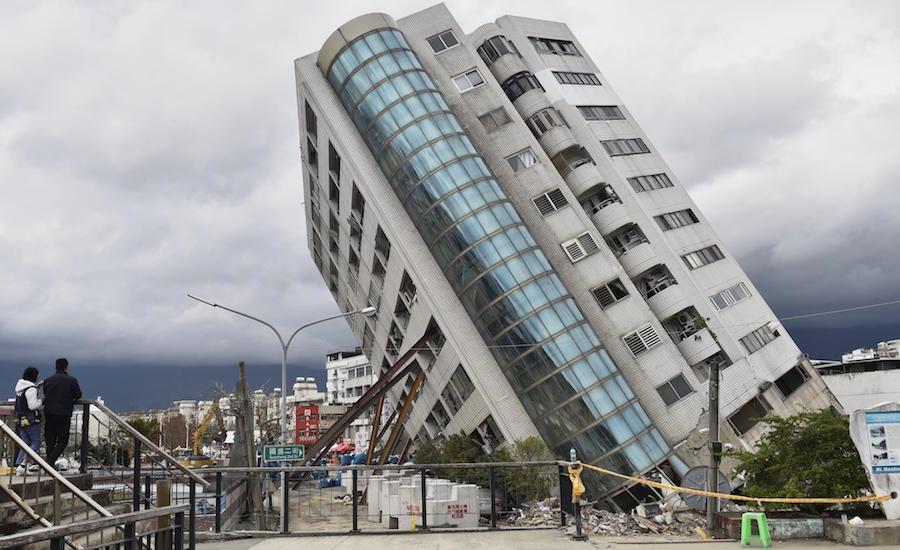
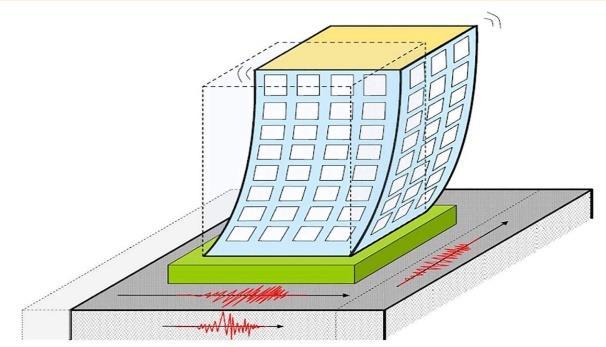
Structural failures during an earthquake often originate at points of weakness within a building system. These weaknesses are caused by discontinuities in mass, stiffness, and geometry, which can lead to progressive deterioration and ultimately result in structural collapse. Buildings exhibiting these discontinuities are classified as irregularstructures,andtheyconstituteasubstantialportion of modern urban infrastructure. Among various types of irregularities, vertical irregularities are a major cause of structural failure during earthquakes. For instance, structures with soft stories have been notably prone to collapse. This highlights the critical importance of understanding the effects of vertical irregularities on the seismicperformanceofbuildings.
The dynamic characteristics of buildings with vertically irregular configurations differ significantly from those of regular buildings. According to IS 1893:2002, a building is considered vertically irregular when the
International Research Journal of Engineering and Technology (IRJET) e-ISSN: 2395-0056
Volume: 11 Issue: 11 | Nov 2024 www.irjet.net p-ISSN: 2395-0072
horizontalstrengthofthelateralforce-resistingsysteminany storyexceeds150%ofthatintheadjacentstory.Whensuch buildingsareconstructedinhighseismiczones,theanalysis anddesignprocessbecomeincreasinglycomplex.Therefore, it is essential for structural engineers to have a thorough understandingoftheseismicresponseofirregularstructures toensuretheirsafeandefficientdesign.
Progressive collapse in one direction typically starts with a localized failure, which can be triggered by several factors,including:
Excessivelateralloads(seismicorwindloads).
Foundationfailureordifferentialsettlement.
Structural deficiencies, such as poor design or constructionpractices.
Materialfailureordegradationovertime.
Severalfailuremodescaninitiateprogressivecollapseinan RCframebuilding,especiallyinonedirection:
Beam Failure: Beams transfer loads between columnsandwalls.Ifabeamfailsduetoexcessive lateralforcesorduetoimproperreinforcement,the entire beam-column joint may fail, leading to a progressivecollapse.
Connection Failure:Thebeam-columnconnections in RC frames are essential for the stability of the building under lateral loads. Inadequate reinforcement,poordetailing,orconstructionerrors canweakentheseconnections,allowingthestructure to fail in one direction when subjected to lateral loads.
Column Failure:Columnsarecriticalintransferring both vertical and lateral loads. If a column in the weakerdirectionfails,eitherduetoseismicforcesor aweakstory,theloadsitcarriesareredistributedto adjacentcolumns.Thesecolumnsmaynotbecapable ofhandlingtheadditionalloads,causingthemtofail andinitiatingaprogressivecollapse.
The collapse of RC frame buildings in one direction can be initiatedbyavarietyoffactorsthatreducethelateralloadbearingcapacityinthatdirection:
Seismic Activity: Earthquakes generate dynamic lateral forces that act in multiple directions. If a buildingisnotproperlydesignedforseismicloads, the structure may collapse in one direction, especially if the seismic forces exceed the design strengthoftheelementsinthatdirection.
Foundation Movement: The building may move differentlyasaresultofunevensettlement,liquefied
soil, or foundation failure. Stress concentrations occurwhenabuilding'ssettlementisgreateronone side, particularly in the lateral load-resisting components.Localfailureandprogressivecollapse aretwopossibleoutcomesofthis.
Pavel Korenkov et al. (2024) examinedtheinclusionof elastic-plasticbehaviorsinstructuraljointelements.Thetwo typesofconnectionsbetweencrossbarsandcolumnsthat wereinvestigatedintheirstudywereafullyrigidconnection and a flexible one that included nonlinear compliance in areaslike"bendingmoment-angleofrotation,""transverse force-deformation," and "longitudinal force-deformation." Numericalinvestigationrevealedthattheinternalforcesin reinforced concrete systems are greatly impacted by the nonlinearpropertiesofthematerialsaswellasgeometric nonlinearitybroughtonbyjointflexibility,withfluctuations ofupto30%.Thesystem'senhancedadaptabilityislinkedto these distinctions, underscoring the need for more experimentalstudiesonvariouskindsofstructurallinkages.
Vitaly I. Kolchunov et al. (2024) developedamodelfor analyzing shear deformations and crack formation in the intermediatecontactzonesbetweenprecastandmonolithic segmentsofreinforcedconcreteframeelements.Themodel accountsforbothsheardeformationsandcracksinducedby axialtensionorbending.Thevalidationinvolvedcomparing thecomputationalresultswithexperimentaldataobtained fromscaledtestsonprecastframesystemsfeaturinglayered beams..Keyfactorsaffectingstiffnessandbearingcapacityin the intermediate contact zone were studied, along with criteria for shear formation and changes in stiffness and dissipative properties under static-dynamic loading conditions.
Qiao Ling Fu et al. (2023) employedDIANAsoftwareto conduct numerical simulations in order to investigate the progressive collapse behavior of reinforced concrete frameworkswithmanystories..Theanalysisfocusedonload
International Research Journal of Engineering and Technology (IRJET) e-ISSN: 2395-0056
Volume: 11 Issue: 11 | Nov 2024 www.irjet.net p-ISSN: 2395-0072
resistance, failure modes, and force redistribution. The research revealed contrasting behaviors between singlestory and multistory frames. Single-story frames initially exhibitedcompressivearchaction,transitioningtocatenary actionunderlargedeformations.Formultistoryframes,only the first-story beams displayed both mechanisms, while upper-storybeamsexperiencedlimitedaxialcompression. The proposed method was validated by comparing numerical results, demonstrating its effectiveness in assessingprogressivecollapseresistance.
Dong Chang et al. (2023) investigatedthestructures' resistance to progressive collapse in the event of middlecolumn failure. Infilled walls were modeled using an equivalent three-strut diagonal bracing approach, while prestressed tendons were simulated with node coupling techniques.Apushdownanalysisrevealedthatinfilledwalls significantly enhance the anti-collapse capacity of IW-PC frames. These walls accelerate peak load attainment and facilitateearlytransformationsofaxialforcesinbeamsand tendons,enablingasmoothertransitiontocatenaryaction, therebyimprovingoverallload-bearingcapacity.
Gaurav Verma et al. (2023) analyzedthefailureofa reinforced concrete tribune structure to propose appropriate repair solutions. The study employed visual inspections,HammerTestevaluations,andcomputational modeling using Staad Pro v8i. Findings indicated that the collapse occurred in beams and floors, necessitating demolition, while columns required minor repairs. The Hammer Test highlighted concrete quality issues at the collapse site, and modeling confirmed inadequate beam reinforcement and weak scaffolding during concrete hardening. Multiple factors, including poor design and construction practices, were identified as causes of the failure.
Said Elkholy et al. (2022) examinedhowfloorsystem layoutsaffectedthesubassemblagesofreinforcedconcrete (RC)frames'abilitytowithstandprogressivecollapseand dissipate energy. Using fiber element modeling, the study examined the influence of beam dimensions and reinforcementdetailsacrossvariousspanlengths.Results showedthatslabpresenceenhancesenergydissipationby approximately 28%, and beam size significantly impacts collapseresistanceandfailurepatterns.
Saif Uddin et al. (2022) examined the progressive collapsepotentialofaG+10RCCbuildinginZoneIIIusing nonlineardynamicanalysis.Scenariosinvolvingtheremoval of corner, edge, and interior ground-floor columns were analyzed.Tomitigatecollapse,V-bracingwasintegratedinto the design. Nonlinear time history analysis conducted via ETABS2019showedthatinteriorcolumnremovalposedthe highest risk to structural stability. Incorporating bracing improved performance by maintaining the demand-tocapacityratiobelowcriticallevels.
Pawan Kumar et al. (2021) examinedhowcatastrophic eventslikeexplosionsorimpactscauseRCconstructionsto gradually collapse. The study emphasized the need for robust designs, referencing historical collapses like the Ronan Point disaster and the Oklahoma City bombing. Numerical and experimental investigations revealed that infill walls significantly improve collapse resistance comparedtobareRCframes.
Anjali G. Dhole et al. (2021) evaluatedtheprogressive collapseriskofa15-storyconcrete-framedbuildingunder differentcolumnremovalscenariosusingthealternateload pathmethod.LinearstaticanddynamicanalysesinETABS 2019 revealed demand-to-capacity ratios exceeding allowable limits in all cases, indicating high collapse risk. Mitigation strategies, such as floor-level bracing and increasingbeamsizes,wereassessedforeffectiveness.
Bhavik R. Patel et al. (2017) studied soil-structure interaction (SSI) effects on progressive collapse in RC frames.UsingtheWinklerapproachandSAP2000software, they analyzed a 15-story building under column failure scenarios. Results highlighted that SSI influences load transfer mechanisms and foundation reactions, making nonlinear static analysis a suitable method for collapse assessment.
Zahrai et al. (2014) compared four analytical approaches for evaluating progressive collapse in intermediate RC frame buildings: linear static, nonlinear static, linear dynamic, and nonlinear dynamic methods. Dynamic procedures were found to provide the most accurate results for determining collapse potential under various column removal scenarios, as outlined by GSA guidelines.
A.R. Rahai et al. (2012) examinedprogressivecollapse in RC structures due to both instantaneous and gradual column removal. Gradual removal, modeled as strength degradation from fire, revealed different redistribution patterns of forces and plastic deformation compared to instantaneousremovalscenarios.
This literature review focuses on the understanding of progressive collapse in one direction, considering factors such as structural design, load distribution, and failure mechanisms Progressive collapsereferstothe failureof a structuralsystemthatinitiatesatalocalizedpointoffailure and spreads to other parts of the structure, leading to a larger portion or the entire structure collapsing. The phenomenon has been a significant concern in structural engineering, especially in the context of seismic events, accidental loads, or design defects. The findings are as follows:
1. Analyzing the collapse of a high-rise RC building framestructure.
International Research Journal of Engineering and Technology (IRJET) e-ISSN: 2395-0056
Volume: 11 Issue: 11 | Nov 2024 www.irjet.net p-ISSN: 2395-0072
2. Analyzingvariousloadscenariosonthecollapseof RCbuildingframestructures.
3. Study of progressive collapse in buildings using software.
4. Numerical study of building frame progressive collapseduetocolumnremoval.
5. Failure of the building frame due to element connections.
6. Building collapse due to earthquake or seismic action.
7. Progressive collapse using a non-linear dynamic approach.
8. Consideringactualsoilconditions,theprogressive collapseofreinforcedconcreteframesisanalysed.
9. Buildingprogressivecollapsemodellingusingdirect elementremoval.
10. Analysisofprogressivecollapseunderguidelines.
1. DesignRecommendations:ThedirectionofBuilding atthetimeofcollapsecanbefixduringearthquake
2. Structural Components: The interaction between different structural components (e.g., beams, columns, slabs) during collapse and how these interactionsvaryunderdifferenttypesofloads(e.g. earthquake,seismic,blast,fire).
3. Loading Scenarios: Consider a variety of loading scenarios,includingdifferenttypesofloads(static, dynamic,seismic)andtheircombinations.Thiswill provide a more comprehensive understanding of thecollapsemechanisms.
4. ColumnScenarios:Expand theanalysistoinclude differentcolumnremovalscenarios,suchascorner columns,edgecolumns,andinteriorcolumns.Each scenario can significantly affect the structure’s response.
5. Progressive Collapse Mechanisms: Provide a detailed analysis of different progressive collapse mechanisms,suchascatenaryaction,compressive arch action, and Vierendeel action, and how they contributetotheoverallstructuralresponse.
[1] Pavel Korenkov & Sergey Meliksetyan (2024) “Influence of Compliance of the Connection of Reinforced Concrete Structures in the Analysis of Progressive Collapse Hazard” – E3S Web of Conferences533,02004(2024)
[2] I.Kolchunov&NataliaV.Fedorova&SergeiY.Savin & Pavel A. Kaydas (2024) “Progressive Collapse
BehaviourofaPrecastReinforcedConcreteFrame SystemwithLayeredBeams” –Buildings2024,14, 1776
[3] Qiao-Ling Fu & Liang Tan & Bin Long & Shao-Bo Kang (2023) “Numerical Investigations of Progressive Collapse Behaviour of Multi-Storey ReinforcedConcreteFrames” –Buildings2023,13, 533
[4] Dong Chang & Bin Zeng & Lin-Jie Huang & Zhen Zhou(2023)“Investigationonprogressivecollapse resistance of prestressed concrete frames with infilled walls” – Engineering Failure Analysis, Volume143,PartA,January2023,106866
[5] GauravVerma&GajendraSingh(2023)“Studyon Structural Collapse Behaviour of Reinforced Concrete Building Collapse Study” – International Research Journal of Engineering and Technology (IRJET)Volume:10Issue:04|Apr2023
[6] Said Elkholy & Ahmad Shehada & Bilal El-Ariss ((2022) ‘Effects of Floor System on Progressive CollapseBehaviourofRCFrameSub-Assemblages” –“Buildings2022,12,122.”
[7] Saif Uddin & Shaik Mohammed Javid (2022) “EvaluatingtheProgressiveCollapseofReinforced ConcreteFramebyNon-LinearDynamicApproach” – International Journal of Creative Research Thoughts (IJCRT), Volume 10, Issue 2, February 2022
[8] PawanKumar&SamratLavendra&TRaghavendra (2021) “A Review on the Progressive Collapse AnalysisofReinforcedConcreteFrameStructures” –IOPConf.Series:EarthandEnvironmentalScience 822(2021)012003
[9] AnjaliG.Dhole&Prof.D.H.Tupe&Dr.G.R.Gandhe (2021) “Progressive Collapse Analysis of R.C.C. Framed Structure using Etab’s” – International Research Journal of Engineering and Technology (IRJET)Volume:08,Issue:04,Apr2021
[10] Bhavik R. Patel & Dr. Bharat J. Shah (2017) “Progressive Collapse Assessment of Reinforced Concrete Frame Structure with And Without Considering Actual Soil Condition” – Kalpa PublicationsinCivilEngineeringVolume1,2017
[11] Zahrai, S.M. & Ezoddin, A.R. (2014) “Numerical Study of Progressive Collapse in Intermediate MomentResistingReinforcedConcreteFrameDue to Column Removal” – Civil Engineering InfrastructuresJournal,47(1):71–88,June2014
International Research Journal of Engineering and Technology (IRJET) e-ISSN: 2395-0056
Volume: 11 Issue: 11 | Nov 2024 www.irjet.net p-ISSN: 2395-0072 © 2024, IRJET | Impact Factor value: 8.315 | ISO 9001:2008
[12] A.R.Rahai&M.Banazadeh&M.R.SeifyAsghshahr& H.Kazem(2012)“ProgressiveCollapseAssessment ofRCStructuresunderInstantaneousandGradual Removal of Columns” - Department of Civil Engineering, Amirkabir University of Technology (TehranPolytechnic),Iran
|