
International Research Journal of Engineering and Technology (IRJET) e-ISSN: 2395-0056
Volume: 11 Issue: 11 | Nov 2024 www.irjet.net p-ISSN: 2395-0072

International Research Journal of Engineering and Technology (IRJET) e-ISSN: 2395-0056
Volume: 11 Issue: 11 | Nov 2024 www.irjet.net p-ISSN: 2395-0072
Swaraj V. Surve1 , N. G. Gore2
1PG Student, Dept. of Civil Engineering, Mahatma Gandhi Mission's College of Engineering and Technology (MGMCET), Kamothe, Navi Mumbai, Maharashtra, India
2Professor, Dept of Civil Engineering, Mahatma Gandhi Mission's College of Engineering and Technology (MGMCET), Kamothe, Navi Mumbai, Maharashtra, India
Abstract - Performance-Based Design (PBD) offers a targeted approach to enhancing the seismic performance of structures, moving beyond traditional safety compliance to achieve specific performance goals. This review explores the applicationofpushoveranalysis anonlinearstaticmethod for optimizing shear wall structures under seismic forces. Shearwalls,crucial forlateralstability,areexaminedinterms of configuration, material selection, and reinforcement to maximize structural resilience. PBD not only identifies weak points through detailed performance evaluation but also ensuresefficientmaterialuse andcostsavings.By integrating advancements in design methodologies and innovative materials, PBD enhances both safety and functionality, particularlyforcriticalinfrastructure.Thispapersynthesizes current research to highlight the role of PBD in reducing repair costs, ensuring operational continuity, and promoting sustainable practices, while identifying gaps and proposing future directions for further improving seismic design strategies.
Key Words: Performance-BasedDesign,PushoverAnalysis, Seismic Resilience, Shear Wall Structures, Earthquake Engineering,StructuralOptimization.
Performance-Based Design (PBD) is an advanced approachtostructuralengineeringthataimstopredicthow buildingswillperformunderspecificconditions,particularly during seismic events. Unlike traditional design methods thatprimarilyfocusonmeetingbasicsafetystandards,PBD sets predefined performance objectives that ensure structures meet specific goals such as operational functionality,immediateoccupancy,lifesafety,andcollapse prevention. This allows for a more tailored and effective design that prioritizes both the safety and usability of the buildingduringandafteranearthquake.
AkeytoolinPBDisPushoverAnalysis,anonlinearstatic method used to evaluate a structure's capacity to resist seismic forces.Inthis method,lateral forcesare gradually appliedtothestructure,simulatingtheeffectofincreasing seismicloadsuntilfailureoccurs.Thisincrementalapproach helps identify the building’s weak points and assesses its overall performance, providing valuable insights for
optimizingstructuraldesigntoenhancesafetyandresilience duringseismicevents.PushoverAnalysis,therefore,playsa crucialroleinensuringthatbuildingsdesignedusingPBD canwithstandandfunctioneffectivelyduringearthquakes, mitigatingdamageandsafeguardingoccupants.
Performance-Based Design (PBD) is an advanced structural engineering methodology that moves beyond traditionaldesigncodesbyfocusingonhowabuildingwill perform during seismic events. Unlike conventional approachesthatoftenaimforcompliancewithbasicsafety requirements, PBD sets specific, measurable performance objectives tailored to a building’s intended use and occupancy. These objectives help ensure that structures remainfunctional,resilient,andsafe,evenundertheextreme conditions caused by earthquakes. By focusing on performance rather than simply meeting code-prescribed safetythresholds,PBDoffersamorerefinedandadaptable approachtoearthquake-resistantdesign.
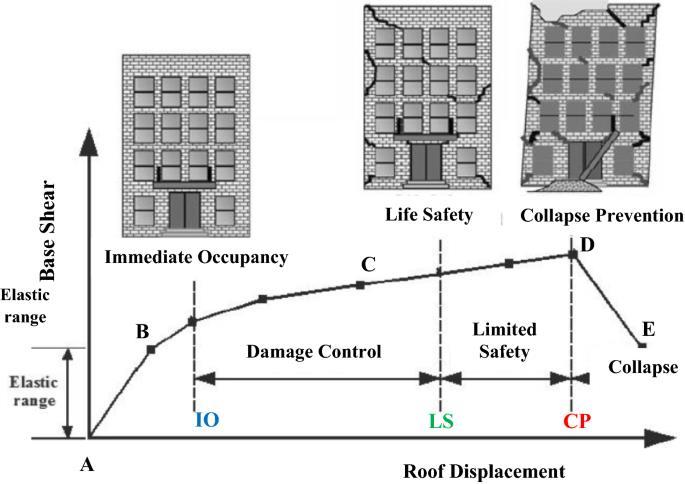
The performance objectives in PBD are organized into four distinct levels, each reflecting a different degree of damage tolerance and building usability. These levels not onlyprovidecleartargetsforengineerstodesigntobutalso offeraflexibleframeworkthatallowsfortailoredsolutions dependingonthebuilding'srole,location,andimportance.
OperationalLevel(O): Thislevelrepresentsthehighest priority for functionality, where the building should experience little to no damage after a minor earthquake. Criticalinfrastructure,suchashospitals,emergencyresponse centres, and data centres, are often designed to meet this standard.Thegoalistoensurethatthesebuildingsremain fullyoperationalimmediatelyafteranearthquake,withno disruption to their essential services. Such buildings are expectedtowithstandminortremorswithoutanyimpacton theirfunctionality.
Immediate Occupancy (IO): Forbuildingsdesignedat the Immediate Occupancy level, the structure must allow immediate use following a moderate earthquake. The buildingshouldsustain minimal damage, with noneed for
International Research Journal of Engineering and Technology (IRJET) e-ISSN: 2395-0056
Volume: 11 Issue: 11 | Nov 2024 www.irjet.net p-ISSN: 2395-0072
immediaterepairstotheprimarystructuralelements.This level of performance is critical for public safety buildings, offices,orresidentialcomplexeswherequickrecoveryand minimal disruption are important. While some cosmetic damagemayoccur,thebuilding’scorefunctionalityandthe safetyofitsoccupantsshouldbeunaffected,ensuringthatit cancontinueservingitsintendedpurpose.
Life Safety (LS): The Life Safety performance level focusesonprotectinghumanlifeduringasevereearthquake. In this case, the building may experience significant structural damage, but the design ensures that there is no collapse.Occupantsshouldbeabletoevacuatethebuilding safely, and the risk of injury or death is minimized. This performancelevelistypicallyappliedtobuildingswherethe primary concern is occupant safety, such as schools, commercialbuildings,andresidentialbuildings.Thedesign ensures that the building is still usable for evacuation but mayrequireextensiverepairsbeforeitcanbereoccupied.
CollapsePrevention(CP):TheCollapsePreventionlevel is aimed at preventing the total collapse of the building during a major earthquake. Although the building might experiencesignificantdamage,itisengineeredtostayintact long enough to allow safe evacuation of occupants. The primary focus here is minimizing the risk of catastrophic failure and protecting human life by preventing structural collapse. This level of performance is typically applied to olderbuildingsorthosethatcannotbedesignedforhigher performancelevels due tocost orotherconstraints. While these buildings may not be immediately usable after an earthquake,theywillnotposeasignificantrisktothesafety ofthepeopleinsideduringtheevent.
1.2
Design
Plastichingesarevitalinpushoveranalysisbecausethey indicate where inelastic deformation occurs in structural
members,suchasbeamsandcolumns.Aslateralforcesare applied to the structure, these hinges form at specific locations,allowingenergytobedissipatedthroughplastic deformation. This mechanism is crucial for effectively managingseismicloads,asitenablesengineerstopinpoint vulnerableareasthatcouldjeopardizethebuilding'soverall performance during an earthquake. By understanding the behaviourofplastichinges,engineerscandesignstructures that better withstand seismic events, ensuring enhanced safetyandresilience.
Understanding the formation and behaviour of plastic hingesenablesengineerstomakeinformeddesigndecisions, ensuring that structures can meet critical performance objectives like life safety and collapse prevention. By strategicallydesigningaroundtheanticipatedlocationsof these hinges, engineers can enhance the resilience of buildings, ensuring they can withstand significant seismic eventswhileprotectingoccupantsandminimizingdamage.

Pradyut Anand et al [2022] conducted performancebased seismic design of G+10 RCC structure. A nonlinear pushover analysis was done after modifying column sizes andreinforcement,usingSTAADPROandETABSsoftware. Thestudyfocusedonanalysingroofdisplacementandbase shear. Increasing column size and reinforcement reduced displacement,butover-enlargingcolumnsbeyond150mm increasedroofdisplacement.
M.Dinesh et al. [2021] conducted a nonlinear static pushover analysis on a G+4 RCC frame using ETABS, comparing displacement and base shear. They generated pushover curves and evaluated seismic performance. The study analysed a G+4 RCC building's seismic performance usingETABS,focusingonroofdisplacementandbaseshear through pushover analysis to assess structural resilience againstearthquakes.
International Research Journal of Engineering and Technology (IRJET) e-ISSN: 2395-0056
Volume: 11 Issue: 11 | Nov 2024 www.irjet.net p-ISSN: 2395-0072
ShashiShankaretal.[2020] conductedaperformancebased seismic design of a G+20 structure using nonlinear pushover analysis. The study evaluated reinforcement variationsandtheireffectsonbuildingperformanceusing ETABSandSAP2000.AG+20building'sseismicperformance was analysed by adjusting reinforcement levels. The nonlinear pushover method highlighted structural improvementsandsuggestedenhanceddesignmethodsfor betterperformanceandeconomy.
I.N.Sinartaetal.[2020] analysedareinforcedconcrete hotel building in Bali using direct displacement and pushoveranalysismethods,assessingperformanceagainst earthquakeloadsperIndonesianregulationsandFEMA356. The study validates that both direct displacement and pushover analysis yield similar results in assessing structuralperformance,recommendingdirectdisplacement as a viable method for earthquake-resistant design. Additionally,theresearchhighlightstheefficiencyofdirect displacement analysis in simplifying complex seismic evaluationswhileensuringcompliancewithperformancebased design principles. The findings underscore the adaptability of these methods for varying structural configurationsandearthquakeintensities,offeringvaluable insightsforresilientbuildingpracticesinseismicregions.
Prashant G. Ingle et al. [2018] evaluated the seismic performance of a six-story RC building using pushover analysisperIS456:2000,focusingonplastichingeformation andcomparingresultsforlifesafetyandcollapseprevention. The study highlights performance-based seismic design (PBSD) as superior to force-based methods, emphasizing non-linear pushover analysis for improved structural assessmentduringearthquakes,ensuringminimaldamage andeconomicloss.
Orlando Arroyoa et al. [2017] analyseda 10-storyRC moment frame building using the PBEE framework to evaluate a seismic design approach minimizing the fundamentalperiod.Nonlineardynamicanalysesassessed collapse risk, annual losses, and casualty rates while investigatingcolumn-to-beamstrengthratiosandstructural changes due to optimization. The study found that optimizingthefundamentalperiodresultedinuniformdrift distribution, reduced collapse risk, and enhanced seismic resilience.Structuralmodificationsincludedlargercolumns at lower stories and smaller sections at higher levels, improving strength ratios and damage distribution. The optimized design demonstrated superior seismic performancecomparedtotraditionalbuildings.
Atul N. Kolekar et al. [2017] performed dynamic analysis of a G+12 reinforced concrete building using SAP2000, employing response spectrum and time history methodsbasedontheKoynaandBhujearthquakedata.Key seismicparameterssuchasbaseshear,storeydisplacement, and drift were evaluated, and a pushover analysis was performedtoassessthebuilding'sseismicsafety.Thestudy
showedthattimehistoryanalysisprovidedmoreaccurate predictions of structural response than the response spectrum method. Base shear, displacements, and drifts were within permissible IS 1893-2002 limits. Pushover results indicated ductile behaviour with hinges in beams, demonstrating seismic safety and strong resistance to collapse.
Chetan Ingale et al. [2017] conducted a performancebasedseismicdesignofaG+5RCCbuildingusingnonlinear static pushover analysis. They evaluated seismic performanceacrossvariouszones,ensuringcompliancewith safety standards. The study emphasizes a performancebasedapproachfordesigningbuildings,focusingonrealistic seismic performance. The analysis revealed that building displacement and base shear vary with seismic zones, affectingoverallstructuralsafety.
Pramodini Naik et al. [2016] evaluated the seismic performance of a nine-storey residential building in Goa using performance-based design principles and nonlinear pushover analysis with ETABS, assessing safety under earthquake loading. The study results show the building performssafelyinseismiczoneIII,withuser-definedhinges improving ductility and reducing base forces, suggesting opportunitiesfordesignoptimization.
Balesh. B. Koni et al. [2016] analysed7-storyflatslab structures under seismic loads using ETABS, considering configurationslikedropsandedgebeams.Parameterssuch ashingelocations,ductility,safetyratio,andglobalstiffness wereevaluatedthroughpushoveranalysisinseismiczoneIII conditions. Thestudyrevealedthatedgebeamsimproved stiffness, while drops increased ductility in infill walls. Critical hinges formed primarily in interior columns. The performance point was within life safety to collapse prevention, with edge beam models showing the least displacement.
Shef Amir Arasy et al. [2016] analysed a 14-story reinforced concrete building with a dual system of shear walls and columns to resist lateral forces. They compared prescriptive code-based design (CBD) with performancebaseddesign(PBD)underMaximumConsideredEarthquake (MCE) conditions in Jakarta. The study aimed to evaluate PBD's effectiveness in optimizing structural and architectural features. The research concluded that PBD achieved life safety performance under MCE, reducing columnsizeby30%with1%reinforcement.Comparedto CBD, PBD offered a more realistic design approach, enhancing architectural space efficiency by minimizing structuraldimensionswhilemaintainingseismicsafety.
MdZibranPawaaretal [2015] analyseddifferentshear wall arrangements in dual systems (flat slabs and shear walls)forseismiczoneV,usingETABSsoftware,evaluating parameterslikedisplacements,baseshears,andpushover curves.ThestudyshowedthatE-shapedmodelswithshear
International Research Journal of Engineering and Technology (IRJET) e-ISSN: 2395-0056
Volume: 11 Issue: 11 | Nov 2024 www.irjet.net p-ISSN: 2395-0072
wallsandflatslabsperformedbetterinminimizingstorey driftsandachievingmoreefficientbaseshearhandlingthan diaphragmdiscontinuitymodels.
Dr. Mohd. Hamraj et al. [2014] conducted a performance-basedseismicanalysisofthreeR.C.C.buildings (G+4, G+8, and G+20) with varying heights, comparing structuralresponsesconsideringinfillwallsusingpushover analysis in ETABS. The study demonstrates that incorporating infill walls significantly reduces top storey displacementinG+4,G+8,andG+20buildings,emphasizing the need to include infill in seismic analysis for better performance.
P. B. Oni et al. [2013] investigated the seismic performance of G+2 and G+5 buildings with plus-shaped shearwallsusinglinearandnonlinearanalyses,comparing pushover analysis with response spectrum and static methods.Thestudyemphasizesusingpushoveranalysisfor accurate seismic response assessment of taller and unsymmetricalbuildings,whiletheequivalentstaticmethod iseffectiveforlower,symmetricstructures.
Mrugesh D. Shah et al. [2011] analysed two RCC buildings(G+4andG+10)usingperformance-basedseismic engineering,consideringthreeinfillconditions:bareframe, infillasmembrane,andinfillasequivalentstrut.Modelswith varyingbays(2×2,3×3,4×4)werestudiedtoevaluatelateral loadcapacityanddisplacementcharacteristicsunderseismic loads.Thestudyrevealedthatbareframeswithoutinfillhad the lowest lateral load capacity, while equivalent strut models performed best. Increasing bays enhanced load capacitywithoutsignificantdisplacementincrease,whereas taller buildings showed increased displacement but no improvementinlateralloadcapacity.
The literature review conducted as part of the study reveals that there are numerous studies focused on performance-baseddesign(PBD)andpushoveranalysisin shear wall structures. A brief review of the literature indicatesthatPBDsignificantlyenhancesastructure'sability towithstandseismicevents.Itisalsofoundthatstructures lacking adequate lateral support are more vulnerable to seismic loads and require more attention than those with regularconfigurations.Thekeyconclusionsderivedfromthe previousstudiesareasfollows:
1. Performance-based design (PBD) improves the ability of RCC residential buildings to withstand earthquakes.
2. The pushover method and direct displacement methodarekeytechniquesforaccuratelyanalyzing earthquakeloadsonstructures.
3. Dual structural systems improve seismic performance in multi-storey reinforced concrete buildings.
4. Non-linear static analysis is useful for assessing howstructuresrespondtoearthquakeforces.
5. Local seismic features greatly influence design approaches, as demonstrated by comparisons betweentheKoynaandBhujearthquakes.
6. Performance-based design improves flat slab structuresandensuressafetyduringearthquakes.
7. Performance-based design helps evaluate slender buildingstoenhancetheirseismicperformanceand stability.
8. Pushover analysis reveals weaknesses in shearwalledRCCbuildingsandirregularframes,helping guidedesignenhancements
Afteranextensivereviewofnumerousresearchpapers, several significant gaps have been identified, highlighting areaswherefurtherinvestigationiscrucialtoadvancethe understandingandapplicationofperformance-baseddesign inseismicengineering:
1. Focus on High-Rise Structures: Existing studies largely emphasize low to mid-rise buildings, neglecting the unique challenges of applying Performance-Based Design (PBD) to high-rise structures,suchaslateralloads,dynamicbehaviour, andstructuralflexibilityduringseismicevents.
2. Member Sizes and Reinforcement Configurations: Limited research explores the impactofvaryingmembersizesandreinforcement percentages on seismic performance. Understanding these factors is critical for optimizingPBDindiversebuildingscenarios.
3. Shear Wall Performance in Real Plans: While shear walls are key to lateral stability, their behaviour within actual building plans under seismicconditionsremainsunderexplored,leaving gapsinimprovingPBDmethodologies.
4. Height-BasedPerformanceComparisons: There isinsufficientcomparativeanalysisofbuildingsof varyingheights.Studiesrarelyexaminehowseismic performancemetrics,suchaslateraldisplacement anddynamicresponse,evolvewithheight.
5. Seismic Zone Variations: Researchinadequately addressesperformancedifferencesacrossvarious seismic zones, which is critically important for
International Research Journal of Engineering and Technology (IRJET) e-ISSN: 2395-0056
Volume: 11 Issue: 11 | Nov 2024 www.irjet.net p-ISSN: 2395-0072
developingeffectiveandregion-specificPBDdesign strategies.
6. Real-World Validation: Analytical models are rarely validated with empirical data from actual seismic events, weakening their reliability. Comprehensivecasestudiescouldbridgethisgap, enhancingmodelaccuracy.
[1] PradyutAnand,PrashantKumar(2022)SeismicDesign on a G+10 RCC Residential Structure based on Performance - “International journal of Architectural Engineering&UrbanPlanning,Volume32,Number03, 2022”
[2] M. Dinesh (2021) Earthquake Performance of G+four existing R.C.C Building by using Etabs software –“International Journal of Creative and Innovative ResearchinAllStudies,Volume04Issue01,June2021”
[3] Shashi Shankar, Mohd. Tauseef Husain (2020) PerformanceBasedDesignandOptimizationofMultistoreyedStructure:ASimulativePerformanceAnalysis–“Journal of Xi'an University of Architecture & Technology,VolumeXII,IssueV,2020”
[4] I. N. Sinarta, I. M. B. Pinandika (2020) Comparison of PushoverMethodAndDirectDisplacementMethodIn Earthquake Load Analysis With Performance-Based Design Concepts – “Ukarst, Volume 04, Number 02, 2020”
[5] Mr. Prashant G. Ingle, Prof. Vijaykumar P. Bhusare (2018)PerformanceBasedSeismicDesignofReinforced Concrete Building by Non-linear Static Analysis –“JournalofAdvancesandScholarlyResearchesinAllied Education, Volume XV, Issue No. 02, (Special Issue) April-2018”
[6] Orlando Arroyoa, Abbie Lielb and Sergio Gutiérrezc (2017) Performance based assessment of reinforced concrete frames designed using eigenfrequency optimization–“XInternationalConferenceonStructural Dynamics,EURODYN 2017, ProcediaEngineering199 (2017)3504-3509”
[7] AtulN.Kolekar,Y.P.Pawar,Dr.C.P.Pise,D.D.Mohite,S. S.Kadam,C.M.Deshmukh(2017)Comparativestudyof PerformanceofRCCMulti-StoreyBuildingforKoynaand BhujEarthquakes-“InternationalJournalofEngineering ResearchandApplications(IJERA),Volume7,Issue5, (Part2)May2017,pp.45-52”
[8] Mr. Chetan Ingale, Prof. M.R.Nalamwar (2017) Performance Based Seismic Design Of Rcc Building –
“International Research Journal of Engineering and Technology(IRJET),Volume04,Issue10,Oct2017”
[9] Pramodini Naik, Satish Annigeri (2016) Performance evaluationof9storeyRCbuildinglocatedinNorthGoa–“Science Direct, 11th International Symposium on PlasticityandImpactMechanics,Implast2016”
[10] Balesh.B.Koni,S.S.Dyavanal(2016)PerformanceBased EvaluationOfFlatSlabStructuresWithSquareColumns – “International Research Journal of Engineering and Technology(IRJET),Volume05,Issue07,Jul-2016”
[11] Shef Amir Arasy, Bambang Budiono, Wiratman Wangsadinata, Junisa Arini Patrisia (2016) The EffectivenessofPerformanceBasedDesigntoEstablish Architectural Featureof Structural Design for Slender Building – “Journal of Engineering Technology (JET), Volume04,Issue01,2016pp.81-87”
[12] Md Zibran Pawaar, Khalid Nayaz Khan, Syed Ahamed Raza(2015)PerformanceBasedSeismicAnalysisOfRc Building Considering The Effect Of Dual Systems –“International Research Journal of Engineering and Technology(IRJET),Volume04,Issue05,May2015”
[13] Dr.Mohd.Hamraj(2014)PerformanceBasedPushover Analysis Of R.C.C Frames For Plan Irregularity –“International Journal of Science, Engineering and Technology,Volume02,Issue07,Sep–Oct2014”
[14] P.B.Oni,Dr.S.B.Vanakudre(2013)PerformanceBased EvaluationofShear Walled RCCBuildingbyPushover Analysis – “International Journal of Multidisciplinary Educational Research, Volume 03, Issue 04, Jul – Aug 2013pp-2522-2525”
[15] MrugeshD.Shah,AtulN.Desai,SumantBPatel(2011) PerformanceBasedAnalysisofR.C.C.Frames–“National Conference on Recent Trends in Engineering & Technology,13-14May2011”