
International Research Journal of Engineering and Technology (IRJET) e-ISSN: 2395-0056
Volume: 11 Issue: 11 | Nov 2024 www.irjet.net p-ISSN: 2395-0072

International Research Journal of Engineering and Technology (IRJET) e-ISSN: 2395-0056
Volume: 11 Issue: 11 | Nov 2024 www.irjet.net p-ISSN: 2395-0072
Ajay Krishnan Prabhakaran
Data Engineer, Meta Inc ***
Abstract - Therapidproliferationofsocialmediaplatforms has enabled the spread of harmful content by bad actors, including bots, trolls, and purveyors of misinformation. This articleexamineshowLargeLanguageModels(LLMs),suchas GPT-4 and BERT, can be leveraged to detect and mitigate the impact of these bad actors. Through advanced natural languageprocessing(NLP)capabilities,LLMsoffersignificant improvements over traditional moderation tools. This paper explores the advantages, challenges, and ethical considerationsofusingLLMsforsocialmediamoderationand presents case studies where these models have been implemented effectively
Key Words: Large LanguageModels(LLMs),SocialMedia Moderation, Bad Actors, Fake News Detection, Toxicity Detection, AI Ethics, Automated Moderation, Natural Language Processing (NLP), Content Filtering, Misinformation
1.INTRODUCTION
Socialmediaplatformshavebecomeacornerstone ofmoderncommunication,allowingindividualstoconnect, share information, and engage in real-time interactions. However, as these platforms grow, so do the challenges associated with moderating harmful content. Bad actors, suchastrolls,bots,andpurveyorsofmisinformation,have emergedassignificantthreatstothesafetyandintegrityof online spaces. These individuals or automated accounts engage in activities like harassment, spreading fake news, and manipulating public opinion, which can have serious consequences,includingsocietaldivisionandtheerosionof trust in democratic processes. The sheer volume and complexityofcontentonsocialmediamakeitincreasingly difficultfortraditionalcontentmoderationsystems,which rely on manual review or simple keyword filters, to keep pace.
Thelimitationsoftraditionalmoderationhighlighttheneed for more advanced solutions, leading many social media platforms to explore the potential of Large Language Models (LLMs),suchasGPT-4andBERT,toautomateand enhancecontentmoderationefforts.Unlikepreviousmodels, LLMs possess advanced Natural Language Processing (NLP) capabilities, allowing them to understand context, detect subtle nuances, and identify harmful content with greaterprecision.Thesemodelscanprocessvastamountsof unstructuredtextdataatscale,makingthemanidealtoolfor
handling the continuous flow of user-generated content across platforms. By analyzing posts, comments, and interactions, LLMs can detect a wide range of harmful behaviors, from toxic language and harassment to misinformationandbotactivity
Overthepasttwodecades,socialmediaplatforms have evolved from simple networking tools to powerful global communication networks that have fundamentally alteredthewayindividualsinteract,shareinformation,and form communities. Platforms such as Facebook, Twitter, Instagram, and TikTok boast billions of active users, with many individuals using these platforms to share their personal lives, discuss current events, and connect with others across cultural and geographical boundaries. Social media has become essential in both personal and professional spaces, serving as a primary source of news, entertainment, and even political discourse. The ability to accessinformationandcommunicatewithothersinreal-time hasdemocratizedcontentcreationandconsumption,offering unprecedented opportunities for interaction and engagement.
However, the rapid growth of social media has also introduced significant challenges. The sheer volume of content shared on these platforms, combined with the diversity of users and the wide array of interactions, has createdanenvironmentwhereharmfulbehaviorscanthrive. Whilesocialmediacanbeatoolforempowerment,ithasalso become a breeding ground for bad actors who engage in activitiesthatunderminetheintegrityandsafetyofonline spaces.
Badactorsonsocialmediaencompassawiderangeof individualsandautomatedaccountsthatengageinharmful behaviors, each posing different threats to the safety and reliabilityofonlineinteractions.Theseactorscangenerally bedividedintoseveralcategories:
Trolls: These are individuals who deliberately post provocative,inflammatory, ordisruptivecontentwith
International Research Journal of Engineering and Technology (IRJET) e-ISSN: 2395-0056
Volume: 11 Issue: 11 | Nov 2024 www.irjet.net p-ISSN: 2395-0072
theintentofelicitingstrongemotionalreactionsfrom others. Trolls often target sensitive topics such as politics,religion,orsocialissues,aimingtosowdiscord andchaoswithinonlinecommunities.
Bots:Automatedaccountsorbotsaredesignedtomimic human behavior but are programmed to carry out repetitiveactionssuchasposting,liking,orretweeting content at a scale and speed far beyond human capabilities.Thesebotsareoftenusedtoamplifycertain narratives, manipulate public opinion, or artificially inflatethepopularityofcertainpostsorhashtags.Bots are commonly employed in political campaigns, disinformationefforts,andspamactivities.
Cyberbullies:Cyberbullyingreferstotheuseofsocial mediatoharass,intimidate,orharmothers,particularly targetingvulnerableindividualsorgroups.Cyberbullies may use derogatory language, threats, and insults to attack others, leading to emotional and psychological harmforthevictims.
Spammers: These are individuals or automated accounts that flood social media platforms with unsolicited, irrelevant, or repetitive content, often for commercial gain. Spammers typically aim to promote products,services,orwebsites,buttheiractionsdetract fromtheuserexperienceandcanleadtothespreadof potentiallyharmfulormisleadinginformation.
Misinformation and Disinformation:Misinformation referstotheunintentionalspreadoffalseorinaccurate information, while disinformation involves the deliberatecreationanddisseminationoffalsecontent withtheaimtodeceiveormanipulate.Misinformation anddisinformationcampaignsareoftencoordinatedby maliciousactorswhoseektoinfluencepublicopinion, swayelections,orcreatesocialunrest.Theviralnature ofsocial mediamakes itan ideal vehiclefor the rapid spreadoffalsenarratives,sometimesfasterthanfactual informationcancounteractit.
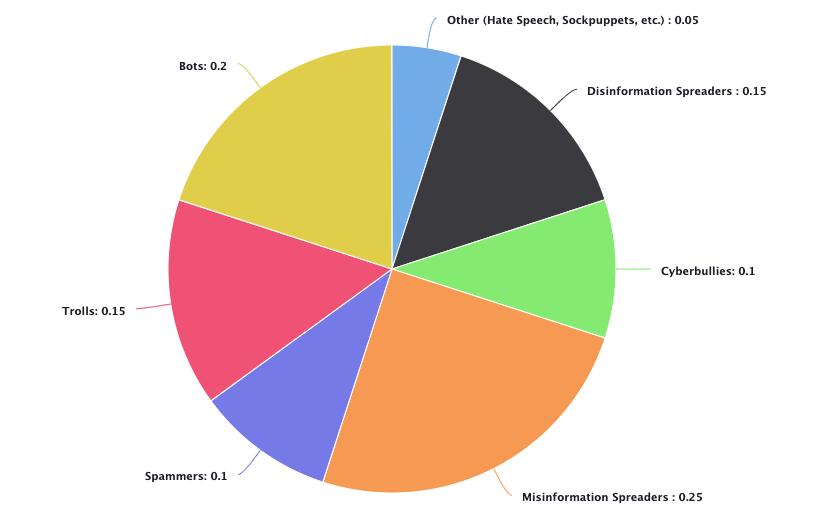
The presence of bad actors on social media has farreachingconsequencesforbothindividualusersandsociety as a whole. Toxic interactions, harassment, and misinformation campaigns can significantly damage the mentalwell-beingofusers,especiallywhentheyaretargeted by cyberbullies or exposed to harmful content. The anonymity provided by social media platforms often emboldensbadactors,allowingthemtoengageinbehavior theymightnotdoinface-to-faceinteractions.Thiscancreate hostileenvironmentswhereusersfeelunsafeordiscouraged fromparticipatingindiscussions.
Onalargerscale,badactorscanunderminepublictrustin the platforms themselves. The spread of misinformation, particularly during key events such as elections or health crises, can erode trust in institutions, distort democratic processes,andcreatewidespreadconfusion.Disinformation campaigns,oftenorchestratedbystate-sponsoredactorsor othermaliciousentities,canmanipulatepublicopinionand influencepoliticaloutcomes,asseeninrecentglobalevents such as elections in the United States and the United Kingdom,aswellasthespreadoffalsehealthinformation duringtheCOVID-19pandemic.
Thescaleandcomplexityoftheseproblemsarecompounded by the sheer volume of content shared on social media platforms daily. With billions of posts, comments, and interactionsoccurringeveryminute,thetaskofmoderating harmful content manually becomes overwhelming. Traditionalmoderationtechniques,suchaskeyword-based filtersandhumanmoderators,struggletoidentifyharmful content in real-time and often fail to detect more subtle forms of malicious activity, such as coded language or nuanceddisinformationtactics.Thishascreatedanurgent need for more advanced solutions to identify and manage theharmfulbehaviorofbadactors
Traditional methods of content moderation, such as manualreviewbyhumanmoderatorsortheuse ofsimple keyword-basedfilters,haveproveninadequateinaddressing the scale and sophistication of bad actors. While these methodscancatchbasicformsofharmfulcontent,suchas explicit hate speech or threats, they often fail to identify morenuancedorcontext-dependentbehaviors.Forexample, sarcasm,irony,orcodedlanguagethatmightbeusedbybad actorstocircumventdetectionisoftenmissedbytraditional systems.Furthermore,manualmoderationislimitedbythe number of human moderators available and the speed at which they can review content, leading to delays and inconsistenciesinthemoderationprocess.
International Research Journal of Engineering and Technology (IRJET) e-ISSN: 2395-0056
Volume: 11 Issue: 11 | Nov 2024 www.irjet.net p-ISSN: 2395-0072
The inefficiency of traditional methods has become particularly evident as the amount of content shared on socialmediaplatformsgrowsexponentially.Thevolumeof posts, tweets, and comments created daily is staggering, makingitvirtuallyimpossibleforhumanmoderatorstokeep up with the flood of content. Additionally, human moderatorsmaynotalwayshavethetrainingorresourcesto recognize emerging trends in harmful behavior or the cultural context necessary to accurately assess content, resulting in biased or inconsistent moderation decisions. Given these limitations, there is a clear need for more sophisticated and scalable approaches to content moderation.
3.1 What Are Large Language Models (LLMs)?
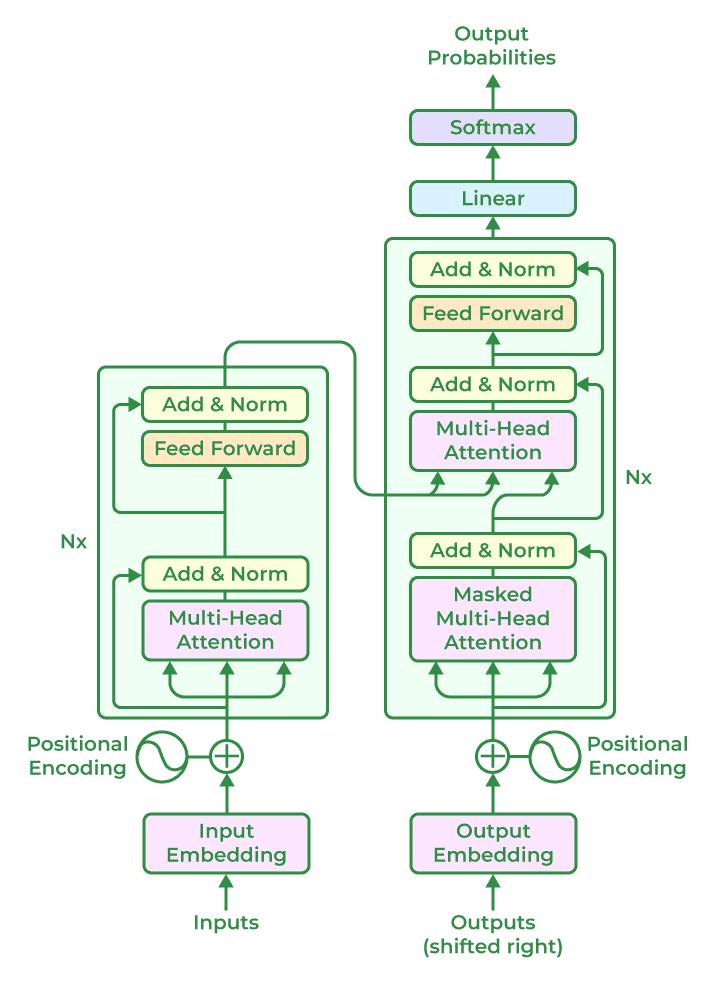
Large Language Models (LLMs) are a subset of artificial intelligence (AI) systems designed to process, understand, and generate human language. LLMs, suchas GPT-3, GPT-4, and BERT, are built using deep learning techniques,specifically transformer architectures,which allowthemtohandlevastamountsofunstructuredtextdata. These models are typically trained on gigantic datasets consistingofdiversetextualsources,suchasbooks,articles, websites,andsocialmediacontent,allowingthemtolearn patterns,relationships,andnuancesinlanguage.
WhatsetsLLMsapartfromearlierAImodelsistheirsheer scale and ability to capture complex linguistic structures. Withmillionsorevenbillionsofparameters(thevariables learned during training), LLMs can process and generate highly coherent, contextually relevant text. The size and complexity of these models enable them to outperform traditionalmachinelearningalgorithmsinnaturallanguage understandingandgenerationtasks.Asaresult,LLMshave becomeakeytoolinavarietyofapplications,from chatbots and virtual assistants to contentgeneration and semantic analysis.
3.2
OneofthemostsignificantstrengthsofLLMsliesin their Natural Language Processing (NLP) capabilities, whichenablethemtoperformavarietyoflanguage-related taskswithremarkableaccuracy.NLPreferstotheabilityof computers to understand, interpret, and generate human language in a way that is meaningful and contextually appropriate. LLMs are adept at a range of NLP tasks, including:
Text Classification: LLMs can categorize text into predefinedclassesbasedonitscontent.Thiscapability iscrucialformoderatingsocialmediaposts,asLLMscan classify content as toxic, abusive, misleading, or neutral.Bylearningthepatternsofharmfullanguage, LLMs can automatically detect offensive or inappropriatepostsatscale.
Sentiment Analysis:SentimentanalysisallowsLLMsto determinetheemotionaltoneofapieceoftext,whether it is positive, negative, or neutral. This is useful for identifying content that could potentially trigger negativeemotions,likeangerorfrustration,whichare commontacticsusedbytrollsandcyberbullies.
International Research Journal of Engineering and Technology (IRJET) e-ISSN: 2395-0056
Volume: 11 Issue: 11 | Nov 2024 www.irjet.net p-ISSN: 2395-0072
Named Entity Recognition (NER):LLMscanidentify andextractspecificentitiesfromtext,suchas names of people, organizations, locations,and dates.Thishelps inidentifyingkey figures or organizationsinvolvedin spreadingharmfulcontentormisinformation.
Contextual Understanding:Unlikeearliermodelsthat couldonlyrecognizeindividualwordsorphrases,LLMs canunderstandthe context inwhichwordsappear.This meanstheycangrasp sarcasm, irony,and ambiguity in language nuancesthatareoftenusedbybadactorsto bypasstraditionalmoderationsystems.
A key strength of LLMs is their ability to identify patterns inlanguageandbehavioracrosslargedatasets.By analyzingmillionsofinteractions,LLMscanrecognizenot justthelanguagebutalsothe behavioral patterns thatmay indicateharmfulactivities.Thesepatternscaninclude:
Repetition and Spammy Behavior: LLMs can detect repetitivelanguageorbehaviorstypicalof spammers and bots, such as identical posts being shared across multiple accounts or the same comment being posted repeatedly.Botsoftenusethesepatternstomanipulate conversationsorpromotedisinformationatscale.
Language Style Analysis:LLMscanidentify distinctive language patterns that may indicate the presence of botsorcoordinatedeffortsbybadactors.Forexample, certainautomatedaccountsortrollnetworksmayuse similar linguistic structures, emojis, or hashtags to amplifyamessage,whichLLMscanflagassuspicious.
User Behavior Patterns:Beyondlanguage,LLMscan alsoanalyze user behavior onaplatform,includingthe frequencyofposting,thetypesofinteractions,andthe content shared. This is useful in detecting botnets, whereanetworkofautomatedaccountsworkstogether topromoteordisruptcontent.
TheabilityofLLMstoprocessvastamountsofdata in real-time is another key advantage for social media platforms. Traditional content moderation systems often relyonhumanmoderatorsorrule-basedalgorithms,which are limited in their ability to scale and detect harmful contentinstantly.LLMs,however,canbetrainedtoanalyze and classify content in real-time, providing immediate feedbackanddetectionofharmfulbehavior.
Forinstance,LLMscanquicklyidentify toxic language or discriminatory remarks inpostsorcommentsandeither flag them for review or automatically remove them. This ability to moderate content in real-time helps platforms maintain a safer environment for users by reducing the
exposuretoharmfulmaterial.Moreover,asLLMscontinueto evolve and adapt to emerging linguistic patterns, they becomemorecapableofidentifyingsubtleformsofharmful behavior,suchas microaggressions orcodedlanguageused tobypassmoderationtools.
WhileLLMsofferpowerfulcapabilitiesfordetecting bad actors on social media, their implementation is not withoutchallenges,particularlyintermsof ethics and bias LLMs are trained on vast datasets, which often contain biasespresentinhumanlanguage.Thesebiasescanreflect historical and societal prejudices, leading to unintended discriminationormisclassificationofcontent.Forexample, LLMsmightinadvertentlyflagcontentthatisinnocuousor suppress speech from certain demographic groups if the trainingdataisskewedorlackssufficientdiversity.
Efforts are being made to mitigate these biases through fairness adjustmentsand algorithmic transparency,but concerns remain. Striking the balance between effective moderationand free speech isacomplexissuethatrequires ongoingresearchandethicaloversight.Platformsmustalso ensurethatLLM-basedmoderationsystemsarenotusedfor overreach or censorship of legitimate content, raising importantquestionsabouttheroleofAIincontrollingpublic discourse.
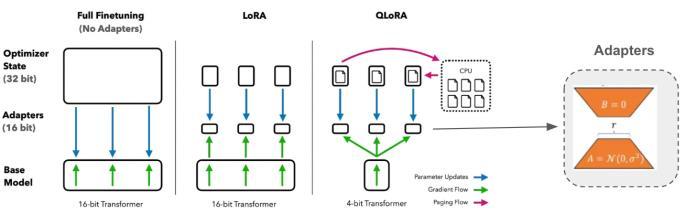
AuniqueaspectofLLMsistheirabilitytobe finetuned onspecifictasksordatasets.Fine-tuningallowsthese models to specialize in detecting certain types of harmful content or bad actor behaviors that are prevalent on a particularsocialmediaplatform.Bytrainingthemodelona specificdataset suchasacollectionofpoststhatinclude hate speech, misinformation,or abusivebehavior LLMs can become better at recognizing these patterns and distinguishingthemfromnormal,non-toxiccontent.
Furthermore, as social media platforms evolve and new formsofharmfulbehavioremerge,LLMscanbeupdatedand adapted to stay ahead of bad actors. This ability to continuouslyimproveandadaptmakesLLMsanidealtool fordynamicenvironmentswherethelanguageusedbybad actorsisconstantlychanging.
International Research Journal of Engineering and Technology (IRJET) e-ISSN: 2395-0056
Volume: 11 Issue: 11 | Nov 2024 www.irjet.net p-ISSN: 2395-0072
OneoftheprimaryapplicationsofLargeLanguage Models(LLMs)indetectingbadactorsonsocialmediaisthe identification of toxic and harmful language. LLMs, through their advanced Natural Language Processing (NLP) capabilities,canrecognizevariousformsofharmful communication, including hate speech, slurs, threats, and offensivecomments.Theycananalyzeposts,comments,and direct messages to flag language that violates platform guidelinesorcontributestoatoxicenvironment.
LLMscangobeyondsimplydetectingexplicitprofanity by also identifying subtle forms of toxicity such as microaggressions,passive-aggressivelanguage,andcoded expressionsthatmaybeoverlookedbytraditionalkeywordbased filters. For example, rather than relying solely on specific words, an LLM can understand context and tone, flaggingcontentthatusessarcasmorindirectlanguage to insult or harm others. This is especially important in addressingissueslike online harassment,wheretheintent behindthelanguagemightbemaskedinmoresubtleways. Moreover,theabilityofLLMstoscalemeansthatplatforms can automatically flag or remove harmful content in realtime, greatly reducing the exposure of users to toxic interactions.
Throughtheuseofthesemodels,socialmediaplatformscan fostermoreinclusiveandsafespacesfortheirusers,offering amoreeffectivemoderationapproachtocurb bullying, hate speech,and discrimination acrossdifferentcommunities.
Another significant application of LLMs is in the detection of misinformation and disinformation, two major threats to the integrity of online communication. Misinformation referstotheunintentionalspreadoffalse ormisleadinginformation,while disinformation involves thedeliberatecreationanddisseminationoffalsehoodswith theintenttodeceiveormanipulate.Theseharmfulbehaviors areparticularlypervasiveonsocialmediaplatforms,where thespeedandreachofinformationcanallowfalsenarratives tospreadrapidly,oftenbeforecorrectivemeasurescanbe implemented.
LLMscanbetrainedtoidentify false claims, inconsistent statements, and fake news by analyzing text for factual inconsistencies, checking for logical coherence, and crossreferencing claims with verified sources. Through contextual analysis,LLMscandeterminewhetherapostis partofacoordinateddisinformationcampaignorsimplya caseofspreadinginaccurateinformation.Forexample,ifa user shares a sensational health claim without credible sources,theLLMcan flagthepostfor review based on its
failure to provide verifiable data. Furthermore, LLMs can identify the language patterns typically associated with disinformation, such as sensationalist language, exaggeration,andtheuseofemotionallychargedrhetoricto provokereactions.
In addition to detecting individual instances of misinformation,LLMscanalsobeusedtotrackthe spread offalsenarrativesacrossplatformsand identifybot-driven campaigns that amplify disinformation. This capability is essentialforpreventingthemanipulationofpublicopinion, particularly during critical events like elections or public healthcrises.
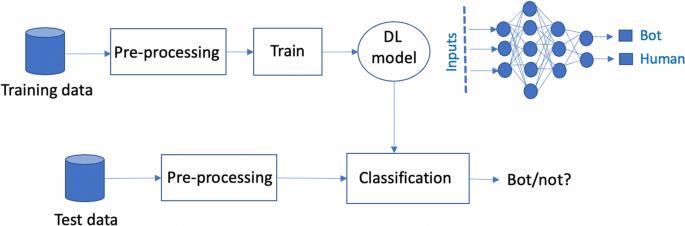
LLMs also play a critical role in identifying bots and other automated accounts thatoftenactasbadactorson socialmediaplatforms.Botsaretypicallyusedtoartificially inflate the visibility of certain messages, spread disinformation,ormanipulateonlineconversations.Because they lack the cognitive abilities of humans, bots typically follow predictable patterns of behavior, such as posting identicalmessagesacrossmultipleaccounts,respondingat highspeeds, or engagingin coordinated effortsto amplify specific content. LLMs can be trained to recognize these patterns and flag bot-driven behavior for further investigation.
Inadditiontodetectingrepetitiveorspam-likecontent, LLMs can identify anomalies in linguistic style or user interaction that are indicative of bots. For example, automated accounts may use generic, formulaic language that lacks the nuanced tone and diversity of humangenerated content. By analyzing linguistic patterns and comparing them against typical user behavior, LLMs can differentiate between human and bot-generated content with high accuracy. LLMs can also monitor network behavior acrossmultipleaccounts,identifyingcoordinated effortstospreadspecificmessagesordisruptconversations, whichiscommoninbot-drivencampaigns.
Moreover, by combining language analysis with other signalssuchasaccountbehaviorandengagementpatterns, LLMs can provide a more holistic approach to identifying and combating bots. This can help social media platforms maintainmoreauthentic,human-drivenconversationsand reduce the influence of automated manipulation on user interactions.
International Research Journal of Engineering and Technology (IRJET) e-ISSN: 2395-0056
Volume: 11 Issue: 11 | Nov 2024 www.irjet.net p-ISSN: 2395-0072
Oneoftheprimaryethicalconcernswhendeploying Large Language Models (LLMs) fordetectingbadactorson socialmediaisthepotentialfor bias inthemodels’outputs. LLMs are trained on large datasets containing diverse content sourced from the internet. These datasets often reflect the inherent biases present in human language, includingcultural,racial,gender,andsocio-politicalbiases. As a result, LLMs can inadvertently amplify these biases when they are used for moderation, leading to discriminatory practices and unfair treatment ofcertain groupsorindividuals.
Forexample, anLLMtrainedpredominantlyon data from Western sources might have difficulty accurately interpreting non-Western forms of communication or cultural references, leading to misclassification or overpolicingofcertaincommunities.Similarly,biasedlanguage patternsinthetrainingdatacancausethemodeltounfairly flag content from minority groups or certain social movements as harmful or inappropriate, even when the content is non-threatening or benign. This presents a significantethicalchallenge,asLLMscouldunintentionally perpetuateexistingsocialinequalitiesanddiscrimination.
Addressing bias in LLMs requires careful attention to diversity in training data, as well as the development of strategiestodetectandmitigatebiasinthemodels’outputs. Fairness adjustments, ongoing model auditing, and the inclusion of diverse perspectives in dataset creation are essentialstepstoensurethatthedeploymentofLLMsdoes notresultinharmtomarginalizedgroups.
AnothercriticalethicalconsiderationwhenusingLLMs forsocialmediamoderationis privacy.LLMsrequirelarge amounts of data to train effectively, and often, this data includes personal information from social media users. Although privacy policies typically govern how data is collected and used, the use of LLMs introduces additional risksrelatedto data privacy.LLMscouldpotentiallylearn and memorize sensitive user data, which might inadvertentlybeexposedorusedwithouttheuser’sconsent.
Forexample,ifauserpostsprivateinformationonasocial mediaplatform,suchasapersonalexperienceorasensitive opinion, the model could inadvertently profile that user basedonthecontentitanalyzes.Thiscouldraiseconcerns about user consent, surveillance, and the potential misuse of personal data.Additionally,thereistheriskthat LLMs could be used to invasively monitor individuals' behavior,leadingto over-surveillance ofsocialmediausers withoutpropersafeguards.
Toaddressprivacyconcerns,itisimportantforsocialmedia platforms to ensure that they comply with privacy regulations, such as GDPR (General Data Protection Regulation) and CCPA (California Consumer Privacy Act), and to implement data anonymization techniques to protectuseridentities.Additionally,platformusersshould haveaclearunderstandingofhowtheirdataisusedandthe option to opt-out or limit the data that is available for analysisbyAImodels.
The deployment of LLMs in content moderation raises important questions about transparency and accountability. Given that LLMs are often complex and operateas"blackbox"systems,itcanbedifficultforusers,as wellasplatformmoderators,tofullyunderstandwhycertain contentisflaggedorremoved.Thislackoftransparencycan underminetrustinmoderationsystems,asusersmayfeel that their content is being unfairly targeted or censored withoutclearjustification.
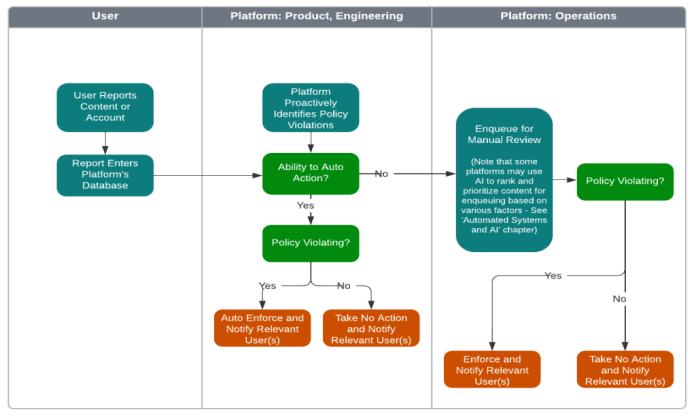
Moreover,whenLLMsareusedtodetectharmfulcontent,it isimportanttoensurethat thereisaclearmechanismfor appeals and human review.Usersshouldhavetheabilityto contestmoderationdecisionsthattheybelieveareunjust,as automated systems are not perfect and may misclassify content, especially in cases involving complex or nuanced language. Platforms need to strike a balance between automatedmoderationandhumanoversighttoensurethat usershavea fairopportunitytoexpressthemselveswhile maintainingsafetystandards.
Transparency also involves providing clear information about how LLMs are being used to moderate content and what criteria the models are using to make decisions. Platforms must be transparent about their moderation policies,theroleofAIintheseprocesses,andthestepsthey aretakingtomitigatebiasandensurefairness.Bydoingso, social media platforms can increase user trust in their moderationsystemsandpreventaccusationsofcensorship orunjusttreatment.
International Research Journal of Engineering and Technology (IRJET) e-ISSN: 2395-0056
Volume: 11 Issue: 11 | Nov 2024 www.irjet.net p-ISSN: 2395-0072
The future of Large Language Models (LLMs) in socialmediamoderationholdssignificantpromiseasthese models continue to evolve in sophistication and effectiveness. As LLMs become more advanced, they will increasingly be able to handle the dynamic and complex nature of online discourse, improving the detection of harmful contentsuchashatespeech,misinformation,and harassment. With more real-time capabilities, LLMs will enable social media platforms to respond instantly to harmful content, providing users with safer online environments. Moreover, the growing ability of LLMs to understand context and nuanced language willenhance theircapacitytodiscernintent,identifyingsubtleformsof toxicity and disinformation that may otherwise go unnoticed.Thiswillbecriticalinaddressingtheemerging challenges of deepfakes, coordinated disinformation campaigns,and complex harassment tactics
However,asLLMscontinuetogrowincapability,sotoowill theneedforcontinuousoversightandethicalconsiderations. Theongoingchallengewill betostrikea balancebetween effective moderation and freedom of expression.Inthe future,theroleof human moderators willremaincrucial, with LLMs acting as tools to support, rather than replace, human judgment. Additionally, as LLMs become more integrated into content moderation processes, the developmentof transparent and accountable systemswill beessentialtomaintainusertrust.ThepotentialforLLMsto evolve into more adaptive, self-learning systems could revolutionize social media moderation, but it will require carefulgovernancetoensurefairness,privacy,andethical integrityintheirapplication.
In conclusion, the use of Large Language Models (LLMs) for detecting bad actors on social media platforms representsasignificantadvancementincontentmoderation technology. These models offer powerful capabilities in identifying toxiclanguage, misinformation, and automated accounts,enablingplatformstorespondmoreeffectivelyand efficientlytoharmfulcontent.However,thedeploymentof LLMscomeswithcriticalethicalchallenges,includingissues of bias, privacy, and transparency. As LLMs continue to evolve,theirintegrationintosocialmediamoderationmust be accompanied by careful consideration of these ethical concernstoensurefair,unbiased,andresponsibleuse.The future ofLLMs insocial media holds great potential, but it requires a balance between technological innovation and maintaining the principles of fairness, privacy, and accountabilityinonlinespaces.
[1] [1]Binns,R.(2018).Ontheimportanceoftransparency in machine learning. Proceedings of the 2018 CHI ConferenceonHumanFactorsinComputingSystems,1–12.https://doi.org/10.1145/3173574.3174028
[2] [2] Brown, T. B., Mann, B., Ryder, N., Subbiah, M., & Kaplan, J. (2020). Language models are few-shot learners.ProceedingsofNeurIPS2020,33,1877–1901. https://doi.org/10.5555/3454287.3454477
[3] [3] Caliskan, A., Bryson, J. J., & Narayanan, A. (2017). Semanticsderivedautomaticallyfromlanguagecorpora contain human-like biases. Science, 356(6334), 183–186.https://doi.org/10.1126/science.aal4230
[4] [4] Devlin, J., Chang, M. W., Lee, K., & Toutanova, K. (2019). BERT: Pre-training of deep bidirectional transformersforlanguageunderstanding.Proceedings of NAACL-HLT 2019, 4171–4186. https://doi.org/10.18653/v1/N19-1423
[5] [5] Ghosh, S., & Chakraborty, D. (2021). AI for social media contentmoderation: Current trends and future prospects. Journal of AI and Ethics, 1(3), 35–48. https://doi.org/10.1007/s43681-021-00014-2
[6] [6]Hao,K.(2020).Whytechcompaniesarestrugglingto tackle misinformation. MIT Technology Review. https://www.technologyreview.com/2020/08/06/100 5662/why-tech-companies-are-struggling-to-tacklemisinformation/
[7] [7]Hovy,D.,&Spruit,S.L.(2016).Thesocialimpactof natural language processing. Proceedings of the 54th Annual Meeting of the Association for Computational Linguistics (ACL 2016), 591–598. https://doi.org/10.18653/v1/P16-2056
[8] [8]Johnson,B.(2019).Understandingandaddressing algorithmic bias in artificial intelligence systems. The Journal of Ethics in AI, 1(1), 1-16. https://doi.org/10.1162/ethics.2019.0201
[9] [9]Johnson,M.,&Zhang,H.(2020).Automatedcontent moderation using artificial intelligence: Potential, challenges, and policy implications. Social Media & Society, 6(4), 45–59. https://doi.org/10.1177/2056305120963543
[10] [10]Joulin,A.,Grave,E.,Mikolov,T.,Bojanowski,P.,& Mikolov, P. (2017). Bag of Tricks for Efficient Text Classification.Proceedingsofthe15thConferenceofthe EuropeanChapteroftheAssociationforComputational Linguistics, 427–431. https://doi.org/10.18653/v1/E17-2062
International Research Journal of Engineering and Technology (IRJET) e-ISSN: 2395-0056
Volume: 11 Issue: 11 | Nov 2024 www.irjet.net p-ISSN: 2395-0072
[11] [11] Kay, J., & King, R. (2019). The role of AI in combatingonlinehatespeech.AIandSociety,34(1),23–35.https://doi.org/10.1007/s00146-019-00893-2
[12] [12] LeCun, Y., Bengio, Y., & Hinton, G. (2015). Deep learning. Nature, 521(7553), 436–444. https://doi.org/10.1038/nature14539
[13] Lucas,J.,&Rashid,I.(2021).Socialmediaplatformsand the fight against fake news: The role of artificial intelligence in moderating content. Information Technology & Politics, 18(4), 1–12. https://doi.org/10.1080/19331681.2021.1921089
[14] Sweeney,L.(2013).Discriminationinonlineaddelivery. Communications of the ACM, 56(5), 44–54. https://doi.org/10.1145/2460276.2460278
[15] Zhang,Y.,&Wei,Z.(2020).Usingmachinelearningto predict harmful content in online platforms: Case studies and lessons learned. Proceedings of the 2020 IEEEInternational ConferenceonBigData (BigData), 2075–2084. https://doi.org/10.1109/BigData50022.2020.9377834