
International Research Journal of Engineering and Technology (IRJET) e-ISSN: 2395-0056
Volume: 11 Issue: 11 | Nov 2024 www.irjet.net p-ISSN: 2395-0072

International Research Journal of Engineering and Technology (IRJET) e-ISSN: 2395-0056
Volume: 11 Issue: 11 | Nov 2024 www.irjet.net p-ISSN: 2395-0072
Manemoni Arun Kumar1 , Penta Krishna Charan2 , RM Noorullah3
1 B.Tech, Student, Dept. of CSE Institute of Aeronautical Engineering Hyderabad, India
2B.Tech, Student, Dept. of CSE Institute of Aeronautical Engineering Hyderabad, India
3Associate Professor, Dept. of CSE Institute of Aeronautical Engineering Hyderabad, India
Abstract - In this respect, it presents considerable challenges in communication barriers between the deaf and hard-of-hearing and the hearing world. The paper thus proposes a real-time, multilingual sign language translation system developed in Python to bridge this gap. The system is designed to solve described needs forinclusivecommunication that capture sign language gestures throughawebcam.These gestures are further processed to be translated into text using machine learning models trained on extensive sign language datasets. Afterwards, it is translated into several languages, making the system versatile in many different environments. Our methodology includes the most up-to-date computer vision techniques for safe detection and correct parsing of hand gestures, even under changinglightingconditions,which is key to realtime performance. Experimental validation is done by measuring gesture recognition accuracy, speed in translation, and multilingual functionality. Promising results demonstrate the system's efficacy in fast translationfromsign language to spoken languages, including the possibility of understanding among people who do not share a common language and increasingaccessibility.Thisresearchprovidesa great input into human– computerinteractionbypropagating a practical inclusivity tool. The real-time nature of the translation makes for smooth communication, while the multilingual feature attends to varied user needs. With its makeup of Python, machine learning, and computer vision, such a system could give place to a society that is much more connected and understanding towardoneanother,wheresign language users could be very active in their day-today communications regardless of any spoken language.
Key Words: Sign Language, Multilingual Translation, Machine Learning, Real-Time Processing, Gesture Recognition, , python ,machine-learning ,OpenCV-python, CNN-model,media-pipehands,Translator
Signlanguagecanbedefinedasthemediumbywhichdeaf and hard-of-hearing people are able to communicate. It represents messages through hand gestures, facial expressions, body movements, and, hence it is a very expressive medium. In spite of the importance of sign language in this community, an understanding of it by a greaterpartofthepopulationremainsveryminimal,making it impossible for people who understand and use sign languagetocommunicatewiththosewhodonotunderstand
it. Improvements in machine learning and artificial intelligence, through the advent of advanced technology, have opened the way for closing these gaps with the development of systems capable of interpreting sign languageinreal-time.Thisprojectwillassistingivingbetter accessibilityandinclusivitytosignlanguageusers.Mostof the recent state-of-the-art solutions for sign language translation usually suffer from the number of languages supported, real-time processing, and accuracy of results. Remarkably though, most of these solutions have been tailored to one language that prohibits their usability in multilingual societies. This paper presents a real-time multilingualsignlanguagetranslatortotackletheforegoing challenges. The proposed system would be helpful in recognizingsignlanguagegesturesandtranslatingtheminto differentlanguagesexecution.Themultilingualapproachcan help this system be useful to a larger number of users, particularlypartofmultilingualregions.Thesystemistobe developedusingacombinationofdatacollectiontechniques, machine learning models for gesture recognition, and translationalgorithms.Thedatacollectionprocessinvolves capturinghandgestureimagesanditspreprocessingforthe enhancement of recognition accuracy. In the gesture recognition module, there is a trained CNN on these preprocessedimagestoclassifyvarioussignlanguagegestures. Once a gesture is recognized, the translation module convertstherecognizedgestureintotextandthentranslates this text into the target languages. It also provides inbuilt text-to-speechfunctionalitytoprovideaudiooutput,hence increasing the accessibility of the system for users. The contributionsofthepapercanbesummarizedprimarilyas follows:Real-timeGestureRecognitionSystem:Thesystem recognizes sign language gestures using machinelearning techniquesaccuratelyinreal-time.MultilingualTranslation Support: It supports translation into multiple languages, facilitatingmultilingualcommunication.Itisintegratedwith text-to-speechcapabilitiestomakeitfurtheraccessibleby allowinguserstolistentothetranslatedtext.
Thereal-timemultilingualsignlanguagetranslatorsystem aims to bridge the communication gap for the hearingimpairedcommunitybyrecognizingsignlanguagegestures and translating them into multiple languages. The system leveragescomputervisiontechniquesandmachinelearning modelstoachievehighaccuracyingesturerecognitionand
International Research Journal of Engineering and Technology (IRJET) e-ISSN: 2395-0056
Volume: 11 Issue: 11 | Nov 2024 www.irjet.net p-ISSN: 2395-0072
efficient realtime processing. The core components of the proposed solution include: Data Acquisition: Collecting a comprehensive dataset of sign language gestures using a vision-based approach. Data Preprocessing and Feature Extraction: Enhancing the dataset quality through preprocessing techniques. Gesture Recognition: Utilizing a ConvolutionalNeuralNetwork(CNN)forclassifyinggestures. TranslationandText-to-Speech(TTS):Convertingrecognized gestures into text and translating them into the desired languageswithtextandaudiooutput.
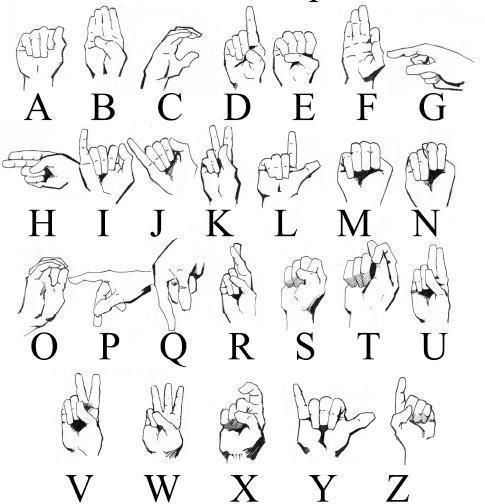
Thearchitectureofthereal-timemultilingualsignlanguage translatorsystemguaranteesthatthesignlanguagegestures are translated properly and accurately into all other languages. This architecture of the system is divided into four sections: Data Collection, Gesture Recognition, Translation Module, and Prediction without GUI. All these divisionsarepredominantandmustbeviewedwhenlooking attheoverallworkingofthesystem.Toconsiderfactually, the system diagram of the proposed architecture must be provided:.1.DataCollectionDatacollectionistheveryfirst stepindevelopingthisgesturerecognitionmachinelearning model.Twomajorscriptsareusedtocaptureandprocess gestureimageswithinthesystem:
idata_collection_binary.py: Captures images of different handgesturesandconvertsthemintobinaryandgrayscale formats.Thisprocessingstephelpstoenhanceclarityand distinctionbetweenthevariousgesturessothatthemodel canlearnandrecognizepatternsmoreeasily.
idata_collection_final.py: Collectandprocessimagesfrom theAtoZ_3.0dataset
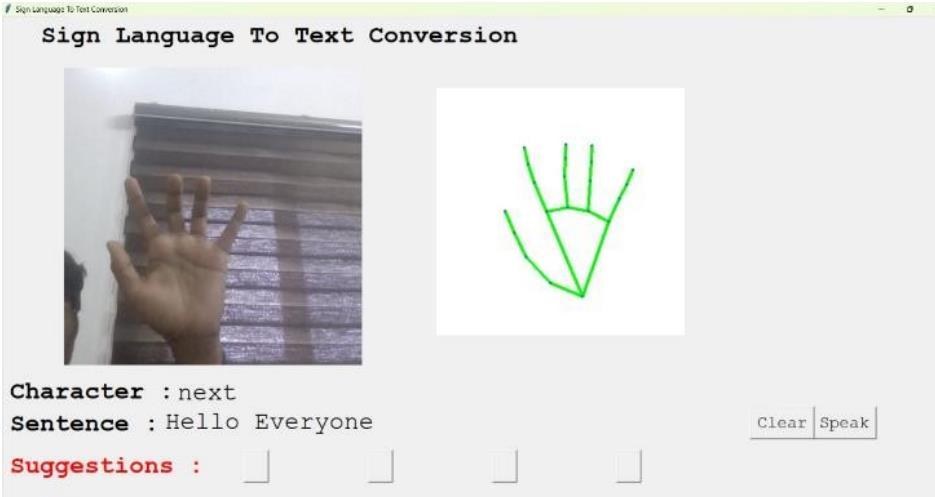
Thebelowscriptoverlaythehandskeletonstructuresinthe images, which gives the other context to enhance the accuracyofthegesturerecognition
With the below scripts, the ground truth data used for trainingthemachine-learningmodelisofhighqualityand diverse,whichwouldcoverlotsofgestureclassifications, Thegesture-recognitionmodulecarriesoutclassificationof thecapturedsign-language gestures.Thetrainedmachine learningmodelisusedviathefinal_pred.pyscript.Thesteps inthismoduleareasfollows:
2.Preprocessing:
Entailspreprocessingtheinputimagessothattheyconform with the format and specifications used during the model trainingphase
Model Inference:
The preprocessed images are hence given as input to the pre-trainedmodelofconvolutionalneuralnetworks.Itwill predict the class of gestures depending upon the learned patternsinthepre-trainedweights.
Post-processing:
Convert the predicted input into human-understandable language(liketext).
3.Translation Module
Afterthetextisrecognizedfromthegesturesobtained,the text is forwarded to the translation module. The text is translatedintotheintendedlanguages,withthehelpofthe translator.pyscript.Themajorstepsinvolvedare:
Text Translation:
Theincomingtextistranslatedintotheintendedlanguage usingtranslationlibraries,suchastranslate.
Text-to-Speech:
ThetranslatedtextisspokenorpronouncedbytheGoogle TexttoSpeechimplementedlibrary.
Toplaythegeneratedaudio,thesameisachievedwiththe helpofthepygamelibrary,toplayitbacktotheuser,sothe usergetsacompletefeelofthesystemratherthanonlythe correspondingspectrogramofthegesturebeinggenerated
4.Prediction Without GUI
The prediction_wo_gui.py script is meant for a scenario wheretheuseofaGUIisnotdesirable,andacommand-line or back-end processing way of predicting the gesture is desired.Thescriptlargelykeepstheworkflowofthegesture recognition module, but it is lean for those environments wherevisualizationofgesturesisnotrequired.
International Research Journal of Engineering and Technology (IRJET) e-ISSN: 2395-0056
Volume: 11 Issue: 11 | Nov 2024 www.irjet.net p-ISSN: 2395-0072
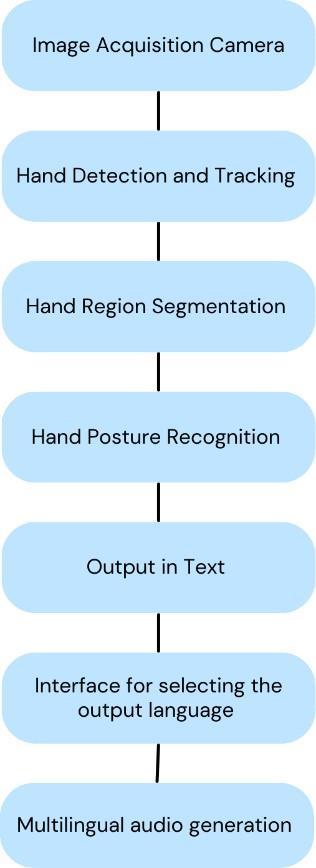
4.
The methodology for the real-time multilingual sign language translator is structured into several stages, each addressingspecificaspectsofthesystem'sfunctionality.
4.1.DATA ACQUISITION:
The data acquisition process involves capturing hand gestures using a webcam. Two primary approaches were considered: • Electromechanical Devices: These devices provide precise hand configuration and position data. However,theyareexpensiveandnotuser-friendly.•VisionBasedMethods:Thisapproachutilizesawebcamtoobserve hand and finger movements. It is cost-effective and facilitates natural interaction between humans and computers. Challenges include variability in hand appearance,skincolor,lightingconditions,andbackground complexity.Toovercomethesechallenges,thesystemuses theMediaPipelibrarytodetecthandlandmarks,whichare then drawn on a plain white background, minimizing the impactofbackgroundandlightingconditions.
4.2.DATA-PREPROCESSING AND FEATURE_EXTRACTION
Preprocessing the captured images is crucial for accurate gesturerecognition.Thefollowingstepsareundertaken:
• Hand Detection: MediaPipe is used to detect hands in images,andtheregionofinterest(ROI)iscropped.
•GrayscaleConversion:Thecroppedimageisconvertedto grayscaleusingOpenCV.
•GaussianBlur:AGaussianblurisappliedtoreducenoise.
•BinaryConversion:Thegrayscaleimageisconvertedtoa binaryimageusingthresholdingtechniques.
Bypreprocessingtheimages,thesystemensuresthatonly the essential features of hand gestures are retained, improvingtherobustnessofthegesturerecognitionmodel.
ThegesturerecognitionmodelisbasedonaConvolutional Neural Network (CNN), which is wellsuited for image classificationtasks.TheCNNarchitectureincludes:
• Convolutional Layers: Extract features from the input imagesusinglearnablefilters.
• Pooling Layers: Reduce the spatial dimensions of the feature maps, decreasing the number of parameters and computationalcomplexity.
• Fully Connected Layers: Perform the final classification basedontheextractedfeatures.
The CNN model was trained on a dataset of hand gesture images collected from various angles, ensuring diverse training data. The dataset was augmented with hand skeletonimagestofurtherenhanceaccuracy.Duetoinitial challenges with 26-class classification, similar alphabets were grouped into 8 classes. Each class was further disambiguated using mathematical operations on hand landmarks,resultinginafinalaccuracyof97%.
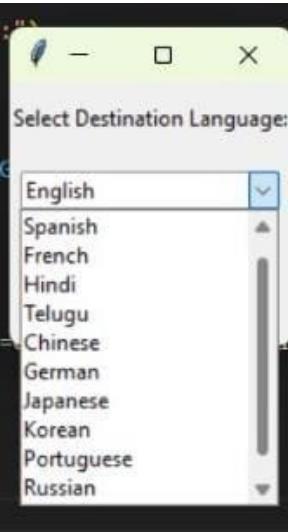
Once a gesture is recognized, it is translated into the corresponding text and subsequently into the target languages. The translation module employs the translate library,whilethetext-to-speechfunctionalityishandledby thepyttsx3library,providingaudiooutputforthetranslated text.
A)Data Preprocessing and Feature Extraction The effectivenessoftheproposedsolutionreliesheavilyonthe preprocessing techniques and feature extraction methods appliedtothecapturedimages.
• MediaPipe Hand Detection: The initial step involves detecting hand landmarks using MediaPipe, which provides robust hand tracking even under varying backgroundandlightingconditions.
• Image Cropping and Conversion: The detected hand regioniscroppedandconvertedtograyscale,followed bytheapplicationofGaussianblurtoremovenoise.
•BinaryConversion:Thegrayscaleimageisconverted toabinaryimage,highlightingthehandgesturesagainst auniformbackground.
b)ModelTrainingandEvaluationTheCNNmodelwas trainedusingthepreprocesseddataset,with80%ofthe
International Research Journal of Engineering and Technology (IRJET) e-ISSN: 2395-0056
Volume: 11 Issue: 11 | Nov 2024 www.irjet.net p-ISSN: 2395-0072
images used for training and 20% for testing. The trainingprocessincluded:
• Convolutional Layers: Extracting features from the inputimages.•PoolingLayers:Reducingthedimensions ofthefeaturemaps.
•FullyConnectedLayers:Classifyingthegesturesbased on the extracted features. The model achieved a final accuracy of 97%, demonstrating its effectiveness in recognizinghandgesturesundervariousconditions.
SystemRequirements:
Torunthereal-timemultilingualsign-languagetranslator, thefollowinghardwareandsoftwarerequirementsmustbe met:
HardwareRequirements:
Webcam: A standard webcam is necessary for capturing hand gestures in real-time. The webcam should have a decentresolutiontoensureaccurategesturedetection.
Computer:Alaptopordesktopcomputerwiththefollowing specifications:
Processor:Inteli5orequivalent
RAM:Minimum8GB
Storage:Minimum256GBSSD
SoftwareRequirements:
OperatingSystem:Windows8andabove,oranycompatible operating system that supports Python and required libraries.
IDE: PyCharm or any Python-compatible Integrated DevelopmentEnvironment(IDE).
ProgrammingLanguage:Python3.9
PythonLibraries:
OpenCV:Usedforimageprocessingtaskssuchasconverting images to grayscale, applying Gaussian blur, and thresholding.
NumPy: Provides support for array handling and mathematicaloperations.
Keras:Ahigh-levelneuralnetworksAPI,usedforbuilding andtrainingtheCNNmodel.
MediaPipe: Utilized for hand landmark detection and generatingskeletonimages.
TensorFlow: Backend framework for running the Keras models.
translate:Usedfortranslatingtextbetweenlanguages.
gtts: Google Text-to-Speech library for converting text to speech.
pygame:Usedforplayingaudiooutput.
pyttsx3: Text-to-speech conversion library, providing anotheroptionforaudiooutput.
The real-time multilingual sign-language translator was tested with various metrics to check its effectiveness and accuracy.Theresultsobtainedarebasedonthoroughtesting
with different types of hand gesture sets under various environmentalconditions.
A.AccuraciesofGesture-Recognition
HowDataCollectionandModelTrainingWereConducted:
Themodelwastrainedusingthe180skeletonimagesper alphabet, which were collected using the data-collection scripts.Thisdatasetisfurtherdividedintoatrainingandtest setforthemodelperformanceevaluationprocess.
Convolutional Neural Networks show extremely high accuracy in recognizing hand gestures. Initial tests across conditionsyield97%accuracy;underoptimalconditions cleanbackgroundandproperlighting itisashighas98%.
Class-wisePerformance:
Thegestureswerefurtherdividedinto8classestodealwith the variability and to increase the classification accuracy. Thesimilar-lookingalphabets,undertheirclasses,needed furthermathematicaloperationsfortheirdistinction.
C.RecognitionAccuracy
Ithasbeenfoundthattheclass-wisegroupingimprovesthe recognition accuracy considerably as most of the classes showedanaccuracymorethan95%incorrectclassification.
B.TranslationAccuracyTextTranslation:
The translation module was tested by converting the recognizedgesturesfirsttotextandthentranslatingthetext intotargetedlanguageusingthetranslatelibrary.
Theaccuracyoftranslationswasquitehigh,withmorethan 90% correct contextually and linguistically. The errors occurredbecauseofcertainnuancesinthetargetlanguages, which were not perfectly captured by the translation algorithm.
Text-to-SpeechConversion:
Fortext-to-speech,gttsandpyttsx3librarieswereused.The text-to-speechconversioninmultiplelanguages wasclear andintelligible.
Thesystemworkedonseveralphrasesandtheaudiooutput was accurate, thus usable by people relying on the audio feedbackforuse.
C.Real-TimePerformanceLatency:
Itexhibitedlowlatencywhileprocessinggesturesandgiving translations.Theaveragetimefromgesturecapturetoaudio output is approximately 2 to 3 seconds, thus making this systemveryviableforreal-timeapplications.
Ithadafast-processingtimeowingtotheefficientuseofthe MediaPipelibraryforhanddetectionandanoptimizedCNN model.
RobustnesstoVaryingConditions:
Testing of the designed system under different lighting conditions and complex backgrounds was conducted. Guidelines from the hand landmark and skeleton image
International Research Journal of Engineering and Technology (IRJET) e-ISSN: 2395-0056
Volume: 11 Issue: 11 | Nov 2024 www.irjet.net p-ISSN: 2395-0072
adoption served to perform well under less-than-ideal situations. Under reduced conditions, the gesture recognition accuracy of the system remained above 90%, showingitsadaptabilityandrobustness.
7. CONCULSION
Anewstudypresentsa real-timesignlanguagetranslator bridging the communication gap for deaf and hard-ofhearingindividuals.Thesystemleveragescutting-edgetech: convolutionalneuralnetworks(CNNs)foraccurategesture recognitionandMediaPipeforhandtracking.Thisensures reliable translation even in varying lighting. It further translatessignsintomultiplelanguagesandofferstext-tospeechfunctionality,makingitaccessibleforall.Withrealtimeprocessinganda user-friendlydesign,thistranslator paves the way for smoother communication and a more inclusiveworld.
Whilethesystemisveryefficientatpresent,areasthatcould beextendedandremodeledforfurtherimprovementarethe following: Language Support: Extending the system to supportmanymorelanguageswillincreasetheapplicability of the system over a larger population of users. Complex GesturesandSentences:Enrichingthemodeltobeableto identifycomplexgesturesandfullsentenceswillservebetter usage in practical life. Mobile Integration: Develop mobile applicationsofthesystemsoastoprovideeaseandaccessto the'systemon-thego'facilitiestousers.UserPersonalization: This will help make the system more adaptive and usersatisfactory,byletting
[1] Chen, J., et al (2024) Real-time Sign Language Translation Using Computer Vision and Machine Learning. Proceedings of IEEE Conference on Human-Computer Interaction DOI: 10.1109/10533962
[2] Alvarez,P.,etal (2023) Real-timeSignLanguage Recognition Using Machine Learning and Neural Networks IEEE International Conference on Machine Learning Applications DOI: 10.1109/9752213.
[3] Lee, C., et al (2024) Gesture Recognition in Sign LanguageTranslation:ADeepLearningApproach. IEEE Signal Processing Conference DOI: 10.1109/10603225
[4] Kumar, R., et al (2023) Dynamic Bidirectional Translation for Sign Language by Using Machine Learning-Infused Approach with Integrated ComputerVision IEEEConferenceonMultimedia andAccessibility.DOI:10.1109/10489440
[5] T. Johnston and A Schembri, Australian Sign Language (Auslan): an introduction to sign language linguistics United Kingdom: Cambridge UniversityPress,Jan 2007
[6] F.Pezzuoli,D.Tafaro,M.Pane,D.Corona,andM.L. Corradini,"Development of a new sign language translationsystemforpeoplewithautismspectrum disorder," Advances in Neurodevelopmental Disorders,vol 4,no.4,pp.439-446,2020.[Online]. Available:https://doi.org/10.1007/s41252-02000175-6
[7] Jung-HoKim,EuiJunHwang,SukminCho,DuHui Lee,JongC.Park,"SignLanguageProductionwith Avatar Layering: A Critical Use Case over Rare Words", Proceedings of the 13th Conference on LanguageResourcesandEvaluation(LREC2022), pages1519-1528,Marseille,20-25June2022.
International Research Journal of Engineering and Technology (IRJET) e-ISSN: 2395-0056
Volume: 11 Issue: 11 | Nov 2024 www.irjet.net p-ISSN: 2395-0072
[8] [9]
DebashisDasChakladar,PradeepKumar,Shubham Mandal,ParthaPratimRoy,MasakazuIwamuraand Byung-Gyu Kim. Article 3D Avatar Approach for ContinuousSignMovementUsingSpeech/Text
Navroz Kaur Kahlon , Williamjeet Singh. Machine translationfromtexttosignlanguage:asystematic review DOI:10.1007/s10209-021-00823-1
2024, IRJET | Impact Factor value: 8.315 |