
International Research Journal of Engineering and Technology (IRJET) e-ISSN:2395-0056
Volume:11Issue:11|Nov2024 www.irjet.net p-ISSN:2395-0072

International Research Journal of Engineering and Technology (IRJET) e-ISSN:2395-0056
Volume:11Issue:11|Nov2024 www.irjet.net p-ISSN:2395-0072
Ajay Krishnan Prabhakaran
Data Engineer, Meta Inc ***
Abstract - Generative AI, a rapidly evolving branch of artificialintelligence,hasemergedasatransformativeforcein the field of data engineering. By automating data pipeline creation, generating synthetic data, and improving data quality, generative AI is reshaping how organizations handle large-scale data. This paper explores the theoretical underpinnings of generative AI, its applications in data engineering,andreal-worldcasestudiesthatdemonstrateits potential. Furthermore, it addresses the limitations and challenges associated with generative AI, including biases, computational costs, and ethical concerns. Finally, the paper outlines future research directions to enhance the adoption andefficiencyofgenerativeAIinthedataengineeringdomain.
Key Words: Generative AI, data engineering, automation, synthetic data, ETL pipelines, anomaly detection, machine learning, scalability, data governance,artificialintelligence
1.INTRODUCTION
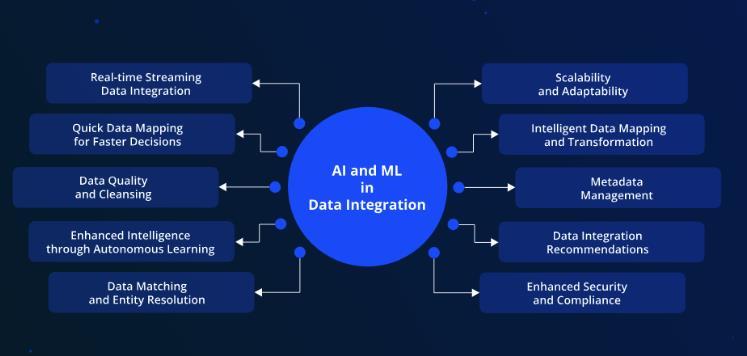
Data engineering forms the backbone of modern data-drivenenterprises.Itinvolvesdesigningandbuilding systemsthatcollect,store,andanalyzevastamountsofdata efficiently. With the exponential growth in data volumes, traditional data engineering methods face limitations in scalability, cost, and efficiency. Enter Generative AI, a subfield of AI focused on creating new data and outputs, whichoffersinnovativesolutionstothesechallenges.
Generative AI models, such as Generative Adversarial Networks (GANs), Variational Autoencoders (VAEs), and Transformer-basedarchitectures(e.g.,GPT-4),canaugment human capabilities by automating repetitive tasks, generatinghigh-qualitysyntheticdata,andimprovingdata pipelineoperations.Thispaperaimstoexploretheprofound impactofgenerativeAIondataengineeringbyaddressing threekeyareas:
HowgenerativeAIoptimizesdataengineeringprocesses
Real-worldapplicationsandusecases
Challengesandpotentialresearchdirections
2.1 Definition and Key Concepts
Generative AI refers to models and algorithms designedtocreatenew,realisticdatapointsoroutputsbased on patterns learned from existing data. Unlike traditional machine learning, which often focuses on prediction or classification,generativeAIcreatesnewinstances,makingit especially valuable in scenarios where data availability or qualityisaconcern.
2.2 Core Technologies
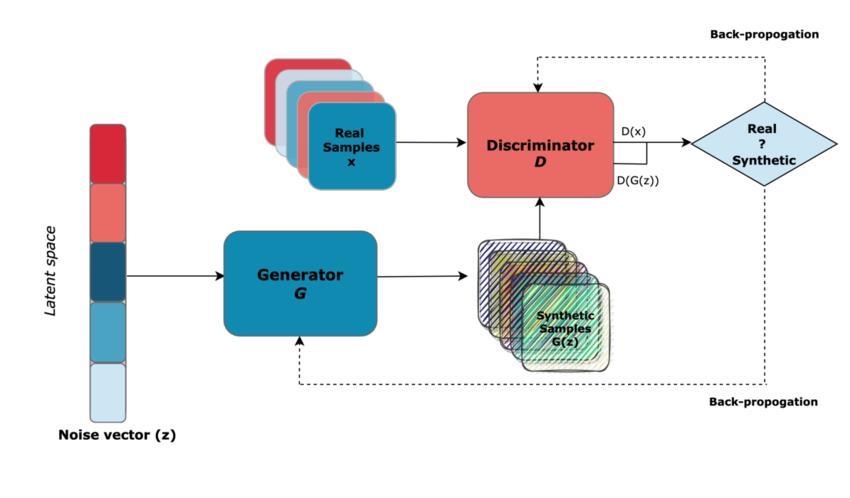
Generative Adversarial Networks (GANs): GANs consist of two neural networks the generator and discriminator that compete against each other. The generator creates data, while the discriminator evaluates its authenticity. Over time, the generator produces increasingly realistic outputs. Applications: Synthetic data generation, anomaly detection
Variational Autoencoders (VAEs): VAEs focus on learning latent representations of data and reconstructing it to generate new samples. Applications: Filling in missing data, augmenting datasetsformachinelearning
Transformer-Based Models (e.g., GPT-4): Transformers process sequential data, excelling in generating text, code, and structured data representations. Applications: Automating pipeline creation, query optimization
International Research Journal of Engineering and Technology (IRJET) e-ISSN:2395-0056
Volume:11Issue:11|Nov2024 www.irjet.net p-ISSN:2395-0072
3.1
Data pipelines are the core of data engineering, involving ETL (Extract, Transform, Load) operations. Traditionalmethodsoftenrequireextensivemanualcoding and debugging. Generative AI simplifies this process by generatingcodesnippetsorentireworkflowsbasedonhighlevelinputdescriptions.
Example:
OpenAI’s Codex can generate SQL queries, Python scripts, andorchestrationworkflowsfortoolslikeApacheAirflow. Thisreducespipelinecreationtimefromdaystohours
Synthetic data generation is one of the most significant and essential contributions of generative AI to data engineering. It helps address data scarcity, improves machine learning model performance, and ensures compliancewithprivacyregulations.
Applications:
Creatingrealistictrainingdatasetsformachinelearning
Addressingclassimbalancesindata(e.g.,forrareevent prediction)
Enhancingprivacycompliancebyremovingpersonally identifiableinformation(PII)
Metric ManualApproach AI-Assisted Approach
Data Processing 5-7hoursper pipelinetoprocess 1TBofdata 1-2hoursper pipelinetoprocess 1TBofdata
Debugging Effort High Low
ErrorRate Moderate Minimal
Pipeline Creation 10-15man-daysto developanewETL pipeline 3-5man-dayswithAI assistedtools
Scalability Manualscaling, oftenrequiring significant infrastructure upgrade
Scalesautomatically, adaptingupto10 TB/hourofdata withoutadditional resources
Timeto 2-3weeksto Realtimeornear
Insight deriveinsights fromnewdata realtimeinsights
Security Manualchecks, auditlogsand security configuration AI-poweredsecurity modelswithrealtimethreatdetection andresponse(99% accuracy)
Maintenance 10-20hoursper monthforsystem updatesand testing Predictive maintenance, reducingdowntime by30%-50%
Table-1:ManualvsAIassistedpipelinecreation
Generative AI can detect anomalies in datasets by learning the underlying data distribution and identifying deviations. Additionally, it can fill missing values, standardizeformats,andimproveoveralldataquality.
GenerativeAIcanrewriteinefficientSQLqueriesorgenerate optimizedonestailoredtospecificdatabasestructures.By analyzing past query patterns, AI models can suggest improvements that reduce execution time and resource usage
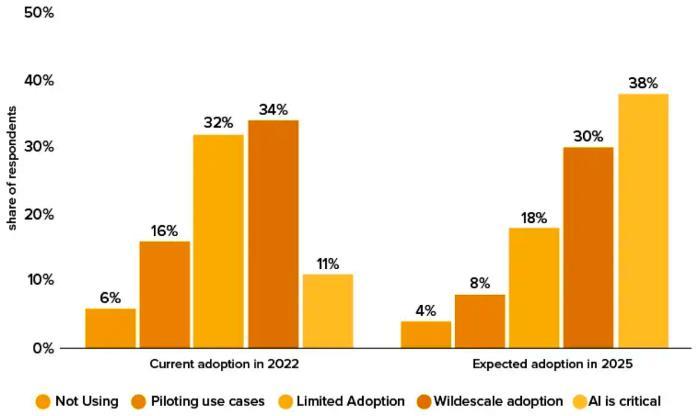
While generative AI presents transformative possibilities for data engineering, several significant challengesmustbeaddressedtofullyharnessitspotential. These challenges span technical, ethical, and operational domains
International Research Journal of Engineering and Technology (IRJET) e-ISSN:2395-0056
Volume:11Issue:11|Nov2024 www.irjet.net p-ISSN:2395-0072
GenerativeAImodelsareonlyasunbiasedasthedata they are trained on. If the training data contains inherent biases whetherdemographic,geographic,orcontextual thesebiasescanbereflectedandevenamplifiedintheAIgeneratedoutputs.Thislimitationhascriticalimplications, especially in sensitive fields like healthcare, finance, or criminal justice, where biased decisions can have severe consequences.
Example: In synthetic data generation for predictive modeling,iftheoriginaldatasetoverrepresentsaparticular demographicgroup,thegenerateddatamayperpetuatethis imbalance,leadingtoskewedmodelperformance
Mitigation Strategies: Implementing rigorous bias detectionmechanisms,usingbalancedtrainingdatasets,and adoptingadversarialdebiasingtechniques
Training generative models such as GANs or large transformer-based systems requires substantial computational resources, including GPUs or TPUs. This makes generative AI implementation cost-prohibitive for smaller organizations or those with limited IT budgets. Additionally,thehighenergyconsumptionofthesemodels raisesconcernsabouttheirenvironmentalimpact.
Statistics: Trainingasinglelarge-scalelanguagemodelcan emitasmuchCO₂asfivecarsduringtheirentirelifespans.
MitigationStrategies: Researchintomoreefficientmodel architectures (e.g., lightweight GANs) and adopting techniques like model distillation or fine-tuning to reduce resourceusage
Generative AI models often operate as black-box systems, making it difficult to understand how specific outputs are generated. This lack of transparency can underminetrust,particularlyinregulatedindustrieswhere explainabilityisaprerequisiteforcompliance.
Example: Inanomalydetection,agenerativemodelmight flagunusualpatternswithoutprovidingaclearexplanation foritsdecisions,complicatingthedebuggingandresolution process.
Mitigation Strategies: Developing post-hoc explanation tools or integrating interpretable AI approaches within generativemodels
The future of generative AI in data engineering is promising,withseveralcriticalareasripefordevelopment. AsAIcontinuestoevolve,itsimpactonthedataengineering landscapewillexpand,introducinginnovativesolutionsto existing challenges while addressing current limitations. Below are the key areas that will shape the future of generativeAIindataengineering
Generative AI models, such as GANs and VAEs, are known to be computationally intensive. Future directions will focus on improving the efficiency of these models, reducingthetimeandresourcesrequiredfortrainingand execution.Thiswillallowsmallerorganizationsandthose withlimitedcomputingresourcestoharnessthepowerof generativeAIintheirdatapipelines.
Example: Developmentoflighterarchitectures,quantization methods, or model distillation techniques to reduce the computationalloadwhilemaintainingperformance
EnsuringthequalityofdatageneratedbyAImodelsis crucial.Assyntheticdatagenerationandanomalydetection usingAIbecomemorewidespread,futuredevelopmentswill focusonintegratingreal-timequalitymonitoring,anomaly detection,anddatavalidationtoensuretheintegrityofthe generateddata.
Example: Implementing AI-driven systems that automatically validate the coherence and quality of generated data, ensuring it aligns with expected trends, patterns,andbusinesslogic
The“black-box”natureofgenerativeAImodelsisa majorlimitation,particularlyinregulatedindustrieswhere transparencyiscrucial.ThefutureofgenerativeAIwilllikely
International Research Journal of Engineering and Technology (IRJET) e-ISSN:2395-0056
Volume:11Issue:11|Nov2024 www.irjet.net p-ISSN:2395-0072
involveadvancementsininterpretabilitymethods,makingit easier for data engineers and stakeholders to understand howmodelsmakedecisionsandhowdataisgenerated.
Example: Research into explainable AI (XAI) methods for generative models will help practitioners trace how synthetic data is produced and assess its alignment with real-worldpatterns.
AsgenerativeAImodelsincreasinglyinteractwith sensitivedata,developingethicalframeworksfortheiruse willbeessential.Thisincludescreatingsafeguardsagainst privacyviolations,reducingbiasesindatageneration,and ensuringfairnessacrossdifferentgroups.
Example: Establishing AI governance frameworks and ethical guidelines for industries using generative AI, especiallyinsectorslikehealthcare,lawenforcement,and finance
6.1
Challenge: Amazon processes vast amounts of product and customerdatadaily.Ensuringthequalityandconsistencyof thisdataacrossitsglobale-commerceplatformisamajor challenge,especiallywiththepresenceofduplicatelistings, missingfields,anderroneousinformation.
Solution: AmazonemploysAImodels,includinggenerativeAI, toautomatedatacleansingandenrichmentprocesses.For instance, generative models are used to fill in missing metadata for product listings, such as descriptions and specifications,bylearningfromsimilarproducts.Anomaly
detectionalgorithmsidentifyandcorrectinconsistenciesin realtime.
Impact:
Reducedmanualinterventionby80%,allowingfaster onboardingofnewproducts.
Improved accuracy of product listings, resulting in a bettercustomerexperienceandincreasedsales.
Enabledreal-timecorrections,minimizingdisruptionsin globalinventorymanagement
Challenge:
PayPal handles millions of transactions daily, makingitaprimetargetforfraudulentactivities.Traditional rule-basedsystemswereunabletokeepupwiththeevolving tactics of cybercriminals, leading to false positives and missedfraudcases.
Solution:
PayPal incorporated AI-driven fraud detection systemsthatleveragegenerativeAItosimulatefraudulent behaviors. By analyzing synthetic data along with real transactiondata,thesystemgeneratesnewfraudscenarios totraindetectionmodels.Thesemodelsdynamicallyadapt toemergingfraudpatterns.
Impact:
Increasedfrauddetectionaccuracyfrom85%to97%.
Reduced false positives by 60%, improving customer satisfaction.
Enabledreal-timefrauddetection,processingthousands oftransactionspersecond
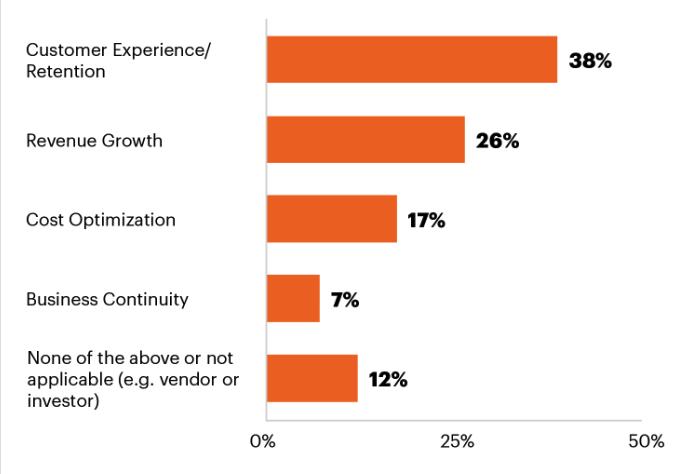
GenerativeAIisrevolutionizingdataengineeringby automating complex tasks, improving data quality, and enhancingscalability.Itallowsorganizationstostreamline theirdatapipelines,significantlyreducemanualeffort,and processlargedatasetsmoreefficiently.Asdemonstratedby the case studies, AI-powered solutions are enabling industries like healthcare, e-commerce, and finance to achieve real-time insights, optimize decision-making, and improveoperationalefficiency.Theseadvancementsnotonly enhancedataaccuracyandreduceoperationalcostsbutalso provideorganizationswiththeabilitytoadaptquicklytonew datasourcesandbusinessrequirements.
International Research Journal of Engineering and Technology (IRJET) e-ISSN:2395-0056
Volume:11Issue:11|Nov2024 www.irjet.net p-ISSN:2395-0072
However,theintegrationofgenerativeAIindataengineering is not without its challenges. Issues related to model transparency,ethicalconcerns,anddataprivacyneedtobe addressed as AI systems become more complex. Despite these challenges, the future of generative AI in data engineeringlookspromising,withongoingadvancementsin AI models and their applications across industries. As organizations continue to adopt AI technologies, data engineers will increasingly leverage these tools to create moreintelligent,scalable,andinnovativedatasolutionsthat drivebetterbusinessoutcomes.
[1] Goodfellow, I., Pouget-Abadie, J., Mirza, M., Xu, B., Warde-Farley, D., Ozair, S., ... & Bengio, Y. (2014). "GenerativeAdversarialNetworks."AdvancesinNeural Information Processing Systems. (SeminalpaperintroducingGANs.)
[2] Brown, T., Mann, B., Ryder, N., Subbiah, M., Kaplan, J., Dhariwal,P.,...&Amodei,D.(2020)."LanguageModels Are Few-Shot Learners." OpenAI. (GPT-3 foundational paper explaining transformerbasedmodels.)
[3] Kingma, D. P., & Welling, M. (2013). "Auto-Encoding Variational Bayes." arXiv preprint arXiv:1312.6114. (IntroducedVariationalAutoencoders.)
[4] Kelleher, J.D.,&Tierney,B. (2018).Data Science.MIT Press. (Overviewofcoredatascienceconcepts,includingdata engineeringandAI.)
[5] Zhang,A.,Lipton,Z.C.,Li,M.,&Smola,A.J.(2021).Dive into Deep Learning. (Comprehensive text on deep learning, including generativemodels.)
[6] Sahu,S.,Verma,R.,&Aggarwal,A.(2022)."TheRoleof AI in Automating ETL Pipelines." Journal of Data Engineering, 15(3), 112-128. (ExploreshowAIoptimizesdataengineeringpipelines.)
[7] Kumar, V., & Mukherjee, S. (2023). "Synthetic Data GenerationUsingGANs:ApplicationsandChallenges." IEEE Transactions on Data Engineering, 20(2), 45-56. (Focuses on synthetic data applications in various industries.)
[8] Arora,A., & Singh, R.(2023)."ImprovingData Quality withAI:ACaseStudyinAnomalyDetection."Journalof AI Research, 25(6), 200-218. (Case study on AI-driven anomaly detection in data pipelines.)
[10] Chen, T., Xu, Z., & Li, X. (2023). "Future Directions in Generative AI for Data Engineering." International ConferenceonDataScienceProceedings,2023,78-85. (Exploresemergingtrendsandfutureresearchareas.)
[9] Jain,A.,&Roy,S.(2022)."EthicalChallengesintheUse of Generative AI for Data Engineering." AI & Society, 37(4), 789-803. (Discussion of ethical concerns in using generative AI technologies.)