
International Research Journal of Engineering and Technology (IRJET) e-ISSN:2395-0056
Volume: 11 Issue: 11 | Nov2024 www.irjet.net p-ISSN:2395-0072

International Research Journal of Engineering and Technology (IRJET) e-ISSN:2395-0056
Volume: 11 Issue: 11 | Nov2024 www.irjet.net p-ISSN:2395-0072
ShrutiDas1 ,SukeshSahu2 , GaneshRamRatnakar3,Mohini Moitra Bhaduri4 ,Vikas Chandra5
1, 2 - BTECH Scholar, Chouksey Engineering College, Bilaspur 3, 4, 5 – Assistant Professor, Chouksey Engineering College, BilaspurDepartmentof Electrical &Electronics Engineering
Abstract - This paper proposes a DC-DC buck-boost converter designed to achieve a lower output voltage than the input voltage while maintaining high efficiency. Theconverter utilizes a topology similar to a conventional buck converter, employing a MOSFET switch, paired inductors, a switched capacitor, diodes, and a load resistor. This configuration allows for the generation of a negative output voltage witha low duty cycle,resulting in high voltagegain.
Key Words: DC-DC buck converter, DC-DC buck boost converter,efficiency,voltagegain,dutycycle
DC-DC converters are essential components in modern electronicsystems,enablingtheefficienttransferofDCpower between different voltage levels. Buck converters are commonlyusedforsteppingdownvoltages,whilebuck-boost convertersoffertheflexibilityofbothstep-upandstep-down operation. However, traditional buck- boost converters often sufferfromlowerefficiencycomparedtobuckconverters.This paper addresses this limitation by proposing a buck-boost convertertopology based on the buck converter structure to achieve higher efficiency while achieving negative output voltagewithhighvoltagegain.
The proposed converter’s circuit configuration is shown in Figure2(a).ItcomprisesaDCinputvoltage (Vin), a MOSFET switch (S), paired inductors (L1 & L2), diodes (D1 & D2), a capacitor(CL),andaloadresistor(RL).Theoperationcanbe dividedintotwo stages:



Fig.-2(a) CircuitconfigurationofproposedDC-DCbuck boost
the MOSFET switch(S)isturnedon,diodesD1andD2arereverse-biased and thus off. The input voltage (Vin) supplies current through inductor L1, storing energy. Simultaneously, capacitor CL discharges, providing current to the load resistor(RL).



Fig.-2(b) Circuitconfigurationofswitchonmodeof proposedbuckboost converter
StageII:SwitchOffMode(Figure2(c)):Whentheswitchis turned off, diode D1 becomes forward- biased and conducts, while diode D2 remains off. Inductor L1 now discharges, providing current through diode D1 and capacitorCL,whichcontinuestosupplytheload.


Fig.-2(c) Circuitconfigurationofswitchoffmodeof proposedDC-DCbuck boostconverter
The steady-state operation can be analyzed by applying voltage-second balance to the inductorL1. During the ontime(DT),thevoltageacross L1is(Vin- 2Vout).During the off-time((1-D)T),thevoltageacrossL1isVout.Equatingthe volt-secondsyields:
International Research Journal of Engineering and Technology (IRJET) e-ISSN:2395-0056
Volume: 11 Issue: 11 | Nov2024 www.irjet.net p-ISSN:2395-0072
According to Figure 2(a), when switch is on,the following equationscanbewritten,
Vin 2Vout L1 =0
∴L1 = Vin−2Vout
Now, from Figure 2(b), when switch is off,the following equationcanbewritten, T To�� To����
L1 Vout =0
Equatingtheoverallequation; in T−DT out DT
∫ VLdt=∫ VL dt+∫ VL dt=0 0 0 0
⟹{( Vin 2Vout)DT}+{Vout(1 D)T} =0
⟹ VinDT 2VoutDT+VoutT VoutDT=0
⟹ VinDT VoutDT+VoutT=0
⟹ VinDT Vout(T DT)=0
⟹ = DT
⟹Vout(T DT)= VinDTV V D
∴Gain= 1 D
Thisequationdemonstratesthattheoutputvoltageisnegative and its magnitude is determined by the dutycycle (D). A low dutycycleresultsinahighvoltagegain.
ANALYSIS
The proposed converter was simulated using PSIM
9.1.1 With the parameters listed in Table 1.The simulation results, presented in Figure 3(b), show theinput and output voltages, currents through the diodes, inductors, capacitor, and load resistor. The proposed converter achieved an efficiencyof98.08%withthespecifiedparameters.
The results indicate that the buck converter exhibits higher efficiency under varying switching frequencies with a fixed load.
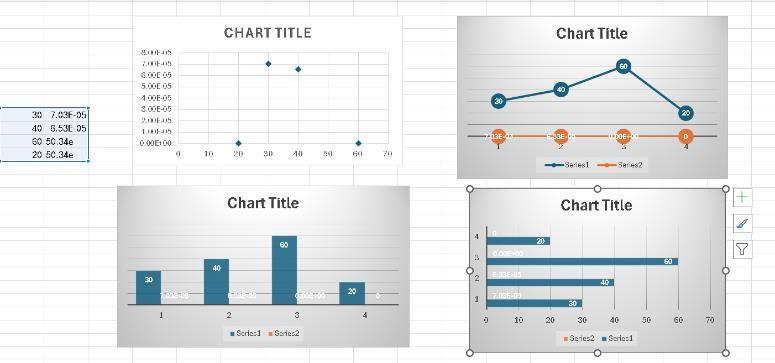
Fig.-3(a) SimulationofInductanceandOutputGraph
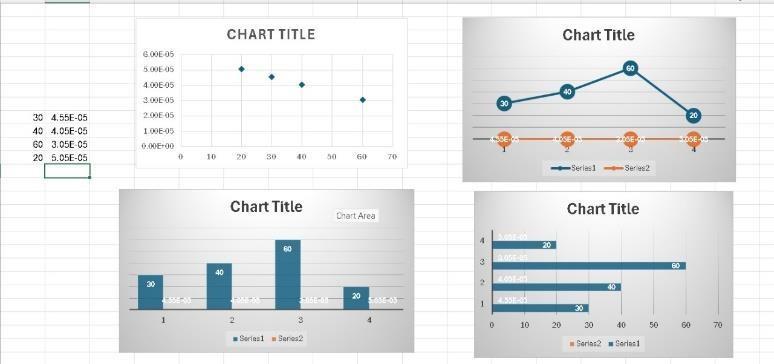
Fig.3(b) SimulationofCapacitanceandOutputGraph
Further analysis examined the relationship between duty cycle and voltage gain for both converters (Table 3 and Figure 5). The proposed converter exhibits a negative voltage gain, which increases significantly with increasing dutycycle,confirmingthederivedgainequation.
Battery Charger/USB
in Portable Devices: Everyonewantstheirsmartphone,tablet, orportablebatterypacktochargequicklywithoutheatingup theirportabledevices.AsynchronousBUCKconvertercanbe used for this application. Typically, a charging port for a mobiledeviceis a microUSBport.Itaccepts a regulated5V. The charging circuits are on the inside of the mobile device, whichisoftenaBUCKconverter.
Devices: PoweringAMOLEDdisplays wearable devices requires DC-DC switching converters that offer high power efficiencyandtightoutputvoltageaccuracy.
Table1 SpecificationoftheImplementedParameters
International Research Journal of Engineering and Technology (IRJET) e-ISSN:2395-0056
Volume: 11 Issue: 11 | Nov2024 www.irjet.net p-ISSN:2395-0072
DDR-SDRAM Memory: DDR-SDRAMmemory requires DCDC switching converters with tight accuracy requirements andabilitytosupportfastloadtransients.
Energy Harvesting Systems: High efficiency switching convertersareavitalblockinenergyharvestingsystems.Itis the most adequate voltage regulation method in such low power systems. Boost converters with clock-controlled input impedance are used forMPPT (Maximum Power Point Tracking)operation.
DVFS (Dynamic Voltage Frequency Scaling): PerformancePower in microprocessors and digital signal processing circuitsismanagedusingswitchingconverters.Increasingthe digital circuit supply leads to increasing the performance (speed) at the expense of dynamic power consumption and viceversa.
4. ADVANTAGES AND APPLICATIONS
The key advantages of the proposed DC-DC buck-boost converterare:
High Efficiency: The converter demonstrates high efficiency, especially under varying load conditions, addressing a common drawback of traditionalbuck-boostconverters.
Negative Output Voltage with High Gain: The topology allows for generating a negative output voltage from a positive input voltage, with the capability of achieving high voltage gain through alowdutycycle.
Potentialapplicationsforthisconverterinclude:
Audio Amplifiers: Negative voltage rails are often required for biasing operational amplifiers inaudiocircuits.
Instrumentation Amplifiers: These amplifiers benefit from negative voltage rails for improvedcommon-moderejection.
5. CONCLUSION
This paper presented a DC-DC buck-boost converter topology based on the buck converter structure, enabling highefficiencyandgenerationofanegativeoutputvoltage with high voltage gain. Simulation results validate the proposed design and demonstrate its superior performanceundervaryingloadconditionscomparedtoa conventionalbuckconverter.
[1] A. P. Dancy, et al., "High-efficiency multiple-output DC-DC conversion for low-voltage systems," IEEE Transactions on Very Large Scale Integration (VLSI) Systems,vol.8,pp.252-263, 2000.
[3] K.Yao,etal.,"Anovelwinding-coupledbuckconverter for high- frequency, high-step- down DC-DC
[2] K. Chomsuwan, et al., "Photovoltaic grid-connected inverter using two-switch buck- boost converter," in CONFERENCE RECORD IEEE PHOTOVOLTAIC SPECIALISTSCONFERENCE, 2002,a. pp.1527-1530. conversion,"IEEEtransactionsonPowerElectronics,vol. 20,pp.1017-1024,2005.
[4] S. Cuk and R. Middlebrook, "Advances in
[6] A. Chakraborty, et al., "Digital combination of buck and boost converters to control a positive buck-boost converter," in PowerElectronics Specialists Conference, 2006.PESC'06.37thIEEE, 2006,pp. switched-mod epower conversion part I," IEEE Transactions on IndustrialElectronics, a. pp. 10-19, 1983.
[5] J. Ejury, "Buck converter design," Infineon Technologies NorthAmerica(TFNA)CornDesionNote,vol.1,2013.