International Research Journal of Engineering and Technology (IRJET) e-ISSN:2395-0056
Volume: 11 Issue: 11 | Nov 2024 www.irjet.net p-ISSN:2395-0072

International Research Journal of Engineering and Technology (IRJET) e-ISSN:2395-0056
Volume: 11 Issue: 11 | Nov 2024 www.irjet.net p-ISSN:2395-0072
Made by – Abhishek Singh, Kshitij Kr. Singh, Suchita Debnath.
Student, Sunbeam Group of educational institutions, Varuna, Sikraul, Varanasi, Uttar Pradesh, India ***
Abstract- Natural disasters are sure to leave communities in dire need of medical assistance,andmany disasters render these effortsimpossible due todestroyed infrastructure, hazardous conditions, and other logistical delays. This may be disastrous because any delay in offering lifesaving or life-sustaining care multiplies the effect on livelihood and health. The Aeropath is an unmanned, drone-based system meant to bridge this very important supply gap by ensuring timely and reliable delivery of lifesaving medical supplies in emergencies. It deploystwotypesofdrones:aQuadcopterforautonomous disaster zone surveying to make damage assessments and build 3D maps, and a VTOL aircraft to supply medical supplies to prioritized locations as quickly as possible. Central to the operation of Aeropathis a Base Station that coordinates all tasks-processing SOS signals, managing inventory, and planning optimized delivery routes based on live data from the mapping done by the Quadcopter. Then, this layout enables the use of Aeropath independently of human involvement and bypasses conventional infrastructure challenges. Automation and real-time decision-making as implemented by Aeropath would enable speed and accuracy in disaster response, ensuring that no stranded person has to wait for medical aid. This paper discusses the current design and operational frameworks of Aeropath and how it can improve disaster resilience by providing an autonomous, efficientsolutionwhenevereachsecondcounts.
Key Words: Autonomous drones, disaster response, realtime mapping, robotic systems, medical supply, delivery, telemetry,Quadcopter,VTOL.
Various factors such as "damaged infrastructure, adverse weather conditions, and logistic barriers invariably come into play in the course of delivering emergency medical supplies during disasters." One can imagine how such delays often result in worse living conditions for the affected people-a fact that underlines that such urgent needs require quick and sure solutions. The Aeropath addresses this challenge through an autonomous, dronebased system designed to deliver lifesaving medical aid precisely and efficiently in the worst conditions. Aeropath integrates two different kinds of drones: a Quadcopter for autonomoussurveyingindisasterzonesandassessmentof damages; a VTOL aircraft for fast supply delivery. The drones are controlled through a centralized Base Station
that manages all aspects of mission planning, from the processingofSOSsignalstorouteoptimizationofdelivery. Operating on real-time mapping and central coordination, it reduces human interference to a minimum; hence, the promptness of response in case of emergencies and supplies are given to the precise locations they are most wanted in. Aeropath is a revolutionary disaster response through its integrated frameworks, affording scalability and efficiency in surmounting the logistical hurdles conventionally faced by traditional emergency response methods. The following proposed project aims at redefining emergency logistics, setting new marks of speed, precision, and reliability in disaster preparedness Thesystemmainlyconsistsoffollowingframeworks:
:1}Quadcopter and Lidar Farmwork
2}Vending Machine Framework Integrated with Base Base Station
3}VTOL Framework
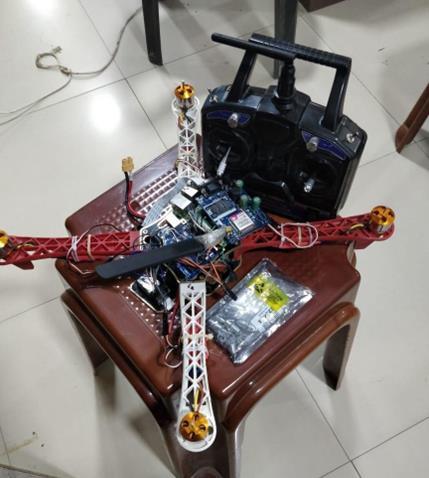
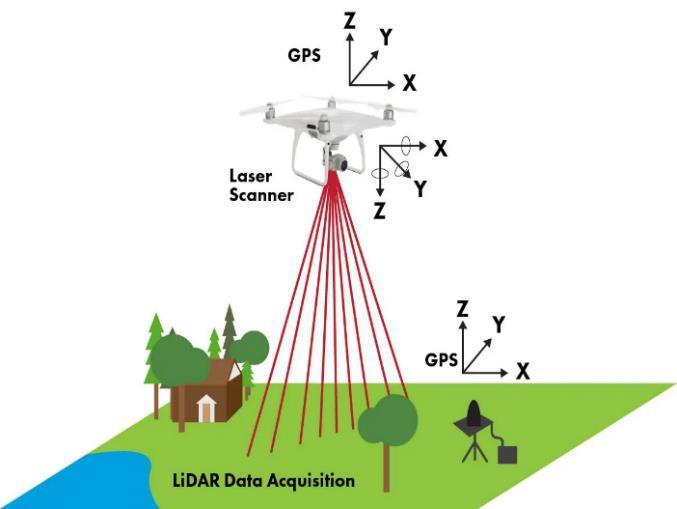
The Quadcopter autonomously surveys disaster zones, creating3DmapsusingLidartechnology,assistinginroute planningforefficientdeliverybytheVTOL
1.2 Vending Machine Framework Integrated with Base Station – V.M.I.B.S.
The Base Station coordinates inventory and drone dispatch. It uses a robotic arm to load supplies into the VTOL, ensuring climate-controlled storage for temperature-sensitiveitems
1.3 VTOL Framework – V.F.
The VTOL delivers medical supplies based on optimal routes planned from Quadcopter data. Equipped with advanced navigation, it ensures accurate delivery to targetedlocationsquickly.
International Research Journal of Engineering and Technology (IRJET) e-ISSN:2395-0056
Volume: 11 Issue: 11 | Nov 2024 www.irjet.net p-ISSN:2395-0072
Theworkingofalltheframeworkshasbeenexplained below.
ItautomaticallylaunchesatthereceiptofanSOSsignal to begin damage assessments and mapping with Lidar. These enable the system to generate detailed 3D maps that outline critical zones needing attention. In real time, the Quadcopterstreams the data back to the base station, where agencies such as the NDRF may monitor it. This live feedback creates dynamic changes in the path of the drone, if necessary, to ensure good area coverage. Data gathered evolves route planning for the VTOLaircraftbywayofsupportingitsnavigationefforts and prioritizing deliveries. Overall, the Quadcopter’s mappingcapabilitiesplayakeyroleinreducingdelivery times by providing accurate, up-to-date information, whichaidsinthequickdeploymentofsupplies
Vending Machine Framework Integrated with Base Station –“V.M.I.B.S
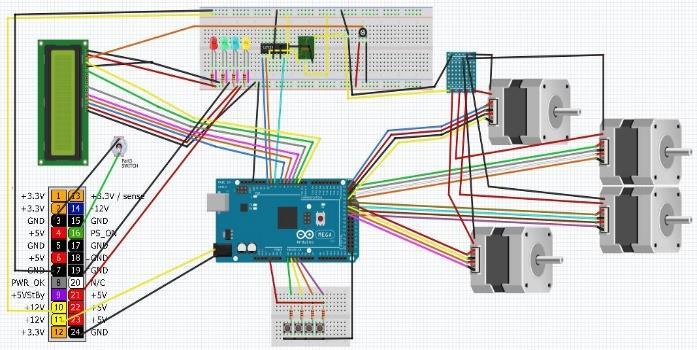
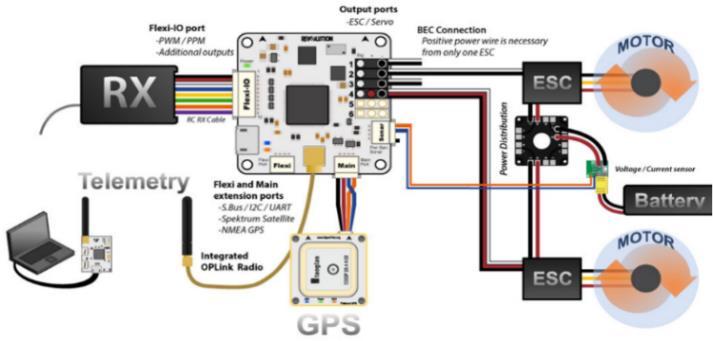
The Vending Machine Framework shall include an autonomous inventory management system and integrate seamlessly with the VTOL aircraft through a central Base Station control system. The required medications are identifiedattheBaseStationfromthesurveydatareceived from the Quadcopter and instruct the vending machine to dispense them. This would be done using a robotic arm that picks up selected items carefully and places them insidetheVTOLaircraftforpreciseandsecuredplacement withouthumaninterference.TheBaseStationservesasthe control hub, integrating all communication and RF telemetry functions: processing real-time data from the Quadcopterandothersources,planningoptimalroutesfor the VTOL, and also transmit the live data collected from
quadcopters, and VTOL with disaster response agencies like the NDRF. Moreover, the Base Station monitors the drones’ status, ensuring they are fully charged and ready for immediate deployment. It also maintains a climatecontrolled environment within the vending machine to store temperature-sensitive supplies, guaranteeing their efficacy during delivery. Integration of automated dispensing for centralized control with efficient communication makes the Vending Machine Framework a crucial componentwithin Aeropath-SRin ensuringspeedy andreliabledeliveryduringemergencies.
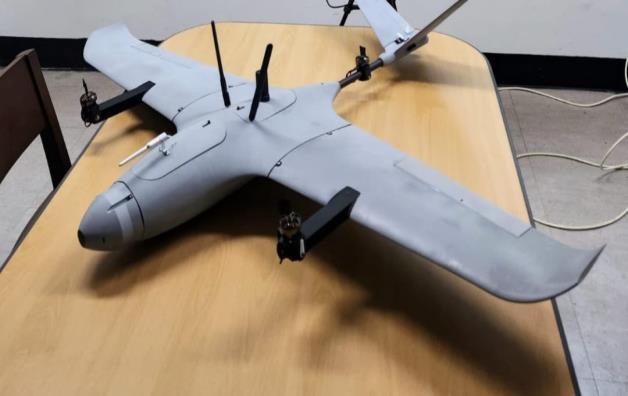
VTOL is the main vehicle to efficiently, accurately deliver medical supplies. From the data gathered by the Quadcopter and then processed bythe Base Station, VTOL will be sent detailed, optimized flight paths that minimize travel time, and supplies reach their destinations in no time. The aircraft carries up to 5 kilograms of supplies, covering a range of 50 kilometers with up to 2 hours of operational capacity at a cruising speed of 80 km/h. The aircraft is equipped with advanced navigation systems, including OpenCV technology, which allows it to identify individuals in need and navigate through challenging terrain, even in areas with obstructed visibility. The VTOL framework also includes a robust payload management system, where medications are securely loaded using a robotic arm to ensure safe and organized transport. This careful attention to payload handling, combined with the precisenavigationcapabilities,makestheVTOLanintegral part of Aeropath’s autonomous delivery network, providing reliable and swift support during critical emergencies.
Volume: 11 Issue: 11 | Nov 2024 www.irjet.net
3. CONCLUSIONS
Aeropath presents a significant advancement in autonomous disaster management technology, integrating multiple autonomous frameworks to streamline the deliveryoflife-savingmedicalsupplies.Bycombiningrealtime 3D mapping, centralized control, and precise navigation, Aeropath minimizes human intervention and reduces response times, addressing the critical need for rapid action during emergencies. Future enhancements willfocusonexpandingoperationalrange,improvingrealtime analytics, and further integrating AI for dynamic disaster response, aiming to set a new standard in emergencylogistics.
AspecialAcknowledgementto:
Miss Pratiksha Sahu (Teacher, engineer, mentor)
Forprovidingmentorshipandresourcesforthisproject.
REFERENCES
[1] Medical Drones for Emergency Response"Highlights the integration of drones in public health emergencies, focusing on real-time response and communityengagementtoenhancedeliverysystems.
[2] Autonomous Drones for Disaster Risk Reduction"Discusses how AI-powered drones improve efficiency in emergency situations by offering real-time reconnaissanceandsupplydelivery.
[3] Drones4Good Initiative: Supporting Disaster Relief" - Covers the use of imaging technology in dronestoassessdamageandlocatesurvivors,helping inefficientmedicaldeliveries. PROTOTYPEMODEL-