
International Research Journal of Engineering and Technology (IRJET) e-ISSN: 2395-0056
Volume: 11 Issue: 11 | Nov 2024 www.irjet.net p-ISSN: 2395-0072

International Research Journal of Engineering and Technology (IRJET) e-ISSN: 2395-0056
Volume: 11 Issue: 11 | Nov 2024 www.irjet.net p-ISSN: 2395-0072
Ajay Krishnan Prabhakaran
Data Engineer, Meta Inc ***
Abstract - As data grows exponentially, optimizing query performance in distributed SQL engines like Presto becomes increasingly crucial. Partitioning, bucketing, and sorting strategies allow for efficient data querying and management. This paper explores these techniques in the context of Presto, providing insights into Presto's integrationwithApache Spark and Hadoop Distributed File System (HDFS). Through a detailed examination of partitioning, bucketing, sorting, and other optimization techniques, the study highlights best practices to improve query performance. A series of diagrams and real-world case studies illustrate how organizations can enhance their data warehousing capabilities.
Key Words: Presto, partitioning, query optimization, HDFS, Spark, bucketing, distributed SQL, data warehousing
1.INTRODUCTION
Distributed SQL engines like Presto have become essential for large-scale data querying in modern data ecosystems.DevelopedbyFacebookandwidelyadoptedby companieslikeNetflixandAirbnb,Prestoenablesreal-time queries across distributed data sources without requiring data movement . One of the key techniques that Presto employstooptimizequeryperformanceispartitioning.
Partitioningdivideslargedatasetsintosmaller,manageable pieces based on specific column criteria, such as dates or geographicalregions,whichPrestousestoreducethescope ofdatascannedduringaquery.Additionaltechniquessuch as bucketing and sorting work alongside partitioning to further enhance query performance by improving data localityandreducingthecomplexityofdatascans.
2. HADOOP DISTRIBUTED FILE SYSTEME (HDFS)
2.1
The Hadoop Distributed File System (HDFS) is a scalable,fault-tolerant,distributedfilesystemdesignedfor storing large datasets across clusters of commodity hardware.HDFSisacorecomponentoftheApacheHadoop ecosystem and is the backbone of many large-scale data processingapplications,includingPrestoandApacheSpark.
HDFS breaks files into smaller blocks (typically 64MB or 128MB) and distributes these blocks across a cluster of nodes.Thisblock-leveldistributionallowsforparalleldata processing, which is essential for handling large datasets
efficiently. HDFS’s architecture is built on two main components:
NameNode:Managesthemetadataofthefilesystem (e.g.,directorystructure,fileownership,andblock locations).
DataNodes: Store the actual data blocks and perform read/write operations as directed by the NameNode
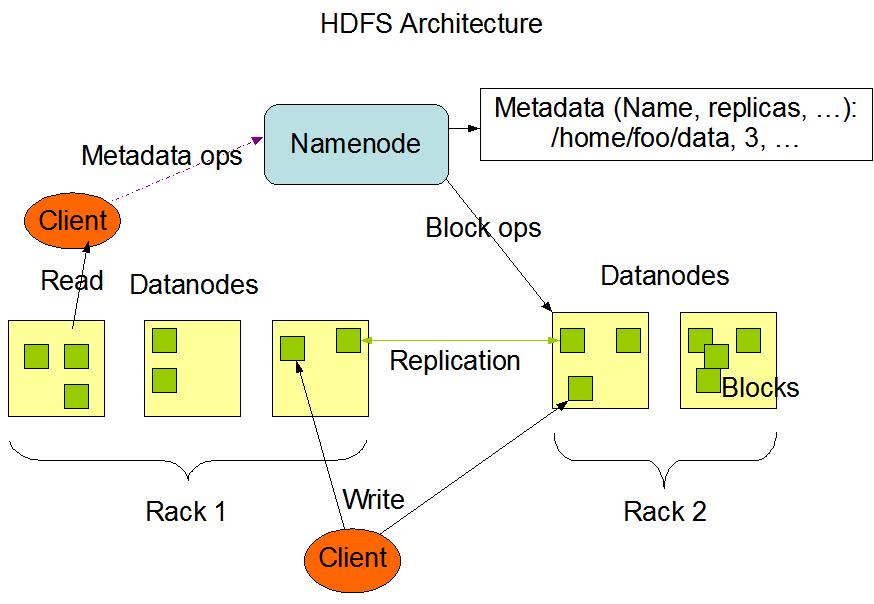
Presto natively supports querying data stored in HDFS,allowinguserstoexecuteSQLqueriesacrossmassive datasetswithoutneedingtomovethedata.Prestoachieves thisbyabstractingthedatastoragelayer,enablingittoread fromHDFSwhiledistributingthequeryprocessingacross multiplenodes.
Presto’sabilitytoworkwithHDFSenablesittobenefitfrom HDFS’sfault-tolerantanddistributedstoragearchitecture. WhenPresto queriesa dataset storedinHDFS,itaccesses the relevant data blocks from DataNodes based on the query'srequirements,leveragingpartitioningandbucketing techniquestominimizetheamountofdataread.
Apache Spark is a distributed data processing frameworkknownforitsspeed,easeofuse,andsupportfor
International Research Journal of Engineering and Technology (IRJET) e-ISSN: 2395-0056
Volume: 11 Issue: 11 | Nov 2024 www.irjet.net p-ISSN: 2395-0072
a wide variety of data processing tasks, such as batch processing,streamprocessing,andmachinelearning.Spark operates on the concept of Resilient Distributed Datasets (RDDs), which are fault-tolerant and distributed across a clusterforparallelprocessing
While Presto is designed for SQL-based querying, Apache Spark is used for more complex data transformation and analysis tasks. Together, Presto and Spark offer a comprehensivesolutionfordataprocessingandquerying.
Presto and Spark can be integrated to combine Presto’s querying power with Spark’s processing capabilities.Forexample,SparkcanbeusedtoperformETL (Extract, Transform, Load) operations and complex transformations, while Presto can be used to run SQL queriesontheprocesseddata
Spark is particularly useful for preprocessing raw data stored in HDFS. Once the data is preprocessed and partitioned, Presto can query it efficiently using SQL commands.Thisintegrationisbeneficialfororganizations that need both real-time analytics and complex data transformations.
4.1
Partitioningistheprocessofdividingalargedataset intosmaller,moremanageablepiecesbasedonthevaluesof oneormorecolumns.InPresto,partitioningisoftendoneon columnslikedate,region,orproduct_category.Bysplitting dataintopartitions,Prestocanreducetheamountofdata scannedduringqueries,improvingperformance.Example
CREATETABLEsales( order_idBIGINT, customer_idBIGINT, total_amountDOUBLE, order_dateDOUBLE ) WITH( partitioned_by=ARRAY['order_date'], );
This SQL statement creates a table partitioned by the order_datecolumn,allowingPrestotooptimizequeriesthat filterbydatebyscanningonlytherelevantpartitions
4.2
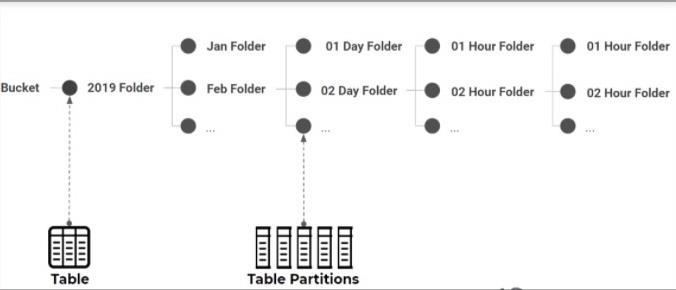
Whenatableispartitioned,eachpartitionisstored as a separate directory in HDFS or another distributed
storagesystem.Presto'squeryengineisabletoscanonlythe directories (partitions) relevant to the query, thereby reducing I/O and improving performance. This becomes extremelyvaluableespeciallywhendealingwithlargetables withbillionsofrowsasscanningthroughalltherecordscan becomeveryexpensive
PartitioningalsoallowsPrestototakeadvantageofpartition pruning,atechniquewherethequeryengineskipsirrelevant partitionsbasedontheWHEREclauseintheSQLquery.For example,ifaqueryrequestsdatafromJanuary2024,Presto canskipallpartitionsthatdonotcontaindataforJanuary 2024.SincejustbyreadingthemetadataPrestocanfigure out which files/partitions to read, its highly efficient and quicktofetchtheresultsasitavoidswastefulsearchingfor datathat’sofnorelevance
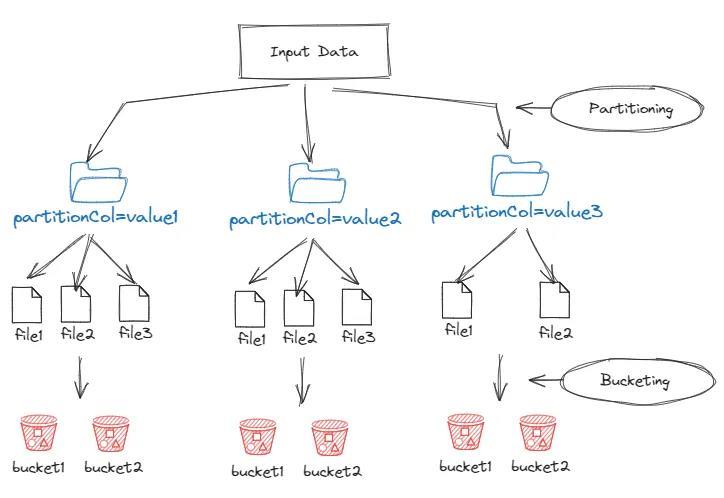
Bucketing is a technique that groups data within partitionsinto"buckets"basedonthevalueofoneormore columns.Thisallowsformoreefficientdataretrievalduring queries,especiallywhenthequeryinvolvesJOINoperations or aggregations. In a table with both partitioning and bucketing,dataisfirstdividedintopartitionsandtheneach partitionisdividedintobuckets.Example
CREATETABLEsales( order_idBIGINT, customer_idBIGINT, total_amountDOUBLE, order_dateDOUBLE ) WITH( partitioned_by=ARRAY['order_date'], bucketed_by=ARRAY['customer_id'], bucket_count=10 );
Inthisexample,thetableispartitionedbyorder_dateand bucketed by customer_id into 10 buckets. This enables
International Research Journal of Engineering and Technology (IRJET) e-ISSN: 2395-0056
Volume: 11 Issue: 11 | Nov 2024 www.irjet.net p-ISSN: 2395-0072
Presto to efficiently join tables or perform aggregations basedoncustomer_idbyscanningonlytherelevantbuckets
Sorting is a powerful optimization technique in Presto that can significantly enhance query performance, particularly for range queries or queries with anORDER BYclause. By storing sorted data within each partition or bucket based on a specific column, Presto can avoid additional sorting steps during query execution, thereby reducingthetimerequiredtocompletequeries.
Whendataissortedwithineachpartitionorbucket,Presto cantakeadvantageofthispre-sorteddatatoquicklyretrieve relevantinformation.Thisisespeciallybeneficialforrange queries,wherethegoalistofinddatawithinaspecificrange of values. With sorted data, Presto can simply scan the relevantpartitionsorbucketsandreturntheresultswithout needingtoperformadditionalsortingoperations.Similarly, when using anORDER BYclause, Presto can leverage the pre-sorted data to efficiently sort the results. Instead of havingtosorttheentiredataset,Prestocanfocusonsorting onlytherelevantdatawithineachpartitionorbucket.This reduces the overall processing time and makes the query executionmoreefficient.
One of the challenges of partitioning is overpartitioning, which occurs when the number of partitions grows too large. Too many small partitions can lead to significant metadata overhead, which can degrade query performanceinsteadofimprovingit
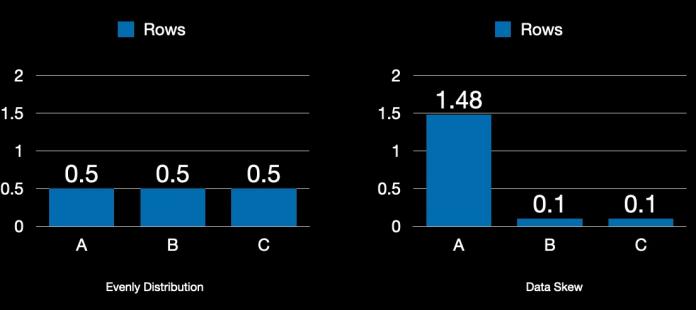
Partition skew occurs when data is unevenly distributedacrosspartitions.Forexample,ifmostofthedata falls into a few partitions, while others remain relatively empty, the benefits of parallelism are reduced. Skewed partitions cause some nodes in the distributed cluster to handlemuchmoredatathanothers,leadingtoanimbalanced workloadandlongerquerytimes.
Tomitigatepartitionskew,oneoptionistochoosecolumns that ensure a more uniform distribution of data when partitioning. Another technique is to implement dynamic partitioning, where the partitions are generated based on incomingdatapatterns.Thisapproachallowsthesystemto adjust partitions as new data is ingested, improving distributionacrosspartitions.
Partitionpruningisacoreoptimizationtechniquein Presto.Itenablesthequeryenginetoscanonlythenecessary partitions based on filters in the WHERE clause. Presto’s queryoptimizeranalyzesthepartitioningcolumnandskips irrelevantpartitions.
Forexample,consideratablepartitionedbyorder_date.Ifa query filters for a specific date range, Presto can avoid scanningpartitionsoutsidethatdaterange.Thisdramatically reduces the amount of data scanned, improving both performanceandresourceusage.
When partitioning is combined with bucketing, query performance can improve even further. Partitioning limitsthenumberofpartitionsthatneedtobescanned,while bucketing allows for efficient JOIN operations within each partition.Forinstance,inthecaseofatablepartitionedby dateandbucketedbycustomer_id,Prestocanperformajoin
International Research Journal of Engineering and Technology (IRJET) e-ISSN: 2395-0056
Volume: 11 Issue: 11 | Nov 2024 www.irjet.net p-ISSN: 2395-0072
on the customer_id column by scanning only the relevant bucketswithineachpartition,reducingqueryexecutiontime.
As data evolves, previously efficient partitioning schemesmaybecomelesseffectiveduetochangesindata volume or distribution. Repartitioning involves redefining partition boundaries based on updated data patterns, ensuringcontinuedperformanceimprovementsovertime. This periodic repartitioning, often combined with sorting withinpartitions,canhelpavoidissueslikepartitionskewor over-partitioning.
Netflix leverages Presto to query petabyte-scale datasets stored in HDFS andAmazon S3. Initially, manyof Netflix’s datasets were not partitioned, which led to slow query performance as large amounts of unnecessary data werescanned.
Byimplementingpartitioning,particularlybasedonthedate and region columns, Netflix significantly improved query times.Forexample,whenqueryingvideostreamlogs,Netflix partitionedthedatabythestream_datecolumn.Thisallowed Presto toscan only the partitions related to specific dates, reducingquerytimesbyover60%.Inaddition,bucketingby user_id helped improve JOIN performance in analytics workflowswhereusers’activitydatawasanalyzed.
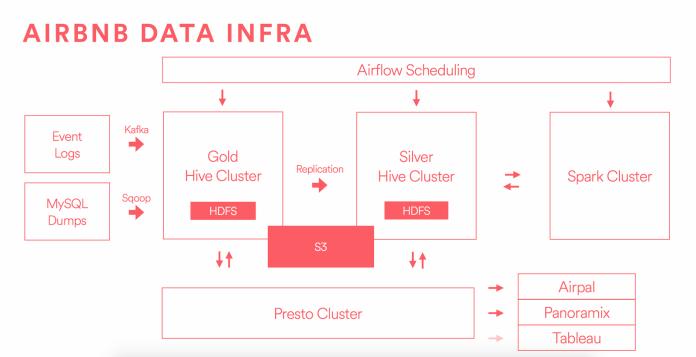
Airbnb uses Presto to run interactive analytics on largedatasetsstoredinHDFS.Oneoftheprimarychallenges facedbyAirbnbwasensuringlow-latencyqueriesonhightrafficdatasets.Throughacombinationofpartitioningand bucketing,Airbnbwasabletoimprovequeryperformance significantly.
Airbnb partitioned its customer activity logs by the date columnandbucketedthedatabycustomer_id.Thisenabled Presto to efficiently retrieve data for specific date ranges, whileJOINoperations(suchasthosecomparingcustomers’ activity across multiple tables) became faster due to bucketing.
Partitioning, bucketing, and sorting are all powerful techniquesforoptimizingqueryperformanceinPresto,but theyservedifferentpurposesandaresuitedtodifferentuse cases.
Partitioning:Bestforfilteringlargedatasetsbased onaspecificcolumn,reducingthenumberofrows scanned during queries. It is highly effective for rangequeriesorqueriesinvolvingaspecificsubset ofthedata.
Bucketing: Improves query performance by groupingrowswithsimilarvaluesintobuckets.This isparticularlyusefulforJOINoperations,asitallows for faster data retrieval when joining tables on a bucketedcolumn.
Sorting: Useful for range queries and ORDER BY operations, sorting within partitions or buckets reducestheneedforadditionalsortingduringquery execution.
Bycombiningthesetechniques,organizationscantailortheir data structures to specific query patterns, ensuring that queryperformanceremainshighevenasdatagrows.
Choosingtherightcolumnforpartitioningiscrucial. Thecolumnshouldbeonethatisfrequentlyusedinqueries' WHEREclauses.Forexample,partitioningbydateiseffective indatasetswherequeriesoftenfilterbytimeranges.Insome cases,partitioningbygeographicregion(e.g.,country)isalso beneficial,dependingonthenatureofthedata.
To avoid the issues associated with overpartitioning, such as excessive metadata and slow query performance,itisimportanttoperiodicallymonitorandtune partitions.Iftoomanysmallpartitionsarecreated,itmaybe
International Research Journal of Engineering and Technology (IRJET) e-ISSN: 2395-0056
Volume: 11 Issue: 11 | Nov 2024 www.irjet.net p-ISSN: 2395-0072
necessarytoconsolidatethembyadjustingthepartitioning scheme.
While partitioning allows for efficient scanning of largedatasets,bucketingaddsanotherlayerofoptimization for queries involving JOINs or groupings. However, using both techniques together should be done with careful consideration. Overuse of bucketing can lead to excessive datafragmentation,soit’simportanttostrikeabalancebased onthespecificquerypatternsanddatasetcharacteristics.
AsPrestocontinuestoevolve,newtechniquesand optimizations will be introduced to handle ever-growing datasetsandmorecomplexquerypatterns.Oneareaoffocus is adaptive partitioning, where Presto dynamically adjusts partitionboundariesbasedontheincomingdataandquery patterns, further reducing query times without manual intervention.
Additionally, machine learning is being increasingly integrated into query optimization strategies, allowing for intelligent decisions regarding partitioning and bucketing schemes based ondata access patterns. This shifttowards automated data optimization will make it easier for organizationstomaintainhighqueryperformancewithout constantmanualtuning.
Partitioning, bucketing, and sorting are key optimizationtechniquesthatimprovequeryperformancein Presto,particularlywhenworkingwithlargedatasetsstored in distributed systems like HDFS and S3. By effectively leveragingthesetechniques,organizationscansignificantly reduce query times, minimize resource consumption, and improveoveralldatamanagement.
However,thesetechniquesrequirecareful managementto avoidpitfallssuchasover-partitioning,skew,andexcessive metadata. The combination of partitioning with advanced techniques like bucketing and sorting, alongside regular monitoringandoptimization,ensuresthatPrestocontinues todeliverhigh-performancequeryingatscale.
Asdatavolumescontinuetogrow,futuredevelopmentsin Presto,includingadaptivepartitioningandAI-drivenquery optimization,willfurtherenhanceitscapabilities,makingit an even more powerful tool for data analytics in the distributedcomputingecosystem.
[1] M.Hanetal.,“Presto:SQLonEverything,”Proceedings oftheVLDBEndowment,vol.6,no.12,pp.1972–1975, 2013.
[2] B.Travers,"ScalingDatawithPrestoatNetflix,"Netflix TechBlog,2021
[3] J.Borthakuretal.,“TheHadoopDistributedFileSystem,” ProceedingsoftheIEEE,vol.107,no.9,pp.1651–1670, 2019.
[4] G.Sakr,“ImprovingDataWarehousePerformanceUsing PartitioningTechniques,”JournalofBigData,vol.9,no. 1,2022.
[5] A. Colbert, “Partitioning Best Practices in Distributed SQLEngines,”DremioBlog,2023.
[6] K.Kumar,"PrestoQueryOptimization,"AWSBlog,2022.
[7] R.Smith,"ManagingBigDatawithPrestoPartitioning," DatabricksBlog,2021.
[8] A. Patel, "Challenges of Over-Partitioning," Snowflake Documentation,2023.
[9] L. Zhang et al., "Handling Data Skew in Partitioning," JournalofDistributedSystems,2020.
[10] S. Wiggins, "Partition Pruning Techniques," Data ManagementJournal,2022.