
International Research Journal of Engineering and Technology (IRJET) e-ISSN:2395-0056
Volume: 11 Issue: 11 | Nov 2024 www.irjet.net p-ISSN:2395-0072

International Research Journal of Engineering and Technology (IRJET) e-ISSN:2395-0056
Volume: 11 Issue: 11 | Nov 2024 www.irjet.net p-ISSN:2395-0072
JAVVAJI BHANU KARTHIK1 , 2 Dr.P. BALA KRISHNA, Ph.D.
1M. Tech Student, Department of Civil Engineering, MVR College of Engineering and Technology (autonomous) paritala, India.
2Associate Professor and Head of the department (HOD), Department of Civil Engineering, MVR College of Engineering and Technology, (autonomous), paritala, India.
Abstract
This study investigates the use of RBI Grade-81, a natural soil stabilizer, in enhancing the engineering properties of black cotton soil for road construction. Black cotton soil, known for its expansive nature, presents significant challenges in road infrastructure due to its tendency to swell when wet and shrink when dry. This behavior leads to cracks, undulations, and structural damage to pavements, necessitating a sustainable solution that addresses these issues. RBI Grade-81, a proprietary soil stabilization additive, offers an environmentally friendly, cost-effective, and durable alternative to conventional materials like cement and lime.
The objectives of this study are multifold: to assess the impact of RBI Grade-81 on the soil's liquid limit, plastic limit, and compaction properties, and to evaluate improvements in the soil's Unconfined Compressive Strength (UCS) and California Bearing Ratio (CBR) under both soaked and unsoaked conditions. A series of laboratory tests were conducted on untreated black cotton soil and soil treated with varying percentages of RBI Grade-81 (2%, 4%, 6%, 8%, and 10%). The soil samples were subjected to standard tests such as Liquid Limit (LL), Plastic Limit (PL), UCS, CBR, Free Swell Index (FSI), and Specific Gravity, following Indian Standard (IS) and ASTM procedures.
The results indicate that the addition of RBI Grade-81 significantly improves the engineering properties of black cotton soil. The liquid limit of the soil decreased with increasing percentages of RBI Grade-81, showing a reduction in the soil’s swelling potential. Similarly, the plasticity index reduced, indicating enhanced soil workability and a lower susceptibility to moisture variations. The UCS values increased notably, with the highest improvement observed at 6% RBI Grade-81, where the UCS value of the treated soil reached 3.63 kN/m² compared to the untreated soil’s 2.08 kN/m². This increase in compressive strength highlights the stabilizer’s potential to improve the load-bearing capacity of roads built on expansive soils.
The CBR test results further demonstrated significant improvements. Under soaked conditions, the CBR value of untreated black cotton soil was 4.84%, while the treated soil with 6% RBI Grade-81 showed a remarkable increase to 132.29%. This improvement is crucial for enhancing the durability and performance of pavements subjected to heavy traffic loads. Additionally, the permeability of the soil reduced, with a decrease in the free swell index, suggesting that RBI Grade-81 helps prevent water infiltration, which is essential for maintaining the stability of pavement layers.
In conclusion, RBI Grade-81 offers a promising solution for addressing the challenges associated with black cotton soil in road construction. Its application leads to substantial improvements in soil strength, stability, and load-bearing capacity, while also reducing environmental impact. The study confirms that RBI Grade-81 can effectively reduce construction time, lower maintenance costs, and extend the lifespan of pavements, making it a sustainable and economical alternative to traditional materials. Future research could explore the long-term performance of RBI Grade-81 under various climatic conditions and its applicability to other soil types.
Key Words: RBI Grade-81, Black Cotton Soil, Soil Stabilization, Road Construction, Expansive Soils, UCS, CBR, SustainableInfrastructure
TheGlobalroadnetworksarecrucialforeconomicgrowth,yettheconstructionofdurable,long-lastingpavementsisoften hindered by the limited availability of traditional construction materials such as cement, aggregates, and bitumen. Additionally, the extraction and processing of these materials contribute significantly to environmental degradation, leading to the depletion of natural resources and increased carbon emissions. The demand for more sustainable alternatives has led researchers to explore natural stabilizers, such as RBI Grade-81, which offer promising benefits in termsofreducingenvironmentalimpactwhileimprovingtheperformanceofpavementmaterials.
International Research Journal of Engineering and Technology (IRJET) e-ISSN:2395-0056
Volume: 11 Issue: 11 | Nov 2024 www.irjet.net p-ISSN:2395-0072
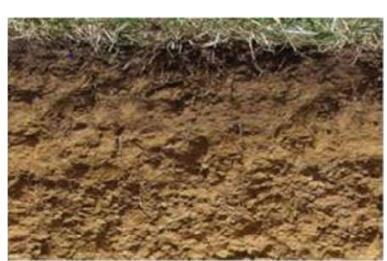
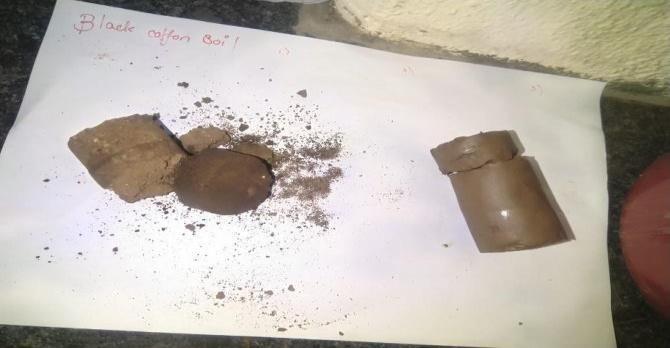
Black cotton soil, commonly found in tropical and subtropical regions, poses significant challenges to road construction duetoitsexpansivenature.Thissoilswellswhenexposedtomoistureandshrinksduringdryperiods,leading tosevere structuraldamagetopavements,foundations,andothercivilinfrastructure.Traditionalmethodstomitigatetheseeffects include soil replacement or the use of chemical additives such as lime or cement, both of which are costly and environmentally unsustainable. RBI Grade-81, a natural soil stabilizer, presents a viable alternative for stabilizing black cottonsoil,enhancingitsload-bearingcapacitywhilereducingswellingandshrinkage.asshowninfig.1
ThisresearchaimstoinvestigatetheeffectivenessofRBIGrade-81instabilizingblackcottonsoilforroadconstruction. Theprimaryobjectivesinclude:
a)Evaluatingthechangesinsoilpropertiessuchasliquidlimit,plasticlimit,andcompactionbehaviorupontheaddition ofRBIGrade-81.
b)AssessingtheimprovementinUnconfinedCompressiveStrength(UCS)andCaliforniaBearingRatio(CBR)underboth soakedandunsoakedconditions.
c)ComparingtheenvironmentalandeconomicimpactsofusingRBIGrade-81withconventionalstabilizerssuchas cementandlime.
ThisstudyevaluatestheeffectivenessofRBIGrade-81instabilizingblackcottonsoilforroadconstruction,addressingits expansive nature and improving its engineering properties. The research involves laboratory tests such as Liquid Limit, Plastic Limit, Unconfined Compressive Strength (UCS), and California Bearing Ratio (CBR) to compare untreated and stabilizedsoil.Itaimstodemonstratethecost-effectiveness,durability,andenvironmentalbenefitsofRBIGrade-81over traditional materials like cement and lime. The practical application of RBI Grade-81 could reduce construction time, lower maintenance costs, and extend road lifespan. The study also highlights its potential to reduce environmental impactsbyloweringcarbonemissionsandconservingresources.
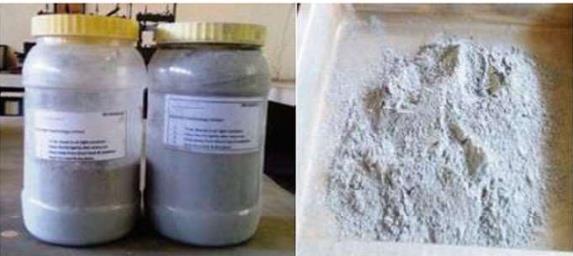
Structure Natural black cotton soil was collected, and several tests were conducted to assess its properties before and after treatment with RBI Grade-81. RBI was mixed in proportions of 2%, 4%, 6%, 8%, and 10% of the soil weight. The samples were subjected to the following tests: Liquid Limit and Plastic Limit using IS: 2720 – Part 5 (1985). Unconfined CompressiveStrength(UCS)andCaliforniaBearingRatio(CBR)testsfollowingIScodes. Specific GravityandFreeSwell Indexteststoevaluatethesoil'sstability.
Experimental protocolswerefollowedstrictlyinaccordancewithIScodes,includingsamplepreparation,testsetup,and curingconditions.Soilsampleswerecompactedandcuredfor7,14,and28daystoevaluatelong-termstability.
4.Introduction to software
ETABS 2015 is a specialized software program designed specifically for structural engineering applications. It facilitates both linear and nonlinear static and dynamic analysis, leveraging modern PC capabilities to handle complex, composite modelsefficiently[15].Thesoftwareintegratesmodeling,analysis,design,andoptimizationwithinasingleuser-friendly interface, fully compatible with Microsoft Windows [15, 16]. ETABS also enhances the visualization of results through advancedgraphicalpresentations,makingiteasierforengineerstointerpretandrefinetheirmodels[17].
5. RESULTS AND DISCUSSIONS
5.1 Effect of RBI Grade-81 on Liquid and Plastic Limits
Theresultsoftheliquidandplasticlimittestsshowanotablereductionintheplasticityofblackcottonsoilwhentreated with RBI Grade-81. The liquid limit decreased from 41% to 35.22% with the addition of 10% RBI Grade-81, indicating a reductioninthesoil'ssusceptibilitytowater-inducedswelling
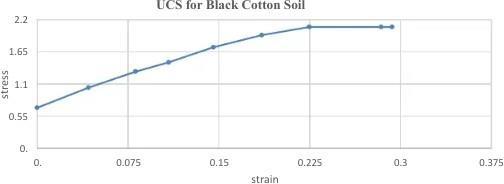
The UCS values increased significantly with the addition of RBI Grade-81. At 6% RBI, the UCS value increased from 2.08 kN/m² to 3.63 kN/m² after 28 days of curing. This improvement is critical for enhancing the load-bearing capacity of roads.Fig.5andfig.6
5.3 California Bearing Ratio (CBR)
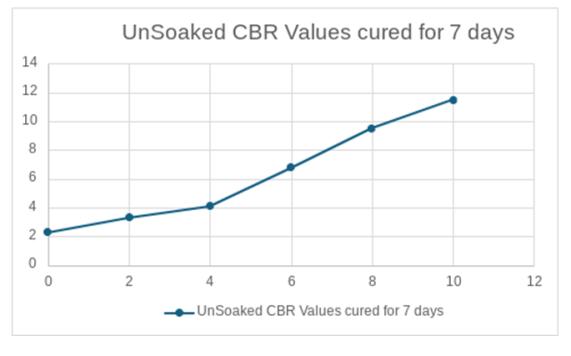
The CBR test results demonstrate substantial improvements in the load-bearing capacity of treated soils. Under soaked conditions,theCBRvalueincreasedfrom4.84%inuntreatedsoilto132.29%withtheadditionof6%RBIGrade-81.This reflectstheenhancedabilitytowithstandheavytrafficloads.
Table2CBRValues
International Research Journal of Engineering and Technology (IRJET) e-ISSN:2395-0056
Volume: 11 Issue: 11 | Nov 2024 www.irjet.net p-ISSN:2395-0072
TheuseofstabilizingagentssuchasRBIGrade81inimprovingthegeotechnicalpropertiesofproblematicsoils,likeblack cotton soil, has gained considerable attention in civil engineering. Black cotton soil, known for its expansive nature, is characterized by significant volume changes during wetting and drying cycles, leading to structural instability in foundations and pavements. This study examines the effects of adding varying percentages of RBI Grade 81 on the engineeringpropertiesofblack cottonsoil,focusingonspecific parameterslikeliquidlimit,plasticlimit,plasticityindex, specific gravity, optimum moisture content, maximum dry density, and unconfined compressive strength. The results indicate that the addition of RBI Grade 81 enhances the soil's performance, making it more suitable for construction applications.
The liquid limit (LL) is an essential indicator of a soil's ability to hold water and its susceptibility to shrinkage and swelling. Black cotton soil exhibits a high liquid limit, which makes it prone to excessive volume changes with moisture fluctuations. The study shows that with the addition of RBI Grade 81, there is a significant reduction in the liquid limit. Initially,theliquidlimitoftheuntreatedblackcottonsoilis42%.AsthepercentageofRBIGrade81increases,theliquid limit decreases progressively, reaching 35.22% at 10% RBI Grade 81. This reduction indicates improved stability and a reducedlikelihoodofshrink-swellbehavior,whichiscriticalinregionswhereexpansivesoilsposeathreattofoundations andpavements.
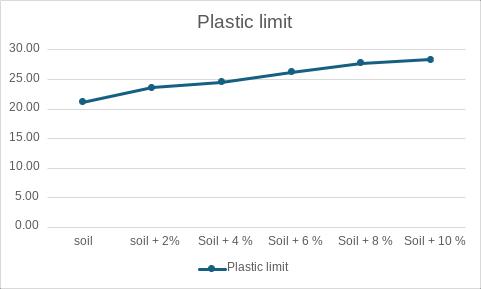
The plastic limit (PL) of soil is the moisture content at which soil begins to exhibit plastic behavior. Higher plastic limits are desirable in construction because they indicate that the soil can be manipulated and compacted at higher moisture contents without losing its plasticity. In this study, the plastic limit of untreated black cotton soil is 21.16%. With the additionofRBIGrade81,theplasticlimitincreasesto28.34%at10%RBIGrade81.Thisincreaseinplasticlimitreflects an improvement in the workability of the soil, making it easier to handle during construction activities. The enhanced workability is particularly beneficial for compacting the soil in situ, as the soil can now be molded at higher moisture contents,allowingformoreefficientconstructionprocesses.
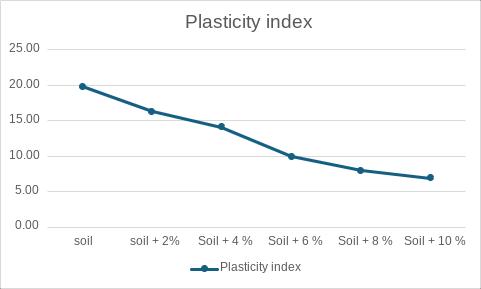
Theplasticityindex(PI)isameasureofthesoil'splasticityandiscalculatedasthedifferencebetweentheliquidlimitand plasticlimit.Itindicatestherangeofmoisturecontentoverwhichthesoilremainsplastic.Inthecaseofblackcottonsoil,a highplasticityindexisassociatedwithsignificantvolumechangesduringwettinganddrying.Thisstudyrevealsthatthe plasticity index of the untreated soil is 19.84%, indicating high plasticity and potential for expansion. However, with the addition of RBI Grade 81, the plasticity index decreases significantly, dropping to 6.88% at 10% RBI Grade 81. This reductionimpliesthatthesoilbecomeslesspronetovolumechangesduetomoisturevariations,whichisacriticalfactor inimprovingthesoil'sperformanceinconstructionapplications.Thelowerplasticityindexalsoindicatesbetterresistance todeformation,makingthesoilmorestableundervaryingweatherconditions.
Specific gravity is a fundamental property of soil that influences its strength, compressibility, and compaction characteristics. In this study, the specific gravity of black cotton soil increases with the addition of RBI Grade 81 up to a certainpercentage,afterwhichitdecreases.Theuntreatedsoilhasaspecificgravityof2.29.AstheRBIGrade81content increases,thespecificgravitypeaksat2.75when6%ofRBIGrade81isadded.
REFERENCES:
[1] Anitha.K.R, R.Ashalatha, ArveeSujil Johnson, “Effects Of RBI 81 On Different Types Of Subgrade Soil.”,10th National ConferenceonTechnologicalTrends(NCTT09]6-7Nov2009.
International Research Journal of Engineering and Technology (IRJET) e-ISSN:2395-0056
Volume: 11 Issue: 11 | Nov 2024 www.irjet.net p-ISSN:2395-0072
[2] C.E.G.Justo, Krishnamurthy, “laboratory studies on properties of soils treated with rbi – 81 stabiliser”, RASTA Center forraodtechnology,2008.
[3]K.V.Madurwar1,P.P.Dahale,A.N.Burile,“ComparativeStudyofBlack CottonSoil StabilizationwithRBIGrade81and SodiumSilicate”,Vol.2,Issue2,February2013.
[4] B.m.Patil, K.A.Patil,“Effect of Fly ash and Rbi grade 81 on Swelling Characteristics of Clayey Soil”, Volume-2, Issue-2, 2013.
[5] Lekha B.M. and A.U. Ravi Shankar ,“Laboratory Performance of RBI 81 Stabilized Soil for Pavements”, Volume 5, Number2(2014),pp.105110.
[6]Er.TejinderSingh&Er.NavjotRiar,“StrengtheningOfSubgradebyUsingRBIGrade-81ACaseStudy”.Volume8,Issue6 (Sep.-Oct.2013),PP101-106.
[7] Akshaya Kumar Sabat , Radhikesh P. Nanda, “Effect of marble dust on strength and durability of Rice husk ash stabilisedexpansivesoil”,Internationaljournalofcivilandstructuralengineering,Volume1,No4,2011PP939-948.
[8] Pankaj R. Modak, Prakash B. Nangare, Sanjay D. Nagrale, Ravindra D. Nalawade, Vivek S. Chavhan, “Stabilisation of BlackCottonSoilUsingAdmixtures,Internationaljournalofcivilandstructuralengineering”,Volume1,Issue5,May2012 pp01-03.
[9] Kiran R.G, Kiran L, “Analysis Of Strength Characteristics Of Black Cotton Soil Using Bagasse Ash and additives as Stabilizer”,InternationalJournalofEngineeringResearch&Technology,Vol.2Issue7,July–2013pp2240-2246.
[10] NoorinaTarannum, R.K. Yadav, “Influence of Blast Furnace Slag on the Consistency Limits of the Black Cotton Soil”, InternationalJournalofScientific&EngineeringResearch,Volume4,Issue4,April-2013pp456-458.
[11] Amu, O.O., Ogunniyi, S.A. and Oladeji, O.O, “Geotechnical properties of lateritic soil stabilized with sugarcane straw ash”,Americanjournalofscientificandindustrialresearch,(2011)pp323-331. [12]A.SreeramaRao,G.Sridevi,M.Rama Rao, “Heave Studies on Expansive Clays with Stabilized Granulated Blast Furnace Slag Cushion”, Indian geological congress,2009pp109-112.
[13] HosseinMoayedi, Bujang B. K. Huat, FatemehMoayedi, AfshinAsadi, AlirezaParsaie, “Effect of Sodium Silicate on UnconfinedCompressiveStrengthofSoftClay”,Vol.16[2011],pp289-295.
[14]K.V.Madurwaretal.(2023).'PropertiesofBlackCottonSoilwithRBI-81.'JournalofSoilStabilization.
[15] B.M.Patiletal.(2019).'ImprovementofSubgradeSoilwithRBIGrade81.'LectureNotesinCivilEngineering.
[16] IS: 2720 (Part 40) (1977). Methods of Test for Soils: Determination of Free Swell Index of Soils, Bureau of Indian Standards,NewDelhi,India.