
International Research Journal of Engineering and Technology (IRJET) e-ISSN: 2395-0056
Volume: 11 Issue: 11 | Nov 2024 www.irjet.net p-ISSN: 2395-0072

International Research Journal of Engineering and Technology (IRJET) e-ISSN: 2395-0056
Volume: 11 Issue: 11 | Nov 2024 www.irjet.net p-ISSN: 2395-0072
Bakkesh Y M R1 , Adarsh Pal S2 , Sanjay Malige L3 , Karthik S L4
1 Bachelor of Engineering, Information Science and Engineering, Bapuji Institute of Engineering and technology, Karnataka, India
2 Bachelor of Engineering, Information Science and Engineering, Bapuji Institute of Engineering and technology, Karnataka, India
3 Bachelor of Engineering, Information Science and Engineering, Bapuji Institute of Engineering and technology, Karnataka, India
4 Bachelor of Engineering, Information Science and Engineering, Bapuji Institute of Engineering and technology, Karnataka, India ***
Abstract - The effective design and management of highway toll plazas are crucial to reducing traffic congestion and guaranteeing smooth vehicle movement. This study presents a complete analysis of toll plaza systems, emphasizingtheirdesign,functioning,andinfluenceontraffic management. It looks at several toll collecting methods, such as manual toll booths, Electronic Toll collecting (ETC), and Automatic Vehicle Identification (AVI) systems. The report emphasizesthedifficultiesinvolvedwithtollplazaoperations, including traffic delays, environmental effect, and cost efficiency.Thereportprovidesbestpracticesforenhancingtoll plazaperformance usingcase studiesandsimulationmodels. The findings indicate that integrating sophisticated technology and implementing dynamic toll pricing may considerably improve the efficiency and sustainability of toll plazas.
Key Words: Global Navigation Satellite System (GNSS), Automatic Number Plate Recognition (ANPR), RadioFrequency Identification (RFID), Waiting time, Toll plaza, FAStag
1.INTRODUCTION
Manual toll collection and delayed processing have led to traffic congestion and long queues at toll plazas, posing a significant concern in India. This leads to excessive wait times and wasted fuel during toll collection. Additionally, this leadstoincreasedpollutionandslowerhighwayspeeds, potentially affecting the quality of food, particularly milk. Severalcountries,includingJapan,Korea,andAmerica,are conductingresearchinthis sector.Thepaperdiscusses how an automated toll collecting system (ATCS) might reduce processing time for moving vehicles at toll plazas. ALPR uses image processing techniques to read a car's license plate while it is moving. Indian citizens have a unique identifyingcard,knownasAadhaar.TheIndiangovernment mandates that individuals link their cell phone number, bankaccount,andautomobiles totheirAadhaarcard.This articleproposesamethodforidentifying thevehicleowner, linking their bank account to the registered license plate, and automatically deducting tolls from their associated
Aadharcard.InIndia,everycarislinked toitsowner'sbank account,eitherdirectlyorindirectly. Manycountrieshave applied different methods for toll collections. Like travel timeestimationandprediction(TTEP)andGlobalSystemfor Mobile Communications (GSM) based car tracking, automaticvehicleidentification,lightmirrortechniqueetc. But here is the most famous approach is electronic toll collection (ETC) Road Network in the Country: India has about66.71lakhkmofroadnetwork,whichisthesecond largest in the world. The length of various categories of roads is as under: National Highways: 1,46,145 km, State Highways:1,79,535km,OtherRoads:63,45,403km India's overalltollcollectionhasincreasedbynearly2.6timesinthe pastfiveyears
Years India's overall toll collection
2018-19
Rs25,154.76cr 2019-20
Rs27,637.64cr 2020-21
Rs27,923.80cr 2021-22
Rs33,907.72cr 2022-23
Rs48,028.22cr
Automatic number plate recognition systems record realtime vehicle counts and provide precise traffic patterns. Manyautomaticlicenseplateidentificationsystemsinclude both still and video footage. Some are intended to photographavehicleaccelerates,runsaredlight,ormakes the wrong turn. The recordings are stable in a range of camera positions and perspectives, as well as indifferent weatherscenarios.Trafficdepartmentsandlegalcounselcan
Benefit from video footage. Serial traffic violators are identified Licence plate recognition. The technology also helps with reactive security. Inspections, forensics, investigations,andlegalactionsareallinstancesofthis.
International Research Journal of Engineering and Technology (IRJET) e-ISSN: 2395-0056
Volume: 11 Issue: 11 | Nov 2024 www.irjet.net p-ISSN: 2395-0072
However,therearesomedownsides.Automaticlicenseplate identificationeliminatestheneedtomanuallyrecorddigits, saving time. The registration number might be difficult to discern,especiallyinfast-movingtraffic.
Manual toll collection has been a common method of collectingfeesforroadusageformanydecades. EarlyYears, Tollroadsdatebacktoancienttimes,withtheRomansusing tolls on their roads. In 19thCentury, The first modern toll roadsappearedintheU.S.intheearly1800s,often operated byprivatecompanies. Where in 20thCentury,Growthofthe HighwaySystem:Theriseofautomobilesintheearly20th century led to a significant expansion of toll roads, particularlyintheU.S.andEurope.
ManualCollectionMethods:Tollsweretypicallycollected at booths where drivers would stop to pay cash to an attendant. This often caused congestion at busy times. Challenges are Traffic Delays, Manual toll collection frequentlyled to delays andbottlenecks, especially during peak travel times, cost and Labor: Staffing toll booths required a significant labor force, contributing to operationalcosts.
TheNationalHighwaysAuthorityofIndiaoperatesFASTag, an electronic toll collecting system in India. It uses Radio FrequencyIdentificationtechnologytocollecttollpayments directlyfromtheprepaidorsavingsaccountlinkedtoit,or from the toll owner. There is no need to stop at tollgates, regulartravelerscanconvertmonthlypassesintoFASTag passes and improves the environment by reducing the consumptionofpaper.FASTagwasintroducedin2014and becomesobligatoryonall vehicles inDecember2020.
ThetechnologyusesRadioFrequencyIdentification(RFID) toautomaticallydebittoll costs froma connectedprepaid account.AFASTagisattachedtothevehicle'swindshield.As thecarnearsatollplaza,theRFIDscannerreadsthetag.The tollmoneyistakenautomaticallyfromtheuser'sassociated account,withnoneedtostop.Thishascutwaittimes,fuel waste,andincreasedtransparency.Vehicleownersmustget FASTags to avoid penalties when traveling on national highways.
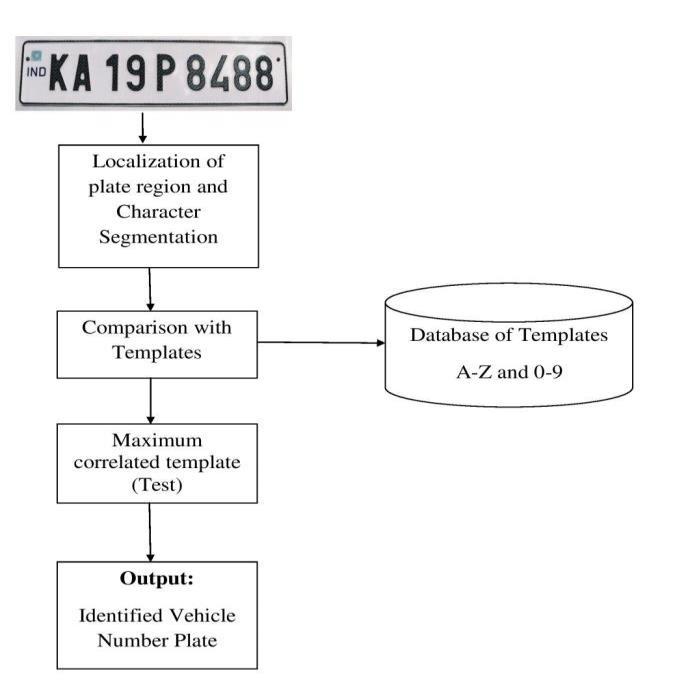
Toll collecting systems rely heavily on GNSS technology, especiallywiththeadventofelectronictollcollection(ETC) systems.Here'showGNSSisused:
AutomaticVehicleIdentification:GNSSenablesthe automatic identification of vehicles as they approachtollplazas.Thisallowsforfasterandmore efficienttollcollecting,withouttheneedformanual involvement.
Distance-Based Tolling: With GNSS, charges are determinedbasedonthedistancetraveledontoll roadsratherthanfixedtollbooths.Thisapproach encouragesfairpricingbasedonrealconsumption.
Real-Time Tracking: GNSS allows for real-time vehicle tracking, which aids in traffic flow monitoringandtollpointcongestionmanagement. This information may also be utilized to optimize roadmaintenanceandplanning.
Integration with Other Systems: GNSS may be integratedwithmobileapplicationsandelectronic walletstoprovidesmoothpaymentchoices.Users can receive toll-charge notifications and pay immediatelyusingmobileapps.
Interoperability: GNSS technology facilitates interoperability among states and toll providers, allowingcarstoaccessdifferenttollroadswithout theneedfornumerousaccountsortransponders.
International Research Journal of Engineering and Technology (IRJET) e-ISSN: 2395-0056
Volume: 11 Issue: 11 | Nov 2024 www.irjet.net p-ISSN: 2395-0072
Theseinnovationsnotonlyspeedtollcollecting,but also improve the overall efficiency of India's transportationsystem.
2. Benefits and Drawback
Adetailedanalysisoftheadvantagesanddisadvantagesof tollcollectingtechniquesinthepast,present,andfuture:
Past(ManualTollCollection)
Benefits:
Low upfront costs, Simple implementation, Personalized connectionwithtollcollectors,Simpletousefordrivers
Demerits:
Timeintensive,pronetohumanmistake,Securityrisks(theft andfraud),Limited paymentchoices,Congestionandlines.
Present(ElectronicTollCollection).
Benefits:
Reducedcongestion,Increasedefficiency,Improvedsafety, Enhanceduserexperience,AutomatedPaymentProcessing
Demerits:
Significantupfrontexpenses,Technicalconcernsandupkeep, Interoperability Concerns, Privacy Concerns (Data Collection),DependenceonTechnology
Future(AutomaticandElectronicTollCollection)
Benefits:
Increased efficiency, Increased security, Better user experience , Automated payment processing, Real-time TrafficManagement,Reducedcongestion,Increasedrevenue collections
Demerits:
Significant upfront expenses, Technical concerns and upkeep,Cybersecurityrisks,Dependenceonsophisticated technologies,Potentialforfaults(systemglitches)
3. Comparative Analysis
EvolutionofTollCollectionBenefits
Increasedefficiency.
Improvedsafety.
ImprovedUserExperience
AutomatedPaymentProcessing
Real-timeTrafficManagement
EvolutionofTollCollectionDemerits
Significantupfrontexpenses
Technicalconcernsandupkeep.
Securityissues(theft,fraud,andcybersecurity)
Dependenceontechnology
Possibilityoffaults(human,systemmalfunctions)
FutureDirections
Integration of Intelligent Transportation Systems (ITS)
ApplicationofAIandMachineLearning(ML)
ImplementationofBlockchainTechnology
Increasedattentiononcybersecurity.
Developing more efficient and sustainable toll collectingmechanisms.
This comparative analysis focuses on the progress of toll collection methods, from manual to automated and computerizedsystems.Whileeachapproachhasadvantages anddisadvantages,thefutureoftollcollectingoffersmore efficiency,security,andautomation.
Table -2: ComparativeAnalysisofTollCollection
Years Waiting Time Source Used
1950–20’s 14-16Min ManualCollection
2014Launched (2020December Implemented)2025
47Sec-5Min (Approximate) RFID(Radio Frequency Identification)
2025-Future 10Sec (Expected) GSNSS(Global SatelliteNavigation SystemsAnd Services)
Key observations:
1.Significantdecreaseinwaittime:from14-16minutesin the1950sto10secondsinthefuture.
2.Technologicaldevelopmentsincreaseefficiency:RFIDcut waitingtimeby75%,whileGSNSSispredictedtoloweritby 90%comparedwithRFID.
4. Auto Gate Toll System ( Smart Vehicle Identification & Payment Flow):
TheSmartTollPasssystemautomatesandstreamlinestoll collecting, employing vehicle recognition technology and real-timeaccountmanagementtoenhancetrafficflowand payment efficiency at toll gates. Traditional toll collecting techniques,whichfrequentlyrelyonmanualpayments,can createsubstantialdelays,contributingtotrafficcongestion andinefficiency.Incontrast,theSmartTollPasstechnology
International Research Journal of Engineering and Technology (IRJET) e-ISSN: 2395-0056
Volume: 11 Issue: 11 | Nov 2024 www.irjet.net p-ISSN: 2395-0072
streamlines the procedure by identifying cars, validating registrationstatus,checkingaccountbalances,andenabling automated payments. The flowchart that is being shown hereshowstheSmartToll Passsystem'sintricate process flow. It describes how the system manages cars that are registered or unregistered, performs balance sufficiency checks, and opens toll gates in accordance with those operations.Tollcollectionmaybecompletedsmoothlywith thehelpofanautomatedsystem,whichevenpermitscars withlowbalancestopasswhilerecordingthestatusoftheir accounts for a future resolution. This guarantees a more effective,user-friendlypassengerexperienceinadditionto reducingcongestion.
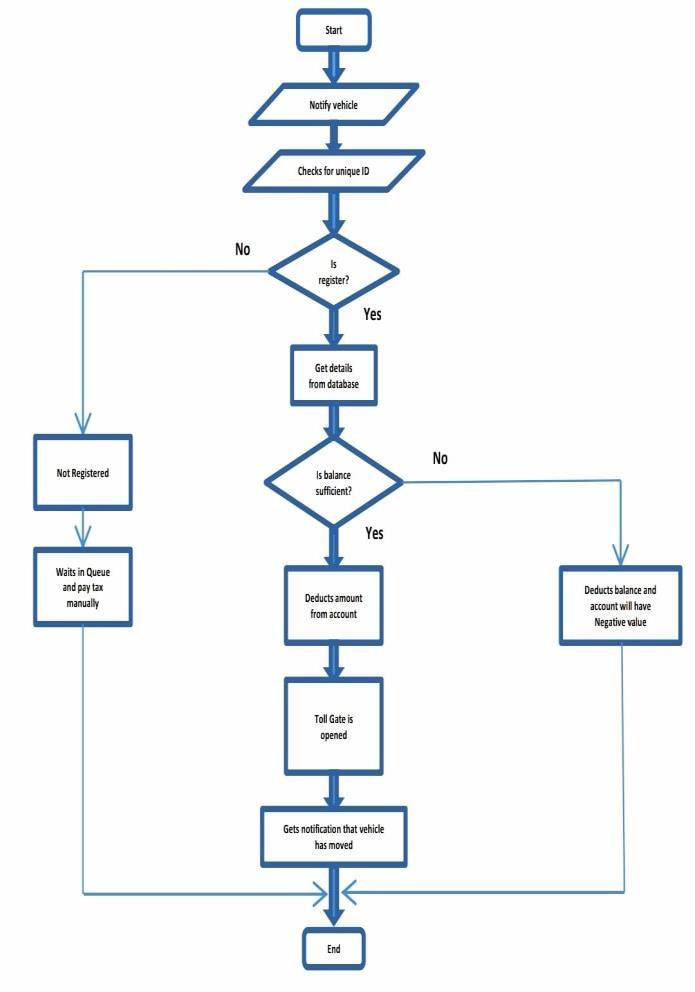
Working: Thisisa schematicthatshowshowa car goes through a toll gate. It demonstrates the procedures for determiningwhetherthecarisregistered,makingsurethere isenoughmoneyintheaccount,andtakingthetolloutofthe account.Thegateopensandsignalsthatthecarhasmoved, marking the conclusion of the procedure. a flow diagram showing how the electronic toll collection method works. Theprocedurestartsbyalertingthecarandthenlooksfora specialID.IntheeventthattheIDisnotregistered,theflow leadstoamanualpaymentqueue.Whenauserregisters,the system obtains information from a database. The chart determineswhetherthebalanceisadequate.Ifnot,moneyis takenoutoftheaccount,leavinganegativebalance.Ifthere isenoughbalance.
Customer Experience: Intoday'sfast-pacedenvironment, customersexpectspeedyresponses,thereforeshorterwait times can dramatically increase customer satisfaction. Operational Efficiency: Shorter processing times can contributetocostsavingsandimprovedresourceallocation. Futuresystemsareanticipatedtousevarioustechnologies (RFID, GSNSS, and IoT) to provide even more efficient operationsandincreasedanalyticalcapabilities.
The investigation of the financial sustainability, costeffectiveness,andrevenuegenerationoftollsystemsisthe focusoftheHighwayTollPlazasEconomicAnalysisstudy. ImpactonTrafficFlow:Evaluationoftheeffectsoftollplazas on travel times, congestion levels, and traffic patterns. TechnologicalIntegration:Examininghowimprovementsin electronictollcollectionsystemsaffectproductivityanduser satisfaction. Environmental Considerations: Examining possiblesustainablepractices andtheecological effects of tollingontheuseofhighways.UserExperience:Researchon how drivers feel, how satisfied they are, and how tolling affects various demographic groups socioeconomically. Policy and Regulation: Synopsis of the legal frameworks controllingtolling,incorporatingequityconsiderationsand pricing tactics. Comparative Studies: Assessment of toll systemsacrossvariousnationsorareastofindbestpractices andlessonsdiscovered.
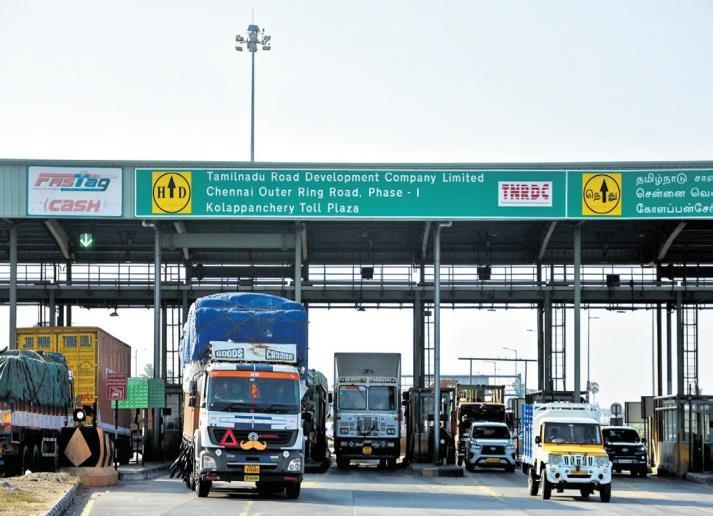
The image depicts a toll plaza, likely part of a highway in India, with multiple lanes of vehicles passing through. Prominent signage above the toll lanes indicates the operator, "Tamilnadu Road Development Company Limited"(TNRDC),anditspecifiesthelocationas"Chennai OuterRingRoad,Phase1,Kolappanchery Toll Plaza."The tollplazaisequippedtohandlevehiclesofvarioussizes,from largetrucksandfreightcarrierstosmallervehicleslikejeeps andvans.Thesignagealsodisplaystechnologysystemslike FASTag, indicating an automated toll collection system. Vehicles are seen queuing up for toll payment, with some
International Research Journal of Engineering and Technology (IRJET) e-ISSN: 2395-0056
Volume: 11 Issue: 11 | Nov 2024 www.irjet.net p-ISSN: 2395-0072
passing through lanes equipped for RFID-based tolling, denoted by FASTag/CASH signage, facilitating both automated and manual payments. The infrastructure appears modern, supporting a seamless toll-collection process, contributing to traffic management and reducing wait times
Through the use of cutting-edge technology including Automatic Vehicle Identification (AVI) systems and Electronic Toll Collection (ETC), the research successfully emphasizestheneedofenhancingtollplazaadministration. The results show that integrating the Global Navigation Satellite System (GNSS), Radio Frequency Identification (RFID),andFASTagtechnologiesmaygreatlyreducetraffic congestion,increasefuelefficiency,andimproveoveralltollcollectionefficiency.
In order to minimize environmental effect and provide a scalableandsustainablesolutionfortollplazaoperations, the paper promotes the use of automated vehicle identificationanddynamictollpricing.Futuredevelopments intollmanagement,likeasblockchaintechnologyforsecure transactions, artificial intelligence (AI)-driven traffic optimization,andsatellite-basedreal-timetrackingsystems, havethepotentialtosignificantlyimprovetheeffectiveness, security,andusabilityoftollcollectingsystems.
Tollsystemsmayprovideamoreefficientand sustainable highway infrastructure by adopting these technology advancements, which will enable them to handle both presentandfuturetrafficdifficulties.
Inconclusion,theanalysisofthehighwaytollplazareveals itscriticalroleinmanagingtrafficflow,generatingrevenue forinfrastructuremaintenance,andenhancingroadsafety. By examining operational efficiency, technological integration, and user experience, it becomes clear that ongoingimprovementsarenecessarytoaddresscongestion and optimize service. Future initiatives should focus on adopting innovative payment systems, enhancing data analytics for traffic management, and ensuring user accessibility to create a more effective and user-friendly tollingexperience.Ultimately,awell-managedtollplazacan contributesignificantlytotheoverallefficiencyofhighway systemsandthesatisfactionofmotorists.
[1] AbuzwidabM,&Aty,M.A.(2015).“Safetyassessmentof the conversion of toll plazas. to all-electronic toll collectionsystem”.AccidentAnalysis&Prevention,80, 153–161.
[2] https://www.moneycontrol.com/news/business/indias -total-toll-collections-rise-35-on-year-to-rs-64810-cr-infy24-target-for-fy25-at-rs-70000-cr-12626331.html
[3] https://tis.nhai.gov.in/Manual_Toll%20Information%2 0System.pdf
[4] F.Don,“ElectronicTollCollection:AnIntroductionand BriefLookatPotentialVulnerabilities,”inSANSInstitute infoSecReadingRoom,1.4bed.2004.
[5] Ajit S.Mali, Komal Barge, “Electronic Toll Collection SystemusingRFID”publishedatInternationalJournalof Innovative Research in Science, Engineering and Technology(IJIRS),Vol.6,Issue5,May2017.
[6] https://www.researchgate.net/publication/325712923 _A_Comparative_Study_of_Toll_Collection_Systems_in_In dia
[7] https://www.sciencedirect.com/science/article/pii/S26 67305322000369
[8] https://www.researchgate.net/publication/325712923 _A_Comparative_Study_of_Toll_Collection_Systems_in_In dia
[9] http://www.ijresm.com/vol1%2Ciss4%2CApril18/IJRE SM14_23.pdf
[10] https://www.sciencedirect.com/science/article/abs/pii /S2213624X23001074
[11] ElectronicTollCollection(ETC)system.(Wikipedia)
[12] K. Subramanam, “Number Plate Detection with Application to Electronic Toll Collection System,” International Journal of Innovative Research in ComputerandCommunicationEngineering,vol.1,no.1, pp.144-148,March2013.
[13] Omarhommadi, H. Asiri and Mamdoohalzahrani, “ComparisonofDifferentTollCollectionsSystem’sand RFID Tool Collection System,” American Journal of EngineeringResearch,vol.6,no.1,pp.118-121,2017.
[14] India's First Automatic Toll Collection System Launched. Source:https://www.ndtv.com/india-news/indias-firstautomatic-toll collection-system-launched
[15] A.S.Bhore,P.D.Thombare,P.B.Pure,B.W.Nimbhorkar andG.Agre,“AutomatedTollSystemforNumberPlate Detection and Collection,” International Journal of Advanced Research in Computer and Communication Engineering,vol.5,no.9,pp.481-483,September2016.
[16] CelilOzkurtandFatihCamc,“AutomaticTrafficDensity Estimation and Vehicle Classification for Traffic Surveillence System using Neural Networking,” MathematicalandComputationalApplications,vol.14, no.3,pp.187-196,2009.