
International Research Journal of Engineering and Technology (IRJET) e-ISSN: 2395-0056
Volume: 11 Issue: 11 | Nov 2024 www.irjet.net p-ISSN: 2395-0072

International Research Journal of Engineering and Technology (IRJET) e-ISSN: 2395-0056
Volume: 11 Issue: 11 | Nov 2024 www.irjet.net p-ISSN: 2395-0072
Nidhi K M1, Kannika B R2 , Pooja Balaganur3, Anusha M4
1234 Bachelor of Engineering, Information Science and Engineering, Bapuji Institute of Engineering and Technology Davangere, affiliated to VTU Belagavi, Karnataka, India
Abstract - Oneareaofartificialintelligenceisdeeplearning.Thebenefitsoffeatureextractionandautonomouslearninghave madeitahotissueinacademiaandbusinessinrecentyears.Naturallanguageprocessing,audioprocessing,andpictureand videoprocessinghaveallmadeextensiveuseofit.Ithasalsodevelopedintoahubforagriculturalplantprotectionresearch, whichinvolvesdiagnosingplantdiseasesandevaluatingtherangeofpests.Deeplearningmaybeusedtodetectplantdiseases withoutthedrawbacksofartificialselectionofdiseasespotfeatures,aswellasincreasingtheobjectivityofplantdisease featureextractionandacceleratingtechnologicaldevelopmentandresearchefficiency.Anoverviewofthestateofresearchon deeplearningtechnologyisgiveninthisreport.intheareaofdeeplearningusingagriculturalimages.Agriculture,which contributesmosttoexpandingeconomiesandpopulations,isessentialtotheavailabilityofhigh-qualityfood.Plantdiseases havetheabilitytowipeoutspeciesvarietyandresultinlargelossesinfoodproduction.Usingpreciseorautomateddetection methods for early plant disease diagnosis could improve food production quality and lower losses. Deep learning has significantly increased the recognition accuracy of object detection and picture classification systems in recent years. Therefore,weemployedconvolutionalneuralnetwork(CNN)-basedpre-trainedmodelsinourworktoefficientlyidentifyplant illnesses.Weconcentratedonfine-tuningthehyperparametersofmanypopularpre-trainedmodels,includingInceptionV4, DenseNet-121,ResNet-50,andVGG-16.
Key Words: CNN, deep learning, transfer learning, leaf disease, and patholog
1.INTRODUCTION
Agriculture,beingasubstantialcontributortotheworld’seconomy,isthekey sourceoffood,income,andemployment.In India,asinotherlow-andmiddle-incomecountries,whereanenormousnumberoffarmersexist,agriculturecontributes18% ofthe nation’sincomeand boosts theemploymentrate to53%[1].Forthepast3 years, thegross valueadded(GVA) by agriculturetothecountry’stotaleconomyhasincreasedfrom17.6%to20.2%[2,3].Thissectorprovidesthehighestshareof economicgrowth.Hence,theimpactofplantdiseaseandinfectionsfrompestsonagriculturemayaffecttheworld’seconomy byreducingtheproductionqualityoffood.Prophylactictreatmentsarenoteffectiveforthepreventionofepidemicsand endemics.EarlymonitoringandproperdiagnosisofcropInfectedplantstypicallyhavenoticeablemarksorspotsontheir stems,fruits,leaves,orflowers;morespecifically,eachinfectionandpestconditionleavesdistinctpatternsthatcanbeusedto diagnoseabnormalities;identifyingaplantdiseaserequiresexpertiseandmanpower;additionally,manualexaminationwhen identifyingthetypeofinfectionofplantsissubjectiveandtime-consuming;and,occasionally,thediseaseidentifiedbyfarmers orexpertsmaybemisleading[4].Determiningthetypesofplantdiseasesisacriticalissuethatrequirescarefulattentionto detail.
PlantVillageisaplantdiseasedatasetreleasedbyPennsylvaniaStateUniversity[17].Thereare38plantdiseaseclassesand 54,305RGBphotosinPlantVillage.Itincludespicturesoffourteendistinctplants.Everyplanthasaminimumoftwo256×256 pictureclassesthatdepictbothhealthyanddamagedleaves.Figure1displaysaselectionofthedataset'spictures.Numerous studiesonplantdiseaseidentificationhavebeenconductedafterthedataset'spublication[18–21].
CNNdeeplearningmodelsarewidelyusedinimage-basedresearch.Theyareeffectiveatextractingsimple,low-levelfeatures frompictures.Unfortunately,trainingdeepCNNlayersischallengingduetothehighcomputationalcost.Severalresearchers have suggested transfer learning-based models to address these problems [22–26]. The VGG-16, ResNet, DenseNet, and Inceptionmodelsarewell-likedtransferlearningmodels[27].TheImageNetdataset,whichcomprisesseveralclasses,isused totrainthesemodels.Becauseimagecharacteristicslikeedgesandcontoursaresharedbyalldatasets,thesemodelscanbe trainedonanydataset.Thus,themostappropriateandreliablemodelforimageclassificationhasbeendeterminedtobethe transferlearningapproach[28].
International Research Journal of Engineering and Technology (IRJET) e-ISSN: 2395-0056
Volume: 11 Issue: 11 | Nov 2024 www.irjet.net p-ISSN: 2395-0072
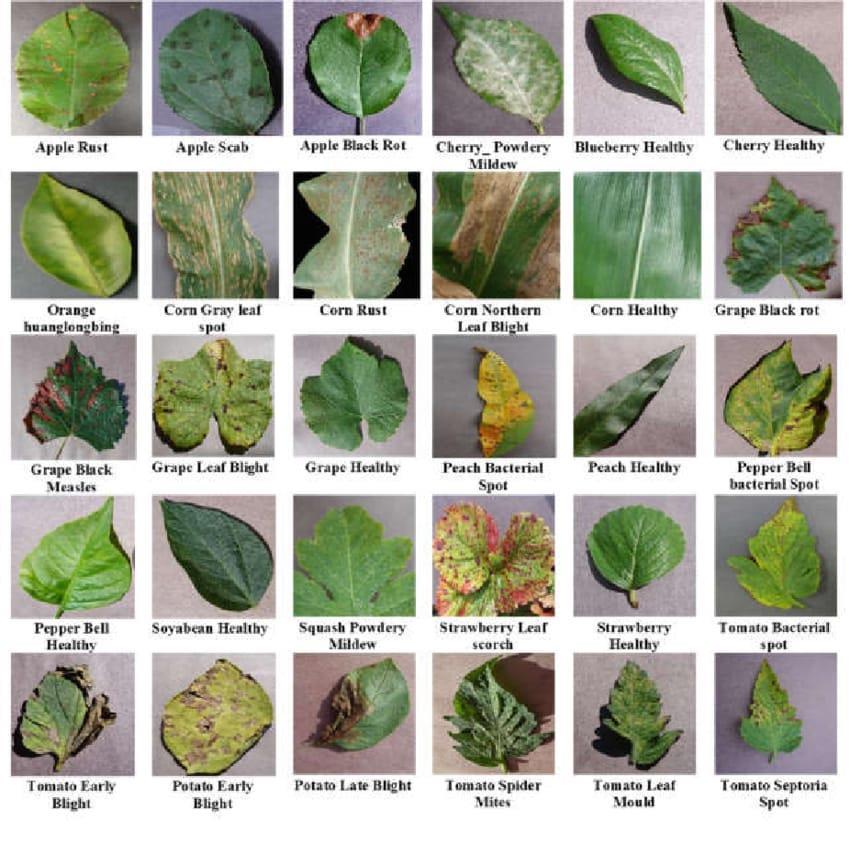
– 1:showssamplephotosfor38differentkindsofleafdiseasesfromthePlantVillagecollection.
International Research Journal of Engineering and Technology (IRJET) e-ISSN: 2395-0056
Volume: 11 Issue: 11 | Nov 2024 www.irjet.net p-ISSN: 2395-0072
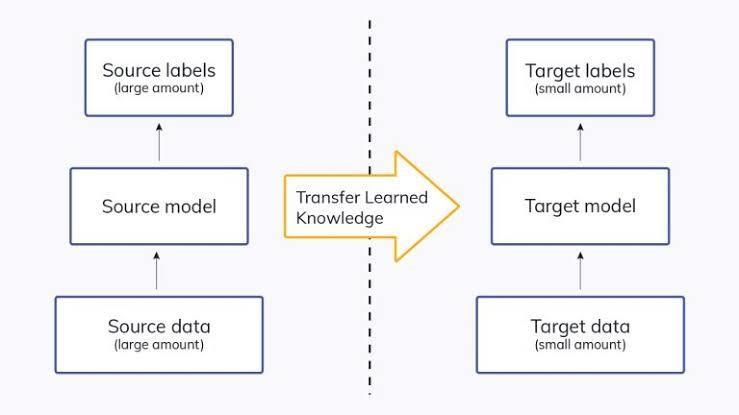
Fig – 2:Basicideabehindtransferlearning.
Tasksaremoreaccuratewithtransferlearning[22],sincethemodelcanbetaughtbyfreezingeithertheinitialorlastlayers. Themodelparameterscanthereforebemaintainedandadjustedforfeatureextractionandclassificationbyfreezingthelayers [29].Inordertoimproverecognitionandclassificationaccuracyandreducetimecomplexity,weconductedacomparative performanceanalysisofvarioustransferlearningmodelsusingdeepCNNs.Figure3showsourworkflowarchitecture.The PlantVillagedatasetandpre-trainedCNNmodels,includingVGG-16,DenseNet-121,ResNet-50,andInceptionV4,wereusedin thetests.
PlantVillageisaplantdiseasedatasetreleasedbyPennsylvaniaStateUniversity[17].Thereare38plantdiseaseclassesand 54,305RGBphotosinPlantVillage.Itincludespicturesoffourteendifferentplants.Everyplanthasaminimumoftwo256× 256 picture classes that depict both healthy and damaged leaves. Figure 1 displays a selection of the dataset's photos. Numerousresearchhavebeenconductedafterthedataset'spublicationtoidentifyplantdiseases[18–21].
Thefollowingsuccinctlydescribesthemaincontributionsofthismanuscript:
•Creatingadeeplearningmodeltodiagnosedifferentplantdiseases;identifyingthebesttransferlearningmethodtoachieve the highest classification and recognition accuracy for multi-class plant diseases; resolving different labeling and class problemsinplantdiseaserecognitionbysuggestingaCNNmodelbasedonmulti-class,multi-labeltransferlearning;resolving theoverfittingissueusingdataaugmentationtechniques
• A multi-class, multi-label transfer learning-based CNN model was proposed to address the separate labeling and class concernsinplantdiseaserecognition;dataaugmentationtechniqueswereusedtoaddresstheoverfittingissue.
International Research Journal of Engineering and Technology (IRJET) e-ISSN: 2395-0056
Volume: 11 Issue: 11 | Nov 2024 www.irjet.net p-ISSN: 2395-0072
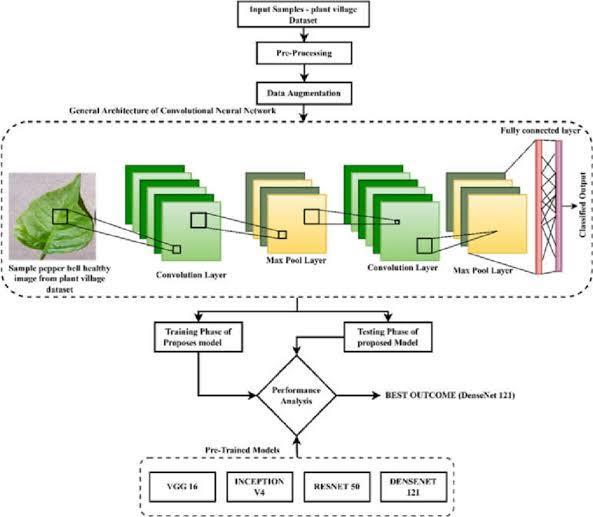
– 3: Overall workflow diagram.
2. Related Work:
Iftheearlywarningindicationsofplantdiseaseareignoredinthesphereofagriculturalproduction,foodcroplossescould potentiallydevastatetheglobaleconomy[30].
Inordertoaccuratelyclassifyplantdiseases,aCNN-baseddeeplearningmodelwaspresentedin[31].Apubliclyaccessible datasetconsistingof87,000RGBimageswasusedtotrainthemodel.First,preprocessingwasdone,andthensegmentation.
CNNwasutilizedtoclassifythedata.Despiteachievinga93.5%identificationaccuracy,thismodelwasunabletocategorize certainclasses,whichcausedconfusionwiththeclassesinlaterstages.Furthermore,themodel'sperformancedeclinedasa resultofthedata'slimitedavailability.However,Narayananetal.[32]suggestedahybridconvolutionalneuralnetworkto categorizebananaplantdiseaseinordertoincreaserecognitionaccuracy.Theirmethodusedamedianfiltertopreservethe conventionalimagedimensionswhilepreprocessingtherawinputimagewithoutchanginganydefaultinformation
International Research Journal of Engineering and Technology (IRJET) e-ISSN: 2395-0056
Volume: 11 Issue: 11 | Nov 2024 www.irjet.net p-ISSN: 2395-0072
Reference CropFocus Disease Addressed Dataset
[41] Tomatoplant Various diseases and pests in tomatoplant
[29] Several Citrus canker, black Mould, bacterial blight,etc.
[45] Tomato ToMV, leaf mould fungus, powdery mildew,blight
[42] Several Powdery mildew, early and late blights, cucumber mosaic,downy mildew,etc
[43] Several Pepper bell bacterial spot, tomato early andlateblight
Self-generated database 9 Faster Regionbased CNN with SSD 1 and Region-based Fully Convolutional Network Precision: 85.98%
Plant disease symptoms database 12 56 diseases under 12 classes
AI-Challenger plant disease recognition 4
Opendataset 58
CNN Google Net with tenfold cross-validation
Accuracy: 84%
Faster regional CNN Accuracy: 98.54%
CNN with pretrained VGG network
Accuracy: 99.53%
PlantVillage 38 ImageNet, GoogLeNet, and VGG-16models
Accuracy: 99.09%
Table 1. DetailedsummaryoftheCNNmodelsusedintherecognitionandclassificationofplantdisease.
3. Methodology:
CNNmodelsworkbestwithpicturedatabasesforobjectrecognitionandclassification.CNNshavemanybenefits,butthereare stilldrawbacks,likethelengthytrainingperiodandtheneedforbigdatasets.ThetrainingofdeepCNNmodelsbecomesmore difficultinordertoextractthelow-levelandcomplexcharacteristicsfromtheimages.Thedifficultieslistedabovecanbe overcomebyusingtransferlearningstrategies.Modelparametersgainedonaspecificdatasetcanbeappliedtodifferentissues throughtheuseofpre-trainednetworksintransferlearning.Themethodsemployedinthisworkarecoveredinthissection.
3.1. Classification by Multiple Classes:
Eachplantsampleisassignedtoaspecificclass,andplantdiseasedatasetscontainseveralphotosofbothhealthyandafflicted plantsamples.Imagesofbothhealthyanddiseasedbananaplantsamples,forexample,willbemappedtotheappropriateclassif wethinkofthebananaplantasawhole.Atthispoint,justthefeaturestakenfromthesourceimageareusedtoclassifythetarget image.Blacksigatoka,bunchytopvirus,fusariumwilt,andxanthomonaswiltarethefourdiseasegroupsthataffectthebanana class,usingthesameexampleasthebananaplant[32].Onceallfoursetsofillnesssamplesfromthebananaclasshavebeenused fortraining,thetestingphaseoutputwillcategorizewhenasampleofacertaindiseaseisdownloadedasinput.
3.2. The Approach to Transfer Learning:
Most state-of-the-art models require days or weeks to train and fine-tune, even when they are trained on powerful GPU computers.Ittakestimetotrainandcreateamodelfromthegroundup.In200epochs,aCNNmodelconstructedfromscratch usingapubliclyavailableplantdiseasedatasetappearedtoachieve25%accuracy,butapretrainedCNNmodelemployinga transferlearningtechniqueachieved63%accuracyinnearlyhalftheiterations(morethan100epochs).Thereareanumberof
International Research Journal of Engineering and Technology (IRJET) e-ISSN: 2395-0056
Volume: 11 Issue: 11 | Nov 2024 www.irjet.net p-ISSN: 2395-0072
transferlearningtechniques;whichoneisusedwillrelyonthespecificsofthedatasetandthepre-trainednetworkmodel selectedforclassification.
TheVGG-16[50]networkmodel,alsoknownastheVeryDeepConvolutionalNetworkforLarge-ScaleImageRecognition,was builtbytheVisualGeometryGroupfromOxfordUniversity.Thedepthispushedto16–19weightlayersand138Mtrainable parameters.Thedepthofthemodelisalsoexpandedbyreducingtheconvolutionfiltersizeto3×3.Thismodelrequiresmore trainingtimeandoccupiesmorediskspace
4.Experiments:
OurstudieswereevaluatedusingaGPUNVIDIAGeForceGTXworkstationasthebaselinesystem.Thesystemspecifications were Core i5 9th generation, GDDR5 graphics memory, Windows 10, and 8 GB of random-access memory. Utilizing the Anaconda3,Keras,OpenCV,NumpyCuDNN,andTheanolibraries,softwareimplementationwascarriedout.Simplelibraries calledCUDNNandCUMeMwerecreatedspecificallytoexecutedeeplearningimplementationsmorequicklyandwithreduced memoryusage.NVIDIAcreatedbothoftheselibrariestofunctionintheTheanobackend.WithsupportforLinux,Windows, Mac OS, iOS, Python, Java, and Android interfaces, OpenCV facilitates the development of both commercial and academic projects.Boththetestingandtrainingaccuracywereassessedforeveryexperimentinthisstudy.Wecomputedthelossesfor eachmodelduringthetrainingandtestingstages.ThePlantVillagedatasetwasusedtotrainthemodelsinordertoincrease theCNN'slearningspeedutilizingtransferlearningtechniques.Forourinvestigation,weselectedpre-trainedmodelssuchas ResNet-50,InceptionV4,VGG-16,andDenseNet-121.ThesemodelswerepreviouslytrainedusingtheImageNetdataset,which contained1.2millionimagesand1000imagecategories.
4.1 Dataset Description:
ApubliclyaccessibledatasetwithseveralplantdiseasecategoriesisPlantVillage[17].Thereare54,305photosin38classesin thisdataset.Wedividedthedatasetintotraining,testing,andvalidationsamplesforourexperimentalstudy.Eightypercentof thePlantVillagedatasetwasutilizedtotrainthepre-trainedmodels,withtheremainingtwentypercentbeingusedfortesting andvalidation.Additionally,ofthe54,305samplesthatwereavailablefortheplantclasses,43,955wereusedfortraining,4902 forvalidation,and5488fortesting.All38classesofthevariousplantdiseasesareincludedinthesetrain,test,andvalidation sets.
Table 2. DetailsofPlantVillagedatasetsplitfortraining,validation,andtesting
International Research Journal of Engineering and Technology (IRJET)
Volume: 11 Issue: 11 | Nov 2024 www.irjet.net
Grape
Grape_black_rot
Grape_black_measles
Grape_leaf_blight
Tomato Tomato_bacterial_spot
Tomato_healthy
Tomato_early_blight
Tomato_late_blight
Tomato_leaf_mold Tomato_septoria_leaf_spot
Tomato_spider_mites_twospotted_spider_mite
Tomato_target_spot
Tomato_mosaic_virus
Tomato_yellow_leaf_curl_virus
4.2. Data Augmentation and Preprocessing:
Therewere38classes,26illnesses,and14cropspeciesinthedataset.SincethecolorphotosfromthePlantVillagedatasetwork wellwiththetransferlearningmodels,weusedthemforourexperiment.Sinceweemployedvariouspre-trainednetwork modelsthatrequirevaryinginputsizes,theimagesweredownscaledto256×256pixelsasastandardformat.Whiletheinput shapeofpicturesforInceptionV4is299×299×3(height,width,andchannelwidth),theinputsizeforVGG-16,DenseNet-121,
International Research Journal of Engineering and Technology (IRJET) e-ISSN: 2395-0056
Volume: 11 Issue: 11 | Nov 2024 www.irjet.net p-ISSN: 2395-0072
andResNet-50is224×224×3(height,width,andchannelwidth).Despitethesizeofthedataset roughly54,000photosof various crop diseases the photos correspond to actual photos taken by farmers using various image collecting methods.smartphones, Kinect sensors, and HD cameras, for example. Furthermore,overfitting is a common problem with datasetsofsize.Thus,overfittingregularizationmethodsweredevelopedtogetaroundthis,likedataaugmentationfollowing pretreatment.Zoomintensity,rescaling,flippinghorizontallyandvertically,andclockwiseandanticlockwiserotationwere amongtheaugmentationtechniquesappliedtothepreprocessedphotos.Comparedtomodelscreatedfromscratch,thetransfer learningmodelhastheadvantageoflearningmorequicklyandallowingforthefreezingofmodellayerssothatthefinallayers canbetrainedformoreprecisecategorization.First,somehyperparameterstandardizationsforvariouspre-trainedmodels werecarriedout.
Tooptimizethemodels,stochasticgradientdescentwasused.ForDenseNet-121,ResNet-50,VGG-16,andInceptionV4,the initiallearningratesweresetto0.001.Everymodelranfor30epochs,withafixeddropoutvalueof0.5.Afterafewiterations (i.e.,theoutputgraphbegantoconvergeafter30epochs),ourexperimentwasabletoovercometheproblemsofoverfittingand degradation.
Table 3. Hyperparameterspecifications.
Regularization Batchnormalization Optimizer Stochasticgradientdescent(SGD)
4.4. Model of Network Architecture:
Theselectionofpre-trainednetworkmodelswasbasedonhowwelltheyappliedtotheobjectiveofclassifyingplantdiseases. Table4providesinformationonthemodelarchitecture.Differentfiltersizesareusedbyeachnetworktoextractparticular characteristicsfromfeaturemaps.Whenitcomestofeatureextraction,filtersareessential.Additionally,eachfilterwillextract distinctfeaturesfromtheinputwhenconvolvedwithit;theparticularfeatureextractionfromthefeaturemapsiscontingent uponthefiltervalues.Weemployedrealpre-trainednetworkmodelsinourstudies,utilizingthepreciseconvolutionlayer combinationsandfiltersizesforeverynetworkmodel.
5. Findings and Conversation:
Inordertodiagnoseplantillnesses,thissectionofthestudyusedcutting-edgedeeplearningmodelswiththetransferlearning methodology.ThedeepCNNnetworksthathadalreadybeentrainedusingtheImageNetdatasetwerefurthertrainedusing PlantVillage,apublicallyaccessibledataset.Eachmodelwasstandardizedforourexperimentwith38outputclasses,adropout of0.5,andalearningrateof0.01.Training,test,andvalidationsamplesweretakenfromthedataset.Thepre-trainedInception V4,VGG-16,ResNet,andDenseNet-121modelsweretrainedusing80%ofthePlantVillagesamples.After30epochsofoperation foreachmodel,itwasdiscoveredthatourmodelbegantoconvergewithexcellentaccuracyafter10epochs.Highyieldsin agriculturalproductiondependonearlycropdiseaseidentification.Thenewesttechnologyshouldbeusedintheearlydiagnosis ofplantdiseasesinordertomaintainahighoutputrate.Theliteraturereviewrevealedthattransferlearning-basedmodelsare effectiveinremovingtrainingcomplexityandtheneedforlargedatasets,whiledeeplearningmodelsareeffectiveatclassifying images.Inordertoidentifythemodelthatwasmosteffectiveinclassifyingdifferentplantillnesses,weassessedfourpre-trained modelsinthisstudy:VGG-16,ResNet-50,InceptionV4,andDensNet-121.Evaluationcriterialikespecificity,sensitivity,andF1 score values were used to assess the pre-trained models' performance. The F1 score was used to calculate the validation accuracy,andagraphicaldepictionofthevalidation.Displaysastatisticaldepictionofthepre-trainednetworkmodelsaccording totheevaluationmetrics.Regularizationtechniqueslikebatchnormalizationwere usedtoremovethevanishinggradient problemscausedbyskipconnections.Deepermodelspresentedanumberofdifficulties,includingcovariantshifts,overfitting,
International Research Journal of Engineering and Technology (IRJET) e-ISSN: 2395-0056
Volume: 11 Issue: 11 | Nov 2024 www.irjet.net p-ISSN: 2395-0072
andthecomplexityoftrainingtime.Weadjustedthehyperparametersinourexperimentstogetaroundtheseobstacles.Inorder toforecastthepercentageofgenuinelyhealthyplantsclassifiedashealthy(truepositive)andgenuinelyhealthyplantsclassified asunwell(falsenegative),thetestsemployedsensitivity.ResNet-50andDenseNet-121outperformedtheVGG-16andInception V4models,accordingtotheevaluation.Anevaluationofthevariouspre-trainedmodels'performancebasedontheirsensitivity andspecificity.
6. CONCLUSIONS:
Inthiswork,wewereabletoexaminethedifferenttransferlearningmodelsthataresuitableforaccuratelyidentifying38 differentplantdiseaseclasses.Theperformanceanalysisofthevariouspre-trainedarchitecturesrevealedthatDenseNet-121 outperformedResNet-50,VGG-16,andInceptionV4.TrainingtheDenseNet-121modelseemsstraightforwardduetoitslower computationalcomplexityandsmallernumberoftrainableparameters.Whenanovelplantdiseaseneedstobeincludedinthe model,DenseNet-121ismoresuitedforplantdiseasedetectionduetoitslowertrainingcomplexity.Theclassificationaccuracy oftheproposedmodelwas99.81%.Infuturestudies,wewilladdressthedifficultiesrelatedtomulti-objectdeeplearning algorithmthatcanevendetectplantdiseasesfromacollectionofleavesratherthanasingleleafusingreal-timedatacollection. Thetrainedmodelfromthisstudywillalsobeusedtodevelopamobileapplication.Thecapacitytodetectleafdiseasesinreal timewillbehelpfultofarmersandtheagriculturesector.
1.Alston,J.M.;Pardey,P.G.AgricultureintheGlobalEconomy.J.Econ.Perspect.2014,28,12–14.[CrossRef].
2.ContributionofAgricultureSectorTowardsGDPAgricultureHasBeentheBrightSpotintheEconomydespiteCOVID-19. Availableonline:https://www.pib.gov.in/indexd.aspx(accessedon29September2022).
3.Li,L.;Zhang, S.; Wang, B. PlantDiseaseDetectionand Classificationby Deep Learning AReview.IEEEAccess2021,9, 56683–56698.[CrossRef]
4.Yun, S.; Xianfeng, W.; Shanwen, Z.; Chuanlei, Z. PNN based crop disease recognition with leaf image features and meteorologicaldata. Int. J. Agric. Biol. Eng. 2015, 8,40-48[CrossRef]
5.Li,G.;Ma,Z.;Wang,H.ImageRecognitionofGrapeDownyMildewandGrape.InProceedingsoftheInternationalConference onComputerandComputingTechnologiesinAgriculture,Beijing,China,29–31October2011
6.Rauf,H.T.;Saleem,B.A.;Lali,M.I.U.;Khan,M.A.;Sharif,M.;Bukhari,S.A.C.Acitrusfruitsandleavesdatasetfordetectionand classificationofcitrusdiseasesthroughmachinelearning. Data Brief 2019, 26,104340.[CrossRef][PubMed]
7.Mohanty,S.P.;Hughes,D.P.;Salathé,M.UsingDeepLearningforImage-BasedPlantDiseaseDetection. Front. Plant Sci. 2016, 7,1419.[CrossRef]
8.PlantVillage.Availableonline:https://plantvillage.psu.edu/(accessedon29September2022)
9.Panchal,A.V.;Patel,S.C.;Bagyalakshmi,K.;Kumar,P.;Khan,I.R.;Soni,M.Image-basedPlantDiseasesDetectionusingDeep Learning. Mater. Today Proc. 2021.[CrossRef]
10.Narayanan,K.L.;Krishnan,R.S.;Robinson,Y.H.;Julie,E.G.;Vimal,S.;Saravanan,V.;Kaliappan,M.BananaPlantDisease ClassificationUsingHybridConvolutionalNeuralNetwork. Comput. Intell. Neurosci. 2022, 2022,9153699.[CrossRef]
11.Abayomi-Alli,O.O.;Damaševicˇius,R.;Misra,S.;Maskeliunas,R.Cassavadiseaserecognitionfromlow-qualityimagesusing¯ enhanceddataaugmentationmodelanddeeplearning. Expert Syst. 2021, 38,e12746.[CrossRef]
12.Abbas,A.;Jain,S.;Gour,M.;Vankudothu,S.TomatoplantdiseasedetectionusingtransferlearningwithC-GANsynthetic images. Comput. Electron. Agric. 2021, 187,106279.[CrossRef]
13.Astani,M.;Hasheminejad,M.;Vaghefi,M.Adiverseensembleclassifierfortomatodiseaserecognition. Comput. Electron. Agric. 2022, 198,107054.[CrossRef]
14.Fuentes,A.;Yoon,S.;Kim,S.C.;Park,D.S.ARobustDeep-Learning-BasedDetectorforReal-TimeTomatoPlantDiseasesand PestsRecognition.Sensors2017,17,2022.[CrossRef]
International Research Journal of Engineering and Technology (IRJET) e-ISSN: 2395-0056
Volume: 11 Issue: 11 | Nov 2024 www.irjet.net p-ISSN: 2395-0072
15.Shrivastava,V.K.;Pradhan,M.K.Riceplantdiseaseclassificationusingcolorfeatures:Amachinelearningparadigm.J. Plant Pathol. 2021, 103,17–26.[CrossRef]
16.Agarwal,M.;Gupta,S.K.;Biswas,K.DevelopmentofEfficientCNNmodelforTomatocropdiseaseidentification. Sustain. Comput. Inform. Syst. 2020, 28,100407.[CrossRef]
17.Chen,J.;Chen,J.;Zhang,D.;Sun,Y.;Nanehkaran,Y.Usingdeeptransferlearningforimage-basedplantdiseaseidentification. Comput. Electron. Agric. 2020, 173,105393.[CrossRef]
18..Astani,M.;Hasheminejad,M.;Vaghefi,M.Adiverseensembleclassifierfortomatodiseaserecognition. Comput. Electron. Agric. 2022, 198,107054.[CrossRef]