
International Research Journal of Engineering and Technology (IRJET) e-ISSN: 2395-0056
Volume: 11 Issue: 11 | Nov 2024 www.irjet.net p-ISSN: 2395-0072

International Research Journal of Engineering and Technology (IRJET) e-ISSN: 2395-0056
Volume: 11 Issue: 11 | Nov 2024 www.irjet.net p-ISSN: 2395-0072
N. Habibunnisha1, M. Geethalakshmi2 and D. Nedumaran3*
1,3Central Instrumentation and Service Laboratory, University of Madras, Guindy Campus, Chennai 600 025, Tamil Nadu, India
2 Department of Mathematics, Queen Mary’s College, Chennai 600 004, Tamilnadu, India
Abstract - The interdisciplinary approach of fusing ideas from different domains with an objective of optimized results is a recent trend in the research areas of image processing. One such attempt was experimented in this study by combining structural mechanics concept of Discrete Topological Derivative (DTD) with Otsu binarization method to remove the show-through existing inthescanneddocument images. The Otsu binarization method was chosen through a comparative study withother traditionalbinarizationmethod. The proposed method DTD-cum-Otsu was implemented in scanned document images and compared with other six stateof-the-art techniquessuchasWiener,Bilateral,Median,Gabor, Homomorphic and Perona-Malik. The algorithms developed for the proposed study was tested in more than 150 scanned document images collected from the databases viz., DIBCO2013, DIBCO2014 and Nabuco dataset-2 and classified into three groups such as lightly-affected (LA), moderatelyaffected (MA) and strongly-affected (SA) show-through noisy images. The effectiveness of the proposed DTD-cum-Otsu method was assessed through visual inspection and quality metrics like PSNR, MSE, NAE, NCC, AD, F-measure, pseudo-Fmeasure, DRD, NRM and MPM. The results of this study reveal that the proposed method is the optimumtechniquetoremove the show-through noise effectively and retaining the useful information without distortion.Further,theexecutionspeedof the proposed method is within the range of real-time application requirements. Thus, the outcome of this study exhibits the glimpse of hope on the multidisciplinaryapproach of solving potential real-life problems.
Key Words: Show-through, Binarization, Image denoising, Diffusion, image enhancement, Quality metrics, DTD, Otsu.
Inrecentyears,mostoftheimportantdocumentsarebeing converted into digital formats for preserving them from aging,mutilation,spoilage,accidentaldamages,etc.Further, thesescanneddocumentsinthedigitalformathaveseveral advantageslikesecuritythroughencapsulation,e-exchange via digital communication, future reference through archiving, e-verification using authentication, etc. These records include ancient historical documents, government/official documents, ancient palm leaves collections, medical hints, etc., which bring lot of useful
information to realize our history, culture, language, evolution of society, and many more [1]. During the digitization process, the scanned digital data contains various types of noises such as margin noise, ruled line noise,clutternoise,non-uniformilluminationnoise,uneven contrast, interfering strokes, background spots, showthrougheffectetc.Thesenoiseswillaffectthequalityofthe document image as well as readability [2]. Among these noises,theshow-throughnoiseisoneofthemajorartifacts that affects the quality and readability of the document. Therefore,thesenoisesshouldberemovedwithouttheloss ofdetailsinthescannedoriginaldocuments.Show-through effect is one of the document image noises which present duringthedocumentdigitizationprocessduetodocument ageing, ink seepage, thickness/quality of the paper, and scanning device. In a scanner, when the single side printed/handwrittendocumentisscanned,thelightexposes tothepapertransmitsthroughthedocumentmediumand reflects back by the backing of the scanner. The reflected lightreceivesthefront-sideinformationbythedetectorand sentforthedisplayandstoragesection.But,inthecaseof double-sideprinteddocumentscanning,theback-sideofthe document information merges with the front-side of the documentinformationisknownas‘show-through’or‘bleedthrough’or‘back-to-frontinterference’[3].Thisinterference makes the reader uncomfortable in understanding and complexities in further processing tasks like automatic character recognition. Several denoising and binarization techniques were investigated by many researchers for removing the document degradations from scanner or camera captured images. Various image enhancement techniquessuchasnon-registration[4,5],registration-based [6, 7], histogram-based [8], thresholding-based [9-11], Genetic algorithm-based [12], and wavelet-based filtering [13] had been implemented to ameliorate the quality and readabilityofthescanneddocumentimages.Stillthisissueis prevailingasachallengingtaskandresearchersinthisarea havebeenendeavoringwithmultidisciplinaryapproachof transforming the mathematical ideas established in other fieldstosolvethiskindofdocumentimageprocessingtasks. Asaconsequenceofthiseffort,anovelstructuralmechanics conceptnamely,discretetopologicalderivative(DTD)was experimentedinthisresearchpaperforfilteringtheshowthroughnoiseincombinationwithabinarizationtechnique to enhance the quality and readability of the scanned documentimages.
International Research Journal of Engineering and Technology (IRJET) e-ISSN: 2395-0056
Volume: 11 Issue: 11 | Nov 2024 www.irjet.net p-ISSN: 2395-0072
Recently,manyresearchershavecontributedtothePartial DifferentialEquation(PDE)basedmethodsforsolvingthe imagedegradationindocumentimageprocessing,including diffusion like PDE’s for image filtering, shock filters for image deblurring and level-set approach for image segmentation. To overcome the shortcomings of the traditionalthresholdmethod,WangandHe[14]introduced anevolutionPDE-basedbinarizationtechniquetoimprove thequalityofcamera-captureddocumentimages.Amethod basedonthedynamicdiffusion-basedmodelcoupledwitha nonlinear Fitzhugh-Nagumo type source term, which demonstrated better character recognition [15], [16]. A nonlineardiffusionequationwithanadaptivesourceterm exhibitednoticeablesmoothingwithpreservationofdetails andthedesirablebinarizationpropertieswasexperimented byGuoetal.[17].Subsequently,theyexploitinganadaptive enhancement scheme [18] involving a shock filtering and nonlinear isotropic diffusion terms for improving the degraded document images. Zhang et al. [19] developed a modified form of Perona-Malik [20] anisotropic equation usingparallel-seriessplittingalgorithmbycombiningfinite differencing with two kinds of splitting methods for the binarization of bleed-through document images. For the purposeofrestoringdamageddocumentimages,DuandHe providedananisotropicdiffusionequationwithaselective source[21]followedbyabasicglobalthresholding.Recently, theyintroducedananisotropicdiffusionmodelwithfuzzybased source for separating the foreground from background of the degraded images [22]. Drira et al. presented a tensor based Weickert coherence-enhancing diffusion non-linear filter for controlling the diffusion processtopreservetheedgeandcornerinformationofthe document images [23, 24]. Mahani et al. proposed the applicationofPDEbasedmethodstodeducethereflectance from the log of luminance and demonstrated the improvements in the images acquired using low-quality cameraphoneimages[25].TheaforementionedPDEbased methodswasinspiredbysomeanisotropydiffusionprocess in the document image reconstruction. But, none of the above reviewed literature tried any novel methods from innovativeconceptsadaptedfromother fields. Thispaper aims to unravel the potentiality of a structural mechanics approach, called discrete topological derivative filter with binarizationtechniquetoremovetheshow-through effect andconformeditscapabilitiesthroughacomparativestudy withsixothertraditionaltechniques.Further,astudywas conducted among six binarization techniques and the outcome of this study was used to identify the Otsu technique as an optimum method for the binarization of documentimages.Finally,eachofthesixdifferentdenoising filterswascombinedwiththeOtsubinarizationtechnique andstudiedtheperformanceofthefiltersintermsofvisual perceptionandqualitymetrics. The remaining parts of the paper are sub-divided into following sections: the theory of topological derivative, concept of discrete topological derivative filter and binarizationmethodsaredescribedinSection2,followedby
thealgorithmdevelopmentstepsoftheproposedmethodsin Section3,andtheexperimentalresultsandinferencesare exemplifiedinSection4.Finally,theconcludingremarksof thisstudyaresummarizedinSection5.
Topological derivative is used to measure the shape sensitivityofaproblem,whenthedomainΩisperturbedin someway.Theperturbationmaybechangeintopology(by theintroductionofhole,crack,sourceterm,inclusionetc.)or bychangeinmaterial properties(diffusioncoefficientthat definethevariationsassociatedtotheproblemorchangein the forces/source term). In the figure 1, Ω is the domain perturbedbysmallhole(changeintopology), γε isthecrack oflength ε centeredatthepixel n,and Ф(Ω) and Фε(Ωε\γε) are thecostfunctionbeforeandafterperturbation,respectively. Hence, Ω beaboundedopensetin ℝN(N=2,3) and γε bethe crack of length ε centered at point Ω. Therefore, cost functionafterperturbationcanbedefinedas,
where f(ε)isapositivefunctiontendtozerowithrespecttoε value,and DT( ) isthetopologicalderivativeatthepointx y applyingtheperturbationatthepoint having DT ofnegative value, the cost function Ф will be reduced, since f(ε) is positive.
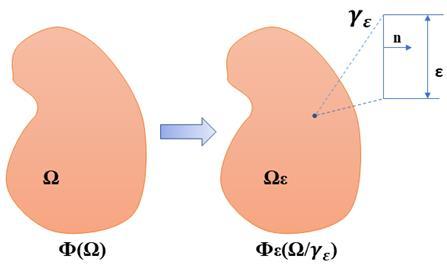
Fig. 1: Thediagrammaticrepresentationoftopological derivativeconcept
Thus, DT decidesthebestplaceswheretheperturbationwill be applied to reduce the cost function value, since it measuresthedegreeofsimilaritybetweentwoimageswith thelimitε→0,thereforetheeqn(1)isdividedby f(ε) which providestheeqn.(2)[26].
Inthispaper,thisdiscretetopologicalderivativeisemployed as a function to separate the background and foreground information, which ultimately reduces the show-through noise fromscanneddocumentimages.Thus,itservesasa restorationfiltertodenoisetheshow-througheffect.Then,a global binarization was applied to exhibit the effect of
International Research Journal of Engineering and Technology (IRJET) e-ISSN: 2395-0056
Volume: 11 Issue: 11 | Nov 2024 www.irjet.net p-ISSN: 2395-0072
preservingtheforegroundinformationfromthebackground interferencebytheproposedmethod.
The Discrete topological derivative (DTD) method is employedinthiswork,whichutilizesacostfunctionandits discreteform,isdenotedbytheeqn.(4).






Suppose and , then using eqn. (6),wecanacquirethevalue .Fromthe eqns.(7)and(9),thetotalvariationofthecostfunctional Ф duetotheperturbation canbewrittenas

where is the diffusion of pixel s with its neighbors p havingfourpixelsinthedirectionsdenotedby ns= and denotestheintensityofthepixel.Thediscreteform ofthe isdefinedintheeqn.(5)


Thevalueof isspecificallyestimatedusingtheeqn.(6)



where is the iteration number, is the four diffusion coefficient associatedwiththeneighbouringpixelsof s and isthesize ofthetime-step.

Letus applyperturbationat thepixel s (withtheadjacent pixels p) having an initial value of . The specific function havingaset anditsbestdiffusionvaluescan beestimatedfromthespecificfunction ,whichtunesthe cost-functioninsuchawaytoidentifythedetailstoreduce the show-through noise of the document image. Thus, the cost functional’s total variation with respect to the perturbationin canbecomputedusingtheeqn.(7).


where represents the total variation of the cost functionalduetoperturbationonthediffusivitycoefficient at pixel s characterized by the set . In this work, let ,thenthesetofallpossiblevaluesof canbe definedbytheeqn.(8)

Theequation10isusedtodevelopthealgorithmofdiscrete topologicalderivativefordenoisingtheshow-througheffect fromdocumentimages.Selectingthecorrectcostfunction based on the particular image is a challenging task for removingthenoiseeffectinalucentmanner.Inthispaper, wehavechosenthecostfunctionintroducedbyLarrabideet al.[27]andappliedthesametostudythecapabilitiesofthe proposed algorithm in removing the show-through effect fromthedegradeddocumentimages.Byselectingthecost functionbetween0and1andthediffusionwillstopat k=0, whichgivesthetotalvariationinthecostfunctionandhence theDTDfilteringwillcometoend.Thesuitableselectionof thepixelforperturbationandthecomputationoftherelated cost function will be of significant role in preserving the edgesinthetextregionsofthedocumentimages.
Binarization is the process of converting gray scale intensities(0-255)toabinarylevel(0sand1s).Whenthe inputpixelintensityiscomparedwiththresholdTvalue,the correspondingoutputpixelintensityischangedto0sand1s according to greater than or less than or equal to the thresholdvalueT Otsu’sapproachoftheoptimalthreshold selection based on the discriminant criterion by the integrationofthehistogram.Thetwooptionsforthreshold selection is to minimize within-class variance , or maximizethe between-classvariance andtheequation canbewrittenas,


where and are the probabilities of the two classesdividedbyathreshold t, isameanofclass and is a variance of class After applying the DTD filter, the filtered image was binarized with Otsu’s method [28] to exhibitthecapabilitiesofdenoisingtheshow-througheffect indocumentimages.

FromtheEq.(8),itisclearthat16differentvaluesof can be estimated using the neighboring four pixels, which has twovaluesviz., (24=16values).But,the costfunctionalvalueofallzeroscanbediscardedandhence theremaining15valuesareavailable.Ofthe15values,one value belong to the combination denotedbytheparameter maybediscardedowingtoits non-perturbed and isotropic nature. As a result, the remaining 14 combinations are represented by the parameterC(s).

Therefore, the value of any pixel can be computed by perturbingthatpixel s havingcombinationof .The costfunction becomes,

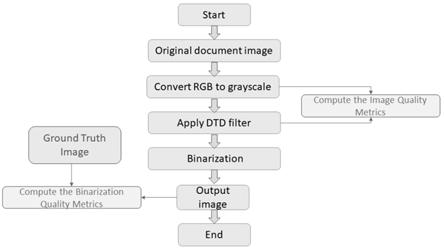
Inthissection,wepresentadiscretetopologicalderivative (DTD)filterwithOtsubinarizationmethodfordenoisingof theshow-througheffectondocumentimages.Theflowchart oftheproposedmodelisshowninfigure.2.Theprincipal idea of this algorithm is to calculate the topological derivativeforanappropriatecostfunctionalintroducedas perturbationinapixelinordertoidentifyitsdiffusionwith the neighboring pixels. At this point, the topological
International Research Journal of Engineering and Technology (IRJET) e-ISSN: 2395-0056
Volume: 11 Issue: 11 | Nov 2024 www.irjet.net p-ISSN: 2395-0072
derivativeactsasanindicatorfunctiontofindthebestpixels to introduce the perturbation that will reduce the showthroughnoiseandpreservethetextimagecharacteristics. Theoriginalscanneddocumentimageistakenasaninput. Before applying the DTD filter, the raw input image was convertedintograyscaleimage.InthisDTDalgorithm,the inputimageismagnifiedto a singlepixel level inorder to apply the cost function to a single pixel. The single pixel identifiedfordiffusionisnowsubjectedtothecostfunction. For each of the 16 possible outcomes, the diffusion coefficientoftheappliedcostfunctionisdetermined(under theassumptionthattheaffectedpixelissurroundedbyfour nearbypixels).Atthispoint,thetopologicalderivativeisset as an indicator function to determine how much the cost functionhasvariedoverall.Next,thetolerancevalue,which willalwaysbefixedatavaluegreaterthanzero,iscompared to the cost function of the first iteration. The iteration is stopped if the cost function is smaller than the tolerance value; otherwise, it continues to calculate the new cost function value by using a different value of the diffusion coefficient.Thegradientforthenewimageandtheoldimage is calculated for sensitivity analysis, if iteration is paused. Thedenoisedimageisthenreshapedusingthetopological derivativevalue.Thisprocessisrepeatedforeachpixel in the image Then, the Otsu’s binarization is applied to the restoreddocumentimage.
In this section, the proposed method was tested on more than150documentimagescollectedfromdatabasessuchas DIBCO2013,DIBCO2014andNabucodataset-2.Theinput imageswerecategorizedintolightly-affected,moderatelyaffectedandstrongly-affectedshow-throughnoisyimages, whichwereselectedfortestingtheproposedalgorithm.The results obtained for the proposed DTD method were compared with the traditional denoising filters such as Weiner,Median,Gabor,Homomorphic,Bilateral,andPerona &Malikfilter.Toidentifyanoptimumbinarizationmethod foraclearvisualizationofthedenoisedimage,Otsu,Niblack, Feng, Wolf, Kapur, Kittler and Sauvola [29] binarization methodsweretestedontherawimagesandcomputedtheir performancesbothquantitativelyandqualitatively.Fromthe datasets, we have chosen three types of sample showthrough-affected (lightly, moderate, strongly) images and their respective ground truth images for evaluation. To
assess the DTD filter performances with the other five denoisingfilters,Peak-SignaltoNoise-Ratio(PSNR),Average Difference (AD), Normalized Absolute Error (NAE) and Normalized Cross Correlation (NCC) parameters are estimated. For the assessment of the performance of the filters,higher-PSNR,lower-MSE,lower-NAE,unity-NCCand lower-AD are recommended and employed for the interpretation of the results obtained. Further, the performance of the binarization as well as proposed DTD withOtsumethodswerecomputedusingF-measure(FM), pseudo-F-measure (p-FM), Distance Reciprocal Distortion (DRD), Negative Rate Metric (NRM) and Misclassified Penalty Metric (MPM) [30-33]. Here, higher F-measure, higher p-FM, lower DRD, lower NRM and lower MPM are consideredasbetterstandardsforvalidatingtheresultsof thebinarizationandfiltered-binarizationtechniques.These performancemetricsaresuitedfortheobjectiveevaluation inthecontextofdocumentimageanalysisandrecognition. The proposed DTD method and other techniques were implementedonMATLAB(r2018a)compilerandrunonan IntelcoreprocessorCPU2.20GHZprocessorwith4.00GB RAMandWindows10Operatingsystem.Theresultsofthe casestudies for thethree differentshow-through-affected imagesandtheirinferencesaresummarizedasfollows.
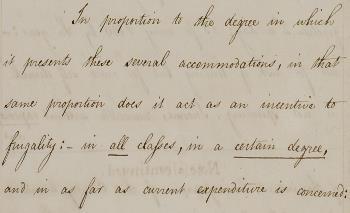
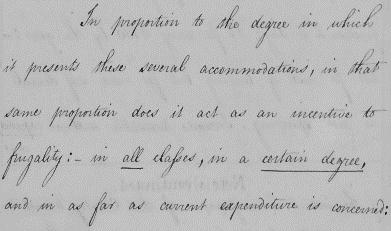
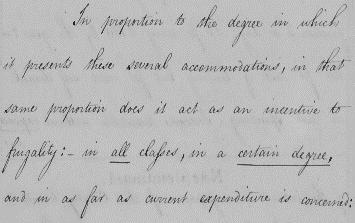
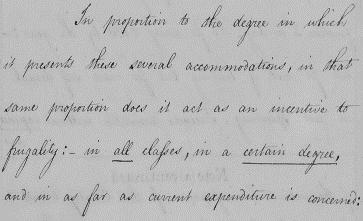
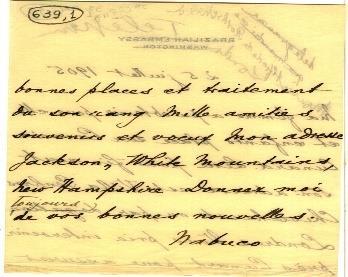
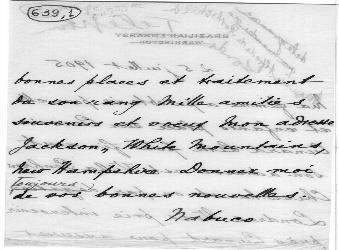
Original image Weineroutput Bilateral output Median output

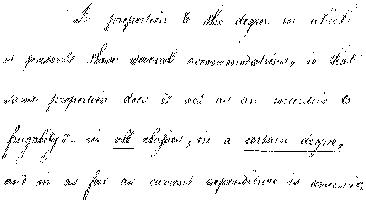
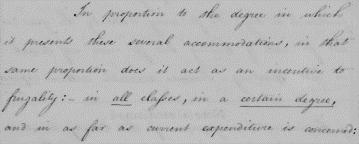
Gabor output Homomorphic output Perona& Malik output DTDoutput
Denoised-Outputsoflightly-affectedshow-throughimage
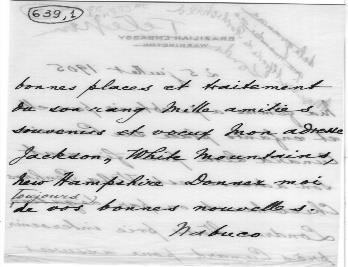
Original image Weineroutput Bilateral output Median output
International Research Journal of Engineering and Technology (IRJET) e-ISSN: 2395-0056
Volume: 11 Issue: 11 | Nov 2024 www.irjet.net p-ISSN: 2395-0072
Gabor output Homomorphic output
Perona& Malik output DTD output
Denoised-outputsofmoderately-affectedshow-through image
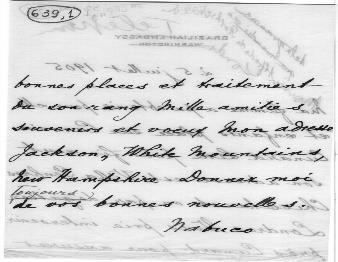
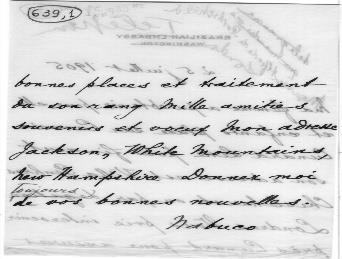
Original image Weineroutput Bilateral output Median output
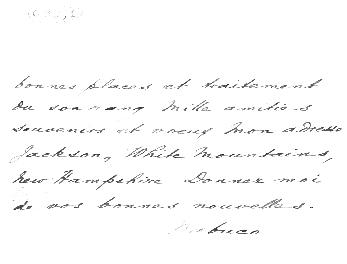
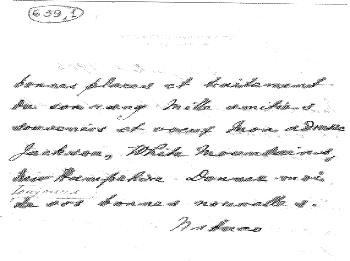
Gabor output Homomorphic output
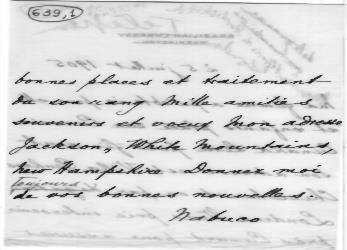
Perona& Malik output DTD output
Denoised-outputsofstrongly-affectedshow-through image
Fig.3: ResultsofthedenoisingoutputsofproposedDTD andotherfilters
Table 1: Imagequalitymetricsofthelightly-affected(LA), moderately-affected(MA)andstrongly-affected(SA) show-throughnoiseimagesoftheproposedDTDand othersixfilters
Quality Measures
Figure3andTable1arethedenoised-outputimagesforLA, MA and SA affected show-through noise images and their respective performance metrices, respectively. On visual inspectionofimagesintheFigure3,itisobservedthatthe DTDfilterretainsthedetailsoftheLAimage,butverylittle show-through noise with the background information are stillpresent,whereastheHomomorphicandGaborfiltered imagesarelookedlikecompletelydenoisedoutputs,which aretheresultofover-filteringofthedetailsandbackground information in those images The remaining four filters’ outputs have comparatively less details and background informationthantheproposedDTDfilter.Fromestimated performancemetricsgivenintheTable1,theproposedDTD filterhashighPSNR,lowMSE,lowNAE,unityNCCandlowAD values than its visuallybetter counterparts viz., Gabor andHomomorphicfiltersareconcerned.Thisimpliedthat theDTDfilteroptimallytunesthecost-functiontoremove theshow-throughnoiseattheoptimumlevelthantheother filter with maximum details as well as background information
In the case of MA image shown in Figure 3, the DTD filter performed well by retaining the details as well as the backgroundinformationoftheimagebyoptimally-filtering theshow-throughnoise.Inthecontrary,theHomomorphic filtercompletelyremovedthebackgroundinformationand finerdetailsoftheimagewhichisexhibitedastotal-filtering oftheshowthroughnoise.TheGaborfilterlostmostofthe detailsandthebackgroundinformationandtheotherfour filtersarenotonparwiththeproposedDTDresults.These observationsareascertainedfromtheperformancemetrics (Table1)suchashigherPSNR,lowerMSE,low-NAE,unity NCCandlowerADvalues,whichisbetterthanvisuallyclear Homomorphicfilterimage.Thus,theDTDfilteristhebetter choicefortheMAshow-throughnoisyimages.
FortheSAimageshowninFigure3,theDTDfilteroptimally enhances the foreground as well as the background information,whilefiltering theshow-through noiseto the required level for better visual perception. On the other hand,theHomomorphicfilterseemstobebetterdenoising atthecostoffinerdetailsoftheforegroundandmaximum informationofbackground.TheGaborfilterstillworstthan the Homomorphic and the other filters have attenuated morefore-groundinformationthantheproposedDTDfilter Theseimpressionsarerealizedthroughthecomparisonof performancemetricsoftheSAimagegiveninTable1.The proposed DTD filter has higher-PSNR, lower-MSE, lowerNAE,unity-NCCandlower-ADvaluesthanitscounter-part filters like Homomorphic and Bilateral. Consequently, the DTD filter is the suitable filtering technique for SA showthroughimages.
From the three grades of show-through noise-affected images,theDTDfilterperformedwellinalltypesofnoisy imagessuchasLA,MAandSAovertheotherfilters,whichis evident from visual inspection and performance metrices. Further,DTDadjustthecost-functionvaluesiterativelyfor
International Research Journal of Engineering and Technology (IRJET) e-ISSN: 2395-0056
Volume: 11 Issue: 11 | Nov 2024 www.irjet.net p-ISSN: 2395-0072
identifying the foreground from the background in an optimum way to give better performance over the other filters. As a result, the proposed DTD filter is found to be optimumfilterforalltypesofshow-throughnoiserejection.
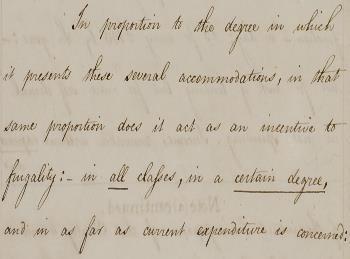
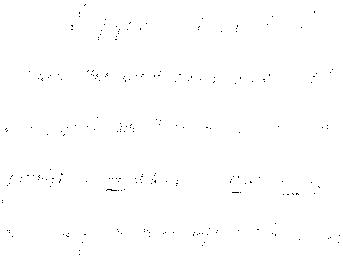
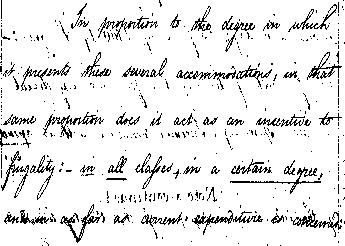
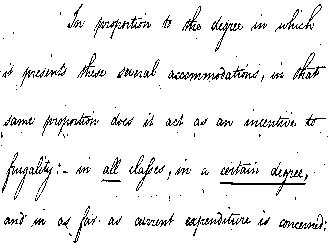
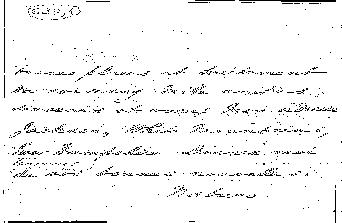
Original image Sauvola output Kittler output Kapur output
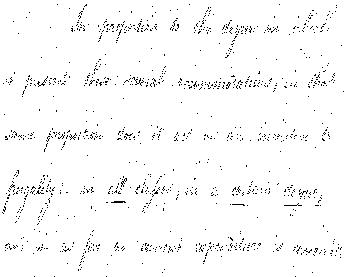
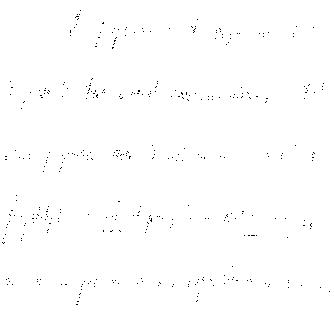
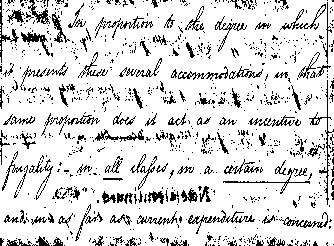
Fengoutput Wolfoutput Niblack output Otsuoutput
Binarizationoutputsofthelightly-affectedshow-through image

Original image Sauvola output Kittler output Kapur output
Fengoutput Wolfoutput Niblack output Otsuoutput
Binarizationoutputsofthemoderately-affectedshowthroughimage
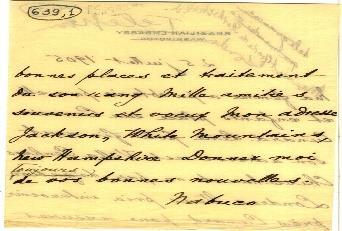
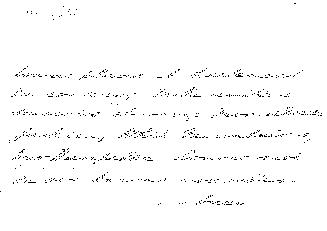
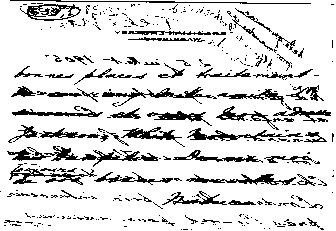
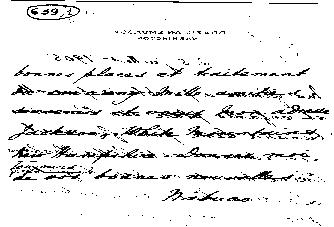
Original image Sauvola output Kittler output Kapur output
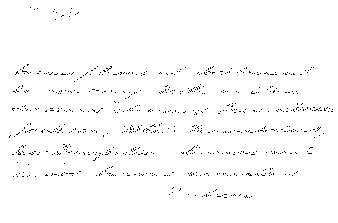
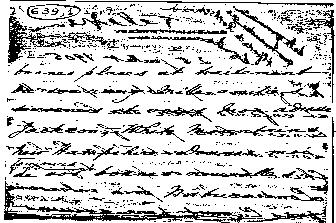
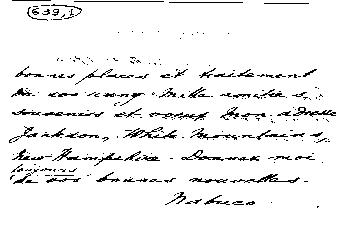
Fengoutput Wolfoutput Niblack output Otsuoutput
Binarizationoutputsofthestrongly-affectedshowthroughimage
Fig. 4: BinarizationoutputsofLA,MAandSAimages
Table 2: Performancemetricsofthesevenbinarization methods
Figure 4 shows the binarization outputs of the familiar techniquesusedforthebinarizationofLA,MAandSAshowthroughnoisydocumentimages.Thecorrespondingquality metrics estimated for the seven binarization methods are summarizedinTable2.Fromthevisualinspectionandthe quality metrics the Otsu binarization technique is a best candidateforshow-throughnoiseaffecteddocumentimages. TheOtsumethodhasscoredhigherPSNR,F-measure,and pseudo-F-measurevaluesthantheothersixmethods,which reflects its efficiency of precision and recall of the pixel information of the foreground from the background noise thantheothermethods.Further,thelowerDRD,NRMand MPMvaluesascertainedtheproficiencyoftheOtsumethod in extracting the foreground information from misclassification,preciseboundaryidentificationwithoutor lessdistortion.Therefore,theOtsumethod waschosen as thebestbinarizationmethodforcombingwiththedenoising filterstodemonstratethetrustworthinessoftheproposed DTDfilter.
International Research Journal of Engineering and Technology (IRJET) e-ISSN: 2395-0056
Volume: 11 Issue: 11 | Nov 2024 www.irjet.net p-ISSN: 2395-0072
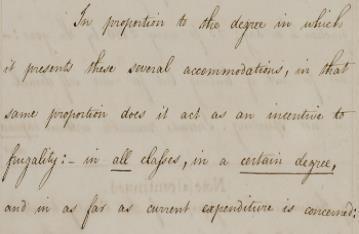
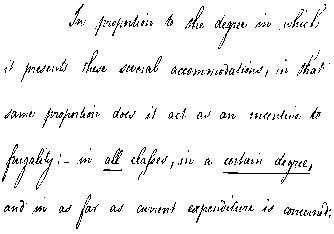
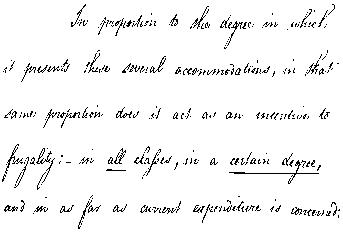
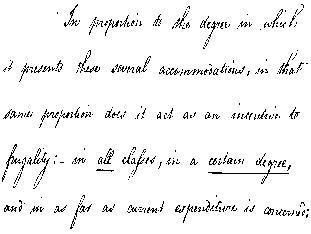
Original image Weinerwith Otsu Bilateral withOtsu Medianwith Otsu
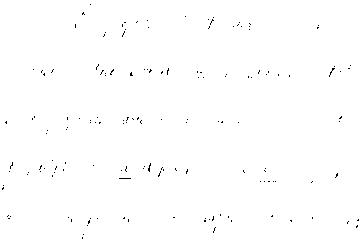
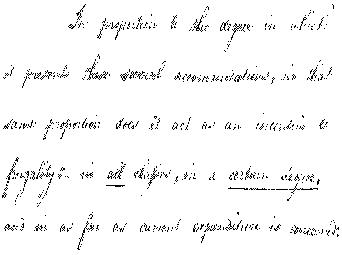
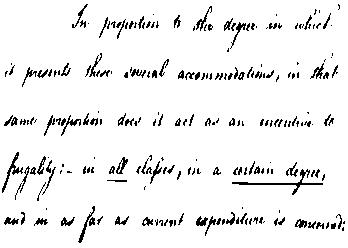
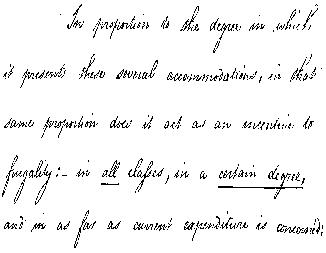
Gaborwith Otsu Homomorphic withOtsu
Perona& Malik withOtsu Proposed method
Outputs of the denoising filter combined with Otsu binarization method for the LA show-through noisy image
Original image Weinerwith Otsu Bilateral withOtsu Medianwith Otsu
Gaborwith Otsu Homomorphic withOtsu
Perona& Malik withOtsu Proposed method
OutputsofthedenoisingfiltercombinedwithOtsu binarizationmethodfortheMAshow-throughnoisyimage
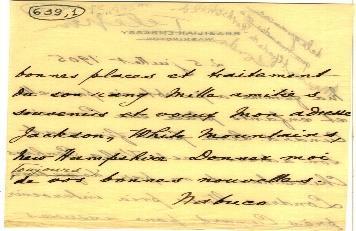
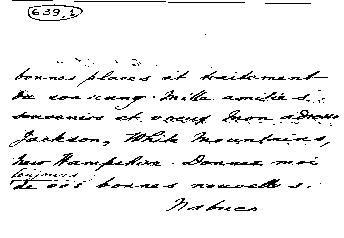
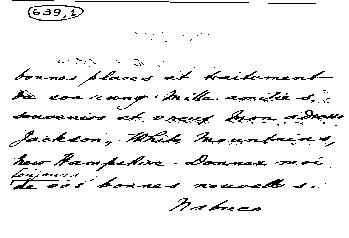
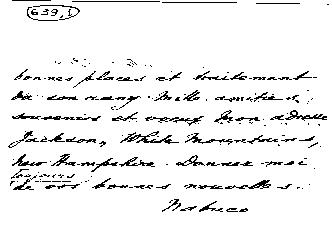
Original image Weinerwith Otsu Bilateral withOtsu Medianwith Otsu
Gaborwith Otsu Homomorphic withOtsu
Perona& Malik withOtsu Proposed method
Outputs of the denoising filter combined with Otsu binarization method for the SA show-through noisy image
Fig.5: OutputsofdenoisingfilterwithOtsubinarization method
Table 3: PerformancemetricsofdenoisingfilterwithOtsu binarizationmethod
Quality Measures Type of image Weiner + Otsu Bilateral + Otsu Median + Ostu Gabor + Otsu
morphic + Otsu
Malik + Otsu
Pseudo Fmeasure
Figure5illustratestheoutputimagesoftheproposedDTD and other six standard filters combined with Otsu binarizationmethod.Theestimatedqualitymetricsofallthe filterscumOtsubinarizationmethodareabridgedinTable3. From the Figure 5, the proposed DTD cum Otsu method resultsin clearforeground imageswithoutanynoticeable lossindetailsofallthethreetypesofshow-throughnoise affecteddocumentimages.Further,theedgeandcornerof thetextarewell-preservedintheproposedmethodthanthe others. The stroke and the style of the texts in the foregroundareretainedassuchwithoutmuchdistortionby attenuating the background information appropriately. These findings are substantiated by the quality metrics in terms of higher PSNR, F-measure and Pseudo F-measure valuesandlowerDRM,NRMandMPMvalues.Further,each of the comparison filtering-cum-binarization method
International Research Journal of Engineering and Technology (IRJET) e-ISSN: 2395-0056
Volume: 11 Issue: 11 | Nov 2024 www.irjet.net p-ISSN: 2395-0072
behaved differently for the three types of show-through noisyimages,whereastheproposedDTDmethodprovide uniform performance which proved its trustworthy and effectiveness in denoising the show-noise. Thus, the proposed DTD-cum-Otsu method is a potential denoising methodforremovingtheshow-throughnoisepresentinthe document binary images. Finally, the proposed algorithm took the execution time of around 7-11 s for all the three typesofshow-throughnoisyimageswithoutresizingtheir original size. This gives some hope in employing the proposedmethodforreal-timeapplications.
This paper presents a new approach for enhancing the qualityofthe documentimagesbycombininga structural mechanics concept of DTD filter with Otsu binarization techniquebyeffectivelydenoisingtheshow-throughnoise. Theproposedmethodwastestedonvariousdatasetimages likeDIBCOandNabucodataset.Theresultsobtainedfrom thecomparativestudyofproposedDTD-cum-Otsumethod withothersixmethodsrevealedthattheproposedmethod removedtheshow-throughnoiseverywellandretainingthe useful details irrespective of the degree of noise present. Thisisconfirmedthroughvisualinspectionandestimated qualitymetrics.Further,theexecutionspeedoftheproposed method is well within the purview of the real-time implementationrequirements.Consequently,theproposed DTD-cum-Otsu method can be deployed as a potential methodforremovingtheshow-throughnoiseinheritedin scanneddocumentimages.Eventually,thereisenoughscope forimprovingtheperformanceofthealgorithmbyapplying parallelprocessing,FPGA,GPUandotherlatesttechniques, whichwillbetakenupasafuturescopeofthisstudy.
[1] AlaaSulaiman.,KhairuddinOmar,andMohammad F. Nasrudin, Degraded Historical Document Binarization, A Review on Issues, Challenges, Techniques, and Future Directions, Journal of Imaging, vol.5, no.48, 2019; doi:10.3390/jimaging5040048.
[2] Farahmand, A. Sarrafzadeh, and J. Shanbehzadeh, “DocumentImageNoisesandRemovalMethods,”in ProceedingsoftheInternatioanlMultiConferenceof EngineerandComputerScientists,vol.I,no.3,2013.
[3] G Sharma,“Show-throughcancellationinscansof duplex printed documents,” IEEE Trans Image Process.,vol.10,no.5,pp.736–754,2001.
[4] D. Fadoua, F. Le Bourgeois, and H. Emptoz, “Restoringink bleed-throughdegraded document imagesusingarecursiveunsupervisedclassification technique,” Lect Notes Comput Sci (including Subser. Lect. Notes Artif. Intell. Lect. Notes Bioinformatics),vol.3872LNCS,pp.38–49,2006.
[5] A Tonazzini, “Color Space Transformations for Analysis and Enhancement of Ancient Degraded
Manuscripts,”PatternRecognit ImageAnal,vol 20, no.3,pp.404–417,2010.
[6] E Dubois and A Pathak, “Reduction of bleedthroughinscannedmanuscriptdocuments,”Proc IS&T Conf. image Process. Image Qual. image captureSyst.,pp.177–180,2001.
[7] R F Moghaddam, M Cheriet, and S Member, “A Variational Approach to Degraded Document Enhancement,” IEEE Transactions on Pattern AnalysisandMachineIntelligence,vol.32,no.8,pp. 1347–1361,2010.
[8] M R Khan, H Imtiaz, and M K Hasan, “Showthrough correction in scanned images using joint histogram,” Signal Video Image Processing, vol 4, no.3,pp.337–351,2010.
[9] E KavallieratouandE Stamatatos,“Improvingthe quality of degraded document images,” ProcSecondInt.Conf.Doc.ImageAnal.Libr.DIAL2006, vol.2006,pp.340–349,2006.
[10] J Marcelo and R Wachenchauzer, “A New and Efficient Algorithm to Binarize Document Images Removing Back-to-Front Interference,” Computer (Long. Beach. Calif)., vol. 14, no. 2, pp. 299–313, 2008.
[11] M.Almeida,R.D.Lins,R.Bernardino,D.Jesus,andB. Lima,“Anewbinarizationalgorithmforhistorical documents,”J Imaging,vol 4,no 2,2018
[12] H.KohmuraandT.Wakahara,“Determiningoptimal filters for binarization of degraded characters in color using genetic algorithms,” Proc - Int. Conf. PatternRecognit.,vol.3,pp.661–664,2006.
[13] M S C AlmeidaandL Almeida,“Wavelet-based separation of nonlinear show-through and bleedthroughimagemixtures,”Neuro-computing,vol.72, no.1–3,pp.57–70,2008.
[14] Y WangandC He,“ inarizationmethodbasedon evolutionequationfordocumentimagesproduced bycameras”,JournalofElectronicImaging,vol 21, no.2,pp.023030-1-14,2012.
[15] A JacobsandE Momoniat,“Anovelapproachto text binarization via a diffusion-based model”, AppliedMathematicsandComputation,vol.225,pp. 446-460,2013.
[16] A Jacobs and E Momoniat, “A locally adaptive, diffusion based text binarization technique”, AppliedMathematicsandComputation,vol.269,pp. 464-472,2015.
[17] J Guo,C He,X Zhang,“Nonlinearedge-preserving diffusionwithadaptivesourcefordocumentimage binarization”, Applied Mathematics and Computation,vol.351,pp.8-22,2019.
[18] J Guo, C He, “Adaptive shock-diffusion model for restorationofdegradeddocumentimages”,Applied MathematicalModeling,vol.79,pp.555-565,2020.
[19] X Zhang,C He,J Guo,“Selectivediffusioninvolving reaction for binarization of bleed-through
International Research Journal of Engineering and Technology (IRJET) e-ISSN: 2395-0056
Volume: 11 Issue: 11 | Nov 2024 www.irjet.net p-ISSN: 2395-0072
documentimages”,AppliedMathematicalModeling, vol.81,pp.844-854,2020.
[20] P Perona and J Malik, “Scale-space and Edge Detection using Anisotropic Diffusion”, IEEE Transaction on Pattern Anlysis and Machine intelligence,vol.12,no.7,pp.629-639,1990.
[21] Z DuandC He,“Nonlineardiffusionequationwith selective source for binarization of degraded documentimages”,AppliedMathematicalModeling, vol.99,pp.243-259,2021.
[22] Z Du and C He, “Anisotropic diffusion with fuzzy basedsourceforbinarizationofdegradeddocument images”, Applied Mathematics and Computation, vol.441,2023.
[23] F Drira,F Le ourgeious,H Emptoz,“AnewPDEbased approach for singularity-preserving regularization:applicationtodegradedcharacters restoration” International Journal on Document Analysis and Recognition, vol. 15, pp. 183-212, 2012.
[24] F Drira, F Le ourgeious, H Emptoz, “Document imagesrestorationbyanewtensorbaseddiffusion process: application to the recognition of old printed documents, 2009 10th International ConferenceonDocumentAnalysisandRecognition, Barcelona, Spain, 2009, pp. 321-325, doi: 10.1109/ICDAR.2009.109.
[25] Mahani,Z.,Zahid,J.,Saoud,S.,ElRhabi,M.,Hakim,A. (2012) TextEnhancementbyPDE’s asedMethods In: Elmoataz, A., Mammass, D., Lezoray, O., Nouboud,F.,Aboutajdine,D.(eds)ImageandSignal Processing.ICISP2012.LectureNotesinComputer Science, vol 7340, pp. 65-76. Springer, Berlin, Heidelberg. https://doi.org/10.1007/978-3-64231254-0_8.
[26] Histace A,“ImageRestoration-RecentAdvancesand Applications”,chapter5,pp 97-118,2012.
[27] I.Larrabide,R.A.Feijoo,A.A. Novotny,E.A. Taroco, “Topologicalderivative:Atoolforimageprocessing, ComputersandStructures,Vol.86,Issue13-14,pp. 1386-1403,2008.
[28] N Otsu,“AThresholdselectionmethodfromgreylevel histograms”, IEEE Transactions on Systems, Man and Cybernetics, vol.SMC-9, no. 1. Pp. 62-66, 1979.
[29] Navid Razmjooy (2023).Image Thresholding: Classic methods, MATLAB Central File Exchange. RetrievedFebruary 14, 2023. https://www.mathworks.com/matlabcentral/fileex change/74510-image-thresholding-classic-methods
[30] M Fedorchukand Lamiroy,“Statisticmetricsfor evaluation of binary classifiers without groundtruth,”ProceedingsofIEEE1stUkraineConference onElectricalandComputerEngineering,UKRCON 2017,,pp.1066–1071,2017.
[31] H.Lu,A.C.Kot,andY. Q Shi,“Distance-reciprocal distortion measure for binary document images,”
IEEE Signal Process. Lett., vol. 11, no. 2, pp. 228–231,2004.
[32] DavidP Young,JamesM Ferryman,“PETSMetrics : On-LinePerformanceEvaluationService,”inIEEE InternationalWorkshoponVisualSurveillanceand Performance Evaluation of Tracking and Surveillance,,pp.317–324,2005.
[33] F Memon,MukthiarAU,Sheeraz M,“Imagequality assessment for performance evaluation of focus measure operators”, Mehran University Research JournalofEngineering&Technology,vol.34,no.4, 2015.