
International Research Journal of Engineering and Technology (IRJET) e-ISSN: 2395-0056
Volume: 11 Issue: 11 | Nov 2024 www.irjet.net p-ISSN: 2395-0072

International Research Journal of Engineering and Technology (IRJET) e-ISSN: 2395-0056
Volume: 11 Issue: 11 | Nov 2024 www.irjet.net p-ISSN: 2395-0072
Ankit Das1 , Sujal Jadhav2 , Mohd Saad Khan3, Dhruv Patel4 , Keshav Halder5
1 Student, Dept. of Computer Science Engineering (Cyber Security), Thakur College of Engineering and Technology, Mumbai, Maharashtra
2Student, Dept. of Computer Science Engineering (Cyber Security), Thakur College of Engineering and Technology, Mumbai, Maharashtra
3Student, Dept. of Computer Science Engineering (Cyber Security), Thakur College of Engineering and Technology, Mumbai, Maharashtra
4Student, Dept. of Computer Science Engineering (Cyber Security), Thakur College of Engineering and Technology, Mumbai, Maharashtra
5Student, Dept. of Computer Science Engineering (Cyber Security), Thakur College of Engineering and Technology, Mumbai, Maharashtra ***
Abstract - Malwareattacksareincreasingandcausinglots ofharmtobothorganizationsandnormal users.Inthisstudy wehavecategorizedmalwareaccordingtothefamilytowhich it belongs. We evaluated the efficacy of six deep learning models CNN, VGG16, VGG19, RestNet50, Xception and MobileNet in classifying malware by examining Malimg dataset and examining classes of Malware. MobileNet outperformedothermodelsaccordingtoourresults,withthe maximum accuracy of 98.74%. This illustrates how sophisticated deep learning techniques may be used to improve the classification of malware and emphasizes the necessity of ongoing model adaptation and improvement in order to combat changing cyberthreats.
Key Words: Malware, Cybersecurity, AI, Deep Learning, CNN, VGG16, VGG19, MobileNet, Xception, ResNet50, Accuracy,Precision.
Malwarehasbecomelessofanoveltyandmoreofareality forbillionsofpeopleandorganizationsaroundtheworldin recentyears[4].Malwareattacksroseby11%to13,44,566 in 2024 from 12,13,528 in 2023 [5]. Any software that damages,disrupts,gainsaccessto,orstealsuserdataand/or money is referred to as malware. Malware can result in a varietyofproblems,suchaslosingcontroloverdata,identity theft,privatelifeeavesdropping,hardwarefailure,service denial,andmore.Malwareattackstargetbothnormalusers and commercial organizations. Whether the malware is infecting a personal computer or a business network, the damageitcausesvariesdependingonthemalwaretypeand itsintention.Amongthemostwell-knownformsofmalware includetrojans,viruses,worms,ransomware,spyware,and adware[4].ToolssuchasVirusTotalandPEviewareused for the detection and classification of malware. Malware createsathreattotheintegrityandauthenticityofdata.
Researchers have found the potential of deep learning, a powerfulbranchofmachinelearning,asafeasibleapproach
toenhancemalwaredetectionandclassification.[2][1][3]. Theresearchdoneinrecenttimeshasincreaseditsfocuson usingdeeplearningmodelstoclassifymalwareintospecific families [1] [2] [3]. We will be using converting malware binariesintovisualrepresentations,image-basedmalware classification is a novel technique that enables efficient analysis and classification using deep learning models, especially Convolutional Neural Networks (CNNs). Deep learningmodelscanremainrelevantinthefaceofquickly changingthreatsbecauseoftheircapacitytocontinuously learnfromfreshdata.Deeplearningmodelsareappropriate forreal-timedetectionapplicationsbecause,oncetrained, they can categorize new samples rapidly [7] [8]. The shortcomingsofconventionalmalwaredetectionmethods, which frequently rely on static or dynamic analysis, are addressed by this approach. By checking for the unique qualitiesandpatternsinmalwaresamples,thesemodelsaim topreciselydeterminewhichparticularmalwarebelongsto which family. This research project is going to compare multiple deep learning models to solve the challenge of malwarefamilycategorization.Thisprojectcanhelpdevelop newdefensesagainstemergingmalwareandenablerapid responsestoevolvingmalwareattacks.
Thisprojectwillinvolve:
Collectingandpreprocessingthemalwareimagedata:We would be using a Dataset which contains 25 malware families/classes. Implementing and Training various deep learningmodels:WehavetrainedthisdataonCNN,VGG16, VGG19, RestNet50, Xception, Mobilenet. Evaluating model performanceusingappropriatemetrics:Theeffectivenessof eachmodelwillbemeasuredusingmetricssuchasaccuracy and loss. Analyzing results to identify the most effective approaches:Dependingontherequirementsandevaluation metrics,thebestsuitedmodel wouldbeselectedamongst theothermodeltrained.
International Research Journal of Engineering and Technology (IRJET) e-ISSN: 2395-0056
Volume: 11 Issue: 11 | Nov 2024 www.irjet.net p-ISSN: 2395-0072
1."MalwareClassificationwithDeep Convolutional Neural Networks"[10]
In order to classify malware binaries using Deep CNNs, Kalashetal.'spapertakesanoveltechniquebyturningthem intograyscalephotos.CNNscanefficientlyextractmalwarespecificpatternsthankstothevisualtransformation,which plays to CNN's advantages in image processing. The suggested model's high accuracy using the Microsoft and MalimgdatasetshighlightsCNN'sversatilityincybersecurity scenarios where visual representation increases the effectivenessofmalwarediscovery.
KeyResults:ShowsthepotentialofCNNsforhigh-precision malwareclassification,achievingupto99.97%accuracyon malware datasets. Additionally, the visual-based method improves interpretability by offering a mechanism to comprehendthestructureofmalware.
Cons:Themethod'shighprocessingneedsmakeitdifficultto use in real-time application scenarios, and it has trouble generalizingtolarger,morediversemalwaredatasets,which maylimititsapplicability.
2."Image-BasedMalwareClassificationusingDeepCNNand TransferLearning"[11]
ThestudybyPantandBistausesCNN transferlearningto categorize viruses by altering images. Because pretrained modelseliminatetheneedforbig,malware-specificdatasets, the method can be used even with constrained data resources.Thisapproachhighlightsthepotentialoftransfer learningincybersecurityapplicationsbyimprovingefficiency andfacilitatingrapidmodelchange.
ImportantResults:Transferlearningreducescomputational requirements, allowing for smaller datasets and shorter model training times without sacrificing appreciable accuracy.
Cons: The accuracy of the approach may be limited for extremely subtle or uncommon malware kinds due to pretrainedmodels'potentiallackofspecificityinidentifying subtleviruschanges.
3. "MalwareClassificationFramework usingConvolutional Neural Network" [12] uses CNN's feature extraction capabilities to turn malware binaries into photos. This techniqueshowsCNNs'potentialincybersecuritybyallowing them to identify virus patterns in visual data, leading to correct categorization. However, the resource-intensive natureofthemethodmightmakeitdifficulttoscaleforlarge datasets.
KeyResults:Highclassificationaccuracyismadepossibleby efficientfeatureextraction,offeringareliabletechniquefor detectingmalwareincybersecurity.
Cons:Theframework'shighprocessingrequirementmakesit difficulttouseindynamiccontextsandrestrictsitsscalability forlarge-scaleorreal-timemalwareinvestigation.
4."MalwareClassificationUsingCustomizedCNNwithLeaky RELU"[13]KomatwarandKokare'sstudyimprovesmalware classification by addressing the "dying ReLU" problem by customizing CNNs with Leaky ReLU. By concentrating on visual patterns unique to malware, this method improves CNN's feature extraction and achieves more accurate classification.
KeyOutcomes:LeakyReLUimprovesCNNresponsivenessto malware features, resulting in increased accuracy and decreased overfitting, making it perfect for complicated malwareclassification.
Cons: Its applicability and generalizability across various malware kinds are limited by the necessity for extensive modeltuning,whichnecessitatesparticularadaptationsfor variousdatasets.
5. "Image-Based Malware Classification using Ensemble of CNNArchitectures(IMCEC)[14]
TheIMCECmodelclassifiesmalwareusinganensembleof CNNs,usingdifferentCNNarchitecturestocapturearangeof malware attributes. With improved accuracy and lower misclassificationrates,thisapproachperformsbetterthan individualCNNmodels.However,ensemblemethodscanbe unfeasibleinreal-timeorresource-constrainedenvironments duetotheirhighresourcerequirements.
KeyResults:Theensemblemodelimproveddetectionacross complicatedmalwarecategoriesbyimprovingclassification accuracyandrobustness.
Cons:Themodel'shighprocessingdemandrestrictsitsuse forreal-timeapplicationsandmakesitdifficulttoimplement inhigh-speedorlow-powersettings.
6."MalwareClassificationUsingConvolutionalFuzzyNeural Networks with Feature Fusion" [15] Lin, Huang, and Lee optimize feature selection using the Taguchi technique by combining CNNs with fuzzy neural networks. The feature fusionofthismodelprovidesgoodaccuracyacrossavariety of datasets and allows for the categorization of intricate malware patterns. Additionally, the incorporation of fuzzy neuralnetworksimprovesthemodel'sadaptabilityinvirus detection.
KeyOutcomes:Featurefusionyieldshighaccuracy,andthe modelcanbeusedtomalwarewithavarietyoftraits,making itpracticalforarangeofapplications.
Cons:Itsusageinreal-timemalwaredetectionislimitedby its increased complexity and processing resource needs, whichmakedeploymentdifficultindynamiccontexts.
International Research Journal of Engineering and Technology (IRJET) e-ISSN: 2395-0056
Volume: 11 Issue: 11 | Nov 2024 www.irjet.net p-ISSN: 2395-0072
Thefundamentaltechniqueforclassifyingmalwarefamilies entails gathering a dataset of malware images, identifying pertinent attributes that can point to harmful intent, and then classifying which malware images are members of whichmalwarefamiliesusingdeeplearningmodels.
A deep learning model’s prediction quality is closely correlatedwiththecaliberofitstrainingdata.SinceCNNand otherDeepLearningmodelsperformwellonimagedata,we chose the Malimg Dataset from [16] and performed data preprocessingonittoensuresmoothoperation.Thereare 9339 malware images in the Malimg Dataset, which are divided into 25 families and classes. An overview of the datasetisprovidedinthetablebelow.
Class Family #
1. Worm Allaple.L 1591
2. Worm Allaple.A 2949
3. Worm Yuner.A 800
4. PWS Lolyda.AA1 213
5. PWS Lolyda.AA2 184
6. PWS Lolyda.AA3 123
7. Trojan C2Lop.P 146
8. Trojan C2Lop.gen!g 200
9. Dialer Instantaccess 431
10. TDownloader Swizzot.gen!I 132
11. TDownloader Swizzor.gen!E 128
12. Worm VB.AT 408
13. Rogue Fakerean 381
14. Trojan Alueron.gen!J 198
15. Trojan Malex.gen!J 136
16. PWS Lolyda.AT 159
17. Dialer Adialer.C 125
18. TDownloader Wintrim.BX 97
19. Dialer Dialplatform.B 177
20. TDownloader Dontovo.A 162
21. TDownloader Obfuscator.AD 142
22. Backdoor Agent.FYI 116
23. Worm:AutoIT Autorun.K 106
24. Backdoor Rbot!gen 158
25. Trojan Skintrim.N 80
Table -1: Malware’sfamilyanditsquantity[16]
The malware dataset that we are using is a processed version of Malimg dataset. Conversion of byte files to png files was done beforehand [16]. However, the method to visualizemalwareusedbyFuetal.[17]provestogivebetter resultsascomparedtothescriptthatwasusedtoconvert the.bytefiles.InthemethodthatFuetal.[17]proposed,the malwareisvisualizedthroughRGBimages,withbytevalues, entropy,andsectionsizemappedtothered,green,andblue channels.Theirtechniquecapturesdetailedglobalandlocal malware features, including Gray Level Co-occurrence Matrix(GLCM)textures,colormoments,anddistinctASCIIconvertible byte sequences, improving classification accuracy. In contrast, the script that was used generates simplergrayscaleimagesbydirectlyconvertinghexadecimal bytes into pixel intensities, capturing basic structural informationwithoutadditional featureextractionorcolor channelseparation,thuslimitingclassificationdetail.
The malware images are classified based on the family or class they belong to into subfolders [18]. The process involvedcreatingbatchesofnormalizedimagetensorsfrom directoriesrepresentingmalwarefamilies,enablingefficient processing for model training and testing. By setting the target size to 64x64 pixels, all images were resized to uniformdimensions,facilitatingstandardizedinput.Witha datasetcontaining9,339images,abatchsizeofupto9,339 ensured each batch could contain the entire dataset if necessary.Datawassplitintotrainingandtestingsetsina 70:30 ratio, with the method successfully recognizing 25 distinct classes based on folder names. Although visual inspection revealed differences among files, accurately distinguishing malware families visually remained challenging, underscoring the need for automated classificationmethods.
Toaddresstheclassimbalanceinourdataset,whereover 30%ofimagesbelongtoclass2(Allaple.A)and17%toclass 3 (Allaple.L). We employed a strategy that adjusts class weights, assigning greater weight to minority classes and lowerweighttothemajorityclass.Thisadjustmentiscrucial to ensure the model does not become biased toward the majority class, thereby improving its ability to correctly classify the minority classes. We began by calculating the weightsinverselyproportionaltoclassfrequencies,which allowed us to set balanced class weights. This step is
International Research Journal of Engineering and Technology (IRJET) e-ISSN: 2395-0056
Volume: 11 Issue: 11 | Nov 2024 www.irjet.net p-ISSN: 2395-0072
essentialtocountertheimbalanceandensurethateachclass isfairlyrepresentedinthetrainingprocess.Thetargetlabels in our training data were transformed to a single label formattofitthisapproach,facilitatingtheapplicationofthe calculatedclassweights.
Classifyingmalwarebasedongrayscaleimagingisacuttingedge method that has demonstrated its effectiveness as a static analysis tool (Kancherla and Mukkamala, 2013; Nataraj et al., 2014). A grayscale image portrays different shadesofgray,rangingfromwhitetoblack,dividedinto256 levelsbasedonalogarithmicscale.Thisgrayscalevariation correspondstodistinctphysicalinformationintheimages, with textures reflecting these grayscale differences in the visualfield.
Numerousfeaturesarefrequentlyusedintextureanalysis, with frequency content analysis being one of the most populartechniques.Thismethodentailssplittingatexture block'sfrequencydomainintodiscreteareas,usuallywedges thatrepresentvariousorientationsandringsthatcapture scale. To further describe the texture, characteristics are calculated within each region. Because they can capture significantpatternsandstructureswithintexturesthatmay be difficult to see in the spatial domain alone, these frequency-based techniques are commonly used.
Theefficacyofthismethodissupportedbypsychophysical research,whichdemonstrateshowthehumanvisualsystem spontaneouslydecomposesimagesaccordingtofrequency and direction in order to perceive textures. By removing directionalfeaturesandspatialfrequencyinformation,this decomposition is consistent with how our perception interpretsminutevariationsintexture.Algorithmscanmore accuratelysimulatehumanperceptionbymodelingtexture analysissimilarly,allowingformoreprecisetexture-based classificationsandanalyses.Asaresult,frequencydomain analysis with scale and orientation segmentation has emerged as a key instrument in texture research, with several applications in domains like remote sensing, computervision,andmedicalimaging.
Textureanalysis,whichfindsuniquepatternsinthevisual structureofmalwareimages,isthebasisofthisclassification method. Because Gabor filters function in both the spatial and frequency domains, they are renowned for their resilience in texture segmentation and classification. This makes it possible to analyze the frequency content of the imageandextractdetailedtexturedetails.Bybreakingdown theimageintodifferentscalesandorientations,gaborfilters capturedistincttextureelementsthathighlightvariationsin malwarestructure.
Nataraj et al. in [16] came up first with the approach of visualizingmalwareasgray-scaleimages.Inthatwork,they representedamalwareasagray-scaleimageintherangeof
[0, 255], where 0 being for black and 255 for white [17]. They could observe that the obtained images presented different sections which in turn represented different information about the malware. Wecanidentifykeytextural featuresspecifictoparticular malware families by dissecting the image into their constituents. their features may include common coding patterns or differences in code structure across malware belongingtothesamefamily.
This method uses GIST features, which are obtained via waveletdecompositionoftheimages,inadditiontoGabor filtering[16].Throughtheapplicationofasteerablepyramid acrossmanyorientationsandscales,GISTfeaturesefficiently capture both local and global attributes [16]. A local representation is computed for every image location, capturingminutefeaturesinstructureandtexture.Amore compactrepresentationisobtainedbyaveragingtheselocal properties across broader spatial regions. The result is a condensedfeaturevectorthatlowersdimensionalitywhile preservingkeyaspectsoftheimage[16].Withitsstructured, high-leveloverviewofimagecontent,thisfeaturevectoris ideal for classification tasks since it improves pattern identificationandfacilitatespreciseclassdifferentiation.
We created a three-layer deep Convolutional Neural Network(CNN)specificallydesignedforclassificationtasks, withRectifiedLinearUnits(ReLU)oneachactivationlayer, asusedin[19].Inordertoprovidenecessarynonlinearity intothenetwork,themodelstartswithatwo-dimensional convolutional layer and then moves on to a nonlinear activation layer in each instance. The network generates features that draw attention to spatial correlations in the inputdatabyperformingelement-wisemultiplicationand summing in each convolutional layer. Because of its computingefficiencyandcapacitytoresolvethevanishing gradient problem, which frequently impacts the bottom layersofdeepnetworks,ReLUwaschosenoveralternative non-linearfunctionsliketanhorsigmoid.Withoutsacrificing model performance, this decision enhances gradient flow andexpeditestraining,enablingfasterconvergence.
Eachconvolutionallayerisfollowedbyamax-poolinglayer inadditiontoReLUtoenhancefeatureextraction.Thislayer selectsthemaximumvaluewithineachsub-regionthatthe filtercoversbyslidinga filterwitha givenstrideoverthe input.Maxpoolingminimizestheoutputsizebymaintaining thesemaximumvalues,whichlowerscomputationdemands whilekeepingthemostimportantfeatures.Thenetwork's overallclassificationaccuracyisincreasedbythissimplified representation,whichalsoimprovesthenetwork'scapacity toidentifypatterns.
International Research Journal of Engineering and Technology (IRJET) e-ISSN: 2395-0056
Volume: 11 Issue: 11 | Nov 2024 www.irjet.net p-ISSN: 2395-0072
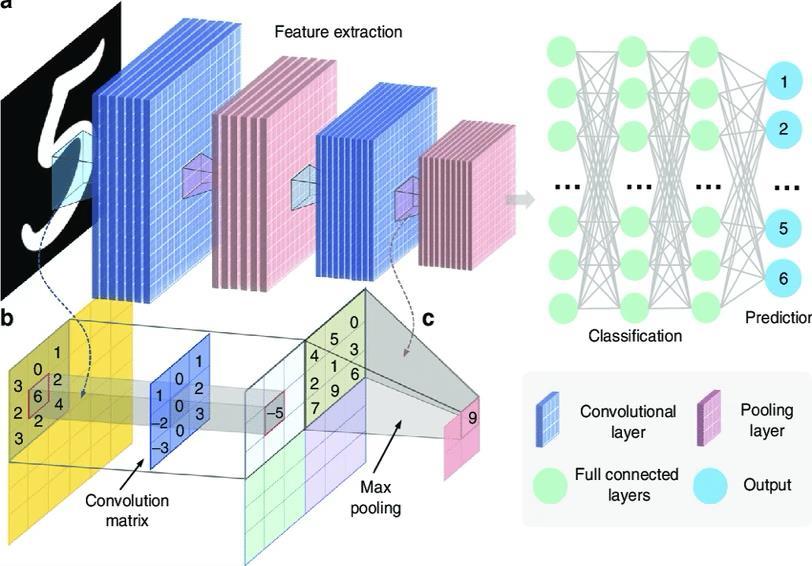
Figure -1: ThetypicalCNNarchitectureforimageclassificationtasks.(L.Nataraj,2011)[20].
WeconcentrateonchoosingandgettingtheVGG-16model readyforourmalwareimageclassificationtaskinthisstep [21].DeepconvolutionalneuralnetworkdesignVGG-16is well known for its ability to perform well in image classificationtasks,especiallyintheImageNetcompetition. Thearchitecturecanlearnrichfeaturerepresentationsfrom images since it has 16 learnable layers, including 3 fully connectedlayersand13convolutionallayers.
We use a pre-trained version of VGG-16 in order to take advantage of its capabilities without having to train the model from scratch. A sizable dataset (ImageNet) with millions of photos in thousands of categories was used to trainthismodel.Usingapre-trainedmodelhasthebenefitof allowing it to extract significant features from photos becauseofthesubstantialtrainingithasreceived.Transfer learning is the method by which we modify the acquired featurestofitourparticularmalwareclassificationgoal.
Severalfullyconnected(FC)layersattheconclusionofthe originalVGG-16architectureareintendedtoclassifyimages into ImageNet's 1,000 categories. We eliminate these FC levelssinceourjobistocategorizemalwarephotosintoa variednumberofclasses(e.g.,distinctmalwarefamilies).
AfterremovingtheFClayers,weaddnewlayerstailoredto ourproblem:
a)GlobalAveragePoolingLayer-Thislayertakestheroleof thefinalconvolutionallayerandaveragesacrossallspatial dimensions to reduce each feature map to a single value. Thisresultsinamoregeneralizedrepresentationandless overfitting.
b) Dense Layer - The number of neurons in one or more denselayersisequivalenttothenumberofmalwareclasses
we are classifying. For example, this layer will have 25 neuronsifthereare25malwarefamilies.
c)ActivationFunction-Inordertointerprettheoutputsas classprobabilities,asoftmaxactivationfunctionisappliedto the output layer, converting raw scores into probabilities thatadduptoone.
Lastly,weuseasuitableoptimizer(suchAdamorSGD)and loss function (categorical cross entropy for multi-class classification) to assemble the model. Additionally, we designatecriteriafortrackingthroughouttraining,suchas accuracy.
WesuccessfullyleverageVGG-16'spotentfeatureextraction capabilities while customizing it for identifying various malware types based on their visual characteristics by followingthesethoroughmethodswhencustomizingitfor ourmalwareclassificationproject.
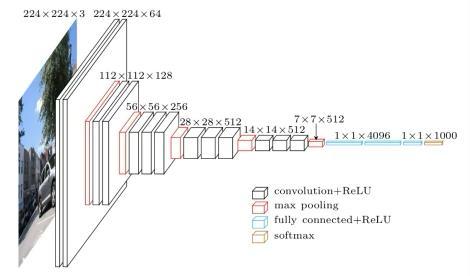
VGG-19
WeemployastructuredmethodologyakintothatofVGG-16 to apply VGG-19 for malware image classification, but we makeuseoftheextradepthandcapabilitiesoftheVGG-19 architecture.VGG-19canrecognizemoreintricatepatterns in photos because it has 19 layers with learnable parameters.Athoroughexplanationofourproject'suseof VGG-19, including implementation methods, is provided below.
Three fully connected layers and sixteen convolutional layersmakeupthe19learnableparameterlayersthatmake upVGG-19.Smallreceptivefields(3x3filters)andauniform architecture,inwhichthesamefiltersizeisappliedacross thenetwork,arecharacteristicsofthedesign.VGG-19isvery useful for picture classification jobs because of its design, whichenablesittocapturecomplexpatternsandtexturesin photos.
TopreservethelearntweightsfromtheImageNetdataset during training, we first freeze the convolutional base of VGG-19.Thisindicatesthatthisphasewill justupdatethe
International Research Journal of Engineering and Technology (IRJET) e-ISSN: 2395-0056
Volume: 11 Issue: 11 | Nov 2024 www.irjet.net p-ISSN: 2395-0072
weights of the recently added layers. By doing this, the model may take advantage of the rich feature representations that VGG-19 has already acquired, preventing overfitting and improving training efficiency. Without changing the pre-trained model's proven feature extraction capabilities, freezing the layers enables us to concentrate on optimizing the classifier for our particular malware classification task. This tactic guarantees a more reliableandefficienttrainingprocedure.
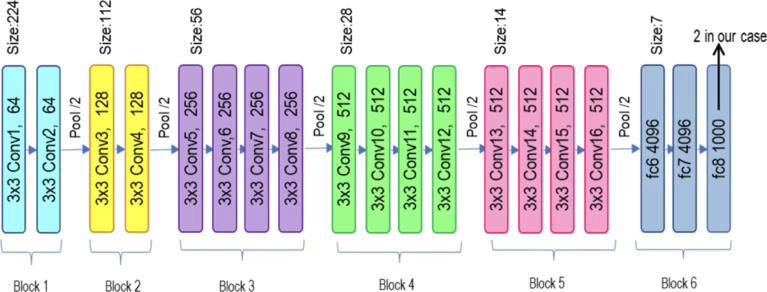
ResNetV2
Deepconvolutionalneuralnetworks(CNNs)presentissues [24],thereforeweuseResNetV2.ResNetV2isanextensionof ResNet designed to solve those problems. It can maintain efficiencywhilereducingcomputingcomplexitybyadding "bottleneck" blocks that compress feature maps. Batch normalization and ReLU activation are placed before convolutions in "reactivation" modules to minimize degradationandspeedupconvergenceduringtraining[24]. ResNetV2outperformsitspredecessor,exhibitingimproved trainingefficacyandprecision,particularlyinmoreintricate networktopologies.Applicationssuchasobjectrecognition, semanticsegmentation,andpictureclassificationhavemade extensiveuseofResNetV2,agroundbreakingarchitecturein computer vision research. To preserve the learnt weights from ImageNet during training, we first freeze the convolutionalbasisofResNetV2.Thisimpliesthatthepretrainedweightswillremainunchangedduringtraining,with only the weights of our new layers being updated. This methodexpeditestrainingandhelpsavoidoverfitting.
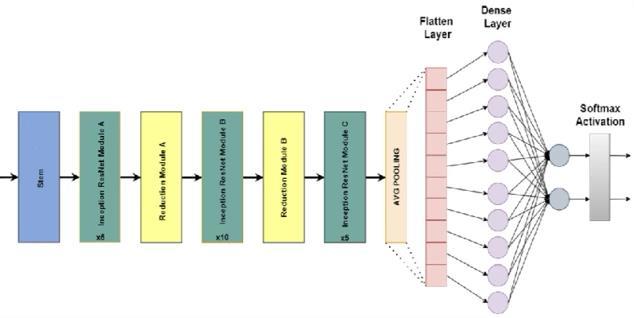
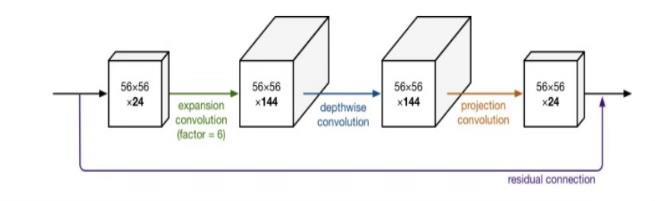
MobileNet Small is an adaptation of the MobileNet architecture intended for efficient deep learning on lowresourcedevices[24].Byemployingdepth-wiseseparable convolutions, it drastically reduces the model size and computational complexity while guaranteeing superior performanceonembeddedsystemsandmobiledevices.
Despiteitsefficacy,MobileNetSmallmaintainsafairlevelof accuracy in tasks such as image classification and object detection[24].Thisdesignchoice,whichpermitsreal-time processing and lowers computational and energy costs, makesittheperfectchoiceforon-deviceAIapplications.
Weevaluatedtheperformanceoffivedeeplearningmodels for malware classification in our research - CNN, VGG16, VGG19, MobileNet, Xception, ResNet50. The accuracy of thesemodelswasusedtogaugetheirperformance.
Table -2: ModelResult
MODEL ACCURACY LOSS
CNN .9607 .1588
VGG16 .9408 .2262
VGG19 .9236 .3176
RestNet50 .9600 .1600
Xception .9853 .04956
MobileNet 0.9874 .0386
To evaluate the efficacy of various models in malware classification, six architectures were tested, yielding substantialperformancedifferences.MobileNetachievedthe highest classification accuracy at 98.74% with a loss of 0.0386,suggestingbothrobustnessandefficiency.Xception followedclosely,with98.53%accuracyandaslightlyhigher loss of 0.04956, marking it as another strong choice for accuratemalwarecategorization.
Otherdeeplearningmodelsalsoperformedwell,particularly CNN and ResNet50, achieving accuracies of 96.07% and 96.00%,withlossesof0.1588and0.1600respectively.These
International Research Journal of Engineering and Technology (IRJET) e-ISSN: 2395-0056
Volume: 11 Issue: 11 | Nov 2024 www.irjet.net p-ISSN: 2395-0072
resultsindicateahighlevelofreliability,thoughslightlyless precisethanMobileNetandXception.TheVGGfamilymodels, VGG16 and VGG19, showed respectable performance with accuraciesof94.08%and92.36%andhigherlossesof0.2262 and 0.3176, respectively. While these accuracies are promising,thegreaterlossvaluessuggestVGGmodelsmay belesseffectiveformalwareclassificationcomparedtothe lightweight and efficient architectures. These findings underscoretheadvantageofusingMobileNetandXception forhigh-accuracymalwareclassificationwithminimalerror, particularly beneficial for real-time detection applications wherebothspeedandprecisionarecritical
Ourstudyexploresanovelmethodofmalwareclassification byusingcommonimageprocessingtechniquestovisualize malwarebinariesasgrayscaleimages.Usingseveralmachine learning models, we were able to categorize malware sampleswithexcellentaccuracyduetothevisualsimilarities withinmalwarefamilies.Inparticular,weusedsixmodels: CNN, VGG16, VGG19, ResNet50, Xception, and MobileNet. These models achieved classification accuracies ranging from92.36%to98.74%,withthebestaccuracyandlowest lossbeingshownbyMobileNetandXception.Thesemodels demonstrated the resilience of our method even against obfuscation techniques such as section encryption by successfullycapturinguniqueimagetexturesandpatterns acrossmalwarefamilies.Ourapproachisacomputationally effectiveandscalablemalwareclassificationsolutionsinceit does not require code execution or disassembly. Additionally, the results indicate that by offering a dependable,texture-basedclassificationstrategy,thisimagebased approach can support conventional malware investigation tools. To further increase resilience against changingmalwareobfuscationtechniques,futureresearch could investigate the use of localized characteristics and adaptive structures. All things considered, this method shows encouraging promise for improving automated malware categorization and strengthening cybersecurity defenses.
[1]Naway,Abdelmonim&LI,Yuancheng.(2018).AReview onTheUseofDeepLearninginAndroidMalwareDetection. 10.48550/arXiv.1812.10360.
[2] J. W. Stokes, D. Wang, M. Marinescu, M. Marino and B. Bussone, "Attack and Defense of Dynamic Analysis-Based, Adversarial Neural Malware Detection Models," MILCOM 2018 - 2018 IEEE Military Communications Conference (MILCOM), Los Angeles, CA, USA, 2018, pp. 1-8, doi: 10.1109/MILCOM.2018.8599855.
[3]Kolosnjaji,Bojan&Demontis,Ambra&Biggio,Battista& Maiorca,Davide&Giacinto,Giorgio&Eckert,Claudia&Roli, Fabio.(2018).AdversarialMalwareBinaries:EvadingDeep
Learning for Malware Detection in Executables. 533-537. 10.23919/EUSIPCO.2018.8553214.
[4] Abdel Ouahab, I.B., Bouhorma, M., El Aachak, L. and Boudhir, A.A., 2022. Towards a new cyberdefense generation: Proposition of an intelligent cybersecurity framework for malware attacks. Recent Advances in ComputerScienceandCommunications(Formerly:Recent PatentsonComputerScience),15(8),pp.1026-1042.
[5]Newsarticlefromindianews https://www.business-standard.com/india-news/malwareattacks-in-india-increase-by-11-22-jump-seen-inransomware-124080100800_1.html
[6]Bensaoud,A.,Kalita,J.andBensaoud,M.,2024.Asurvey ofmalwaredetectionusingdeeplearning.MachineLearning WithApplications,16,p.100546.
[7]Mcafeeblog https://www.mcafee.com/blogs/other-blogs/mcafeelabs/the-rise-of-deep-learning-for-detection-andclassification-of-malware/
[8]Bensaoud,A.,Kalita,J.andBensaoud,M.,2024.Asurvey ofmalwaredetectionusingdeeplearning.MachineLearning WithApplications,16,p.100546.
[9]M.Kalash,M.Rochan,N.Mohammed,N.D.B.Bruce, Y. Wang, and F. Iqbal, “Malware Classification with Deep Convolutional Neural Networks,” IEEE Conference Publication.[Online].Available:IEEEXplore.
[10]M.Kalash,M.Rochan,N.Mohammed,N.D.B.Bruce,Y. Wang, and F. Iqbal, “Malware Classification with Deep Convolutional Neural Networks,” IEEE Conference Publication.[Online].Available:IEEEXplore.
[11] D. Pant and R. Bista, “Image-based Malware ClassificationusingDeepConvolutionalNeuralNetworkand Transfer Learning,” in Proceedings of the 2021 3rd InternationalConferenceonAdvancedInformationScience and System (AISS 2021), Sanya, China, Nov. 2021, doi: 10.1145/3503047.3503081.
[12]“MalwareClassificationFrameworkusingConvolutional NeuralNetwork,”in2020InternationalConferenceonCyber Warfare and Security (ICCWS), Oct. 2020, doi: 10.1109/ICCWS48432.2020.9292384.
[13] R. Komatwar and M. Kokare, “Malware Classification UsingCustomizedConvolutionalNeuralNetworksbyLeaky ReLUActivatedFunction,”JournalofXi’anShiyouUniversity, NaturalScienceEdition,vol.18,no.3,pp.186-200,2020.
[14]D.Vasan,M.Alazab,S.Wassan,B.Safaei,andQ.Zheng, “Image-BasedMalwareClassificationusingEnsembleofCNN Architectures(IMCEC),”ComputerSecurityResearch.
International Research Journal of Engineering and Technology (IRJET) e-ISSN: 2395-0056
Volume: 11 Issue: 11 | Nov 2024 www.irjet.net p-ISSN: 2395-0072
[15] C. J. Lin, M. S. Huang, and C. L. Lee, “Malware ClassificationUsingConvolutional Fuzzy Neural Networks Based on Feature Fusion and the Taguchi Method,” International Journal of Advanced Computer Science and Applications
[16]S.Nataraj,S.Karthikeyan,G.Jacob,andB.S.Manjunath, “Malware Images: Visualization and Automatic Classification,” Proceedings of the 8th International Symposium on Visualization for Cyber Security (VizSec'11), 2011,pp.1–7.
[17] J. Fu, J. Xue, Y. Wang, Z. Liu, and C. Shan, “Malware Visualization for Fine-Grained Classification,” IEEE Access, vol. 6, pp. 14510–14523, 2018, doi: 10.1109/ACCESS.2018.2805301.
[18]R.Suresh,“MalwareClassificationUsingConvolutional Neural Networks: Step-by-Step Tutorial,” Towards Data Science,Apr.17,2019.[Online].
[19] Kabanga, E.K. and Kim, C.H., 2017. Malware images classificationusingconvolutionalneuralnetwork. Journalof Computer and Communications, 6(1),pp.153-158.
[20]Zuo,Chao&Qian,Jiaming&Feng,Shijie&Yin,Wei&Li, Yixuan & Fan, Pengfei & Han, Jing & Qian, Kemao & Chen, Qian.(2022).Deeplearninginopticalmetrology:areview. Light:Science&Applications.11.39.10.1038/s41377-02200714-x.
[21] Simonyan, K., & Zisserman, A. (2014). Very Deep ConvolutionalNetworksforLarge-ScaleImageRecognition. arXivpreprintarXiv:1409.1556.
[22] Step by step VGG16 implementation in Keras for beginners. https://towardsdatascience.com/step-by-step-vgg16implementation-in-keras-for-beginners-a833c686ae6c
[23] Khattar, Anuradha & Quadri, Syed. (2022). “Generalization of convolutional network to domain adaptationnetworkforclassificationofdisasterimageson twitter”. Multimedia Tools and Applications. 81. 10.1007/s11042-022-12869-1.
[24] Sharma, A.K.V., Swamy, H., Shetty, A. and Sathyanarayana, A.B., 2023. Malware Classification using Deep Neural Networks: Performance Evaluation and Applications in Edge Devices. arXiv preprint arXiv:2310.06841
[25]Anis,Shazia&Xuan,Tan&Chuah,JoonHuang&Usman, Juliana & Qian, Pengjiang & Lai, Khin Wee. (2021). A comparativestudyofmultipleneuralnetworkfordetection ofCOVID-19onchestX-ray.EURASIPJournalonAdvancesin SignalProcessing.2021.10.1186/s13634-021-00755-1.