
Enhancing Concrete Setting Time with Sustainable Innovation -
Utilizing Apple Juice as a Retarder Agent
Suehail Aijaz Shah1, Dr. M. A. Tantray2 , Dr. Shafquat Ara3, Mominah Ajaz4
1Research Fellow, Department of Civil Engineering, National Institute of Technology Srinagar
2Professor, Department of Civil Engineering, National Institute of Technology Srinagar
3Principal, Government Polytechnic College Budgam
4Demonstrator, Department of Civil Engineering, Government Polytechnic College Budgam
Abstract – Admixtures are group of chemicals or minerals that are added to modern concrete, in order to modify the traditional mix in accordance to the requirements and site demand. Various researches and investigations are being executed to add different chemicals and materials to this group.Constructionactivities arecarriedthroughalaiddown procedures and parameters including temperature, humidity andplacingenvironment.Concretinginhotweathercondition, is limited to the maximum concrete temperature to 35 ºC. Concreting above this range results in early hydration of cementandthusproducesconcretewithearlygainofstrength and latterly reduction with the age gain. The increased surrounding temperature results in rapid evaporation of water causing water reduction within the concrete matrix thus cause associated plastic shrinkage, un-hydrated cement within the matrix and subsequent cooling causing tensile stresses and cracking. Chemical admixture categorized as Retarders, come a solution to this problem. The addition of chemicals from this group delays the initial setting time allowing the time for mixing, transporting and placing. This study seeks to investigate the impact of sugar on the properties of cement. The sucrose crystals were used as the source of sugar in this experimental investigation. Various sugar concentration, by weight of cement were added to the cement paste, and the impact over the setting time was monitored. Additionally the compressive strength of the cement with modifiedalteredwater-sugarconcentrationwere investigated. This experimental investigation demonstrated that the optimum dosage of apple juice, greatly altered the setting time of cement and the mechanical strength of cementitious materials as well. This study advocates for the innovative use of apple juice as a retarder in the construction industry, offering a dual benefit by not only enhancing construction processes but also economically empowering farmers through the generation of a substantial yield of ungraded apples.
Key Words:
CompressiveStrength,Retarder,Sugar,SettingTime.
1. INTRODUCTION
Maintaining workability is one of the essential criteria duringtheconcretingoperation- transportation,handling
and placement. Workability can be loosed due to various factorsviz insufficientmixingtime,excessivewatercontent, incorrect cement content, improper aggregate grading, temperatureeffectatthetimeofconcretingoperationand other ambient conditions. During the transportation of Ready Mix Concrete, to longer distances workability retention also arises a challenge. Admixture categorized under Retarders, serve the purpose of maintaining workability by delaying the hydration process. Elevated temperatures also accelerate the setting time of concrete, leadingtoalterationindesiredworkabilityconditionalong with the increase in water demand and a higher risk of thermal cracking. To mitigate such type of issue in the construction industry, use of retarders is recommended y theconcretepractitioners.Retardersarechemicaladmixture that slow down the hydration rate of cement within the concrete, such that the concrete remains in plastic and workableforaprolongedduration,providingnecessarytime forplacementandfinishing.Bytheinclusionofretardersin such conditions better control over the concrete mix is obtainedalongwiththereductionoftheassociatedimpact overtheworkability.Varioustypesofretardersbothorganic andinorganicareavailablefortheutilization,withdifferent mechanismsforretardingthehydrationrate.Thechemical mechanismsunderlyingtheretardingeffectsareexploredin depthinstudiesbySmithetal.[1]andBrownandJones[2], offering insights into their particular impacts on cement hydration. Scholars have investigated several forms of retarders, such as gluconates, organic acids, and lignosulfonates,assessingtheirinfluenceonthemechanical andrheologicalcharacteristicsofconcretemixtures.Garcia andLee[3] pointoutthatretardershaveamajorimpacton howlongittakesforconcretetoset.Better workability is madepossiblebythisextension,whichisalsoessential in situations when lengthy placement or transit times are needed.JohnsonandWang's[4]researchdelvesdeeplyinto the impact retarders have on early-age strength. Understanding how retarders influence strength developmentiscrucialforimprovingconcretemixdesigns andguaranteeingtheintendedperformance.Retardersare widely employed in hot weather concreting as a countermeasure against the temperature-induced acceleration of setting. According to Young [5], setretardation may primarily result from a delay in the
© 2024, IRJET | Impact Factor value: 8.226 | ISO 9001:2008 Certified Journal | Page56
***
International Research Journal of Engineering and Technology (IRJET) e-ISSN: 2395-0056 Volume: 11 Issue: 01 | Jan 2024 www.irjet.net p-ISSN: 2395-0072
International Research Journal
2395-0056
Volume: 11 Issue: 01 | Jan 2024 www.irjet.net p-ISSN: 2395-0072
hydrationoftricalciumsilicatecausedbyorganicadmixtures adheringtothecalciumhydroxidenuclei.Concretesetting time is also largely influenced by the type of cement used andtheamountofadditiveadded,accordingtoKandhari[6]. Retardersarewidelyacceptedintheliteratureasanefficient andworkablewaytoimprovetheperformanceofconcrete, especiallyinharshenvironmentalcircumstancesespecially inhotweatherconcretingpractice.Throughthenumerous methodsoutlinedbelow,retardersobstructtheprocessof hydration.
AdsorptiononCementParticle-Whenretardersareadded tothecementmatrix,theywraparoundthecementparticle, formingaprotectivelayerinhibitingwaterfromreachingto thecementparticlewithintheconcretematrixconsequently slowing down the dissolution of cement initiated by the hydrationreaction.
ComplexFormation–Ionsinvolvedinthehydrationreaction formcomplexes.Thecementparticles'reactivityischanged as a result of this contact, which delays the production of hydrationproducts.
IonExchange-Inionexchangereactions,retardershavethe abilitytocompetewithionsnecessaryforcementhydration. The hydration reactions are delayed by this competition, whichincreasesthesettingtime.
SurfaceChargeModification-Retardershavetheabilityto alterthecementparticles'surfacecharge,whichcanaffect the electrostatic forces that propel the hydration process. Thisalterationcouldallowthecementandwatertointeract ataslowerpace.
DelayofNucleation&Growth-Retardersmayimpedethe hydrationproducts'nucleationanddevelopment,haltingthe concrete's quick setting. Strength can now be developed moregraduallyasaresult.
It's essential to remember that a retarder's particular process may vary depending on its chemical structure. Retarderssuchaslignosulfonates,gluconates,citrates,and derivatives of tartaric acid are frequently employed. The design of the concrete mix, the surrounding environment, and the intended setting time all influence the retarder selection. While retarders are necessary in some constructionsituations,it'simportanttocarefullymonitor their dose in order to attain the appropriate setting time without sacrificing the concrete's final strength and durability.Whileapplejuicefindsitsuseinvariousculinary applications.Howeveritschemicalcompositioncanpromote its utility beyond kitchen. One of the constituents is the Sugar in the apple, harnessing the presence of this component in the apple juice can lead to its utilization as Retarderincementconcrete.Theelevatedsugarcontentin applejuiceactsasaretardantbyimpedingthesettingand hardening processes of concrete. It's crucial to remember thataddingapplejuicetoconcreteisanunusualmethod,and
inordertopreservethestructuralintegrityofthematerial, considerable thought should be given to aspects like dose and long-term durability. In this innovative experimental exploration of utilizing the apple juice in construction industry,underscoresthepotentialforunexpectedsolution in the diverse field. An estimated one-third of the world's foodsupplyislostorsquanderedannually.Approximately 20–40%ofallfruitsandvegetablesindevelopingcountries and10-15%indevelopedcountriesarelostduringthevalue chain'spost-harvest phases asa resultof inadequatefood handlingproceduresandalackoftechnology(Gustavssonet al,2011).Itisestimatedthatashocking3000000tonnesof apple waste are being generated every year[8]. Kashmir beingamongthenorth-westernHimalayanstatesonIndiais the major apple producing state of India. Similar huge amount of apple waste generated during the harvesting stageposesapublichealthhazard,thoughlowpercentageof thewasteisbeingutilizedtherestgoestolandfills,polluting the environment. During the biodegradation, it helps microbestogrowthusdecreasingtheavailablenitrogenin the soil. If this land filling is encountering the water, the dumped apple will start an unpredictable fermentation processwhilerottingreleasingmethane,contributingtothe greenhousegases.Harnessingthepotentialofwasteapples by converting them into juice can serves as an effective meansofutilizingthisagriculturalbyproductasaretarderin construction practice. Offering a sustainable alternative, transforming waste apples into juice not only maximizes theirutilitybutalsoprovidesasafeandeco-friendlysolution for the disposal of agricultural waste. Consequently, the objectiveofthepresentworkwastohighlighttheinfluence of apple juice on the setting time and strength of cement, leadingtowardsselectionofanoptimaldosageofsugarasan alternativeretarder.Thisinnovativedevelopmentmaylead to economic advantage in the region, by producing admixturefromthiswastehorticulturalproductleadingto hardearnedforeignexchange.
2. MATERIAL
2.1 Cement
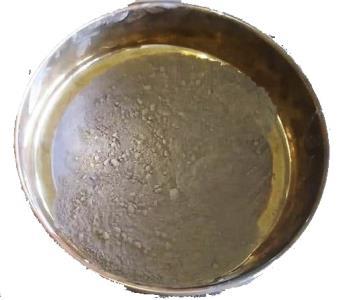
LocallyavailableOrdinaryPortlandCement,Grade43was usedforthisexperimental investigation. Thecement was fulfilling IS:8112-1989 specifications. Cement bag was checked for freshness by checking manufacturing date on bag.
2.2 Sand
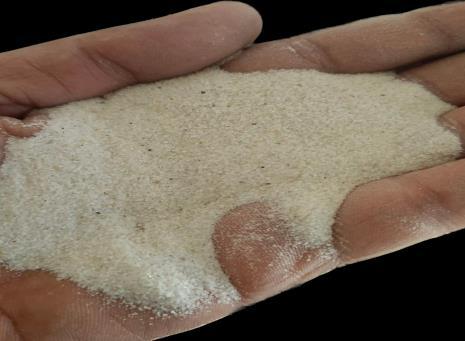
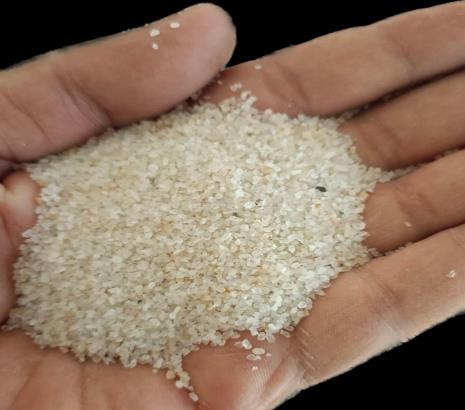
Standard sand conforming to IS: 650-1991 is used for preparing moulds for conducting compressive strength of cement. Standard sand consisting of well graded sand of quartz, light grey or whitish in color procured through supplierfrom Tamilnadu.
© 2024, IRJET | Impact Factor value: 8.226 | ISO 9001:2008 Certified Journal | Page57
of Engineering and Technology (IRJET) e-ISSN:
2.3 Water
Tap water supplied through municipal means free from particlesandgoodfordrinkingwasusedforthemixing.
2.4 Apple Juice
Applepurchasedfromlocalmarket,locallycultivatedinthe region was used for this experimental finding. Juice was extractedfromthesame.


Cement OPC
43Grade
3. EXPERIMENTAL PROCEDURE
3.1 Perpetration of Apple Juice
Applepurchasedfromlocalmarket,werethoroughlywashed bytapewatertoremoveanydirtorpesticides.Theapples werecutintosmallchunks,thesechunkswerefeedthrough thejuiceraccordingtothemanufacturer’sinstructions.The extractobtainedneedsstraining,whichwasdonebyusinga cheeseclothoverfinemeshstrainerandcollectedtobeused laterintheexperimentalprogram.
Indian Standard Sand
GradeIII ParticleSize

3.2 Quantitative Analysis of Sugar Content in Apple Juice
Indian Standard Sand
Indian Standard Sand
SugarcontentwasdeterminedbyusingBenedict'sSolution method.Waterbathwaspreparedandbroughttoboil.Inthe test tube, mix a small amount of the apple juice with Benedict's Solution, which contains copper sulfate and sodiumcitrate.Placethetesttubeintheboilingwaterbath and let it react for a specified time, typically around 5 minutes.Thepresenceofreducingsugarsintheapplejuice causesacolorchangeinthesolution,rangingfromblueto green,yellow,orange,orevenbrick red,dependingonthe concentrationofsugar.Afterthereaction,observethecolor changeandcompareittoacolorchartforquantification.
3.3 Calculation of Setting Time
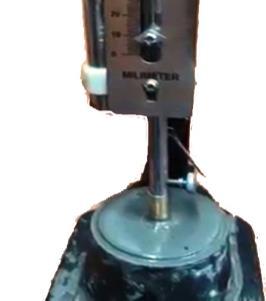
AspertheIndianStandard(IS4031:Part5),thesettingtime ofcementisdeterminedusingtheVicatapparatus.Theinitial settingtimeisthedurationelapsedbetweenthetimewateris addedtothecementandthemomenttheVicatneedlemakes nodiscernibleimpressiononthecementpasteandceasesto penetrate.Thefinalsettingtimeistheperiodbetweenthe additionofwaterandthepointatwhichtheneedle,witha larger attachment, makes only a slight impression on the paste,and the needle does not penetrate morethan 1 mm
© 2024, IRJET | Impact Factor value: 8.226 | ISO 9001:2008 Certified Journal | Page58
GradeII ParticleSize
GradeI ParticleSize
Figure -1:
RawMaterial
Figure -2: PreparationofAppleJuice
e-ISSN:
www.irjet.net p-ISSN:
International Research Journal of Engineering and Technology (IRJET)
2395-0056 Volume: 11 Issue: 01 | Jan 2024
2395-0072
into the cement. The testsare conducted under controlled conditionsoftemperatureandhumidity,andtheresultshelp assess the suitability of cement for various construction applications.
3.4 Calculation of Compressive Strength
Initiallytake300gmsofcementand900gmsofstandardsand and add water equal to ((P/4)+3)% of combined mass cementandsand.WerePisthenormalconsistencyvalueof thecementutilized.Thefollowingsampleswerepreparedby alertingthewaterquantitybyreplacingthewaterfractionby theextractedjuice.
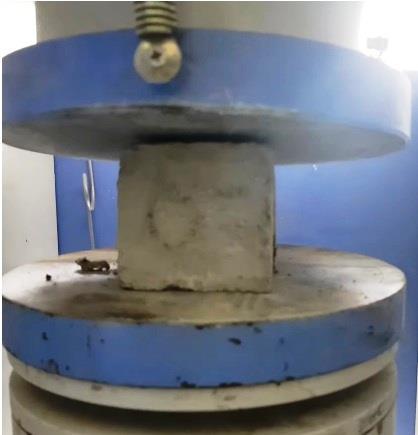
Themixobtainedisthenfilledinthecubemouldsofsize70.6 mm x 70.6 mm x 70.6 mm. The samples were demoulded, codedafter24hoursandplacedforcuringinthecuringtank with controlled conditions. The respective samples were testedforcompressivestrengthinthecompressivetesting machine after 7,14 and 28 days. The substitution of apple juicewasdonebyvaryingpercentageof5%,10%,15%and 20%byweightofcement.
4. MIX & SAMPLE PREPRATION
Themixwerepreparedwith43gradeofOPCcement,forneat concrete the water quantity was 34% of the weight of cement. Moreover few other mix were prepared by substitution the water fraction by the apple juice. For calculatingthesettingtimesthecementfractionwasmixed with the water or water and apple juice respectively. The settingtimeofthecementmixwasmadewithreplacementof waterby5%,10%,15%and20%applejuicebyweightof cement.
Forcalculatingthecompressivestrengthofcementwithand withouttheapplejuicefraction–addedintomixbyweightof cement. The ratio of cement to sand is 1:3 which has the followingparticlesizedistributionof Smallerthan2mmbut greaterthan1mm:33.33%Smallerthan1mmbutgreater than500μ:33.33%Smallerthan500μbutgreaterthan90μ :33.33%.Thewaterquantityaddedtothemixiscalculated as(0.25P+3)%ofcombinedweightofcementandsand, mixed uniformly until the mixture of uniform color is obtained(Pistheconsistencyofcement).
Additionally, alteration of the mixing water quantity was alteredbysubstitutingthewaterbyapplejuicefractionby weightofcement inaccordancetoTable1.

5. RESULT & DISCUSSION
5.1 Physical Test with Cement
Initiallythecementsamplewerephysicallytestforensuring thecementmeetstherequiredspecifications.FinessTest(IS 4031-Part1:1996)bydrysievingtodeterminetheparticle sizeofcementandStandardconsistencytest(IS:4031-Part 4: 1988) to find the moisture content whichisrequiredto produce the cement paste of standard consistency. The resultsobtainedforthecementsamplehavebeentabulated inTable2.
© 2024, IRJET | Impact Factor value: 8.226 | ISO 9001:2008 Certified Journal | Page59
Table -1: MixProportion Mix Cement (grams) Sand (grams) Apple Juice Water (grams) % grams Mix-1 200 600 0 0 88 Mix-2 200 600 5 10 78 Mix-3 200 600 10 20 68 Mix-4 200 600 15 30 58 Mix-5 200 600 20 40 48
Figure -3: SamplePreparation–CompressiveStrength Test
International Research Journal of Engineering and Technology (IRJET) e-ISSN: 2395-0056
11 Issue: 01 | Jan 2024 www.irjet.net p-ISSN: 2395-0072
Figure -4: PhysicalTestofCement–Finesse& Consistency
Volume:
International Research Journal of Engineering and Technology (IRJET) e-ISSN: 2395-0056
Volume: 11 Issue: 01 | Jan 2024 www.irjet.net p-ISSN: 2395-0072
5.2 Sugar Content of Apple Juice
Benedict’s Test gives the indication of the presence of reducedsugarinliquid.Thecolorchangeoccurredduetothe reductionofcopper(II)ionsintheBenedict'ssolutionbythe reducingsugarspresentintheapplejuice.
The extracted juice when tested with Benedict’s solution turnedthesolutiontoBrickRedcolorshowingthepresence ofhighconcentrationofreducingsugar.

5.3 Setting Time of Cement Mix
Cementpastebygauging400gramsofcementwithwater quantity of 0.85 times the consistency value is used to preparethecementpasteforinvestigatingthesettingtime. However in this experimental investigation the water quantitytobeaddedisdividedintotofractionwithmajor beingthetapwaterandtheremainingsmallerfractionbeing theapplejuicecalculatedwithrespecttopercentageweight ofcement,astabulatedinTable-2.Theinitialsettingtime and the final setting time comprise the two halves of the setting time. when the elasticity of cement paste beginsto decline.Initialsettingtimeisdefinedastheamountoftime thatpassesbetweenaddingwatertothecementandwhenit firstsets.
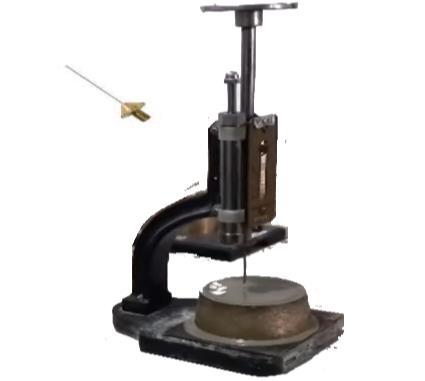

Vicatapparatuswithannularattachement.
When the paste hardens to the point when the annular attachment to the needle under standard weight merely leavesanimpressiononthehardenedcementpaste,itissaid tohavereachedthefinalsettingtime.

-1: SettingTime
AsobservedfromChart-1,theplotteddataindicatewiththe additionofapplejuicemodificationwithinthecementsetting timevalueswasnoted.Themaximumsettingtimeof5hr27
© 2024, IRJET | Impact Factor value: 8.226 | ISO 9001:2008 Certified Journal | Page60
Table -2: PhysicalTestofCement–Results
Investigation Result Color Grey Fineness 4.67% Consistency 32%
Figure -5: ColorchangeforapplejuicewithBendetic Reagent
Figure -6: InitialSettingTime-Vicatapparatuswith needle.
Figure -7: FinalSettingTime
Chart
Analysis
minutes was attained with Mix-4 with 15% of apple juice concentrationwithonly3hr17minuteswithnoapplejuice addition.AsFigure2illustratedtheinitialandfinalsetting time increasewiththeincreaseinapplejuiceconcentration however after 15% addition the trend was reversed. Retardingeffectcausedbytheadditionofapplejuicemaybe attributedtotheretentionofwaterbytheinducedsugarthus interferinginthecementhydratecrystal growth.Alsothe additionofsugarcanhaveacoolingeffectontheconcrete mix, influencing the setting time of cement and lowering temperaturecanslowdownthehydrationreactions.
5.4 Compressive Strength of Cement
Chart-2,illustratesthevariationofthecompressivestrength inaccordancetothevariousmixproportions.Thetabulated dataistheaveragevalueofthe3samplestestedforeachday of age respectively. Marginal variation in the compressive strengthcanbeobservedwiththeadditionoftheapplejuice. Initially with the incremental dosage of apple juice the compressive strength increased with the maximum being obtainedinMix-40containing15%applejuicebyweightof cementcontent.

From the plot of compressive strength data, it can be observed that there is no significant reduction in the compressivestrength.Themaximumgainof9.2%hasbeen observedinthemixwithreferencetotheneatmix,inMix-4 which contained 15% of apple juice. However with the furtherincreaseintheapplejuiceconcentrationthestrength valuesstartedtodecrease.AccordingtoNevilleetal.[9],the useofsugarasaretardersignificantlylowerstheconcrete's early strength for all ages however, the strength then increases forall ages. The quick-setting is thecause of the earlystrengthdecline.Retardationoccurswhentheamount of SCJ rises, increasing strength. The aforesaid fact is supported by the current study's findings. The gain in the strengthmaybeattributedtotheextendedsettingtimeof cement , allowing more time for the cement particle to hydrateandformthecrystallinestructureresultinggainin thestrength.
6. CONCLUSIONS
Fromthisexperimental studyfollowingconclusioncan be drawn:
TheadditionofSugarjuicetocementmixhadthe abilityofmodifythefreshandhardenedproperties.
By introducing apple juice in the cement mix, the setting time can we enhanced, showing the retarding effect over the setting of cement. Thus recommending apple juice as an alternate to retarderadmixture.
Theoptimumdosagesof15%ofapplejuicehadthe abilityofdelayingthefinalsettingtimeofcementby 6.7%.
Apple juice substitution, had the impact over the compressive strength of cement as well. The incremental value of apple juice concentration increased the compressive strength linearly upto
the optimum value of 15% showing a maximum gainof6.7%withrespecttoreferenceconcrete.
TheabundanceofappleinKashmir,andutilization of lower grade of apple for this purpose in constructionindustryisofeconomicadvantagein terms of savings in the foreign exchange used to importretardingagentsfortheindustrialpurpose.
7. FUTURE SCOPE
Effectonthedurabilityofconcreteduetopotentialissues such as increased permeability and reduced resistance to chemicalattacksneedtobeinvestigated.
© 2024, IRJET | Impact Factor value: 8.226 | ISO 9001:2008 Certified Journal | Page61
Figure 8: CompressiveStrengthofcubespecimeninCTM
Chart -2: CompressiveStrength(N/mm2)
International Research Journal of Engineering and Technology (IRJET) e-ISSN: 2395-0056 Volume: 11 Issue:
2024 www.irjet.net p-ISSN: 2395-0072
01 | Jan
Volume: 11 Issue: 01 | Jan 2024
8. ACKNOWLEDGEMENT
I extend my sincere gratitude to the Department of Civil EngineeringatGovernmentPolytechnicCollege,Budgam,for their invaluable support and provision of exceptional lab facilities.Theircommitmenthasplayedacrucialroleinthe successfulexecutionofthisexperimentalprogram.Iamtruly thankful for the opportunities and resources provided, whichhavesignificantlycontributedtotheoverallsuccessof thisendeavor.
REFERENCES
[1] Smith, A., et al. (2018). "Mechanistic Insights into the Action of Concrete Retarders." Journal of Materials Science, 33(7), 1123-1135.M. Young, The Technical Writer’sHandbook.MillValley,CA:UniversityScience, 1989.
[2] Elisabeth John, Barbara Lothenbach (2023), “Cement hydration mechanisms through time – a review.” JournalofMaterialsScience58(24):1-29K.Elissa,“Title ofpaperifknown,”unpublished.
[3] Garcia, R., & Lee, S. (2020). "Enhancing Workability through Retarder Admixtures." Construction and BuildingMaterials,45(2),231-245.Dd
[4] Johnson,M.,&Wang,Q.(2017)."InfluenceofRetarders onEarly-AgeStrength."CementandConcreteResearch, 28(4),521-534
[5] J.F. Young, A review of the mechanisms of setretardation in Portland cement pastes containing organicadmixtures,Cem.Concr.Res.2(1972)415–433.
[6] Y. Kandhari, Effect of a retarding admixture on the settingtimeofcementpastesinhotweather,Int.Res.J. Eng.Sci.Technol.Innov.4(2017)1589–1592.
[7] Gustavsson et al.,2011; Huang et al., “Global Food Losses and Food Waste” , Save Food Congress, Düsseldorf16May2011SaveFoodCongress,Düsseldorf 16May2011,JennyGustavsson,Christel Cederberg& UlfSonessonSIK–TheSwedishInstituteforFoodand Biotechnology.
[8] https://www.explore-leap.com/post/from-landfill-toleather-alternative-the-apple-waste
[9] Neville, A. M., 2006, Properties of concrete. 4th ed., DorlingKindersley,NewDelhi,India.
[10] IS4031:1-61988
BIOGRAPHIES




SeuhailAijazShah ResearchFellow
DepartmentofCivilEngineering NationalInstituteOfTechnology Srinagar.
Dr.ManzoorAhmadTantray Professor
DepartmentofCivilEngineering
NationalInstituteOfTechnology Srinagar J&K,India
Dr ShafquatAra
Principal
GovernmentPolytechnicCollege
Budgam, J&K,India
MominahAjaz
Demonstrator
DepartmentofCivilEngineering
GovernmentPolytechnicCollege
Budgam, J&K,India
© 2024, IRJET | Impact Factor value: 8.226 | ISO 9001:2008 Certified Journal | Page62
International Research Journal of Engineering and Technology (IRJET) e-ISSN:
2395-0056
www.irjet.net p-ISSN: 2395-0072