
International Research Journal of Engineering and Technology (IRJET) e-ISSN: 2395-0056
Volume: 11 Issue: 10| Oct2024 www.irjet.net p-ISSN:2395-0072

International Research Journal of Engineering and Technology (IRJET) e-ISSN: 2395-0056
Volume: 11 Issue: 10| Oct2024 www.irjet.net p-ISSN:2395-0072
Andrew Renault1, Michael Johnson2
1 Grad Student, Dept. of Aeronautical Science, Capital Technology University, South Laurel, Maryland, USA
2 Adjunct Professor, Dept. of Aeronautical Science, Capital Technology University, South Laurel, Maryland, USA
Abstract - TheexistingAirTrafficControl(ATC)systemsface mounting challenges due to increasing global air traffic, the widespread use of Unmanned Aerial Vehicles (UAVs), and outdatedradarandcommunicationtechnologies.Theseissues areexacerbatedbyemergingcybersecuritythreatsandhuman factors risks, creating significant safety and operational concerns. The ATC infrastructure, originally designed for conventionalmannedaircraft,strugglestomeetthedemands ofmodernaviation,whichincludesmanaginghigherairtraffic volumes and diverse aircraft types. This paper examines the limitations of current ATC systems, emphasizing the need for technological upgrades such as multi-sensor radar integration, AI-driven decision support, and robust cybersecurity measures. Additionally, the paper explores human factors considerations and the challenges associated with UAV integration. The discussion highlights the necessity for comprehensive reforms to ensure the continued safety, efficiency, and resilience of airspace management. Future recommendations include enhancing radar coverage, implementing encrypted communication protocols, and developingadaptiveautomationsolutionsthatimprovesafety outcomes while accounting for human limitations.
Key Words: ATC, UAV, AI, Cybersecurity, Flight Safety, HumanFactors
AirTrafficControl(ATC)systemsarecurrentlyencountering unprecedented challenges that threaten the safety and efficiency of the global aviation industry. The continuous surge in global air traffic and the rapid proliferation of UnmannedAerialVehicles(UAVs)havesignificantlystrained traditionalATCframeworks.Originallydesignedtomanage manned aircraft within structured environments, the existing radar and communication technologies are increasinglyinadequateforaddressingthecomplexitiesof today’s airspace. The integration of UAVs, along with the sheervolumeofflights,hasoutpacedthecapabilitiesofthese outdatedsystems,exposingcriticallimitationsthatmustbe addressedurgently[1,2,3,4,5]
InadditiontohandlingincreasedtrafficandUAVintegration, ATC systems face evolving cybersecurity risks and safety concerns linked to human factors. These digital vulnerabilitiesandoperationalchallengesfurthercomplicate analreadycongestedairspace,underscoringthenecessity for modernizing ATC infrastructure. Without substantial
upgrades in technology, security measures, and safety protocols,ATCwillstruggletokeeppacewiththedemands ofcontemporaryaviation[5,6].
To meet these challenges, immediate advancements are required in key areas such as radar and communication protocols, AI-driven automation, and enhanced cybersecuritystrategies.Theseimprovementsarecrucialto accommodatethegrowingdiversityofairspaceuserswhile mitigating safety risks associated with congestion, unauthorizedUAVoperations,andpotentialdigitalthreats [7,8,9].
The integration of UAVs into the airspace presents significantchallengesforcurrentATCsystems,whichwere originally designed for manned aircraft operations. UAVs typicallyoperateatloweraltitudes,ofteninairspacethatis morecongestedandcomplexthantraditionalflightcorridors [9, 10, 11, 12]. Their rapid proliferation, driven by commercial,recreational,andindustrialuses,hascreatedan urgentneedfornewtrafficmanagementsolutionstosafely accommodatetheseaircraftwithinsharedairspace.Asthe numberofUAVscontinuestorise,thepressureonexisting ATC frameworks intensifies, necessitating innovative strategiestomaintainairspacesafetyandefficiency[13,14].
UAVs introduce specific risks related to mid-air collisions andincreasedairspacecongestion,especiallyinlow-altitude regionswherebothmannedandunmannedaircraftoperate. Traditional radarsystems, whichrelyoncooperativedata exchangeandtranspondersignalsfromaircraft,struggleto detect UAVs that may lack such equipment. This reduced visibilitysignificantlycomplicatesthemanagementofUAVs withinexistingATCsystems,wheremanualtrackingofthese vehiclesisimpracticalduetotheirsheernumbersandrapid movement [10, 11, 12]. Current ATC systems are not equipped to handle the unique characteristics of UAVs, leading to a growing need for advanced detection and monitoringcapabilities.
EffortstointegrateUAVsintonationalairspaceinvolvethe developmentofspecializedUnmannedTrafficManagement (UTM) systems, which aim to provide autonomous traffic managementsolutionsforUAVs.However,thesesystemsare stillintheearlystagesofdevelopmentandfacenumerous technological, regulatory, and operational challenges. Considerable investment is required to advance UTM infrastructure, including enhancing radar capabilities,
International Research Journal of Engineering and Technology (IRJET) e-ISSN: 2395-0056
Volume: 11 Issue: 10| Oct2024 www.irjet.net p-ISSN:2395-0072
deploying more sophisticated tracking systems, and establishing comprehensive regulatory frameworks that addresstheuniquerequirementsofUAVoperations[10,11, 12]. As UAV usage expands across various industries, including delivery, agriculture, and surveillance, the importanceofimprovingdetectiontechnologiesandrefining trafficmanagementstrategiesbecomesevermorecriticalfor ensuringthesafetyofbothmannedandunmannedaircraft insharedairspace[3,5,7,9].
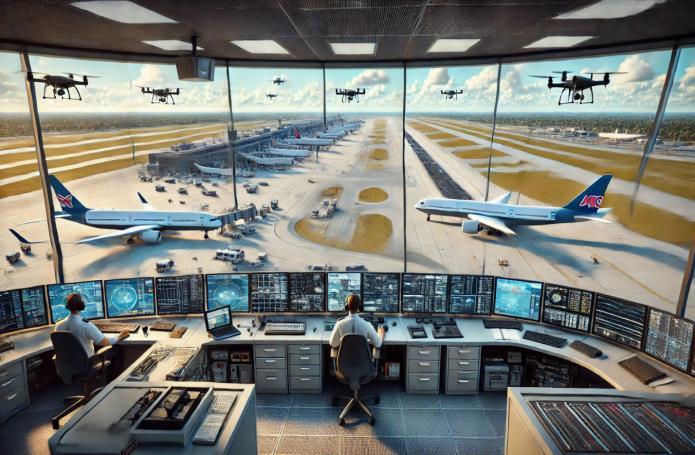
The global demand for air travel is rising sharply, with substantialgrowthexpectedinpassengernumbers,aswell ascivilian,military,andfreightflights.TheFederalAviation Administration(FAA),aviationagencies,andmajorairplane manufacturers project a 2.7% annual increase in U.S. air traffic,forecastingapproximately1.8billionpassengersby 2036 [6, 16, 17, 18, 19]. On a global scale, billions of passengers are anticipated to travel annually by 2040, significantly intensifying airspace congestion and placing enormousstrainonexisting ATCsystems[2,6].Therapid expansion of air travel, driven by economic growth, the globalizationofmarkets,andtheincreasedaccessibilityof airtransportation,necessitatesimmediateupgradestoATC infrastructure to prevent widespread delays and inefficiencies.
As airspace congestion worsens, the limitations of radarbased ATC systems become increasingly apparent. Traditional radartechnologies,whicharethe backbone of currentATCoperations,struggletomanagethelargevolume ofdatarequiredforreal-timetrafficmonitoringandcontrol [1,2,6].Thesesystemsrelyonmaintaininggreateraircraft separation distances to ensure safety, but this approach reducesairspaceefficiency andincreases thepotentialfor mid-air collisions as traffic density rises [2, 5, 6, 7]. The inability to handle higher traffic volumes with existing technologyresultsinmorefrequentdelaysanddiminished operational effectiveness, underscoring the need for technologicaladvancementsinairtrafficmanagement.
Forecastspredictthatairtrafficwillincreaseoverthenext two decades, propelled by growing passenger demand, expanding airline fleets, and the economic integration of globalmarkets[6,12,16,17,18,19].However,currentradar systems are not equipped to accommodate this surge in traffic.Therelianceonwideseparationdistancestomaintain safetybecomesincreasinglyuntenableasflightoperations expand,creatingbottlenecksinairspaceusageandelevating safety risks. Addressing these challenges will require modernizing ATC systems to integrate real-time data processing capabilities, AI-driven traffic management solutions,andmoreadvancedcommunicationtechnologies to optimize flight operations and improve airspace utilization [1, 12, 13, 22]. Additionally, investments in automation and predictive analytics will be crucial for enhancing traffic flow management and reducing congestion-relateddelays.
Table 1:AirTrafficForecastDataandATClimitations.
Therelianceonoutdatedradarandcommunicationsystems presents significant challenges in current ATC operations. Althoughtraditionalradarsystemshaveprovidedreliable service in the past, they are increasingly inadequate for managing the complexities of modern aviation. These systemsofferlimitedcoverage,particularlyatlowaltitudes, andsufferfromdelaysinrelayingcriticalinformation,which hampers the ability to ensure safe and efficient airspace management[6].Astheaviationlandscapeevolveswiththe rise of UAVs and increasing air traffic, the limitations of conventional radar technology have become more pronounced,necessitatingtheadoptionofmoreadvanced solutions.
International Research Journal of Engineering and Technology (IRJET) e-ISSN: 2395-0056
Volume: 11 Issue: 10| Oct2024 www.irjet.net p-ISSN:2395-0072
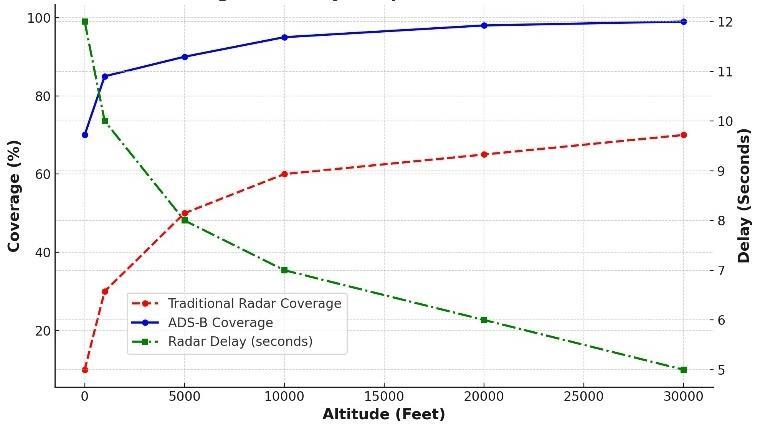
Chart 1:ComparisonofRadarCoverageandDelays: Traditionalvs.ADS-BSystems.
ThetransitiontoNextGenATCsystems,spearheadedbythe FAA, aims to address these shortcomings by leveraging cutting-edgetechnologies.NextGenincorporatesAutomatic Dependent Surveillance-Broadcast (ADS-B) and Performance-Based Navigation (PBN) to enhance aircraft trackingandcommunicationaccuracy.ADS-B,whichutilizes satellite-basedtracking,enablesmoreprecisereal-timedata exchange between aircraft and ATC, thereby reducing required separation distances and improving operational efficiency [6]. Despite these advancements, ADS-B is not without its challenges. The system remains vulnerable to cybersecurity threats, such as spoofing and data interception, due to the unencrypted nature of its signals, posingriskstoaviationsafetyandsecurity[14,15,22,23].
Table 2: ComparisonofRadarandADS-BSystems
Moreover,theshifttowardsNextGentechnologies,whilea significantimprovementovertraditionalsystems,doesnot fullyresolvethelimitationsassociatedwithradarcoverage and communication capabilities. Conventional radar systems, originally designed to provide high-altitude coverageformannedaircraft,struggletoreliablytracklowaltitudeUAVsandotheraircraftoperatingincomplexand congestedairspaces[3,7,9,10,12].AsUAVusagecontinues togrowandairspacebecomesmorecrowded,thedemand for more comprehensive and resilient tracking solutions increases.
Addressingtheseissueswillrequireongoingadvancements inradartechnology,includingtheintegrationofmulti-sensor data fusion and satellite-based enhancements. These upgradesareessentialforexpandinglow-altitudecoverage and delivering more precise real-time information to ATC
operators [10, 12]. Additionally, incorporating advanced cybersecurity measures into ADS-B and other NextGen technologies will be critical for mitigating the risks associated with unencrypted communication signals and ensuringthesafetyoffutureairtrafficmanagement[6,14].
The modernization of ATC systems involves integrating advancedtechnologieslike ADS-BandPBN,bothaimedat enhancing navigation accuracy and operational efficiency. While these systems represent significant improvements overtraditionalradar-basedATC,theyalsointroducenew security challenges that must be addressed to maintain aviationsafety.
PBNallowsaircrafttofollowmorepreciseflightpathsusing satellite-basedsystemsandonboardavionics[15,30].This capabilityimprovesairspaceutilization,reducescongestion, andenablesmoreflexiblerouting.However,PBN’sreliance on satellite signals exposes it to vulnerabilities such as jamming,wheresignalinterferencecandegradenavigation accuracy, and potential malware insertion, which could disrupttheintegrityofnavigationdata.Despitetheserisks, PBNoffersstrongerresistancetospoofingattacksthanADSBduetoitsmulti-layeredverificationprocessesandreliance onencrypteddatatransmissions[15,30,32].
NextGen Systems and Vulnerabilities: The shift towards NextGen technologies, including ADS-B, has improved tracking accuracy through satellite-based surveillance, enablingreal-timedataexchangebetweenaircraftandATC. However, the unencrypted nature of ADS-B signals makes themsusceptibletospoofinganddatainterception,posing risks to the integrity of air traffic management [22, 23]. Upgradingtraditionalradarandcommunicationsystemsis essential to support NextGen capabilities and manage the growing complexity of airspace, especially with the increasingnumberofUAVs[10,28,29].
Radar and Communication Limitations: Traditional radar systems are still widely used, but they struggle with lowaltitude coverage and are not effective for tracking UAVs. Enhancements such as multi-sensor fusion and satellitebasedimprovementsarenecessarytofillcoveragegapsand providereal-timeinformationtocontrollers[10,22,23,28]. With the rising number of UAVs and air traffic in general, modernizingradarandincorporatingrobustcybersecurity measuresiscrucialforfutureATCoperations.
The increasing risk of hijacking UAVs or even manned aircraftposessignificantthreats,asmaliciousactorscould exploithijackedaircraftforterrorism,potentiallyusingthem as weapons to target critical infrastructure or densely populatedareas.
International Research Journal of Engineering and Technology (IRJET) e-ISSN: 2395-0056
Volume: 11 Issue: 10| Oct2024 www.irjet.net p-ISSN:2395-0072
Humanfactorscontinue to playa crucial role in air traffic safety, as the increasing volume of air traffic and technological complexity place significant demands on air trafficcontrollers.SafetyremainsaprimaryconcerninATC operations,withhumanfactorscontributingsignificantlyto theriskoferrors.AsATCsystemsevolveandbecomemore sophisticated, the workload on controllers can escalate, leading to cognitive overload, fatigue, and stress. These factorsareknowntoincreasethelikelihoodofoperational mistakes,whicharealeadingcauseofaviationaccidents[8, 20, 21, 26]. Managing these human factors is critical for maintainingsafetyandefficiencyintheATCenvironment.
Efforts to mitigate these risks focus on integrating automation, AI-driven decision support, and humancentered system design. Advanced decision-support tools that reduce the cognitive load on controllers while enhancing situational awareness can improve safety outcomesbyprovidingtimelyandaccurateinformationto assist in decision-making [1]. However, balancing the benefitsofautomationwiththeneedforhumanoversight remainsasignificantchallenge.Over-relianceonautomated systemscanleadtoautomationbias,wherecontrollersmay trust the system's outputs without adequately verifying them,potentiallyoverlookingerrorsorsystemfailures[24, 32,33].ThisissueunderscorestheneedforATCsystemsto supportacollaborativeapproachthatcombinesautomated assistancewithactivehumanengagement.
Moreover,asATCsystemsincreasinglyincorporateAIand machinelearning,newchallengesariseconcerninghumanmachine interaction. A trust survey on automation has highlightedthatmanyairtrafficcontrollersharborconcerns aboutAI'sincreasingroleindecision-making,fearingthatit mayunderminetheirauthorityorleadtosituationswhere they are unable to intervene effectively during system failures[31].EnsuringthatAI-driventoolsaretransparent and interpretable for human operators is essential to buildingtrustandenablingeffectivecollaborationbetween humans and automated systems. Incorporating humancentereddesignprinciplesintofutureATCsystemswillbe crucial to achieving this balance. Such designs should prioritizeuserinterfaceergonomics, intuitive information
displays, and adaptive automation levels that can be adjusted according to the controller’s workload and situationaldemands.
Inadditiontocognitivefactors,physicalandenvironmental conditions can also impact controller performance. Noise, lighting, workstation ergonomics, and shift patterns all influence stress levels and fatigue, further affecting safety outcomes.Addressingthesefactorsthroughcomprehensive fatigue management programs, ergonomic improvements, andschedulingoptimizationcanhelpreducehumanerror andenhanceoverallATCsystemresilience[27,30].
As air traffic continues to grow and ATC systems become moreintegratedwithnewtechnologies,ongoingtrainingand competencydevelopmentforairtrafficcontrollerswill be essential.Trainingprogramsshouldincludesimulationsof high-stress scenarios and emphasize the importance of maintaining situational awareness while using automated tools. Future ATC research should explore the long-term effectsofautomationonhumanperformanceandinvestigate strategiestoenhancehuman-machineteamingincomplex operationalenvironments[13,24,26,27].
Theescalatingdemandforairtravel,coupledwiththerapid growth of UAVs and the limitations of existing radar and communication systems, underscores the urgent need to modernize ATC systems. The current infrastructure, originally designed for conventional manned aviation, is increasinglyinadequateforaddressingthecomplexitiesof contemporaryairspacemanagement.Criticalissuesinclude not only outdated technology but also emerging cybersecurityvulnerabilitiesandhumanfactorschallenges
International Research Journal of Engineering and Technology (IRJET) e-ISSN: 2395-0056
Volume: 11 Issue: 10| Oct2024 www.irjet.net p-ISSN:2395-0072
that significantly impact safety and operational efficiency [21,24,25,32].
To meet the needs of modern aviation, comprehensive upgrades are essential. These upgrades should focus on integratingAI-drivendecision-supportsystems,multi-sensor radarenhancements,androbustcybersecuritymeasuresto improve situational awareness and risk mitigation capabilities. For example, enhanced radar systems can providebetterlow-altitudecoverageforUAVs,reducingthe risk of mid-air collisions in congested airspaces. Furthermore,AIcanassistcontrollersbyautomatingroutine tasks,thusallowingthemtoconcentrateonmorecomplex decision-makingscenarios,reducingthelikelihoodofhuman error.
Cybersecurity remains a prominent concern, with the adoption of technologies like ADS-B, which, despite improvingtrackingaccuracy,exposesATCsystemstodata interception and spoofing risks. Therefore, implementing encrypted communication protocols and AI-based threat detectionalgorithmsiscrucialtocounteringthesethreats.
The modernization of ATC is not just a technological necessity but a strategic imperative for global aviation safety. The reforms needed extend beyond hardware upgrades to include regulatory changes, stakeholder coordination, and significant investment in training programs.Withoutthesemeasures,thegrowingrisktoair traffic management's safety and efficiency could lead to severe disruptions, potentially impacting millions of passengersandairspaceusersworldwide.
Futureresearchwillfocusonseveralkeyareastosupport theongoingmodernizationofATCsystems:
1. AI-Enhanced Decision Support Systems: Investigate advanced AI algorithms capable of providing real-time traffic management support while ensuring transparency and interpretability for air traffic controllers. This research should explore AI’s potential to adaptively assist controllers under various levels of airspace congestion.
2. Human-AI Collaboration: Conduct studies on balancing automation with human oversight, preventing over-reliance on automated systems. Researchshouldexaminethedynamicsofhumanmachineinteraction,aimingtomaintainsituational awarenessandreduceautomationbias.
3. UAV Regulatory Frameworks: Continue developing comprehensive regulations for UAV integration,emphasizingtheneedforstandardized tracking technologies and clearly defined operationalprotocolswithinsharedairspace.Such frameworksshouldalsoaddresstherequirements forcollisionavoidanceandairworthinessstandards.
4. Cybersecurity Innovations: Investigate novel encryption methods and AI-based intrusion detection systems tailored to ATC environments. The focus should be on strengthening resilience againstspoofing,jamming,andmalwarethreats.
5. Multi-Sensor Radar Integration: Explore the potentialforintegratingmultiplesensortypes(e.g., radar,ADS-B,satellite-basedsystems)toimprove real-timecoverageandsituationalawareness.This researchshouldalsoassessthefeasibilityofusing emergingtechnologiessuchasquantumradarfor moreprecisetrackingcapabilities.
[1] A. Degas et al., "A survey on artificial intelligence (AI) andeXplainableAIinairtrafficmanagement," Applied Sciences, vol. 12, no. 3, p. 1295, 2022. doi: https://doi.org/10.3390/app12031295
[2] C. Cummings, “Air traffic flow and congestion of the skies,” 2022. [Online]. Available: https://www.proquest.com/dissertations-theses/airtraffic-flow-congestion-skies-modelsinsights/docview/2707696219/se-2.
[3] J.Z.Wells,“Applicationofpathpredictiontechniquesfor unmanned aerial system operations,” 2021. [Online]. Available: https://www.proquest.com/dissertationstheses/application-path-prediction-techniquesunmanned/docview/2735849146/se-2
[4] Y. Pang, “Artificial intelligence-enhanced predictive modeling in air traffic management,” 2023. [Online]. Available: https://www.proquest.com/dissertationstheses/artificial-intelligence-enhancedpredictive/docview/2814233441/se-2
[5] C.Xiaetal.,"AconflictriskanalysisofMAV/UAVflightin shared airspace," International Journal of Aerospace Engineering, vol. 2021, pp. 1–14, 2021. doi: https://doi.org/10.1155/2021/1692896.
[6] AllianceforAviationAcrossAmerica, AirTrafficControl Modernization and NextGen, 2023. [Online]. Available: https://aviationacrossamerica.org/issues/atcmodernization/
[7] A.HamissiandA.Dhraief,"Asurveyontheunmanned aircraft system traffic management," ACM Computing Surveys, vol. 56, no. 3, Art. 68, 2024. doi: https://doi.org/10.1145/3617992
[8] P. Domogala and P. Marien, 100 years of air traffic control, 2022. [Online]. Available: https://ifatca.org/100-years-air-traffic-control/
[9] R.T.Q.Overmyer,“Democratizationofaviation,”2023. [Online]. Available:
International Research Journal of Engineering and Technology (IRJET) e-ISSN: 2395-0056
Volume: 11 Issue: 10| Oct2024 www.irjet.net p-ISSN:2395-0072
https://www.proquest.com/dissertationstheses/democratization-aviation-contentanalysis/docview/2854824094/se-2.
[10] M.S.KrämerandK.D.Kuhnert,"Multi-sensorfusionfor UAVcollisionavoidance,"in Proceedingsofthe20182nd International Conference on Mechatronics Systems and Control Engineering, 2018. doi: https://doi.org/10.1145/3185066.3185081
[11] D. Sacharny, “A lane-based approach to large-scale unmannedaircraftsystemstrafficmanagement,”2022. [Online]. Available: https://www.proquest.com/dissertations-theses/lanebased-approach-large-scale-unmannedaircraft/docview/2735900420/se-2.
[12] S. U. Gunawardana, “A rule-based dialog management systemforintegrationofunmannedaerialsystemsinto thenationalairspacesystem,”2012.[Online].Available: https://www.proquest.com/dissertations-theses/rulebased-dialog-management-systemintegration/docview/2454363866/se-2
[13] C.J.Boyer,“Airtrafficleadershipperceptionsontheuse ofmachinelearningforairtrafficsafety,”2020.[Online]. Available: https://www.proquest.com/dissertationstheses/air-traffic-leadership-perceptions-on-usemachine/docview/2559697262/se-2
[14] USGAO,“FAAneedsamorecomprehensiveapproachto addresscybersecurityasagencytransitionstoNextGen,” GAO Reports, GAO-15-370, 2015. [Online]. Available: https://www.gao.gov/assets/gao-15-370.pdf
[15] S. Khandker et al., "Cybersecurity attacks on ADS-B implementations," IEEE Transactions on Aerospace and Electronic Systems,vol.58,no.4,pp.2702–2719,2022. doi:https://doi.org/10.1109/taes.2021.3139559.
[16] FAA, Aerospace Forecast: Fiscal Years 2024–2044, U.S. DepartmentofTransportation,2024.[Online].Available: https://www.faa.gov/data_research/aviation/aerospac e_forecasts/
[17] IATA, 20 Year Passenger Forecast, 2024. [Online]. Available: https://www.iata.org/en/services/data/marketdata/20-year-passenger-forecast/.
[18] Boeing, Commercial Market Outlook 2024–2043,2024. [Online]. Available: https://www.boeing.com/commercial/market/commer cial-market-outlook/
[19] Airbus, Global Market Forecast 2024–2043, 2024. [Online]. Available: https://www.airbus.com/en/productsservices/commercial-aircraft/global-market-forecast
[20] C.A.Harris,“ATCspecialists'perceptionsofsimulation for developing job-related competencies,” 2021. [Online]. Available: https://www.proquest.com/dissertations-theses/airtraffic-control-specialistsperceptions/docview/2620068007/se-2
[21] F.L.Lazaroetal.,"Humanfactorsinaviationaccidents," Applied Sciences, vol. 14, no. 2, 2024. doi: https://doi.org/10.3390/app14020640
[22] T. H. Aldhyani and H. Alkahtani, "Cybersecurity algorithms for autonomous vehicles," Sensors, vol. 22, no.1,2022.doi:https://doi.org/10.3390/s22010360.
[23] A. Ray, “Machine learning-based spectrum fingerprinting,” 2023. [Online]. Available: https://www.proquest.com/dissertationstheses/machine-learning-based-spectrumfingerprinting/docview/2808151612/se-2
[24] L.P.Armbrister,“Automationinaviationsafety,”2023. [Online]. Available: https://www.proquest.com/dissertationstheses/automation-aviation-advancement-hindrancesafety/docview/2861553125/se-2.
[25] A.Reyes-Muñozetal.,"RPAScontingencymanagement innon-segregatedairspace," AppliedSciences,2023.doi: https://doi.org/10.3390/app13031408
[26] T. T. İnan and N. G. İnan, "Factors in fatal aviation accidents," 2022. doi: https://doi.org/10.15394/ijaaa.2022.1672
[27] F. P. Moreno et al., "Machine learning models for air traffic complexity," Symmetry, vol. 14, no. 12, 2022. https://doi.org/10.3390/sym14122629.
[28] M. Jones et al., "UAV path-planning for complex environments," 2023. doi: https://doi.org/10.1145/3570723
[29] K.H.Cheliotietal.,"UAVmonitoringadvancementsfor infrastructure," 2023. doi: https://doi.org/10.32738/jeppm-2023-0023
[30] F.Enayatollahietal.,"PBN-basedtime-optimalterminal air traffic control using cellular automata," 2021. doi: https://doi.org/10.1109/taes.2020.3048787.
[31] J.Hicks,“Aviationsystems–trustsurveydevelopment,” 2023. [Online]. Available: https://www.proquest.com/dissertationstheses/generalizable-method-case-applicationdevelopment/docview/2814746979/se-2
[32] K. J. O'Donnell, “Improving ADS-B console functionality,”2020. [Online]. Available:
International Research Journal of Engineering and Technology (IRJET) e-ISSN: 2395-0056
https://www.proquest.com/dissertationstheses/exploring-strategies-human-computerinteraction/docview/2429005268/se-2.
[33] R. Li, Z. Zhou, Y. Cheng, and J. Wang, "Failure effects evaluation for ATC automation system," Applied Computational Intelligence & Soft Computing,vol.2017, pp. 1–8, 2017, doi: https://doi.org/10.1155/2017/8304236

Volume: 11 Issue: 10| Oct2024 www.irjet.net p-ISSN:2395-0072 © 2024, IRJET | Impact Factor value: 8.315 |
Andrew Renault is a graduate student in the Aeronautical Science Department at Capital Technology University, where he focuses on advancing research in air traffic management and unmanned aerial vehicle(UAV)integration.Withover 30 years of engineering experience in the aerospace industry, Andrew has contributed to a variety of projectsrangingfromaircraftdesign to systems optimization. His expertise spans both technical and regulatory aspects of aerospace operations, makinghima keyvoice in discussions on modernizing air traffic control systems and addressing emerging challenges in aviation.