
Volume: 11 Issue: 10 | Oct 2024 www.irjet.net p-ISSN: 2395-0072

Volume: 11 Issue: 10 | Oct 2024 www.irjet.net p-ISSN: 2395-0072
Kaneez Fatma1, Dipti Ranjan Tiwari2
1Master of Technology, Computer Science and Engineering, Lucknow Institute of Technology, Lucknow, India
2Assistant Professor, Department of Computer Science and Engineering, Lucknow Institute of Technology, Lucknow, India
Abstract - Sentiment analysis is a field that examines people's opinions on various topics, from products to political and social events. It has gained widespread attention as it helps stakeholders make informed decisions based on public sentiment. Opinion mining is a key technique used to extract insights from platforms like searchengines, blogs, Twitter, and social networks. However, manually analyzing large volumes of tweets, which are often in unstructured text form, can be challenging. To overcome this, researchers use computational techniques like the Bag-of-Words (BoW) model, which identifies sentiment-bearing words throughmachinelearning. In this study, a lexicon-based method was employed to automatically detect sentiments in tweets collected from Twitter. Researchers applied three machine learning algorithms: Naive Bayes (NB), Maximum Entropy (ME), and Support Vector Machines (SVM), toassess their effectiveness in classifying tweets by sentiment. The results showed that both NB with Laplace smoothing and SVM were reliable classifiers, especially when using specific features like unigrams or Partof-Speech (POS) tags. Overall, sentiment analysis is a valuable tool for understanding public opinions shared on platforms like Twitter, allowing stakeholders to gauge public reactions to various subjects.
Key Words: Sentiment Analysis, Social Media, Natural LanguageProcessing(NLP),DeepLearning, Transformers, SupervisedLearning,TextClassification.
1.SENTIMENT ANALYSIS
Sentimentanalysis,alsoreferredtoasopinionmining,isa pivotal domain within natural language processing (NLP) that entails discerning the emotional undertones within a body of text. In the realm of social media and online discourse,itholdssubstantialsignificanceincomprehending thesentimentsarticulatedbyusersacrossvariousplatforms such as Twitter, Facebook, and online forums. Given the proliferation of user-generated content, organizations, scholars, and governmental bodies are increasingly dependent on sentiment analysis to assess public perceptions pertaining to products, services, political occurrences,andsocietalmatters.Nonetheless,owingtothe informal and colloquial lexicon utilized in these posts frequentlyincorporatingslang,emoticons,andambivalent sentiments the task presents distinctive complexities.
Machine learning methodologies have been extensively embracedtorefinetheprecisionandscalabilityofsentiment classification,renderingitanindispensableinstrumentfor scrutinizingextensivequantitiesofonlinematerial.
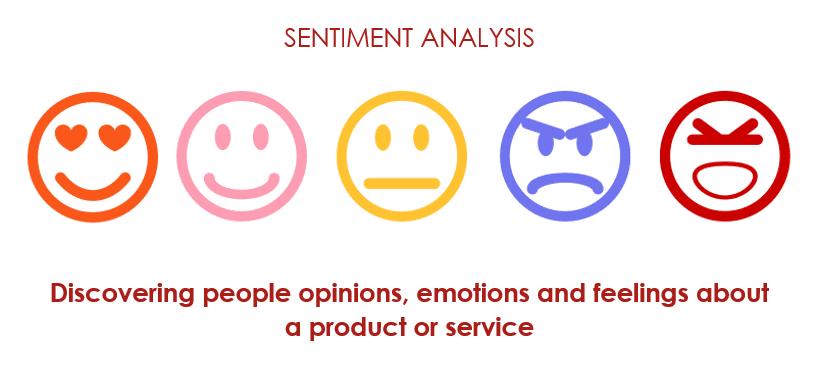
Sentiment identification plays a crucial role in various aspects such as understanding public opinions, customer feedback,andemergingtrends.Bydelvingintohowpeople perceive products, services, events, or societal issues, businessescangainvaluableinsightsthatdriveactionable decisions.Forinstance,whenacompanyanalyzescustomer feedback, it can pinpoint specific areas for improvement, leadingtoenhancedproductqualityandincreasedcustomer satisfaction. This, in turn, fosters brand loyalty and strengthensthecompany'smarketposition.
Intherealmofpublicopinion,sentimentanalysisservesasa powerful tool for governments, organizations, and media outlets.Bymonitoringreactionstopolicies,newsevents,or socialmovements,stakeholderscangaugepublicsentiment andmakeinformeddecisions.Forexample,duringapolitical campaign, tracking sentiment trends can offer valuable insights into voter behavior and preferences, helping candidatestailortheirstrategiesformaximumimpact.
Moreover, sentiment analysis enables industries to anticipate consumer behavior, predict market shifts, and even forecast political outcomes. By leveraging sentiment data,businessescanstayaheadofthecompetitionandmake strategic decisions that align with evolving trends. This proactive approach not only enhances decision-making processes but also supports long-term planning efforts,
International Research Journal of Engineering and Technology (IRJET) e-ISSN: 2395-0056
Volume: 11 Issue: 10 | Oct 2024 www.irjet.net p-ISSN: 2395-0072
givingorganizationsacompetitiveedgeintoday'sdynamic landscape. Ultimately, sentiment identification remains a cornerstone for informed decision-making and strategic planningacrossvarioussectors.
Sentimentanalysisencountersvariouschallengesduetothe intricatenatureofhumanlanguage.Onesignificanthurdle liesindecipheringsarcasm,irony,andhumor,wherewords' literalmeaningsdivergefromtheintendedemotions,thus posingachallengeforalgorithmstoaccuratelycapturetrue sentiments.Forinstance,astatementlike"Oh,great,another Monday!" may seem positive on the surface but actually conveysasenseofdreadordislike.Thiscomplexitymakesit toughforsentimentanalysistoolstodiscerntheunderlying sentimentaccurately.
The prevalence of slang, abbreviations, and informal language, particularly on social media platforms, adds another layer of difficulty. These linguistic nuances often vary across different regions and communities, making it challenging for algorithms to interpret sentiments accurately.Forexample,expressionslike"lit"or"fam"may have different connotations based on cultural context, furthercomplicatingsentimentanalysisprocesses.
Anotherkeychallengearisesfrommixedsentiments,where asinglepostcontainsbothpositiveandnegativeemotions. Thisjuxtapositioncanconfusesentimentanalysismodels,as understanding the overall sentiment requires nuanced interpretation of the context. Additionally, the context dependency of sentiment analysis presents a significant obstacle. The sentiment associated with a word or phrase can shift based on the surrounding text, necessitating a comprehensive understanding of the entire message to accuratelygaugeemotions.
The rise of multilingual and code-switching posts further complicates sentiment analysis tasks. Users often blend multiple languages in their communications, making it challengingforalgorithmstoaccuratelyidentifysentiments across diverse linguistic landscapes. Overall, navigating these challenges requires sophisticated algorithms and a deepunderstandingoftheintricaciesofhumanlanguageto ensure accurate sentiment analysis in an increasingly complexdigitalworld.
Sentiment analysis techniques have evolved significantly overtime,transitioningfromtraditional methodstomore advanced machine learning approaches. Traditional methods, such as lexicon-based techniques, rely on predefinedlistsofwordscategorizedaspositive,negative,or neutral. For instance, a lexicon-based approach might classifywordslike"happy"aspositiveand"sad"asnegative
basedontheirinherentmeanings.However,thesemethods face challenges when it comes to capturing context and dealing with ambiguity. This can result in lower accuracy whenanalyzingsentimentsinmorecomplextexts.
In contrast, machine learning approaches have revolutionizedsentimentanalysis,especiallywiththeadvent of supervised learning techniques. For example, Support Vector Machines (SVM), Naive Bayes, and deep learning models like neural networks have shown remarkable successinautomaticallylearningpatternsfromlargelabeled datasets. These algorithms can adapt to various contexts, including slang and nuanced expressions that may pose challenges for traditional methods. By leveraging word embeddingsandtransformerslikeBERT,machinelearning models can grasp intricate relationships between words, enhancingtheirunderstandingofsentimentnuances.
Machine learning approaches offer more accurate and scalable solutions for sentiment analysis compared to traditional methods. While they do require substantial amountsofdataandcomputationalresources,theirabilityto capture complex patterns and adapt to diverse contexts makes them invaluable in today's data-driven world. As sentiment analysis continues to play a crucial role in understandingcustomerfeedback,socialmediatrends,and marketsentiments,theadvancementsinmachinelearning are set to further revolutionize how we interpret and analyzesentimentsintextualdata.
Current machine learning models used for sentiment analysisencompassadiversearrayoftechniques,ranging from traditional algorithms to cutting-edge deep learning methodologies.Amongthetraditionalalgorithms,Support Vector Machines (SVM) stand out for their proficiency in establishingdecisionboundariesthateffectivelysegregate positive and negative sentiments within textual data. For instance, in a sentiment analysis task analyzing customer reviewsofaproduct,SVMcanaccuratelyclassifysentiments basedonthespecificlanguageusedtoconveysatisfactionor dissatisfaction.
Incontrast,theRandomForestalgorithm,categorizedasan ensemblemethod,showcasesitsprowessbyamalgamating multipledecisiontreestoenhancepredictionaccuracyand mitigate overfitting issues. Consider a scenario where market sentiment towards a particular stock needs to be analyzed using a vast dataset of financial news articles; Random Forest would excel in discerning nuanced sentiments and preventing the model from memorizing noiseinthedata.
Delving into the realm of deep learning, neural networks haverevolutionizedsentimentanalysisbydelvingdeepinto the intricate patterns embedded within textual content.
International Research Journal of Engineering and Technology (IRJET) e-ISSN: 2395-0056
Volume: 11 Issue: 10 | Oct 2024 www.irjet.net
Convolutional Neural Networks (CNNs) and Recurrent NeuralNetworks(RNNs)haveemergedasstalwartsinthis domain.Forexample,inasentimentanalysistaskanalyzing social media posts, CNNs can effectively capture spatial hierarchiesofwordstodiscernsentimentnuancesinvarying contexts.
RNNs, particularly Long Short-Term Memory (LSTM) networks,shineinunderstandingthesequentialnatureof language, making them indispensable for tasks involving context or lengthy sentences. Imagine a scenario where sentiment analysis is conducted on movie reviews; LSTM networkswouldexcelingraspingthesentimentevolution throughoutareview,capturingthenuancesinhowopinions change over the course of the text. Recently, transformer models like BERT have taken the sentiment analysis landscape by storm, leveraging attention mechanisms to grasp the semantic relationships between words in the context of a whole sentence. By understanding complex languagestructures,sarcasm,andcontextualdependencies, BERTanditscounterpartsoutperformtraditionalmethods. In a sentiment analysis task analyzing customer service interactions,BERTcouldaccuratelyinterprettheunderlying sentiment even in cases of subtle nuances or implicit meaningswithintheconversation.
Supervised and unsupervised approaches in sentiment identification represent two distinct methodologies, each withitsownadvantagesandlimitations.
Supervisedsentimentidentificationisacrucialprocessthat heavily relies on labeled datasets. These datasets contain text samples that are meticulously annotated with the correspondingsentiment,beitpositive,negative,orneutral. ToeffectivelytrainmachinelearningalgorithmslikeSupport Vector Machines (SVM), Random Forest, and neural networks, this labeled data is utilized. These algorithms learn intricate patterns and associations between various features (such as words or phrases) and their respective sentiments.Forinstance,inthecaseofsentimentanalysis forproductreviews,alabeleddatasetmayconsistofreviews labeledaspositive,negative,orneutralbasedontheoverall sentimentexpressedtowardstheproduct.
When these machine learning models are trained on such datasets,theyacquiretheabilitytopredictsentimentinnew, unseen text. For example, consider a scenario where a sentimentidentificationmodelhasbeentrainedonadataset of movie reviews. The model can then be used to analyze newly released movie reviews and predict whether the sentiment expressed is positive, negative, or neutral. This predictive capability is derived from the knowledge and patternsthemodelhaslearnedduringitstrainingphase.
p-ISSN: 2395-0072
In essence, the process of supervised sentiment identificationinvolvesleveraginglabeleddatasetsto train machine learning algorithms, enabling them to predict sentiment in unseen text based on the patterns and associationslearnedduringtraining.Thismethodologyhas applicationsinvariousdomainssuchascustomerfeedback analysis, social media sentiment tracking, and opinion mining.Theaccuracyandeffectivenessofthesesentiment identification models heavily depend on the quality and diversity of the labeled datasets used for training. As the fieldofnaturallanguageprocessingcontinuestoadvance,so too will the capabilities of supervised sentiment identificationmodelsinunderstandingandanalyzinghuman emotionsandopinionsexpressedthroughtext.
Supervised models have shown remarkable accuracy in scenarioswhereextensiveandwell-annotateddatasetsare accessible. This is primarily due to their ability to discern intricate patterns from the provided training data. For instance, models like BERT and LSTM excel in capturing contextual nuances and word dependencies, thereby enhancing sentiment analysis, especially in handling complexsentencestructures.Throughsupervisedlearning, thesemodelscanbefine-tunedtocatertospecifictasksor domains, such as distinguishing between product reviews andmoviereviews.
Furthermore, supervised learning leverages cutting-edge algorithmslikedeeplearningandtransformers,whichhave revolutionized the field of sentiment analysis. These advancedalgorithmsplayapivotalroleinachievingsuperior performance outcomes in sentiment prediction tasks. By incorporatingdeeplearningtechniques,supervisedmodels can delve deeper into the intricacies of language patterns and semantic meanings, enabling them to deliver more accuratesentimentanalysisresults.
The utilization of supervised learning methodologies, coupled with state-of-the-art algorithms, has significantly elevated the effectiveness and precision of sentiment prediction tasks. Through continuous advancements in machinelearningtechniques,therealmofsentimentanalysis continuestoevolve,pavingthewayformoresophisticated andprecisemodelsinthefuture.
Theeffectivenessofsupervisedapproachesheavilydepends onthequalityandsizeofthelabeleddataset.Labeleddatais oftenscarceandexpensivetocreate.Supervisedmodelscan overfittothetrainingdata,meaningtheymayperformwell onknownexamplesbutpoorlyonunseendata,especiallyif the training set lacks diversity. Training large models, especiallydeeplearningarchitectures,requiressignificant computationalresourcesandtime.
International Research Journal of Engineering and Technology (IRJET) e-ISSN: 2395-0056
Volume: 11 Issue: 10 | Oct 2024 www.irjet.net
Supervised learning algorithms, such as support vector machinesandneuralnetworks,relyonlabeleddatatolearn patterns and make predictions. For instance, in image classificationtasks,asupervisedmodelneedsadatasetwith imageslabeledaccordingtotheirrespectiveclasses(e.g.,cat, dog,car).Withoutsufficientlabeleddata,themodelmight struggletogeneralizetonew,unseenimagesaccurately.
Moreover,overfittingisacommonchallengeinsupervised learning.Imagineascenariowhereamodelistrainedona datasetthatpredominantlyconsistsofimagesofwhitecats. If the model memorizes specific features unique to white cats, it may fail to correctly classify a black cat in a realworld scenario. This highlights the importance of diverse andrepresentativetrainingdatatopreventoverfitting.
Whendealingwithlarge-scaledatasets,particularlyindeep learning,thecomputationaldemandscanbeimmense.Deep neural networks with multiple layers require substantial computational resources for training and inference. For example,trainingadeeplearningmodelonadatasetofhighresolutionimagescantakedaysorevenweeksonpowerful hardware like GPUs. The challenges associated with supervisedapproachesunderscorethecriticalroleofhighqualitylabeleddata,theriskofoverfitting,andtheresourceintensivenatureoftrainingcomplexmodels.Balancingthese factors is essential for developing accurate and robust supervisedlearningsystems.
Unsupervisedsentimentidentification,bycontrast,doesnot requirelabeleddata.Instead,thesemethodsattempttoinfer sentiment from patterns or relationships in the text itself. Lexicon-basedmethods,clustering,andtopicmodelingare commonunsupervisedtechniques.Forinstance,inalexiconbasedapproach,thesystemusespredefinedlistsofpositive andnegativewordstodeterminetheoverallsentimentofa textbyanalyzingwordfrequenciesandco-occurrences.
Inlexicon-basedmethods,thesystemassignsascoretoeach wordbasedonitssentiment,suchas+1forpositivewords and -1 for negative words. By summing up these scores acrossallwordsinatext,thesystemcancalculateanoverall sentimentscore.Forexample,ifatextcontainswordslike "happy,""joyful,"and"exciting,"thesentimentscorewould likely be positive. On the other hand, words like "sad," "angry,"and"disappointing"wouldcontributetoanegative sentimentscore.Clusteringtechniquesgroupsimilartexts together based on their content, allowing the system to identifycommonsentimentpatterns.Forinstance,ifagroup oftextsfrequentlymentionstermsrelatedtohappinessand satisfaction, the system may infer a positive sentiment. Conversely, if another group of texts contains words associated with sadness and frustration, a negative sentimentcanbededuced.
p-ISSN: 2395-0072
Topic modeling is another unsupervised technique that involves identifying underlying themes or topics in a collection of texts. By analyzing the distribution of words acrossdifferenttopics,sentimentcanbeinferredbasedon theprevalentthemes.Forexample,ifatopicisdominatedby wordslike"love,""laughter,"and"celebration,"itsuggestsa positivesentiment,whileatopiccharacterizedbywordslike "loss,""grief,"and"regret"indicatesa negativesentiment. Unsupervised sentiment identification methods offer a valuable approach to analyzing sentiment in text data without the need for labeled training data. By leveraging techniqueslikelexicon-basedanalysis,clustering,andtopic modeling,thesemethodscaneffectivelyextractsentiment patternsandrelationshipsfromunstructuredtext,providing valuableinsightsforvariousapplications.
Unsupervisedapproachesofferacost-effectiveandefficient solutionforprocessingvastamountsoftextdatawithoutthe needformanuallabeling.Thismeansthatlargedatasetscan beanalyzedwithoutthetime-consumingtaskofannotating eachpieceofinformation.Onepracticalexampleofthisisin socialmediamonitoring,whereunsupervisedmethodscan siftthroughmassiveamountsofuser-generatedcontentto identifytrendsandsentimentswithouttheneedforhuman intervention.
Theseapproachesarenotlimitedbydomain-specificlabeled data,makingthemadaptabletovariousindustriesandfields. Forinstance,inthehealthcaresector,unsupervisedmethods canbeutilizedtoanalyzepatientfeedbackandreviewsto improve services and identify areas for enhancement withouttheconstraintsofpredefinedlabels.
Another advantage of unsupervised methods is their simplicity and ease of implementation. Lexicon-based techniques,forexample,relyonpredefineddictionariesor wordliststocategorizetext,makingthemmoreaccessibleto userswithlimitedtechnicalexpertise.Thisstraightforward approachrequiresfewercomputationalresourcescompared tocomplexsupervisedmodels,makingitapracticalchoice fororganizationswithlimitedcomputingcapabilities.
Unsupervised methods often offer a higher level of interpretability compared to deep learning models. By utilizingclearrulesorclusteringtechniques,thesemethods provide transparency in decision-making processes. This transparency is crucial in applications such as fraud detection, where understanding how a system reaches a conclusion is essential for validation and compliance purposes.Unsupervisedapproachespresentaflexible,costeffective,andinterpretablesolutionfortextanalysisacross various domains. Their versatility, simplicity, and transparency make them a valuable tool in extracting insights from unstructured data without the need for extensivemanualintervention.
International Research Journal of Engineering and Technology (IRJET) e-ISSN: 2395-0056
Volume: 11 Issue: 10 | Oct 2024 www.irjet.net
6.2.2.Limitations
Unsupervised approaches generally perform worse than supervised models because they rely on broad generalizations (e.g., lexicons) and cannot learn domainspecificpatternsorcontext.Thismeansthatunsupervised methodsstruggletoachievethesamelevelofaccuracyand precision as supervised models, particularly in tasks that requirenuancedunderstandingorcontext-specificinsights. For instance, when analyzing sentiment in text, unsupervised approaches may falter when faced with complex sentences that involve sarcasm, irony, or subtle contextualcues.Considerascenariowhereapositiveword isusedinasarcasticmanner;anunsupervisedmodelmight misclassify the sentiment due to its inability to grasp the underlyingtone.
Lxicon-basedmethods,whichrelyonpredefineddictionaries ofwordsandtheirassociatedsentiments,oftenfallshortin capturingthefullsentimentspectrum.Thesesystemsmay struggle with sentences that convey mixed emotions or subtle nuances, leading to inaccurate sentiment analysis outcomes. For example, a lexicon-based system might misinterpretasentencethatexpressesbothjoyandsorrow simultaneously.Lexicon-basedsystemsarestaticinnature anddonotadaptto evolvinglanguagetrendsor real-time expressions.Thislackofadaptabilitymeansthattheymight miss out on capturing the latest slang terms, emerging expressions, or shifts in sentiment that are prevalent in dynamictextstreams.Asaresult,thesesystemsmaynotbe as effective in analyzing contemporary language usage or capturingtheever-changingnuancesofsentimentinonline conversations.
Whileunsupervisedapproachesandlexicon-basedmethods have their own strengths, they both have limitations that hinder their performance in sentiment analysis tasks requiringadeepunderstandingofcontextandemotion.To overcome these challenges, a more sophisticated blend of supervisedlearningtechniques,naturallanguageprocessing algorithms, and contextual analysis may be necessary to achievemoreaccurateandnuancedsentimentclassification intextdata.
SentiWordNet is a valuable lexical resource that has been specifically designed to facilitate opinion mining and sentimentanalysis.Itservesasareliabletoolforindividuals whorequireassistanceincarryingoutthesetasks,withits primaryobjectivebeingtoprovidesupportandguidancein such endeavors. The approach used by SentiWordNet for generating term-level opinion polarity is semi-automatic, whichensuresthattheresultsareaccurateandreliable.This polarity information is made available to users, enabling them to conduct their analyses with greater ease and efficiency.
p-ISSN: 2395-0072
One example of how SentiWordNet can be used is in the analysisofproductreviews.Imagineacompanywantingto understand customer sentiments towards a new product theylaunched.ByutilizingSentiWordNet,theycanquickly assesswhetherthereviewsarepositive,negative,orneutral, allowing them to make data-driven decisions on potential productimprovements.
Theunderlyingsourceofinformationusedtogeneratethis polarity data is the WordNet database, which contains an extensive collection of English words along with their respective relationships. By leveraging this rich database, SentiWordNetprovidesuserswithahighlyeffectivesolution foropinionminingandsentimentanalysis,allowingthemto makeinformeddecisionsbasedonreliableinsights.
SentiWordNet acts as a guiding light for individuals and businessesseekingtodelveintotherealmofopinionmining andsentimentanalysis.Itsrobustmethodologyandreliance ontheWordNetdatabaseensurethatusershaveaccessto accurate and valuable information, empowering them to navigate the complexities of analyzing sentiments with confidenceandefficiency.Throughitsuser-friendlyinterface andcomprehensivedata,SentiWordNetstandsasabeacon of support for those embarking on the journey of understanding and interpreting opinions in the vast landscapeoftextdata.
WordNet, developed at Princeton University, is a robust lexicaldatabasedesignedtodelveintotheintricatesemantic relationshipsamongEnglishlanguageterms.Thecoreaimof this initiative was to delve deeper into the interconnectednessofwordsandtheirmeaningswithinour language. This recognition of the significance of such relationships propelled the creation of WordNet, an indispensable tool for individuals seeking to explore the complexitiesandnuancesofEnglishvocabulary.Theprocess of developing WordNet was no small feat, requiring extensiveresearchintothemyriadwaysinwhichwordscan be linked. This encompassed not only scrutinizing their definitions but also exploring synonyms, antonyms, hypernyms(moregeneralterms),hyponyms(morespecific terms), and meronyms (words denoting parts of larger entities).
Bymeticulouslyconstructingacomprehensivedatabaseof interconnectedwordsandconcepts,WordNethasfurnished linguists and researchers with a potent instrument for delvingintothesubtletiesofEnglishvocabulary.Oneofthe key advantages of WordNet lies in its capacityto enhance users'comprehensionoftherelationshipsbetweendifferent words.Forinstance,considerthewords"big"and"large." Whiletheymayappearsynonymousatfirstglance,acloser examinationrevealsnuanceddistinctionsintheirusageand connotations. WordNet facilitates this exploration by
International Research Journal of Engineering and Technology (IRJET) e-ISSN: 2395-0056
Volume: 11 Issue: 10 | Oct 2024 www.irjet.net p-ISSN: 2395-0072
showcasing how these words are interconnected through theirmeaningsandusagecontexts.
WordNet'sutilityextendsbeyondmerewordrelationships, asitalsoshedslightonbroadersemanticconnectionswithin the English language. For example, the relationships between animals and their habitats or between tools and their functions can be elucidated through WordNet's expansive network of terms. This intricate web of connections serves as a testament to the depth and complexity of language, offering a rich tapestry for exploration and analysis. In essence, WordNet stands asa testament to the power of linguistic research and the profound insights that can be gleaned from a thorough examinationofwordrelationships.Itsenduringlegacyliesin itsabilitytounraveltheintricaciesoflanguageandprovidea platform for continued exploration and discovery in the realmofsemantics.
Inourcomprehensiveinvestigation,wedelvedintoadiverse arrayoffactors,eachwieldingasubstantialinfluenceonthe outcomes of sentiment analysis. The focal point of our researchrevolvedaroundtheutilizationofN-gramfeatures, specificallyhoninginonunigrams(n=1)andbigrams(n= 2).TheseparticularN-gramfeatures,suchasunigramsand bigrams, are commonly leveraged in various text classification tasks, with sentiment analysis being a prominentapplication.Toelucidate,unigramswithasingle tokenandbigramsconsistingoftwoadjacenttokenswere meticulouslyscrutinized.By employingthesefeatures,we sought to ascertain the interplay between them, experimenting with boolean attributes to gauge their interconnectedness.
For instance, when considering unigrams with n = 1, we observedthattheseindividualtokenscouldprovidevaluable insights into the sentiment expressed within a text. In contrast, bigrams with n = 2 offered a more nuanced understanding by capturing the relationship between adjacent pairs of words. By toggling the boolean qualities associatedwiththeseN-gramfeatures,weaimedtodiscern the impact of their presence or absence on the sentiment analysisprocess.Thisdynamicapproachallowedustofinetuneourmethodologyandextractnuancedsentimentsfrom the text data. The boolean values linked to each n-gram featureplayedapivotalroleinourstudy.Thesevaluescould be activated or deactivated based on user preferences, ensuring flexibility in the analysis process. However, it is crucial tonotethatthebooleanvalueisonlydeemedtrue when the requisite n-gram is detected within the tweet under consideration. This stringent criterion helped us maintain the integrity of our analysis and enhance the accuracyofourfindings.
In Table 5.1, we meticulously documented the accuracy ratingsobtainedfromvariousclassifiers,offeringadetailed
overviewofthecharacteristicsweemployedinourstudy. This tabulated data served as a valuable reference point, enabling us to compare and contrast the performance of differentclassifiersandtheimpactofvariedcharacteristics on sentiment analysis outcomes. By presenting this informationina structured format, we were able to glean valuableinsightsanddrawmeaningfulconclusionsfromour researchendeavors.
Table 1: Emotiondatasetaccuracyutilisingseveral characteristics
Upondelvingintotherealmofdatacollection,westumbled upon the remarkable utility of harnessing hashtags to automaticallygathertweets,amethodthatfarsurpassesthe manual annotation of individual tweets. This realization dawned on us as we meticulously compared the dataset constructedthroughautomatedhashtagcollectionwiththe one painstakingly annotated by hand. Our thorough examinationledus toa profounddiscovery - theinherent precision with which authors express their sentiments throughtheirownwordsfarexceedswhatannotatorscan discernsolelyfromtextualanalysis.
Toillustratethispointfurther,considerascenariowherea usertweets,"Iamthrilledtoannouncemynewproject!"The enthusiasm and excitement exuded in this tweet may be crystal clear to the author, but nuances like these might easilyeludethecomprehensionofannotatorsrelyingsolely on text. This stark contrast in precision underscores the limitationsofconventionalannotationmethods,whichoften fall short in capturing the true essence of a writer's intentions.
As a consequence, misinterpretations and inaccuracies aboundwhenannotatorsattempttodeciphertheobjectives and underlying emotions embedded within a tweet. Such misreadingscanleadtoerroneousconclusionsandflawed analyses,ultimatelydistortingtheoriginalmessageintended bytheauthor.Inessence,ourexplorationintotherealmof tweetcollectionmethodshasshedlightonthecriticalrole that author-generated content plays in preserving the genuinevoiceandintentbehindeachtweet.
International Research Journal of Engineering and Technology (IRJET) e-ISSN: 2395-0056
Volume: 11 Issue: 10 | Oct 2024 www.irjet.net p-ISSN: 2395-0072
Table 2: MNBclassifier'sF1ratingfortheunigramfeature
1
2
3
4
5
6
This study constitutes an academic exploration into the realmofsentimentanalysis,withaparticularemphasison the utilization of lexical resources and machine learning algorithmstocategorizetheemotionalundertonesoftweets and text messages - both exemplars of unstructured data sources. Given the profusion of subjective information accessible online, Sentiment Analysis holds manifold applicationsindiversesectorssuchasonlineadvertisingand marketresearch. Withinknowledgemanagement,opinion dataassumesapivotalroleasitfrequentlyinfluencespivotal decisions. Our investigation seeks to delve into the complexities associated with Sentiment Analysis, while scrutinizing the methodologies devised to tackle them. Unearthing the underlying sentiments from social media dataposesaformidablechallengeowingtoitssheervolume anddiversity;hence,weoptedforpublicstreamtweetsfor ouranalysisutilizinglexicon-basedtechniquesandmachine learningmethodologiesforSentimentAnalysis.
TorefineourlexiconwhiledevisingourTwitterSentiment Analysisframework,wesubjectedtheSentiWordNetlexicon to rigorous scrutiny. Nonetheless, we ascertained that the precision was profoundly context-dependent despite encompassing phrases alongside their emotional ratings sincepivotaltermsparticulartoalocalewerestillabsent. Hence,theformulationofalexicontailoredtothetestcorpus wouldbeadvisableforclassificationendeavors.Ourmodel surpasses SentiWordNet on our dataset by integrating Google search engine ratings via pointwise mutual informationcomputation,therebyenablingthehandlingof one of Sentiment Analysis' most significant challengesunforeseentransitionsfrompositivetonegativepolarities.
1. Alqahtani, A., Khan, S. B., Alqahtani, J., AlYami, S., & Alfayez,F.(2023).Sentimentanalysisofsemantically interoperable social media platforms using computational intelligence techniques. Applied Sciences, 13(13), 7599. https://doi.org/10.3390/app13137599
2. Aremu, A. O., & Muhammad, I. (2024). Sentiment analysis in social media: A case study of hike in universityschoolfeesinselectedNigerianuniversities. JournalofInformaticsandWebEngineering,3(2),98–104.https://doi.org/10.33093/jiwe.2024.3.2.7
3. Dandash, M., & Asadpour, M. (2024). Personality AnalysisforSocialMediaUsersusingArabiclanguage and its Effect on Sentiment Analysis. arXiv (Cornell University). https://doi.org/10.48550/arxiv.2407.06314
4. El-Badaoui,M.,Gherabi,N.,&Quanouni,F.(2024).TED talkscommentssentimentclassificationusingmachine learning algorithms. Revue D Intelligence Artificielle, 38(3),885–892.https://doi.org/10.18280/ria.380315
5. Fithriasari,K.,Jannah,S.Z.,&Reyhana,Z.(2020).Deep learning for social media sentiment analysis. MATEMATIKA, 99–111. https://doi.org/10.11113/matematika.v36.n2.1226
6. Furqan,M.,&Nasir,A.F.A.(2024).BigDataapproach to sentiment Analysis in Machine Learning-Based Microblogs:PerspectivesofreligiousModerationPublic PolicyinIndonesia.JournalofAppliedEngineeringand Technological Science (JAETS), 5(2), 955–965. https://doi.org/10.37385/jaets.v5i2.4498
7. Hassan, F., Qureshi, N. A., Khan, M. Z., Khan, M. A., Soomro, A. S., Imroz, A., & Marri, H. B. (2023). Performance evolution for sentiment classification using machinelearning algorithm. Journal of Applied ResearchinTechnology&Engineering,4(2),97–110. https://doi.org/10.4995/jarte.2023.19306
8. Janjua,S.H.,Siddiqui,G.F.,Sindhu,M.A.,&Rashid,U. (2021). Multi-level aspect based sentiment classificationofTwitterdata:usinghybridapproachin deep learning. PeerJ Computer Science, 7, e433. https://doi.org/10.7717/peerj-cs.433
9. Joshi, S., & Deshpande, D. (2018). Twitter Sentiment AnalysisSystem.InInternationalJournalofComputer Applications(Vols.180–180,IssueNo.47,pp.35–36). https://www.ijcaonline.org/archives/volume180/num ber47/joshi-2018-ijca-917319.pdf
10. Kimani,J.,Karanjah,A.,&Kihara,P.(2024).Sentiment ClassificationofSafaricomPLCsocialmediasentiments on X(Formerly Twitter). Asian Journal of Probability and Statistics, 26(6), 31–40. https://doi.org/10.9734/ajpas/2024/v26i6622
11. Li, C., & Li, F. (2023). Emotion recognition of social mediausers based on deep learning.PeerJComputer Science, 9, e1414. https://doi.org/10.7717/peerjcs.1414
International Research Journal of Engineering and Technology (IRJET) e-ISSN: 2395-0056
Volume: 11 Issue: 10 | Oct 2024 www.irjet.net p-ISSN: 2395-0072
12. Mapping vaccine sentiment: analyzing spanishlanguage social media posts and survey-based public opinion. (n.d.). JMIR Preprints. https://preprints.jmir.org/preprint/63223
13. Omuya, E. O., Okeyo, G., & Kimwele, M. (2022a). Sentiment analysis on social media tweets using dimensionality reduction and natural language processing. Engineering Reports, 5(3). https://doi.org/10.1002/eng2.12579
14. Omuya, E. O., Okeyo, G., & Kimwele, M. (2022b). Sentiment analysis on social media tweets using dimensionality reduction and natural language processing. Engineering Reports, 5(3). https://doi.org/10.1002/eng2.12579
15. Parveen, N., Chakrabarti, P., Hung, B. T., & Shaik, A. (2023).Twittersentimentanalysisusinghybridgated attentionrecurrentnetwork.JournalofBigData,10(1). https://doi.org/10.1186/s40537-023-00726-3
16. Pratama,J.A.,Suprijadi,Y.,&Zulhanif,Z.(2017).The Analisis sentimen sosial media Twitter dengan algoritmamachinelearningmenggunakansoftwareR. Jurnal Fourier, 6(2), 85. https://doi.org/10.14421/fourier.2017.62.85-89
17. Pyate, N. P. G., & Srinivasan, N. B. B. (2024). Social Media Platforms: Investigate sentiment analysis for transforming business decisions in car segments. Deleted Journal, 1(2), 70–85. https://doi.org/10.62569/fijc.v1i2.24
18. TwitterSentimentAnalysisusingMachineLearningand Optimization Techniques. (2018). In International JournalofComputerApplications(Vols.179–179,Issue No.19, pp. 5–6). https://www.ijcaonline.org/archives/volume179/num ber19/bansal-2018-ijca-916321.pdf
19. Vidyashree, K. P., & Rajendra, A. B. (2023). An improvisedsentimentanalysismodelonTwitterdata usingStochasticGradientDescent(SGD)optimization algorithminStochasticGateNeuralNetwork(SGNN). SN Computer Science, 4(2). https://doi.org/10.1007/s42979-022-01607-x
20. Widyayulianto,M.R.,Susanty,M.,&Irawan,A.(2022). Sentiment analysis terhadap tulisan mengenai Universitas Pertamina di media sosial Twitter. Petir, 15(2), 276–286. https://doi.org/10.33322/petir.v15i2.1197