
International Research Journal of Engineering and Technology (IRJET) e-ISSN: 2395-0056
Volume: 11 Issue: 10 | Oct 2024 www.irjet.net p-ISSN: 2395-0072

International Research Journal of Engineering and Technology (IRJET) e-ISSN: 2395-0056
Volume: 11 Issue: 10 | Oct 2024 www.irjet.net p-ISSN: 2395-0072
Nandita Vivek Suryawanshi1
1BE Computer Engineering, K. K. Wagh Institute of Engineering Education and Research, Nashik, Maharashtra. ***
Abstract - Healthinsuranceclaimpredictionisacriticaltask for insurance companies as it allows them to estimate future claims, manage risk, and set premiums more effectively. Traditional actuarial methods have been employed for decades, but the advent of machine learning has opened up new opportunities to improve the accuracy and efficiency of claim predictions. This paper investigates various machine learning algorithms, including linear regression, decision trees, random forests, and neural networks, to predict health insurance claim amounts. The study compares the performance of these models using key evaluation metrics such as Root Mean Squared Error (RMSE), Mean Absolute Error(MAE),andR-squared.Theresultsindicatethatmachine learning methods can significantly outperform traditional models, providing insurers with more accurate tools for managing claims and optimizing business strategies.
Key Words: Insuranceclaimsprediction,machinelearning, neuralnetworks,decisiontrees,randomforests,andlinear regression.
Healthinsurancecompaniesfaceconsiderablechallengesin predicting future claims accurately, which is essential for settingappropriatepremiums,managingrisk,andensuring profitability. Traditionally,actuarial techniqueshave been employed to model and predict claim amounts based on historical data. However, these methods may struggle to capturecomplexrelationshipsinthedata,suchasnonlinear patternsandinteractionsbetweenmultiplevariables.
Machine learning (ML) algorithms have shown immense potential in various domains, including finance, medicine, and insurance. These models can handle large datasets, capturecomplexrelationships,andadapttochangesinthe underlyingpatternsofthedata.Thispaperaimstoexplore the efficacy of several machine learning models for predictinghealthinsuranceclaimamounts,comparingtheir performanceagainsttraditionalmethodsanddiscussingthe practicalimplicationsforinsurers.
Forecasting the amount of Medicaid claims is crucial for governmentagencies,healthcareproviders,andinsurersto manage resources efficiently. By using machine learning (ML)techniques,stakeholderscanleveragehistoricaldata, patientdemographics,andeconomictrendstopredictthe volumeandcostofclaims,enablingbetterplanning,fraud detection,andfinancialsustainability.
Traditional methods for insurance claim prediction are largelybasedonstatisticalmodels,suchasgeneralizedlinear models(GLMs)andPoissonregression.Whilethesemodels areinterpretableandeasytoimplement,theyoftenstruggle tomodelcomplexnonlinearinteractionsinthedata.Studies haveshownthattheselimitationscanleadtolessaccurate predictions,particularlywhenthedata includesnumerous covariatesandnonlinearpatterns.
In recent years, machine learning techniques have been increasingly applied to insurance data. These techniques include decision trees, random forests, support vector machines(SVMs),anddeepneuralnetworks(DNNs).Studies have shown that ML models can outperform traditional models in terms of predictive accuracy because they can capturecomplexrelationshipsandadapttononlinearityin the data. These techniques, however, come at the cost of reduced interpretability compared to traditional models.
The dataset used in this study contains historical health insuranceclaimrecords,whichincludevariablessuchasage, gender, smoking status, body mass index (BMI), and geographicalregion.Thetargetvariableistheclaimamount.
Data preprocessing steps include handling missing values, encoding categorical variables (e.g., gender, region), and normalizingcontinuousfeatures(e.g.,BMI,age).Outliersare alsodetectedandremovedtoimprovemodelperformance.
A number of machine learning algorithms are used to anticipateclaimamounts.
Abasicpredictivemodelcalled"linearregression"positsa linearrelationshipbetweentheindependentvariablesand thedependentvariable,orclaimamount.
International Research Journal of Engineering and Technology (IRJET) e-ISSN: 2395-0056
Volume: 11 Issue: 10 | Oct 2024 www.irjet.net p-ISSN: 2395-0072
Decision trees are tree-based models that split data into categoriesdependingonfeaturevalues.Thisnon-parametric model allows you to capture non-linear relationships.
Random Forests: An ensemble learning strategy that eliminatesoverfittingandimprovesaccuracybygenerating many decision trees and averaging their predictions.
Neural networks are a sort of deep learning model that recognises complicated patterns in data due to its several layersoflinkednodesorneurones.
Thedatasetismadeupof80%trainingsetsand20%test sets. After being trained using training data, models are assessed on test data. The following metrics are used to evaluatethemodel'sperformance:
The root mean square error (RMSE) measures the discrepancybetweenpredictedandactualdata.
Themeanabsoluteerror,orMAE,iscalculatedbytakinga collectionofprojectedaverageerrorsizes.
TheR-squared(R²)statisticassessesamodel'sfittodata.
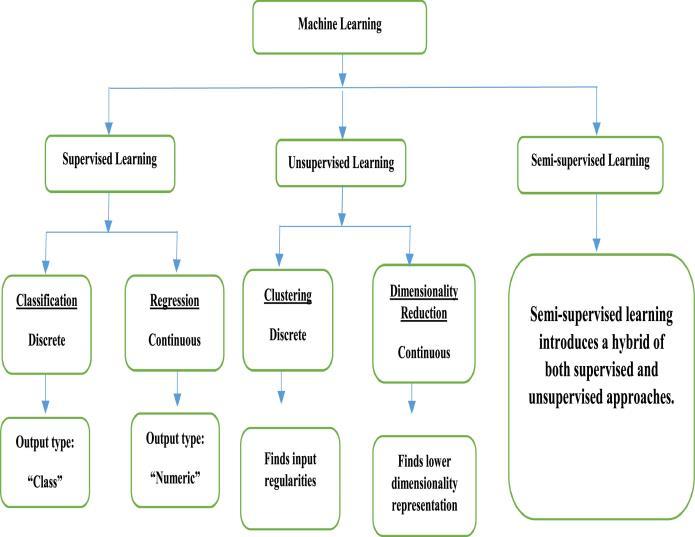
3.4 Time Series Forecasting
Time series techniques are well-suited for forecasting the number of claims, as Medicaid data is often available in monthlyoryearlyintervals.
ARIMA (AutoRegressive Integrated Moving Average):Thisclassicalmodelcancapturetrends andseasonalpatternsinclaimdata.
SARIMA (Seasonal ARIMA): Extends ARIMA by accounting for seasonality, which is crucial in
healthcare,asclaimvolumesmayvaryseasonally (e.g.,fluseason).
Prophet:DevelopedbyFacebook,thistoolisrobust tomissingdataandcanhandleoutliers,makingit usefulinforecastingirregularMedicaidclaims.
Long Short-Term Memory (LSTM) Networks:A typeofrecurrentneuralnetwork(RNN)thatiswellsuitedforsequentialdata.LSTMscancapturelongterm dependencies in the claims data and are particularly useful for forecasting future claims basedonhistoricalpatterns.
Clusteringalgorithmscanbeusedtogroupsimilarclaimsor patients,whichcanaidinforecastingspecificcategoriesof claims(e.g.,high-costpatients).
K-Means Clustering: Useful for segmenting Medicaid patients or claims into different risk categories(e.g.,low,medium,andhigh-costclaims).
Hierarchical Clustering: Can help create a hierarchy of claim types based on patient demographicsandhealthconditions.
3.6
Machine learning models can detect fraudulent claims or unusuallyhigh-costclaims.
Isolation Forests: An unsupervised learning method used to detect anomalies by isolating outliers.
Autoencoders: As mentioned, these can identify abnormalpatternsinMedicaidclaims,suchasfraud orbillingerrors.
3.7
Combiningmultiplemachinelearningmodels(e.g.,blending regressionmodels,timeseriesforecastingmodels,anddeep learning)canoftenimprovetheaccuracyofpredictions.
Stacking: Combines the predictions of multiple modelstoformastrongerprediction.Forinstance, blendingARIMAfortime-seriesdataandRandom Forestfordemographicdatacanenhanceforecast accuracy.
4.1
Theoutcomesofthevariousmachinelearningmodelsare presented in Table 1. The R-squared, MAE, and RMSE
International Research Journal of Engineering and Technology (IRJET) e-ISSN: 2395-0056
Volume: 11 Issue: 10 | Oct 2024 www.irjet.net p-ISSN: 2395-0072
metricsareemployedtoassesseachmodel'sperformance.It makessensethatthelinearregressionmodeldidthelowest outofallthemodelsexaminedsinceithasalimitedcapacity toexplainnonlinearinteractions.Althoughdecisiontreesare more effective, their tendency to suit the data too closely makes them less generalisable. Random forests reduce overfitting,whichraisesR2.Allotherassessmentmeasures wereexceededbytheneuralnetworkmodel,demonstrating its capacity to capture intricate patterns in the data.
Healthcare Planning: Predictive models can inform healthcare providers and policymakers about potential surgesinclaims,helpingtoprepareforincreaseddemand.
Fraud Detection: Machine learning can help identify suspiciousclaims,reducingMedicaidfraudandwaste.
PolicyEvaluation:Bysimulatingtheeffectofpolicychanges, such as Medicaid expansion or changes in eligibility, predictivemodelscanassesstheimpactonfutureclaims.
Thisstudydemonstratesthatmachinelearningalgorithms can significantly improve the accuracy of health insurance claim prediction compared to traditional methods. While linear regression and decision trees offer simplicity and interpretability, more complex models such as random forests and neural networks provide higher predictive accuracy. Insurers should consider integrating machine learning techniques into their risk assessment and pricing strategiestoremaincompetitiveinarapidlyevolvingmarket.
Future work could focus on the integration of more advanced deep learning models, such as convolutional neural networks (CNNs) or long short-term memory networks(LSTMs),tocapturetemporalandspatialaspects of health data. Additionally, hybrid models that combine machinelearningwithtraditionalactuarialtechniquescould offerabalancebetweeninterpretabilityandperformance.
DataQuality:Medicaiddatamaycontainmissing,inaccurate, or delayed entries, which can negatively affect model performance.
The superior performance of machine learning models, particularlyrandomforestsandneural networks,suggests that insurers can benefit from adopting these methods to predict claim amounts more accurately. However, the complexity of these modelsmakes themless interpretable thantraditionalmethods,whichmaybeabarriertoadoption.
Onepotentialsolutionistousemodel-agnosticinterpretation techniques,suchasSHAP(ShapleyAdditiveexPlanations),to improve the interpretability of machine learning models withoutsacrificingperformance.
BudgetingandResourceAllocation:Predictingfutureclaims allows for better budgeting and allocation of resources to high-demandareas.
Regulatory Constraints: The use of personal health informationinMLmodelsmustcomplywithregulationslike HIPAA(HealthInsurancePortabilityandAccountabilityAct).
Interpretability:Somemachinelearningmodels,especially deeplearningmodels,areconsidered"blackboxes,"making it difficult for policymakers to understand and trust the predictions.
Machine learning techniques offer a powerful toolset for forecastingMedicaidclaims,enablinghealthcareproviders and policymakers to make data-driven decisions. By leveraging timeseriesforecasting,regressionmodels,and deeplearningapproaches,accuratepredictionsofMedicaid claim volumes and costs can be made, leading to more efficient resource allocation, better fraud detection, and improvedoverallmanagementofMedicaidprograms.
International Research Journal of Engineering and Technology (IRJET) e-ISSN: 2395-0056
Volume: 11 Issue: 10 | Oct 2024 www.irjet.net p-ISSN: 2395-0072
[1] https://www.sciencedirect.com/science/article/pii/S26 66827023000695
[2] https://www.ibm.com/topics/machine-learning
[3] https://www.tableau.com/learn/articles/top-machinelearning-methods
[4] https://www.mathworks.com/discovery/machinelearning.html
[5] Hands-On Machine Learning with Scikit-Learn, Keras, and TensorFlow: Concepts, Tools, and Techniques to BuildIntelligentSystemsbyAurélienGéron
|