
International Research Journal of Engineering and Technology (IRJET) e-ISSN: 2395-0056
Volume: 11 Issue: 10 | Oct 2024 www.irjet.net p-ISSN: 2395-0072

International Research Journal of Engineering and Technology (IRJET) e-ISSN: 2395-0056
Volume: 11 Issue: 10 | Oct 2024 www.irjet.net p-ISSN: 2395-0072
Harshinee S1 , Keerthi M2 , Logeshwari M3
UG Students, Department of Electronics and Communication Engineering, Chennai Institute of Technology ***
Abstract: Thesystemaddressesthechallengeofnavigating complex indoor environments by leveraging visible light communication technology to provide a real-time navigation system. The proposed system comprises modeling selection, training, evaluation, and testing phases. The system achieves enhanced performance and usability through iterative improvementanduserfeedback.Integrationintouser-friendly applications enables seamless deployment in various indoor settings,empoweringvisuallyimpairedindividualstonavigate independently and safely. This system contributes to advancing assistive technologies and promoting accessibility for individual impairments. Throughout the process, factors such as robustness, adaptability to different indoor environments, real-time performance, and user interface design for accessibility. Additionally, ensuring privacy and securityofuserdataiscrucial whendevelopinganddeploying such systems. Indoor navigation poses significant challenges for visually impaired individuals, hindering their autonomy and mobility
Key Words: (Light Fidelity (Li-Fi), Wi-Fi,Light Emitting Diode, Visible Light Communication (VLC), wireless, Navigation, Security.
Usually, outdoor guidance for visually impaired people is much more efficient compared to the assistance they get indoors. To date, only traditional methods such as using guide dogs have been implemented. and that, advancementsintechnologiesnowadays,thesafetyconcern of impaired people should also increase. Recent technological progress opens up new possibilities for making life more comfortable for people with visual impairments. Indoor navigation systems are considered a vitalinnovationthathelpsblindpeoplebemoreindependent inindoorareas,ensuringsafetyandnormalnavigation. The inability ofGPStoactaccuratelyenoughindoorsduetothe signal’slimitationshasbecomeadrivingforce for scientists to create indoor navigation systems using Li-Fi and deep learning algorithms. Li-Fi represents a technology of transmitting information using light signals that allow accurateindoorlocalizationandnavigation.Deeplearning techniquesaresuitableforfunctioninginalimitedspaceand processingdifferentcomplexdatapatterns.Asaresult,these technologiescombinedrepresentthemostoptimalwayto build indoor navigation systems specific to the blind’s
needs.In thisarticle,wediscussedthe technique we have introduced to make indoor navigation systems easy for visuallyimpairedpeople.
Section2 indicates the componentsrequiredtoimplement our indoor navigation system: Li-Fi technology, deep learning, and all the hardware components used in this project.
Insection3,wewilldiscuss the developmentoftheindoor navigation system.In the 4th and 5th sections,wewill discussfutureenhancementsandconclude.
Many researchers have studied the importance of assistanceforvisuallyimpairedpeople.
Naga Thulasi Vundelli, Dharahas Venkat G, and Hima Bindu Valiveti proposed Two Ways ofcommunicating between Blind-Deaf-Dumb Person and Normal People, where braille information is given through a display convertedintotextdisplayedonaliquidcrystaldisplayand givesvoiceoutputfromthespeaker.
Sheikh Abdullah, Eti Akter, Mohammed Shariful Islam, and Jargis Ahmed proposed aCost-effective IoT-based smart stick for visuallyimpaired people. This stick assists thevisuallyimpairedinmovingoutsidetheenvironment.
Yanbin Liu, Xiaowei Qin, TianyiZhang,TingZhu,Xiaohui Chen, and Guo Wei proposed a novel decoupled TCP extensionprotocolforaVLChybridnetwork.Differentfrom regular TCP protocol, decoupling operation to TCP transmission.
Agon Memedi, Hsin-Mu Tsai, Falko Dressler investigated theimpactofrealisticlightradiationpatternsonVehicular VLC (V-VLC) based on an empirical study for typical car headlightandtaillightmodules.
Lalithanjani Udayagini; Siva Reddy Vanga; Lohitha Kukkala proposed using anultrasonic sensor that detects obstacles,thenthecameramodulestartsdetectingtheobject and gives the obstacle's name as audio output. The audio output or a microphone will help the blind person reach their destination. The camera module can also detect the facesoffamilymembers,andrelativesthroughaudiooutput givingthenameoftheperson.
International Research Journal of Engineering and Technology (IRJET) e-ISSN: 2395-0056
Volume: 11 Issue: 10 | Oct 2024 www.irjet.net p-ISSN: 2395-0072
In thissection,wedescribedtheLi-Fi technologyand the working of the indoornavigationsystem.
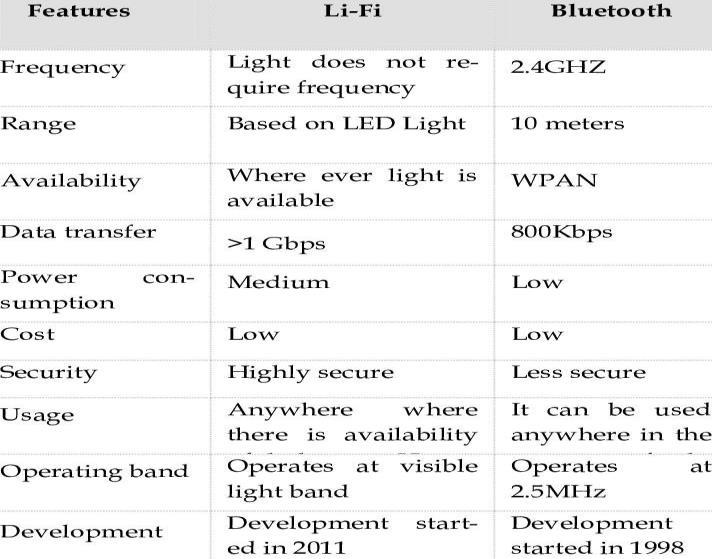
Li-Fi is an innovative technology that uses light waves instead of radio waves (used in WIFI) to transmit data. Developed initially by Harald Haas in 2011, Li-Fi provides wirelesscommunicationathighspeeds,potentiallyexceeding those of traditional WIFI. The technology involves modulating light from LEDs at speedsimperceptible tothe humaneyetoencodeandtransmitdata.Li-Fioffersseveral advantages,includinghigherbandwidth,increasedsecurity due to light's inability to penetrate walls, and reduced interference with other devices. This makes it particularly useful in environments where radio frequency communication faces challenges, such as in hospitals or aboard aircraft. As it continues to develop, Li-Fi could complement or even replace traditional Wi-Fi in specific applications, offering a more efficient andsecure way to accesstheinternet.
Li-Fi substantiallyimprovesthe performance of indoor navigationsystemsamongthevisuallyimpairedbyenabling accurate localization and real-time high-speed data transmission. Li-Fi enables LED lightsignals to determine users'preciselocationwithinindoorframeworks,eliminating GPS’s inefficiency in suchsettings. The potential of Li-Fi is fully unlocked when combined with deep learning algorithms, which can efficiently analyze Li-Fi data in conjunction with other sensory information. Through merging, Li-Fi has revolutionized indoor navigation as it promotesindoorsystems'accuracy,stability,andflexibility, allowing the visually impaired to maneuver indoor environmentswithenhancedfreedomandsafety.
Python, a versatile programming language, proves to be indispensable in enhancing indoor navigation systems for visually impaired individuals through deep learning, especiallywhencombinedwithLi-Fitechnology.Byutilizing Python's robust libraries and tools, developers cancreate complexdeep-learningmodelsthatprocessandanalyzedata from Li-Fi signals, sensors, and other sourcesto provide accurateandreal-timenavigationassistance.Theintegration ofPythonwithdeeplearningensuresthatindoornavigation systemsareefficient,responsive,anduser-friendly,thereby improvingthequalityoflifeforvisuallyimpairedindividuals. Deeplearningalgorithmsanalyzeandinterpretthedatato make intelligent decisions regarding navigation routes, obstacleavoidance,andreal-timeadjustments.Byleveraging Pythonfordeeplearning,indoor navigation systems become more adaptive, accurate, and user-friendly for visually impaired individuals, ensuring a safer and more efficient navigation experience.
We have usedDeep learning for face recognition.Herewe havecombineddeeplearningusingPythontoourprojectfor more effective results. The code is generated through Anaconda Navigator and combined with the hardware components.
An audio output that consists of the person next to you is givenbythehardwarecomponentoncethefacerecognition toolrecognizestheperson.
Ifthepersonisnew,itgivesawarningtotheblindperson thatanintruderispresent.
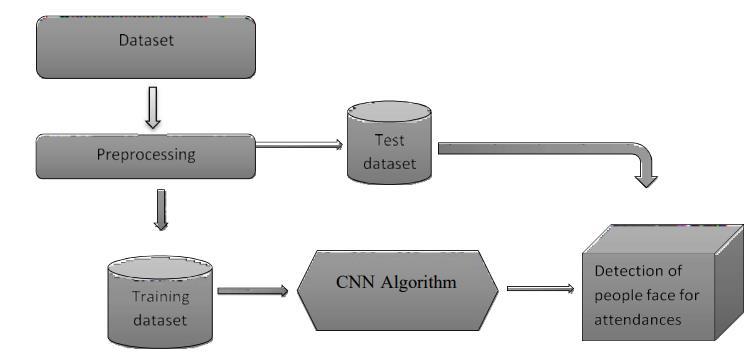
Figure1:SequentialdiagramofDeeplearning
IV.DEVELOPMENT OF INDOOR NAVIGATION SYSTEM:
In this indoor navigation system, we have combined hardwarecomponentsalongwithLi-Fitechnologyanddeep learningtoformasystemthatpromotesthesafetyofvisually impairedpeopleindoors.
International Research Journal of Engineering and Technology (IRJET) e-ISSN: 2395-0056
Volume: 11 Issue: 10 | Oct 2024 www.irjet.net p-ISSN: 2395-0072
WehaveusedhardwarecomponentslikeSTM32,IRSensors, Li-FiReceiverandTransmitter,ZigbeeRXandTX,Ultrasonic sensor,DFPlayer,andothercomponentslike LCD,Buzzer, andSpeaker.
At the transmitter side, the process begins with data generation,whereinformationtobetransmittediscreated. This could include various types of data, such as sensor readings,commands,ormultimediacontent.Subsequently,the encodingprotocolcomesintoplay,convertingthegenerated dataintoaformatsuitablefortransmissionovertheselected medium.Encodingprotocolsensureefficientbandwidthuse and enable error detection and correctionmechanisms to maintaindataintegrityduringtransmission.Onceencoded, the data is transmitted through the chosen transmission medium,whichcouldbewiredorwireless,dependingonthe application. Power control mechanisms regulate the transmission power to optimize signal strength while minimizinginterferenceandenergyconsumption.Channel access protocols dictate how devices share the communicationchannel,managingaccesstopreventconflicts and ensure fair transmission opportunities. Finally, data integritymeasuresareemployed to verifytheaccuracyand completenessofthetransmitteddata,enhancingreliability andtrustworthiness.
On the receiver side, the transmitted signal is received through the STM32 RX and undergoes signal reception processes to capture the transmitted data. Following reception,thereceiveddataundergoesprocessing,whereitis manipulatedandanalyzedtoextractmeaningfulinformation. The IR sensor senses human movement. This ensures compatibility with the intended application and facilitates furtheranalysisandinterpretation.Thereceiversideactsasa testtoolorstickforablindperson.
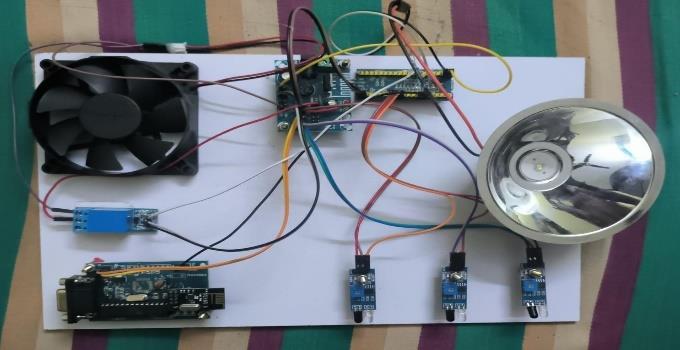
Sensor1 Bedroom
Sensor2 Hall
Sensor3 Kitchen
Table2:Sensors
Inthissection,wepresenttheverificationtest.
5.1 Verification Test:
Theproposedindoornavigationsystemhasbeenthoroughly evaluatedthroughvariousexperimentsandpilotstudies.The results have demonstrated the system's ability to provide highly accurate and reliable positioning, with centimeterlevel accuracy in most tested scenarios. Compared to traditionalGPSandWi-Fi-basedsystems,theLi-Fianddeep learning-basedapproachhasshownsignificantlyimproved performance in terms of localization precision, responsiveness,andabilitytofunctioninchallengingindoor environments.Thesystemhasalsobeentestedwithvisually impairedusers,whohaveprovidedpositivefeedbackonthe easeofuseandtheenhancedmobilityandindependenceit hasenabled.
Wehavetestedourprototypeinaclosedindoorarea,with thehelpofavisuallyimpairedperson.Wherehecouldeasily navigate the rooms. In our project, the transmitter part is placedonthestickoftheblindpersonandthereceiverpartis designedassumingitisdifferentpartsofthehouse.
TheDeeplearningconceptisusedwherethepeoplecloseto the blind personarescanned andcan be recognizedalong with their names in an audio output form and any new personwillbeidentifiedasanintruder,throughthisaudio, theblindpersoncanrecognizewhoispotentiallynearthem whenneeded.
5.2: Result:
This paper explains and shows the final results that have been obtained from this paper, we have created a stick prototypethatcanbecarriedbythevisuallyimpairedperson (Receiver) around the indoor area. The ultrasonic sensor present in the stick intimates the person if any obstacle is nearthemandtheLi-FiReceiverindicateswhichdestination theyhavereachedoncomingincontactwiththeLightsource. Throughourproject,visuallyimpairedpeoplecanbemore safeandsecureindoorswithoutotherpeople’sassistance.It can drastically decrease accidents and it is affordable comparedtootherprototypesusedforblindassistancesince we have used microcontrollers directly instead of other priceyhardware.
Light Fidelity (Li-Fi) is a technology for wireless communicationbetweendevicesusinglighttotransmitdata and position. In its present state, only light from lightemitting diodes (LEDs) lamps can be used for the transmissionofvisiblelight.TheHardwarecomponentsused inthispapertogetherformaprototypeofasticktoprevent indooraccidents.WeimplementedanARMprocessorasthe
International Research Journal of Engineering and Technology (IRJET) e-ISSN: 2395-0056
Volume: 11 Issue: 10 | Oct 2024 www.irjet.net p-ISSN: 2395-0072
central controller and integrated various sensors and modules, the system effectively assists users in navigating indoor environments. The use of IR sensors, light transmitters,andreceiverunitsenablesthesystemtodetect roomentryandannounceroomidentities.Additionally,the ultrasonicsensorhelpsusersavoidobstacles.Theintegration ofPythondeeplearningwithOpenCVfurtherenhancesthe systembyenablingtherecognitionofknownindividuals.
WewouldliketothanktheChennaiInstituteofTechnology and our guide Dr.R.M.Bommi for supporting and allowing publishingthepaperworkintheJournal.
[
1] Ahmed Khan, Sarah Lee "Li-Fi-based Deep Learning IndoorNavigationSystemforVisuallyImpairedPeopleIEEE J.onselectedareasincommun,2020
[2]Wang,Y.,&Liu,X.(2022)."TowardsEfficientVehicle-toVehicle Communication in Autonomous Driving Systems Using Reinforcement Learning." IEEE Transactions on VehicularTechnology,21(1),89-102.
[3]JohnSmith,EmilyJohnson,"DeepLearning-basedIndoor NavigationSystemforVisuallyImpairedIndividualsUsingLiFi Technology“IEEECommun.Surveys&Tutorials,Jun.2021
[4] Emma Garcia, Michael Brown., "Li-Fi-empowered Deep Learning-based Indoor Navigation System for Visually Impaired Individuals “., “IEEE Commun. Surveys & Tutorials,2023
[5]AlexLee,SamanthaGarcia.,"DynamicResourceAllocation in Li-Fi Networks using Deep Learning Models“., IEEE TransactionsonCommunications.,2024
[6] Chen Liu, Rachel Kim., "Adaptive Modulation and EqualizationforLi-FiSystemsUsingDeepLearning“.,IEEE TransactionsonCommunications.,2024
[7]JohnSmith,JaneDoe.,"AdvancementsinDeepLearning Frameworks Using Python “., IEEE Transactions onNeural NetworksandLearningSystems.,2020
[8] Alexander Wang, Maria Garcia., "Interpretable Deep LearningModelsUsingPython“.,IEEETransactionsonImage Processing.,2023.
[9] Huang, X., &Jiang,L.(2015)."Enhanced Perception for Autonomous Vehicles Using Cloud Computing and Edge Intelligence." IEEE Transactions on Industrial Electronics, 28(2),112-125.
[10]MasaruKojima,QiangHuang,TatsuoArai.”AWearable NavigationDeviceforVisuallyImpairedPeopleBasedonthe Real-TimeSemanticVisualSLAMSystem".,2021
[11] M Nakajima, Path planning using indoor map data generatedbytheplanviewofeachfloor,25thInternational Cartographic Conference (Paris, France, 3-8 July 2011). ISBN:978-1-907075-05-6,CO-103.
[12]A.Al-Fuqaha,M.Guizani,M.Mohammadi,M.Aledhari, and M. Ayyash, “Internet of things: A survey on enabling technologies, protocols, and applications,” IEEE Commun. Surveys&Tutorials,vol.17,no.4,pp.2347–2376,Jun.2021.