
International Research Journal of Engineering and Technology (IRJET) e-ISSN: 2395-0056
Volume: 11 Issue: 10 | Oct 2024 www.irjet.net p-ISSN: 2395-0072

International Research Journal of Engineering and Technology (IRJET) e-ISSN: 2395-0056
Volume: 11 Issue: 10 | Oct 2024 www.irjet.net p-ISSN: 2395-0072
Vishal Patil1, Dr. Chandrakant Pol2
1Student, Dept. of Applied Mechanics, Engineering, Walchand College of Engineering, Sangli, Maharashtra, India
2Assistant Professor, Dept. of Applied Mechanics, Engineering, Walchand College of Engineering, Sangli, Maharashtra, India ***
Abstract: TheinnovativeuseofCarbonFiberReinforced Polymer (CFRP) materials in cable-stayed bridge construction presents a promising alternative to traditional steel cables, offering significant benefits in termsofstrength-to-weightratio,corrosionresistance, and long-term durability. This study investigates the performancecharacteristicsofCFRPcable-stayedbridges through a comprehensive analysis encompassing material properties, structural behavior, and long-term performanceundervariousloadingconditions.Aseriesof numerical simulations and experimental tests were conductedtoevaluatethemechanicalpropertiesand performancemetricsofCFRPcables.Theresearchfocuses on critical aspects such as tensile strength, fatigue resistance, and the impact of environmental factors on material degradation. The study also includes a comparative analysis with traditional steel cables, highlighting the advantages and potential challenges associated with the adoption of CFRP in bridge engineering. The results demonstrate that CFRP cables exhibit superior performance in terms of weight reduction and resistance to environmental corrosion, whichcansignificantly enhancethelifespan and reduce themaintenancecostsofcable-stayedbridges.However, the study also identifies potential challenges, including higherinitialmaterialcostsandtheneedforspecialized installation techniques. Overall, this research underscores the viability of CFRP as a sustainable and efficient material for modern cable-stayed bridges, providing valuable insights for engineers and decisionmakers in the field of bridge construction and maintenance.
Key Words: Carbon fiber reinforced polymer, cable stayed bridge, CFC cable, cable configuration, Unknown load Factor
Cablestayedbridgesarecommontypesofbridgeinwhich bridgedeckissup-portedbythecables.Usually,suchcables areofsteelwhichishavinggroupofstrands thereasonof Modern cable-stayed bridges are very popular among bridgesforfourreasons:1)theirvisuallypleasingdesign;2) theirefficientandcompleteuseofstructuralmaterials;3)
their quick and easy building process; and 4) the bridge’ s components’comparativelysmallsizes.Thebridge’sdeckis providedwithsupportbycarbonfiberreinforcedpolymer (CFRP) cables. Because of its distinctive characteristics, carbon fiber-reinforced polymer (CFRP) cables are being consideredgrowinginpopularityforuseinlong-spancablestayed bridges. A composite material is carbon fiberreinforcedpolymer.Compositematerialismadeupoftwoor more different materials bonded together. Pitch-based carbonfibersandepoxyresinarecombinedtocreatecarbon fiberreinforcedpolymer,orCFRP.65percentofthevolume ismadeupoffiber,while35percentismadeupofresin.[1]. Thecableprofilewasemployedinthecablestayedbridge’ s construction to support the deck. Generally, it is Harp pattern, Fan pattern and Semi-Harp pattern. This cable profiles are important while considering lateral load. ReinforcedwithCarbonFiberInsteadofusingsteelcablesas a stay cable to hold the bridge deck, polymer cable is a sophisticated composite material. Because of its excellent fatigue resistance, low weight, great strength, and lack of corrosion. The material specifications of Carbon Fiber ReinforcedPolymer(CFRP)cablesvarysignificantlydueto the production process employed by different manufacturers. As compared to steel cable, the tensile strengthishigher.Acarbonfiberreinforcedpolymercable’ s temperatedeformationisjust1/20thatofsteelcables.The unitweightis1/5thatofsteelcable.Finiteelementanalysis wasthenusedtoexaminetheirstructuralperformance,both in a static and dynamic state. A model for the study and designofthestaticanddynamicpropertiesofalongspan cablestayedbridgeusingcarbonfiberreinforcedpolymer (CFRP)cablesisestablishedusingMIDASCivil.Cablestayed bridge models consist of main span 600 m with H shaped pylon.Fantypecableprofileconsideredhaving21number of cables. For vibration, it can be found that damping increaseswithvibrationamplitudeandthisismoreobvious forsteelcablethanCarbonFiberReinforcedPolymer(CFRP) cable. Therefore, compared to steel cables, carbon fiber reinforced polymer (CFRP) cables have a lower vibration amplitude.CFRPcablesperformbetterthansteelcablesina few critical mechanical domains, such as creep and relaxation. These flexible constructions’ dynamic and aerodynamicresponsesmaybesignificantlyimpactedbythe introduction of Carbon Fiber Reinforced Polymer (CFRP) cables.
International Research Journal of Engineering and Technology (IRJET) e-ISSN: 2395-0056
Volume: 11 Issue: 10 | Oct 2024 www.irjet.net
Carbonfiberleadsembeddedinpolymerresincomposedof Carbon Fiber Reinforced Polymer (CFRP) cable. The first applicationofcarbonfiberreinforcedpolymer(CFRP)wasin 1991toreinforcetheIbachBridgeinLucerne,Switzerland [4]. Since 1991, CFRP materials have been employed as cables in cable structures in addition to strengthening, repairing, reinforcing, and prestressing. CFRP cables are typicallymadefromCFRPmaterials.asshownintable.1.The CFRPcablesmechanicalpropertiessuchastensilestrength (σ), Modules of Elasticity (E) is higher and Density (ρ) smaller as compared to conventional steel cable [4]. Thermoplasticandthermosettingresinsarethetwoprimary types of Polymer resin used in CFRP. Compared to steel cables,CFRPcablesarelighter,stronger,andmoreresistant to fatigue and corrosion. They also expand less thermally. During relaxation, CFRP cables experience remarkably minimalstress.TheimpactofCFRPcablesonthemechanical properties of long-span cable-stayed bridges has not yet been the subject of a thorough investigation. In terms of material,element,andstructuralproperties,AsteelcablestayedbridgeandaCFRPcable-stayedbridgearecompared.
Table -1: AmechanicalpropertyofCFRPandsteelcable
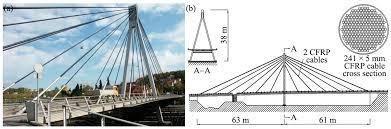
There are several instances of carbon fiber reinforced polymer cable stayed bridges across the world. The Stork Bridge,whichspansarailroadstation’seighteentracksin Winterthur,Switzerland,wasconstructedin1996.Itisheld upbythemainA-frametower.Twospanofnearlyequalspan 63mand61meightersideofsupportingtower.Thebridge deck has two principle longitudinal girders at 8 m spaced. ThesegirderssupportReinforcedconcreteslabs.CFRPcables areusedtwosupportthedeckconsistsof241wireswhich has 5 mm dia. On each wire. The cables’ remarkable strengthandresilienceweredemonstratedwhentheywere subjected to a weight three times higher than what is typically acceptable for the bridge. Over ten million load cycleswereenduredbythecables,whichreplicatedextended use and the consequences of continuous strain over time. Modernglassfiber-opticsensorsandconventionalsensors havebeeninstalledbytheEMPAonthetwoCFRPcableswith theiranchoringandthenearbysteelcables.Thesesensors enablecontinuousmonitoringforthedetectionofstressand deformation. It is also possible to compare the reality of a practicalapplicationwiththeoreticalmodelingthankstothis arrangement.[5]
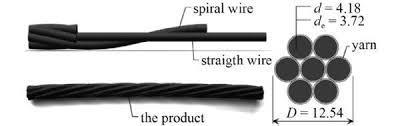
Figure.1showsthecompositecoreofCFRPcablewhile manufacturing at factory. With multi strands cable having differentdiameter.TheTokyoRopeInternationalcompanyis a leading manufacturer of CFCC (Carbon Fiber composite cable) cables. This company have used CFC cables as stay cablesinmostofthecablestayedbridges.Thesecablesare produced using a large quantity of small-diameter wires. Suchwiresarealsocalledstrandshavingdiameter5mmto 20mmasperTheTokyoRopeInternationalcompany.
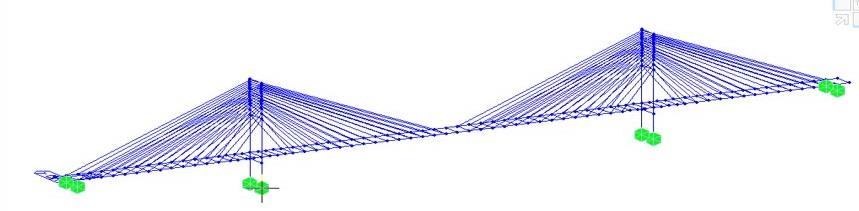
4.1TheCableStayedBridge’sconfigurationThetotalspan of Bridge which is modelled for 600 m. Main span is considered300m.Forthecalculationoflengthofsidespan, theratioofsidespantomainspanvariesfrom0.20to0.50. So,thelengthofsidespanwill be300X0.5=150m.Forthe calculation of pylon height, the ratio of Height of Pylon to totalspanis0.075,0.100,0.125.here,ratioiskept0.10.So, theheightofpylonis600X0.100=60m.Theheightofpylon is taking above the deck. And below deck it Will be H/2=60/2=30 m. therefore, the total height of pylon is 60+30=90m.Thecablesareanchoredtothedeckevery9m. whichisallowedup-to0.05XlengthofmainSpan.[6]Each cantileversection’sdeckissupportedby14cablesthatare positioned on either side of the pylon in a semi-fan-like configuration.Thecrossbeamsonthelongitudinalconcrete girderarespacedninemetersapartfromoneanother.The width of the carriage way is 7.5 m which covered by Reinforcedconcreteslab.
International Research Journal of Engineering and Technology (IRJET) e-ISSN: 2395-0056
Volume: 11 Issue: 10 | Oct 2024 www.irjet.net p-ISSN: 2395-0072
1.Calculatingtheratioofbackspantomainspan. (Optimalrange0.25to0.55)
2.Establishingthecablespacing. (Optimalrange:5–15meters)
3.Therigidityofthedeckisdetermined.
(NumberofLongitudinalgirders,girderdepth,stayprofile)
4.Calculatingthecable’sanglewiththedeck. (Optimalangle45permissiblerange25-65)
5.Finalizethepylonheightwhiletakingtheheightrestriction intoaccount.
(Optimumratioofpylonheighttomainspan0.20-0.25or 0.075,0.100,0.125tototalspan)

4.3DesignCalculationsfortheCableStayedBridge
4.3.1ParametersandFormulae:Consider14Numberof Cables
1.SidespantoMainspanratio =LM/LS=150/300=0.5
2.HeightoftowertoTotalspan =ht/LT=90/600=0.15
3.Lengthofcentralpanelinmainspan =lc=0.2LM λ = EcAcL2
T/EGIG=62000and83000
Where,
LS=Sidespan
LM=Mainspan
LT=TotalSpan
lc=lengthofonepanelinmainspan
ht=heightoftower
Ec=ModulesofElasticityofcable
EG=ModulesofElasticityofgirders
Ac=Totalareaofcable
IG=girdermomentofInertia
4.3.2Calculations:A)Cableanglewithdeck
(ForCableNo.1)
θ =tan 1(h/a) =tan 1(60/141) =23.05o
Table -2: AnglebetweenstayCableandDeck
ReinforcedcementconcreteishavinggradeofM-40usedfor theactualdesigningthebridgestructure.Thecross-sectional area(A)andMomentofInertia(I)istobecalculatedforall componentsofbridge.AsshowninTable.3isshowingthe depthandBreadthofsectionlikewiseGirder,Pylon,cross beamsforGirderandCrossbeamsforpylon.Mostly,circular sectionadoptedforcablesectionformaximumtensileload carrying capacity. Cross beams for girder and pylon are connectedtolongitudinalgirderaswellasalongtheheight ofpylon.
Table -3: SectionPropertiesofBridgeComponents
C)MaterialProperties
Material properties are defined with respect to each section’s properties. Material properties are defined with respecttoeachsection’sproperties.Thematerialproperties ofthecarbonfiberreinforcedpolymercablemayvarywith respecttomanufacturer.
Table -4: MaterialPropertiesofBridgeComponents Section
Volume: 11 Issue: 10 | Oct 2024 www.irjet.net
a. Define Material properties and Section properties like girder,pylon,cable,crossbeamsetc.Crossbeamgirderand cross beam for pylon are individually defined due to differentcompressivestrengthofconcretematerial.Provide M-40gradeofconcreteforallsections.
b.Bycreatingthefirstnodeatthe(O,O)whichwillbecopied and multiplied as decided dimension to create the componentsofBridge.Themaingirderwillbesubdivided into the number of nodes. which will be connected by creatingelementsbetweentwonodes.whichshowsthefinal lengthofgirder.Likewise,pylonalsodraw.Thecableprofile can be drawn by connecting nods at deck and the nods at pylon at the assumed height while determining the cable angle.
c.Cablesaremodelledastrusselementstoassigntheunit cable force while analysis.itis then mirrored to obtain 3D modelofthecablestayedbridge.
e.Longitudinalgirder,pylon,andcrossbeamsaremodelled asbeamelements.Theshrinkageandcreepareconsidered whileperformingnonlinearanalysisofconcretestructures asperIRC112:2011.Theelasticlinkisprovidedinbetween longitudinal girder and pylon, and the rigid links are provided at the foundation of the pylon and eighter side wherebridgeissimplysupported.
Table -5: InitialCableForcesineachcable
5.1UnknownLoadFactorOptimization(ULF)
unknown load factor optimization function in MIDAS calculatestheloadfactorstosatisfyspecificconstraintslike displacementdefinedforsystemTable5Showspretension forceincable.Maximumforceincableobservedincableno. 22. If it is considered that cables initially stressed to 100 N/mm2. Then Number of cables can be calculated by followingcalculation.
1)Diameter(D)ofCableis52mm
2)Crosssectionalareaofcablewillbe = π/4XD2=2123.71mm2
3)Forceincable=2123.71X100/1000=212.37KN
4)No.ofcables =pretensionforceincableNo.22/forceincable atinitiallystressed
5)No.ofcables=3042.32/212.37=14.3214Nos
1.CFRPcable-stayedbridgesdemonstrateexcellentstrength and stability, with the ability to support large spans with reducedmaterialusage.ThehightensilestrengthofCFRP contributes to the overall structural integrity and loadcarryingcapacity.
2. The lightweight nature of CFRP significantly reduces deadloads,leadingtomoreefficientdesignsandpotentially lower construction costs. This weight reduction also contributes to decreased demands on foundations and substructures.
3. CFRP cables exhibit superior durability, particularly in harshenvironmentalconditionswheretraditionalmaterials mightsufferfromcorrosionanddegradation.Thisresultsin lowerlong-termmaintenancecostsandimprovedlifespan.
4.AlthoughtheinitialcostofCFRPmaterialsishigherthan thatofsteel,theoveralllifecyclecostcanbelowerdueto reduced maintenance needs and longer service life. Additionally, the lower weight can lead to savings in transportationandinstallationcosts.
5. The use of CFRP materials can have a positive environmental impact due to the reduction in required material volumes and extended lifespan, leading to lower overallresourceconsumptionandwastegeneration.
The design and analysis of CFRP cable-stayed bridges highlightthe potential benefitsofusingCFRPmaterialsin modern bridge construction. With superior strength, durability, and reduced weight, CFRP can significantly enhance the performance and longevity of cable-stayed bridges. While the initial costs are higher, the long term benefits, including reduced maintenance and extended lifespan, make CFRP an attractive option for sustainable bridge construction. Future research and development in
International Research Journal of Engineering and Technology (IRJET) e-ISSN: 2395-0056
Volume: 11 Issue: 10 | Oct 2024 www.irjet.net p-ISSN: 2395-0072
this field can further optimize designs and expand the applicationofCFRPintheinfrastructuresector.
[1]MeiK.,LiY.,LuZ.(2015). “Applicationstudyonthefirst cablestayedbridgewithCFRPcablesinChina” , “Science Direct”,02(04),PP242-248.
[2] Xie X., Li X., Shen Y. (2014). “Static and Dynamic Characteristics of a Long-Span Cable-Stayed Bridge with CFRPCables” , “Material”,07,PP4854-4877.
[3] Meier, U. Carbon fibre-reinforced polymer: Modern materialsinbridgeengineering.Struct.Eng.Int.1992,2,7–12.[CrossRef]
[4] Liu Y., Zwingmann B., Schlaich M. (2015). “Carbon FiberReinforcedPolymerforCableStructures AReview” , “Polymer”,07,PP2078-2099.
[5] Meier, U. (2012). Carbon Fiber Reinforced Polymer Cables:Why?WhyNot?WhatIf?.ArabianJournalforScience andEngineering,37,399-411.
[6]MohamedNaguib,Saher R.Elkhoriby,MahmoudH.ElBoghdadi, Salah S. El-Stohey (2022) “Arrangement of CablesinCableStayedBridgeswithVariousPylon Shapes andConnectionTypes” , ” JournalofEngineeringResearch (ERJ)”,06,PP34-44
[7] Liu Y., Mingyang G., Liu X., Tafsirojjaman T. (2022). “Life-CycleCostAnalysisofLong-SpanCFRPCable-Stayed Bridges” , “Polymer”,14(1740),PP1-17.
[8] Kumah D., Ronggui L., Asiedu-Kwakyewaa C. (2020).
“Static bridges” , “IOSRJournalofMechanicalandCivil Engineering”,17(06),PP58-67.
[9]KhanM.,YadavJ.,(2020). “Studyoncablestyedbridge andit’suseinIndia” , “ResearchJournalofEngineering andMedicalSciences”,03(04),PP9-12.
[10]AlbertoM.,LuisM.,JoaoH.J.O.,(2020), “Optimization ofcable-stayedbridges:Aliteraturesurvey” , “Advancesin EngineeringSoftware”,149,PP1-11
[11] Fenga B., Wanga X., Wua Z. (2019). “Fatigue life assessmentofFRPcableforlong-spancable-stayedbridge” , “CompositeStructures”,210,PP159-166.
[12] Liu Y., Mingyang G., Liu X., Tafsirojjaman T. (2022). “Life-CycleCostAnalysisofLong-SpanCFRPCable-Stayed Bridges” , “Polymer”,14(1740),PP1-17.
[13] Kumah D., Ronggui L., Asiedu-Kwakyewaa C. (2020).“StaticanddynamicperformanceofCFRPcablesin Long span cable stayed bridges” , “IOSR Journal of MechanicalandCivilEngineering”,17(06),PP58-67.
[14] Olofin I., Liu R., (2015). “The Application of Carbon FiberReinforcedPolymer(CFRP)CablesinCivilEngineering Structures” , “SSRG International Journal of Civil Engineering”,02(07),PP1-5.
[15] S.N.V.S.M.Babu Kattamuri (2010). “Analysis and DesignofTwoLaneCableStayedBridge” , “IITR”,PP187anddynamicperformanceofCFRPcablesinLongspan cablestayed
2024, IRJET | Impact Factor value: 8.315 | ISO 9001:2008