
International Research Journal of Engineering and Technology (IRJET) e-ISSN: 2395-0056
Volume: 11 Issue: 10 | Oct 2024 www.irjet.net p-ISSN: 2395-0072

International Research Journal of Engineering and Technology (IRJET) e-ISSN: 2395-0056
Volume: 11 Issue: 10 | Oct 2024 www.irjet.net p-ISSN: 2395-0072
Sunny M. Ramchandani1 , Dr. Hemant H. Patel2
1PG Student, Department of Computer Science and Engineering, Dr. Subhash University, Junagadh, Gujarat, India. 2Associate Professor and Head, Department of Computer Science and Engineering, Dr. Subhash University, Junagadh, Gujarat, India.
Abstract - Text classification is a classical research domain utilized for various applications in education, medical and government. However, traditional text classification task is different from the new age text classification problem. In this presented work, the text classification is investigated for classifying the fake or spam review in an e-commerce platform. The e-commerce product vendors are sometimes utilizing fake and partial reviews to boost sales of their own low-quality products in e-commerce platform. This act will waste the consumer’s time, and also negatively impact the ecommerce credibility. Therefore, identification and removal of such misleading reviews from the e-commerce platform. In this work, the text classification technique is used for classifying the spam reviews in e-commerce platform. For this purpose, first text pre-processing technique is used to make clean the reviews, next the word two vector technique is used to prepare the training and validation samples. For conducting the experiments amazon product review dataset has been used. In this dataset different category of product reviews is available, among them the toy and game product category is considered. Additionally, to perform the classification task, two popular machine learning algorithms namely Convolutional Neural Network (CNN) and Long Short-Term Memory (LSTM) have been used. After successfully implementation the performance in terms of precision, recall, f-measure and accuracy has been measured. Based on experimental results CNN is providing 90% classification accuracy then LSTM, which provides 89.31% accuracy. Additionally, the CNN is efficient than LSTM model in terms of training time. Therefore, it is recommended to use CNN model for future implementations.
Key Words: DeepLearning,E-commercereview,Machine Learning,smalltextclassification,Textclassification.
The text analysis is a traditional domain of research in academics. There are a number of applications has been developedusingtextanalysistechniquessuchasinformation retrieval(IR)andsearchengine[1].But,duetoincreasein the communication mediums various sources of text informationhavebeendevelopedsuchassocialmedia,and e-commerce[2].Inboththechannelsasignificantamountof texthasbeengeneratedandanalysisofsuchinformationcan help in various real-world applications such as disaster management,socialgatheringandothers[3].However,the
traditional text analysis task is different from the social media or e-commerce-based text analysis. The amount of textinthesetypeoftextdataisfewerbuthavinghighimpact onsocialmediaandalsoine-commerceplatform[4].
Inthispresentedwork,ataskofsentimentanalysishasbeen doneone-commerceplatformdataspecificallyonreviews. The aim is to identify the spam reviews which are influencing user’s or buyers’ decisions [5]. Because sometimesofthetimee-commercesellersareutilizingthe fakeorspamreviewtolurethebuyersduringnewproduct launch. Most of the time a new buyer in e-commerce platformutilizesthereviewsformakingabuyingdecision [6].Inthiscontext,thefakereviewcanimpactonthebuying decisions. Therefore,it isessential toidentifyand remove suchkindoffakereviewsusingthesentimentanalysistask. Inthissection,thebasicoverviewoftheproposedworkhas beendiscussed.Additionally,thenextsectionincludesthe motivationoftheproposedwork.
Inthissection,thearchitectureoftheproposedsystemhas beendiscussed.Additionally,thecomponentsoftheproposed system are also explained. Using these components the functionalrequirementofeachcomponentisdiscussed.
In order to understand the working of the sentiment-based text classification techniques recently a review has been carried out. In this review, the different researcharticlesareinvolvedbasedonmachinelearningand text classification. The aim is to study different available techniqueofclassifyingthespamreviewsinane-commerce platform.Therefore,adetailedinvestigationofthecollected researcharticleshasbeenperformed.Additionally,basedon the analysis it is recognized that, the traditional text classification techniques are different from the sentimentbasedtextclassification.Inaddition,thesentiment-basedtext classificationtechniquesrequireasmallernumberoffeatures ascomparedtothetraditionalmethodsoftextclassification. Therefore, why the traditional text feature selection techniques are used in the emotion classification. It is requiredtoinvestigate.
International Research Journal of Engineering and Technology (IRJET) e-ISSN: 2395-0056
Volume: 11 Issue: 10 | Oct 2024 www.irjet.net p-ISSN: 2395-0072
Inthiscontext,theproposedstudyhasbeenfocused on investigating the different text data pre-processingand feature selection techniques. The aim is to find the appropriate text data analysis methods for emotion-based textclassification.Therefore,anexperimentalinvestigationof the sentiment-based text classification is proposed in this study.Bymotivationoftherequiredtechnique,amodelhas been proposed for future design and implementation. The given model is providing the understanding about the sentiment text analysis process. In addition, the basic requirementsofthecomponents.
Themainaimoftheproposedwokistoaccurately classify the spam review in an e-commerce platform. The identificationandeliminationoffakereviewsareessentialto dealwiththepartialreviewswhicharefalselydescribingthe qualityofproduct.Therefore,amachinelearningmodelhas beenpresentedinthissection.Additionally,theconceptfor implementationisdemonstratedinFig-1
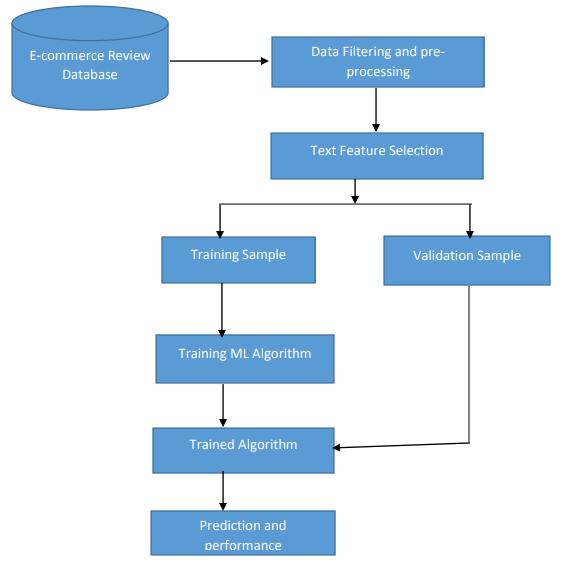
According to this diagram, the system is initiated with the dataset consist of user reviews. Actually, in any machine learning model for training a set of historical records are required. The algorithms are utilizing the historical records to train and build a model. In this presented work amazon product dataset has been used, which is downloaded from the Kaggle repository. This dataset has multiple categories of products and their reviews.Inthiswork,thetoyandgamescategoryofproduct reviews have been downloaded. The downloaded file has more than 1.25 lacks instances. Due to limitations of computationalresourcesthe30kinstancesofthedatasethas
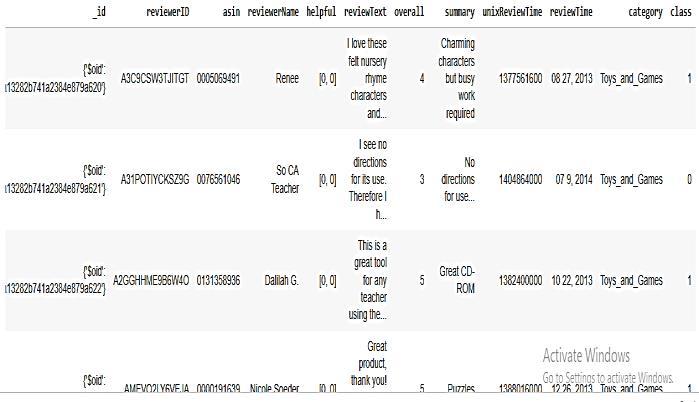
beenusedforexperimentation.Thedatasetinstanceshave made with 12 attributes. Among them 11 attributes are definingthepropertiesofproductandreviewand1isclass labelfortraining.Therawsampleofthedatasetisgivenin Fig-2.
For better training of the machine learning algorithms,itisessentialtoutilizehighqualityandauthentic data for learning. Therefore, the dataset is used with differentcleaningoperations.Thisprocessofdatacleaningis known as pre-processing steps, which is responsible for improvingthequalityoflearningdataset.
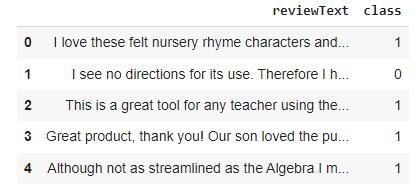
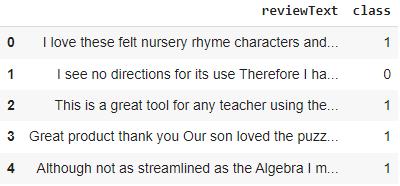
Thepre-processingtechniquesarealsohelpingtotransform data for suitable data representation. Therefore, first the unwanteddatasetattributeshavebeeneliminatedfromthe dataset.Additionally,theattributesnamely‘reviewtext’and ‘class’isseparatedforfurtherpre-processing.Theextracted data is given in Fig-3. The review text has been also preprocessed using the text pre-processing technique. Therefore, two functions have been implemented first is used for eliminating the punctuations from the text and secondfunctionisusedforremovingthenumericaldigits. Afterapplyingboththefunctionsondatathefinalprepared dataisgiveninFig-4
International Research Journal of Engineering and Technology (IRJET) e-ISSN: 2395-0056
Volume: 11 Issue: 10 | Oct 2024 www.irjet.net p-ISSN: 2395-0072
2.2.3
Aftercleaningandfilteringthedatasetisusedwith different feature selection techniques. The aim of feature selectiontechniqueistoidentifythemostvaluablefeatures which are highly contributing in recognizing the target object.Therefore,differentfeatureselectiontechniqueshave been adopted and then planned for experiment. In sentiment-basedtextanalysistechniquesdifferentfeature selectiontechniquescanbeusedsuchasTermfrequency–inverse document frequency (TF-IDF), Part of Speech Tagging (POS), word to vector and others. In the text classificationproblems,thefeatureselectionapproachesare alsousedforrepresentationofthelearningandvalidation data.Inthispresentedwork,thedeeplearningalgorithms aretryingtoimplementfordealingwiththelargedataset. Therefore, the word embedding technique has been used withthiswork.Thewordembeddingtechniqueisefficient andeasilyadoptablewiththedeeplearningsystems.
Inthisprocess,firstthedatasetreviewtexthasbeen tokenizedbyusingthewordtokenizermethodavailable.A totalof10ktokenshasbeenextractedfromthetext,where thetotalnumberoftokens58058hasbeenavailable.Next theentirereviewtexthasbeenneededtopadforpreparing thesimilarsize of text samplesfor utilizing with the deep learning model. The sequence length is 100 considered in this work. Next for preparing the embedding we need a dictionary of words, therefore Google News Word2Vec model has been used for preparing the embedding. After preparing the word embedding the embedded vector is prepared and used for next step of the data processing. Further,theselectedfeaturesaresubdividedintotwoparts trainingsamplesandvalidationsamples.Therearetraining samples are selected randomly and has a composition of 70%ofentiresamples.Additionally,thevalidationsamples haveatotalof30%ofentiresamples.
The training samples are used with the machine learning algorithms namely Long Short-Term Memory (LSTM) and 1 dimensional Convolutional Neural Network (1D-CNN).BoththemodelsarevariantsofArtificialNeural Network(ANN)architecture.Additionallybelongstodeep
learning models for improved learning performance with largetrainingdata.Boththemodelsarebrieflydiscussedas:
Convolutional Neural Network (CNN) model is frequently used. The CNN can also be used in classification task. The CNNiscombinationofdifferentkindsoffiltersandlayers.In order to understand, the working of the CNN a basic architecture of CNN is given in Fig-5. The architecture includes a number of different components; thus, an overviewoftheCNNcomponentsisgivenas:
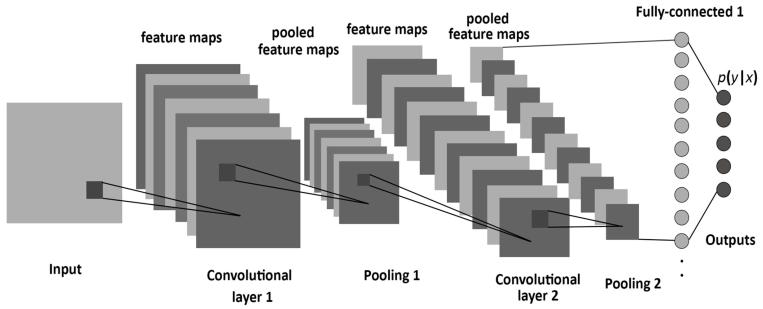
Themainaimofthislayeristoextractfeaturesfrom theinputimage.TheConvolutionallayerisalwaysfirststep in a CNN. In this step an input image is processed using a featuredetectorandafeaturemapisproduced.Thedifferent kindoffilterscanbeutilizedinthisphase.Thesefiltersare working pixel by pixel to the input image. In order to performthisoperation,themultiplicationofthematricesis used. The CNN learns the values of the filters on its own duringthetrainingprocess.Therearealotoffiltersoptions available,thereforetherearemultiplewaystomakethebest imageclassifier.Here,itisabetterpracticetopadtheinput image matrix with zeros, before applying the filter into image. This also allows controlling the size. Adding zero padding is wide convolution. Not adding zero padding is narrowconvolution.
TheReLU(rectifiedlinearunit)layerisanotherstep to convolution layer. This applying an activation function ontofeaturemapstoincreasenon-linearitybecauseimages arehighlynon-linear.Herenonlinearitymeansthetransition between pixels, the borders, the colours, etc. It removes negativevaluesfromanactivationmapbysettingthemto zero. The rectifier function is removing all the black elementsfromimage,keepingonlythosecarryingapositive value. The essential difference between the non-rectified versionoftheimageandtherectifiedoneistheprogression ofcolours.Afterrectifytheimage,wewillfindthecolours changing more abruptly. The gradual change is no longer there.Thatindicatesthatthelinearityhasbeendisposedof. Therefore,that isnota differentlayerfromConvolutional
International Research Journal of Engineering and Technology (IRJET) e-ISSN: 2395-0056
Volume: 11 Issue: 10 | Oct 2024 www.irjet.net p-ISSN: 2395-0072
layeritisapartofit.Afterthisprocessweadvancetheinput imageintomaxpoolinglayer.
2.2.7
The last thing is in network to get one specific feature. The aim of the pooling layer is to enable CNN to detecttheleafimageinanymanner.Becausefortrainingwe need lots of images so that network can recognize leaf in images.Poolingprogressivelyreducesthesizeoftheinput representation.Itmakesitpossibletodetectleafinanimage nomatterwhereandhowthey’relocated.Poolinghelpsto reducethenumberofparametersandcomputation.Italso helpstocontrolover-fitting.Theredifferentkindsofpooling techniquesavailableforprocessinganimagenamely:
1. Meanpooling
2. Maxpooling
3. Sumpooling
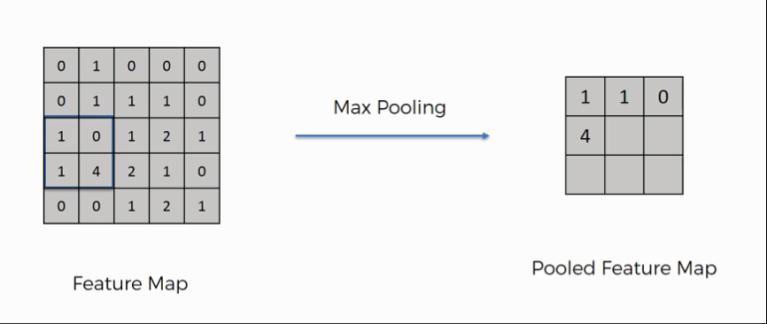
In order to obtain good performance in terms of timeandaccuracyinrecognizingthehealthyanddiseased leafimageweareproposedtoinvestigatingallthreekindsof techniqueforpooling.However,inmostoftheliteraturemax poolingisfrequentlyusedtechnique.Accordingtothefigure 6 of max pooling if we have image pixels as given in first block,weneedtohaveawindowwhichscanandselectthe maximumvaluesinthewindow.Accordingtodiagramwe have2X2windowsizetoreducetheimagefeatures.Andthe resultantimageblockisshowninsimilarimage.
Afterreducingtheimagedatausingthemaxpoolinglayer, weneedafullyconnectedlayertolearnthefeatures.
2.2.8
AnartificialneuralnetworktoCNNisimplemented herethemainpurposeofthislayeristocombinefeatures into attributes. Fully Connected Layer is a feed forward neural network. Fully Connected Layers form the last few layersinthenetwork.Theinputtothefullyconnectedlayer is the output from the final max Pooling Layer. That is flattenedandthenfedintothefullyconnectedlayer.These willpredicttheclasses.
This Flattened vector is then connected to a few fully connected layers which are same as Artificial Neural Networksandperformthesamemathematicaloperations. ForeachlayeroftheArtificialNeuralNetwork,thefollowing calculationtakesplace
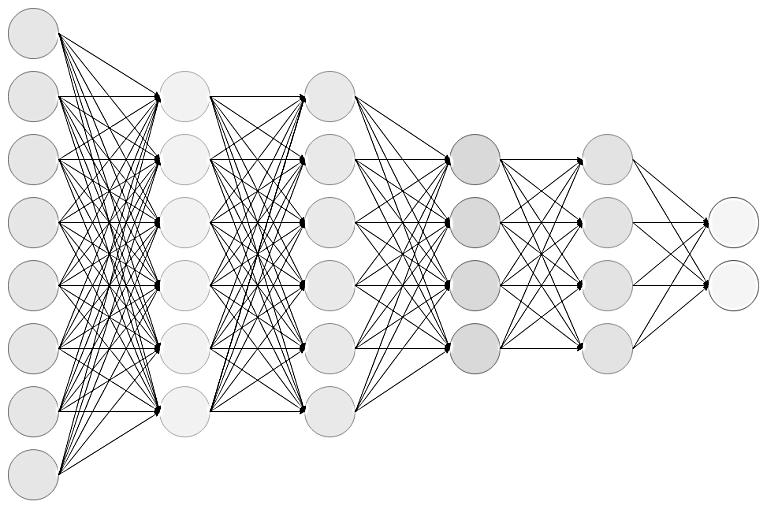
Where,xistheinputvectorofdimension ,W istheweightmatrixofdimensions , isthenumber of neurons in the previous layer and is the number of neurons in the current layer, b is the bias vector of dimension ,andgistheactivationfunction.TheFig-7 showstheexampleoffullyconnectedlayerandtheabove givencalculationisrepeatedforeachlayer.Afterpassingthe imageintothefullyconnectedlayers,thefinallayerusesthe soft-maxactivationfunction.Thatisusedtogetprobabilities of the input being in a particular class. And so finally, we havetheprobabilitiesoftheobjectintheimagebelongingto thedifferentclasses.
LSTMisatypeofRecurrentNeuralNetwork(RNN) butisbetterthanRNNintermsofmemory.Itisbetterfor memorizingpatterns.LSTM may havemultiplelayersand information will pass through every layer. The relevant information is kept and the irrelevant information gets discarded. LSTMs efficiently improves performance by memorizing the relevant information and important for findingthepatterns.InordertolearnLSTMincludes3types ofgates:FORGETGate,INPUTGate,andOUTPUTGate.An UnderstandingoftheLSTMmodelisdemonstratedinFig-8
International Research Journal of Engineering and Technology (IRJET) e-ISSN: 2395-0056
Volume: 11 Issue: 10 | Oct 2024 www.irjet.net p-ISSN: 2395-0072
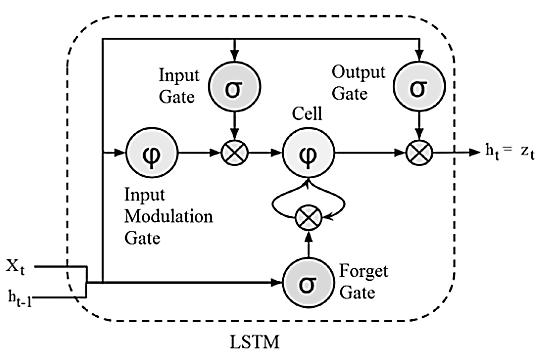
Fig- 8: LSTMGates
1. FORGETGateisusedtodecidingwhichinformation iskeptandwhichisnot.The istheinformation fromthepreviouscelland istheinformationof currentcell.These2areinputsoftheForgetgate. Theinputsarepassedthroughasigmoidfunction andinputtowards0areeliminated,andothersare passedfurtherlayer.
2. INPUTGateupdatesthecellstateanddecidesthe given information is important or not, and store information in the memory. and are the inputs for this gate and both inputs are passed through sigmoid and tanh functions respectively. These functions are helpful to control and reduce bias.Alltheinformationisusedtocalculatethenew cellstate.Thecellstateismultipliedwiththeoutput oftheforgetgate.Thenapointwiseadditionwith theoutputfromtheinputgateupdatesthecellstate tonewvalues.
3. OUTPUTgateislastgate,whichdecides“whatthe nexthiddenstateshouldbe”. and arepassed to a sigmoid function. Then the new cell state is passedthroughthetanhfunctionandismultiplied withthesigmoidoutputtodecidewhatinformation shouldcarry.
The1DCNNmodelhasthefollowingarchitectureasgivenin table1.
Table -1: Architectureof1D-CNNmodel
Modeltype Sequential
Layer1 Type dense, number of neurons 128, input dimension(100,1),activationfunction‘Relu’
Layer2 Type dense, number of neurons 64, activationfunction‘Relu’
Layer3 Type dense, number of neurons 32, activationfunction‘Relu’
Layer4 Type dense, number of neurons 16, activationfunction‘Relu’
Layer5 Typedense,numberofneurons2,activation function‘SoftMax’
Additionally for compilation of the 1D-CNN model the categoricalcrossentropylossfunctionusedwiththe‘Adam’ optimization function. Finally for measuring the performanceoftrainingandvalidationmodelthe‘Accuracy’ as the performance matrix has been used. Similarly, the LSTMmodelhasbeenimplementedforclassifyingtheword 2vectorbasedselectedfeature.TheLSTMhasthefollowing layersintheimplementedarchitectureasgivenintable2.
Table -2:
Modeltype Sequential
Layer1
Typeembedding,maximumvocablengthis 10k,inputsizeis300
Layer2 Neurons100
Layer3
Type dense, number of neurons 1, activation‘Sigmoid’
FurthertheLSTMmodeliscompiledwiththebinarycross entropylossfunction.Additionally,theoptimizer‘Adam’has beenusedwiththeperformancematrix‘Accuracy’.TheCNN model has been trained for 100 epoch cycles and LSTM classifieristrainedfor10epochcycles.
Finally, after training of the machine learning algorithmsarebeingtrainedtoacceptvalidationdata.The validation data is used with the trained machine learning algorithmforclassifyingthedata.Atthattimethepredicted classlabelsandactualvalidationdataclasslabelshasbeen comparedtomeasureperformanceofthemachinelearning algorithms.
Theabovegivenmethodologyofe-commerce reviewclassificationcanbesummarizedusingthealgorithm steps. The steps of implementing the review classification systemisgivenintable3.Accordingtothegivensteps,the algorithmisacceptingthedatasetDandselectedmachine learning algorithm M. after successful execution of the algorithm the classification labels of validation samples, accuracyanderrorratehasbeenobtained.
Volume: 11 Issue: 10 | Oct 2024 www.irjet.net p-ISSN: 2395-0072
Table -3: showsthealgorithmstepstobeimplement
Input:DatasetD,SelectedMLalgorithmM
Output:ClassifiedsamplesC,PerformanceP
Endif
8. ReturnC,Accuracy,Error
Thedatasetisreadandstoredinavariable , where the n is the number of samples in dataset. The prepared variable is pre-processed using the steps as given in previous section. The pre-processed dataset is stored in a new variable . Next for the feature representationthewordtovectormodelhasbeenused.The preparedvectorisnextsplitintotwopartstrainingsamples and validation samples Vl. The has 70% of sample whichisusedwiththeselectedmachinelearningalgorithm M.aftertakingtrainingofthemodelMitbecomes . Furtherthevalidationofthemodelhasbeendoneusingthe trainedmodel andvalidationsamplesVl.For each instanceofvalidation,thetrainedmodel predictthe class label . Further, the predicted class labels are comparedwiththeactualclasslabels formeasuringthe performance. If the predicted labels are equal to actual labels,thenaccuracyisincrementedandisnotthenerroris increased. All these three outcomes are provided by the algorithm.
Theproposedworkisaimedtoaccuratelyclassifytheecommerce fake reviews to help the consumers to get authentic and actual reviews. By which they can take appropriate decisions related to the product. Therefore, a machine learning model has been presented in this work. Additionally,twodifferentMLmodelshavebeenproposed toimplementforexperimentalanalysisandobtainingmost
relevantapplication.Therefore,anarchitectureofthemodel has been presented and algorithm steps are provided. Further the presented algorithm is implemented and performance has been studied. Next section includes the implementationandresultsanalysis.
Inthissection,theproposedfakereviewclassificationmodel has been evaluated on the different performance parameters.Additionally,theindividualperformancematrix has been discussed which are used in analyzing machine learningalgorithms.
Precisionisalsoknownaspositivepredictivevalue.Thatis the fraction of relevant instances among the retrieved instances.Precisionisdefinedasfollows:
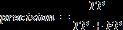
Where, TP indicates the True Positive, and FP shows the FalsePositiveratio.
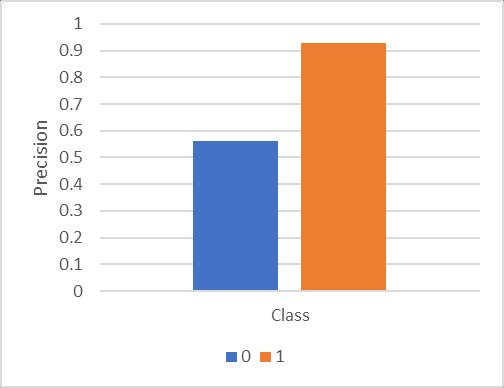
TheclasswiseprecisionoftheCNNmodelisgiveninFig-9 Inthisdiagram,XaxisshowstheclassestobeclassifyandY axisshowsprecisionoftheCNNalgorithm.Accordingtothe obtained results the model is providing higher accurate results for classifying the class label ‘1’ and provides less precisionforclass‘0’.Precisionissimilartotheaccuracybut by only using the precision we cannot decide the best performingalgorithm.Therefore,recallisalsoneededtobe measure. The recall of the CNN model is given in next section.
Volume: 11 Issue: 10 | Oct 2024 www.irjet.net p-ISSN: 2395-0072
Recallisalsoknownassensitivityortruepositiverateandis definedasfollows:
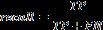
Where,FNshowstheFalseNegativeratio.
Recall is an alternate method to evaluate the model’s correctness.Figure10showstherecalloftheimplemented CNNmodelaccordingtotheclasstobeclassify.Theretwo classesareavailableforrecognizeandtherecallforboththe classrecognitionisgiveninthisfigure.IntheXaxisofthe diagramnumberofclassesaregivenandYaxisshowsthe recall.
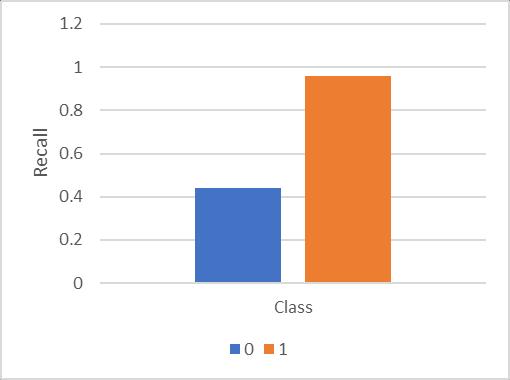
Fig- 10: RecallofCNNmodelclasswise
Accordingtotheobtainedresultsthemodelisprovidemore accurateclassificationforclassifyingtheclasslabel1andit achieve up to 96% correctness. On the other hand, for recognizing the class 0, the model provides the 46% correctness.Therefore,normallyitisessentialtomakemore improvement in the model for obtaining more accurate results.
F1-scoreisametricwhichtakesintoaccountbothprecision andrecallthereforethatisaharmonicmeanofprecisionand recall in order to describe the quality of classification outcomes.Itisdefinedas:

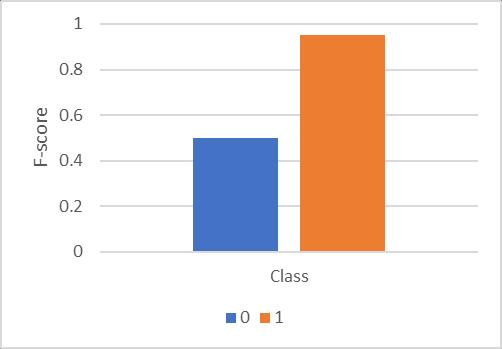
Fig- 11: F-scoreofCNNmodelclasswise
Fig-11showstheclasswisef-scoreoftheCNNmodel.Inthis diagram, X axis shows the classes to recognize and Y axis showsthecalculatedf-score.Basically,themeasuref-score showsthemeanoftheprecisionandrecall.Therefore,this parameter is used for deciding the better performing classifier. Due to mean of the precision and recall that parameterisalsodemonstratingthesimilarperformance.
Theaccuracyistheratioofcorrectlyrecognizedinformation and total information produced for recognition. The accuracycanbemeasuredusingthefollowingequation:

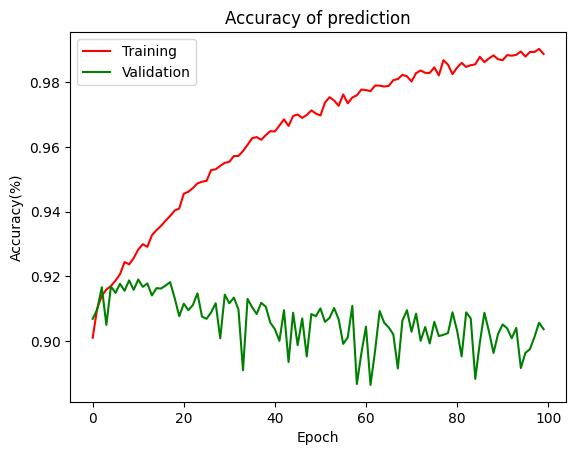
Fig- 12: Trainingandvalidationaccuracyfor1D-CNN Model
There are two type of classification techniques has been usedandboththealgorithmsaretrainedandvalidatedusing the same dataset. The accuracy for CNN model is given in Fig-12andtheLSTMmodel’saccuracyisgiveninFig-13
International Research Journal of Engineering and Technology (IRJET) e-ISSN: 2395-0056
Volume: 11 Issue: 10 | Oct 2024 www.irjet.net p-ISSN: 2395-0072
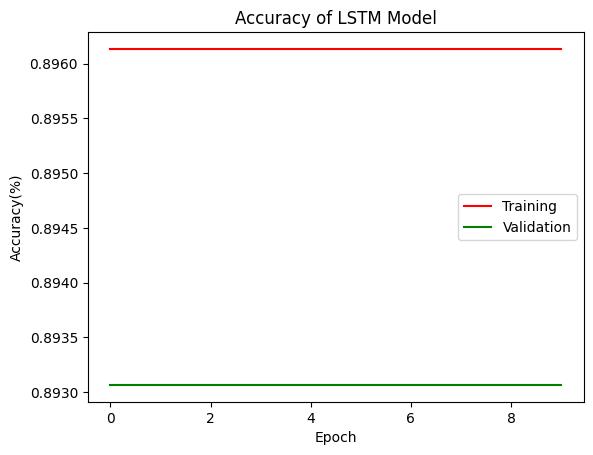
Inboththefigures,XaxisshowsthenumberofepochandY axisshowstheaccuracyinpercentage(%).ForCNNmodel theneuralnetworkistrainedfor100epochandforLSTM modelthetrainingisperformedfor10epoch.Inthiscontext, when we considering the CNN then training accuracy is improving with the epoch and validation accuracy is degrading with the epoch.However,aftersome epochthe validationaccuracybecomesconsistent.Ontheotherhand, whentheperformanceofLSTMmodelhasbeenconsidered than it is observed the training and validation accuracy remains consistent for all the epoch cycles. Therefore, in LSTMthetrainingandvalidationisnotimprovingwiththe provided training. Further for comparing both the algorithms mean accuracy of the models have also been calculated.Themeanaccuracyofboththemodelsaregiven in figure 14 and table 4. In this diagram a bar graph is provided,whereXaxisshowsthealgorithmsimplemented andYaxisshowstheaccuracyintermsofpercentage(%).
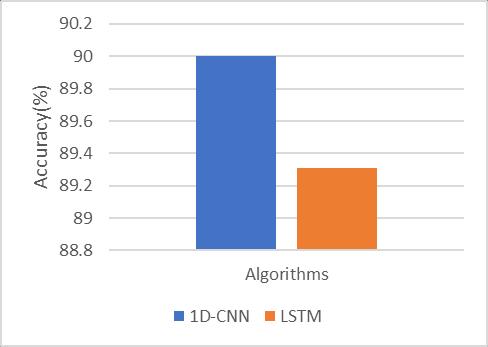
Fig- 14: ComparativeMeanAccuracy
Basedontheperformanceintermsofaccuracyofboththe modelsboththealgorithmsareperformingsimilarbutthe 1D-CNNisprovidinghighaccurateresultsthanLSTM.
Table -4: ComparativeMeanAccuracy
Thelossisnotmeasuredintermsofpercentageoranyother kind of scale. That indicates the difference between predictedanddesiredoutcomeobtainedfromthemachine learningalgorithm.
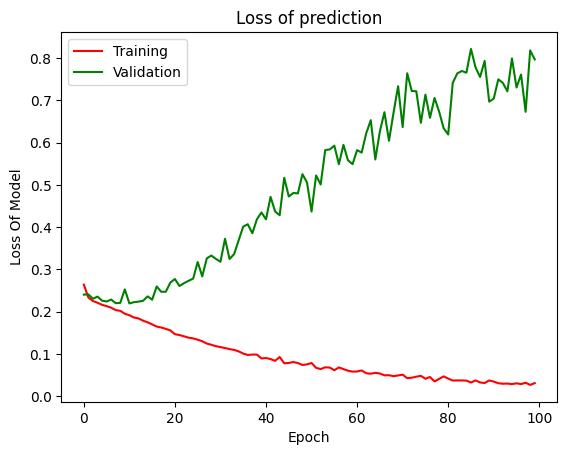
Fig- 15: LossforCNNtrainingandvalidation
Inthiscontext,thelossfunctionshavebeenusedtomeasure thedifference,usingthislossvaluetheoptimizerfunctionis performing the update operation on the neural network weights.
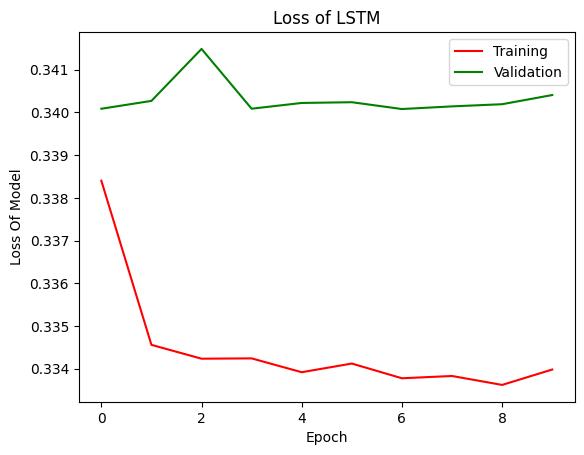
Fig- 16: LossofLSTMtrainingandvalidation
International Research Journal of Engineering and Technology (IRJET) e-ISSN: 2395-0056
Volume: 11 Issue: 10 | Oct 2024 www.irjet.net p-ISSN: 2395-0072
ThecalculatedlossofCNNmodelfortrainingandvalidation isgiveninFig-15.Inthisdiagram,Xaxiscontainstheepoch and Y axis contains the measured loss. Similarly, Fig-16 contains the training and validation of LSTM model. According to both the diagrams the training loss is decreasing with the increasing number of epochs on the other hand the validation loss for both the models are increasing withthe epoch. However,inboththediagrams the training and validation losses are becomes consistent aftersomeepoch.Normally,itisobservedthatwhentheloss becomeconsistentthanthemodelstopstheimprovement.
This section provides the conclusion of the entire work performed. Therefore, the observations and experimental outcomes are given as the conclusion of the work. First providesabriefofthefindingsandwork.Additionally,the future study plan of the presented work has also been discussed.
Thetextclassificationisaclassicaldomainofresearchand development. However, the text analysis has a number of differentapplicationsinreal world.Theproposedwork is intended to explore and investigate the power of text classification based on sentiment analysis. The traditional textclassificationisdifferentfromthesentimentandsocial media-basedtextclassificationtask.Thecurrentageoftext classificationcontainsalargenumberofinstancesbutthe lessamountofcontentavailable.Therefore,currentmethod oftextclassificationandfeatureextractionisdifferent.Thus, the presented work is dealing with the small text data analysisproblem.Here,thetermsmallisconcernedwiththe socialmedia,reviewormicro-blogtext.Theproposedwork ismainlyappliedonreviewdatasetforidentifyingthefake ormisleadingreviewsfromthee-commerceplatform.
Inthiscontext,asafirsttaskareviewhasbeenperformed. The review is performed on the basis of small text classification problem based on machine learning algorithms.Usingthisreviewtheproposedworkistryingto identifying the key machine learning algorithms, experimental datasets and relevant results. Next, for supportingfairnessinecommerceplatformaspamreview classification system has been proposed. The presented spamreviewclassificationtechniqueispreparedusingthe identifiedtechniquesinthisreview.Theproposedmodelisa machine learning based model to conduct text analysis to recognizespame-commercereviews.Thus,acompletespam product review classification model is demonstrated. Additionally, the basic overview of the model with the essential components has been also given. The model incorporates the process of text pre-processing, feature selectionandtwopopulardeeplearningtechniquesnamely LSTM and CNN. Finally, the entire system is described in termsofalgorithmsteps.
Further,forsystemimplementationtherequiredtoolsand techniqueshavebeendiscussed.Additionally,byusingthe amazonproductreviewdatasetisusedforconductingthe experiments. A total of 30000 instances of the review has beenconsidered,whichisbelongsfromthetoyandgames categoryofamazonproduct.Finally,theperformanceofthe implementedsystembyusingtheLSTMandCNNhasbeen evaluated in terms of different performance indicators namelyprecision,recall,f-score,accuracyandloss.Basedon the experiments the LSTM model is able to deliver only 89.31%correctclassificationwhiletheCNNbasedmodelis providing90%accurateclassificationresults.Inaddition,it isobservedthattheLSTMmodelisutilizingmoretimefor trainingascomparedtoCNN.Therefore,CNN algorithmis more efficient and accurate than LSTM model for spam classificationine-commerceplatform.
The main aim of the proposed work is to accomplish a machine learning model for classifying the e-commerce reviews into fake and/or legitimate text. The proposed modelhasbeensuccessfullyimplementedandperformance has been evaluated. In near future the following task is proposedformoreimprovement:
1.The experimental resultsdemonstratetheCNN based classification technique is efficient and accurate thus in near future the CNN based classification technique is recommended for implementationintextclassificationtask.
2.Theproposedspamdetectionapproachisatext classification-basedtechnique.Thatonlyconsiders thereviewtextforclassification.Innearfuture,the spam review classification system is needed to enhance by incorporating the reviewer’s profile attributesalso.
[1] Palanivinayagam, C. Z. El-Bayeh, R. Damaševicius, “Twenty Years of Machine-Learning-Based Text Classification:ASystematicReview”,Algorithms2023, 16,236.
[2] S. Ray, “A Quick Review of Machine Learning Algorithms”,2019InternationalConferenceonMachine Learning,BigData,CloudandParallelComputing(ComIT-Con),India,14th-16thFeb2019,IEEE
[3] J.W.Bi,Y.Liu,Z.P.Fan,E.Cambria,“Modellingcustomer satisfactionfromonlinereviewsusingensembleneural network and effect-based Kano model”, International Journal of Production Research, 2019, Vol. 57, No. 22, 7068–7088
International Research Journal of Engineering and Technology (IRJET) e-ISSN: 2395-0056
Volume: 11 Issue: 10 | Oct 2024 www.irjet.net p-ISSN: 2395-0072
[4] H. Jeong, Y. Yi, D. Kim, “An Innovative E-Commerce PlatformIncorporatingMetaversetoLiveECommerce”, International Journal of Innovative Computing, Information and Control ICIC, Volume 18, Number 1, February2022
[5] T.Chen,P.Samaranayake,X.Y.Cen,M.Qi,Y.C.Lan,“The Impact of Online Reviews on Consumers’ Purchasing Decisions: Evidence From an Eye-Tracking Study”, Front.Psychol,Vol13,paperid865702
[6] A.Onan,“Sentimentanalysisonproductreviewsbased on weighted word embeddings and deep neural networks”, Concurrency Computat Pract Exper. 2020;e5909
[7] H.Tufail,M.U.Ashraf,K.Alsubhi,H.M.Aljahdali,“The EffectofFakeReviewsone-CommerceDuringandAfter Covid-19 Pandemic: SKL-Based Fake Reviews Detection”,VOLUME10,2022
[8] N. Hussain, H. T. Mirza, I. Hussain, F. Iqbal, I. Memon, “Spam Review Detection using the Linguistic and Spammer Behavioral Methods,” IEEE Access (2020), UnitedStates,pp:53801-53816,Vol:8,Standard:21693536..