

Analysis of Different Machine Learning Models for Credit Card Fraud Detection
Harsh Mehta
School of Computer Science, Presidency University, (UGC), Bangalore, Karnataka, India
Abstract The increase in number of online transactions has led to a significant amount of credit card fraud over the past decade. Unauthorized use of one’s credit card information by stealing the information through dark web or scam calls, poses a major risk to both customer and businesses, particularly in e-commerce setting. This paper presents a comparative analysis of multiple machine learning modelsforcreditcardfrauddetection,includinglogistic regression, isolation forest, K – mean clustering, and convolutional neural networks. With a highly unbalanced dataset we aim to evaluate these models’ performance in differentiating between genuine and fraudulent transactions based on features such as transaction history, user details, and merchant information. Our experiment results will help provide insights into effectiveness of each model for finding patterns to distinguish between real and fake that can beapplied toreal world data. This researchcontributes to the field of financial security by offering guidance on model selection for credit card fraud detection and relatedapplications.Viewthisprojecthere.
Keywords – Credit card fraud, machine learning, logistic regression, isolation forest, k-mean clustering, convolutional neural network, financial security.
I. INTRODUCTION
The rapid growth of online financial transactional methods are seen in the recent times and adopted widely because it’s easy, reliable, and faster in multiple aspects compared to traditional payment methods. Among this online credit card fraud has been a concerning issue that challenges the security and integrity of information that can be circulated through internet. This paper will help future peers in understanding and choosing models accordingtotheirbuildrequirements.
A. Background on credit card frauds
Credit card frauds have become a significant threat in the coming digital age, possessing an enormous financial risk to individual, businesses and the global financial system.Ase-commerceand digital transactionsgrowwith time so does the fraudulent activities. Credit card fraud generallyoccurswhenunauthorizedindividualgainaccess to card information through various means like data
breach, skimming devices, or phishing attacks. These scammers then use the stolen information to make unauthorized purchases or even cash withdrawals, often resulting in financial losses for cardholder and merchants Theproblemgoesbeyondthelossofmoneyasitaffectsthe trust in digital payment systems, and potentially leads to longtermeconomicinstabilityifleftunchecked.
B. Current challenges in detection
The detection and prevention of credit card fraud presents several challenges for developers and organizations trying to deal with it. One of the primary obstacles is working with high dynamic nature of fraudulent activities, with scammers always changing and adapting new methods to cheatthe detection system. This makesitnecessarytokeepevolvingourdetectionmethods tostayahead of emerging threatsandavoid beforeit even takes place. The number of genuine transactions vastly outnumber fraudulentone, thisresultsin having a dataset wherefraudtransactionsrepresentveryminutenumberof the whole dataset. This imbalance creates biased models thatprioritizethemajority class,whichmightmisscritical fraud transaction. Additionally, the sensitive nature of financial data often limits access to real world datasets, making it very difficult for researchers and developers to buildandtestamodel.
C. Our approach and its significance
Our approach to address this issue involves a performance analysis of multiple machine learning model appliedtocreditcardfrauddetection.Usingadatasetfrom Kaggle named “Credit Card Transactions Fraud Detection Dataset” (Brandon, 2022) which mimics real world transaction pattern while preserving user’s privacy, we implementedauniquemethodologywhereweevaluatethe effectiveness of different models like: regression model, decision tree model, clustering model and convolutional neural network (CNN). We compare the performance of thesemodelsacrossmultiplemetrics,suchasclassification report, confusion metrics, AUC-ROC scores and feature importance analysis, through this we aim to find relative strengths and weaknesses in the context of credit card fraud detection. This performance evaluation contributes to providing help in ongoing efforts for improvement in fraud detection systems and offers valuable guidance to future peers in selecting and implementing appropriate modelaccordingtoneedsforsimilarsecurityapplications.
Volume: 11 Issue: 10 | Oct 2024 www.irjet.net p-ISSN:2395-0072
II. LITERATURE REVIEW
A. Credit Card Fraud Detection using Machine Learning and Data Science, DOI: ISSN: 2278-0181, (SPManiraj,2019)
Fraud detection in credit card transactions has been a subjectofextensiveresearchduetoitssignificantfinancial implications. Previous studies have explored various data mining applications and machine learning techniques for automated fraud detection. Supervised and unsupervised learning methods have been applied to this domain, with varyingdegreesofsuccess.Someresearchershaveutilized outlier mining and distance sum algorithms to predict fraudulenttransactionsinemulatedcreditcardtransaction datasets. While these methods have shown promise in certain areas, they have not provided a consistent and permanentsolutiontothefrauddetectionproblem.
More recent approaches have incorporated advanced techniques such as hybrid data mining/complex network classification algorithms. These methods have demonstratedeffectivenessindetectingillegalinstancesin real card transaction datasets, particularly for mediumsized online transactions. Efforts have also been made to improve the alert feedback interaction in fraudulent transaction detection systems. Artificial Genetic Algorithms have been explored as a novel approach, showing accuracy in identifying fraudulent transactions while minimizing false alerts. However, these methods often face challenges related to classification problems withvariablemisclassificationcosts.Theongoingresearch in this field continues to seek more robust and adaptable solutions to address the evolving nature of credit card fraud.
B A Research Paper on Credit Card Fraud Detection, (BORA MEHARSRISATYATEJA,2022)
The paper explores various techniques used in credit card fraud detection, including outlier detection, unsupervised outlier detection, peer group analysis, and breakpoint analysis. Outlier detection identifies abnormal transactions that deviate from a user's typical behaviour, but it may misclassify legitimate unusual transactions. Unsupervised outlier detection focuses on understanding customer transaction patterns without predicting specific outcomes. Peer group analysis compares entities with similar characteristics to identify anomalies. Breakpoint analysis examines structural changes in data to detect anomalies.
The authors note that while supervised learning methods are commonly used in fraud detection, they may fail in certain cases. The paper highlights the challenge of classimbalanceinfrauddetectiondatasets,wheregenuine transactionssignificantlyoutnumberfraudulentones.This imbalance can lead to difficulties in accurately identifying fraudulent activities. The researchers also discuss the
concept of "concept drift," where transaction patterns changeovertime,furthercomplicatingthefrauddetection process. To address these challenges, the paper proposes using machine learning algorithms such as Decision Trees and Random Forests, along with techniques like oversamplingtomitigateclassimbalanceissues.
C A machine learning based credit card fraud detection using the GA algorithm for feature selection, DOI: 10.1186/s40537-022-00573-8, (EmmanuelIleberi,2022)
The literature survey on credit card fraud detection reveals a growing interest in machine learning techniques to address this critical issue in financial security. Researchers have explored various approaches, including supervised and unsupervised learning methods, to improve the accuracy and efficiency of fraud detection systems.Severalstudieshavefocusedontheapplicationof traditional machine learning algorithms such as Support Vector Machines (SVM), Decision Trees, and Neural Networks.Thesemethodshaveshownpromisingresultsin identifying fraudulent transactions, although they often face challenges related to imbalanced datasets and the dynamicnatureoffraudpatterns.
Recent research has increasingly turned towards ensemble methods and hybrid approaches to enhance fraud detection capabilities. Random Forest and Gradient Boosting algorithms have gained popularity due to their abilitytohandlecomplex,high-dimensionaldataandtheir robustness against overfitting. Additionally, some studies have explored the potential of deep learning techniques, including Convolutional Neural Networks (CNN) and Long Short-TermMemory(LSTM)networks,tocaptureintricate patternsintransactiondata.Theseadvancedmethodshave demonstrated improved performance in detecting subtle fraud patterns that may be missed by traditional approaches.
A significant trend in the literature is the focus on feature engineering and selection techniques to improve model performance. Researchers have employed various methods, including Principal Component Analysis (PCA), GeneticAlgorithms,anddomain-specificfeatureextraction, toidentifythemostrelevantattributesforfrauddetection. Moreover,thereisagrowingemphasisondevelopingrealtime fraud detection systems that can adapt to evolving fraud patterns and provide timely alerts. Despite these advancements,theliteraturehighlightsongoingchallenges increditcardfrauddetection,includingtheneedformore representative and up-to-date datasets, addressing class imbalance issues, and developing interpretable models that can provide insights into fraudulent behaviour patterns.
International Research Journal of Engineering and Technology (IRJET) e-ISSN:2395-0056
Volume: 11 Issue: 10 | Oct 2024 www.irjet.net p-ISSN:2395-0072
D Review of Machine Learning Approach on Credit Card Fraud Detection, DOI: 10.1007/s44230-022-00004-0, (RejwanBinSulaiman,2022)
This review examines various machine learning techniquesforcreditcardfrauddetection(CCFD),focusing on their effectiveness, limitations, and privacy considerations. The paper discusses several algorithms, including Random Forest (RF), Artificial Neural Networks (ANN), Support Vector Machines (SVM), and K-Nearest Neighbors (KNN). Each method demonstrates unique strengths and weaknesses in handling CCFD tasks. For instance, Random Forest shows promise in handling large datasets but may be slower in real-time scenarios. ANN, particularly when used in unsupervised learning, demonstrates high accuracy and fault tolerance, making it a strong contender for CCFD applications. SVM performs well with smaller feature sets but struggles with larger volumes of data, while KNN offers high accuracy and efficiency but faces challenges with memory usage and performancedegradationonextensivedatasets.
The review highlights a critical challenge in CCFD: balancing effective fraud detection with data privacy and confidentiality.Traditionalcentralizedapproachestofraud detection face limitations due to data sharing restrictions imposed by regulations like GDPR. Even anonymized datasets stored locally on servers’ risk being reverseengineered, potentially compromising user privacy. This privacy concern is a recurring theme across various machine learning approaches discussed in the paper, emphasizing the need for more secure and privacypreservingmethodsinCCFD.
To address these challenges, the paper proposes a hybrid approach combining Federated Learning (FL) with Artificial Neural Networks. This innovative model aims to traindatalocallyonedgedevices,sharingonlythetrained model among participating institutions. This approach potentially enhances fraud detection accuracy while maintaining strict privacy standards. By allowing banks and financial centres to collaborate without directly sharing sensitive customer data, the proposed method offers a promising solution to the privacy-accuracy tradeoff in CCFD. The authors suggest that this hybrid model could significantly improve fraud detection capabilities while ensuring compliance with data protection regulations, marking a potential advancement in the field ofcreditcardfrauddetection.
E. A Review Paper on Feature Selection in Credit Card Fraud Detection,
(SurbhiBansal,2024)
Credit card fraud detection has been a subject of extensive research due to its significant economic impact. Researchers have compared the performance of various machine learning techniques such as Support Vector
Machines, Random Forests, and Logistic Regression in detecting credit card fraud, highlighting the importance of feature selection in improving model accuracy. The challenge of class imbalance in fraud detection has also been addressed, with proposed methods combining techniqueslikeSMOTEandrandomundersampling.These works have emphasized the need for adaptive learning techniquesinhandlingevolvingfraudpatterns.
Featureselectioninfrauddetectionhasseenincreasing attention, with researchers exploring various approaches. The effectiveness of transaction aggregation for creating behavioural features has been demonstrated, significantly improving fraud detection rates. Scalable real-time fraud detection systems using feature engineering and hybrid methods have been proposed, showcasing the importance of both domain expertise and machine learning in feature creation. More recently, Swarm Intelligence techniques have been applied for feature selection in fraud detection, demonstrating improved model performance and interpretabilitycomparedtotraditionalmethods.
F. Credit card fraud detection using machine learning, (Mr. Thirunavukkarasu.M,2021)
Credit card fraud detection has been an active area of research due to its significant economic impact. Previous studies have compared the performance of various machine learning techniques such as Support Vector Machines, Random Forests, and Logistic Regression for detecting credit card fraud, with Random Forests often outperforming other methods. Research has also demonstrated the effectiveness of transaction aggregation combined with Random Forests for fraud detection, showingimprovedresultsoversingletransactionanalysis.
In recent years, machine learning approaches have gained prominence in fraud detection. Researchers have addressed the challenge of class imbalance in credit card frauddetection datasets, proposing methods thatcombine under sampling with different algorithms to improve overall performance. Comprehensive reviewsof intelligent fraud detection techniques have highlighted the potential of ensemble methods like Random Forests in handling complex, high-dimensional data typical in financial transactions.
The application of deep learning to credit card fraud detection has also emerged as a promising direction. StudieshaveexploredtheuseofLongShort-TermMemory (LSTM) networksforsequenceclassificationincredit card fraud detection, showing that incorporating transaction sequences can enhance detection accuracy compared to traditional methods.However, whiledeep learning models can offer improved performance, they often lack the interpretability of simpler models like Random Forests, whichremainsan importantconsideration in the financial industry.
International Research Journal of Engineering and Technology (IRJET) e-ISSN:2395-0056
Volume: 11 Issue: 10 | Oct 2024 www.irjet.net p-ISSN:2395-0072
III. OBJECTIVES
A. Understanding various ML models with respect to credit card fraud detection
We aim to explore and analyze different machine learning models, specifically logistic regression, isolation forest, k-means clustering, and convolutional neural network, with respect to credit card fraud detection. We will understand the principle of each model and how are theyusedtoidentifyfraudtransactions.
B. Performance analysis of ML models
We will evaluate each model performance in detecting credit card fraud. This includes assessing their ability to correctlyidentifyfraudulenttransactionswhileminimizing false positives. This analysis is based on factors like accuracy,precision,andrecalltoprovideanoverallviewof eachmodelseffectiveness.
C. Assessing the effectiveness of each model using different metrics
To ensure our model is performing well we will use various performance metrics beyond basic accuracy. This includes confusion matrices, AUC-ROC curves and F1 scores,byusingthesefactorswewillaimtofindoutmore about the strengths and weaknesses of each detection models.
D. Provide recommendation for the ML model
Based on our analysis we will provide insights and recommendation on which model perform best for credit card fraud detection. These recommendations will consider factors such as model performance, computational requirements and ease of implementation providingguidancetofuturepeers.
E. Understanding features that affect the model development
Wewillunderstandtheimportanceofdifferentfeatures inthedatasetandtheirimpactontheperformanceofeach model. This involves conducting feature importance analysis to identify which transaction characteristics are most crucial in determining whether a transaction is fraudulentorlegitimate
IV. PROPOSED METHODOLOGY
Todevelopthiscreditcardfrauddetectionprojectusing various machine learning models we have taken the following steps that helps us understand this project from scratch:
A. System overview
Ourcreditcardfrauddetectionsystemfollowsthegiven workflow:
Data Ingestion: Raw data that’s downloaded from Kaggle is fed to the system without any preprocessingorscaling.
Preprocessing: The data undergoes cleaning through various methods and techniques to modelling can be done on the data that makes sense.
Data Scaling: The numerical features are normalized in the data so the model can ensure to provideconsistentoutputs.
Applying Pretrained Models: We use four different pre trained machine learning models on the preprocesseddata.
Classification Report and Metrics: Performance metricsandreportsareproducedforeachmodel.
B. Dataset Description
The dataset used in this project is downloaded from Kaggle the dataset originally belongs to Brandon Harris and generated using a simulator (Brandon, 2022) This data consists of legitimate and fraud transactions details from Jan 2019 till Dec 2020, and consist of card details of over 1000 customers and 800 merchants. This data generated creates easy to use fraud transaction dataset which is a representation of real-life transactions it containstwofilesnamed“fraudTrain”and“fraudTest”both of them combining contains over 1.5 million various transactions.
C. Data Preprocessing
Inourpreprocessingpipelinewe:
Convert date to datetime: The time features is convertedtodatetimeforbetterinterpretability.
Extracting features from datetime: We extract additional features like hour, day and month to capturetemporalpatterns.
Dropping unnecessary columns: Removing redundantandnon-informativecolumnsarealways helpfulforbettermodelinterpretability.
Scaling the data: Numerical features are scaled using standard scalers to ensure all features contributeformodeldevelopment.
D. Model Description
Weareusingfourdifferenttypesofmodelsandtheyall workandtrainthemselvesusingthedatadifferently:
Logistic Regression Model: In statics the logistic regression model helps in estimating the probabilityofaneventtakingplaceprovidedonthe provided dataset, and helps analyze the relationshipbetweenfactors.Thiswouldfitwellas themodelcanmarkthefakedetectionasoddsand logthemforfuturepredictions.
International Research Journal of Engineering and Technology (IRJET) e-ISSN:2395-0056
Volume: 11 Issue: 10 | Oct 2024 www.irjet.net p-ISSN:2395-0072
Isolation forest model: This algorithm is used for anomaly detection in the data with the help of binary trees. This algorithm is ideal for credit card frauddetectionasithasalowtimecomplexityand memory use that works well with huge amount of datatoo.
K-Mean clustering: This is an unsupervised machine learning algorithm, which helps group unlabeled data into multiple groups or clusters. It creates a centroid in the data and based on the distance it classifies or categorize the data. This model will theoretically fit well as the model and createtwoclusterofrealandfakeandpredictusing theircentroids.
Convolutional Neural Network: CNN comes under deep learning and is a type of neural network that usually creates 3 layers: input, hidden, and output It will help in Local Pattern Detection, and Feature Extraction and generally works well with large volumeofdata.
E.
Training Process
Even though the preprocessing method for all the four models is the same but each one of them will undergo a differenttrainingprocess:
Logistic Regression and Isolation Forest: They will be directly trained on the pre-processed data with defaulthyperparameter.
K-Means: Here the number of clusters would be determinedusingelbowmethodbeforetraining.
CNN: The network architecture would be modified according to the tabular data with multiple convolutional layers. The training would go on for 10 rounds with early stopping to prevent overfitting.
F. Evaluation and Analysis
Wewillevaluatethemodelusingmetricssuchas:
Accuracy:Overallcorrectnessofthemodel.
PrecisionandRecall:Toaccessmodelperformance onminorityclass.
F1-score: The harmonic mean of precision and recall.
ROC-AUC: To check models’ ability to distinguish betweendifferentclasses.
Confusion Matrix: To visualize model performance acrossalloutcomes.
Feature Importance Analysis: To check which feature in the dataset is most important for fraud detection.
Finally,wewillnotedownalltheresultsandcheckhow each model performs in various metrics and also note
downthetimeandcomputationalpowerthatwasrequired foreachmodeltogivethefinalpredictions.
TABLEI
Hardware Requirements
Graphic Card (Recommended):
- NVIDIA GPU with CUDA support (Optional but recommended).
Compute Resources:
-8coreCPU.
- Adequate RAM (8GB orabove)
Storage:
- SSD with at least 20GBfreespace
Network Infrastructure:
- High-speed Internet Connection.
Software Requirements
Operating System:
- Windows 10/11, macOS, or Linux (Ubuntu 18.04 or later recommended)
CUDA Toolkit:
- Version compatible with PyTorch and GPU (Optional: works only with graphic cards)
Necessary Library:
-numpy
-scikit-learn
-matplotlib
-seaborn
-pandas
Development Tools:
- Anaconda
-JupyterNotebook
Requirementsfordeepfakedetectionmodel
Thesearegeneralrequirements

Fig.1.1 Workflowdiagramofcreditcardfrauddetection model.
International Research Journal of Engineering and Technology (IRJET) e-ISSN:2395-0056
Volume: 11 Issue: 10 | Oct 2024 www.irjet.net p-ISSN:2395-0072

Fig.1.2 Workflowdiagramofcreditcardfrauddetection model

Fig.1.3 Workflowdiagramofcreditcardfrauddetection model

Fig.2 Architectureofcreditcardfrauddetectionmodel.
V. RESULTS AND DISCUSSION
Evaluation of each model is necessary to understand and rank the models accordingly. As discussed earlier we willevaluateallthefourmodelondifferentmetrics:
Training and Testing accuracy: It’s the proportion of correct prediction by total number of cases. It’s used check training vs testing set to assess overfitting.
Classification Report: It’s a summary of the key classification’s metrics including precisions, recall score, and F1-score for each class. It helps us provide a comprehensive view of model’s performance
AUC-ROC and Average Precision Score: The AUCROC measures the model’s ability to differentiate between classes among different threshold. The average precision scores summarize the precisionrecall curve as the weighted mean of precisions achievedateachthreshold
Confusion Matrix: It’s a table showcasing the number of correct and incorrect predictions made bythemodel.Thishelpsusprovideabreakdownof model’sperformanceandunderstanderrortypes.
Feature Importance: This is the measure of the features which contributes to the prediction of the model. This helps us provide transaction characteristics and that provides insights for featureengineeringandmodelinterpretation
A. Logistic Regression Model Performance

31 TrainingandTestingscoresusingLogistic regressionmodel.
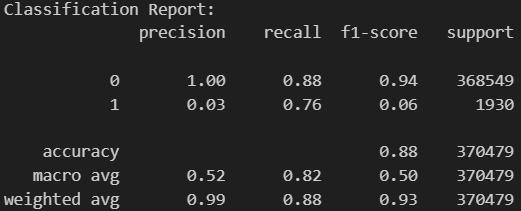
Fig.32 ClassificationreportofLogisticregressionmodel.

Fig.3.3.ROCCurveofLogisticregressionmodel.
Fig.

Fig.34.AUC-ROCandAveragePrecisionscoreofLogistic regressionmodel.

Fig.3.5.ConfusionMatrixofLogisticregressionmodel.
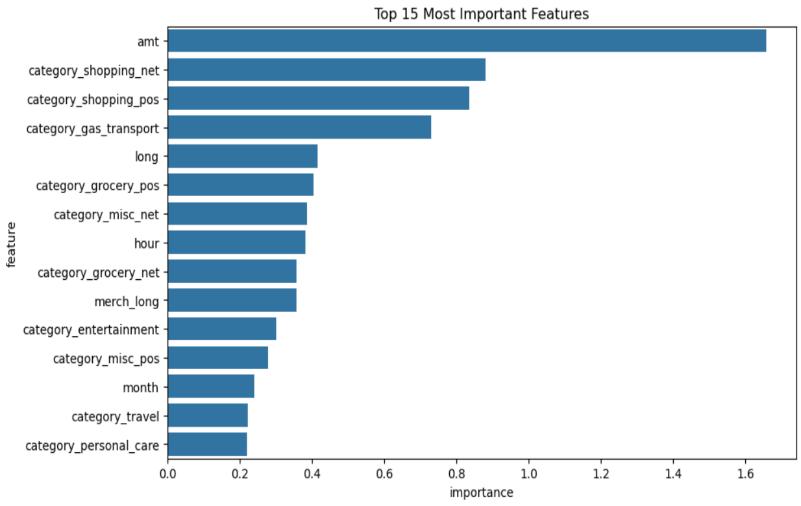
Fig.36.FeatureImportanceAnalysisofLogisticregression model.
B Isolation Forest Model Performance

41. TrainingandTestingscoresusingIsolationForest model.

4.2. ClassificationreportofIsolationForestmodel.

Fig.43.ROCCurveofIsolationForestmodel.

44.AUC-ROCandAveragePrecisionscoreofIsolation Forestmodel.

Fig.4.5.ConfusionMatrixofIsolationForestmodel.
Fig.
Fig.
Fig.
International Research Journal of Engineering and Technology (IRJET) e-ISSN:2395-0056

Fig.46.FeatureImportanceAnalysisofIsolationForest model.
C K-Mean Model Performance

Fig.51. TrainingandTestingscoresusingK-Meansmodel.

Fig.5.2. ClassificationreportofK-Meansmodel.

Fig.53.ClusteringofK-meansmodel

Fig.5.4.AUC-ROCandAveragePrecisionscoreofK-means model

Fig.55.ConfusionMatrixofK-Meansmodel

Fig.56.FeatureImportanceAnalysisofK-Meansmodel D Convolutional Neural Network Model Performance

6.1. TrainingandTestingscoresusingCNNmodel.
Volume: 11 Issue: 10 | Oct 2024 www.irjet.net p-ISSN:2395-0072 © 2024, IRJET | Impact Factor value: 8.315 | ISO 9001:2008
Fig.


FinalAnalysisofallthe4modelsandtheirperformance.
Logistic Regression K- Mean Isolation forest CNN
- Accuracy: 0.88
- F1 score: 0.94
-Recall:0.88
Computation al Power: Low
- AUC-ROC score:0.91 - Average Precision
Score:0.15
- Accuracy: 0.55
- F1 score: 0.71
-Recall:0.55
Computation al Power: Low
- AUC-ROC score:0.52 - Average Precision
Score:0.005
TopFeature: Amount TopFeature: Gender_M
VI. CONCLUSION
- Accuracy: 0.98
- F1 score: 0.99
-Recall:0.99
Computation al Power: Medium
- AUC-ROC score:0.54 - Average Precision
Score:0.006
TopFeature: Category_per sonal_care
- Accuracy: 0.98
- F1 score: 0.99
-Recall:0.99
Computation al Power: High
- AUC-ROC score:0.99 - Average Precision Score:0.80
TopFeature: Amount
This study compares four machine learning modelsLogistic Regression, K-Means clustering, Isolation Forest, and convolutional Neural Network (CNN) for credit card fraud detection. We evaluated these models using various setofmetricsincludingaccuracy,F1score,recall,AUC-ROC score
Our results reveal the performance of various models. The CNN model is able to generate a model with accuracy of 0.98 F1 score of 0.99, and AUC-ROC of 0.99. However, this superior performance comes at cost of high computationalpower.Thelogisticregressioncomesoutas a good model with good performance showcasing scores with accuracy of 0.88, F1 score of 0.94, AUC-ROC of 0.91 and also has low computational power. Therefore, these two models emerge as a viable option for real-time fraud detection as well where accuracy is important and computationalpowerisoptional.
Interestingly,theIsolationForestmodelachievesahigh accuracy of .98 compared to CNN, but its low AUC-ROC scoreshowsthattheremightbesomepotential issuewith class separations. This tells us that it’s important to consider multiple metrics in evaluating model performance, particularly in imbalanced classification problems like fraud detection. The K-Means clustering performs poorly across all metrics showcasing its not an idealmodeltopredictcreditcardfrauddetection,thisalso indicates that unsupervised learning methods may not fit wellwithproblemslikecreditcardfrauddetections.
International Research Journal of Engineering and Technology (IRJET) e-ISSN:2395-0056
Volume: 11 Issue: 10 | Oct 2024 www.irjet.net p-ISSN:2395-0072
These models explain the trade-off between models’ complexityandperformanceincreditcardfrauddetection Where models like CNN provides higher detection capability but models like Logistic regression offer strong balance between accuracy and computational efficiency. Finally,thechoicesofthemodelsshouldbedonebasedon specific requirements and constraints of fraud detection systemthatisneededtobedeveloped.
This study helps contributing into the ongoing studies anddevelopment that happening aroundcredit card fraud detection. Future Work can explore ensemble modelling techniques that uses strength of different models to improve the detection mechanism and develop computational efficient modelsthat can run on any device withminimalrequirements.
ACKNOLODGEMENT
I would like to extend my sincere and heartfelt thanks to my professor Dr. Pallavi who guided me by reviewing and providing feedback throughout this research and activelyencouragedmetocompletethiswork.Iwouldalso take a moment to appreciate Mr. Arun Samanta for taking out his time in reviewing my work and providing me a plagiarism report on the paper to keep this work original. The journey would not have been completed without the resources and knowledge provided by these faculties at presidencyuniversity.
I am also very grateful to the services provided by OpenAI and Anthropic for their resources and tools for various help that includes resources collection, content paraphrasinganddebuggingcodingerrors.Finally,Iwould like to thank Google scholar and Research gate for providing relevant articles which helped later during the developmentofproject.
REFERENCE
[1] AlEmad, M. (2022). Credit Card Fraud Detection Using Machine Learning. RIT Digital Institutional Repository.
[2] BORA MEHAR SRI SATYA TEJA, B. M. (2022). A Research Paper on Credit Card Fraud Detection. International Research Journal of Engineering and Technology,1-4.
[3] Brandon, H. (2022). Synthetic Credit Card Transaction Generator used in the Sparkov program. Retrieved from GitHub: https://github.com/namebrandon/Sparkov_Data_ Generation
[4] EmmanuelIleberi,Y.S.(2022).Amachinelearning based credit card fraud detection using the GA algorithmforfeatureselection. Journal of Big data, 2-15.
[5] Harris, B. (2020). Credit Card Transactions Fraud Detection Dataset. Retrieved from Kaggle: https://www.kaggle.com/datasets/kartik2112/fr aud-detection
[6] Mr. Thirunavukkarasu.M, A. N. (2021). CREDIT CARD FRAUD DETECTION USING MACHINE LEARNING. International Journal of Computer Science and Mobile Computing,2-7.
[7] Rejwan Bin Sulaiman, V. S. (2022). Review of MachineLearning Approach on Credit Card Fraud Detection. Human-Centric Intelligent Systems,1-12.
[8] S P Maniraj, A. S. (2019). Credit Card Fraud Detection using Machine Learning and Data Science. International Journal of Engineering Research & Technology,2-4.
[9] Surbhi Bansal, R. H. (2024). A Review Paper on Feature Selection in Credit Card Fraud Detection International joint conference on computing sciences,1-5.
[10]Vaishnavi Nath Dornadulaa, G. S. (2019). Credit Card fraud Detection using Machine Learning Algorithms. International Conference on Recent Trends in Advanced Computing,3-9.