

Coherence-based numerical differential current relay for synchronous generator stator windings protection
R.
A. Mahmoud1, E. S. Elwakil2
1Misr University for Science and Technology (MUST), College of Engineering Science & Technology, Department of Electrical Power and Machines Engineering (PME), 6th of October City-Giza-Egypt.
2Power Electronics and Energy Conversion Department, Electronics Research Institute, Cairo -Egypt. ***
Abstract:
A novel protective scheme for stator windings of synchronous generators is presented. The proposed method utilizes coherence coefficients for currents at both stator winding terminals to detect the fault condition in the AC power system, to determine which phase is faulty and to specify whether the fault is internal or external. The suggested scheme has developed closed-tripping characteristics to identify the relay tripping and blocking zones. Extensive fault situations are simulated using ATP software; then the protective scheme is verified using MATLAB package. In this method, the fault detection and classification are not affected by the fault types, fault locations, fault resistances, fault time span, fault inception times, and initial operating conditions. Moreover, it is smart and reliable; it can be practically implemented and gives fast time response (about half a cycle). In addition, the settings of the coherence coefficients can be selected in a narrow boundary. Besides, the proposed scheme can detect the ground faults near the neutral terminal of SG windings with high grounding impedance.
Keywords: Synchronous generator; Fault detection; Fault classification; Internal fault; External fault; Coherencecoefficient.
1. Introduction
Due to the fact that Synchronous Generator (SG) is the most critical equipment in power networks, fault detectionandclassificationareessentialtoavoidoutages and blackouts [1-2]. As a result, many protection methods were proposed to protect SGs against various types of faults Several researches and applications were processed for SGs protection in the literature. Faults in the SG are commonly classified as internal and external faults.Thecommoninternalfaultsmaybephasetophase and phase to ground faults in stator windings, whereas external faults are those which occur outside the generator’s protection zone, which may be caused by short circuits, over loading or unbalanced loads [3]. The conventional protection schemes consist of differential andstatorearth-faultrelays;thoseareknowntobeslow in clearing the faults unless the fault develops and
current reaches the operating value [4]. Faults near neutral point, cannot be detected by earth-fault relays, especiallyforSGwithhighimpedancegrounding neutral due to insufficient voltage to drive the fault current [4]. To overcome these limitations, several techniques were proposed as in [5-7]. The paper in [7] presented a protection technique for stator windings against earth faultsusingthethirdharmonicvoltageattheneutraland theterminalsoftheSG.Faultdetectionandclassification schemes using statistical approaches such as correlation and alienation techniques were presented in [8-10]. SG protection methods based on signal processing
techniques such as wavelet transforms were developed in [11-12]. Recently, Artificial Neural Network (ANN) technique was proposed for fault detection in SG stator windings [13]. The ANN technique is provided for detecting various internal, external and ground faults, whichareclosetoneutralpoint Otheralgorithmsusinga fuzzylogiccontrolledneuralnetworkwereintroducedin [14-17]; the algorithms utilized the fault generated transientsforinternalandexternalfaults discrimination TheANNandfuzzylogicwereusedforturn-to-turnfault detection, fault type classification and fault location identification [18-19]. In [20], the authors presented support vector machine-based fault detection and classification for electrical AC machines using vibration waves. Fault detection in Synchronous Generators (SGs) based on independent component analysis and machine learningwasintroducedin[21].
This paper presents a novel protection scheme for SG stator windings based on coherence analysis The coherence coefficients are estimated for current signals measured at both terminals of three phase stator windings, which can be used for fault detection, faulty phase(s)selection,andfaultlocationdiscrimination with respect to the generator protection zone The proposed algorithm presents new tripping characteristic curves, utilizing coherence coefficients, to identify the relay trippingandblockingregions.
2 Synchronous generator modeling
Modeling of internal faults in synchronous generator cannot be built directly in the ATP program. When dynamics of the machine is not required, sinusoidal
© 2024, IRJET | Impact Factor value: 8.315 | ISO 9001:2008
Volume: 11 Issue: 10 | Oct 2024 www.irjet.net
voltagesourcemodelType-14canbeused[22-23].Thus, the package model Type-14 is easier for modeling SG to analyze the internal faults located on stator windings. In fact, the voltage source (Type-14) can be used for internal fault simulation during only the sub-transient period.Thefaulttimeinterval of3cyclesissufficientfor evaluating the proposed protection scheme. This was verified via the extensive case studies of ATP simulation presented in [23]. It has been proved that the shortcircuitcurrent, the3-phvoltages andcurrents generated from three sources of Type-14 are identical to those obtained from the source of Type-SM59 during only the sub-transientperiod[24].
3. Proposed protection algorithm
3.1 Coherence index computation
( ) ( )|
)
| ( )| ∑ | ( )| ( ) ( ) ∑[ ( ) ( )] ∑[ ( )
( ) ( ) ( )( )
( ) ( ) ( )( )
Where,
Ci (k): The coherence coefficient calculated between the two time-series signals (x(n) and y(n)) at a given frequency(k);theformulayieldsrealvalue,
n:Thesamplenumber,n=0,1,…(N-1),
X(k): The Discrete Fourier Transform (DFT) of timeseries signal ' x(n)'; the formula yields one complex number X(k) forevery k,
Y(k): The Discrete Fourier Transform (DFT) of timeseries signal ' y(n)'; the formula yields one complex number Y(k)forevery k,
Where,
Tc:Thecycletimeperiod,(Tc=20 mSec),
Ts:Thesamplingtimeinterval,(Ts=0.2 mSec), International Research Journal of
Acoherenceisameasureofthedegreeofrelationship,as a function of frequency, between two time-series signals/sets The coherence, sometimes called Magnitude-Squared Coherence (MSC), between any two signals/sets is a real-valued function; its values lie between 0.0 and +1.0 [25-26]. The magnitude of coherence is +1.0 if the two signals correspond to each otherperfectlyatagivenfrequency,(i.e.perfectcoherent signals), while, if they are totally unrelated, the magnitude of coherence will be 0.0 (i.e. incoherent signals). If the coherence coefficient is less than one, but greater thanzero, it indicates noise/harmonic contentin the measurements.Thismeansthatthefunction relating the two signals is not linear. The coherence function can be described using the following mathematical formula [27-28]:
k:Thefrequencycomponentnumber; k =0,1,…(N-1),
N:numberofsamplesinvolvedinonewindow,
j:Theimaginaryunit,
*:Denotescomplexconjugation.
a(k): CosinecoefficientoftheDFTforsignal x(n), b(k): SinecoefficientoftheDFTforsignal x(n), u(k): CosinecoefficientoftheDFTforsignal y(n), and v(k): SinecoefficientoftheDFTforsignal y(n).
Thefollowingmathematicalequationrepresentsthefinal form, used in the proposed algorithm, for calculating the coherencecoefficient(Ci (k)): ) / ( 2 Sec Rad
) / (
Sec Rad
Fc: Thefundamentalfrequencyofoneperiodiccycle,(Fc= 50 Hz),
International Research Journal of Engineering and Technology (IRJET) e-ISSN:2395-0056
Volume: 11 Issue: 10 | Oct 2024 www.irjet.net p-ISSN:2395-0072
Fs: Thesamplingfrequency,(Fs=5 kHz).
Nc: Thenumberofsamplespercycleforeachsignal(x(n) and y(n)), (Nc= Tc /Ts and Nc= Fs /Fc= 100Samples/cycle).
3.2 Phase angle estimation
Thecalculatedphaseangle(φ12)isdirectlyrelatedtothe magnitude of coherence. If the phase angle is random between two time-series signals, then coherence coefficient is equal zero. When coherence is computed with a reasonable number of degrees and approaches
To estimate the phase shift angle (φ12) between the two signals (x(n) and y(n)) for every frequency component (k),thefollowingequationcanbeapplied[29]:
[ ( ) ( ) ( ) ( )]
)
[ ( ) ( ) ( ) ( )]] ( )
unity, then the phase angle between the two time-series signalsbecomesmeaningfulbecausetheintervalofphase is a function of the coherence value and the degree of freedom. The phase relation determines, for two timeseriessignals,oneislagorleadfromeachother.
Table 1: Coherencecoefficientlimitsofcurrentsignalsfordifferentfaulttypesandtherelayaction.
Fault location (for SG stator windings)
1. Normal operation
Coherencecoefficientslimits Faultclassificationtype
presetvalueofcoherence Cx = 1- Δ = 0.9
1 ≥ Cia12 ≥ Cx, 1 ≥ Cib12 ≥ Cx, 1 ≥ Cic12 ≥ Cx and ΔI ≤ 20% In
2. External fault 1 ≥ Cia12 ≥ Cx, 1 ≥ Cib12 ≥ Cx, 1 ≥ Cic12 ≥ C and ΔI > 20% In 3LGorSLGorDLGorDLExternalFault
3. Internal fault Cia12 ˂ Cx,
Cib12 ˂ Cx or Cic12 ˂ Cx
Cia12 ˂ Cx,
Cib12 ˂ Cx and Cic12 ˂ Cx
Cia12 ˂ Cx,
1 ≥ Cib12 ≥ Cx and 1 ≥ Cic12 ≥ Cx
1 ≥ Cia12 ≥ Cx,
Cib12 ˂ Cx and
1 ≥ Cic12 ≥ Cx
1 ≥ Cia12 ≥ Cx, 1 ≥ Cib12 ≥ Cx and Cic12 ˂ Cx
Cia12 ˂ Cx,
Cib12 ˂ Cx and
1 ≥ Cic12 ≥ Cx
1 ≥ Cia12 ≥ Cx,
Cib12 ˂ Cx and
Cic12 ˂ Cx
Cia12 ˂ Cx,
1 ≥ Cib12 ≥ Cx and
Cic12 ˂ Cx
3.3 Proposed algorithm procedure
InternalFault 3LG (A-B-C-G)
InternalFault, SLG phase‘A’
InternalFault, SLG phase‘B’
InternalFault, SLG phase‘C’
InternalFault DLG (A-B-G) or InternalFault DL (A-B)
InternalFault DLG (B-C-G) or InternalFault DL (B-C)
InternalFault DLG (A-C-G) or InternalFault DL (A-C)
Fig.1 presents the flow chart of the new protection scheme based on coherence coefficients. The algorithm performs three simultaneous tasks: fault detection, classification and localization. The procedure of the proposed algorithm can be described in the following steps:
Relay action
Tripping
1 ≥ Ciab ≥ Cx
Internal Fault DL (A-B), Otherwise InternalFault DLG (A-B-G)
1 ≥ Cibc ≥ Cx Internal Fault DL (B-C), Otherwise InternalFault DLG (B-C-G)
1 ≥ Cica ≥ Cx
Internal Fault DL (A-C)
Otherwise InternalFault DLG (A-C-G)
(1) Read the sampled 3-phase currents signals at both ends of SG stator windings required to be protected (six currentsignalssampledat5kHz)
(2) Calculatethecoherence coefficient (Cis12) forthetwo currentsignals(is1 (n) and is2 (n))measuredatbothstator winding ends of phase ‘S’ Each coefficient is estimated between each two corresponding windows of the two currents(is1 and is2)ofphase ‘S’
International Research Journal of Engineering and Technology (IRJET) e-ISSN:2395-0056
Volume: 11 Issue: 10 | Oct 2024 www.irjet.net p-ISSN:2395-0072
(3) The sudden changes in the three coherence coefficient valuescanbeanalyzedandusedtodetectthe fault condition, to identify the faulty phase(s) and to selectthefaultlocation
(4) To discriminate between the DLG and DL faults, another three coherence coefficients (Ciab, Cibc, and Cica) are required; they are computed between the two currentsofthefaultyphasestakenatneutralorloadside ofSGstatorwindings.Thecoefficients(Ciab, Cibc, and Cica) areevaluatedforthethreepairsofcurrentsignals(ia1 (n) and ib1 (n)), (ib1 (n) and ic1 (n)) and (ic1 (n) and ia1 (n)), respectively
(5) Also, the coherence coefficients (Ciab, Cibc, and Cica) can be used to discriminate between normal operation and the fault conditions. Ideally, the values of these coefficients are 0.25 at normal operation. Hence if their
values are out of the margin 0.25 ± Δ, then the system conditionisfaulty.
(6) The action of the protection algorithm follows the listedconditionsinTable1.
3.4 Proposed tripping-characteristics design
Figs. 2(a-c) present the characteristics of the proposed protective algorithm. Each characteristic is depicted for each pair of coherence coefficients for current signals. The characteristic has two zones: a blocking zone for normal operation or external fault condition and a tripping zone for internal fault condition. The processes of fault detection, faulty phase(s) identification and fault location discrimination (internal or external) start altogether in parallel with a maximum execution time of 10mSec(i.e.halfacycle).
Fig. 1: Flowchartoftheproposedalgorithm.
Read 3-ph secondary currentsfor both ends ofSG stator windings
Calculate coherence coefficients between phase currents for both ends of SG stator windings
Cia12<Cx
International Research Journal of Engineering and Technology (IRJET) e-ISSN:
Volume: 11 Issue: 10 | Oct 2024 www.irjet.net p-ISSN:2395-0072
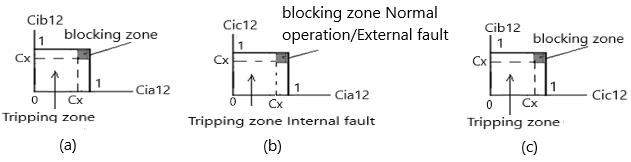
Figs. 2(a-c): Trippingcharacteristics.
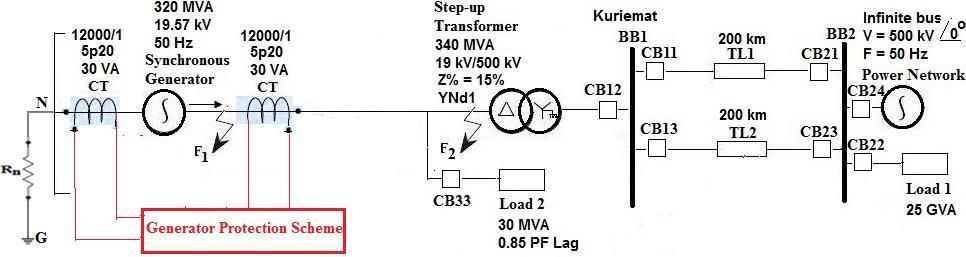
Fig. 3: Synchronousgeneratorconnectedtoapowersystemnetwork.
4. Simulated power system
A power system model consisting of a synchronous generator, which feeds the loads through a step down transformer and double circuits of transmission lines, is considered for simulation. The model is shown in Fig. 3 Thepre-faultoperatingconditionsandparametersofthe simulated power system are given in Appendix 1 and Appendix2[29]
5. Simulation findings and analysis
Differenttypesofshortcircuits havebeensimulatedand tested using ATP and MATLAB for the case studies of sections5.1to5.4 consideringdifferent faulttypes,fault locations (0-100%) on stator windings, fault resistances (0-20 Ω), fault inception angles (0-90o) and fault zones (internal/external) The total simulation time is 0.2 Sec (i.e. Nsim = 1000 samples);andthe faultinceptiontimeis setto tf =0.102Sec (i.e. Nf =510samples).Itisassumed that the SG is loaded before the fault inception. The samplingfrequencyis fs =5.0kHz(i.e. h =0.0002Sec).
5.1 Case 1: SLG external fault
A single line-to-ground (SLG) fault is inserted at the locationofpointF2 betweentheprimarysideofthestepup transformer and load 2. For this case, the fault resistance is 1 Ω, the grounding impedance of the generator neutral point is 1 Ω and the fault inception angle is 36o . Fig. 4(a-c) show the 3-phase secondary
currents at both terminals of SG stator windings. The current magnitudesduringfaultarehigherthan the prefault current magnitudes for the two phases A’ and ‘B’; while the current magnitude of phase ‘C’ during fault is lower than the pre-fault current. This is due to the SLG external fault located on the phase ‘A’ and the delta connection of the primary windings of the transformer. The two current signals, at the ends of stator windings, areidenticalbeforeandafterthefaultinceptiontime.Fig. 4(d) shows the delay angles (Tia12, Tib12 and Tic12) evaluatedbetweenthethreepairsofphasecurrents.Itis observed that the three angle differences are zero degrees because the fault location is external. The 3phase coherence coefficients (Cia12, Cib12 and Cic12) are showninFig.5(a)tobeequalandclosetoonebeforeand after the fault instant. The values of these coefficients confirm that the system condition is either external or normal operation. The calculated values of coherence coefficients (Ciab, Cibc, and Cica) are balanced and close to 0.25 before the fault starting. While they are unbalanced during fault with values between 0 and 0.8, as shown in Fig. 5(b). Thus, these unbalanced values prove that the fault is external. The proposed technique prevents the tripping of generator CB(s) in the case of external fault condition.Fig.5(c)showstheblockingflag,whichis zero in this case. Fig. 5(d) shows the operating point on the characteristicsdueto the SLGexternal fault.Itisnoticed that the values of (Cia12, Cib12 and Cic12) on the three characteristics are identical and located at the value of one.
International Research Journal of Engineering and Technology (IRJET) e-ISSN:2395-0056
Volume: 11 Issue: 10 | Oct 2024 www.irjet.net p-ISSN:2395-0072
Fig. 4(a):Currentsignals ia1 and ia2.
Fig. 5(a):Coefficients(Cia12, Cib12 and Cic12).
Fig. 4(b): Currentsignals ib1 and ib2
Fig. 5(b): Coefficients(Ciab, Cibc and Cica).
Fig. 4(c):Currentsignals ic1 and ic2.
Fig. 4(d):Delayanglesbetweenthetwocurrentsignals ofeachphase.
Fig. 4(a-d):CurrentsignalstakenattheterminalsofSG statorwindingsandtheirdelayanglesforcase1.
Fig. 5(c):Blockingflagincase1.

Fig. 5(d): Proposedschemeblockingonthetripping characteristics.
Fig. 5(a-d): Simulationresultsofcase1.
© 2024, IRJET | Impact Factor value: 8.315 | ISO 9001:2008 Certified Journal | Page322
International Research Journal of Engineering and Technology (IRJET) e-ISSN:
Volume: 11 Issue: 10 | Oct 2024 www.irjet.net p-ISSN:2395-0072
5.2 Case 2: SLG fault at 100% phase ‘A’ of stator winding
A SLG internal fault is simulated at 100% of stator windings away from the neutral point. In this case, the faultlocationischangedtoSLGinternalfaultonphase‘A’ throughafaultresistance Rf =1Ω.Fig.6(a-c)presentsthe curves of three-phase secondary currents at both stator windingsterminals.Thetwophase-current’smagnitudes of the healthy phases; 'B' and 'C', before and during the fault interval, are identical. The current magnitude of ia1, for the faulty phase 'A', during the fault period is higher than ia2 and the pre-fault current magnitudes. Fig. 6(d) shows the shift angle deviations (Tia12, Tib12 and Tic12) evaluated between the three pairs of the three phase currents, at both stator winding ends, respectively. The three angle differences are zero before the fault occurrence. During fault, Tia12 is greater than 70o, while Tib12 and Tic12 remain zero because the fault type is SLG internal fault for phase ‘A’. The calculated six coherence coefficients (Cia12, Cib12, Cic12, Ciab, Cibc, and Cica), the tripping signal, the proposed scheme operation on the tripping characteristics are shown in Fig. 7(a-d). The calculated values of the three coherence coefficients (Cia12, Cib12 and Cic12) are fixed close to one before fault inception. During fault period, the values of coefficients (Cib12 and Cic12) are still fixed; whereas the values of the coefficient (Cia12) lie between the values of 0 and 0.8, as shown in Fig. 7(a) The values of coherence coefficients (Cia12, Cib12 and Cic12) prove that the system load is balanced before fault inception and the fault type is SLG internal fault on the phase ‘A’ The estimated values of coherencecoefficients(Ciab, Cibc, and Cica)arefixedat0.25 before the fault time, but they are unsymmetrical during fault, where their values range between 0 and 1.0, (see Fig. 7(b)). Thus, the six coherence coefficients confirm thatthesystemstatusisinternalfault.Atrippingsignalis sent for isolating the generator CB(s) as shown in Fig. 7(c).Theoperatingpointsonthetrippingcharacteristics incaseofSLGinternalfaultaredepictedinFig.7(d).
6(b): Currentsignals ib1 and ib2
Fig. 6(c):Currentsignals ic1 and ic2
Fig. 6(d):Delayanglesbetweenthetwocurrentsignals ofeachphase.
Fig. 6(a-d):CurrentsignalstakenatbothterminalsofSG statorwindingsandtheirdelayanglesforcase2.
Fig. 6(a): Currentsignals ia1 and ia2
Fig. 7(a):Coefficients(Cia12, Cib12 and Cic12).
Fig.
International Research Journal of Engineering and Technology (IRJET) e-ISSN:2395-0056
Volume: 11 Issue: 10 | Oct 2024 www.irjet.net p-ISSN:2395-0072
Fig. 7(b): Coefficients(Ciab, Cibc and Cica).
Fig. 7(c):Trippingflagincase2.
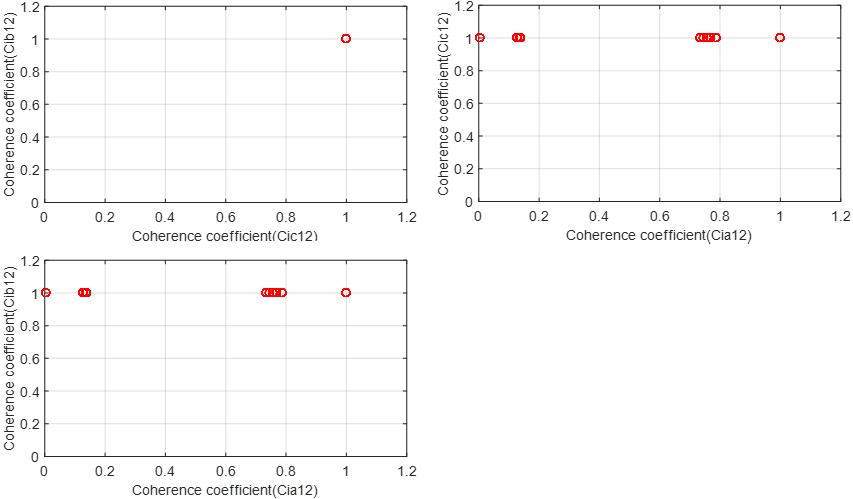
Fig. 7(d):Proposedschemeoperatingpointonthe trippingcharacteristics.
Fig. 7(a-d):Simulationresultsforcase2.
5.3 Case 3: SLG fault at 10% phase ‘A’ of stator winding
In this case, a SLG fault is placed 10% away from the neutral pointofphase‘A’ windingwitha fault resistance of 1 Ω. The algorithm has correctly classified the fault incident as an internal fault. This is proven in the simulation results explained in this case. Fig. 8(a-c) shows the three pairs of secondary currents at neutral andloadsidesforSGstatorwindings.Thecurrentsignals of phases ‘B’ and ‘C’ obtained at stator winding ends are identical and their magnitudes during fault time are the samemagnitudeofthepre-faultcurrent.Itcanbenoticed thatthecurrentsignals(ia1 and ia2)ofthefaultyphase‘A’
at both ends of the stator winding are not similar. The current amplitude of ia2 are larger than the current amplitude of ia1 as shown in Fig. 8(a) The estimated coherencecoefficients(Cia12, Cib12, Cic12, Ciab, Cibc, and Cica), thetrippingsignalandtheschemeoperatingpointonthe trippingcharacteristicsareintroducedin Fig.9(a-d) The calculatedvaluesofcoherencecoefficients(Cia12, Cib12 and Cic12) arefixedatonebeforefaultinception.Forthefaulty phase ‘A’, Cia12 is less than 0.1 during fault period. While the coherence coefficients of Cib12 and Cic12 remain at the value one during fault, as shown in Fig. 9(a). The calculated values of coherence coefficients (Ciab, Cibc, and Cica) are balanced and close to 0.25 before fault, while they are unbalanced during fault (see Fig. 9(b)) The condition of the SLG fault at 10% of phase ‘A’ winding leadstoatripsignaltobesentforisolatingthegenerator CB(s) with the fault beginning, at the sample number of 510 as shown in Fig. 9(c). The operating points in this case are plotted on the tripping characteristics in Fig. 9(d).
Fig. 8(a):Currentsignals ia1 and ia2.
Fig. 8(b): Currentsignals ib1 and ib2
Fig. 8(c):Currentsignals ic1 and ic2
International Research Journal of Engineering and Technology (IRJET) e-ISSN:2395-0056
Volume: 11 Issue: 10 | Oct 2024 www.irjet.net p-ISSN:2395-0072
Fig. 8(a-c):CurrentsignalstakenatbothterminalsofSG statorwindingsforcase3.
Fig. 9(a):Coefficients(Cia12, Cib12 and Cic12).
Fig. 9(b):Coefficients(Ciab, Cibc and Cica).
Fig. 9(c):Trippingflagincase3.
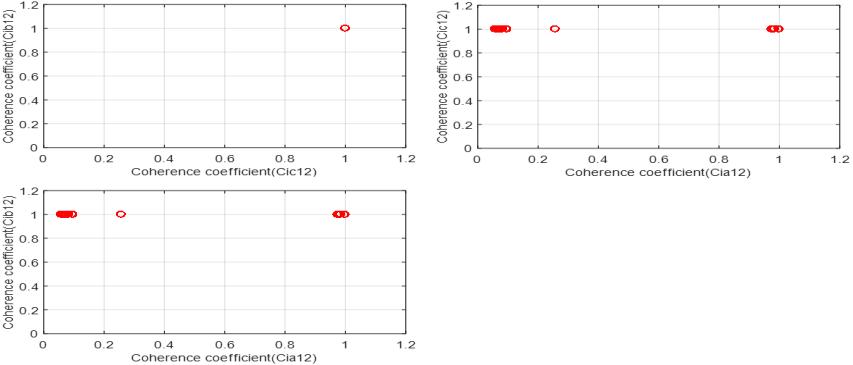
Fig. 9(d):Proposedschemeoperatingpointsonthe trippingcharacteristics.
Fig. 9(a-d): Simulationresultsforcase3.
5.4 Case 4: SLG fault at 5% of phase ‘A’ stator winding
This is a case of an internal SLG fault occurred at 5% of phase‘A’statorwindingawayfromtheneutralpointand the fault resistance is 1 Ω. Fig. 10(a-c) presents the waveforms of the 3-phase secondary currents at neutral andloadsidesforSGstatorwindings. Itcanbeobserved thatthecurrentsignals(ia1 and ia2)ofthefaultyphase‘A’ at the ends of the stator windings are different. The current ia2 has a larger value due to the short circuit occurrence. Whereas the phase current magnitudes of the healthy phases 'B' and 'C' during fault are identical with approximately the same values as those of the prefault current. Fig. 11(a-d) shows the estimated six coherencecoefficients(Cia12, Cib12, Cic12, Ciab, Cibc, and Cica), the tripping signal, and the operating protection scheme on the tripping characteristics, respectively. The calculatedvaluesofthecoherencecoefficients(Cia12, Cib12 and Cic12) are constant and close to one before the fault inceptiontime.Duringthefaultperiod, thevaluesof Cib12 and Cic12 are fixed and close to one whereas Cia12 values arelessthan 0.2,asshowninFig.11(a) Thevaluesofthe coherence coefficients (Ciab, Cibc, and Cica) are equal and close to 0.25 before fault, while they are greater than 0.27during fault, as shown in Fig. 11(b). The values of (Cia12, Cib12 and Cic12) confirm that the fault type is SLG internal fault and the values of (Ciab, Cibc, and Cica) indicate to existing unbalance condition for the three phasecurrentsofthestatorwindings.Duetotheinternal fault event, a tripping signal is issued to isolate the protected generator. The scheme sets a trip signal for opening the generator CB(s), as shown in Fig. 11(c). Fig. 11(d) shows the scheme operation on the tripping characteristicsinthecaseof SLGfaultat5%ofphase ‘A’ stator winding. The response of the coherence function, in this case and in the previous cases, proved that the proposed techniqueisable todetermine thehealthyand faulty phases and discriminate between the internal and externalfaults.
Fig. 10(a):Currentsignals ia1 and ia2
International Research Journal of Engineering and Technology (IRJET) e-ISSN:2395-0056
Volume: 11 Issue: 10 | Oct 2024 www.irjet.net p-ISSN:2395-0072
Fig. 10(b):Currentsignals ib1 and ib2
Fig. 10(c): Currentsignals ic1 and ic2
Fig. 10(a-c):Currentsignalstakenatbothterminalsof SGstatorwindingsforcase4.
Fig. 11(a): Coefficients(Cia12, Cib12 and Cic12).
11(c):Trippingflagincase4.
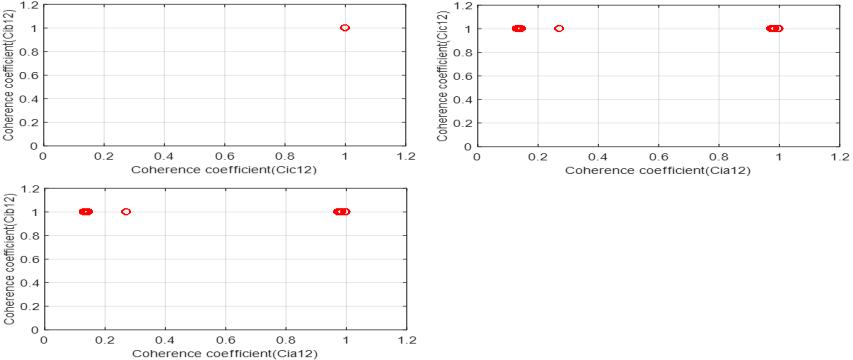
Fig. 11(d): Proposedschemeoperatingpointsonthe trippingcharacteristics.
Fig. 11(a-d):Simulationresultsforcase4.
6. Advantages of the proposed differential current protection
Theproposedscheme,forSGstatorwindingsprotection, hasseveraladvantagesasgivenbelow:
(1) It is a novel protection scheme, based on the coherence analysis for the current signals measured at both SG stator windings terminals, against series and shuntfaults,
(2) Only the 3-phase current measurements, at both SG stator windings ends, are required to implement this scheme,
(3) It can be processed on-line for faults detection and classification,
(4)Ithasclosedtrippingcharacteristicswithaquadratic form, utilizing coherence coefficients, to determine the relay blocking and tripping zones for generator protection,
(5)Itissimple,reliableandpracticalforprotectionofSG statorwindingsandtheotherpowersystemelements,
(6) It has a fast response, (10 ms for a 50-Hz power system),
Fig. 11(b):Coefficients(Ciab, Cibc and Cica).
Fig.
International Research Journal of Engineering and Technology (IRJET) e-ISSN:2395-0056
Volume: 11 Issue: 10 | Oct 2024 www.irjet.net p-ISSN:2395-0072
(7) The operation speed of the algorithm is controllable bythemovingwindowusedforcalculatingthecoherence coefficients,
(8) It can adjust the pickup value of the coherence coefficientsbyselectingthecoherentsettingdeviation,
(9) The algorithm’s sensitivity is controllable via the coherencesettingdeviationandthemovingdatawindow size,
(10) It is not affected by the fault type, fault location, faultresistance,faultinceptionanglenorpre-faultpower levels,
(11)HarmonicsandDCcomponentsaredigitallyfiltered withthedata windowused forcomputingthecoherence coefficients,
(12) The coherence setting deviation and the data window concept can be used for amending the relay attributes such as security, dependability, stability, sensitivityandspeed,
(13)Theapproachisabletodifferentiatebetweendouble lineanddoubleline-to-groundfaults,
(14) Suitable for smart grid applications with different voltage levels for protecting the various power system components.
7. Conclusions
Thispaperpresentsanovel protectionschemebasedon coherence concept for SG stator windings. Six currents are measured at both SG stator windings ends which is sufficient to process this scheme. The coherence algorithm is used to detect, classify the fault, determine thefaultyphase(s)anddiscriminatethelocationoffault, whether it is internal or external. New tripping characteristics, for the proposed protection algorithm, have been developed to determine the tripping and blocking zones for generator CB(s) In the proposed scheme, fault detection and identification have been performed in less than a half-cycle of the fundamental power frequency. The power system model, with real parameters, is simulated and verified using ATP and MATLABsoftware.Thesimulationresultsconfirmedthat theapproachis smart,simple,reliable,accurate,fastand efficient at different operating and loading conditions. Also, the proposed algorithm is not affected by the fault typeandlocation,faultresistance,faultinceptiontimeor pre-fault conditions. In addition, it can be practically implemented, with the availability to control the operation speed by adjusting the setting values of coherence coefficients according to the prevailed conditions of the power network This makes the coherence approach a good candidate to compete with,
or even to replace, the conventional numerical protectionmethods.
8. References
[1]El-Saadawi,M.Hatata:‘’Anovelprotectionschemefor synchronous generator stator windings based on SVM’’, Journal of Protection and Control of Modern PowerSystems,Vol.2,Issue24,PP.1-12,Dec.2017.
[2] Khaled Al Jaafari, Amir Negahdari and Hamid A. Toliyat: ‘’Modeling and experimental verification of a 100% stator ground fault protection based on adaptive third-harmonic differential voltage scheme for synchronous generators’’, IEEE Transactions on IndustryApplications,Vol.53,Issue4,PP.3379-3386, March2017.
[3] R. Gopinath, C. Santhosh Kumar, V. Upendranath, P.V.R. Sai Kiran, and K.I. Ramachandran: ‘’Intelligent faultdiagnosis ofsynchronousgenerators’’,Journalof ExpertSystemswithApplications,Vol.45,IssueC,PP. 142-149,March2016.
[4] N.W.Kinhekar, Sangeeta Daingade and Ajayshree Kinhekar: “Current differential protection of alternator stator winding”, Paper submitted to the International Conference on Power Systems Transients(IPST2009)inKyoto,Japan,June3-6,2009.
[5] Nader Safari-Shad, and Russ Franklin: ‘’Adaptive 100% stator ground fault protection based on subharmonic injection method’’, Electrical Machines (ICEM), 2016 XXII International Conference on, 4-7 Sept.2016.
[6] Dehkordi, A. B., D. S. Ouellette, and P. A. Forsyth: ” Protectiontestingofa100%statorgroundfaultusing a direct-phase synchronous machine model in real time”, In Developments in Power System Protection (DPSP 2010). Managing the Change, 10th IET InternationalConferenceon,PP.1-5,2010.
[7] Carlos Platero, and Miguel Pardo: ‘’Novel adaptive 100% stator ground fault protection based on the third harmonic measurement’’, IEEE Conference Proceedings,IssueICEM,PP 2300‐2305,Sep.2016.
[8] R. Abd Allah:'' Unbalance current detection for synchronous generator using alienation concept '', International Journal of Engineering and Advanced Technology(IJEAT),Vol.5,Issue3,Feb.2016.
[9] R. Abd Allah, S. M. Mohamed, E. H. Shehab-Eldin, and M. E. MASOUD: ''A new scheme based on correlation technique for generator stator fault detection-part ІI'',International Journal of Energy and Power Engineering.Vol.3,Issue3,PP.147-153,2014.
[10]R.AbdAllah,S.M.Mohamed,E.H.Shehab-Eldin,and M. E. Masoud: ''A new scheme based on correlation technique for generator stator fault detection-part І'',International Journal of Energy and Power Engineering.Vol.3,Issue3,PP.116-124,2014.
[11] A. Malhotra and P. Sharma: "Fault Detection and Classification Using Discrete Wavelet Transform", International Journal of Research and Innovation in
International Research Journal of Engineering and Technology (IRJET) e-ISSN:2395-0056
Volume: 11 Issue: 10 | Oct 2024 www.irjet.net p-ISSN:2395-0072
SocialScience(IJRISS),vol.7,no.8,pp.231–236,Aug. 2023.
[12]P.Malla,W.Coburn,K.Keegan,andX.H.Yu: "Power System Fault Detection and Classification Using WaveletTransformandArtificialNeuralNetworks",in AdvancesinNeuralNetworks–ISNN2019,vol.11555, Springer,Cham,pp.303–311,2019.
[13] M. Hosseinzadeh, M. Rashidinejad, and H. Saadatmand: "A New Protection Algorithm for Synchronous Generators Using Artificial Neural Networks",IEEETransactionsonPowerDelivery,vol. 38,no.1,pp.120-129,2023.
[14] A. Ghosh, P. Sen, and S. Sharma: "Fuzzy Logic and Neural Network-Based Hybrid Protection Scheme for Synchronous Generator Stator Winding Faults", IEEE Transactions on Energy Conversion,vol. 39, no. 1,pp. 125-132,Mar.2024.
[15] M. A. Saeed and M. El-Saadawi, "Practical Implementation of RNN-Based Synchronous Generator Internal Fault Protection", Recent Patents on Electrical & Electronic Engineering, vol. 12, pp. 181-189,2019.
[16] K. Meena and K. K. Sahu: "Fuzzy Logic Controlled Neural Network for Fault Detection in Power Systems", IEEE Transactions on Power Delivery, vol. 38,no.2,pp.1345–1352,Apr.2023.
[17]I.JlassiandA.J.M.Cardoso:"FuzzyNeuralNetworkBased Fault Diagnosis Method for Permanent Magnet Synchronous Generators", IEEE Journal of Emerging and Selected Topics in Power Electronics, vol. 8, pp. 2583-2599,2019.
[18] A. F. Al-Hadhrami, S. M. Gupta, and M. S. Kumar: "A Novel Fault Detection Approach Using Fuzzy Logic and Neural Networks for Electrical Machines", IEEE Access,vol.8,pp.103656-103665,2020.
[19]R.H.L.Lu,Y.C.Liao,J.M.Lin,andT.L.Lin:"Turn-toTurn Fault Detection of Induction Motors Using Hybrid ANN and Fuzzy Logic System", IEEE Transactions on Industrial Electronics, vol. 67, no. 5, pp.3946-3954,May2020.
[20] H. Zhang, W. Yang, and Y. Zhang: "Support Vector Machine-Based Fault Classification for Electrical Machines Using Vibration Signals", IEEE Transactions onIndustrialElectronics,vol.71,no.4,pp.4003-4012, April2024.
[21] J. A. Vargas, S. M. K. Wang, and L. R. Smith: "Fault Detection in Synchronous Generators Based on Independent Component Analysis and Machine Learning", IEEE Transactions on Energy Conversion, vol.39,no.2,pp.789-798,June2024.
[22] M. D. Martinez, F. G. Adams, and P. T. Williams: "Internal Fault Modeling of Synchronous Generators Using Voltage-Behind-Reactive Representation", IEEE Transactions on Power Delivery, vol. 39, no. 3, pp. 1625-1633,June2024.
[23] Vilchis-Rodriguez, Damian S., and Enrique Acha: ” A synchronous generator internal fault model based on
the voltage-behind-reactance representation”, Energy Conversion,IEEETransactionson,Vol.24,Issue1,PP. 184-194,2009.
[24] R. Abd Allah: ''Multifunction digital relay for large synchronous generators protection'', Ph.D. thesis, Helwanuniversity,Chapter3,2012.
[25] R. A. Mahmoud: ''Integrated busbar protection scheme utilizing a numerical technique based on coherence method'', IET Journal of Engineering, vol. 2022,Issue1,pp.94–119,Jan.2022.
[26] R. A. Mahmoud, A. Emam: ‘‘Coherence-based automatic power factor correction (APFC) algorithm for power grids’’, IET Journal of Engineering, vol. 2022,Issue5,pp.512–527,May2022.
[27] R. A. Mahmoud, E. S. Elwakil: ‘‘Experimental investigationsusingquadratic-trippingcharacteristics based on alienation/coherence coefficients of voltage and current signals for synchronous generators protection’’, IET Generation, Transmission & Distribution, vol. 15, Issue 21, pp. 2978–3000, Nov.2021
[28] R. A. Mahmoud: ''Coherence-based integrated detection and assessment algorithm for voltages and currents unbalance/disturbance in three-phase synchronous generators: A validation of simulation results'',IETJournalofEngineering,vol.2023,Issue5, pp.e12272,May2023.
[29] R. A. Mahmoud: ''Smart automatic synchronization system based on coherence algorithm for power grids'', IET Journal of Engineering, vol. 2023, Issue 1, pp.e12214,Jan.2023.
International Research Journal of Engineering and Technology (IRJET) e-ISSN:2395-0056
Volume: 11 Issue: 10 | Oct 2024 www.irjet.net
Appendix 1: Nomenclatures
Symbols Abbreviations
is1 (n)
is2 (n)
changeofsecondarycurrentis1(n)atsamplenforphase ‘’s’’,
changeofsecondarycurrentis2(n)atsamplenforphase ‘’s’’,
3LG Threeline-to-groundfault,
ANN ArtificialNeuralNetwork
ATP AlternativeTransientProgram,
BB Busbar
CB Circuitbreaker
Ci coherencecoefficientforcurrentsignal,
Cia12 coherencecoefficientcalculatedbetweenia1 (n)andia2 (n),samenotationisusedforphases“BandC”
Ciab coherencecoefficientcalculatedbetweenia1 (n)andib1 (n),
Cibc coherencecoefficientbetweenib1 (n)andic1 (n),
Cica coherencecoefficientbetweenia1 (n)andic1 (n),
Cis12 coherencecoefficientbetweenis1 (n)andis2 (n)for phase‘s’,
Cisx coherencecoefficientbetweenis1 (n)andix1 (n)for phases‘sandx’,
CT CurrentTransformer
Cx settingofcoherencecoefficient,
DL Doublelinefault,
DLG Doubleline-to-groundfault,
F1op operatingfrequencyofSG,
Symbol s Abbreviations
is2(n)
p-ISSN:2395-0072
current signal (is2) at sample ‘n’ for phase ‘s’ of theloadSGstatorwindingterminal,
Ismax maximum value of secondary current of the currenttransformer,
N samplesperwindow,
Nf sampleatwhichthefaultoccurs,
Ns samplespercycle,
Nsim totalnumberofsamples,
NT currenttransformerturnsratio,
Rb currenttransformerburden
RCT currenttransformersecondarywinding resistance
Rf faultresistance,
Rlead leadresistance
Rn
Generatorgroundingimpedancethroughthe neutralpoint
S phasedesignationA,B,orC,
SLG
Singleline-to-groundfault,
tf faultinceptiontime,
TL Transmissionline
TW TravellingWave
V1Max maximumphasevoltageofSG,
V2Max maximumphasevoltageofthenetwork,
F2op operatingfrequencyof theelectricalnetwork, vf (n) voltageofthefaultpointatsamplen,
FD Faultdetection
FL Faultlocation
fs samplingfrequency,
h samplingperiod,
ia1(n),
ia2(n) instantaneousvalueofcurrentsignalsatbothSGstator windingsterminalsforphase‘A’,thesamenotationis usedforphases“BandC”
if (n)
Vn nominalvoltageofthepowersystem
VT VoltageTransformer
Zf Thefaultimpedance,
α powersystemangle,
Δ selecteddeviationofcoherencesetting,
totalshortcircuitcurrent,atsamplen, δ1
operatingpowerangleofsynchronous generator,
Imax maximumvalueoftheprimarycurrentoftheCT, δ2 operatingpowerangleoftheelectricalnetwork,
In nominalcurrentofthepowersystem ω angularvelocityofthepowersystem,
is1(n) currentsignal(is1)atsample‘n’forphase‘s’ofthe neutralSGstatorwindingterminal, Ө faultinceptionangle,
Appendix 2: Pre-faultoperatingconditionsofthesimulatedpowersystemforeachcasestudy.
ElectricalComponent(OperatingCondition)
Data
Operatingpeakphasevoltageofsynchronousgenerator 16.063kV
OperatingpeakphasevoltageofElectricalpowernetwork 16.063kV
F1operated ofsynchronousgenerator 50Hz
F2operated ofelectricalpowernetwork 50Hz
Synchronousgeneratoroperatingpowerangle(δ1) 0o
Electricalpowernetworkoperatingpowerangle (δ2)
International Research Journal of Engineering and Technology (IRJET)
Volume: 11 Issue: 10 | Oct 2024 www.irjet.net
Appendix 3: Parameters’dataofthesimulatedpowersystem.
Power system parameter
Machine 1 (Sending source):
RatedVolt-ampere
Ratedlinevoltage
voltagephasorangle
Ratedfrequency
Numberofpoles
Neutralgroundingimpedance(Rn)
Power Network (Receiving source):
Nominallinevoltage
Voltagephasoranglephase
Nominalfrequency
Volt-ampereshortcircuit
Main Transformers:
RatedVolt-ampere
Transformationvoltageratio
Connectionprimary/secondary
Primarywindingimpedance(Zp)
Secondarywindingimpedance(Zs)
Vectorgroup
Z%
Transmission Lines (1&2):
+vesequenceR
ZerosequenceR
+vesequenceXL
ZerosequenceXL
+vesequence1/Xc
Zerosequence1/Xc
Data
(1pu)
GVA ( is.c = 10 kA)
MVA
kV /500 kV Delta/Star earthed neutral
+ j0.184 Ω
+ j 61.8 Ω.
Transmissionlinelong(Km) 0.0217 Ω /km 0.247 Ω /km 0.302 Ω /km 0.91 Ω /km 3.96 μƱ /km 2.94 μƱ /km 200 Km
Main Load (load 1):
Load1Volt-ampere
Aux. Load (load 2):
Load2Volt-ampere
Current Transformer (CT):
CurrentTransformerRatio
Ratedburden
GVA at PF = 0.85 lag
MVA at PF = 0.85 lag
Class 12000/1 30 VA 5p20