
International Research Journal of Engineering and Technology (IRJET) e-ISSN:2395-0056
Volume: 11 Issue: 10 | Oct 2024 www.irjet.net p-ISSN:2395-0072

International Research Journal of Engineering and Technology (IRJET) e-ISSN:2395-0056
Volume: 11 Issue: 10 | Oct 2024 www.irjet.net p-ISSN:2395-0072
Chirag Nere1, Dr. Vaijanti Despande2, Prof. Jahida Subhedar3
1Department of Mechatronics, Symbiosis Skills and Professional University Pune, India
2Professor, Dept. of Mechatronics Engineering, Symbiosis Skills and professional University , Maharashtra, India
3 Professor, Dept. of Mechatronics Engineering, Symbiosis Skills and professional University , Maharashtra, India
Abstract - The paper explores the intricate relationship between actuation systems, kinematics, and efficiency in quadrupedal locomotion. By analyzing the complex interplay of these factors, the research contributes to the advancement of quadruped robotics, enhancing their mobility and overall performance. The study delves into novel actuation approaches, considering both mechanical design and control strategies. Additionally, it investigates the impact of kinematic configurations on locomotion patterns, and terrain adaptation. The paper emphasizes the pivotal role of efficiency in ensuring sustainable and effective quadrupedal movement. Ultimately, this research serves as a comprehensive guide for designing, engineering, and optimizing quadrupedal actuation systems, paving the way for improved robotic mobility across various applications.
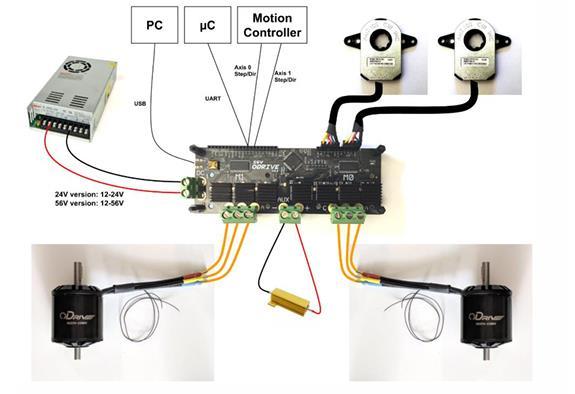
The quadruped research consists of a motor drive used which is an Odrive setup connected with a 900KV BLDC motor in combination of AS5600 magnetic encoder and which is controlled by a microcontroller Arduino DUE. This testing rig is a more simplified version of quadruped and its actuation system, the sensor and BLDC motors are held by a 3D printedsetup.
A precise control is possible for a quadruped robot on difficult terrains giving each leg of a quadruped robot property of shock absorber. The robot is more energy efficient as we are using harmonic gear boxes and there are less losses. Durability and reliability combination of harmonic and series elastic drive reduced the stress on the system. As the harmonic gearbox has zero backlash the durability ofthe robot increases. One of the mainreasons for SED is Adaptability of a quadruped robot on various terrains and dynamic environment enhancing more stability in a quadruped robot.
Key Words: Quadruped robot, Actuation system, series elasticdrive,HarmonicGearbox.
Driven by nature's locomotion principles, legged robotics research is experiencing a transformative phase. Contrasting early rigid, kinematically-controlled walking machines, the field is embracing increasingly compliant
systems, opening up novel avenues for exploration. Leveraging their mechanical softness, manifested through back-drivability and low system inertia, these platforms seamlessly engage with their surroundings. They adeptly handle collisions during ground contact, and their inherent safety facilitates harmonious human-robot cooperation. Drawing inspiration from nature's efficient muscle and tendon compliance, springs in robotics emulate non-linear oscillations, mirroring biological energy-efficientmechanisms.
StarlETH is based on four identical legs that are arranged inanXconfiguration. Withlineardimensionsofabout0.6 mandatotalweightof23kg,ithasthesizeofamediumsized dog. Every leg has a total of 3 degrees of freedom, one each for hip abduction/adduction, hip flexion/extension, as well as knee flexion/extension. The robot’s design is based on earlier studies that we conducted to optimize a planar running leg. We put emphasis on keeping the inertia of the moving segments minimal by concentrating all actuators at the main body through the use of chain and cable pulley systems. This is beneficial to ensure fast swing leg motion and to reduce impact losses at the intermittent ground contact.[3] The lightweight main body is fabricated as a carbon fiber sandwich monocoque with aluminum front and back connectors. It contains well protected all electronic parts thatarecooledthroughactiveaircirculation.
The key elements of StarlETH are the high compliant series elastic actuators that are implemented in all joints using linear compression springs in a pre-compressed setup(antagonisticallyatthehipjoints).Springsdecouple the motor (Maxon EC-4pole 200W) and gearbox (Harmonic Drive CSG-14, 1:100 reduction) from the joint. [3]This setup ensures robustness against impacts, allows forenergystoragetoimprovetheefficiency,andprovides full torque controllability. All joint angles, motor angles, and spring deflections are precisely measured in every joint. The lightweight ball feet are based on air filled racquet ballsthatprovideamblecushioningwithminimal weight while having a high contact friction coefficient. To detect changes in the contact force, we tightly integrated force sensing resistors (FSR). The proprioceptive sensor
International Research Journal of Engineering and Technology (IRJET) e-ISSN:2395-0056
Volume: 11 Issue: 10 | Oct 2024 www.irjet.net p-ISSN:2395-0072
equipment is completed with a X-sense MTi IMU that includesanaccelerometer.
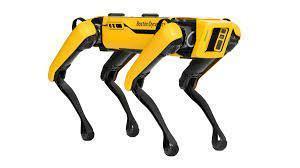
Fig.1[1]Spot robot Boston dynamics
BostonDynamicsdevelopedthelatestdog-likeuntethered quadruped robot named Spot,asshownin fig.1 [1]. Itisa new approach to dynamic robot control compared to BigDogandLS3, previously releasedbythecompany.The robotisabout1.1 mx 0.5 mx0.84m(L x Wx H)and can run5.76km/h.Thetotalweightoftherobotis30kg,and is able to carry14 kg load. All the joints are electric actuation and powered by a battery. The robot has Omnidirectional walking and trotting gaits. The Spot is built with a 3D vision system with simultaneous localization and mapping (SLAM), providing depth information, enabling the robot its surroundings, and avoiding obstacles.Spot’sbuilt-in computers are fully dedicated to robot locomotion and navigation. The robot is remotely controlled by human operators while also navigating and performing some tasks autonomously. The robot is dynamically controlled, which can easily climb, descend stairs, balance, and adjust to physical disturbance. The Spot becomes a light-footed robot that can work in the office,home,andoutdoorsusingits5DOFsensorarm.
1.2 Methodology/Experimental
Actuationsystem:
Actuationsysteminaquadrupedrobotplaysacrucialrole for the movement of a quadruped. This system comprises mechanisms and components responsible for generating motion in a quadruped robot. The methodology mainly comprises analysis of types of actuators, gear box , and encoders of the actuation system. The research phase involves dealing with exact configuration of motor, gearbox,andencoder.
Formotors,weclassifythemotorsbasedontheir KV which is Kilovolts or how much a motor is capable of handling load. Torque is also an distinguishing feature whichdifferentiatesthemotor.Someofthemajorratiosto beconsideredareweighttopower,RPMtotorque,Torque to KV, and RPM to KV. While researching the actuators
conclusion was obtained that ideal specifications for a quadrupedrobotareasfollows:
Specification Cubemars AK80-9 MJBOTS QDD100
Voltage 24V 44V
Current 12A -
Torque 18Nm 16Nm
Weight 485g 485g
RPM 245rpm 416rpm
TypeofGearbox Planetary Planetary
Now, the major research are revolves around the type of gear box system use in the actual there are two types of gearboxes:
1. Planetarygearbox
2. Harmonicgearbox
Planetary Gearbox: Gearbox which is an epicyclic type of gearbox which has a sun gear and planet gear. The sun gearisstationaryandplanetgearsurroundsitandrotates aroundit.
Harmonic Gearbox: Harmonic Gearbox also known as StrainwavegearboxconsistofaSplinewithexternalteeth which is deformed by an elliptical to engage contact of internal spline with the outer spline which is a solid ring. Thus, the harmonic gearbox has Zero backlash which makesitmorepreciseandaccurate.
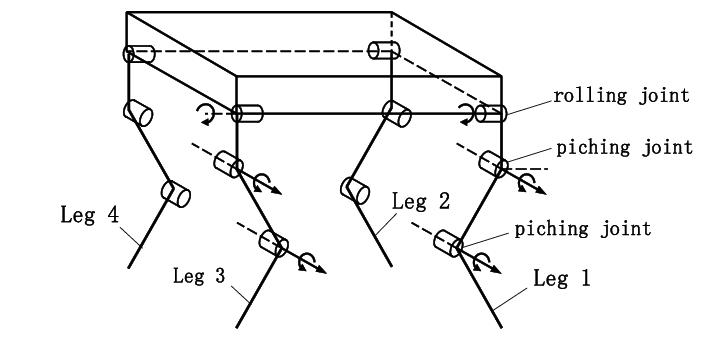
Series elastic drive, one of the major aspects for a quadruped was to tackle the problem of stiffness of a quadruped. A quadruped robot has to replicate the acrobatics of a four-legged animal. Hence the quadruped robotneedstomanagethestiffnessandthe
International Research Journal of Engineering and Technology (IRJET) e-ISSN:2395-0056
Volume: 11 Issue: 10 | Oct 2024 www.irjet.net p-ISSN:2395-0072
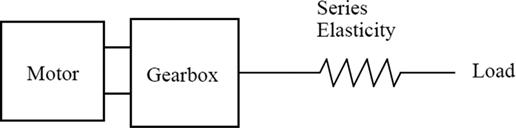
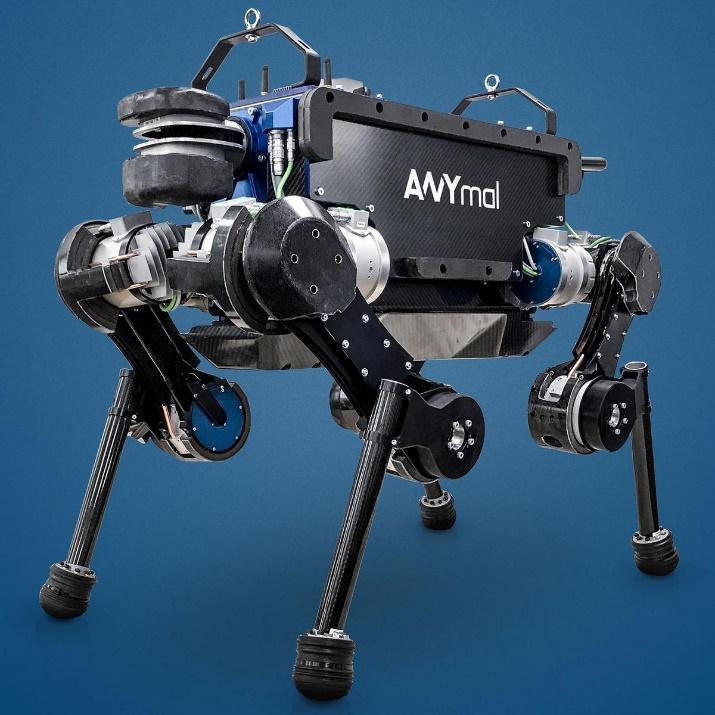
Theseriesofhighstandard elasticactuators areinstalled in Star1ETH, which have similar behavior as our ten-don andmusclestokeepalargeamountofenergytemporarily. The robot is incorporated with IMU, which gives the kinematic information from the joint. Another versatile quadruped robot is designed for the robotic system at Star1ETHZurichcalledANYmal,asshowninFig.4
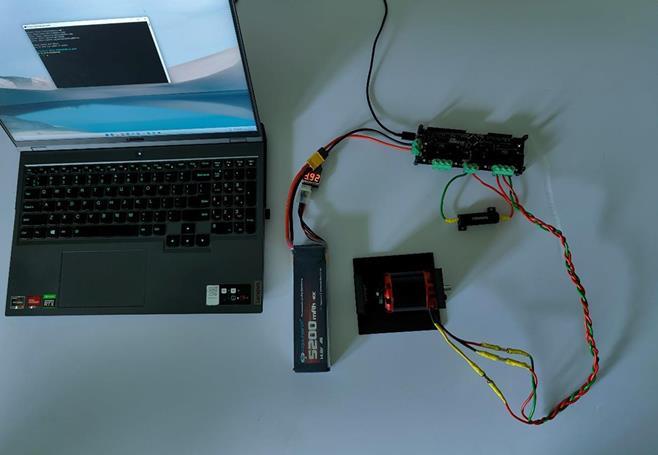
Experimental Setup for this research comprises a 3D printed rig for holding BLDC motor and a magnetic encoder AS5600 on the other end. Initially the testing rig of AS5600 magnetic encoder which is shown in figure fig. 5
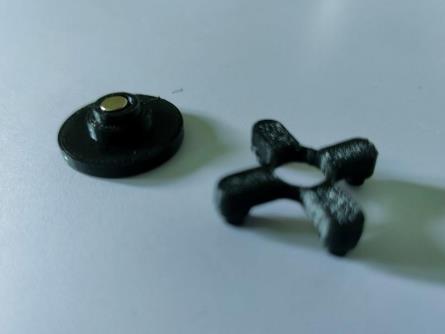
The testing rig described below features a Brushless DC (BLDC) motor paired with an AS5600 Magnetic encoder, forming a crucial setup for evaluating series elastic drive systems. This innovative rig is supported by a customdesigned 3D printed structure, which provides stability andprecisionduringtestingprocedures.TheBLDCmotor, known for its efficiency and controllability, serves as the powerhouse of the setup, driving the series elastic drive mechanism with precision and consistency. The AS5600 Magnetic encoder enhances the functionality of the rig by accurately measuring the motor's rotational position and velocity, enabling precise control and feedback mechanisms. Together, these components create a versatile testing platform that enables researchers and engineers to assess the performance and capabilities of serieselasticdrivesystems,contributingtoadvancements invariousfieldssuchasrobotics,automation,and motion control.
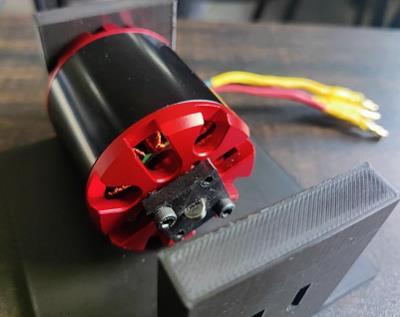
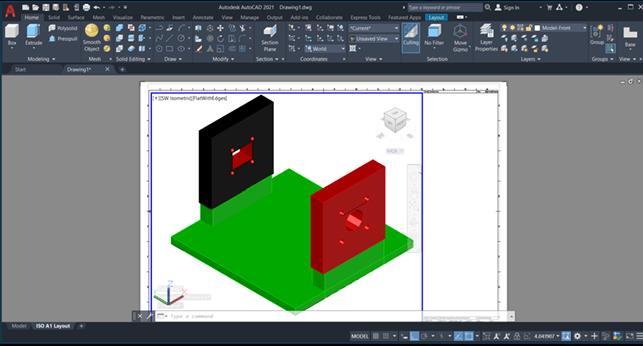
The 3D printing rig comprises two supporting walls, each serving a specific purpose within the setup. One wall is designed to securely hold the BLDC motor in place, providingastablefoundationforitsoperation.Thiswallis meticulously engineered to accommodate the motor's dimensionsandmountingrequirements,ensuringoptimal alignment and minimal vibration during testing. The second supporting wall is dedicated to housing the magnetic encoder of the AS5600. Positioned adjacent to the BLDC motor, this wall is strategically placed to facilitateprecisealignmentbetweenthemotor'sshaftand theencoder, enablingaccuratemeasurementofrotational position and velocity. Together, these two walls form the backbone of the testing rig, providing essential support and stability for the BLDC motor and AS5600 encoder, respectively.Theirrobustconstructionandprecisedesign ensure reliable performance and accurate data collection, making them indispensable components of the overall setupfortestingserieselasticdrivesystems.
International Research Journal of Engineering and Technology (IRJET) e-ISSN:2395-0056
Volume: 11 Issue: 10 | Oct 2024 www.irjet.net p-ISSN:2395-0072
2. Results and Discussion
In a wide array of actuators after selection of actuators withdesiredneedandoutcomehereisacomparisontable regardingactuators.
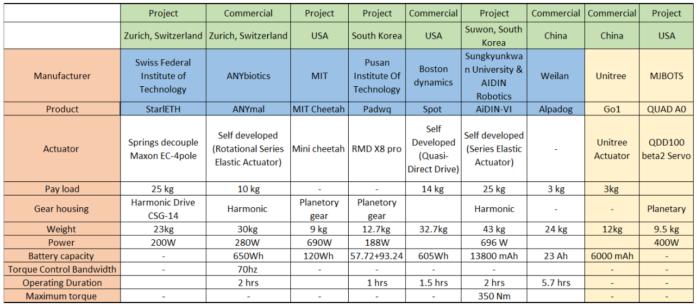
The above comparison of quadruped is done on differentiatingfactors:
1. Actuators: An Actuator of a quadruped is a deciding factor for comparison because the factors such as speed, torque, power is based on an actuator. (refer fig.1) The actuators used here are from companies such as Cubemars(RMD X8 pro), Unitree actuator, Mjbots (QDD100beta2servo)
2.Payload:Payloadisafactorwhichtellustheamountof weight which can be carried by a robot excluding the weightofitsown.Thisisandifferentiatingfactorbecause it should be capable of carrying accessories such as Lidar sensor,Visioncameras,RoboticArm.(referfig.4)
3. Gear housing: Mostly there are two types of gear box used:planetarygearboxandharmonicgearbox.Harmonic Gearboxes are used on high end robots because of their zero backlash feature and accurate movements in the robotskinematics.
4.CommercialorResearchRobots:Thisisadifferentiating factorbecausethecommercialrobotsareusedforonfield use and others are used as a hobby project and for understandingthemechanicsofquadruped.
SomeofthelimitationofQuadrupedrobotare:
1. Vulnerabilitytoslippingonslipperysurfaces.
2. Inabilitytoeffectivelytraversedensevegetation.
3. Challenging navigation on unstable or shifting ground.
4. Higherenergyconsumptioncomparedtowheeled robots.
3.
In this research we can conclude that combination of actuator with SED (Series Elastic drive) and Harmonic gearboxaquadrupedcanworkwithmoreefficiency.
Series elastic actuators play an important role for a quadruped robot to have natural and more precise
International Research Journal of Engineering and Technology (IRJET) e-ISSN:2395-0056
Volume: 11 Issue: 10 | Oct 2024 www.irjet.net p-ISSN:2395-0072
movement like a 4 legged animal. Series elastic actuators provide a better movement of quadrupeds such as Crawl, Walk,Trot,Creep.
With help of this combination various improvements areachieved.Aprecisecontrolispossibleforaquadruped robot on difficult terrains giving each leg of a quadruped robot property of shock absorber. The robot is more energy efficient as we are using harmonic gear boxes and therearelesslosses.Durabilityandreliabilitycombination ofharmonicandserieselasticdrivereducedthestresson thesystem.Astheharmonicgearboxhaszerobacklashthe durability of the robot increases. One of the main reasons for SED is Adaptability of a quadruped robot on various terrains and dynamic environment enhancing more stabilityinaquadrupedrobot.
[1] Boston Dynamics, Spot. https://www.bostondynamics.com/spot
[2] Robotic Systems Lab, ANYmal. http://www.rsl.ethz.ch/robots-media/animal0.html
[3] Hutter M, Gehring C, Bloesch M, Hoepflinger M, SiegwartR.Walkingandrunning
[4] 1.withStarlETH;2013.
[5] Shuaishuai, Zhang & Rong, Xuewen & Li, Yibin & Li, Bin. (2015). A Composite COG Trajectory Planning Method for the Quadruped Robot Walking on Rough Terrain. International Journal of Control and Automation.8.101-118.10.14257/ijca.2015.8.9.11.
[6] Fujita, M., Kitano, H. Development of an Autonomous Quadruped Robot for Robot Entertainment. AutonomousRobots5,7–18(1998).
[7] Shao, N., Zhou, Q., Shao, C. et al. Adaptive Control of Robot Series Elastic Drive Joint Based on Optimized Radial Basis Function Neural Network. Int J of Soc Robotics13,1823–1832(2021).
[8] Phan, L.T., Lee, Y.H., Lee, Y.H. et al. Study on effects of spinal joint for running quadruped robots. Intel Serv Robotics13,29–46(2020).
[9] Chen, X., Watanabe, K., Kiguchi, K. et al. A Real-Time Kinematics on the Translational Crawl Motion of a Quadruped Robot. Journal of Intelligent and Robotic Systems29,111–131(2000).