
Volume: 11 Issue: 10 | Oct 2024 www.irjet.net
e-ISSN:2395-0056
p-ISSN:2395-0072

Volume: 11 Issue: 10 | Oct 2024 www.irjet.net
e-ISSN:2395-0056
p-ISSN:2395-0072
Krishma, Pooja Sharma
M.Tech. Scholar, Dept. of Computer Science & Engineering, I.K.G. Punjab Technical University, Kapurthala, Punjab, India
Assistant Professor, Dept. of Computer Science & Engineering, I.K.G. Punjab Technical University, Kapurthala, Punjab, India
Abstract:
In recent years, the use of Artificial Intelligence (AI), particularlylargelanguagemodelslikeChatGPT, hasgained significant traction in the financial industry. ChatGPT can reform finance by enhancing customer service, streamlining operations, and improving decision-making processes. It is widely utilized for automating tasks such as financial reporting, customer queries, fraud detection, and portfolio management. By analysing large datasets, ChatGPT can offer insights into market trends, forecast risks, and provide personalized financial advice. Furthermore, its natural language processing capabilities enable more accurate sentiment analysis in stock market predictions and investment strategies. However, despite its potential, there are challenges related to data privacy, regulatory compliance, and biases in AI-generated outputs. Ensuring transparency, accountability, and ethical use of such models iscriticaltomaintainingtrustinAI-drivenfinancialservices.
As technology continues to evolve, ChatGPT is expected to play an even more integral role in reshaping the landscape of finance. Moreover, the ability to handle real-time data and generate actionable insights positions ChatGPT as a powerful tool for risk management, compliance monitoring, and fraud prevention, allowing financial institutions to enhance operational efficiency while reducing costs and improvingcustomerexperience.
Keywords: Artificial Intelligence, ChatGPT, finance, financial reporting, customer service, fraud detection, portfolio management, market trends, sentiment analysis, regulatory compliance, data privacy, AI ethics, risk management,compliancemonitoring.
The financial industry has always been at the forefront of adopting technological advancements to streamline operations, improve decision-making processes, and better serve clients. Over the past decade, Artificial Intelligence (AI) has been one of the most transformative
forces reshaping how financial institutions operate, with largelanguagemodelssuchasChatGPTleadingthecharge. ChatGPT, a product of OpenAI, is a type of AI model that usesdeeplearningtounderstandandgeneratehuman-like text, making it an extremely versatile tool for various applications. Its ability to comprehend natural language, interpret vast amounts of data, and provide contextually relevant responses makes it particularly valuable in finance, an industry characterized by large datasets, complex decision-making processes, and the need for precision[1]
The deployment of AI in finance is not new, with algorithms, machine learning (ML), and automation already playing crucial roles in trading, fraud detection, and credit scoring. However, ChatGPT brings a new dimension by offering more nuanced, context-aware, and dynamic responses[2]. This shift has the potential to not only improve customer service and operational efficiency but also transform risk management, fraud prevention, and financial forecasting[3]. Despite these promising benefits, the integration of AI tools like ChatGPT into the financial ecosystem raises important questions regarding ethics, regulatory compliance, data privacy, and biases inherentinAImodels.
This introduction delves into how ChatGPT is revolutionizing finance, the key applications it serves, the benefits it offers, and the challenges it presents[4]. By understanding the roles and implications of ChatGPT in finance,stake2olderscanbetterharnessitspotentialwhile addressingtheassociatedrisks.
Technological advancements have driven significant improvementsinthefinancialsector,fromtheadoptionof automated teller machines (ATMs) to the development of online banking platforms. Over time, the emergence of digital solutions has transformed how consumers interact with financial institutions, and how organizations manage data,processtransactions,andmakeinvestmentdecisions.
AI and machine learning represent the latest wave of technological innovation in finance. These tools have already enabled financial institutions to analyze vast datasets, optimize portfolio management, and detect fraudulent activity more effectively[5]. ChatGPT, a large language model developed by OpenAI, is a more recent innovation in this space, focusing on the understanding andgenerationofnaturallanguage.Thisbreakthroughhas openedupnewavenuesforAItosupportawiderrangeof applications, from automating routine customer service interactions to generating comprehensive financial reports[6]
The financial industry is increasingly adopting AI technologies to improve efficiency, enhance decisionmaking, and deliver better customer experiences. However,integratingadvancedAImodelssuchasChatGPT into financial operations presents several challenges. While ChatGPT’s ability to process natural language and analyzelargedatasetsofferssubstantialbenefits,thereare critical issues that need to be addressed for its effective andethicaldeploymentinfinance.
1.1.1.Automating customer interactions with natural language understanding while maintainingaccuracyandconsistency.
1.1.2.Enhancing fraud detection and risk management systems using ChatGPT, focusingonreal-timeaccuracy.
1.1.3.Automating financial reporting while ensuring compliance and adaptability to regulatorychanges.
1.1.4.EnsuringethicalAIusagebyaddressingdata privacy,biases,andtransparency.
1.1.5.Integrating ChatGPT with existing financial systems without compromising performanceorsecurity.
By addressing these problems, financial institutions can fully leverage ChatGPT’s potential while minimizing risks and ensuring compliance with ethical and regulatory standards.
Fig -1 depicts a process diagram outlining a structured approach to conducting a literature review, data extraction, and analysis. The process is divided into
distinctphases:whereLiteratureSearchstartswithSource identification,DataExtraction,andAnalysis.
The first phase initiates with Literature Search. This step emphasizestheimportanceofidentifyingrelevantsources for a study, which could include books, journal articles, conference papers, and other scholarly materials. To ensure the inclusion of appropriate and high-quality sources, keywords are utilized[8]. These keywords are critical search terms relevant to the topic of interest, designed to refine the scope of the literature search. Keywords help in narrowing down the vast range of available literature to only the most pertinent studies, increasing the efficiency and relevance of the search process[9].
After selecting relevant literature, the next phase focuses on data extraction. This phase involves extracting the factual data selecting the most appropriate sources for further consideration[10]. This stage has predefined conditions that sources must meet to be included in the final analysis.Extracteddata mayincluderelevancetothe research topic, the publication date, methodology, and more. This ensures that only studies aligned with the research objectives are considered. This phase is divided intotwokeytasks:
2.2.1.Categorization: Once theliteraturehasbeen gathered, it is categorized based on themes, methodologies, findings, or other relevant dimensions. Categorization allows for organized analysis, making it easier to identify trends or commonalities across differentstudies.
2.2.2.Summarization: Alongside categorization, summarizingthemainpointsofeachsource is essential. Summarization helps in condensing the findings of each study into concise overviews, facilitating easier comparisonduringtheanalysisphase.
The final stage of the process is Comparative Analysis, which is the most critical aspect of the review. Two tasks areinvolvedhere:
2.3.1.Synthesize Findings: This task involves bringingtogetherthesummarizeddatafrom all sources to identify broader patterns, e-ISSN:2395-0056 Volume: 11 Issue: 10 | Oct 2024 www.irjet.net p-ISSN:2395-0072
Volume: 11 Issue: 10 | Oct 2024 www.irjet.net p-ISSN:2395-0072
trends,andinsights.Synthesizingfindingsis crucial for understanding the overall landscape of research within the topic area and for drawing meaningful conclusions fromthedata[11]
2.3.2.Comparative Analysis: The final step is to conduct a comparative analysis of the findings.Thisinvolvescomparingtheresults of various studies to highlight similarities, differences, and possible contradictions. Comparative analysis provides depth to the understanding of the topic, helping to identify gaps in the literature and potential areasforfurtherresearch.
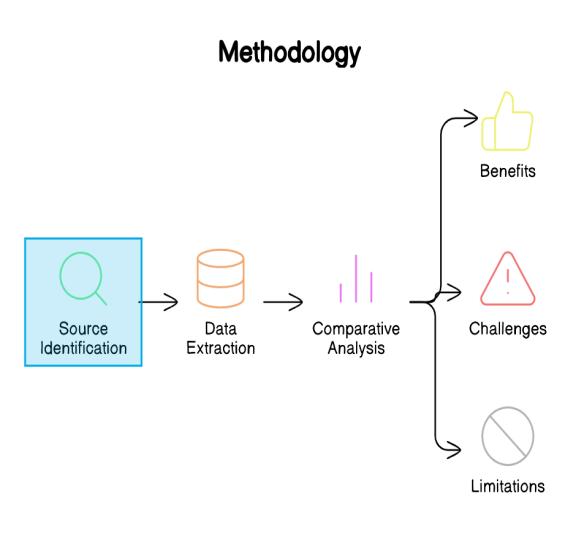
Fig-1:Methodologyforpurposedwork
Overall, Fig -1 represents a structured and systematic approach to conducting a literature review, ensuring the rigor and quality of the research. Starting with a broad literature search, the process narrows down through careful selection criteria and organized data extraction, leadingtoinsightfulandcomparativeanalysis.Eachstepis essential in refining and interpreting existing research to buildastrongfoundationforfurtherinquiry.
The financial industry has experienced significant technological transformations over the years, with Artificial Intelligence (AI) becoming a central focus in recent research. AI applications in finance are broad, covering areas such as algorithmic trading, customer serviceautomation,riskmanagement,frauddetection,and financial forecasting[12]. ChatGPT, developed by OpenAI, represents one of the most recent and impactful
innovations in AI, particularly for tasks related to data analysis, pattern recognition, and decision-making. This literature survey reviews key academic and industry contributions related to the use of AI, especially ChatGPT andsimilarmodels,inthefinancialsector,withafocuson its applications in enhancing efficiency, improving accuracy,andautomatingcomplexfinancialtasks.
AI's role in finance is well-documented in academic literature,withmanyresearchersfocusingonitsability to enhance decision-making, automate processes, and improve risk management. The work of[13] provides a comprehensive review of AI applications in finance, emphasizing how machine learning has revolutionized areas such as algorithmic trading, credit scoring, and customer service. They discuss how AI models, which can process large datasets and extract actionable insights, enable financial institutions to reduce operational costs and improve efficiency. Similarly, [14]explored the impact of AI on investment management, identifying the benefits ofusingAI-driventoolsforportfoliooptimizationandrisk assessment. Their findings highlight how AI systems are increasingly being used to develop predictive models that guide investment strategies and reduce uncertainties associatedwithmarketfluctuations.[15][16]
The use of AI in finance has gained traction, particularlyinareassuchassentimentanalysis,report generation,andfrauddetection.discusses[15]howAI techniques have been employed to analyse market sentiment based on social media posts, news articles, and financial reports. By understanding market sentiment, investors and financial institutions can better predict market movements, enhancing the effectiveness of investment strategies. [16] explored how AI-based models can be used for the automated generation of financial reports and documents, significantly reducing the time and human effort required to prepare reports. They highlighted that these models are particularly valuable for ensuring accuracyinfinancialstatementsandregulatoryfilings. ChatGPT, with its ability to generate coherent and contextually appropriate text, builds on these AI capabilitiesbyofferingmoredynamicandhuman-like responses.
Language models such as ChatGPT have gained attention for their potential to revolutionize e-ISSN:2395-0056
Volume: 11 Issue: 10 | Oct 2024 www.irjet.net
communication and data analysis in finance. . [17]investigated the application of GPT-based models for automating customer service functions within banks. They found that the ability of these models to handle natural language queries significantly improvesthecustomerexperience,allowingforfaster and more efficient resolution of customer inquiries. Additionally, the use of such models reduces operational costs associated with maintaining large customer support teams. Similarly, [18]evaluated the useofChatGPTforfinancial documentsummarization and reporting. Their research revealed that ChatGPT can streamline the creation of regulatory reports by summarizing large volumes of financial data into structured, comprehensible narratives. This has a substantial impact on compliance-related activities, where accuracy and timeliness are critical. In a more recent study, [19]explored the role of ChatGPT in financial forecasting. They emphasized that while ChatGPT can assist in summarizing market data and identifying trends, it should be used alongside traditional financial forecasting tools rather than as a standalone solution. ChatGPT’s capabilities allow for the interpretation of market signals, but its predictive accuracy remains dependent on the quality and breadthofthedataitistrainedon.
Fraud detection and risk management are essential areas of focus for financial institutions, and AI has become a key tool in enhancing these processes. [20] provideadetailedoverviewofAI-basedapproachesto fraud detection, particularly in the context of transaction monitoring. Their research highlights the importance of real-time data processing and the ability of machine learning models to detect anomalous behaviour that could indicate fraudulent activity. [21]explored how AI, particularly deep learning models, enhances risk management by forecastingpotentialfinancialrisksbasedonhistorical data. They found that incorporating AI into risk assessment models improved the accuracy of risk forecasts, allowing institutions to mitigate financial losses more effectively. While ChatGPT is primarily a language model, its ability to analyze text data makes it a valuable tool for understanding risk factors, particularly in areas such as market sentiment and geopoliticaldevelopments.
e-ISSN:2395-0056
p-ISSN:2395-0072
e-ISSN:2395-0056
Volume: 11 Issue: 10 | Oct 2024 www.irjet.net p-ISSN:2395-0072
Table-1.capturesthecontributionsofvariousresearchersandhighlightskeyareaswhereAIandChatGPThavebeenapplied infinance.
Author(s) Year Focus Area AI Technique Key Findings
[5] 2021 Algorithmic Trading, Credit Scoring, CustomerService MachineLearning
[6] 2021 Investment Management AI for Portfolio Optimization
[7] 2022 SentimentAnalysis Natural Language Processing(NLP)
[8] 2022 Financial Report Generation AI for Document Automation
[9] 2023 CustomerService GPT-basedLanguage Models
[10] 2023 FinancialReporting ChatGPT for Document Summarization
[11] 2023 Financial Forecasting ChatGPT and Traditional ForecastingTools
AI models can enhance decision-making and reduce operational costs. Key applications includealgorithmictradingandcustomerservice automation.
AI-driven tools improve portfolio optimization and riskassessment. These systems can develop predictivemodelsforinvestmentstrategies.
AIisemployedtoanalyzemarketsentimentfrom socialmediaandnews,improvingtheprediction ofmarketmovements.
AI models automate the generation of financial reports,improvingaccuracyandreducinghuman effortinregulatoryfilings.
GPT-based models enhance customer service by processing natural language queries, improving efficiencyandreducingoperationalcosts.
ChatGPT streamlines financial report generation by summarizing large datasets into comprehensiblenarratives,benefitingregulatory compliance.
While ChatGPT helps interpret marketsignals, it should complement, not replace, traditional financial forecasting tools due to its dependence ontrainingdata.
[12] 2021 FraudDetection Machine Learning for Transaction Monitoring AI enhances fraud detection by enabling realtime monitoring and identifying anomalous transactionsthatmayindicatefraud.
[13] 2022 RiskManagement Deep Learning Models AI improves risk forecasting by using historical data to predict potential risks, increasing accuracyinfinancialriskassessment.
[19] 2022 FraudDetection ChatGPT for Analyzing UnstructuredData
ChatGPT’s ability to process unstructured data may enhance fraud detection, but challenges include real-time adaptation and minimizing falsepositives.
e-ISSN:2395-0056
Volume: 11 Issue: 10 | Oct 2024 www.irjet.net p-ISSN:2395-0072
The integration of ChatGPT into the financial industry offers numerous benefits, including enhanced operational efficiency, reduced costs, and improved customer experiences.Byautomatingroutinetaskssuchascustomer service, reporting, and fraud detection, financial institutions can optimize their resources and focus on more strategic activities. Moreover, ChatGPT’s ability to process and analyze large datasets in real time allows for moreaccuratedecision-makingandriskmanagement.
In addition to operational benefits, ChatGPT improves financial accessibility by providing personalized financial advice to a broader audience. Through AI-powered tools, individualscangaininsightsintotheirfinancialhealthand make more informed investment decisions. This democratization of financial services helps bridge the gap between professional financial advisors and retail investors.
While the potential of ChatGPT in finance is immense, it also presents several challenges. One of the primary concerns is data privacy. Financial institutions handle sensitive customer information, and any breach of this data could result in significant reputational and financial damage. Ensuring that AI systems, like ChatGPT, comply with data privacy regulations such as the General Data Protection Regulation (GDPR) is crucial for maintaining trust.
Anotherchallengeisthepotential for biasinAI-generated outputs.SinceChatGPTistrainedonlargedatasets,itmay inadvertently learn and replicate biases present in the data. This could lead to discriminatory outcomes, particularly in areas such as credit scoring or investment advice.Therefore,ensuringfairnessandtransparencyinAI modelsisessential.
Finally, regulatory compliance is a significant concern when deploying AI tools in finance. Financial institutions must ensure that the use of ChatGPT adheres to industry regulations and does not inadvertently violate legal requirements.Thisincludesensuringtransparencyinhow AI models make decisions and maintaining accountability foranyerrorsorbiasesinthesystem.
The integration of ChatGPT in the financial sector offers significant potential to enhance efficiency, decisionmaking, and customer experience across various
applications, including customer service, fraud detection, financial reporting, and risk management. Its ability to process and analyze large volumes of unstructured data, automate routine tasks, and provide insights makes it an invaluable tool for financial institutions[22]. However, challenges such as bias, data privacy, regulatory compliance, and seamless integration with legacy systems must be addressed to fully realize its benefits. Continuous monitoring, ethical oversight, and iterative improvements will be essential in ensuring that ChatGPT not only improves operational efficiency but also aligns with the industry's ethical and regulatory standards. As AI technologies continue to evolve, the role of ChatGPT in finance will expand, driving innovation and transforming how financial institutions operate in a rapidly changing landscape.
[1] H.KoandJ.Lee,“CanChatGPTimproveinvestment decisions? From a portfolio management perspective,” Financ Res Lett, vol. 64, p. 105433, Jun.2024,doi:10.1016/J.FRL.2024.105433.
[2] T. T. Nguyen, A. D. Le, H. T. Hoang, and T. Nguyen, “NEU-chatbot: chatbot for admission of national economicsuniversity,” ComputEducArtifIntell,vol. 2,Jan.2021,doi:10.1016/j.caeai.2021.100036.
[3] K. Huang and A. Xie, “Overview of ChatGPT, Web3, andNewBusinessLandscape,”pp.3–36,2023,doi: 10.1007/978-3-031-45282-6_1.
[4] A. Singh, K. Ramasubramanian, and S. Shivam, “Building an enterprise chatbot: Work with protected enterprise data using open source frameworks,”2019, Springer
[5] A. B. S. P. S. K. CS Kulkarni, “BANK CHAT BOT an intelligentassistantsystemusingNLPandmachine learning,” Int Res J Eng Technol, vol. 4, pp. 2374–2377,2017.
[6] T. B. Brown et al., “Language models are few-shot learners,” Adv Neural Inf Process Syst, vol. 2020December,2020.
[7] A.FølstadandP.B.Brandtzaeg,“Users’experiences with chatbots: findings from a questionnaire study,” Qual User Exp, vol. 5, no. 1, Dec. 2020, doi: 10.1007/S41233-020-00033-2/METRICS.
[8] A.FølstadandP.B.Brandtzaeg,“Users’experiences with chatbots: findings from a questionnaire
International Research Journal of Engineering and Technology (IRJET) e-ISSN:2395-0056
Volume: 11 Issue: 10 | Oct 2024 www.irjet.net
study,” Qual User Exp, vol. 5, no. 1, Dec. 2020, doi: 10.1007/S41233-020-00033-2/TABLES/1.
[9] S. Raj, “Natural Language Processing for Chatbots,” Building Chatbots with Python, pp. 29–61, 2019, doi:10.1007/978-1-4842-4096-0_2.
[10] G. Huang and K. Huang, “ChatGPT in Product Management,” pp. 97–127, 2023, doi: 10.1007/978-3-031-45282-6_4.
[11] S. Hwang and J. Kim, “Toward a Chatbot for Financial Sustainability,” Sustainability, vol. 13, no. 6,p.6,Mar.2021,doi:10.3390/su13063173.
[12] J.K.M.Ali,M.A.A.Shamsan,T.A.Hezam,andA.A. Q. Mohammed, “Impact of ChatGPT on Learning Motivation:,” Journal of English Studies in Arabia Felix, vol. 2, no. 1, pp. 41–49, Mar. 2023, doi: 10.56540/JESAF.V2I1.51.
[13] A. Ausekar and R. Bhagwat, “Banking on AI: Exploring the Transformative Role of ChatGPT in Financial Services,” 2023 IEEE Engineering Informatics, EI 2023, 2023, doi: 10.1109/IEEECONF58110.2023.10520354.
[14] Gioia. Arnone, “AI and chatbots in Fintech : revolutionizing digital experiences and predictive analytics,”p.125,2024.
[15] H. H. Thorp, “ChatGPT is fun, but not an author,” Science(1979),vol.379,no.6630,p.313,Jan.2023, doi:10.1126/SCIENCE.ADG7879.
[16] M.M.deMedeiros,N.Hoppen,andA.C.G.Maçada, “Datascienceforbusiness:benefits,challengesand opportunities,” Bottom Line,vol.33,no.2,pp.149–163,May2020,doi:10.1108/BL-12-2019-0132.
[17] M. R. King, “A Conversation on Artificial Intelligence, Chatbots, and Plagiarism in Higher Education,” Cell Mol Bioeng, vol. 16, no. 1, pp. 1–2, Feb.2023,doi:10.1007/S12195-022-00754-8.
[18] G. Arnone, “AI and Chatbots in FinTech: Revolutionizing Digital Experiences and Predictive Analytics,” ContributionstoFinanceandAccounting, vol. Part F2871, pp. 1–125, 2024, doi: 10.1007/978-3-031-55536-7.
[19] G.Arnone,“ChatGPTforStock PricePredictionand DetectingFinancialFrauds,”pp.97–103,2024,doi: 10.1007/978-3-031-55536-7_9.
p-ISSN:2395-0072
[20] K. Huang, X. Chen, Y. Yang, J. Ponnapalli, and G. Huang,“ChatGPTinFinanceandBanking,”pp.187–218,2023,doi:10.1007/978-3-031-45282-6_7.
[21] K. Huang, Y. Wang, F. Zhu, X. Chen, and C. Xing, “Beyond AI - ChatGPT, Web3, and the Business LandscapeofTomorrow,”2023.
[22] M. Dowling and B. Lucey, “ChatGPT for (Finance) research: The Bananarama Conjecture,” Financ Res Lett, vol. 53, May 2023, doi: 10.1016/j.frl.2023.103662.