
International Research Journal of Engineering and Technology (IRJET) e-ISSN: 2395-0056
Volume: 11 Issue: 10 | Oct 2024 www.irjet.net p-ISSN: 2395-0072

International Research Journal of Engineering and Technology (IRJET) e-ISSN: 2395-0056
Volume: 11 Issue: 10 | Oct 2024 www.irjet.net p-ISSN: 2395-0072
Anjana Dwivedi1 , Paulami Ganguly
2
1Assistant Professor, Department of Bioengineering and Biotechnology, Birla Institute of Technology, Mesra, Ranchi-835215, Jharkhand, India
2MTech. Student, Department of Bioengineering and Biotechnology, Birla Institute of Technology, Mesra, Ranchi835215, Jharkhand, India
***
Abstract
Background: Vagus nerve regulates various bodily compartments and processes while the body is at rest. Heart rate variability is a trait indicator of vagal tone and psychophysiologicaladaptability. Lowerheartratesandmore heart rate variability are typically linked to increased vagal tone. This study examines the effect of different lifestyle interventions on vagal tone and to see how they can affect general well-being.
Method: Sixty participants (N=60, Nfemale =27) aged 18-25 were recruited from Birla Institute of Technology, Mesra and equally divided into experimental and control groups. The participants were put in a controlled laboratory setting in a sitting position where their ECG readings were taken. Informed written consent was taken from all participants.
Results: The fixed breathing with greater exhalation to inhalation ratio and mood enhancing interventions showed increase in RMSSD and HF Power indicating an increase in vagal tone. The exercise intervention showed decrease in RMSSD andHF Powerindicatingsympatheticactivation.Thep values for paced breathing, acute exercise and mood enhancing activity was less than0.05 indicatingthestatistical significance of the hypothesis.
Conclusion: We concluded that fixed breathing with greater exhalation to inhalation ratio is one of the best ways to relax the bodyafter stress andit is alsogoodfor the body inthelong term as it shows the maximum increase in vagal tone.
Key Words: Heart Rate Variability, HF power, pNN50, mood enhancing activity, paced breathing, RMSSD, short term exercise, SDNN, Vagal tone
1.INTRODUCTION
Vagal toneis the activity of thevagus nerve, which is the tenthcranial nerve, and also a fundamental autonomic nervoussystemcomponentoftheparasympatheticbranch. The fundamental role of this unconsciously managed nervous system component is to regulate various
physiologicalcompartmentswhilethebodyisatrest.Vagal activityhasavarietyofeffects,includingreducedheartrate, glandularactionintheheart,vasodilationofbloodvessels, lungs,digestivetract,andliver,immunesystemregulation, and control of gastrointestinal sensitivity, motility, and inflammation[1,2].
Vagal tone is typically not directly quantified, instead, measurementsofthevagusnerve-affectedprocesses,suchas heart rate and heart rate variability (HRV), are made and usedtorepresentvagaltone[3].Lowerheartratesandmore heartratevariabilityaretypicallylinkedtoincreasedvagal tone (and hence, enhanced vagal activity). Heart rate variabilityestimationisarecognizedtechniqueforassessing cardiacandemotionalhealthandshowshowsympathetic and parasympathetic activity in the autonomic nervous system is balanced. Heart rate variability (HRV) is the physiologicaloccurrenceoffluctuationinthetimeinterval betweenheartbeats.HRVismeasuredbythefluctuationin thebeat-to-beatinterval[4].
HRVcanbeestimatedinthetimedomain,frequencydomain, or using non-linear measurements. Even though the root mean square of successive differences between normal heartbeats (RMSSD) categorizes the parasympathetic influencesoftheautonomicnervoussystemoncardiovagal tone, time-domain measures are pretty much exclusive variationsofthestandarddeviationofnormaltonormalR-R intervals(SDNN)thatreflectoverallHRV[5,6].
The frequency-domain approach, in contrast to the timedomain, calculatestheheart rate'spower spectral density distribution into four frequency bands (high [0.15-0.4Hz], low[0.04-0.15Hz],very-low[0.003-0.04Hz],andultra-low [0.003 Hz] frequency power), allowing for a reasonably excellentseparationoftheHRVcomponentsthatrepresent thesympatheticandparasympatheticnervoussystems[7].
Theparasympatheticnervoussystemstimulatestheheart's cardiovagalactivity,whichinturndrivesthehigh-frequency (HF)bandofHRV,whichcorrespondswithRMSSD[8].
International Research Journal of Engineering and Technology (IRJET) e-ISSN: 2395-0056
Volume: 11 Issue: 10 | Oct 2024 www.irjet.net p-ISSN: 2395-0072
Notably, therapies including mindfulness meditation and straightforwardbreathing patternmodification,or"paced breathing,"canincreaseHF-HRV[9-11].
Inhalationresultsinvagalwithdrawalandanelevatedheart rate,whileexpirationresultsinanelevatedvagaltoneanda loweredheartrate[12,13].
When a person believes that their adaptive capacities are being taxed or exceeded by personal or environmental pressures, they experience stress. The "fight-or-flight response," defined by sympathetic nervous system (SNS) dominance over parasympathetic nervous system (PNS) dominance, is a physiological response mechanism that tendstoincreaseheartrateandbloodpressuretopromote adaptability and energy mobilization. Our mental and physical health typically benefit from this temporary adjustmentthatoccursafterbeingexposedtoarealstressor becauseithelpsuscopewiththecircumstance[14].
Whencomparedto1:1breathing,abreathingpatternwitha greater exhalation to inhalation ratio (an E: I > 1) would have larger RMSSD and HF-HRV; indicators of increased parasympatheticimpactsoncardiovagaltone[15].
IthasbeendemonstratedthatHRVisrespirationfrequencydependent,meaningthatitdeclinesastherespirationrate rises. With each breath, the respiratory frequency is accompanied by lower trough heart rates, an increase in HRV,andalargerspectralfrequencypeak.Accordingtothe frequency peak data, paced breathing results in a highfrequencypeakinrespiratoryrhythm[16].
Ingeneral,ahighrestingHRVindicatesgoodhealthanda hightoleranceforstress[17],whereasalowHRVindicatesa higher chance of developing mental illness and a slower recoveryprocess[18].Long-termexercisetraininghasbeen proven to cause resting bradycardia, as well as decreased sympathetic activity and/or increased parasympathetic activityandasignificantdecreaseinintrinsicheartrate[19]. Furthermore, data suggests that regular exercise might reducestresswhilealsoboostingwell-being[20].
HRV measurements taken immediately after exercise in differenttrainingregimentsresultedindistinctvariationsin HRV.Whencomparedtointervaltraining,HFcomponents during the first hour after exercise were greater with constantintensitytraining[21].Itappearsthatexercisecan be described as a “double-edged weapon” [22]. Indeed, frequent physical activity increases autonomic function markerssuchasHRVandbaroreflexsensitivity[23],butitis alsorelatedtohighersympathetictoneandparasympathetic withdrawal, resulting in a drop in HRV [24]. According to this theory, regular physical activity may result in an optimized HRV for psychosomatic well-being and stress relief. Numerous researches have been conducted to investigatetheeffectsofexerciseandexercisetraining on HRV[25-27].
Since emotions are psychological processes, their experience,andcontrolshouldbefunctionallydependenton the condition of the neurological system. Vagal tone is a quantifiablecharacteristicthatcontributestoindividualand developmental differences in emotion expression and control. Individual differences in the neurological system mayimpacttheexpressionandregulationofemotions[28].
Mood-enhancingactivitiesorstress-relievingactivitiesare meanttolowertheheartrateandthereforeelevatethevagal tone.Listeningtosongsisarenownedwayofrelievingstress andthereforecanbeusedtotestifitdecreasesheartrate andthereforeincreasesvagaltone.
Mostresearchontheautonomiccorrelationtoemotionshas focused on sympathetic activation; here we attempt to designamoodenhancinginterventiontoregulateemotions that will correlate to parasympathetic activation and thereforeshowusitsrelationtovagaltoneandthereforethe vagalmodulationoftheheart.
Inthiscurrentstudy,weusedthreedifferentinterventions viz. modulation of respiration by changing exhalation to inhalation ratio, acute short-term exercise, and effect of mood-enhancing activity, to check which activity was the best suited to enhance parasympathetic activity and thereforeincreasevagaltone.
2.1 Study participants
Inclusion criteria:
Healthyyoungadultsagedbetween18to25years
60 Participants were recruited from the Birla Institute of Technology,Mesra.Theexperimentalgroup(EG)consistedof 30participantsbetween18and25yearsofage(17males,13 females). The control group (CG) included 30 participants agedbetween18and25(16males,14females).
Exclusion criteria:
For both groups included: psychiatric or neurological illnesses,significanthearingtroublethatwouldinterferewith taskcompliance,coronaryarterydiseaseduetotheknown effects of cardiac conditions on HRV [29],active breathing conditions such as chronic obstructive pulmonary disease (COPD)orasthma,andanyotheracutemedicalcondition.
Informedwrittenconsentwastakenfromallpartipipants.
2.2 Biopac Student Lab MP45 for ECG data acquisition
ECG data acquisition was done using Biopac MP 45 instrumentsetup.
International Research Journal of Engineering and Technology (IRJET) e-ISSN: 2395-0056
Volume: 11 Issue: 10 | Oct 2024 www.irjet.net p-ISSN: 2395-0072
2.3 Kubios HRV Premium (ver. 3.5.0) software for HRV parameter estimation
This software was used to extract time and frequency domain data from ECG recordings done with Biopac. Parametersusefulforvagaltoneestimationasdescribedby Laborde and his team of researchers are-RMSSD, SDNN, pNN50,HFPOWERandHF[30]
2.4 t-test: paired two sample for means using MS excel
The hypothesis testing was done using p- value; for an alternatehypothesistobetruep-valuemustbelessthan0.05 (p<0.05)[31].Statisticalanalysisincludesthecalculationof meanandstandarddeviationofpreandpostECGrecordings oftimedomainparameterslikeRMSSD,SDNN,pNN50and frequency domain parameters like High frequency componentandHFpower.
2.5 Procedures
2.5.1 Physiological measurements
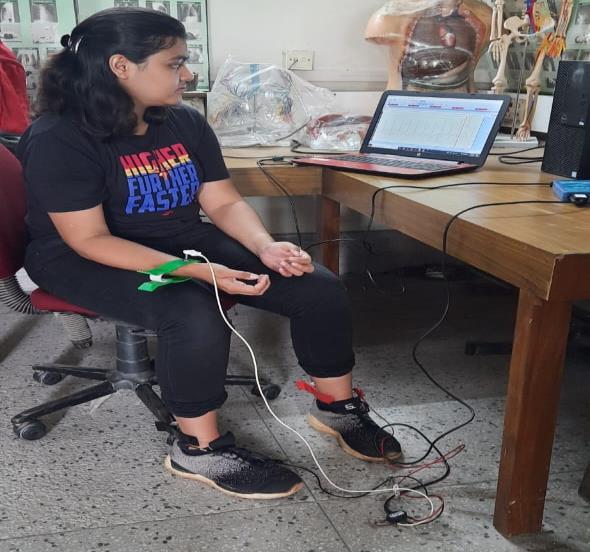
TheBIOPAC(BiopacSystems,Inc.,California)MP45system was used to collect all physiological measurements in an uprightsittingposition [32].TheECGrecordingwasdoneat asamplingrateof500Hzusinga5-35Hzelectrocardiogram (ECG)andaleadIIECGplacement[33].
2.5.2
Normal breathing
The task began with a 6-minute ECG recording of the participant at normal breathing pattern to adjust the participant to the lab environment and to determine the participants’baselinebreathingrate.Participantsweretold tositquietlyandrelaxforsixminuteswhiletheirbreathing
wasrecorded.The6-minutebaselinerecordingwasusedto calculate the mean duration of inhalation and exhalation phases, the mean number of entire breathing cycles per minute, and the E: I ratio. The control task design block is describedinFigure2.
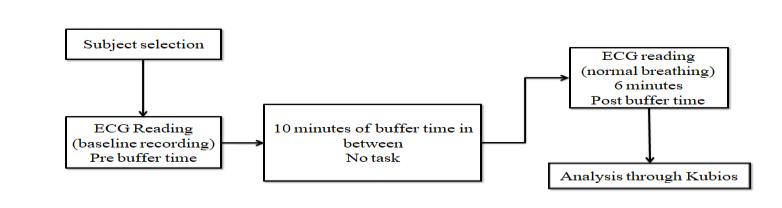
Figure 2: Workflowforcontrol(normalbreathing)
Respiration rate
Thechestbeltprovidedtomeasuretherespirationrateof the participants was found to be uncomfortable and restricting so the respiration rate was measured manually withthehelpofmanualobservationwithastopwatch.The respirationratefortheexperimentalprocedurewastakenas 6 bpm which was determined as the most comfortable breathingrateamongtheparticipants.
Task design
The experimental fixed breathing task consisted of breathingwithanexhalationratethatwashigherthanthe inhalationrate.Theparticipantswereaskedtolistentoan audio that included auditory cues according to the task design.Thesoundcuesconsistedof4secondsofinhalation and6secondsofexhalation.Thiswasdesignedfor6breaths per minute and we recorded for 6 minutes to achieve a sufficientlengthoftimeforproperanalysisthroughKubios. TheexperimentaltaskdesignisillustratedinFigure3.
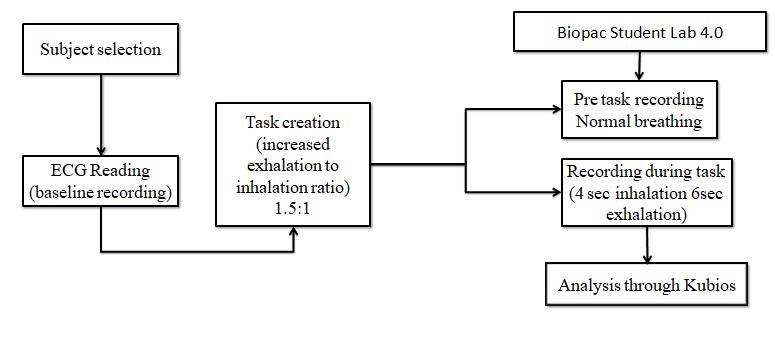
3: Workflowfortheexperimentaltask(breathingat afixedE:Iratio)
Experimental procedure
Duringthefixedbreathingtask,theparticipantslistened totheauditorycuesusingearplugstominimizedistractions from other sounds inthe environment. To preventmotion artifactsfromaffectingtheECGdata,theywereinstructedto unwind, keep calm, and limit movement. The participants wereaskedtoremoveanyelectronic gadgetsonthemlike
International Research Journal of Engineering and Technology (IRJET) e-ISSN: 2395-0056
Volume: 11 Issue: 10 | Oct 2024 www.irjet.net p-ISSN: 2395-0072
smartwatchesandmobilephonesandweretoldtostayaway fromlaptopstominimizetheeffectofelectromagneticfield ontheECG.
2.5.3 Physical exercise task
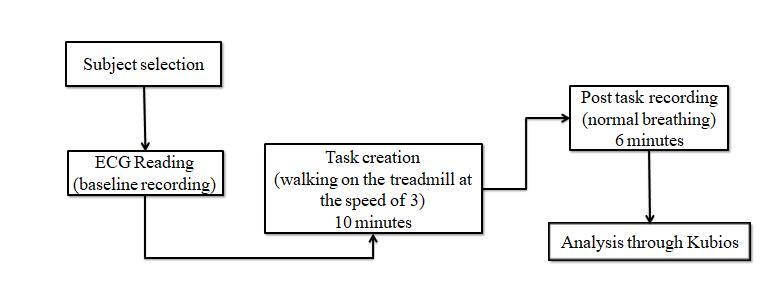
Togetthesubjectusedtothelabsettinganddeterminetheir baseline breathing rate, the task started with a 6-minute recordingoftheirnormalbreathingpattern.Forsixminutes, participantswereadvisedtositstillanddecompresswhile theirECGwasrecorded.
Theparticipantsweregiveninstructionstowalkfor10 minutesataspeedof3onthetreadmillthatwassetupinthe labaspartoftheexperiment.TheECGrecordingwasthen done for 6 minutes at a fixed E: I ratio (1:1- 4 seconds exhalation and 4 seconds inhalation) after the initial 10 minuteshadpassed.Topreventintroducingdistortionsinto theECGdata,theywereurgedtorelax,bequiet,andmoveas little as possible. The experimental task block is shown in Figure4.
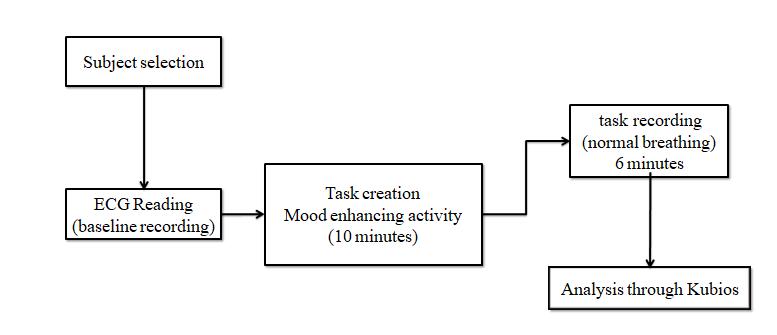
2.5.4 Mood-enhancing activity task
A survey was conducted to find out the most relaxing activityinyounghealthyadults.100participantsfilledupthe surveywhichconcludedworkingoutwasthemostpreferable activity 33%) followed closely by listening to songs 28%), watchingfunnyvideos(18%),watchinga movie(7%)and cooking(5%).Thissurveywasusedasabaseforcreatingthe thirdtask.Asworkingouthasalreadybeenusedasoneofthe experimental tasks we chose to go with the second most relaxingactivityaccordingtothesurvey.
The participants were toldto sit and relax while their baselineECGwasrecordedasintheprevioustasks.Allthe participantswereaskedtoplugintheheadphonesandlisten tothesongswhicharerelaxingtothemfor10minutes.After that the ECG recording was done again for 6 minutes at a fixed E:I ratio (1:1- 4 seconds exhalation and 4 seconds inhalation).ToavoiddistortionsandnoiseintheECGdata theyweretoldtorelax,bequietandmoveaslittleaspossible. TheexperimentaltaskblockisshowninFigure5.
AnalysiswasperformedontheKubiospremiumsoftware wherethestandardHRVanalysiswasusedtovisualizetheRRtimeseries,thetimedomainresults,thefrequencydomain results, and the non-linear results. We have used the time domainresultsandthefrequencydomainresultstoassess theHRVparameterswhicharethebestindicatorsofvagal toneaccordingtotheguidelinesofLabordeetal.,2017and the Task Force guidelines ofMalik 1996. The timedomain parameters taken for this study are SDNN, RMSSD, and pNN50andthefrequencydomainparametersareHFpower andLF/HFratio.TheanalysisfeatureontheBiopacstudent softwaregivesavarietyofoptionswherewechosetheHeart Rate Variability analysis option. The HRV analysis options show us the R-R interval, raw tachogram, interpolated tachogram,andthespectrumofthegraph;weusedtheR-R intervalsintheECGtoanalyzetheHRVparameters.Totest the hypothesis that an increased E: I ratio in the 2:1 task condition would be linked with larger HRV than a 1:1 breathingcondition,meanRMSSD,SDNN,andHF-HRVvalues in the 2:1 task block were compared to a control groupof participants with a 1:1 E: I ratio. The values of each participant's pre and post paced breathing were also compared and then compared to the control group with normal breathing. The post-exercise task breathing was comparedtothe1:1pre-tasknormalbreathingandthento thecontrolgrouptocomparetheacuteeffectofexerciseon HRVparameters.
Forthethirdintervention;thepostmoodenhancertask 1:1 breathing was compared to the pre-task 1:1 breathing andthenwiththecontrol grouptocheck ifthehypothesis aboutrelaxingactivityisvalid.
StatisticalanalysiswasdoneinMSExcelwiththehelpof the data analysis option. We did the t-test: Paired Two Sample forMeans andfound the p-value for both the onetailed test and the two-tailed test. Since we assumed the confidencerateforourhypothesisis95%,therefore,ourα valueis0.05.
International Research Journal of Engineering and Technology (IRJET) e-ISSN: 2395-0056
Volume: 11 Issue: 10 | Oct 2024 www.irjet.net p-ISSN: 2395-0072
BasedonthedatacollectedandanalyzedasshowninTable1, itwasfoundthattherewasasignificantdifferencebetween the control and experimental group in terms of heart rate variability.
This indicates that the intervention implemented in the experimental group, had a modulating effect on the participants'autonomicnervoussystem.
Vagal tone refers to the activity of the vagus nerve, which plays an important role in regulating the parasympathetic nervous system. The parasympathetic nervous system is responsibleforthe"restanddigest"response,whichhelps the body to relax and recover. An increase in vagal tone suggeststhattheparasympatheticnervoussystemismore active,whichisassociatedwithimprovedhealthoutcomes, including reduced stress levels and improved immune function.
The results showed that for the first intervention the experimental group had a significant increase in the vagal tone parameters, as compared to the control group. Specifically,theexperimentalgroupshowedanincreasein SDNN,RMSSD,pNN50,andHFpower,whichareindicatorsof increasedvagaltone.TheLF/HFratio,whichisanindicator ofsympathetic-parasympatheticbalance,showedadecrease in the experimental group, indicating a shift towards parasympatheticdominance.
Thesecondinterventionwhichwasbasedontheacute effects of exercise showed sympathetic activation and thereforeparasympatheticwithdrawal.Itshowedadecrease in SDNN, RMSSD, pNN50 and HF Power which shows sympathetic activation and the LF/HF ratio showed an increasesuggestingthesame.
Thethirdintervention,moodenhancingactivityshowed significant changes; it showed an increase in the SDNN, RMSSD, pNN50,andHF powerindicatingparasympathetic activation. The increase in the values was not as good as pacedbreathingbutitstillprovesthehypothesisthatmoodenhancing activities like listening to songs can actually modulatevagaltoneandthereforeheartratevariability.
Therefore, the results suggest that the interventions ‘pacedbreathing’and‘listeningtomusic’implementedinthe experimental group were effective in improving the participants'autonomicnervoussystemfunctioning,which mayhaveimportantimplicationsfortheiroverallhealthand well-being.
BasedonthepvaluesgiveninTable2itwasfoundthat forthefirstinterventioni.e.withfixedhighE:Iratio(1.5:1) breathing;thepvaluesinthebothone-tailedandtwo-tailed testwaslessthantheαvaluesshowingasignificantrisein theHRVparameterswhichverifiedtheproposedhypothesis that paced breathing or increased exhalation time to inhalationtimecanincreasevagaltone.
Forthesecondinterventioni.e.acuteshort-termexercise, the p values for both the tests were less than the α values indicating that the hypothesis saying that acute exercise increases heart rate and therefore decreases vagal tone is statisticallycorrect.
International
Volume: 11 Issue: 10 | Oct 2024 www.irjet.net
Table 2: pvaluesforone-tailedandtwo-tailedtestsforall theinterventions
Respir ation
Exerci se
P(T˂=t) one tail=1.22E080.000000012 2
P(T˂=t)two tail=2.43E 080.00000002 43
P(T˂=t)one tail=0.0013
P(T˂=t)two tail=0.0026
P(T˂=t )one tail=0. 0055
P(T˂=t )two tail=0. 011
P(T˂=t )one tail=0. 00129
P(T˂=t )two tail=0. 00257
Mood enhan cing activit y
P(T˂=t)one tail=0.054
P(T˂=t)two tail=0.108
P(T˂=t )one tail=0. 116
P(T˂=t )two tail=0. 233
P(T˂=t )one tail=0. 091
P(T˂=t )two tail=0. 18
P(T˂=t )one tail=0. 00018
P(T˂=t )two tail=0. 00036
P(T˂=t )one tail=0. 019
P(T˂=t )two tail=0. 039
P(T˂=t)one tail=3.79E060.0000037 9
P(T˂=t)two tail=7.57E06 0.00000757
P(T˂=t)one tail=0.014
P(T˂=t)two tail=0.029
P(T˂=t) one tail=0.0 00227
P(T˂=t) two tail=0.0 00454
P(T˂=t) one tail=0.0 816
P(T˂=t) two tail=0.1 63
P(T˂=t)one tail=0.022
P(T˂=t)two tail=0.044
P(T˂=t) one tail=0.3 34
P(T˂=t) two tail=0.6 69
For the thirdintervention i.e. mood-enhancingactivitythe HRVparameterslikeSDNN,pNN50,andHFpowershowedp values less than α but RMSSD and LF/HF ratio was a bit higher than α, indicating that parameters which are most efficientforshowingchangesinvagaltonewerefollowingthe theoryofalternatehypothesis.
The purpose of this study was to compare different interventions to assess their effect on breathing and heart ratevariabilitywhichcouldindicatetheincreaseordecrease inthevagaltone.Wespecificallycomparedtheeffectsofcued 1.5:1(exhale1.5timesaslongasinhale)andcued1:1(equal exhaleandinhale)breathing.
Inlinewithourtheory,vagaltoneindicatorssuchasRMSSD andHFpowerincreasedsignificantlyinthe1.5:1taskblock comparedto1:1normalbreathing.Thesefindingsshowthat prolonged exhalation time compared to inhalation time affectscentralcardiacautonomiccontrolratherthanbeinga result of the longer time window during exhalation that maximizesthecapacitytoobservetheeffectsofcardiacvagal control.Ourfindingsareconsistentwiththefactthatpaced breathing or E: I>1 increases HRV parameters showingan increase in vagal tone [15]but the breathing pattern used thereisnotcomfortablewitheveryone,thereforewehave
used a more comfortable ratio which is 1.5:1 (4-second inhalationand6-secondexhalation).Deepbreathingorpaced breathing affects all the HRV parameters suggesting an increase in vagal tone [34] and not only in one or two parametersfromwhichdeductionishard.Pacedbreathingat a cardiovascular system resonance frequency results in a significant rise in HRV, as observed in a study by [35, 36]. Paced breathing and respiratory interval do not affect the spectral components of HRV and support the concept that increasing respiratory interval amplifies the respiratoryrelatedvagalmodulationofheartrate[37].
Theseresultssuggestthatpacedbreathing,withaspecific exhalation-inhalationratio,maybeaneffectivetechniquefor increasing vagal tone and promoting parasympathetic activity.However,itshouldbenotedthatthestudydesign waslimitedbytherelativelysmallsamplesizeandtheuseof only one type of breathing pattern for the experimental group.Futureresearchwithlargersamplesizesanddifferent breathing patterns may provide further insights into the effectsofpacedbreathingonHRVparameters.
Heart rate variability, on the other hand, refers to the variationintimebetweensuccessiveheartbeats.Higherheart rate variability is connected with better health outcomes, such as better cardiovascular health and a lower risk of chronicdiseases.Thequickincreaseinheartrateatthestart ofexerciseiscausedbyadecreaseincardiacvagaltone[38] which is established in this current study using the HRV parametersshowingadecreaseintheirvaluesfromthepreexercisevalues.
Theacuteeffectofexercisecanbeseenasanincreasein sympatheticactivity;howeverregularphysicalactivityand exercise may increase parasympathetic dominance in the longrun[39].Moderate-intensityexercisetraininghastens post-exercise vagal reactivation [40]. Hence continuous exercisetrainingisimportantinmaintainingahighervagal tone.
SeveralstudiesindicatethatHRVmeasuresareimportant in analyzing the stress that the body experiences during training and in gaining insight into physiological recovery aftertraining[41].Futureresearchcanbedonebasedonthis hypothesisanditseffectonlong-termexercise.
Therelationshipbetweenvagaltoneandemotionshasnot beenwidelyhypothesizedpreviously,butsomestudiesshow that baseline levels of cardiac vagal tone and vagal tone reactivityabilitiesareassociatedwithbehavioralmeasuresof reactivityandemotionalexpression[28],sowehypothesized that vagal tone can serve as an indicator of emotional regulation.
Higher HRV would be associated with improved subjective well-being, as shown by improved mood and higherlifesatisfaction[42]butthelimitationofthestudywas they didn't know if HRV was giving a positive effect or a
International Research Journal of Engineering and Technology (IRJET) e-ISSN: 2395-0056
Volume: 11 Issue: 10 | Oct 2024 www.irjet.net p-ISSN: 2395-0072
positiveeffectwasincreasingHRVbutinthishypothesis,we arecreatingapositivemoodwhichisrelatedtoincreasein HRVwhichislatershownintheHRVparametersshowingan increaseinvagaltone.Vagalactivationappearstobecrucial for good emotional response control [43], our hypothesis showsparasympatheticactivationandthereforeanincrease invagaltoneduetopositivemood-enhancingactivity.
Insummary,wedemonstratedthreeinterventionsrelated to vagal tone and its corresponding parasympathetic or sympatheticactivation.Outofthesethree,breathingathigher E:Iratioandmood-enhancinginterventionworkswell for parasympatheticactivationandthereforeinincreasingvagal toneandindicatingthatitcanrelaxyourbodyafterstress.
Oursecondinterventionaboutacuteshort-termexercise indicates sympathetic activation but after a long period of exercise can help in parasympathetic dominance and can improvestressandbodyfunctionovertime.Outofourtwo interventionsthatincreasevagaltonepacedbreathinghas shown significant changes as compared to the moodenhancing activity, therefore we can conclude that fixed breathingathigherE:Iratioisoneofthebestwaystorelax yourbodyafterstressanditisalsogoodgotyourbodyinthe longtermasitshowsthemaximumincreaseinvagaltone.
Declarations
Ethical approval and consent to participate
Informedconsentformsweresignedbyparticipants
Consent for publication
Theauthorsconsenttotheirworkbeingpublished
Data availability
Allthedatahasbeenincludedinthemanuscript
Competing interest
Onbehalfoftheauthors,thecorrespondingauthordeclares thatthereisnoconflictofinterest
Funding source
None
Clinical trial registration
Notapplicable
[1] Berntson, G. G., Cacioppo, J. T., & Quigley, K. S. (1993). Respiratory sinus arrhythmia: Autonomic origins, physiological mechanisms, and psychophysiological implications.Psychophysiology,30(2),183-196. DOI:10.1111/j.14698986.1993.tb01731.x
[2] BerntsonGG,ThomasBiggerJrJ,EckbergDL,GrossmanP, Kaufmann PG, Malik M, Nagaraja HN, Porges SW, Saul JP,
StonePH,vandermolenMW(1997).Heartratevariability: origins, methods, and interpretive caveats.Psychophysiology,34(6), 623-648. DOI:10.1111/j.1469-8986.1997.tb02140.x
[3] Chapleau, M. W., & Sabharwal, R. (2011). Methods of assessing vagus nerve activity and reflexes.Heart failure reviews,16,109-127.
[4] Malik, M. (1996). Heart rate variability: Standards of measurement,physiologicalinterpretation,andclinicaluse: Task force of the European Society of Cardiology and the North American Society for Pacing and Electrophysiology.Annals of Noninvasive Electrocardiology,1(2), 151-181. DOI:10.1111/j.1542474X.1996.tb00275.x
[5] Shaffer, F., McCraty, R., & Zerr, C. L. (2014). A healthy heartisnotametronome:anintegrativereviewoftheheart's anatomyandheartratevariability.Frontiersinpsychology,5, 1040.DOI:10.3389/fpsyg.2014.01040
[6] Russell,M.E.,Scott,A.B.,Boggero,I.A.,&Carlson,C.R. (2017).Inclusionofarestperiodindiaphragmaticbreathing increaseshighfrequencyheartratevariability:Implications for behavioral therapy.Psychophysiology,54(3), 358-365. DOI:10.1111/psyp.12791
[7] Shaffer,F.,&Ginsberg,J.P.(2017).Anoverviewofheart ratevariabilitymetricsandnorms.Frontiersinpublichealth, 258.DOI:10.3389/fpubh.2017.00258
[8] Kleiger,R.E.,Stein,P.K.,&BiggerJr,J.T.(2005).Heart ratevariability:measurementandclinicalutility.Annalsof Noninvasive Electrocardiology,10(1), 88-101. DOI:10.1111/j.1542-474X.2005.10101.x
[9] Tsai,H.J.,Kuo,T.B.,Lee,G.S.,&Yang,C.C.(2015).Efficacy ofpacedbreathingforinsomnia:enhancesvagalactivityand improvessleepquality.Psychophysiology,52(3),388-396.
[10] Kromenacker,B.W.,Sanova,A.A.,Marcus,F.I.,Allen,J.J., &Lane,R.D.(2018).Vagalmediationoflow-frequencyheart ratevariabilityduringslowyogicbreathing.Psychosomatic medicine,80(6),581-587.
[11] Shao,R.,Man,I.S.,&Lee,T.M.(2024).TheEffectofSlowPacedBreathingonCardiovascularandEmotionFunctions:A Meta-AnalysisandSystematicReview.Mindfulness,15(1),118.
[12] Gerritsen, R. J., & Band, G. P. (2018). Breath of life: the respiratory vagal stimulation model of contemplative activity.Frontiersinhumanneuroscience,12,397.
[13] Magnon,V.,Dutheil,F.,&Vallet,G.T.(2021).Benefitsfrom one session of deep and slow breathing on vagal tone and anxietyinyoungandolderadults.Scientific reports,11(1), 19267.
International Research Journal of Engineering and Technology (IRJET) e-ISSN: 2395-0056
Volume: 11 Issue: 10 | Oct 2024 www.irjet.net p-ISSN: 2395-0072
[14] Vanderhasselt, M. A., & Ottaviani, C. (2022). Combining top-downandbottom-upinterventionstargetingthevagus nervetoincreaseresilience.Neuroscience&Biobehavioral Reviews,132, 725-729. DOI:10.1016/j.neubiorev.2021.11.018
[15] Bae, D., Matthews, J. J., Chen, J. J., & Mah, L. (2021). Increased exhalation to inhalation ratio during breathing enhances high‐frequency heart rate variability in healthy adults.Psychophysiology,58(11), e13905. DOI:10.1111/psyp.13905
[16] Song,H.S.,&Lehrer,P.M.(2003).Theeffectsofspecific respiratory rates on heart rate and heart rate variability.Applied psychophysiology and biofeedback,28, 13-23.DOI:10.1023/A:1022312815649
[17] Oldehinkel,A.J.,Verhulst,F.C.,&Ormel,J.(2008).Low heart rate: a marker of stress resilience. The TRAILS study.Biological psychiatry,63(12), 1141-1146. DOI:10.1016/j.biopsych.2007.12.006
[18] Chalmers,J.A.,Quintana,D.S.,Abbott,M.J.A.,&Kemp,A. H. (2014). Anxiety disorders are associated with reduced heart rate variability: a meta-analysis.Frontiers in psychiatry,5,80.DOI:10.3389/fpsyt.2014.00080
[19] Negrao,C.E.,Moreira,E.D.,Santos,M.C.,Farah,V.M.,& Krieger, E. M. (1992). Vagal function impairment after exercisetraining.Journalofappliedphysiology,72(5),17491753.DOI:10.1152/jappl.1992.72.5.1749
[20] ChuDuc,H.,NguyenPhan,K.,&NguyenViet,D.(2013).A reviewofheartratevariabilityanditsapplications.APCBEE procedia,7,80-85.DOI:10.1016/j.apcbee.2013.08.016
[21] Dong, J. G. (2016). The role of heart rate variability in sports physiology.Experimental and therapeutic medicine,11(5),1531-1536.DOI:10.3892/etm.2016.3104
[22] Maron,B.J.(2000).Theparadoxofexercise.NewEngland Journal of Medicine,343(19), 1409-1411. DOI: 10.1056/NEJM200011093431911
[23] Curtis,B.M.,&O'KeefeJr,J.H.(2002,January).Autonomic toneasacardiovascularriskfactor:thedangersofchronic fightorflight.InMayoClinicProceedings(Vol.77,No.1,pp. 45-54).Elsevier.DOI:10.4065/77.1.45
[24] Arai, Y., Saul, J. P., Albrecht,P., Hartley,L. H., Lilly, L. S., Cohen, R. J., & Colucci, W. S. (1989). Modulation of cardiac autonomic activity during and immediately after exercise.American Journal of Physiology-Heart and Circulatory Physiology,256(1), H132-H141. DOI:10.1152/ajpheart.1989.256.1.H132
[25] Kingsley,J.D.,&Figueroa,A.(2016).Acuteandtraining effectsofresistanceexerciseonheartratevariability.Clinical physiologyandfunctionalimaging,36(3),179-187.
[26] Picard,M.,Tauveron,I.,Magdasy,S.,Benichou,T.,Bagheri, R., Ugbolue, U. C., ... & Dutheil, F. (2021). Effect of exercise trainingonheartratevariabilityintype2diabetesmellitus patients: A systematic review and meta-analysis.PLoS One,16(5),e0251863.
[27] Perrone, M. A., Volterrani, M., Manzi, V., Barchiesi,F.,& Iellamo, F. (2021). Heart rate variability modifications in response to different types of exercise training in athletes.The Journal of Sports Medicine and Physical Fitness,61(10),1411-1415.
[28] Porges, S. W., Doussard-Roosevelt, J. A., & Maiti, A. K. (1994). Vagal tone and the physiological regulation of emotion.Monographs of the society for research in child development,167-186.DOI:10.2307/1166144
[29] Vaishnav, S., Stevenson, R., Marchant, B., Lagi, K., Ranjadayalan,K.,&Timmis,A.D.(1994).Relationbetween heartratevariabilityearlyafteracutemyocardialinfarction and long-term mortality.The American journal of cardiology,73(9), 653-657. DOI:10.1016/00029149(94)90928-8
[30] Laborde,S.,Mosley,E.,&Thayer,J.F.(2017).Heartrate variability and cardiac vagal tone in psychophysiological research–recommendations for experiment planning, data analysis,anddatareporting.Frontiersinpsychology,8,213. DOI:10.3389/fpsyg.2017.00213
[31] Cohen, J. (2013).Statistical power analysis for the behavioralsciences.Academicpress
[32] Kumar,P.,Das,A.K.,& Halder, S. (2020).Time-domain HRV analysis of ECG signal under different body postures.ProcediaComputerScience,167,1705-1710
[33] Finkelstein, J. (2015). Using heart rate variability for automated identification of exercise exertion levels. InDrivingQualityinInformatics:FulfillingthePromise(pp. 137-141).IOSPress.
[34] Jensen,M.K.,Andersen,S.S.,Andersen,S.S.,Liboriussen, C. H., Kristensen, S., & Jochumsen, M. (2022). Modulating HeartRateVariabilitythroughDeepBreathingExercisesand TranscutaneousAuricularVagusNerveStimulation:AStudy in Healthy Participants and in Patients with Rheumatoid ArthritisorSystemicLupusErythematosus.Sensors,22(20), 7884.DOI:10.3390/s22207884
[35] Vaschillo, E., Lehrer, P., Rishe, N., & Konstantinov, M. (2002). Heart rate variability biofeedback as a method for assessing baroreflex function: a preliminary study of resonance in the cardiovascular system.Applied psychophysiology and biofeedback,27, 1-27. DOI:10.1023/A:1014587304314
[36] Vaschillo, E. G., Vaschillo, B., & Lehrer, P. M. (2006). Characteristics of resonance in heart rate variability
International Research Journal of Engineering and Technology (IRJET) e-ISSN: 2395-0056
Volume: 11 Issue: 10 | Oct 2024 www.irjet.net p-ISSN: 2395-0072
stimulated by biofeedback.Applied psychophysiology and biofeedback,31,129-142.DOI:10.1007/s10484-006-9009-3
[37] HayanoJU,MukaiSE,SakakibaraMA,OkadaAK,TakataK, FujinamiTA(1994).Effectsofrespiratoryintervalonvagal modulation of heart rate.American Journal of PhysiologyHeart and Circulatory Physiology,267(1), H33-H40. DOI:10.1152/ajpheart.1994.267.1.H33
[38] Coote,J.H.,&Bothams,V.F.(2001).Cardiacvagalcontrol before, during and after exercise.Experimental physiology,86(6),811-815.DOI:10.1113/eph8602292
[39] Aubert,A.E.,Ramaekers,D.,Cuche,Y.,Lysens,R.,Ector,H., & Van de Werf, F. (1996, September). Effect of long term physical training on heart rate variability.InComputers in Cardiology 1996(pp. 17-20). IEEE. DOI: 10.1109/CIC.1996.542462
[40] Sugawara,J.,Murakami,H.,Maeda,S.,Kuno,S.,&Matsuda, M. (2001). Change in post-exercise vagal reactivation with exercise training and detraining in young men.European journal of applied physiology,85(3), 259-263. DOI:10.1007/s004210100443
[41] Amano, M., Kanda, T., UE, H., & Moritani, T. (2001). Exercisetrainingandautonomicnervoussystemactivityin obese individuals.Medicine & Science in Sports & Exercise,33(8), 1287-1291. DOI:10.1097/00005768200108000-00007
[42] Geisler, F. C., Vennewald, N., Kubiak, T., & Weber, H. (2010). The impact of heart rate variability on subjective well-being is mediated by emotion regulation.Personality and individual differences,49(7), 723-728. DOI:10.1016/j.paid.2010.06.015
[43] Pinna,T.,&Edwards,D.J.(2020).Asystematicreviewof associations between interoception, vagal tone, and emotional regulation: Potential applications for mental health, wellbeing, psychological flexibility, and chronic conditions.Frontiers in psychology,11, 1792. DOI:10.3389/fpsyg.2020.01792
2024, IRJET | Impact Factor value: 8.315 |