
International Research Journal of Engineering and Technology (IRJET) e-ISSN: 2395-0056
Volume: 11 Issue: 10 | Oct 2024 www.irjet.net p-ISSN: 2395-0072

International Research Journal of Engineering and Technology (IRJET) e-ISSN: 2395-0056
Volume: 11 Issue: 10 | Oct 2024 www.irjet.net p-ISSN: 2395-0072
Mrs. K. Soniya Lakshmi1, Varshini. S2, Varshini. V3, Sowmiya. S4, Kanmani. T5, Mrs. B. Ananthi6
1,6Assistant professor, Vivekanandha College of Engineering for Women, Tiruchengode, Tamilnadu(India), 2,3,4,5 UG Student of Vivekanandha College of Engineering for Women, Tiruchengode, TamilNadu(India)
Abstract Alzheimer'sdisease,agradualanddegenerative brainillness,cancausecognitivedeclineaswellbehavioral changes.Theconditionaffectsnotonlythesufferer,butalso thosewhocareforthemandsocietyasawhole.Thisstudy usesconvolutionalneuralnetworks(CNN)forMRIdataand machinelearningmethodsforEEG(electroencephalogram) data to classify new data as healthy or pathological. Our findings imply that integrating EEG and MRI (Magnetic Resonance Imagining ) data with data augmentation techniquescanleadtomoreaccurateandreliablestrategies for early identification and diagnosis of Alzheimer's. Alzheimer's disease (AD) is a progressive neurological ailment that affects a large number of people worldwide. Early identification of Alzheimer's disease is critical for effective treatment and management. Deep learning approacheshaveshowedpotentialinpredictingAlzheimer's disease development using diverse indicators such as neuroimaging data, genetic markers, and clinical information.Thispaperprovidesadeeplearningapproach forpredictingAlzheimer'sdiseaseutilizingmultimodaldata fusion approaches. To improve prediction accuracy, we present a unique neural network architecture that incorporates data from many modalities. Experimental resultsonalargedatasetshowthatthesuggestedmethodis more effective than existing approaches at accurately forecastingADprogression.
Keywords CNN,MRI,EEG,ImageNet,Finetuning.
Alzheimerdiseasecauseofdementiaamongtheelderlyand affects millions around the world. Alzheimer's disease is incurable,advancesgraduallyorfast,andcanresultinlossof independenceanddeath.Alzheimer'sdiseaseisdiagnosed usingmemoryloss,cognitiveimpairment,medicalhistory,as wellasphysicalandneurologicaltesting.Thesemethodsare subjective and may fail to detect early diseases. Thus, Alzheimer's disease detection and diagnosis must be objectiveandprecise.Recentadvancesinmedicalimaging and machine learning have enabled the diagnosis of Alzheimer'sdiseaseusingEEGandMRIdata.MRIproduces high-resolutionbrainimages,whereasEEGmeasuresbrain electrical activity non-invasively. Machine learning algorithmscandetectindicatorsforAlzheimer'sdiseasein largeEEGandMRIdatasets.Thesealgorithmscanrecognize new EEG and MRI data as healthy. This paper aims to investigatetheuseofEEGandMRIdatainthedetectionof Alzheimer'sdiseaseusingmachinelearningtechniques.We
willanalyzeadatasetconsistingofEEGrecordingsandbrain MRIimagesfromhealthyandAlzheimer'sdiseaseaffected individualsUsingmetricssuchassensitivity,specificity,and area under the curve, we will compare the accuracy of various machine learning algorithms for detecting Alzheimer's disease. Our findings will contribute to the development of more objective and accurate methods for earlydetectionanddiagnosisofAlzheimer'sdisease,leading toimprovedtreatmentandmanagementofthisdebilitating disease
Deep learning represents a revolutionary approach to artificial intelligence, leveraging complex neural networks withmultiplelayerstoautomaticallylearnintricatepatterns fromvastamountsofdata.Atitsheartareartificial neural networks,inspiredbythestructureofthehumanbrain,with eachlayerprocessinginformationinahierarchicalmannerto extract increasingly abstract features. Unlike traditional machinelearningmethods,deeplearningeliminatestheneed formanualfeatureengineeringbyautonomouslydiscovering relevantfeaturesfromrawdata.However,thispowercomes withcomputationaldemands,requiringsubstantialresources fortrainingandhandlinglargedatasets.Despitechallenges such as overfitting and interpretability, deep learning has fueled breakthroughs across diverse fields, including computervision,naturallanguageprocessing,healthcare,and finance.Itsimpactisfeltinapplicationsrangingfromimage classificationandobjectdetectiontolanguagetranslationand medical diagnosis, ushering in a new era of intelligent technology.
Detect subtle patterns and biomarkers indicative of Alzheimer's disease in brain imaging scans, including MRI andPETscansProvideobjectiveandconsistentdiagnostic predictions,reducingvariabilityandsubjectivityindiagnosis. Enable early detectionofAlzheimer's disease,allowingfor timelyinterventionandtreatmenttopotentiallyslowdisease progressionandimprovepatientoutcomesandResultswill berigorouslyevaluatedusingtestdatasets,withcomparisons existingmethodsanddiscussionsinlimitationsandpotential improvements.3.Thecoreofthestudywillfocusondesigning and implementing a CNN architecture optimized for Alzheimer's detection, with considerations for layers, activationfunctions,andmodel evaluationmetricssuchas accuracy,precision,recall,andF1-score.Thetrainingprocess
International Research Journal of Engineering and Technology (IRJET) e-ISSN: 2395-0056
Volume: 11 Issue: 10 | Oct 2024 www.irjet.net p-ISSN: 2395-0072
will involve hyperparameter tuning and optimization algorithmslikeAdamorSGD.
Alzheimer's disease detection using deep learning techniques: Author : Dan Pan Published year : 2020
Publishedin:IEEEEXPLORE
Researcher Dan Pan conducted an exhaustive literature survey on the utilization of deep learning techniques for Alzheimer'sdiseasedetection.Byscrutinizingadiversearray ofstudies,includingthoseutilizingMRIandPETscans,Pan aimed to delineate current methodologies, challenges, and advancementsinthefield.Thesurveyhighlightedtheefficacy ofdeeplearningmodelsindistinguishingbetweenhealthy individualsandAlzheimer'spatients,whilealsoaddressing interpretability,generalization,andscalabilityissues.
2.1 Multimodal deep learning model for the early stage detection of Alzheimer’s :Author : Janani Venugopalan
Published year :2019 Published in : PUMPED
Using a multimodal deep learning model for the earlystagedetectionofAlzheimer’s.TheyusedDLtoanalyze the images, the genetics and the clinic altest data for classification of patients into AD, MCI and controls. Their study delved into the burgeoning field of medical image analysis, particularly utilizing advanced computational methodstoanalyzebrainimagingdataforearlydiagnosisof Alzheimer'sdisease.Leveragingthepowerofdeeplearning algorithms, the team developed and evaluated novel approachesforautomaticallydetectingsubtlepatternsand magneticresonanceimaging(MRI).
2.2 Alzheimer's disease detection using deep learning represents significant contribution of medical imaging and computational neuroscience: Author : S. Sarran Published year : 2019 Published in : IEEE EXPLORE
Sarrafandtheirteamhavemaderemarkablestrides in the field of medical imaging and computational neuroscience with their groundbreaking research on Alzheimer's disease detection using deep learning. Their study,employingdeepconvolutionalneuralnetworks(CNNs) and recurrent neural networks (RNNs), achieved an impressiveaccuracyof96.85%indistinguishingbetweenAD patients and healthy individuals using fMRI data from the ADNIdataset.
2.3 Alzheimer's disease detection using deep learning : Author : Yan Wang et al Published year:2022 Published in : PUBMED
Yan Wang et al.'s research paper on Alzheimer's disease detection using deep learning showcases their innovativeapproachtoleveragingdeeplearningtechniques forimproveddiagnosis.Theirmethodologylikelyinvolves
the development and evaluation of deep learning models trainedonextensivedatasetsofbrainimagingdata.Results fromtheirstudymaydemonstratethesuperioraccuracyof thesemodelscomparedtotraditionaldiagnosticmethods, offeringpromisingimplicationsforclinicalpractice.
2.4 E.Alzheimer's disease detection using deep learning techniques.the study explores the application of advanced machine learning algorithms to analyze medical imaging data, magnetic resonance imaging (MRI) or positron emission tomography (PET) scans,for the purpose of diagnosing Alzheimer's disease :Author : Jie Zhang et al Published year : 2021 Published in : PUBMED
Jie Zhang et al.'s research paper delves into the utilization of deep learning techniques for Alzheimer's diseasedetection,particularlyfocusingonanalyzingMRIand PET scans. Their methodology likely encompasses comprehensivedatacollection,preprocessingsteps,andthe development of specialized deep learning architectures tailored for Alzheimer's detection. Leveraging a sizable dataset of brain imaging scans emphasizing metrics like accuracy,sensitivity,specificity,andAUC.
2.5 Alzheimer's disease diagnostics by a deep learning method using selforganized neural cells. Author : Keiichi Horio, Takashi Murata, Osamu Ando Published year : 2023 Published in : IEEE EXPLORE
Intheirpaper,"Alzheimer'sdiseasediagnosticsbya deep learning method using self-organized neural cells," authors Keiichi Horio, Takashi Murata, and Osamu Ando introduceanovelapproachtoAlzheimer'sdiseasediagnosis leveraging deep learning techniques with self-organized neuralcells.Unliketraditionalneuralnetworkarchitectures, potentiallyenhancingdiagnosticaccuracyforthecomplex andvarieddatasetsencounteredinmedicaldiagnosis.
2.6 Deep Learning Based Classification of Alzheimer’s Disease Using 3DCNN and Transfer Learning:Author : Ahmad Chaddad, Rohit Shrivastava, Abdulmajeed Alsufyani Published year : 2020 Published in:PUBMED
In their paper titled "Deep Learning Based Classification of Alzheimer’s Disease Using 3D-CNN and Transfer Learning," authors Ahmad Chaddad, Rohit Shrivastava, and Abdulmajeed Alsufyani propose an innovative approach to Alzheimer's disease classification. They leverage a combination of deep learning techniques, specifically3DConvolutionalNeuralNetworks(CNN),and transferlearning.3D-CNNsarecapableofextractingspatial andtemporalfeaturesfromvolumetricdata,makingthem well-suitedforprocessingthreedimensionalneuroimaging data such as MRI scans commonly used in Alzheimer's diseasediagnosis.
International Research Journal of Engineering and Technology (IRJET) e-ISSN: 2395-0056
Volume: 11 Issue: 10 | Oct 2024 www.irjet.net p-ISSN: 2395-0072
2.7 Early Diagnosis of Alzheimer’s Disease Using Deep Learning Method Based on Hippocampus MRI Images:
Author : Yuanyuan Zhang, Ruijiang Li, Daguang Xu, et al.m Published year : 2020 Published in : IEEE EXPLORE
Intheirpapertitled"EarlyDiagnosisofAlzheimer’s Disease Using Deep Learning Method Based on Hippocampus MRI Images," authors Yuanyuan Zhang, RuijiangLi,DaguangXu,etal.proposeanovelapproachfor theearlydetectionofAlzheimer'sdisease(AD)utilizingdeep learningtechniques.Focusingspecificallyonhippocampus MRIimages,akeyregionaffectedinAD,theauthorsaimto developapreciseandreliablediagnostictool.Deeplearning methods offer the capability to automatically extract intricatepatternsandfeaturesfrommedicalimages.
ExistingSystemareAlzheimer'sdiseasedetection usingdeeplearningisliketeachingasmartcomputertolook atpicturesofthebrainandrecognizesignsofAlzheimer's disease.Wecollectlotsofbrainimagesfrompeople,some withAlzheimer'sandsomewithout.Thecomputerlearnsto pick up on subtle differences in the images that are associated with Alzheimer's disease. These systems begin withthemeticulouscollectionoflargedatasetscomprising brainimagingscans,includingMRIandPETscans,sourced fromdiversesourcessuchashospitals,researchinstitutions, and medical databases. Once collected, the brain images undergometiculouspreprocessingstepstostandardizeand enhance their quality. These preprocessing techniques include resizing the images to a standardized size, normalizationtoadjustintensityvalues,andnoisereduction to improve image clarity. Moreover, data augmentation techniques are often employed to augment the dataset's diversityandimprovethemodel'srobustnessbyintroducing variationssuchasrotation,flipping,andscaling.
TheproposedsystemforAlzheimer'sdiseasedetectionusing deep learning integrates cutting-edge technology with meticulous data collection and validation processes to developarobustandreliablediagnostictool.Beginningwith theacquisitionoflargeanddiversedatasetsofbrainimaging scans,includingMRIandPETscans,frommultiplesources, the system emphasizes data quality and balance between healthyindividualsandAlzheimer'spatientsacrossvarious diseasestages.Theselectionofanappropriatedeeplearning architecture,customizedoradaptedtosuitthecomplexities ofbrainimagingdata,ispivotalinthesystem'sdesign.Model training involves optimizing parameters and mitigating overfitting through advanced techniques while validation efforts focus on assessing performance metrics across diverse patient populations and imaging modalities. By implementingthisproposedsystem,weaimtoadvanceearly diagnosis,improvepatientoutcomes,andcontributetothe ongoing efforts in Alzheimer's disease research and treatment.
4.1
Alzheimer's disease detection using deep learning is like teachingasmartcomputertolookatpicturesofthebrain andrecognizesignsofAlzheimer'sdisease.Wecollectlotsof brainimagesfrompeople,somewithAlzheimer'sandsome without. The computer learns to pick up on subtle differences in the images that are associated with Alzheimer's disease. These systems begin with the meticulous collection of large datasets comprising brain imagingscans,includingMRIandPETscans,sourcedfrom diversesourcessuchashospitals,researchinstitutions,and medicaldatabase.
4.2 Drawback :
Deeplearningmodelsrequirelargeamountsofhigh-quality labeleddatafortraining
While deep learning models may perform well on the datasetstheyweretrainedon,theirabilitytogeneralizeto new,unseendataisnotguaranteed.
The use of deep learning models for Alzheimer's disease detectionraisesethicalconcernsrelatedtopatientprivacy, consent,anddatasecurity.
4.3 Proposed System:
TheproposedsystemforAlzheimer'sdiseasedetectionusing deep learning integrates cutting-edge technology with meticulous data collection and validation processes to developarobustandreliablediagnostictool.Beginningwith theacquisitionoflargeanddiversedatasetsofbrainimaging scans,includingMRIandPETscans,frommultiplesources, the system emphasizes data quality and balance between healthyindividualsandAlzheimer'spatientsacrossvarious diseasestages.
4.4 Advantages :
Deep learning models can identify subtle patterns and biomarkers in brain imaging scans that may indicate the presenceofAlzheimer'sdiseaseatanearlystage.
Deeplearningmodelscananalyzelargeamountsofcomplex datawithhighaccuracy.
This scalability enables researchers to train models on comprehensivedatasets,leadingtomorerobustandreliable diagnostictools.
International Research Journal of Engineering and Technology (IRJET) e-ISSN: 2395-0056
Volume: 11 Issue: 10 | Oct 2024 www.irjet.net p-ISSN: 2395-0072
5.1 Module description :
Detection and classification of skin diseases using deep learningconsistsofthreemodules.
• DiseaseDetection
• Diseaseclassification
• Resultsofdiagnosix
Disease Detection:
First,animageoftheAlzheimer’saffectedareaisuploaded. With this uploaded image, it is then checked to see if it is actually a Alzheimer or not. If it is a disease then further classification will take place, if it is not a disease then a message will be displayed such as "not a Alzheimer’s disease".
Disease classification:
OncetheAlzheimer’sdiseaseisdetected,itisthenfurther classified,thisclassificationisdonebyusingdeeplearning techniques. For the accuracy of classification, CNN Architecturesofdeeplearningareused.
Results of Diagnosis:
Afterthediagnosis ofthedisease isdone,the nameofthe diseaseandsuggestionstocurethediseasearementioned.
5.2 CNN Architecture :
Thename“convolutionalneuralnetwork”indicatesthatthe network employs a mathematical operation called convolution.Convolutionalnetworksareaspecializedtype ofneuralnetworksthatuseconvolutioninplaceofgeneral matrixmultiplicationinatleastoneoftheirlayers.
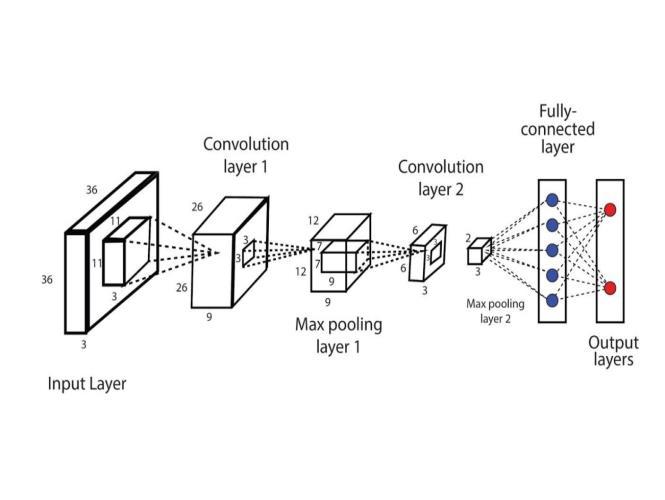
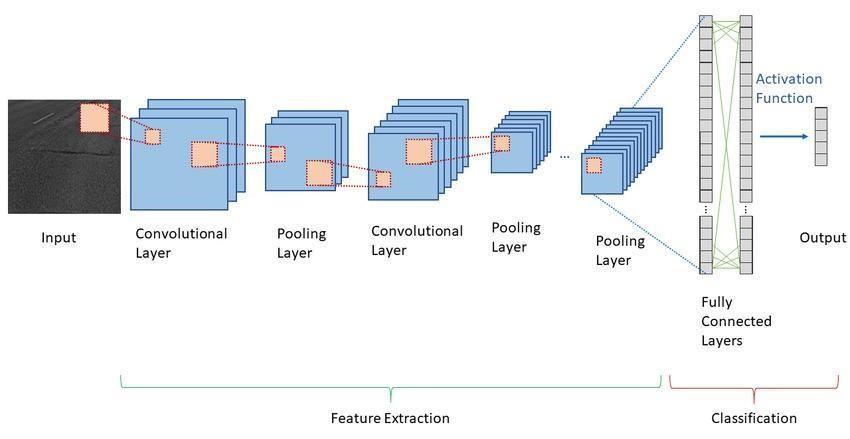
Aconvolutionalneuralnetworkconsistsofaninput layer,hiddenlayersandanoutputlayer.Inanyfeed-forward neuralnetwork,anymiddlelayersarecalledhiddenbecause their inputs and outputs are masked by the activation function and final convolution. In a convolutional neural network, the hidden layers include layers that perform convolutions. This product is usually the Frobenius inner product,anditsactivationfunctioniscommonlyReLU.Asthe convolutionkernelslidesalongtheinputmatrixforthelayer, theconvolutionoperationgeneratesafeaturemap,whichin turn contributes to the input of the next layer. This is followed by other layers such as pooling layers, fully connectedlayers,andnormalizationlayers.
Convolutional layers:
Convolutionallayersconvolvetheinputandpassitsresultto thenextlayer.Thisissimilartotheresponseofaneuronin thevisualcortextoaspecificstimulas.EachConvolutional neuronprocessdataonlyforitsreceptivefield.
REL-U:
ReL-U(RectifiedLinearUnit)isanactivationlayerinCNNto increase the training stage on neural networks that have advantagestominimizeerrors.
Pooling Layer:
Poolinglayersreducethedimensionsofdatabycombining the outputs of neuron clusters at one layer into a single neuroninthenextlayer.
Fully Connected layers:
Fullyconnectedlayersconnecteveryneuroninonelayerto everyneuroninanotherlayer.
International Research Journal of Engineering and Technology (IRJET) e-ISSN: 2395-0056
Volume: 11 Issue: 10 | Oct 2024 www.irjet.net p-ISSN: 2395-0072
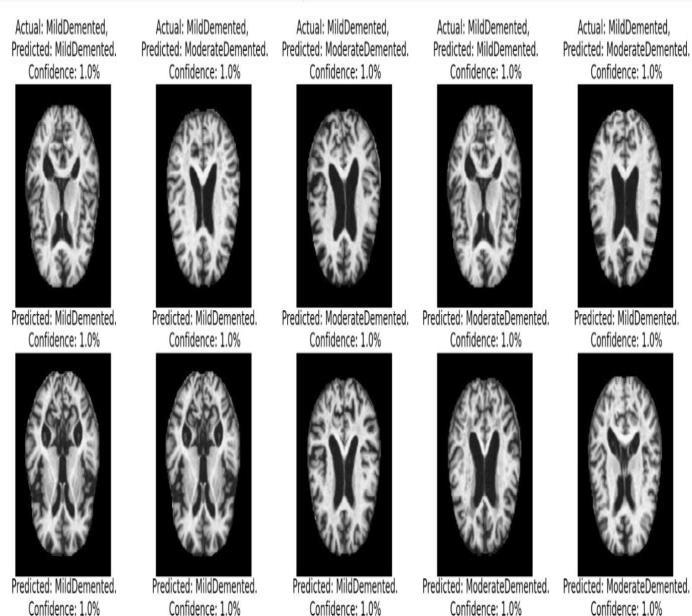
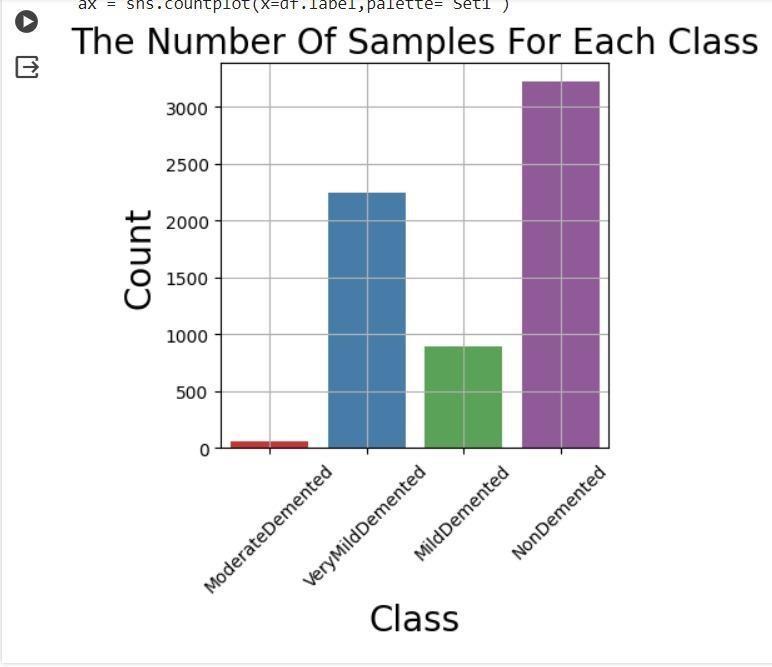
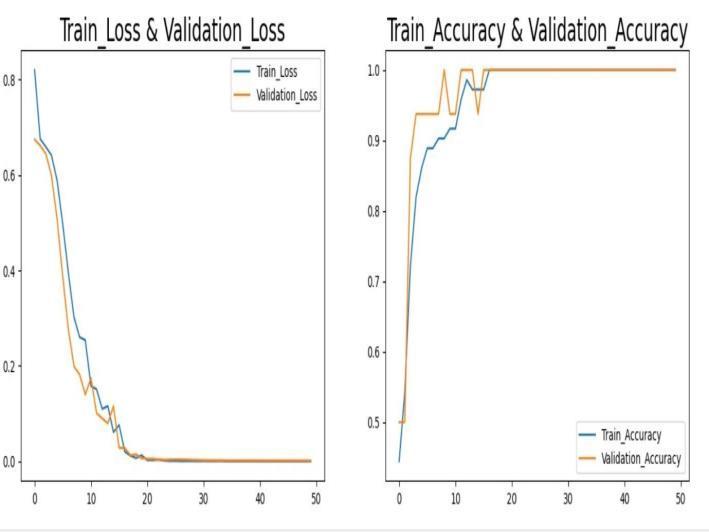
This is based on the comparison and evaluation of recent work done in the prognosis and prediction of Alzheimer’s disease using machine learning methods. Explicitly,therecenttrendswithrespecttomachinelearning hasbeenrevealedincludingthetypesofdatabeingusedand theperformanceofmachinelearningmethodsinpredicting early stages of Alzheimer’s. It is obvious that machine learningtendstoimprovethepredictionaccuracyespecially when compared to standard statistical tools. It can be transferredasatoolinhospitalssothatithelpsthepatients with Alzheimer's disease. A bigger dataset can help us improve the performance of our models and decrease overfitting.Transferlearningisanextraapproachthatwe mightemploy.Thisstrategyinvolvestrainingamodelona bigger dataset, such as ImageNet, and then fine tuning it usingdatafromourAlzheimer'spatientcohort.Evenwitha smalldataset,thishasthepotentialtohelpusimprovethe accuracyofourmodel.Finally,toimprovethereliabilityof our Alzheimer's disease diagnostic model, we should considerintegratingdatafromsourcesotherthanMRI.
Deep learning architectures, including recurrent neural networks (RNNs), convolutional neural networks (CNNs), and generative modelling, have shown great promise in the field of Alzheimer’s disease (AD) research. Theseadvancedtechniqueshaveprovidedvaluableinsights andimprovedourunderstandingofthedisease.
One important perspective is the integration of multiplemodalities.Deeplearningmodelsshouldcontinue toexplorethecombinationofvariousdatasources,suchas neuroimaging,genetics,andclinicaldata.Byleveragingthe complementaryinformationfromthesemodalities,wecan enhance the accuracy of AD diagnosis, prognosis, and treatmentresponseprediction.Integratingmultimodaldata canprovideamorecomprehensiveviewofthediseaseand enable the development of personalized treatment strategies.
Another key perspective is the analysis of longitudinaldata.Furthermore,itisimportanttoaddressthe challenges associated with limited data availability in AD research. Deep learning techniques often require large amountsoflabelleddataforoptimalperformance.However, AD datasets are typically limited due to the difficulty and cost of data collection. To overcome this challenge, researcherscanexploretransferlearningtechniques,where pre-trained models on related tasks or datasets are finetuned for AD analysis. Additionally, data augmentation strategies can artificially increase the available data’s size and diversity, enabling more robust and generalizable models.
International Research Journal of Engineering and Technology (IRJET) e-ISSN: 2395-0056
Volume: 11 Issue: 10 | Oct 2024 www.irjet.net p-ISSN: 2395-0072
Intermsofmodelinterpretability,futureresearch should focus on developing techniques to enhance the transparencyandexplainabilityofdeeplearningmodelsin AD diagnosis and prediction. Interpretability in medical applications is crucial to gain the trust and acceptance of clinicians and ensure the ethical use of AI technologies. Efforts should be made to incorporate interpretable components,suchasattentionmechanismsorsaliencymaps, intodeeplearningarchitecturesforADanalysis.
Deeplearningarchitecturesholdgreatpotentialfor advancing our understanding of AD and improving diagnosis,prognosis,andtreatment.Byintegratingmultiple modalities, analyzing longitudinal data, addressing data limitations, enhancing interpretability, and fostering collaboration, we can pave the way for more accurate, efficient, and interpretable deep learning models in AD research. These efforts have the potential to transform clinical practice and contribute to the development of personalized and targeted interventions for individuals at riskoraffectedbyAD.
1. Gao,S.,&Lima,D.(2022).AReviewofTheApplicationOf Deep Learning In The Detection Of Alzheimer's Disease. InternationalJournalofCognitiveComputingInEngineering,
2. Jo, T., Nho, K., & Saykin, A. J. (2019). Deep Learning In Alzheimer's Disease: Diagnostic Classification And PrognosticPredictionUsingNeuroimagingData.FrontiersIn AgingNeuroscience.
3. Liu,S.,Masurkar,A.V.,Rusinek,H.,Chen,J.,Zhang,B.,Zhu, W., ... & Razavian, N. (2022). Generalizable Deep Learning Model For Early Alzheimer’s Disease Detection From StructuralMris.ScientificReports,12(1),17106.
4. N. An, H. Ding, J. Yang, R. Au, And T. F. A. Ang, ‘‘Deep EnsembleLearningForAlzheimer’sDiseaseClassification,’’J. Biomed.Informat.,Vol.
5. 105, May 2020, Art. No. 103411, Doi: 10.1016/J.Jbi.2020.103411.
6. Pirrone,D.,Weitschek,E.,DiPaolo,P.,De Salvo,S.,&De Cola, M. C. (2022). Eeg Signal Processing And Supervised MachineLearningToEarlyDiagnoseAlzheimer’sDisease.
7. Rao,B.S.AndAparna,M.,2023.AReviewOnAlzheimer’s Disease Through Analysis Of Mri Images Using Deep LearningTechniques.IeeeAccess.
8. Williams, J. W., Plassman, B. L., Burke, J., & Benjamin, S. (2010). Preventing Alzheimer's Disease And Cognitive Decline.EvidenceReport/TechnologyAssessment,(193),1727.
9. Yang, Q., Li, X., Ding, X., Xu, F., & Ling, Z. (2022). Deep Learning-Based Speech Analysis For Alzheimer’s Disease Detection: A Literature Review. Alzheimer's Research & Therapy,14(1),1-16.