
International Research Journal of Engineering and Technology (IRJET) e-ISSN:2395-0056


Volume:11Issue:10|Oct2024 www.irjet.net p-ISSN: 2395-0072

International Research Journal of Engineering and Technology (IRJET) e-ISSN:2395-0056
Volume:11Issue:10|Oct2024 www.irjet.net p-ISSN: 2395-0072
Vedalaxmi1 , Prathvi S Kundar2 , Rajashekar Mali Patil3 , Rajendraprasad D R4 , DR. B.M Krishna5 , Shivaprasad K. S6 .
1Student, Dept. Environmental Engineering, JSS S&TU, Mysuru.
2Student, Dept. Environmental Engineering, JSS S&TU, Mysuru.
3Student, Dept. Environmental Engineering, JSS S&TU, Mysuru.
4Student, Dept. Environmental Engineering, JSS S&TU, Mysuru.
5Associate Professor, Dept. Environmental Engineering, JSS S&TU, Mysuru.
6Assistant Professor, Dept. Environmental Engineering, JSS S&TU, Mysuru.
Abstract
The threatening crisis of climate change and pollution resulting from various anthropogenic interventions has attracted worldwide attention over the last few decades. However,CarbonCapture andStorage (CCS) methods arestill unclear. Toovercome this globalissue, biologicalMicroalgae can be used for capturing of CO2. This study involving the utilization of various sensors and boards, such as the MG811 CO2 sensor, Arduino UNO, and DHT11 for monitoring temperature, humidity, and CO2 levels. The results and discussions highlighted the impactoffactors like temperature andairsupplyonalgalgrowthanditsCO2 captureefficiency. Mixed culture microalgae showed maximum CO2 removal efficiency of 23.36% with a low air flow rate at indoor conditions,foraruntimeof180minutes.Attheendofthelab scale experimental study 3 gram of biomass from mixed culture was generated as result of CO2 sequestration. The studyemphasized the importance ofmicroalgaeandsensors in sustainable way to capture CO2 from the ambient air. Algae can be extensively used to capture CO2 from various point sources. Besides giving environmental and economic benefit. Overall, the project delved into the potential of mixed algal cultures for bio-sequestration of CO2, showcasing promising results for environmental sustainability.
Key Words:Climatechange,carboncaptureandstorage (CCS), Microalgae, MG811, DHT11, mixed culture, spirulina,sustainability
1.INTRODUCTION
Excessivereleaseofgreenhousegases(GHG’s)andincrease intheconcentrationofanthropogeniccarbondioxide(CO2) inrecenttimehavearousedtheattentionofeveryonedueto
the serious threat they represent to the environment and humanhealth.AccordingtotheWorldHealthOrganization (WHO),itisestimatedthatsevenmilliondeathsayearare theproductofenvironmental pollutionarisingfromGHGs and it is predicted that these deaths may amount to up to nine million in 2060 if the growing trend in CO2 and GHG emissions continues (Qin. 2022). In this regard, it is necessary to capture CO2 through an environmentally

sustainable process to reduce the damage on the environment.Amongthedifferenttechnologiesforcapturing CO2, the use of microalgae, which are photosynthetic microorganisms that can naturally fix CO2 from 10 to 50 timesthatofterrestrialplantstoproduceO2 (Chengetal., 2022).Bio-sequestrationemergesasapromisingsolutionto tackle the harsh effects of climate change on our environment,offeringanaturalandeco-friendlyapproach.It involvesutilizingmicroalgae,tinyorganismsfoundinwater, to capture and store CO2. Carbon sinks are these amazing naturalsystemsthattakeinandsoakupawholebunchof carbon dioxide from the air. they're like the Earth's super cleaners. They come from places like forests, oceans, soil, wetlands,andgrasslands
Sequestrationisgenerallyofthreetypes-physical,chemical andbiologicalmethods.Mostofthetechnologiesareusedto reducecarbondioxideemissionsintheatmosphere,widely sequestrationmethodsareusedtocapturecarbon.Directair capture,oxy-combustion,precombustion,postcombustionis someofthecarbonsequestrationmethods(NarinderSingh et al. 2023). By trim and fill analysis, it is estimated that carboncapturecostcomprisesofover80%oftotalCarbon capture and storage (CCS) cost (Gal Hochman and Vijay Appasamy,2024).
The role of microalgae in bio sequestration is pivotal for mitigatingclimatechange,asthesemicroscopicorganisms efficiently capture and store carbon dioxide from the atmosphere. Through photosynthesis, microalgae convert CO2 intobiomass,whichcanbeharvestedandprocessedto sequestercarbonforextendedperiods.Theirrapidgrowth rates and high biomass productivity make them effective carbon sinks, while their versatility allows for various applications, including bioenergy production and bioremediation. Harnessing the potential of microalgae in carboncaptureoffersasustainablesolutiontocombatting rising CO2 levels and mitigating the impacts of climate change.

International Research Journal of Engineering and Technology (IRJET) e-ISSN:2395-0056
Microalgae cultivation can contribute to bioremediation effortsbyremovingpollutantsfromwastewater,indirectly aiding in reducing environmental factors contributing to climate change. Their adaptability to different aquatic environments ensures suitability for various geographical regions and climates. Implementing microalgae biosequestrationtechniquesinurbanregionnotonlyreduces carbonfootprintbuthelpsinenhancingitsgreenbelt.
Themainobjectiveofthisreportistoanalyzeenvironmental factors influencing algal growth through a project that integratesenvironmentalengineeringprincipleswithsensor technology and biotechnology. The project involves a comprehensiveliteraturesurveyonvariousmethodologies for CO2 capture and the installation of sensors to monitor CO2 levels.Theexperimentalsetup,designedtostudyboth indoor and outdoor environments, uses materials and methods to evaluate the efficiency of a bioreactor in capturingcarbondioxide,focusingonspirulinaandmixed culturemicroalgae.Thisprojecthighlightsbio-sequestration using microalgae as a sustainable solution to mitigate climatechangeimpacts.
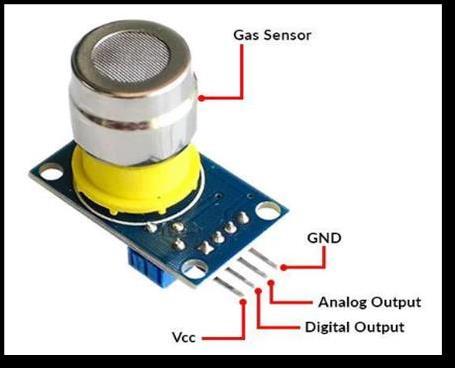
The experimental setup integrates two main components: electricalcomponentsandlaboratoryequipment.Electrical Components such as Sensors (MG811) to Monitor temperature, humidity, and CO2 concentrations, Arduino UNOBoardwhichservesasthemicrocontroller,Connecting Wires, Air Pump, Flow Regulator, LCD Display, Adapters wereusedtoFacilitatetheoverallfunctioningandreal-time monitoringofthesystem.LaboratoryEquipment’srequired areClosedCultureMediaforcultivatingmicroalgae,polymer Pipes to Transfer gases in and out of the culture media. FunctionandfeaturesofMG811CO2 Sensor:Sensescarbon dioxideconcentrationbymonitoringtheinfraredradiation absorbed by CO2 in ppm. High sensitivity, stability, wide detectionrange,simplecircuit,digitalandanalogueoutputs, compatibility with Arduino UNO. Figure 2.1 shows the pictorialrepresentationofMG811-CO2 sensor.Specification ofCO2sensorisrepresentedintable1.
Volume:11Issue:10|Oct2024 www.irjet.net p-ISSN: 2395-0072
Figure2.1showsthepictorialrepresentationofMG811-CO2 sensor.SpecificationofCO2 sensorisrepresentedintable1.
Table1:SpecificationsofMG811-CO2 Sensor
SensorType GasSensor
Chip MG811
GasSensitivity CarbonDioxide
OperatingVoltage 6Volt
Dimensions 3.2X2.2X2.9cm
Weight 10g
Themethodologyimplementedinthestudyisintwophases, i.e.,PrimaryphaseandSecondaryphase.Theprimaryphase comprised of selection of algal strains followed by algae cultivation and observation. On the other hand, design of experimentalsetupwasinprogress.
Followingthecompletionofprimaryphase,thesecondary phaseoftheprojectwasinitiated.Asshowninfigure2,the phaseconsistedofselectionofalgalstrainsconductingthe experiment, monitoring and collecting data and analyzing theresults.

ALGAE CULTIVATION AND OBSERVATION

DESIGN OF EXPERIMENTAL SETUP
CARBON DIOXIDE INJECTION

MONITORING AND ANALYSIS
DATA COLLECTION AND ANALYSIS
RESULTS AND DISCUSSION
Figure2:Flowsheetofmethodologyadoptedforthe project
International Research Journal of Engineering and Technology (IRJET) e-ISSN:2395-0056
To identify suitable microalgal species for CO2 biosequestration,anextensiveliteraturereviewwasconducted. Theprimaryfactorsconsideredincludedstrainavailability, growth rate, cultivation conditions, lipid content, and tolerancetofluegasandextremeenvironmentalconditions. Basedonthesecriteria,Spirulinawasselected.Additionally, a mixed culture approach was adopted by collecting algal samplesfromalocalwaterbodyandcultivatingthemunder laboratory conditions. This mixed culture contained variousspeciesofmicroalgae.
2.2.1 Spirulina
Volume:11Issue:10|Oct2024 www.irjet.net p-ISSN: 2395-0072
The project also utilized a mixed culture(fig-4) of various algal species, which included both unicellular and multicellularorganisms.Cultivatedinaquariumconditions attemperaturesof30-40ºC,themixedculturehadalifespan ofuptotendaysandcontainednumerousalgalspecies.
Plate 3.2 illustrates the mixed culture used in the project, which included species such as Oscillatoria, Diatoms, Chlorella, Euglena, Eudorina, Cynadommus quadriquada, Zygnema,Phacus,Anabaena,andMicrocyst.
Spirulina(fig-3),ablue-greenalgaofthecyanobacteriaclass, ischaracterizedbyitsspiral-shaped,multicellularfilaments. Renownedforitshighnutritionalvalue,Spirulinacontains significant levels of proteins, vitamins, minerals, and fatty acids.Itisaphotosyntheticorganismthatconvertscarbon dioxideandwaterintoorganiccompoundsinthepresenceof sunlight,andcantoleratetemperaturesof35-38 o C.Spirulina has a lifespan of approximately eight days and a doubling timeof2-3hours
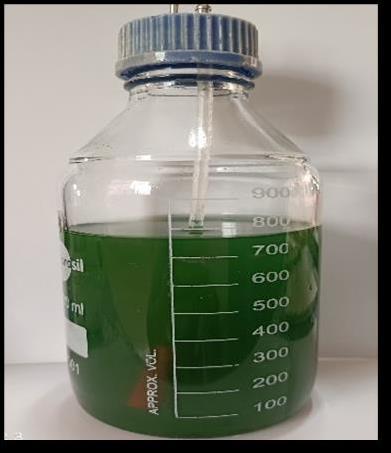
Fig:3a)PictorialrepresentationofSpirulinaAlgae
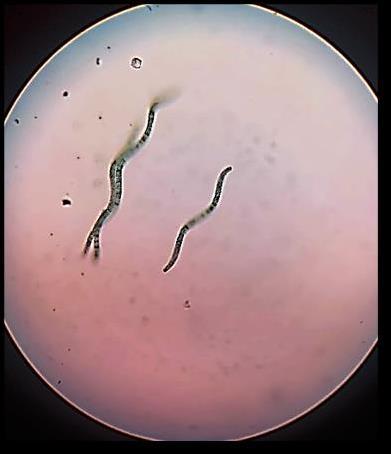
Fig:3b)SpirulinaAlgaeundermicroscope
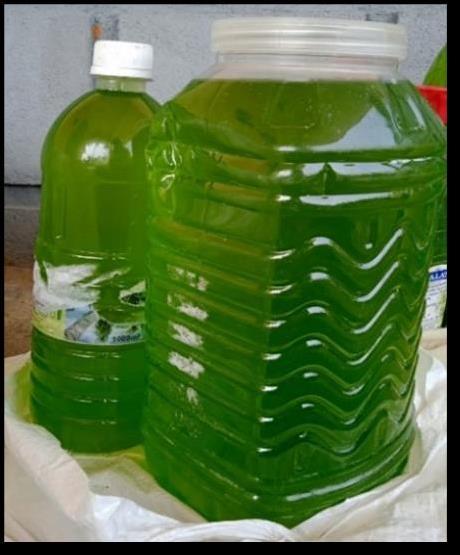
Cultivating algal species requires algal strains, sterilized water,nutrients,andsunlight,asillustratedinFigure5.The strains used were Spirulina and mixed culture, with urea serving as the nutrient medium. After full growth, continuous aeration was provided to maintain the live culture.Bubblingairthroughthewater,thereforealgaeget enoughoxygenanddon'tsettleatthebottom.Theaeration helps to keep the nutrients and light evenly distributed throughout the culture, ensuring that all the algae can continuetothrive.
Volume:11Issue:10|Oct2024 www.irjet.net
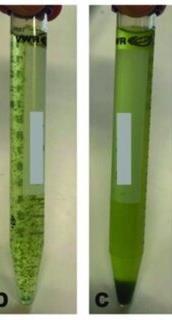




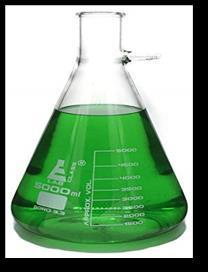



Figure5:Flowsheet representingrequirementsfor cultureofalgae
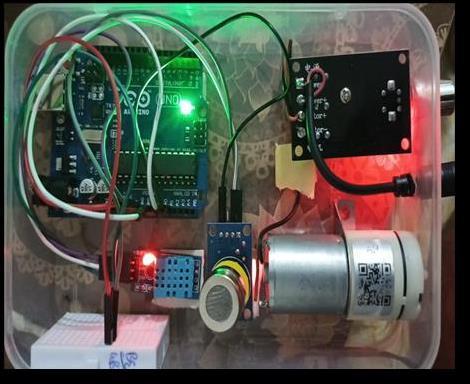
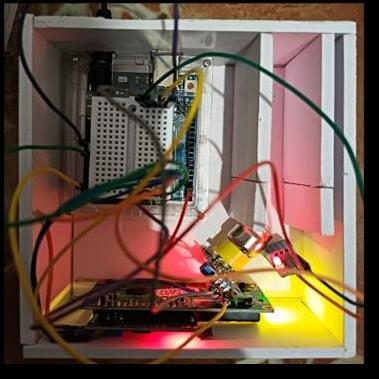
The overall design (Fig-8) includes an inlet chamber, an outletchamber,andthealgalculturemedium,allofwhich areplacedonanacrylicsheetforstability.Theinletchamber (fig-6 ) is equipped with an air pump, flow regulator, Arduino UNO board, MG811 CO2 sensor , DHT11 Temperature and Humidity sensor, LCD display, and connecting wires. These components are enclosed with a white sun-board to prevent external environmental interference,Theoutletchamber(fig-7)containsanArduino UNO board, MG811 CO2 sensor, DHT11 Temperature and Humiditysensor,andLCDdisplay,allenclosedwithasunboard to avoid external contact and the Algal culture mediumconsistsofa1-litercylindricalcontainerwithacap thathasopeningsfortheinletandoutlet.Tubesconnectthe inletandoutletholestotheairpumpintheinletchamber and the air trapping colony in the outlet chamber, respectively.
Volume:11Issue:10|Oct2024 www.irjet.net
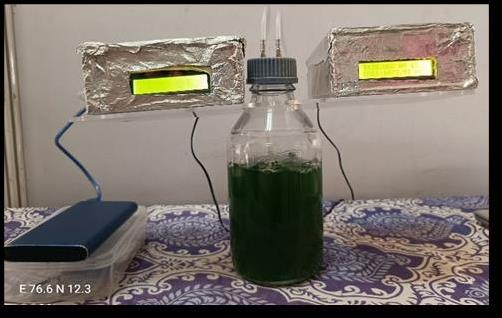
Fig8:Pictorialrepresentationofexperimentalsetup
Thesecondaryphaseoftheprojectinvolvesconductingthe carbon dioxide injection experiment. The 1-liter culture mediumisfilledwith800mlofalgalsample.Aircontaining CO2 is pumped into the chamber, allowing the algae to absorb CO2 for photosynthesis and release excess gas through a pipe to the outlet chamber. The temperature, humidity, and CO2 levels transferred into and out of the culture medium are monitored by the DHT11 sensor and MG811sensor,respectively.Theoperationalconditionsfor thecarbondioxideinjectionexperimentaresummarizedin Table2.
Thetable2outlinesthedifferentparametersconsideredfor theexperimentalrunforbothSpirulinaandmixedculture algae. The parameters include environmental conditions (indoor and outdoor), flow rate (low and high), nutrient medium (urea), experimental duration (3 hours), and volumeofculture(800ml). International Research

Table2:OperationalconditionsforCarbondioxide injection
Theexperimentwasconductedfor3hoursunderindoorand outdoorconditionswithlowandhighflowrates,using800 ml samples. During each 3-hour experimental run, continuousmonitoringofCO2 levelsenteringandexitingthe chamberwasperformed.Real-timedatawasdisplayedon LCD screens every 2 seconds, showing temperature (in degrees Celsius), humidity (in percentage), and CO2 concentration(inpartspermillion).Readingswererecorded every5minutesforboththeinletandoutlet,resultingin36 readingsoverthe3-hourperiod.Thecollecteddatawasthen analyzedtoderivetheresults
Fromtheaboveexperimentthealgaereductionefficiencyof differentalgaeatdifferentatdifferentoperationconditions likeOutdoor/Indoor,Minimum/MaximumCO2injection(Air flow rate). Among the different algae and at different operatingconditionsthemixedculturealgaperformedwell by achieving the CO2 reduction efficiency of 23.36 % at indoorenvironmentandatminimumairflowratethismixed culturealgaeachievedthe34.36%asshowninfigure9.This is because of the mixed culture consists of multiple algae. Among them the diatom algae were the major one for the efficiencyofCO2 reductionthediatomalgaearethecomes underProtistakingdom,thediatomalgaegenerateabout20 to 50 percent of the oxygen produced on the planet each year.AfterthemixedculturetheSpirulinaalgaeachievedthe maximumCO2reductionefficiencyof13.93%atOutdoorat maximumairflowrate.Thesuitabletemperature26°to 37°.
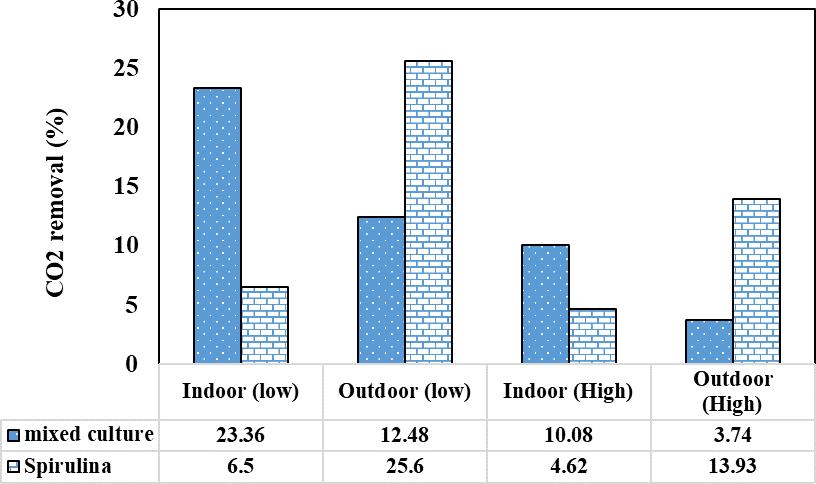
Fig9:RemovalEfficiencyofMicroalgae
Biological carbon sequestration is crucial for mitigating climatechange,andamongthetwoalgalculturesselected forCO2sequestration,themixedculturedemonstratedaCO2 removalefficiencyof23.36%underindoorconditionswitha low air flow rate. This removal rate remained steady
International Research Journal of Engineering and Technology (IRJET) e-ISSN:2395-0056
throughout the 180-minute experimental run. In comparison,theSpirulinaalgaecultureachievedaremoval efficiency of 25.61% under outdoor conditions at temperaturesaround34°Cto36°C.Theoptimaltemperature rangeforSpirulina,between30°Cand35°C,supportshigh biomassproductionwithsignificantproteincontent.Itwas observed that high air flow rates do not favor proper CO2
sequestrationforeitheralgalculture;therefore,asteadyand lowairflowrateisrecommendedformaximumCO2capture. AlgaecaneffectivelysequesterCO2,producingbiomassthat canbeconvertedintobiofuel.Theenergyrequirementfor carbon sequestration using micro-organisms like algae is minimal,andutilizingsolarenergyforthisprocessmakesit fully eco-friendly. The application of microalgae for CO2 sequestrationnotonlyreducesatmosphericcarbonbutalso contributes to mitigating global warming trends. This method is considered economical and eco-friendly, particularlywhenimplementedatpointsources.
1) Alami, A. H., Alasad, S., Ali, M., & Alshamsi, M. (2021). Investigatingalgae forCO2 captureandaccumulationand simultaneous production of biomass for biodiesel production.ScienceoftheTotalEnvironment,759,143529. https://doi.org/10.1016/j.scitotenv.2020.143529
2)Anguselvi,V.,Masto, R.E.,Mukherjee,A.,& Singh, P. K. (2019). CO2 capture for industries by algae. In IntechOpeneBooks. https://doi.org/10.5772/intechopen.81800
3)DaRosa,G.M.,Moraes,L.,Cardias,B.B.,DaRosaAndrade ZimmermannDeSouza,M.,&Costa,J.a.V.(2015).Chemical absorption and CO2 bio-fixation via the cultivation of Spirulina in semicontinuous mode with nutrient recycle. Bioresource Technology, 192, 321–327. https://doi.org/10.1016/j.biortech.2015.05.020
4)Deniz,İ.(2020).DeterminationofGrowthConditionsfor Chlorella vulgaris. Marine Science and Technology Bulletin,9(2),114–117. https://doi.org/10.33714/masteb.717126
5)Iglina,T.,Iglin,P.,&Pashchenko,D.(2022).IndustrialCO2 capture by algae: A review and recent advances. Sustainability, 14(7), 3801. https://doi.org/10.3390/su14073801
6)Ighalo,J.O.,Dulta,K.,Kurniawan,S.B.,Omoarukhe,F.O., Ewuzie,U.,Eshiemogie,S.O.,Ojo,A.U.,&Abdullah,S.R.S. (2022). Progress in microalgae application for CO2 sequestration.Cleaner Chemical Engineering, 3, 100044. https://doi.org/10.1016/j.clce.2022.100044
7)Li,G.,Xiao,W.,Yang,T.,&Lyu,T.(2023).Optimizationand Process Effect for Microalgae Carbon dioxide Fixation
Volume:11Issue:10|Oct2024 www.irjet.net p-ISSN: 2395-0072
echnology Applications Based on Carbon Capture: A Comprehensivereview.C,9(1),35. https://doi.org/10.3390/c9010035
8)Nguyen,L.N.,Vu,M.T.,Vu,H.P.,Johir,M.a.H.,Labeeuw, L.,Ralph,P.J.,Mahlia,T.M.I.,Pandey,A.,Sirohi,R.,&Nghiem, L. D. (2022). Microalgae-based carbon capture and utilization:Acriticalreviewoncurrentsystemdevelopments andbiomassutilization.CriticalReviewsinEnvironmental Science and Technology, 53(2), 216–238. https://doi.org/10.1080/10643389.2022.2047141
9)Nithiya,E.,Tamilmani,J.,Vasumathi,K.,&Premalatha,M. (2017). Improved CO2 fixation with Oscillatoria sp. in response to various supply frequencies of CO2 supply. Journal of CO2 Utilization, 18, 198–205. https://doi.org/10.1016/j.jcou.2017.01.025
10) Onyeaka,H.,Miri,T.,Obileke,K.,Hart,A.,Anumudu,C.,& Al-Sharify, Z. T. (2021). Minimizing carbon footprint via microalgaeasabiologicalcapture.CarbonCaptureScience& Technology,1,100007. https://doi.org/10.1016/j.ccst.2021.100007
11) Politaeva, N., Ilin, I., Velmozhina, K., & Shinkevich, P. (2023). Carbon dioxide utilization using chlorella microalgae. Environments, 10(7), 109. https://doi.org/10.3390/environments10070109
12) Sarwer, A., Hamed, S. M., Osman, A. I., Jamil, F., AlMuhtaseb,A.H.,Alhajeri,N.S.,&Rooney,D.W.(2022).Algal biomass valorization for biofuel production and carbon
sequestration: a review. Environmental ChemistryLetters,20(5),2797–2851. https://doi.org/10.1007/s10311-022-01458-1
13) Setiawan,Y.,Asthary,P.B.,&Saepulloh,N.(2019).CO2 fluegascaptureforcultivationofSpirulinaplatensisinpaper mill effluent medium. AIP ConferenceProceedings. https://doi.org/10.1063/1.5115643
14) Singh,N.,Farina,I.,Petrillo,A.,Colangelo,F.,&DeFelice, F.(2023).Carboncapture,sequestration,andusageforclean and green environment: challenges and opportunities. InternationalJournalofSustainableEngineering,16(1),248–268.https://doi.org/10.1080/19397038.2023.2256379
15) Singh, J., & Dhar, D. W. (2019). Overview of Carbon capture Technology: Microalgal Biorefinery concept and State-of-the-Art. Frontiers in Marine Science, 6. https://doi.org/10.3389/fmars.2019.00029
16) Tripathi, S., Choudhary, S., Meena, A., & Poluri, K. M. (2023).Carboncapture,storage,andusagewithmicroalgae: a review. Environmental Chemistry Letters,21(4),2085–2128.https://doi.org/10.1007/s10311-023-01609-y
© 2024, IRJET | Impact Factor value: 8.315 | ISO 9001:2008 Certified Journal | Page25