Implementing Integrated Solid Waste Management: A Case Study of Domestic Waste in Ward No. 3, Gwalior City
Er. Shivam Agrawal1 , Ar. Harshita Mishra2 , Dr. Anjali Patil31Civil Engineer, Graduated from SGSITS, Indore, MP, India

2Architect and Environmental planner, Post-graduated from SPA Bhopal, MP, India
3Architect and urban Planner, Post-graduate from COEP Technological University, Pune, Maharashtra, India ***
Abstract - Municipal Solid Waste Management has been a significant concern worldwide. Mishandling of generated waste has caused severe health concerns for residents and disturbs the urban environment. Most Indian cities lackproper management of solid waste and rapid urbanization has pressurized the existinginfrastructure. Gwalior CityofMadhya Pradesh state has been taken as a case study for this research. The city was selected under the smart city project of the MOHUA, Government of India in 2016 and the waste management of the city is being done under the aegis of the Swachh Bharat Mission. Still, numerous parameters have led to the inadequacy of infrastructure and waste management. The study has looked at the obstacles and prospects of waste management by conducting a detailed study on a selected ward of Gwalior city where maximum challenges have been identified. The study involves a literature review of the waste management cycle and best practices. The government intervention done so far in this domainhas beendiscussed. The site visits have been conducted and interaction with various stakeholders has been taken into consideration. Both primary and secondary data have been collected. A sample size of 120 households have been collected from the residents of the selected ward for having in-depth understanding. The analysis of primary data highlights the demand and supply gap along with the public perception and awareness of the city’s waste management system. Public involvement at different stages of waste management for better infrastructure efficiency has been proposed with some recommendations.
Key Words: IntegratedsolidwasteManagement(ISWM), Private Public Partnerships (PPP), Municipal Solid Waste Management (SWM), Sustainable Development Goals (SDG’s)
1.INTRODUCTION
AscitedbytheNationalGreenTribunal(inthematterof Compliance of Municipal Solid Waste Management Rules, 2016)theMunicipalSolidWaste(MSW)remainsoneofthe most serious challenges for environment protection. Deficiencies in proper management of solid waste have resultedinoutbreakofseriousdiseasesinthepastandhave suchpotentialinfuture.
1.1 National Scenario
Over the past few years, our nation’s stable waste manufacturing from domestic and commercial spaces has expanded appreciably because of the country's speedy populace increase and the ongoing pursuit of economic development.Percapitawastegenerationvariesbetween0.2 Kgto0.6Kgperdayincitieswithpopulationrangingfrom 1.0lakhto50lakh. Withaspeedypopulationincreaseand urbanization,annualwastegenerationisexpectedtoincrease by73% from2020levelsto3.88billiontonnesin2050.[4]
1.2 Concerns
Compared to those in developed nations, residents in developing countries, especially the urban poor are more severelyimpactedbyunsustainablymanagedwasteinlowincomecountries.Over90%ofthiswasteisoftendisposed ofinunregulateddumpsoropenlyburned.Thesepractices create serious health, safety, and environmental consequences.Poorlymanagedwasteservesasabreeding ground for disease vectors contributing to international climatechangethroughmethanegenerationandcaneven promoteurbanviolence.
2. METHODOLOGY:
Toestablishthemethodofdatacollectionwelookedforan areafacingwastesegregationanddisposalproblemscreated due to haphazard and unplanned urbanisation. For the collection data a set of questionnaires was created for the residents,commercialenterprises,communitymembersand all theothervariousstakeholdersinvolvedastheyarethe one primarily facing the problem of waste and its harmful effects.
Simultaneously to lend a practical dimension to our methodological exploration, we drew insights from noteworthycasestudiesinIndia,specificallythoseofAgra& Bhopal Theseempiricalillustrationsnotonlyenrichedour understanding but also engendered a nuanced comprehension of the manifold solutions employed to addressthecomplexissueofsolidwastemanagement.
Followingthat,thepurposeofAims,objectives,scope,and constraints were articulated, carefully defining the
parameterswithinwhichthestudytookplace.Anin-depth analysis of case studies led to the orchestration of comprehensive solutions for the reduction of solid waste concerns.
3. LITERATURE REVIEW
Everyelementofnatureservesapurpose.Theworsterror istobelievethatThrowingwasteintoalandfillispointless. HenceSolidwasteisdefinedas"Organicorinorganicwaste materialsproducedoutofdomesticorcommercialactivities, thathavelosttheirvalueintheeyesofthefirstpossessor butwhichmaybeofgreatimportancetofutureusers”[1]
3.1 Sustainable Development Goals of waste management
Managingwasteisaglobalproblem.TheUnitedNations Goal 2030, which includes 17 sustainable development objectives,wasofficiallyendorsedbyallmemberstatesin 2015 in the United Nations. The following objectives are included among them as being directly or indirectly connectedtowastemanagementare:
Goal No 03: Improved health and wellbeing (loweringpollution-relateddisease)
Goal No 11: Sustainable Cities and Communities (Cleanlinessofthecities)
Goal No. 12: Responsible Consumption and Production(Reduce|Reuse|Recycle)
Goal No 15: Life on Land (Promoting healthy lifestyleofresidents)[7]
3.2 – National Acts and Rules regarding (SWM) –NationalActsandRulesrelatedtoSolidWasteManagement.
1. “TheEnvironment(Protection)Act,1986.
2. MunicipalSolidWaste(ManagementandHandling) Rules,2000.
3. EPA –“Rule and Implementation Information for Standards of Performance for Municipal Waste Landfills” .
4. EPA-MunicipalSolidWasteLandfillRegulations.
5. TheNationalGreenTribunal,2010”(Moud.gov.in, n.d.)
Policies Regarding Solid Waste Management in India –
1. 1994 –“MSWMstrategypaperbyNEERI
2. 1995- JS. Bajaj Committee I The High-Powered CommitteeonUrbanSolidWasteManagement)[1]
3. 2000 -MSW(M&H)RulesCPHEEOManualonMSW.
4. 2006 -StrategyandActionPlan-Useofcompostin cities.
5. 2007 -11Five-YearPlan(2007-2012) Rs.2.210Cr forMSWM
6. 2014 - Swachh Bharat Mission, “a country-wide campaign initiated by the Government of India in 2014 to eliminate open defecation and improve solidwastemanagement”.[6]
7. 2016 WasteManagementRules,2016comprising ofSolidWasteManagement”(Moud.gov.in,n.d.)
Theseactsandpoliciesprovidedtheguidelineframework fortheimplementationofISWMinthenationforeffective waste management and fulfill the aspirations of SDG’s leadingtoahealthylife-styleofresidents.
3.3 Policy Interventions in India –
The Supreme Court's decisioninAlmitraPatelv.Unionof India(writ(civil)no.888/1996),whichdealtwithmunicipal garbage,resultedinthe1990sinthedevelopmentofseveral waste management programmes and policies from the Government of India. The Swachh Bharat Mission in October 2014 is remembered as a turning point in urban localbodies(ULB’s)awarenessofwastemanagement.Also, theordersof National Green Tribunal and MOHUA, GOI guidelinesandregulationsareonlythestartoftheprocess, though the implementation stage presents a more challengingchallenge.Thisresearchdiscussesthedifficulties facedwithwastemanagementinthecityofGwalior.
4. PRESENT SCENARIO OF SOLID WASTE MANAGEMENT IN GWALIOR CITY
4.1 – Introduction to Gwalior –
Gwaliorisahistoriccityinnorth-centralIndiaat26.2183° N,78.1828°Ewithamunicipalareaof375sq.kilometresand apopulationof20,32,036aspercensus2011[6].ItisaTierI citylocatedinMadhyaPradesh'sfarnorth-westerncorner. Theurbanpopulationis1.05millionpeople,including0.14 millionpeoplelivinginnotifiedandun-notifiedslums.The Gwalior municipal corporation is organised into 25 zones, eachofwhichisfurthersubdividedinto66wards.Thecity hasadensityof6157peoplepersquarekilometre.[2]
Source Segregation
Door to door collection of waste
Nosourceofsegregationpracticeat presentinGMC.
Currently, a street-to-street collection approach is followed in the66wardsonalternatedaysbasis.
Storage of waste There are many garbage collection points&openpointstostorewaste and subsequently transport them. On other hand garbage collection pointsthereare1.1cubicmeterbins forsecondarystorageofwaste.The currentpracticeistostorethewaste inopenplots.
Secondary transportation Waste that is stored at garbage collection points is lifted and transported to the dump site by tractor trolleys and dumpers and tipperswastethatisstoredinopen points is lifted by open points is lifted by open tractor trolleys and transportedtothedumpingsite.
Waste Processing At present there is no 100% processing facility at Gwalior and currently all mixed waste is being dumpedatKedarpurlandfillsite.
4.2 Waste Generation in the city -
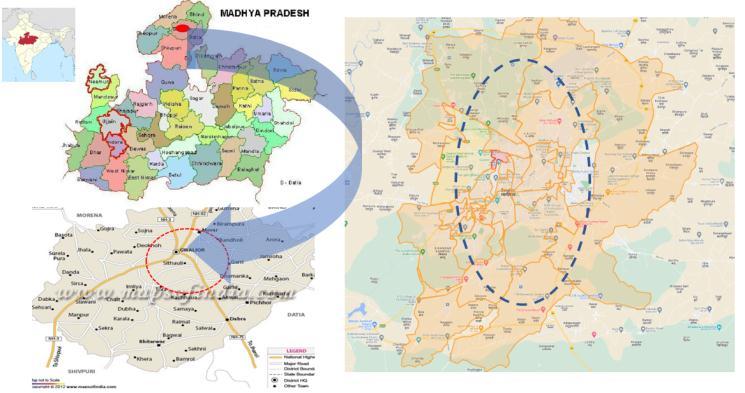
Most of the solid waste is generated by households, markets and commercial areas. The total number of households in Gwalior Municipal Corporation is around 2,95,000.Thecitygeneratesaround450-600TPDofsolid wasteofwhicharound80%isdrywasteandtherest20%is wetwaste.Allkindsofwasteincludingcowdung,biomedical, e-waste and construction & demolition waste are being mixed in the municipal stream of waste. Almost all the unsegregatedwasteisbeingdumpedrampantlyacrossthe
onlypresentKedarpurLandfillSiteandatvariousopenplots inthecityeventhoughrecyclingislimited.
DrywasteprocessingcapacityofLandfillSite - 250TPD
WetwasteprocessingcapacityofLandfillSite - 390TPD
Drywastereceivedperday(avg) - 400TPD
Wetwastereceivedperday(avg) - 150TPD
Thelandfillsitewithamaximumprocessingcapacityof drywastearound250TPDreceivesaround400TPDofwaste ofwhicharound60%getsrecycledandprocessedandrest over is dumped leading to its overburdening. Wet waste receivediswellwithintheprocessinglimitandgetsrecycled completelyintoorganiccompost.[2]
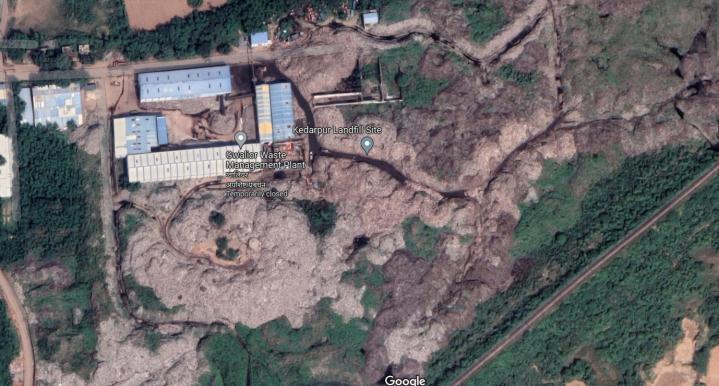
Lackofrecyclingprocessandoverburdeningofwasteleads totheaccumulationofwasteandcreatinghazardousissues forthepopulaceaslegacywaste.
5. INTRODUCTION TO THE STUDY AREA –
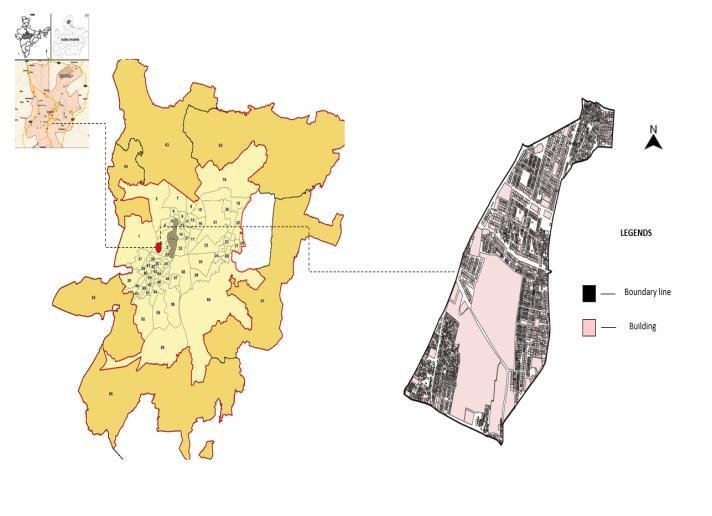
Thewardno03VinayNagarFallsintheNorthPeripheryof theGwaliordistrict.TheareaoftheVinayNagarWardis2.18 km²approximately.Thedistanceis5.4kmfromtherailway stationand14.7kmfromGwaliorAirport.Itis4.9kmfrom the Bus Stand of Gwalior and 4.3 km from the Primary BusinessDistrict,MaharajBada.Thirtythousandpeoplelive ina2.18m2 totalwardarea.
With a population density of 14000 people/km2, 12 colonies, it is the ward with the highest population in Gwalior
5.1 Present status of ward’s SWM-
Themajorityofthelandinthewardisusedforresidential, institutional,andcommercial purposes.Most of the waste, which is organic and may be recycled, is produced by residentialindividuals.Constructionmaterialstoresinthis wardproducehazardouswastethatcanberecycledandnot recycled,andindustrialgarbageisalsoproducedasaresult ofthepresenceofanindustrialarea.
Thewardgenerates10.5tonsofwastedaily.outofwhich dry waste is 70% & wet waste is 30%. The vehicle collectionisirregular;themajorityofthewasteispickedup byragpickers,andpeopledumpitinthenearbyopenplots ordrains. Only 50% ofthematerialisbeingcollectedand disposedofbyGMCbecauseofinsufficientfacilities.
Only 50% ofthematerialisbeingcollectedanddisposedof byGMCbecauseofinsufficientfacilities.Municipalwastewas typically discovered in a mixed form, which included biomedicalwaste,constructionwaste,andotherwastethathad beenplacedinanopenarea.Itwasquitetypicalforwasteto be burned at disposal sites. (Gwalior Nagar Nigam norm statesthat350gm.ofwasteisproducedperpersonevery day).Thetotalnumberofwastecollectionvehiclesoperating inthecityis300foralloverGwalior.
5.2 Current issues in the ward –
Withawastegenerationof10.5TPDintheward,around6 tonnesiscollectedbytheULBandtherestisdumpedinthe locality.
No.ofwastegeneratingunits–
Residential–7200
Commercial-450
No slum area in ward no.3
The indiscriminatescattering of unsorted waste in and aroundthelocallandscapegeneratesfoulodoursandposes health concerns for the community's inhabitants. This unmanagedwasteaccumulationfosterstheproliferationof contagiousailments,whilealsoattractingstrayanimalsthat fall sick after consuming these discarded materials. Furthermore,theobstructionofdrainagesystemsresultsin heightenedsedimentbuildupwithinthechannels,leadingto flood-like scenarios during the rainy season. This, in turn, resultsinthedispersalofharmfuldecomposingwasteonto thestreetsandprivatepropertiesoftheresidents.Moreover, this situation acts as an impediment to the realization of SustainableDevelopmentGoals(SDGs)03,11,and15.
5.3 Analysis of household survey -
Thesurveywasconductedthroughgoogleformandpersonal interactions with the people. A sample size of 120 households.theanalysisofvariousquestionsare
a) Segregation of waste – IntheVinayNagarWard, 68% of residents are aware of waste segregation, while32%arenot.Thosewhoareawarestilldonot segregatethewasteanddiscarditinthemixedform which creates issues in recycling. Literate people weremoreawareandoptedforwastesegregationat theirhomes.
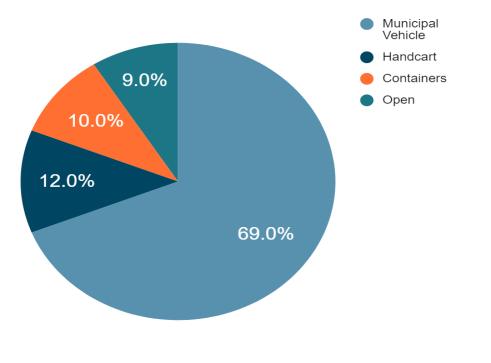
b) Method of disposal of waste –9%ofpeopledump their waste in open spaces, while 69% of people dump their waste in municipal vehicles. 12% dumpedinhandcarts,10%dumpedincontainers.It was observed that people who were not literate mostlydiscardedthewasteinopenlandanddidnot use sustainable methods and a lack of awareness wasobservedamongthem.
c) Regularity of collection –76% of residents claim thatcollectionisregular,however,24%claimthat collectionisnotregular.Itjustcollectsthriceaweek. Whichisthebasisforopendisposal.TheULBneeds tospeeduptheircollectionprocessandensurethat everyhouseholdiscoveredatleastonceaday.
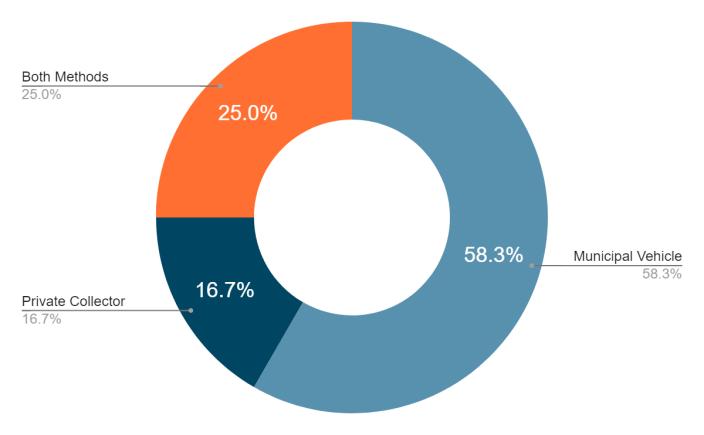
d) Disposalserviceavailable– Everyamountofwaste is either collected by the municipal corporation,a private individual, or both. 58.3% of households disposeoftheirvehiclesthroughcollection,16.7% dosothroughhiredprivatecollectors,and25%use both services. ULB should increase its collection vehiclesandtheirfrequency.

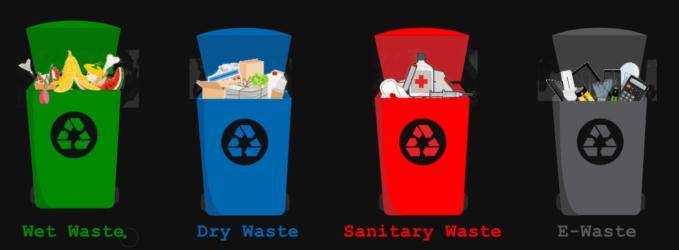
f) Need of large bins – Areasrequiring colorcoded large community bins should be addressed on a priority basis to make sure the waste is not discarded in open on non- availability of waste collectionvehicles.Italsomakesthetaskeasierfor both the public and the Government. The waste segregationbytheresidentsintodry,wetandother waste can be ensured by discarding the waste in propercolor-codedbins.
e) Cleaning of area - 71% coverage of the area for cleaning of the ward shows adequate manpower employedbytheULB.Propertrainingisnecessary tomanagetherelatedfunctionalcomponents,such as garbage collection and segregation and safety equipment should also be made available to the safai-mitrastoensuretheirhealth-beinganddaily availability.
g) Participant’s opinion on opting Composting69.2% of the respondents were aware about and readytooptforcomposting.Moreawarenessamong thepeopleisrequiredtoimproveitfurtherto80% as it will reduce the daily incoming waste at the landfill site significantly and reduce its overburdening.ApartfromHomeCompostingsome pit composting plant should also be set up by creatingawarenessamongtheresidentsbytheULB.
6. PROPOSED ISWM SCHEME FOR VINAY NAGAR WARD IN GWALIOR CITY –
The ISWM strategy designed for theGwaliormunicipal regionaimstodecreasetheinitialwastegeneration,followed byrecyclingandreuse,therebyachievingareduction(inline withthe3R'sofSDG6)intheamountofwastebeingsentto landfills for ultimate disposal. To overcome limitations,an integratedstrategicapproachforISWMincorporatesexisting data,standards,andframework.
The primary goal in this context is to guarantee appropriate storage, efficient collection, seamless transfer, processing, and responsible disposal of waste, taking into accountthecomponentswithinthewastestream.Thisisto be achieved sustainably and with active community engagement.Lastly,formaintainingahealthyenvironment, theULBshalladoptthisapproachandshallpursuereducing theamountofsolidwastecost-effectively.
6.1 Proposals -
1. Segregating waste at its origin, particularly household waste,involvestheactiveengagementofthecommunity.This is done by using separate containers and employing fuelefficientvehiclesfortheroutinecollectionofwastebasedon itscharacteristics.Theinclusionofacompactorenhancesthe efficiencyandcost-effectivenessofthecollectionprocess.
2. Toincreasethenumberofinstalledcommunitybinsand storagecontainersforstoringbiodegradableandwetwaste.
3. Constructionoftransferstationsatsuitablelocationsfor impeccableoperationoftheSWMsystem.
4. Creation of Pit Composting Centres and spreading awarenessaboutcompostingamongtheresidentsthrough variouscampaigns.
5. Increasing the number of collection vehicles and their frequency.
6. Thetrainingnecessarytomanagetherelatedfunctional components, such as garbage collection and segregation, shouldbeprovidedtoallstaffatalllevelsinvolvedinsolid wastemanagement.SafaiMitrasandragpickersshouldalso becompelledtoundergoregularmedicalexams.
7. Portable truck mounted refuse compactor shall be deployed in the commercial areas to improve the waste collectionefficiencyofcommercialareas.
7. CONCLUSIONS
Un-plannedurbanisationandrapidpopulationgrowthare partlyblamedforthedramaticrisein volumeofmunicipal waste produced in numerous Indian cities and municipalities. Waste management issues have a negative impact on public health as well as the environment. As a result,moreintegratedsolidwastemanagementsystemsare replacingtraditionalsolidwastemanagementsolutions.But theimplementationoftheISWMstrategyisbeingseriously hampered by a lack of planning, proper funding, and ineffectiveadministrativepractices.
TheGwaliorwastemanagementsystemisoutdatedinthe domain of effective waste management and disposal. Its efficacyhasbeenhinderedbyfinancialdifficultiesandalack
ofcoordinationandcooperationbetweenthepublicandthe relevantauthority.
Along with use of cutting-edge spatial analytical tools like GISandGPS,thepotentialforcommunityinvolvementinthe waste management system shall be stressed more for efficient management. While, for the system to succeed, government initiative is always required. Consumer advertisements that entice people to participate in waste separationandbuyrecoveredgoodscanbeusedtopromote wasterecycling.ULBshouldpromotecompostingofgarbage concurrentlysinceitwillminimisetheamountofwastetobe disposedofandalsohelptosafeguardtheenvironment.
REFERENCES
[1] MSWM & Swachh Bharat Mission, Manual II, CPHEEO,MOUD,2016
[2] Gwalior Municipality Booklet on Swacchta SarvekshanandSwacchBharatMission(2017).
[3] SOLID WASTE MANAGEMENT MONITORABLE ACTIONPLAN,MunicipalCorporationAgra(2020)
[4] SayantaniJafa,MunicipalSolidWasteManagement in India- A Compendium Report, International Centre for Environment Audit and Sustainable Development(iCED),Jaipur,India(2022)
[5] CensusofIndia,2011
[6] GUIDELINES,MOHUA,2016
[7] Sustainable Development Goals, United Nations EnvironmentProgramme,2015
[8] BrijeshKumarPandey,SavitaVyas,MukeshPandey andAnuragGaur.“CharacterisationOFMUNICIPAL SOLIDWASTEGENERATEDFROMBHOPAL,India” CurrentSciencePerspectives2(3)(2016)52-56