Review: Utilizing Machine Learning Techniques for Timely Diagnosis of Parkinson's Disease
Azhan Umar kamil1 Talha Khursheed51,2Student, Department of Computer Engineering, Zakir Husain College of Engineering and Technology, Aligarh Muslim University, Aligarh
3Student, Department of Electrical Engineering, Zakir Husain College of Engineering and Technology, Aligarh Muslim University, Aligarh
4Student, Department of Computer Science, Aligarh Muslim University, Aligarh
5Student, Jawaharlal Nehru Medical College, Aligarh Muslim University, Aligarh ***
Abstract - The second-most dangerous neurological condition, Parkinson's disease (PD), has a history of loweringpeople's qualityof life(QOL). Parkinson's disease is a neurological condition that worsens over time, caused by the degeneration of dopaminergic neurons in the substantia nigra. It is characterized by slow movements, tremors, rigidity in the limbs, and changes in gait such as an abnormal forward-leaning posture, a shuffling gait, a tendency to take small rapid steps, difficulty initiating movement, and a higher risk of losing balance and falling. However, the initialsymptoms ofParkinson's disease may be subtle and easily missed, leading to a delayed diagnosis aftersignificant neuronaldamage hasalreadyoccurred.
Early PD discovery allows for prompt treatment intervention, which lowers morbidity. However, The elderly population, which has a higher prevalence of Parkinson's disease, often experiences progressive slowness due to other health conditions, it can be difficult to correctly identify PD, especially in the early stages. Recent improvements in imaging, biomarker analysis, and other diagnostic tools have made it easier to detect PD early. Magnetic resonance imaging (MRI) has been used to detect changes in the substantia nigra and other brain regions, while biomarker analysis of cerebrospinal fluid and blood has revealed changes in the levels of specific proteins associated with PD. Additionally, several behavioral and cognitive tests have been created to examine the early signs of Parkinson's disease (PD). Optical coherence tomography (OCT) is a type of medical imaging method that creates detailed images of the retina without the need for invasive procedures. By using light waves, OCT can produce high-quality and precise images of the retina. The use of Optical coherence tomography (OCT) has made it possible to measure the thickness of the retinal nerve fiber layer (RNFL), which is proving to be a useful tool in the early detection of Parkinson's disease. OCT is a promising method for early diagnosis because research has indicated that individuals with Parkinson's disease exhibit significantly lower RNFL thicknesscomparedtohealthyindividuals.
We examined various research articles published until 2022 to gain a comprehensive understanding of the data formats and artificial intelligence (AI) techniques utilized in Parkinson's disease research and diagnosis. The aim was to address the challenge of distinguishing subjective diseases from healthy individuals who exhibit similar medical features by employing machine learning (ML) methods. Through our analysis of 30 academic papers, we discovered that the use of ML methods and novel biomarkers has great potential in improving the diagnostic process for PD, therebyenhancingclinicaldecision-making.

Key Words: PD,Parkinson’sDisease,Neuro-degenerative, Dopamine, Machine Learning, Deep Learning, Neuroimaging,Gaitdatasets,Voice-baseddatasets.
1. INTRODUCTION
The human brain is the body's main processing center, evenarelativelymodestinjurytooneareaofthebodycan havefar-reachingeffectson therestofthe body.PD[1] is one of its hidden effects. Parkinson's disease is a type of incurable neurological disorder that worsens over time [2]. Around the world, approximately 9.4 million individuals were still affected by this illness in the year 2020 [3]. People over the age of 60 are most likely to get thisdisease.
Only4%ofpeopleundertheageof50getit[4].Thereare bothmotorandnon-motorsignsofthisdisease[5].
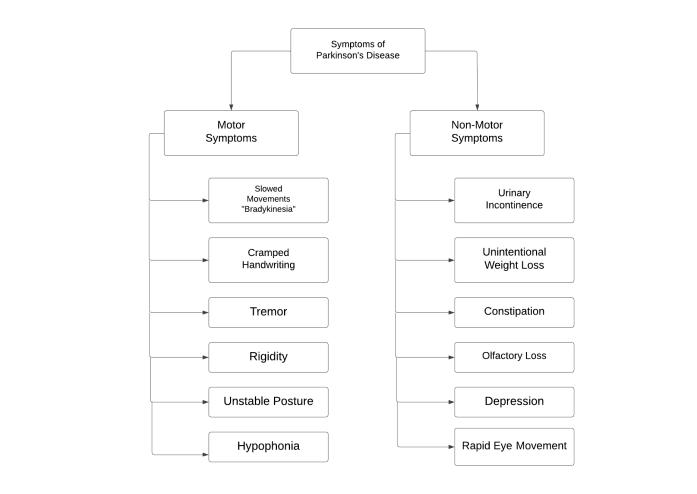
Movement slowness, The major motor symptoms of Parkinson's disease include tremors, difficulty walking, unstable stance, rapid eye movement problems, and shivering. [6,7]. Low blood pressure, sweating, weariness, constipation, urinary issues, and weight loss are among non-motor symptoms [8]. According to research, speech and voice acoustic problems are present in 90% of individualswithParkinson'sdisease[9].Theseissuesmay include microphonia, dysarthria, monochromatic speech, and dysphonia [10]. Therefore, the loss of one's voice is often the first symptom of this illness [11]. While there is
no cure for the disease as of yet [12], during the initial stages, there are several medications available that can help alleviate its symptoms. The voice frequency analysis is quick and painless. As a result, changes in voice frequency can serve as a potential method for monitoring the progression of Parkinson's disease [13]. To track the advancement of this challenging disease, several speech tests have been carried out. Machine learning (ML) techniques are commonly employed in the healthcare industryforthispurpose.Differentkindsofdata,likevoice recordings and handwritten patterns, are being used by ML algorithms for PD detection. The proper qualities that aren'ttypicallyutilizedtodefineParkinson'sdisease(PD) may be discovered with the aid of ML approaches, and these additional symptoms may be employed to identify PD in its pre-clinical phases. There are typically three stages in making a diagnosis for this illness: the steps of (1) data preparation, (2) feature extraction, and (3) classificationtechniques[14,15,16].
The purpose of this study was to provide neurologists withinsightsthatmightaidinthediagnosisandtreatment of Parkinson's disease by looking into untested methods and offering unexplored alternatives. This paper's contributionisasfollows:
● We provide background information on Parkinson's disease, outlining its primary traits andthemainmotorandnon-motorsymptoms.
● Using speech, handwriting, and gait metrics, we categorized ML models and examined their diagnosticefficacyforParkinson'sdisease.
● The paper concludes by highlighting the difficulties and outlining suggestions for further work.
We explain what you need to know about Parkinson's disease, including its main signs and symptoms, both motorized and non-motorized. We put ML models into groups and looked at how well they could diagnose Parkinson's disease by analyzing speech patterns, handwriting, and walking factors. In this study, we also talked about a different ML-based framework for diagnosing Parkinson's disease. The goal is to improve Parkinson's disease data. The article's challenges and suggestions for future research are discussed in the paper'sconclusion.
2. METHODOLOGY OF THE STUDY
2.1 Data Acquisition
We collected scientometric data from various databases including Web of Science, IEEE, Scopus, and ScienceDirecttodiagnosesubjectivediseases.Ouranalysis used up-to-date data from various research papers
containing the latest research and findings related to Parkinson'sdiseaseupuntil2022.Thisdatawascollected from multiple sources and included abstracts, concepts, and other relevant information. The search process was systematic and thorough, ensuring a comprehensive overview of the disease. Furthermore, artificial intelligence was utilized for disease diagnosis. The indexing process for this database is quick and comprehensive, allowing for the easy retrieval of recent researchpapers.Thisresourceprovideduswithaccessto numerous databases from various fields, enabling us to offerextensivecoverageinouranalysis
2.2 Journals
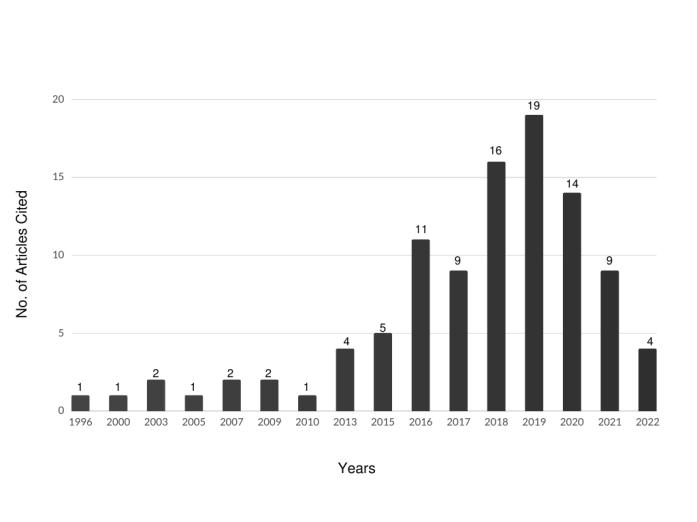
By looking at 103 articles released between 1996 and 2022, a systematic analysis of the ML approach to diagnosingPDwasdone.Figure1showsthemajorjournal thatwritesabouthowdifferentMLtechniquescanbeused to diagnose Parkinson's disease. The studies reviewed in this analysis demonstrate that feature selection techniques and machine learning (ML) algorithms can be utilized to extract valuable insights regarding both motor and non-motor symptoms of Parkinson's disease. This allows medical professionals to make informed decisions by utilizing data from the available datasets. In collaboration with the National Centre for Voice and Speech in Denver, Colorado, MA Little and colleagues established a database by obtaining speech signals in 2017. To classify PD, the authors employed a kernelsupport vector machine. Little's PD voice datasets have been the subject of a variety of investigations up to this point, with varying degrees of accuracy obtained by employing various categorization techniques. The works were filtered by looking at the abstracts, and full-length publications were retrieved if there was any doubt about therelevanceofthefindings.
International
Research Journal of Engineering and Technology (IRJET)
symptoms [17]. In some cases, doctors may recommend regional brain control as a medical intervention to alleviatesymptomsfurther[20].
Inordertoensurethatrelevantresearchwasconsidered, thefinalanalysisfocusedsolelyonpublicationsthatdealt withtheuseofmachine-learningapproachesfor diagnosingParkinson'sdisease.
3. Parkinson’s Disease: Background
Parkinson'sdisease(PD)isa developmental disorderthat affects the sensory systems and is characterized by tremors,stiffness,slowedmobility,slurredspeech,andflat facialexpressions[17-19].PDsymptomstypicallydevelop graduallyovertime,andthereiscurrentlynocureforthe disease,althoughmedicationandsurgerycanhelpmanage
Studies estimate that seven million people over 60 years old in India are living with PD, which is an illness with uncleardiagnosticcriteria[21].Parkinson'sdiseaseaffects morethanamillionpeopleintheUnitedStates,surpassing the total number of individuals affected by Lou Gehrig's diseaseandmultiplesclerosis[17].Itispredictedthatthis number will increase to 1.2 million by 2030. The symptoms, treatment responses, and negative effects experienced by Parkinson's disease patients can vary significantly,andwhileresearcherssuspectacombination of genetic and environmental factors contribute to the illness, they cannot be certain [22]. Only 10%-15% of correlation between a family history of Parkinson's disease and its occurrence in individuals, and some familieshaveahistoryofpassingdownmutationsorother changestocertaingenes[22].
A complete understanding of the molecular foundation of Parkinson's disease is still lacking, but researchers have identified six genes involved in the inheritance of the disease: Parkin, VPS35, DJ-1, LRRK2, alpha-synuclein, and PINK1 [23]. While the first mutation related to PD was discovered over 20 years ago, recent advances in technologieslikenext-generationsequencingandgenomewideassociationstudieshaveledtosignificantprogressin PDgeneticsstudies[23].
4. Machine Learning Techniques to Diagnose Parkinson's Disease
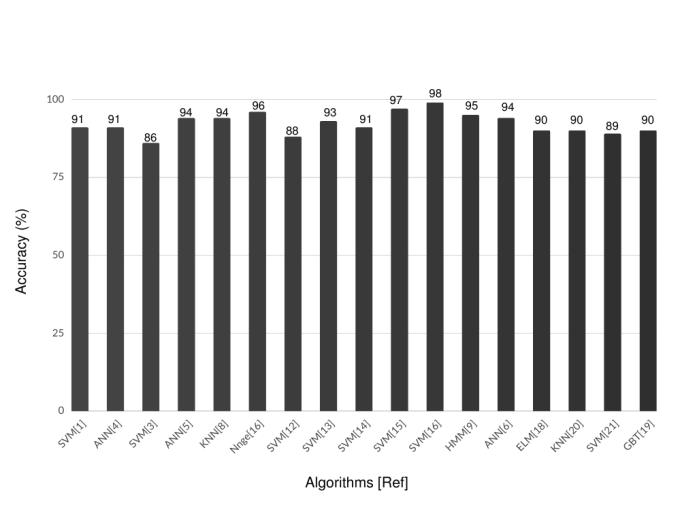
metrics with reasonable accuracy. ANN isfrequently used for classification and regression issues when there is a strong correlation between features. Access to both training and test datasets is necessary for ML algorithms to function effectively. While algorithms that can synthesize data are the primary focus of ML, any method that can learn from past data to improve performance is includedinthefield.
By providing symptoms to the algorithm as an attribute, ML can assist in diagnosing PD. Tremors, speech analysis, and handwriting analysis are all used to determine the severityofPD.Variousmethodshavebeenattemptedover theyearstodiagnosePDreliably.
Resul Das [1] used the same dataset as Little et al. and compared four different methods to diagnose PD: neural networks, data mining neural networks, logistic regression, and decision trees. The Multi-layer feedforward neural network with the Levenberg–Marquardt algorithm performed the best out of the four methods, witha92.9%successrate.
FreddieandRasit[2]employednineparallelfeed-forward neural network techniques on the same voice dataset to predictPD, resultinginan8.4%increaseinthelikelihood of PD compared to using a single network. Hui-Ling Chen et al. [3] used a fuzzy k-nearest neighbor approach with PrincipalComponentAnalysisonasimilarvoicedatasetto forecastPDandidentifythefeaturesubsetfromtheentire feature space. Their technique outperformed previously attemptedmethods.
Omer et al. [4] examined the accuracy of LS-SVM, SVM, MLPNN,andGRNNwhenappliedtoremotemonitoringof PDprogression.ItwasseenthatLS-SVMmapsvocaltraits toUPDRSdatabetterthantheothermethods.
IthasbeenobservedthatamajorityofindividualswithPD often face challenges in terms of mobility and speech. In order to accurately measure the severity of motor dysfunction,You-Yinandcolleagueshavedevelopedagait regression model that utilizes a collection of gait images. This approach presents a novel and promising technique for assessing the extent of motor dysfunction in individualswithPD.
5. Modification to the ML Framework
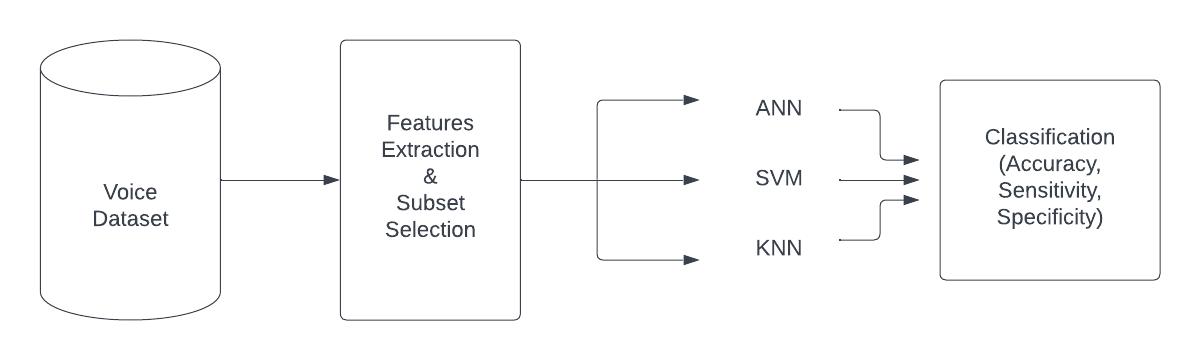
There are many possible outcomes since there are so many input factors. For Parkinson's disease (PD) diagnosis, ML algorithms excel when an acoustic voice feature is used as the input variable. The primary motivationforusingMLonacousticvoicedatasetswasfor earlydiagnosisofPDsymptoms[25].Trainingmodelscan be quite helpful in early PD screening in some circumstances where a gold standard is available. A specificcombinationofMLtechniques,includingprincipal
component analysis, was used to reduce the dimensionality of the input datasets. Speech database features can be analyzed with classifiers such as decision trees and k-means clustering techniques to reliably label voicedataaseithernormalorPD.
Since the acoustic speech data was deemed to be in violation of the data in components, it was decided that the most effective course of action would be to use ML techniqueslikeHMMtolearntheacousticspeechdataand then perform the detection. Utilizing a deep-learning convolutional neural network (CNN) classifier, which has been trained using transfer learning techniques and data augmentationmethods,isoneapproachforpredictingthe probability of Parkinson's disease (PD). However, detectingPDintheearlystagesthroughhandwritingdata canposeasignificantclassificationchallenge.Byusingthe ImageNet and MNIST databases as input sources separately, the classification accuracy was considerably improved.
5.1 Voice Datasets as Input
In a study documented in [26], a range of machine learningclassifiers,includingSGD,logisticregression,XGB, KNN,randomforest,anddecisiontrees,wereemployedto diagnoseParkinson'sdisease.Theauthorsutilizedfeature extraction techniques to improve the accuracy of the trainedmodelsbyobtainingcharacteristicsfromtheinput data.Theyreducedthedata'sdimensionalitybyremoving irrelevant records and combining variables into features thatbestrepresentedthedataset.
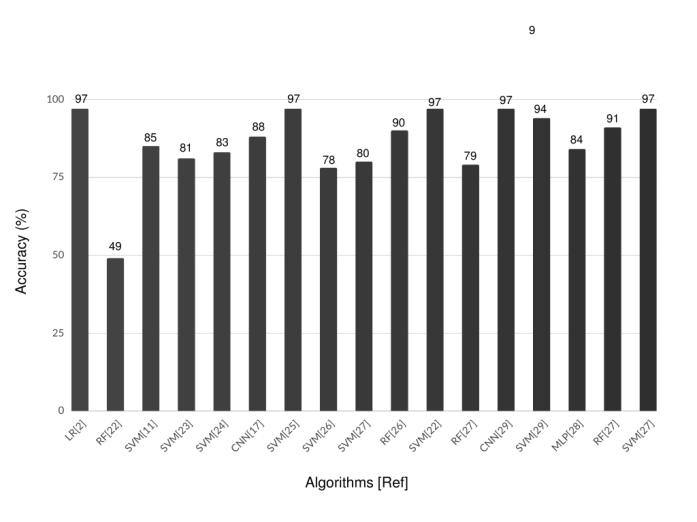
The authors utilized data mining techniques to differentiate individuals with Parkinson's disease (PD) from those without the condition by examining specific speech-related features, with the goal of achieving a high levelofaccuracyinprediction.TheyselectedPDdiagnosis as the target variable and updated the input dataset column accordingly. Lastly, the ML algorithms were evaluatedandcomparedbasedontheirperformance,with therandomforestclassifierachievingthehighestaccuracy of 97.10%, while SGD and logistic regression had the lowestaccuracyof91.66%.
5.2 Handwritten Patterns as Input
A Structural Co-occurrence Matrix (SCM) based method for PD diagnosis was described in [27]. Features were extractedfromtheHandPDdatasetsusingassessmentsof spiral and meander handwriting [28]. The study details a system that uses both a standardized test plan and a student's handwriting to evaluate performance. A segmentation process is utilized to create two distinct imagesfromtheoriginal image,whicharethenprocessed using digital image processing techniques to produce grayscale images. Once the grayscale images have been segmented and transformed, feature extraction can be performed. These grayscale images serve as input images fortheSCM.
To analyze the relationship between data in a twodimensional space, the researchers employed feature extraction with the SCM. The study used data from 92 individuals, including 74 PD patients and 18 healthy controls, as described in [27]. The researchers used variousclassifiers,includingSVM,naiveBayes,andOPF,in theiranalysisofthedataset.Maximumaccuracy(85.54%) wasachievedwhencombiningthehandwrittentracewith thespiralformathandwritingusingSVM.
5.3 Gait datasets as Input
In[29],theauthorssuggestedtheuseofmachinelearning (ML) algorithms to examine gait patterns as a way of diagnosingPD.Althougheachpersonwalksdifferently,the authors argue that there is a significant difference in gait patterns between HC and PD individuals. The study gathered data from various sources, including individuals themselves and the Laboratory for Gait and Neurodynamics in the Neurology Outpatient Clinic at Massachusetts General Hospital in Boston, Massachusetts, USA,andtheUniversityofMichigan.
The authors utilized several machine learning algorithms to diagnose Parkinson's disease based on gait symptoms, suchasSVM,PSO,KNN,RF,HMM,LR,ANN,NB,andLDA.
Thestudyinvolvedatotalof424participants,andvarious algorithms were applied to diagnose PD based on gait symptoms. The hidden Markov model algorithm achieved anaccuracyrateof85.51%.Thedeepconvolutionalneural network algorithm was able to achieve 91.9% accuracy using a small sample size of only 20 individuals. The experimental setup involved the use of MATLAB R2013b and Python. The SVM algorithm was applied to classify 166 individuals and achieved a 100% accuracy rate in distinguishing between PD patients and healthy individuals. Among all 80 cases, where 40 participants were PD patients and 40 were healthy controls, the random forest algorithm exhibited the highest accuracy rateof79.6%.
5.4 Neuroimages as Input
Preliminary research suggests that people with PD also sufferfromareductioninneuronsinthebrain'sdopamine area. To visually detect and quantitatively measure the loss of neurons in various brain lobes, neuroimaging techniques such as MRI, SPECT, fMRI, and PET have been used throughout the past two decades. Because of its excellent spatial resolution and lack of invasiveness, MRI is the method of choice. Different machine learning methodologiesandmethodshavebeenshowntobeuseful in the literature for diagnosing PD patients based on neuroimagingdata.
Tao et al. [7] used fMRI and a network model based on graph theory to show how the functional connectivity of motor networks is altered during the resting state in PD. Functionalconnectivityintheleftcerebellum,leftprimary motor cortex, and left parietal cortex was found to be increased in PD patients compared to normal subjects at rest,whileconnectivityintheleftdorsallateralprefrontal cortex and left putamen was found to be significantly decreased.
Defeng et al. [8] implanted deep brain electrodes to predict PD tremors in a real-time case study. In a similar vein, Christian Salvotre et al. [9] analyzed a database containing MRI scans from 28 healthy individuals, 28 people with PD, and 28 people with Progressive Supranuclear Palsy. Principal component analysis (PCA) was used for feature extraction, and a support vector machine (SVM) was used for classification, as part of a supervised machine learning technique. The authors have attempted to address the issue of a skewed dataset by including an equal number of patients from each group (PD, HC, and PSP). Classifiers for PD detection have proliferated in recent years, with criteria including accuracy,sensitivity,andspecificityusedtoevaluatetheir effectiveness. Accuracy is a measure of the overall performance of a procedure or the proportion of positive andnegativecasesthatarecorrectlydetected.
Opticalcoherencetomography(OCT)hasbeenthesubject of several research efforts aimed at its potential application in the diagnosis of Parkinson's disease at an early stage. Objectives of these investigations include contrasting retinal thickness and retinal nerve fiber layer thickness in people with Parkinson's disease and healthy controls using optical coherence tomography (OCT). Researchers in [10] investigated the link between disease severity and RNFL values by comparing OCT findings of retinalthicknessandretinalnervefiberlayerthicknessin patients with idiopathic Parkinson's disease (IPD) and healthyvolunteers.
6. Discussion and Recommendations
Researchers and medical professionals are becoming increasinglyinterestedinusingAIindiseasediagnosisand treatment.Bigdataonhealthisbeinggeneratedbymobile technologies like smartphones and cheap, widely used sensors. In a free-flowing population and with access to additional clinical datasets, AI may be able to glean insights about disease prevalence and patient status that were previously unavailable. Artificial intelligence can aid in worldwide epidemiology efforts and in monitoring patient symptoms. Despite the excitement of these new uses, it is vital to weigh the benefits and drawbacks of theseinnovativeapproachestoanalysis.Themostexciting usesofAIareyetinthefuture.ByapplyingAItorelevant datasets in the future, we can better characterize the molecular sub-types of Parkinson's disease, for example. This will facilitate precision medicine by allowing clinicians to match patients with effective molecular therapies. Until AI proves it can progress in precision medicine, its primary value will remain in its ability to facilitateindividualizedmonitoring[30].Weidentifiedthe remaining challenges and proposed recommendations for future research that could result in effective ML approachestotacklethesechallenges.
Weevaluatedtheselectedarticlesbasedontheirstrengths and weaknesses. Using the criteria for critical appraisal, we then identified potential research areas for further investigation. The findings were categorized based on theirrelevancetosimilarorrelatedresearchquestions.
In order to make a real-time diagnosis of Parkinson's disease using picture and sensory data, it is important to adopt real-time and customized-based equipment equipped with a sophisticated processing unit. The capacityofML modelstospotoutliersindata collected in real-time from IoT-based devices has already been demonstrated. To process data at the network's edge and immediately distribute the results, edge computing might be combined with specialized devices. Researchers have already implemented a variety of ML models capable of makingadifferentialdiagnosisofParkinson'sdisease.The research team should concentrate on creating a machinelearning model for Parkinson's disease that takes into accountallofthesymptomsatonce.Inordertodetectthe various symptoms of PD, a compact and easily transportable device can be used to measure different features such as speed, duration, range of motion, and coordination. This device should be easy to use, easy to clean, and capable of detecting and analyzing changes in diseaseprogressionandtreatmentresponse.
The diagnosis of Parkinson's disease using gait metrics is currently the only use for wearable sensors. Other modulesshouldbeintegratedintothewearabledevicefor Parkinson's disease detection. Wearable sensor technologiesforthediagnosisofmanyailmentsshouldbe
a primary focus of research. A wrist-worn gadget, for instance, could be created to gather data continuously for an extended duration and detect various symptoms of Parkinson'sdisease.
7. CONCLUSIONS
Day-to-day life with PD is extremely difficult to manage. Therefore,itishelpfultohaveareliablescreeningstrategy in place, especially in caseswhere medical intervention is not required. Consequently, machine learning (ML) algorithms were evaluated to determine their effectiveness in detecting Parkinson's disease (PD). The primary objective of this literature review was to identify studies utilizing ML-based approaches to diagnose PD throughhandwriting,speechcharacteristics,andgaitdata. The ultimate goal was to select the most suitable method for accurately diagnosing PD. The review showed that a machine learning approach utilizing support vector machines with L1 regularization and K-fold crossvalidationachievedadiagnosticaccuracyof99.0\%when analyzing speech characteristics for PD detection., 97.96\% when using handwritten patterns to detect PD, and 100\% when using gait analysis to detect PD. We foundthatmuchremainstobedoneinthefuture,andthis evaluationhelpedusthinkthroughsomeofthechallenges we might face and the opportunities we might be able to take advantage of. The advancements of neural networks andsimilarlearningsystemsalsobenefitgreatlyfromthis overview, since new insights and rules for the field are provided.
REFERENCES
[1] R. Das, “A comparison of multiple classification methods for diagnosis of Parkinson's disease,” Expert Syst.Appl.,Vol.37,pp.1568–72,2010.
[2] F. Astrom and R. Koker, “A parallel neural network approachtopredictionofParkinson’sdisease,”Expert Syst.Appl.,Vol.38,pp.12470–4.
[3] H.-L.Chen,C-C.Huang,X-G.Yu,X.Xu,X.Sun,G.Wang, and S-J. Wang, “An efficient diagnosis system for detectionofParkinson’sdiseaseusingfuzzyk-nearest neighbor approach,” Expert Syst. Appl., Vol. 40, pp. 263–71.
[4] O. Eskidere, F. Ertas, and C. Hanilci, “A comparison of regressionmethodsforremotetrackingofParkinson’s disease progression,” Expert Syst. Appl., Vol. 39, pp. 5523–8.
[5] W. Zeng and C. Wang, “Classification of neurodegenerative diseases using gait dynamics via deterministiclearning,”Inform.Sci.,Vol.317,pp.246–58.
[6] Y.-Y. Chen, et al., “A vision-based regression model to evaluate parkinsonian gait from monocular image sequences,”ExpertSyst.Appl.,Vol.39,pp.520–6.
[7] Alzubaidi, M.S.; Shah, U.; DhiaZubaydi, H.; Dolaat, K.; Abd-Alrazaq, A.A.; Ahmed, A.; Househ, M. The Role of Neural Network for the Detection of Parkinson’s disease:AScopingReview.Healthcare2021,9,740.
[8] Maitín, A.M.; García-Tejedor, A.J.; Muñoz, J.P.R. Machine Learning Approaches for Detecting Parkinson’s Disease from EEG Analysis: A Systematic Review.Appl.Sci.2020,10,8662.
[9] Maserejian,N.;Vinikoor-Imler,L.;Dilley,A.Estimation of the 2020 Global Population of Parkinson’s Disease (PD) [abstract]. Mov. Disord. 2020, 35 (Suppl. S1), 198.
[10] Van Den Eeden, S.K.; Tanner, C.M.; Bernstein, A.L.; Fross, R.D.; Leimpeter, A.; Bloch, D.A.; Nelson, L.M. Incidence of Parkinson’s disease: Variation by age, gender,andrace/ethnicity.AmJEpidemiol.2003,157, 1015–1022.
[11] Gunduz, H. Deep Learning-Based Parkinson’s Disease Classification Using Vocal Feature Sets. IEEE Access 2019,7,115540–115551.
[12] Quan, C.; Ren, K.; Luo, Z. A Deep Learning-Based Method for Parkinson’s Disease Detection Using Dynamic Features of Speech. IEEE Access 2021, 9, 10239–10252.
[13] Braak, H.; Del Tredici, K.; Rüb, U.; De Vos, R.A.; Steur, E.N.J.; Braak, E. Staging of brain pathology related to sporadic Parkinson’s disease. Neurobiol. Aging 2003, 24,197–211.
[14] Sveinbjornsdottir, S. The clinical symptoms of Parkinson’s disease. J. Neurochem. 2016, 139, 318–324.
[15] Tsanas, A.; Little, M.A.; McSharry, P.E.; Ramig, L.O. Accurate telemonitoring of Parkinson’s disease progressionbynon-invasivespeechtests.IEEETrans. Biomed.Eng.2009,57,884–893.
[16] Perez, K.S.; Ramig, L.O.; Smith, M.E.; Dromey, C. The Parkinson larynx: Tremor and video stroboscopic findings.J.Voice1996,10,354–361.
[17] Bugalho, P.; Viana-Baptista, M. REM sleep behavior disorder and motor dysfunction in Parkinson’s disease A longitudinal study. Parkinsonism Relat. Disord.2013,19,1084–1087.
[18] Balestrino, R.; Schapira, A.H. Parkinson's disease. Eur. J.Neurol.2020,27,27–42.
[19] Rahn, D.A.; Chou, M.; Jiang, J.J.; Zhang, Y. Phonatory impairment in Parkinson’s disease: Evidence from nonlineardynamicanalysisandperturbationanalysis. J.Voice2007,21,64–71.
[20] Ahlrichs, C.; Lawo, M. Parkinson’s Disease Motor Symptoms in Machine Learning: A Review. Health Inform.Int.J.2013,2,4.
[21] Mei,J.;Desrosiers,C.;Frasnelli,J.MachineLearningfor the Diagnosis of Parkinson’s Disease: A Review of Literature.Front.AgingNeurosci.2021,13,633752.
[22] Battineni,G.;Chintalapudi,N.;Amenta,F.Comparative Machine Learning Approach in Dementia Patient Classification using Principal Component Analysis. In Proceedings of the 12th International Conference on Agents and Artificial Intelligence, Valletta, Malta, 22–24February2020.
[23] Al-Wahishi, A.; Belal, N.; Ghanem, N. Diagnosis of Parkinson’s Disease by Deep Learning Techniques Using Handwriting Dataset. In Proceedings of the International Symposium on Signal Processing and IntelligentRecognitionSystems,Chennai,India,14–17 October2020.
[24] Neharika, D.B.; Anusuya, S. Machine Learning AlgorithmsforDetectionof Parkinson’sDiseaseusing Motor Symptoms: Speech and Tremor. IJRTE 2020, 8, 47–50.
[25] Paul, S.; Maindarkar, M.; Saxena, S.; Saba, L.; Turk, M.; Kalra,M.;Krishnan,P.R.;Suri,J.S.BiasInvestigationin Artificial Intelligence Systems for Early Detection of Parkinson’s Disease: A Narrative Review. Diagnostics 2022,12,166.
[26] Ahmed, I.; Aljahdali, S.; Khan, M.S.; Kaddoura, S. Classification of Parkinson disease based on patient’s voicesignalusingmachinelearning.Intell.Autom.Soft Comput.2021,32,705–722.
[27] De Souza, J.W.; Alves, S.S.; Rebouças, E.D.S.; Almeida, J.S.; RebouçasFilho, P.P. A New Approach to Diagnose Parkinson’s Disease Using a Structural Cooccurrence Matrix for a Similarity Analysis. Comput. Intell. Neurosci.2018,2018,7613282.
[28] Pereira, C.R.; Pereira, D.R.; Silva, F.A.; Masieiro, J.P.; Weber, S.A.; Hook, C.; Papa, J.P. A new computer vision-based approach to aid the diagnosis of Parkinson’s disease. Comput. Methods Programs Biomed.2016,136,79–88.
[29] Abdulhay, E.; Arunkumar, N.; Narasimhan, K.; Vellaiappan, E.; Venkatraman, V. Gait and tremor investigation using machine learning techniques for
the diagnosis of Parkinson's disease. Future Gener. Comput.Syst.2018,83,366–373.
[30] Landers, M.; Saria, S.; Espay, A.J. Will Artificial Intelligence Replace the Movement Disorders Specialist for Diagnosing and Managing Parkinson’s Disease?J.ParkinsonsDis.2021,11(Suppl.S1),S117
S122.
[31] Razim, A., Kamil, M.A.U. (2022). Deep Learning-Based Efficient Detection of COVID-19. In: Suma, V., Baig, Z., Kolandapalayam Shanmugam, S., Lorenz, P. (eds) Inventive Systems and Control. Lecture Notes in Networks and Systems, vol 436. Springer, Singapore. https://doi.org/10.1007/978-981-19-1012-8_24
[32] Gupta, R., et al. (2023). New era of artificial intelligence and machine learning-based detection, diagnosis, and therapeutics in Parkinson's disease. AgeingResearchReviews.
https://doi.org/10.1016/j.arr.2023.102013