PARAMETRIC STUDY OF GLASS FIBRE REINFORCED POLYMER (GFRP) STRENGTHENED CONCRETE COLUMN UNDER ECCENTRIC COMPRESSION LOAD
Ajay Kumar, Deepak Tarachandani Applied Mechanics Department L. D. College of Engineering AhmedabadABSTRACT: Thestudyinvestigatedtheperformanceof reinforced concrete columns that were strengthened using GFRP materials when subjected to eccentric loading. Eccentric loading refers to the application of a load that is not centrally located, causing an off-centre force on the column. This type of loading is known to introduce additional challenges and stress concentrationsinthecolumn.
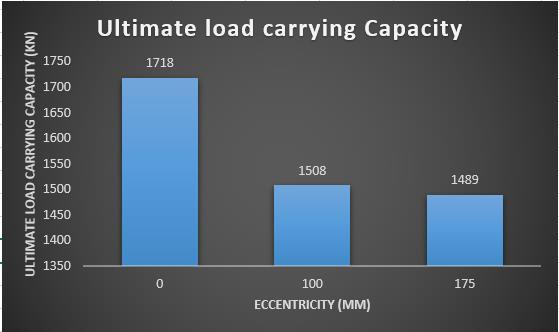
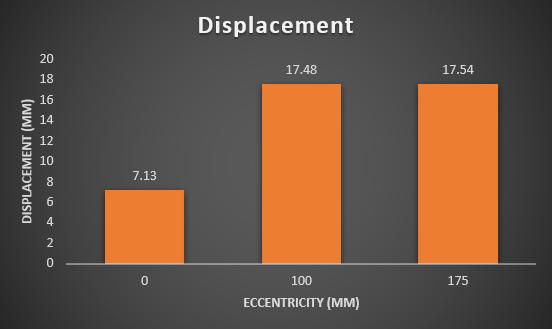
The objective of the research was to evaluate the effectiveness of GFRP strengthening in improving the performance of reinforced concrete columns under eccentric loading. The researchers conducted FEA analysisonaseriesofreinforcedconcretecolumns,with various parameters such as length, cross section, eccentricity,endconditionandvariedspacingofstirrups to compare their ultimate load carrying capacity and displacement.
Finite Element Analysis (FEA) is employed to simulate the behaviour of GFRP-strengthened concrete columns. The numerical models are validated against experimental results obtained from laboratory tests conducted on prototype specimens. The study investigates the influence of each parameter on the ultimateloadcarrying capacity and displacement of the columns, aiming to identify the optimal configuration for GFRP strengthening.
Overall,theresearchdemonstratedthepotentialofGFRP strengthening in enhancing the behaviour and performance of reinforced concrete columns subjected toeccentricloading.Thesefindingscancontributetothe development of improved design guidelines and strategies for strengthening existing structures or designing new ones with increased resistance to eccentricloadingeffect
Keywords: GFRP,Eccentricloading,Strengthening.
1. INTRODUCTION: When exposed to a humid environment, the steel bars in reinforced concrete (RC) structures experience a decline in their mechanical

properties, resulting in reduced load-carrying capacity andserviceability.Topreventcorrosionanddegradation, protective measures are necessary, but they can come withasignificantupfrontcost.
Glass fiber reinforced polymer (GFRP) bars are considered the optimal alternative to steel bars due to their high tensile strength, lightweight nature, low density, and excellent electromagnetic resistance. Most importantly,theypossesssuperiorcorrosionresistance.
FiberReinforcedPolymers(FRP)wereoriginallycreated for the aerospace industry and later adopted by the automotive industry. However, their superior characteristics in comparison to other materials made themapreferredchoiceforcivilengineeringapplications overtime.
When it comes to research on FRP-confined concrete columns, the focus is typically on studying the stressstrainrelationshipofthesecolumns,observinghowthey behaveundereccentricload,andevaluatingtheirseismic performance.
Since most columns in structures are subjected to eccentric loads, the study of the behaviour of FRPconfined reinforced concrete columns under such loads holdsgreatersignificance.
2. FINITE ELEMENT MODELLING: Numerical simulations of GFRP reinforced concrete columns were donebyusingsoftwareABAQUS.Duringthemodellingof specimens, the concrete material models, boundary conditions, and different geometric and material parameters. The concrete material was modelled as a homogeneous 3D solid section. Diameter of main reinforcement is 25 mm and diameter of stirrups is 8 mm.
Intotal48numberofmodelswerepreparedand the variable in models are length, end condition, cross sectional dimension, eccentricity and varied stirrup spacing.
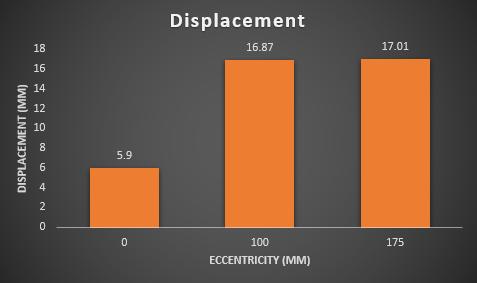
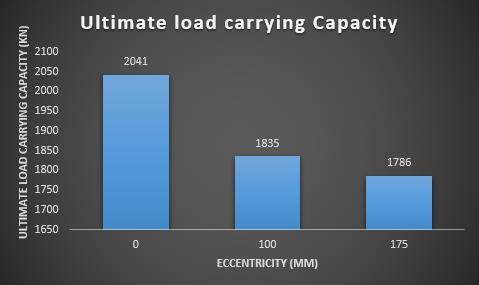
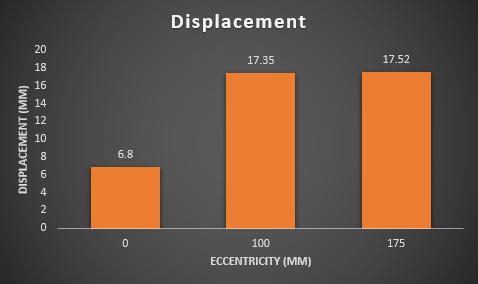
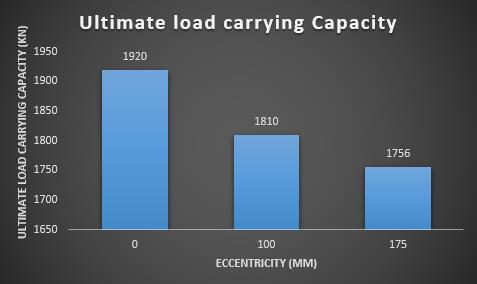
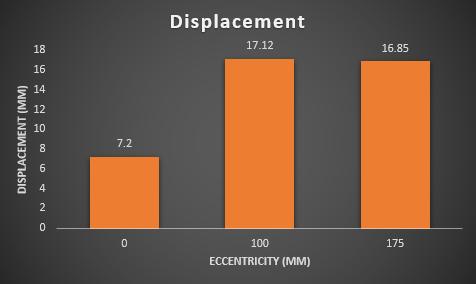
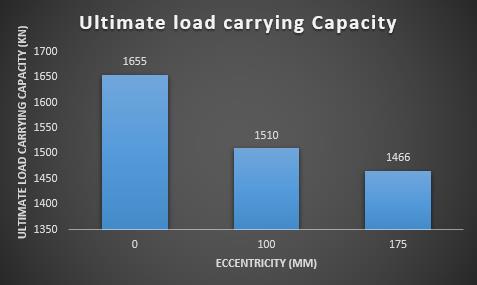
For considering the variation in eccentricity 12 models were prepared in which three eccentricities of 0 mm, 100mm and 175mm are considered for two differentlengthandfortwodifferentendconditionsbut having same cross-sectional dimension. For same eccentricities12modelswerealso prepared having different cross-sectional dimension (400x400mm).
As per the provision of IS 13920 for special confining reinforcement a stirrup spacing of 85mm in top and bottom 450 mm and a spacing of 100mm in middle portion of column is taken for that 24 models
were prepared having variation in length, eccentricity, cross sectional dimension and end condition of column buthavingtwolayersofhoopGFRP.
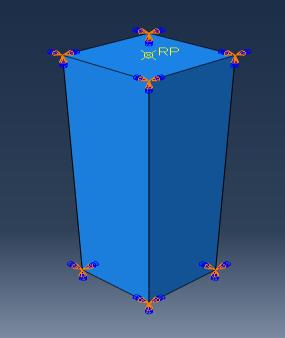
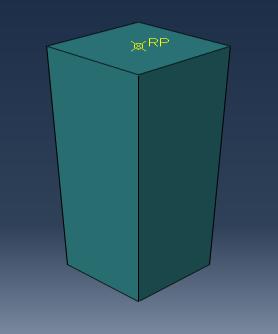
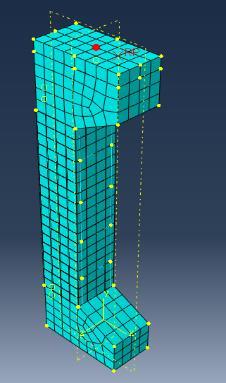
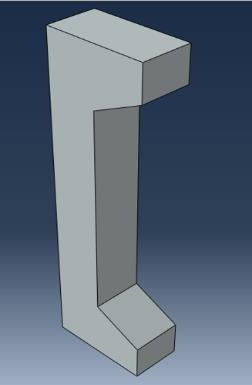
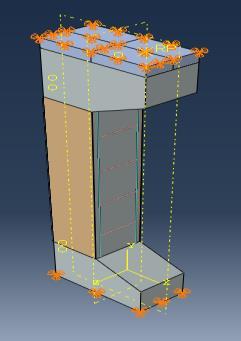
Todeterminetheaxialload-deflectionhistoryof reinforced concrete columns up to failure, a static monotonic loading was applied on the top by the displacement control technique. An induced displacement of 20mm was applied on the top centre of concentric columns and at a distance equal to required eccentricity from the centre of specimens along the weakeraxisof eccentriccolumns.Thegeometryandthe modelling details of the finite element models of steelreinforced columns are shown in Figure 1.
3.
4. Conclusion:
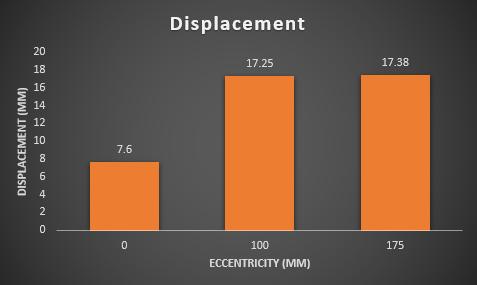
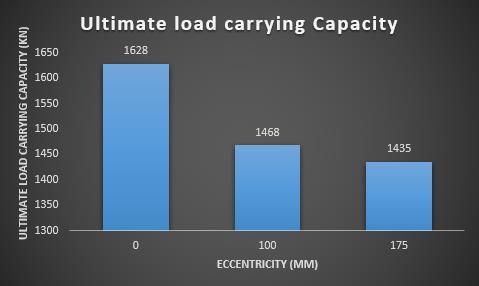
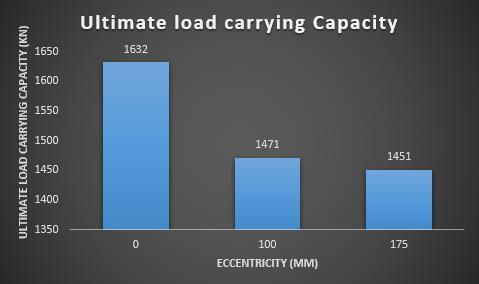
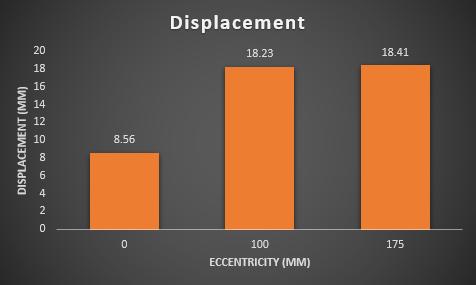
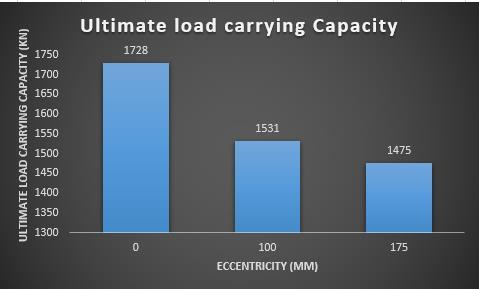
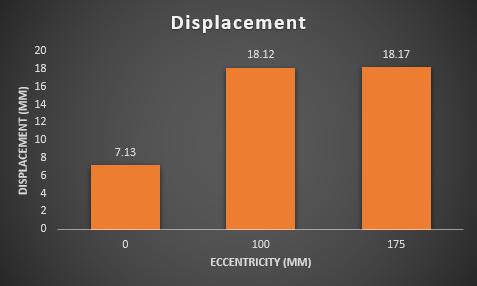
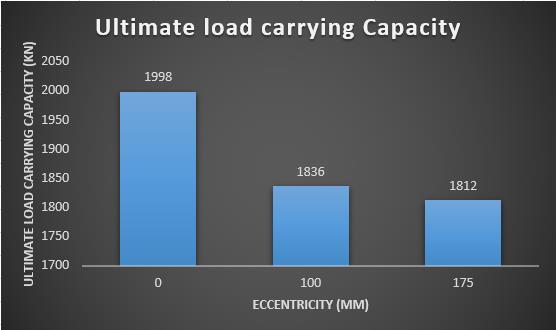
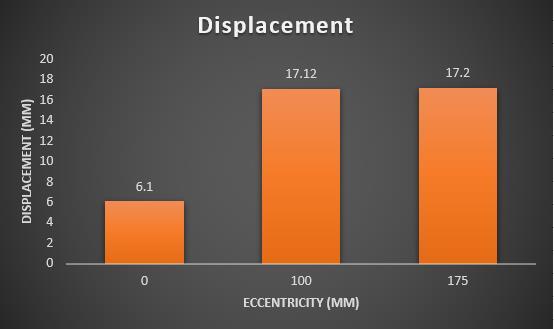
It can be concluded that by using GFRP under eccentric loading for different length of column and same cross section does not increase the load carrying capacity as much but it significantly reduces the displacement by 13.5%forconcentricloadedcolumn.
By changing the end condition from hinged to fixed, the load carrying capacity of the GFRP strengthened RC column is increased by 2.78 % for 100 mm eccentricity and displacement is reduced by 3.14 % for 175 mm eccentricity with respect to column having both ends hinged.
The load carrying capacity of GFRP strengthened RC column under eccentric loading is increased by 3.46 % for column having larger cross section as compared to smallercrosssection.
By reducing the length of column by taking same cross section and end condition the load carrying capacity is increased by 4.77 % for 100 mm eccentricity significantly but very less for 175 mm eccentricity and displacement is also reduced by 7.46 % for 100 mm eccentricloading.
GFRP strengthened RC column under eccentric loading having varied spacing of stirrups along the length of column significantly reduces the displacement by 20 %
5.References:
under 100 mm eccentric loading for smaller length of column.
The ultimate load carrying capacity is increased by 3.15 % and displacement is reduced by 10.16 % for concentric loading by changing the spacing of stirrups for smaller length of column under both ends hinged condition.
For column having cross section 350 x 350 mm having both endsfixeddoes not enhanceloadcarryingcapacity significantly but it reduces the displacement by 1.54 % under 175 mm eccentric loading by reducing the length ofcolumn.
Forcolumnhavingcrosssection400x400mmandboth endsfixedreducesthedisplacementby2.87%andthere is negligible change in ultimate load carrying capacity under concentric loading by reducing the length of column.
So, it is better to use GFRP for smaller length of column under small eccentric loading and larger cross section. GFRPalsoenhancestheloadcarryingcapacitywhenthe spacingofstirrupsisvariedalongthelengthofcolumn.
1. Behaviour of GFRP strengthened Reinforced Concrete Columns under Large Eccentric Compression Load” by AdvancedMaterialsResearchWang,YongfengWang,SuyanWang.
2. Finite elementanalysisofrectangularreinforcedconcretecolumnswrappedwithFRPcompositesbyAbdurra’uf MGora1,JayaprakashJaganathan,MPAnwar,UJohnsonAlengaram.
3. The effect of FRP characteristics on the behaviour of square columns under eccentric loads by Hiwa Noamani, ArashSayari.
4. Tests of glass fibre reinforced polymer rectangular concrete columns subjected to concentric and eccentric axial loadingbyMohamedElchalakani,GuoweiMa.
5. NumericalInvestigationofLoad-CarryingCapacityofGFRP-ReinforcedRectangularConcreteMembersUsingCDP ModelinABAQUSbyAliRaza,QaiseruzZamanKhan,andAfaqAhmad.
6. Compression behaviour of FRP-strengthened RC square columns of varying slenderness ratios under eccentric loadingNadeemSiddiqui,HusainAbbas,TarekAlmusallam,AbobakerBinyahya,YousefAl-Salloum.
7. ExperimentalandnumericalstudyonthestructuralbehaviourofeccentricallyloadedGFRPcolumnsby F.Nunes a,M.Correiab,J.R.Correiaa,N.Silvestrea,n,A.Moreira
8. GuidefortheDesignandConstructionofExternallyBondedFRPSystemsforStrengtheningConcreteStructures.
9. Design recommendations for the use of FRP for reinforcement and strengthening of concrete structures by S. Rizkalla,T.Hassan,andN.Hassan.
© 2023, IRJET | Impact Factor value: 8.226 | ISO 9001:2008
Certified Journal | Page 398
10. ExperimentalandnumericalstudyonthestructuralbehaviourofeccentricallyloadedGFRPcolumnsbyF.Nunes, M.Correia,J.R.Correia,N.Silvestre,andA.Moreira.
11. Tests of glass fibre reinforced polymer rectangular concrete columns subjected to concentric and eccentric axial loading.
12. Nonlinear finite element modelling of concrete confined by fiber composites by A. Mirmiran, K. Zagers, and W. Yuan.
13. 3D finite element analysis of substandard RC columns strengthened by fiber-reinforced polymer sheets by A. I. Karabinis,T.C.Rousakis,andG.E.Manolitsi.
14. Experimentsandfinite elementanalysisofGFRPreinforcedgeopolymerconcreterectangularcolumnssubjected toconcentricandeccentricaxialloadingbyM.Elchalakani,A.Karrech,M.Dong,M.S.MohamedAliandB.Yang.
15. Behaviouroffull-scaleglassfiber-reinforcedpolymerreinforcedconcretecolumnsunderaxialloadbyDeLucaA, MattaF,Nanni.
16. IS:456–2000,IS:13920–2016,IS:800–2007.